


6-Gingerol
Synonym name:
Catalogue No.: BP0092
Cas No.: 23513-14-6
Formula: C17H26O4
Mol Weight: 294.391
Botanical Source: ginger (Zingiber officinale)
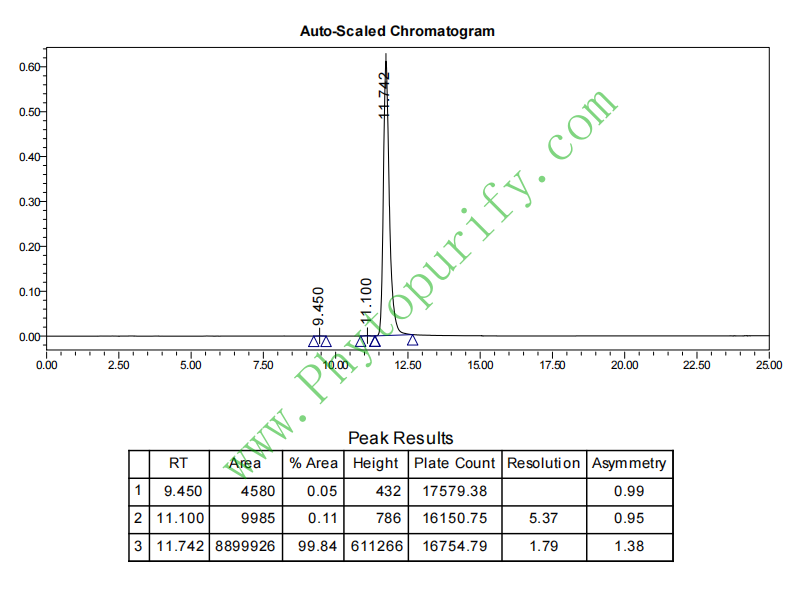
Purity: 90%~99%
Analysis Method: HPLC-DAD
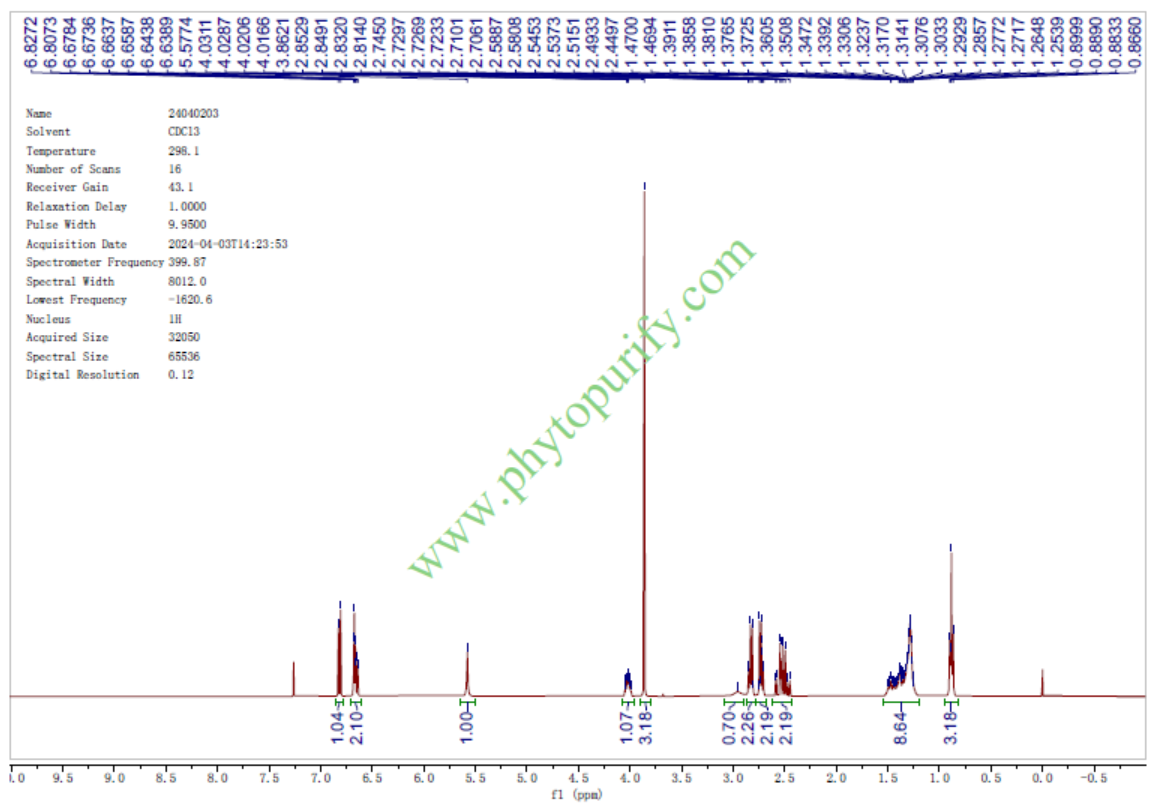
Identification Method: Mass, NMR
Packing: Brown vial, HDPE plastic or Aluminum bottle
Can be supplied from milligrams, grams to kilograms.
The purity(assay) of 90%, 95% and 98% is available for food, nutrition and cosmetics request, except for R&D and reference standard.
Storage conditions:Short-term storage at 2~8℃, long-term storage at -20 ~ -80℃
66.7600
3.3100
3.3100
Low
No
No
No
No
No
Negative
6-Gingerol, CAS number 23513-14-6, is one of the main active ingredients in fresh ginger (Zingiber officinale Roscoe) and a natural product of β - hydroxyketones. As a typical secondary metabolite of ginger plants, 6-gingerol has attracted much attention due to its diverse biological activities, especially in the fields of anti-inflammatory, antioxidant, anti-tumor, and metabolic regulation, showing significant pharmacological potential. In recent years, with the development of natural product pharmacology and molecular biology techniques, the mechanism of action of 6-gingerol has been gradually revealed, involving multiple signaling pathways and molecular targets, demonstrating its unique advantages as a candidate molecule for multi-target drugs. This article provides a systematic review of the chemical structure and physicochemical properties, plant sources and extraction methods, pharmacological activity and mechanism of action, pharmacological evaluation, and clinical application prospects of 6-gingerol, aiming to provide a theoretical basis and reference for its subsequent drug development and clinical applications.
The chemical name of 6-gingerol is 5-hydroxy-1- (4-hydroxy-3-methoxyphenyl) dec-3-one, with a molecular formula of C17H26O4 and a molecular weight of 294.39. Its structural feature is a long-chain ketone body containing a β - hydroxyl group, with a 4-hydroxy-3-methoxyphenyl aromatic ring attached at position 1, endowing it with unique chemical and biological activities. 6-gingerol belongs to the guaiacol and β - hydroxyketone family, with typical phenolic hydroxyl and methoxy functional groups that play a key role in its antioxidant and free radical scavenging abilities.
In terms of physicochemical properties, the LogP value of 6-gingerol is about 3.31, indicating its moderate lipid solubility, which is beneficial for membrane penetration and bioavailability. Its topological polar surface area (TPSA) is 66.76 Å ² and the number of hydrogen bond acceptors is 4, indicating its hydrophilicity and binding ability in intermolecular interactions. Despite its low blood-brain barrier permeability, it still has potential central nervous system activity. 6-gingerol has no hepatotoxicity or cardiotoxicity, and its hERG channel inhibition and Ames mutagenicity tests are negative, indicating its high safety and good pharmacological basis.
6-gingerol mainly exists in the roots and stems of fresh ginger, and is an important component of the volatile oil and non-volatile components of ginger. Ginger, as a traditional Chinese medicine and seasoning, is widely distributed in Asia, Africa, and the Caribbean. Its content is greatly affected by variety, harvesting time, geographical environment, and processing method. Fresh ginger has the highest content of 6-gingerol, while the content in dried ginger and processed ginger products has decreased.
The methods for extracting 6-gingerol mainly include solvent extraction, supercritical fluid extraction, and modern green extraction techniques. Traditional solvent extraction often uses ethanol, water, or their mixed solvents to obtain crude extracts through impregnation, reflux, or ultrasound assisted extraction, followed by purification and separation by silica gel column chromatography or high-performance liquid chromatography (HPLC). Supercritical CO2 extraction has been widely used in recent years due to its solvent-free residue, environmental friendliness, and high efficiency. In addition, microwave-assisted extraction and enzymatic assisted extraction techniques have also been used to improve extraction efficiency and purity. The optimization of extraction process is crucial for ensuring the active ingredient content and stability of 6-gingerol.
The pharmacological activities of 6-gingerol include anti fat generation, anti-tumor, anti invasion, antioxidant, anti-inflammatory, and pro apoptotic effects, demonstrating its potential as a multifunctional natural medicine.
6-gingerol significantly inhibits adipogenesis by regulating adipocyte differentiation and lipid metabolism. In vitro studies have shown that 6-gingerol can inhibit the differentiation of 3T3-L1 preadipocytes into mature adipocytes, mainly by downregulating the key transcription factors PPAR β and C/EBP β for adipogenesis, thereby inhibiting the expression of fatty acid synthase (FAS) and fatty acid binding protein aP2. In addition, 6-gingerol inhibits the differentiation process of adipocytes by reducing the activity of the Akt/GSK3 β signaling pathway, indicating its potential application value in the prevention and treatment of metabolic diseases such as obesity and fatty liver.
6-gingerol exhibits significant anti proliferative and pro apoptotic activities in various tumor cell lines. Its anti-tumor mechanism involves the regulation of cell cycle arrest and apoptosis signaling pathways. Research has shown that 6-gingerol induces G1 phase cell cycle arrest by upregulating the atypical apoptosis related gene NAG-1, while downregulating the cell cycle protein D1 and inhibiting tumor cell proliferation. Its pro apoptotic effect also involves activation of mitochondrial pathways, activation of caspase family proteins, and regulation of Bcl-2 family protein expression. In addition, 6-gingerol can inhibit the invasion and migration of tumor cells, partially through the β - catenin signaling pathway, protein kinase C β (PKC β), and glycogen synthase kinase-3 β (GSK-3 β).
As a natural phenolic compound, 6-gingerol has excellent free radical scavenging ability and can effectively alleviate oxidative stress damage. Its antioxidant effect is mainly achieved by directly clearing reactive oxygen species (ROS) and upregulating the endogenous antioxidant enzyme system. In terms of anti-inflammatory effects, 6-gingerol can inhibit the expression of pro-inflammatory cytokines (such as TNF - α, IL-6, IL-1 β) and inflammatory mediators (such as NO, PGE2), regulate inflammatory signaling pathways such as NF - κ B and MAPK, alleviate inflammatory reactions, and demonstrate the potential for treating chronic inflammatory diseases.
6-gingerol has also shown positive effects in research on cognitive impairment and neurodegenerative diseases. Its targets include IDO1, APP, BACE1, PTPN1, TYR, ABCB1, ABCG2, SYNJ2, USP2, and ALOX5, involving multiple links such as neuroinflammation, β - amyloid metabolism, and neuroprotection. Despite the low permeability of the blood-brain barrier, 6-gingerol may improve cognitive function and delay neurodegenerative changes by regulating these targets.
The multiple pharmacological effects of 6-gingerol depend on its regulation of multiple cellular signaling pathways and key molecules, and the specific mechanism is as follows:
cell cycle regulation 6-gingerol upregulates NAG-1 (an atypical apoptosis related gene) and blocks the G1 phase cell cycle, inhibiting the expression of cyclin D1 and limiting cell proliferation.
Pro apoptotic signal Activate mitochondrial dependent apoptosis pathway, regulate Bcl-2/Bax ratio, promote activation of caspase-3 and caspase-9, and induce tumor cell apoptosis.
Fat production inhibition Downregulate the transcription factors PPAR β and C/EBP β for adipogenesis, inhibit the expression of fatty acid synthase (FAS) and fatty acid binding protein aP2, and block adipocyte differentiation. By inhibiting the Akt/GSK3 β signaling pathway, it further affects fat metabolism.
Signal pathway regulation 6-gingerol affects the β - catenin, PKC β, and GSK-3 β pathways, regulating cell proliferation, differentiation, and migration processes.
Anti inflammatory mechanism Inhibiting the NF - κ B and MAPK signaling pathways, reducing the expression of pro-inflammatory cytokines and mediators, and alleviating inflammatory responses.
Neuroprotective mechanism By regulating targets such as IDO1, APP, BACE1, etc., it intervenes in neuroinflammation and β - amyloid metabolism, exerting a cognitive protective effect.
The pharmacological parameters of 6-gingerol show that it has good potential for drug development. The molecular weight is 294.39, which conforms to Lipinski's rule. The LogP is 3.31, indicating moderate lipid solubility and favorable cell membrane penetration. The TPSA is 66.76 Å ², with 4 hydrogen bond acceptors, supporting its effective binding to biological targets. The blood-brain barrier has low permeability, which may limit its direct role in central nervous system diseases, but can be improved through structural modification or drug carrier technology.
Toxicological evaluation showed that 6-gingerol had no significant hepatotoxicity or cardiotoxicity, and the hERG channel inhibition and Ames mutagenicity tests were negative, indicating good safety. Pharmacokinetic studies in vivo have shown that 6-gingerol is well absorbed orally, but its bioavailability is limited by first pass effects and metabolic stability. Its main metabolic pathways include phase I hydroxylation and phase II binding reactions (such as glucuronic acid binding), and the metabolites are mostly water-soluble and easily excreted substances. In the future, drug formulation optimization and structural modification are expected to enhance its pharmacokinetic performance.
6-gingerol, as a natural multifunctional active ingredient, has broad clinical application potential. Its anti-inflammatory, antioxidant, and metabolic regulatory effects make it an ideal candidate molecule for treating chronic inflammation, metabolic syndrome, and related diseases. The anti-tumor activity provides new ideas for its application in tumor adjuvant therapy and prevention, especially in multi-target regulation of tumor cell proliferation, invasion, and metastasis.
In the field of neurodegenerative diseases and cognitive impairment, although the permeability of the blood-brain barrier is limited, 6-gingerol exhibits neuroprotective potential by regulating multiple key targets. Combining nanocarriers and drug delivery systems is expected to break through the bottleneck of central nervous system drug delivery in the future.
However, the clinical translation of 6-gingerol still faces many challenges, including low bioavailability, rapid metabolism in vivo, and insufficient targeting. Future research needs to focus on structural optimization, dosage form innovation, and combination therapy strategies to enhance their efficacy and safety. In addition, the clinical trials of the system to verify its efficacy and safety are key steps in promoting the clinical application of 6-gingerol.
6-gingerol, as an important active ingredient in fresh ginger, has shown broad application prospects in the fields of anti fat generation, anti-tumor, anti-inflammatory, and neuroprotection due to its multi-target and multi mechanism pharmacological effects. Its good safety and drug properties have laid a solid foundation for subsequent drug development. In the future, by combining modern medicinal chemistry, molecular biology, and pharmaceutical technology, we will deeply explore the mechanism of action of 6-gingerol and optimize its pharmacokinetic properties, which will promote its clinical translation and benefit more patients.
