


Product name: Epicatechin
Synonym name: Epicatechol; (-)-Epicatechin;Teacatechin I; Acacatechin; Kakaol; Colatein
Catalogue No.: BP0538
Cas No.: 490-46-0
Formula: C15H14O6
Mol Weight: 290.271
Botanical Source: Green Tea
Physical Description:
Type of Compound: Polyphenols
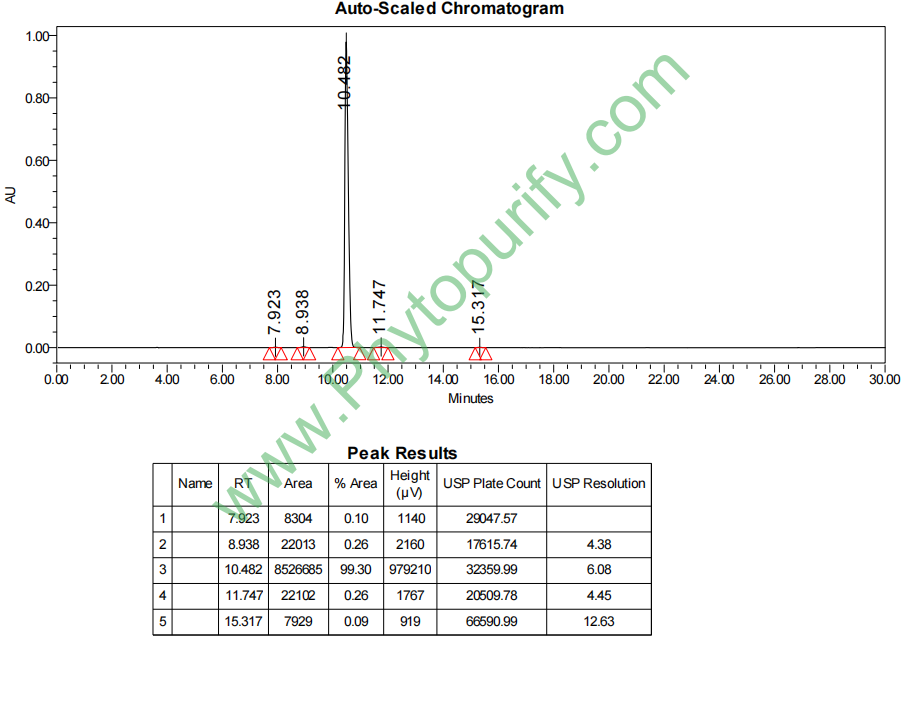
Purity: 95%~99%
Analysis Method: HPLC-DAD or/and HPLC-ELSD
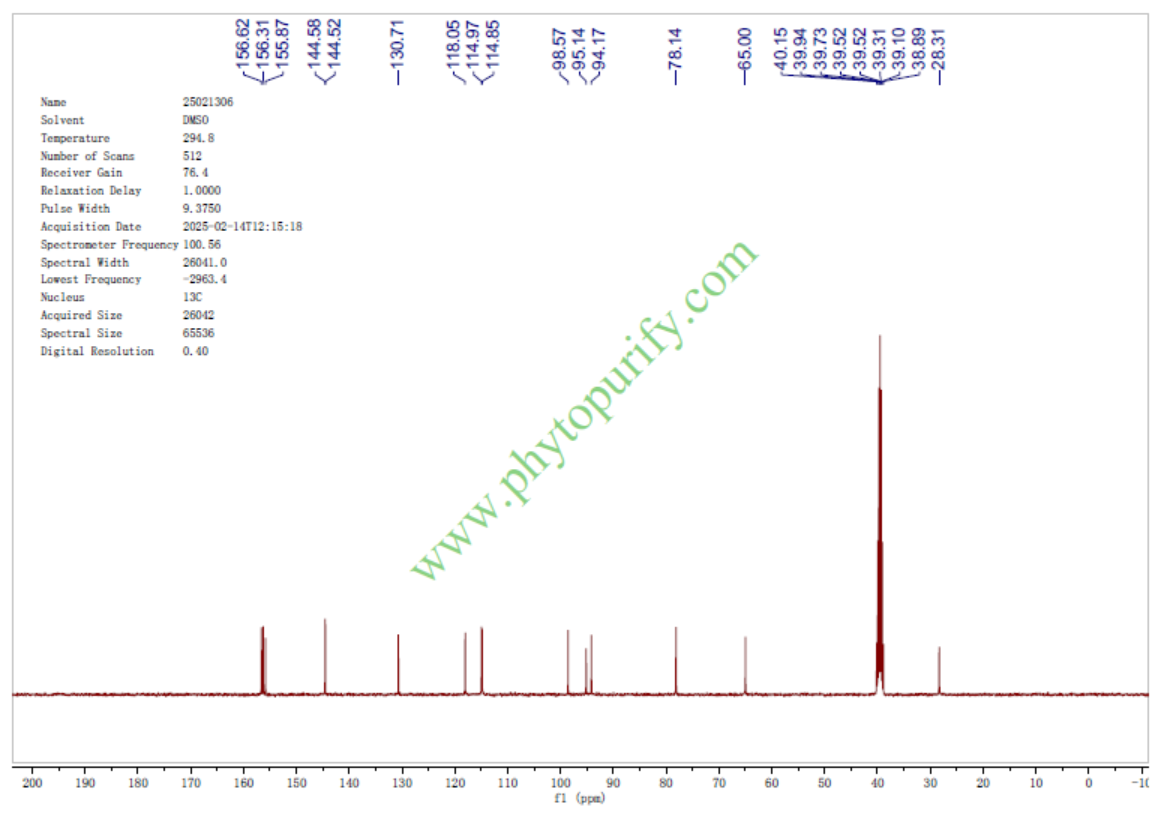
Identification Method: Mass, NMR
Packing: Brown vial or HDPE plastic bottle
Storage: Store in a well closed container, protected from air and light. Put into refrigerate or freeze for long term storage.
Whenever possible, you should prepare and use solutions on the same day. However, if you need to make up stock solutions in advance, we recommend that you store the solution as aliquots in tightly sealed vials at -20℃. Generally, these will be useable for up to two weeks.
The product could be supplied from milligrams to grams
Inquire for bulk scale.
Chengdu Biopurify Phytochemicals Ltd. is a leading company in the research, development, manufacture and marketing of High Quality Phytochemicals and Extracts(especially Active Ingredients from Traditional Chinese Medicine,TCM), Natural Active Pharmaceutical Ingredients worldwide.
The main services:
A. Supply active ingredients and reference standards of TCM, from mgs to kgs scale
B. Custom extraction and purification, target Herb Active Ingredients
C. Custom synthesis and semi-synthesis for Natural Active Ingredients
D. CR(contract research), CM(contract manufacture) and PD(process development) services from lab scale, pilot scale to commercial scale(GMP is also available)
E. TCM compounds library for drug screen,more than 3000 compounds available, many of them are rare and unique.
HPLC of Epicatechin
NMR of Epicatechin
Storage conditions:Short-term storage at 2~8℃, long-term storage at -20 ~ -80℃
110.3800
.9684
.9519
.7466
1.8292
.1944
Low
66.2328
3.3441
Yes
No
No
No
Yes
No
0.0
Yes
No
Yes
No
Epicatechin (EC), also known as (2R, 3R) -2- (3,4-dihydroxyphenyl) -3,4-dihydro-2H-1-benzopyran-3,5,7-triol, is a widely present flavan-3-alcohol compound in nature. It is one of the main bioactive components in various plant-based foods such as tea, cocoa, grapes, and apples. Its CAS number is 490-46-0, and it usually exists in the form of (±) - epicatechin (racemic) or a single enantiomer. As an important member of the catechin family, epicatechin has long been highly regarded for its excellent antioxidant capacity. Modern pharmacological research continuously reveals its extensive biological activities beyond antioxidant, including anti-inflammatory, anti hyperuricemia, cardiovascular protection, neuroprotection, and potential anti-tumor effects. Especially its activity as a xanthine oxidase inhibitor (IC50 of 982.14 μ M) provides direct scientific basis for its application in the study of hyperuricemia and gout. With the development of systems biology and molecular pharmacology, the target network of epicatechin is becoming increasingly clear, especially playing a key role in the nuclear factor E2 related factor 2 (NRF2/NFE2L2) signaling pathway and downstream antioxidant enzyme system closely related to oxidative stress damage. This article aims to systematically review the chemical properties, plant sources, pharmacological activities, molecular mechanisms of action, pharmacological evaluation, and clinical application prospects of catechins, in order to provide comprehensive academic references for the in-depth development and transformation research of this natural product.
Epicatechins belong to flavan-3-ol compounds, with a molecular formula of C15H14O6 and a molecular weight of 290.2710. Its basic structure consists of a benzodihydropyran (C ring) core, with the A ring being a meta phenyltriphenylene type (5,7-dihydroxy) and the B ring being a catechol type (3 ', 4' - dihydroxy). The 2nd and 3rd carbon atoms of the C ring are chiral centers with an R configuration. Common epicatechins usually refer to (-) - epicatechins, whose 2R and 3R configurations are the main contributors to their biological activity; And its diastereomers are (-) - epigallocatechin gallate (EGC) or (+) - catechin. The (±) - epicatechin mentioned in the article is a racemic mixture.
In terms of physical and chemical properties, epicatechin is usually a white to off white crystalline powder. Its lipid water partition coefficient (LogP) is 0.9684, indicating that it has a certain degree of lipophilicity, but overall it still leans towards hydrophilicity. The topological polar surface area (TPSA) is 110.3800 Å ², reflecting the strong polarity brought by multiple hydroxyl groups in the molecule. Its water solubility data is 0.7466 (usually measured in mg/mL or g/L, depending on the specific system), indicating that it has moderate solubility in water, which is beneficial for its absorption and distribution in organisms. However, its blood-brain barrier permeability is predicted to be 'low', which may limit its direct therapeutic effect on central nervous system diseases. The preliminary safety evaluation shows that the risk of hERG channel inhibition is "no", and the Ames test result is 0.0 (usually indicating no mutagenicity), indicating that it has good cardiac safety and genotoxic safety profile.
Epicatechins are widely distributed in the plant kingdom and are secondary metabolites of various common edible and medicinal plants.
1. Main plant sources:
* tea Especially green tea and unfermented tea are rich in various catechins, and epicatechin is one of them.
* cocoa bean The high content of epicatechin in dark chocolate is considered a key component for its cardiovascular benefits.
* Grapes and wine Grape seeds and grape skins are rich in anthocyanins (polymerized from monomers such as epicatechin), and red wine also contains a certain amount of free epicatechin.
* Apples and berries Apple peels, blueberries, cranberries and other fruits are important sources of epicatechin in daily diet.
* medicinal plants As mentioned in the title sterculia lychnophora(Sterculia lychnophora), The extract of its seeds contains epicatechin, which provides some modern pharmacological explanations for its traditional use in clearing heat, moistening the lungs, and detoxifying the throat. In addition, it has also been detected in medicinal plants such as Ginkgo biloba leaves and Forsythia suspensa.
Epicatechins exhibit diverse pharmacological activities, and their core role is closely related to regulating redox balance.
1. Antioxidant and anti-inflammatory activities This is the most fundamental and important activity of epicatechin. It can directly scavenge free radicals such as DPPH and ABTS, chelate metal ions such as Fe2+and Cu2+, and prevent their catalytic production of hydroxyl radicals. More importantly, it can indirectly exert strong antioxidant effects by activating the cell's own antioxidant defense system (see next section for details). The anti-inflammatory effect is closely related to antioxidant activity. Epicatechins can reduce the production of inflammatory mediators such as tumor necrosis factor alpha (TNF - α), interleukin-6 (IL-6), and prostaglandin E2 (PGE2) by inhibiting inflammatory signaling pathways such as nuclear factor kappa B (NF - κ B).
2. Anti hyperuricemia and gout related activity Epicatechin is a competitive inhibitor of xanthine oxidase (XO). XO is a key enzyme in the production of uric acid, catalyzing the conversion of hypoxanthine to xanthine and then to uric acid. Epicatechins have potential therapeutic effects on hyperuricemia and gout by inhibiting XO activity and reducing uric acid production. Its IC50 is 982.14 μ M, although its activity is weaker than classical drugs such as allopurinol, its natural and multi-target properties make it an attractive adjuvant or preventive strategy.
3. Cardiovascular protective effect Numerous studies have confirmed that epicatechin can improve endothelial function, promote nitric oxide (NO) production, and lower blood pressure; Inhibit the oxidation of low density lipoprotein (LDL) and reduce the formation of atherosclerotic plaque; It also has anti platelet aggregation and anti thrombotic effects.
4. Neuroprotective effect Although the blood-brain barrier permeability is low, epicatechin can still exert neuroprotective effects through indirect mechanisms such as regulating peripheral inflammation and improving cerebrovascular function, or at low concentrations. Research has shown that it may improve cognitive function, slow down the progression of neurodegenerative diseases such as Alzheimer's disease and Parkinson's disease, by inhibiting β - amyloid protein aggregation, reducing neuroinflammation, and mitochondrial dysfunction.
5. Other activities This also includes the potential to improve insulin resistance, protect the liver (against liver fibrosis), resist tumors (induce cell cycle arrest and apoptosis), and enhance exercise endurance.
The pharmacological effects of epicatechin are not achieved through a single target, but through a complex multi-target network, in which Pathway related to antioxidant damage Occupies a central position.
Core target: NRF2/KEAP1 signaling pathway:
Downstream key antioxidant/detoxifying enzyme targets:
Other important molecular mechanisms:
Although epicatechin has a wide range of biological activities, its development as a drug still faces some challenges in drug formulation.
Absorption, distribution, metabolism, and excretion:
Advantages and challenges of pharmaceutical properties:
Formulation improvement strategy:
To enhance its medicinal properties, researchers have developed various delivery systems:
Epicatechins have a broad prospect in transitioning from a dietary component to a clinical therapeutic agent, but the path needs to be cautiously explored.
Potential clinical application directions:
Future research focus and challenges:
Epicatechins, as a classic natural flavan-3-ol compound, have been extensively studied from their initial antioxidant properties to complex multi-target pharmacological networks and molecular mechanisms. It not only directly scavenges free radicals, but also activates the central regulatory factor NRF2 to activate the body's own antioxidant defense system, thus demonstrating remarkable potential in various aspects such as anti hyperuricemia, anti-inflammatory, cardiovascular and cerebrovascular protection, and neuroprotection. Although it faces challenges such as low bioavailability and rapid metabolism in terms of drug properties, modern pharmaceutical and medicinal chemistry technologies provide feasible solutions for this. In the future, with the continuous deepening of basic research, the continuous accumulation of clinical evidence, and the successful development of new delivery systems, epicatechin is expected to transform from a beneficial dietary component into a functional therapeutic agent with a clear position in the prevention and adjuvant therapy of metabolic diseases, chronic inflammatory diseases, and degenerative diseases. Its research paradigm also provides important references for the development of other multi-target natural products.
