


Product Name: 1-Deoxynojirimycin
Synonym name: Moranoline; Deoxynojirimycin;
Catalogue No.: BP0030
Cas No.: 19130-96-2
Formula: C6H13NO4
Mol Weight: 163.173
Botanical Source: Alkaloid from Morus spp. (Moraceae), Jacobinia suberecta and Commelina communis. Also prod. by various Bacillus spp. and Streptomyces lavendulae ssp. trehalostaticus
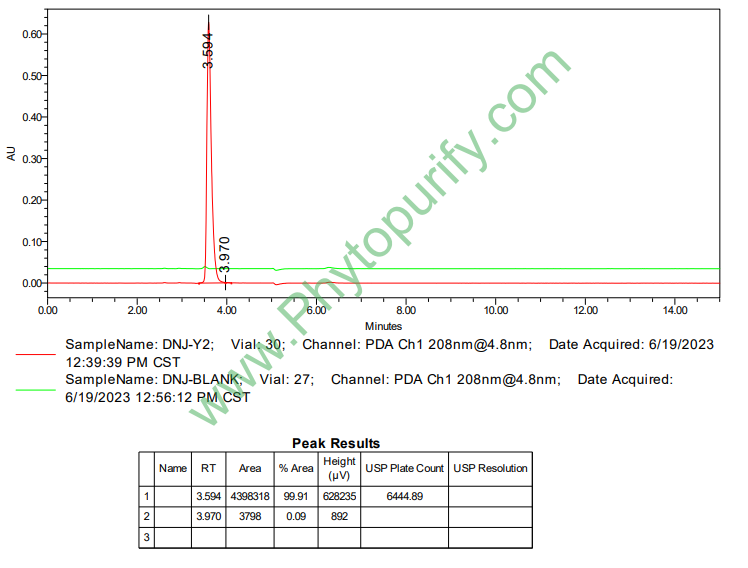
Purity: 95%~99%
Analysis Method: HPLC-DAD or/and HPLC-ELSD
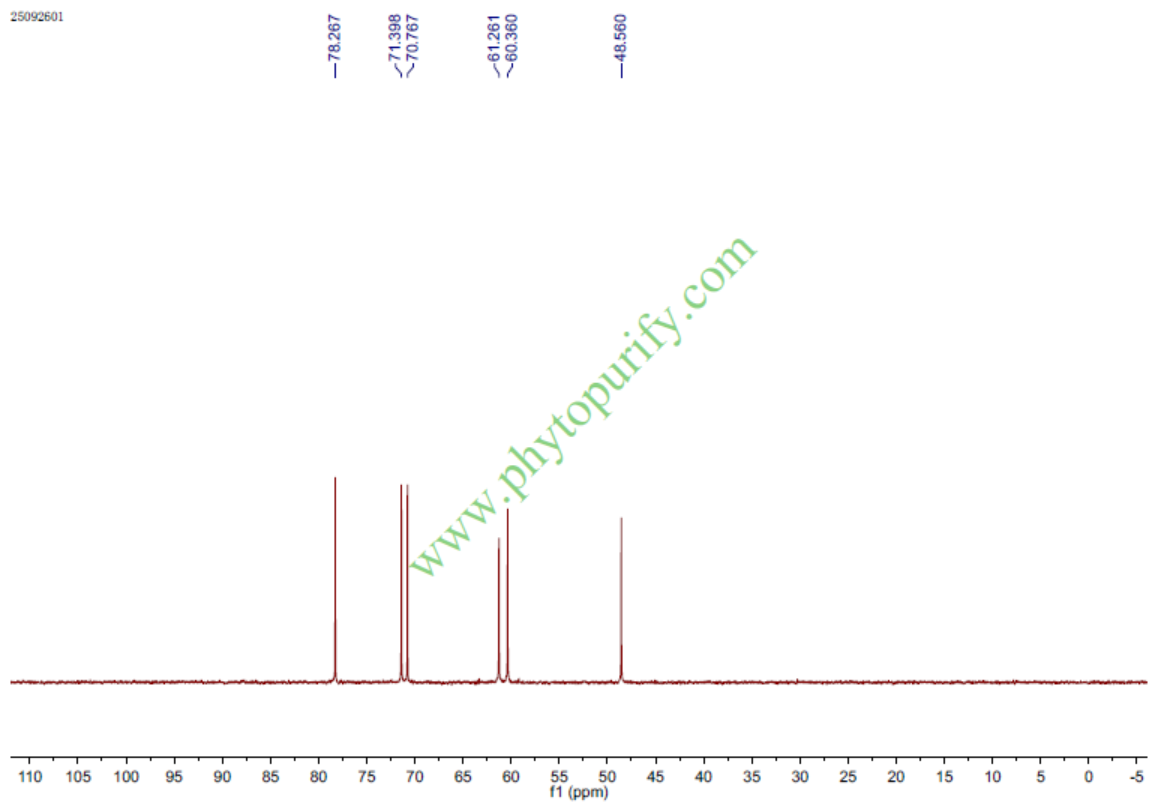
Identification Method: Mass, NMR
Packing: Brown vial or HDPE plastic bottle
Can be supplied from milligrams to grams, up to kilograms.
We have specially developed industrial production process of deoxynojirimycin, which can meet large quantity demand from grams level to kilograms level, and we have kilograms stock, please inquire for details.
HPLC of 1-Deoxynojirimycin
NMR of 1-Deoxynojirimycin
Storage conditions:Short-term storage at 2~8℃, long-term storage at -20 ~ -80℃
92.9500
-2.7180
-3.3728
722.2247
.3279
.6317
Low
8.9053
4.0136
Yes
No
No
No
No
No
0.6
Yes
Yes
Yes
Yes
Deoxynojirimycin (1-DNJ, CAS number: 19130-96-2), as a natural alkaloid with a unique polyhydroxypyridine structure, has attracted much attention due to its excellent glycosidase inhibitory activity since its discovery from the root bark of Morus alba L. and microbial Streptomyces. Its chemical essence is (2R, 3R, 4R, 5S) -2- (hydroxymethyl) piperidine-3,4,5-triol, which is a deoxyanalog of nojirimycin. This structural modification makes it a potent and highly selective glycosidase inhibitor. At first, 1-DNJ was considered as a potential anti diabetes drug because of its significant hypoglycemic effect. By inhibiting the α - glucosidase on the brush edge of the small intestine, it delayed the digestion and absorption of carbohydrates, thus effectively controlling the peak of postprandial blood glucose. With the deepening of research, its pharmacological activity spectrum continues to expand, showing multiple biological activities including antiviral (especially anti HIV), anti obesity, hepatoprotective, anti-inflammatory, and regulation of gut microbiota, making it leap from a single hypoglycemic candidate to a "star" natural product with multi-target therapeutic potential.
Of particular note is that 1-DNJ, as a glycosidase inhibitor, targets not only the digestive system. In recent years, its application prospects in the treatment of lysosomal storage diseases (LSDs) have been widely explored. LSDs are a type of genetic metabolic disease caused by abnormal accumulation of substrates due to defects in specific hydrolytic enzymes in lysosomes. As a competitive inhibitor of certain glycosidases, 1-DNJ can reduce substrate production by inhibiting the activity of the corresponding glycosyl ceramide synthase, thus playing a role in "substrate reduction therapy" and providing new ideas for the treatment of such refractory diseases. The purpose of this paper is to systematically review the chemical properties, natural sources, extensive pharmacological activities, in-depth mechanism of action, pharmaceutical evaluation and clinical application prospects of 1-DNJ in many diseases, especially diabetes and lysosomal storage disease, in order to provide a comprehensive scientific reference for the in-depth development and transformation of this natural product.
The molecular formula of deoxynojirimycin is C6H13NO4, with a molecular weight of 163.17 g/mol. Its core structure is a completely substituted pyridine ring, connected to a hydroxymethyl group at position 2, with hydroxyl groups at positions 3, 4, and 5, and possessing an absolute configuration of (2R, 3R, 4R, 5S). This structure is highly similar to the pyranose form of D-glucose, where the nitrogen atom in the pyridine ring simulates the role of the oxygen atom in the glycoside, and the spatial arrangement of hydroxyl groups is highly consistent with the orientation of glucose hydroxyl groups. The "sugar like" characteristic of this structure is the molecular basis for 1-DNJ to act as a competitive inhibitor of glycosidase. It can bind to the active center of glycosidase with extremely high affinity, but its stable carbon nitrogen bond prevents it from being hydrolyzed by the enzyme, forming a stable enzyme inhibitor complex that blocks the binding and catalysis of natural substrates.
In terms of physical and chemical properties, 1-DNJ is rich in polar hydroxyl groups, and the calculated lipid water partition coefficient (LogP) is -2.72, indicating its strong hydrophilicity. Its topological polar surface area (TPSA) is as high as 92.95 Å ², further confirming its characteristics of high molecular polarity and poor lipid solubility. Correspondingly, the solubility of 1-DNJ in water is extremely high (theoretical value exceeding 700 mg/mL), which is beneficial for its distribution and absorption in aqueous systems such as body fluids. However, high polarity and hydrophilicity also pose challenges, mainly manifested in their weak transmembrane passive diffusion ability. The predictive model shows that its blood-brain barrier (BBB) permeability is low, which limits its direct therapeutic application for central nervous system diseases, but may also reduce the risk of central nervous system side effects. In addition, preliminary pharmacological screening data showed that 1-DNJ was negative in the Ames test (mutagenicity index 0.6) and had no significant inhibitory effect on hERG potassium channels, indicating a low risk of genetic toxicity and induction of cardiac QT interval prolongation, providing preliminary evidence for its relatively good safety.
1-DNJ is relatively widely distributed in nature, but its content is generally low. Its most famous and main plant source is Morus spp., especially the root bark, leaves, branches, and mulberries of Morus alba L. Mulberry leaves, as a traditional Chinese medicine, have been proven to have hypoglycemic effects through long-term practice, and modern research has confirmed that 1-DNJ is one of the key active ingredients. There are significant differences in the content of 1-DNJ in mulberry materials of different varieties, parts, growing seasons, and origins, with higher levels in leaves than in branches. In addition, the presence of 1-DNJ has also been detected in leguminous plants such as Combretum spp. and some Liliaceae plants.
In addition to plant sources, various microorganisms are also "cell factories" for producing 1-DNJ. Especially certain actinomycetes, such as Streptomyces lavendulae and Bacillus subtilis, can synthesize 1-DNJ and its derivatives through secondary metabolism. Microbial fermentation method has the advantages of short production cycle, not limited by seasons and geography, and easy to improve yield through strain selection and process optimization. It is an important way for industrial scale preparation of 1-DNJ.
The extraction and purification of 1-DNJ from natural materials usually follow the following process: first, plant materials (such as mulberry leaves) are dried and crushed, and extracted using water, acidic aqueous solution, or alcohol aqueous solution. The excellent water solubility of 1-DNJ is utilized to dissolve it from plant tissues. Subsequently, preliminary enrichment and decolorization were carried out using macroporous adsorption resins (such as D101, AB-8), and the adsorption and desorption characteristics of the resin for 1-DNJ were utilized to achieve separation from a large amount of impurities such as polysaccharides and pigments. Further purification relies on chromatographic techniques, including ion exchange chromatography (using its alkalinity to carry a positive charge under acidic conditions), high-performance liquid chromatography (HPLC, often using hydrophilic interaction chromatography columns or amino columns), and preparative thin-layer chromatography. Ultimately, high-purity 1-DNJ monomer can be obtained. Modern biotechnology, such as utilizing genetically engineered microorganisms or plant cells for directed biosynthesis, is a research and development direction for increasing 1-DNJ production and reducing costs in the future.
1. Hypoglycemic and anti diabetes activity
This is the earliest recognized and most core pharmacological activity of 1-DNJ. As a potent alpha glucosidase inhibitor, 1-DNJ can reversibly and competitively inhibit key enzymes such as maltase and sucrase on the brush edge of small intestinal epithelial cells, delaying the breakdown of disaccharides and polysaccharides such as starch and sucrose into absorbable monosaccharides (glucose), thereby smoothing the postprandial blood glucose curve, reducing blood glucose peak, and alleviating the burden on pancreatic beta cells. A large number of animal experiments (such as streptozotocin induced diabetes rat models) and clinical studies have confirmed that oral administration of mulberry leaf extract or 1-DNJ can significantly improve glucose tolerance, reduce fasting and postprandial blood glucose, and improve insulin resistance. It has a mild effect and is less likely to cause severe hypoglycemia risk caused by traditional hypoglycemic drugs such as sulfonylureas.
2. Antiviral activity
The antiviral effect of 1-DNJ is mainly based on its inhibition of host cells or virus glycosidases. In terms of anti-HIV-1, it mainly works through two mechanisms: one is to inhibit the alpha glucosidase I and II of the viral envelope glycoprotein gp120, interfere with the precise processing of its N-linked sugar chain, resulting in abnormal folding of gp120, thereby weakening its binding ability to host cell CD4 receptors and co receptors (such as CXCR4), and blocking the early steps of viral invasion; Secondly, as an alpha glucosidase inhibitor, it may affect the assembly and release of viruses within cells. In addition, 1-DNJ has shown certain inhibitory effects on hepatitis B virus (HBV), hepatitis C virus (HCV), and some enveloped viruses (such as dengue virus).
3. Anti obesity and regulation of lipid metabolism activity
The anti obesity effect of 1-DNJ is synergistic with its hypoglycemic mechanism. By delaying carbohydrate absorption, energy intake and de novo fat synthesis are reduced. Meanwhile, studies have shown that it can regulate the expression of enzymes and genes related to lipid metabolism, such as reducing the activity of fatty acid synthase (FAS) and upregulating the expression of carnitine palmitoyltransferase-1 (CPT-1), thereby promoting fatty acid beta oxidation and inhibiting fat accumulation. In diet induced obesity animal models, 1-DNJ can effectively reduce body weight, lower body fat percentage, and improve liver steatosis.
4. Liver protective activity
1-DNJ exhibits protective effects against both chemical (such as carbon tetrachloride, alcohol) and metabolic (such as non-alcoholic fatty liver disease) liver damage. Its mechanism involves multiple pathways, including antioxidant activity (increasing levels of superoxide dismutase (SOD) and glutathione (GSH)), anti-inflammatory activity (inhibiting inflammatory pathways such as NF - κ B and TNF - α), inhibition of hepatocyte apoptosis, and improvement of hepatic lipid metabolism disorders.
5. Other activities
This includes improving learning and memory abilities (possibly related to regulating brain glucose metabolism and neurotransmitters), anti-tumor effects (inhibiting tumor cell proliferation and metastasis, possibly related to affecting cell surface glycosylation), and probiotic like effects exerted by regulating intestinal digestive enzyme activity and microbiota structure.
The core mechanism of action of 1-DNJ lies in its role as a "sugar mimic" that competitively inhibits various glycoside hydrolases. Its pharmacological network revolves around this core capability.
1. Digestive system alpha glucosidase
This is the main direct target for its hypoglycemic and anti obesity effects. The binding affinity between 1-DNJ and active centers of enzymes such as maltose glucoamylase (MGAM) is much stronger than that of natural substrates (such as maltose and sucrose), forming stable transition state analogs that block the final digestion step of carbohydrates in food.
2. Lysosomal glycosidases and targets associated with lysosomal storage diseases (LSDs)
This is a new field of treatment for 1-DNJ that has received much attention in recent years. It functions as a "pharmacological partner" or "substrate reduction therapy" drug:
- Pharmacological Companion Effect For certain LSDs (such as Gaucher's disease, Fabry's disease, Pompe's disease, etc.) that have misfolded enzyme proteins due to genetic mutations but still retain partial catalytic activity, 1-DNJ, as a competitive inhibitor of the corresponding enzymes (such as glucocerebrosidase, alpha galactosidase A, acidic alpha glucosidase), can bind to misfolded enzymes in the endoplasmic reticulum, help them fold correctly, promote their passage through quality control systems, and transport to lysosomes. In the acidic environment of lysosomes, the affinity of 1-DNJ with the enzyme decreases and dissociates, allowing the enzyme to restore activity and degrade accumulated substrates.
- Substrate reduction therapy 1-DNJ can inhibit glucose ceramide synthase, which is a key rate limiting enzyme for the synthesis of glucocerebrosides (a cumulative substrate of Gaucher's disease) and other glycosphingolipids. By reducing the biosynthesis of substrates and achieving a new balance between their generation rate and the degradation rate of residual enzyme activity, substrate accumulation and the resulting cytotoxicity can be alleviated.
The relevant targets include:
- MGAM Intestinal alpha glucosidase directly mediates the hypoglycemic effect.
- GBA1 Lysosomal glucosidase, the pathogenic gene of Gaucher's disease, 1-DNJ can serve as its pharmacological partner.
- GLA Alpha galactosidase A, the pathogenic gene of Fabry disease, is inhibited by 1-DNJ and can be used for companion therapy.
- GAA Acid alpha glucosidase, the pathogenic gene of Pompe disease.
- FUCA1 Alpha fucosidase, the pathogenic gene of fucosidine storage disease.
- GLB1β - galactosidase, the pathogenic gene of GM1 ganglioside storage disorder.
3. Endoplasmic reticulum alpha glucosidase I/II
This is a key target for its antiviral (especially HIV) effects. Inhibiting these enzymes can affect the N-glycosylation modification of viral envelope glycoproteins, leading to functional defects.
4. Gut microbiota and metabolites
1-DNJ indirectly affects the composition of gut microbiota and the production of metabolites such as short chain fatty acids by altering the availability of gut carbohydrates, which are closely related to systemic metabolic improvement and immune regulation.
Although 1-DNJ has a wide range of pharmacological activities, there are significant shortcomings in its pharmacological properties, especially in terms of pharmacokinetics, which restrict its direct development as a single chemical drug.
absorb 1-DNJ can be absorbed from the gastrointestinal tract after oral administration, but due to its high hydrophilicity and polarity, the absorption rate is slow and incomplete, resulting in low bioavailability. This is consistent with its site of action for inhibiting intestinal alpha glucosidase, but it also means that higher doses or special formulations are needed to achieve effective systemic blood drug concentrations.
distribution After absorption, it is mainly distributed in the blood and extracellular fluid. Due to poor blood-brain barrier permeability, its concentration in cerebrospinal fluid and central nervous system is extremely low. This is a challenge for its treatment of neurogenic LSDs.
Metabolism and excretion 1-DNJ is relatively stable in the body and has a low degree of metabolism. The prototype drug is mainly rapidly excreted through glomerular filtration by the kidneys, with a short half-life (about 2-3 hours). This requires frequent administration to maintain effective blood drug concentration.
Formulation improvement strategy To overcome its low bioavailability and short half-life, researchers have developed various strategies:
1. Prodrug design Esterify the hydroxyl group of 1-DNJ to prepare a more lipophilic prodrug (such as alkyl ester derivatives) to improve its membrane permeability and oral absorption. After entering the body, it is hydrolyzed into its active form.
2. Structural modification Synthesize N-alkylated derivatives (such as N-hydroxyethyl DNJ, Miglitol) or other site modified derivatives, optimizing their pharmacokinetic properties while retaining glycosidase inhibitory activity. Miglitol has been marketed as an anti diabetes drug with better absorption and more lasting effect.
3. New drug delivery system Using liposomes, nanoparticles, microspheres and other carriers to encapsulate 1-DNJ, improve its stability, and achieve sustained release or targeted delivery (such as targeting the liver or macrophages, which is particularly important for the treatment of LSDs).
4. Compound preparation Combination therapy with other hypoglycemic drugs or drugs with complementary mechanisms of action to reduce their respective doses, minimize side effects, and enhance efficacy.
1. diabetes and metabolic syndrome
As an α - glucosidase inhibitor, 1-DNJ and its derivatives (such as miglitol) have played a role in the treatment of type 2 diabetes, especially for patients with postprandial hyperglycemia. Future research can focus on developing longer acting and more selective derivatives, or combining them with fixed compounds such as metformin and DPP-4 inhibitors to optimize treatment plans. 1-DNJ also shows potential value in the management of metabolic syndrome components such as obesity and non-alcoholic fatty liver disease.
2. Lysosomal storage diseases (LSDs)
This is the most breakthrough potential application area for 1-DNJ. As "substrate reduction therapy" drugs (such as N-butyl-DNJ and MiGistat for Gaucher's disease) and "pharmacological partners" (for Fabry disease, Pompe disease, etc.), 1-DNJ compounds provide alternative options for patients who are ineffective or intolerant to enzyme replacement therapy. The current research focus is on optimizing the efficacy and safety of existing drugs (such as reducing gastrointestinal side effects), and exploring their applicability to more types of LSDs. Developing derivatives that can penetrate the blood-brain barrier to treat neurodegenerative LSDs is a major challenge and direction for the future.
3. Antiviral therapy
Although the efficacy of 1-DNJ alone against HIV is not sufficient as a first-line treatment, its unique mechanism of action (interfering with virus entry) makes it a useful adjuvant in combination antiretroviral therapy, especially for drug-resistant strains. More preclinical and clinical studies are needed to validate its efficacy in combating HBV/HCV and other enveloped viruses.
4. Other fields
Its applications in tumor glycobiology (affecting malignant behavior by interfering with abnormal glycosylation of tumor cells), neurodegenerative diseases (such as Alzheimer's disease, which may be associated with abnormal glucose metabolism in the brain), and as a functional food additive (for blood glucose management and weight control) are also being explored.
Challenges and Prospects Future research needs to focus on: ① synthesizing novel 1-DNJ derivatives with higher target selectivity and better pharmacokinetic properties through rational drug design; ② Utilizing advanced delivery systems such as nanotechnology to achieve targeted and controlled release of drugs; ③ Conduct in-depth multicenter and large-scale clinical studies to confirm its long-term efficacy and safety in rare diseases such as LSDs and chronic metabolic diseases; ④ Elucidate its systemic mechanism of action mediated by gut microbiota. With the deepening of interdisciplinary integration, deoxynojirimycin, an ancient natural molecule, will surely shine with new vitality in modern precision medicine and translational medicine.
Deoxynojirimycin, as a sophisticated "sugar mimic" gifted by nature, has achieved efficient and selective inhibition of various glycosidases with its unique polyhydroxypyridine structure. The continuous expansion of its pharmacological activity spectrum, from its initial hypoglycemic effect to its widespread application in antiviral, anti obesity, liver protection, and especially lysosomal storage disease treatment, fully reflects the enormous potential of basic research driven drug discovery. Although its inherent pharmaceutical defects, such as low oral bioavailability and short half-life, pose challenges for direct application, these obstacles are gradually being overcome through strategies such as prodrug design, structural modification, and novel delivery systems. The successful market launch of derivatives represented by Miglitol and Migistat validates the feasibility of drug development based on the 1-DNJ core structure. Looking forward to the future, with the deepening of understanding of glycobiology and molecular mechanism of diseases, as well as the progress of pharmaceutical chemistry and preparation technology, deoxynojirimycin and its derivatives are expected to play a more important role in the treatment of diabetes, rare genetic metabolic diseases and even more extensive diseases, and continue to contribute its unique value to human health.
