


Product name: Betulinic acid
Synonym name: Melaleucin; Mairin; Gratiolone; Platanol; Platanolic acid; Betulic acid
Catalogue No.: BP0271
Cas No.: 472-15-1
Formula: C30H48O3
Mol Weight: 456.711
Botanical Source: Betula platyphylla Suk.
Physical Description:
Type of Compound: Triterpenoids
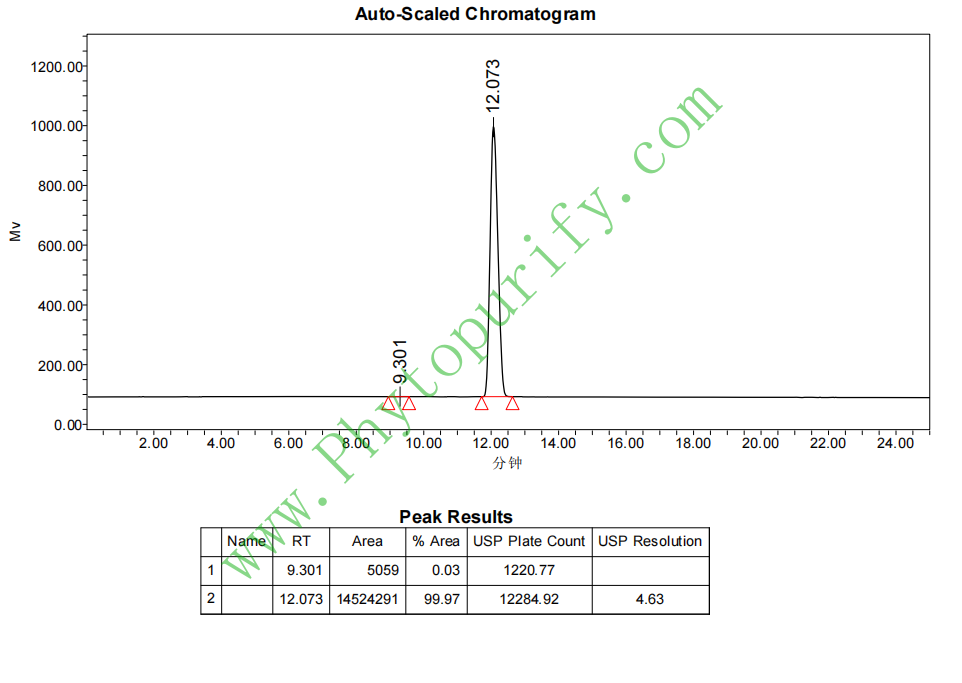
Purity: 95%~99%
Analysis Method: HPLC-DAD or/and HPLC-ELSD
Identification Method: Mass, NMR
Packing: Brown vial or HDPE plastic bottle
Storage: Store in a well closed container, protected from air and light. Put into refrigerate or freeze for long term storage.
Whenever possible, you should prepare and use solutions on the same day. However, if you need to make up stock solutions in advance, we recommend that you store the solution as aliquots in tightly sealed vials at -20℃. Generally, these will be useable for up to two weeks.
The product could be supplied from milligrams to grams
Inquire for bulk scale.
Description:
Betulinic acid is a natural pentacyclic triterpenoid, acts as a eukaryotic topoisomerase I inhibitor, with an IC50 of 5 μM, and possesses anti-HIV, anti-malarial, immunomodulatory, anti-inflammatory and anti-tumor properties.Betulinic acid is a selective inducer of apoptosis in tumor cells, it inhibits activation of NF-kappaB and NF-kappaB-regulated gene expression induced by carcinogens and inflammatory stimuli.
References:
Toxicol Appl Pharmacol. 2014 Mar 1;275(2):152-62.
Betulinic acid, a bioactive pentacyclic triterpenoid, inhibits skeletal-related events induced by breast cancer bone metastases and treatment.
The present study provides evidence on the protective and therapeutic potential of Betulinic acid on cancer-associated bone diseases. Betulinic acid is a naturally occurring triterpenoid with the beneficial activity to limit the progression and severity of cancer, diabetes, cardiovascular diseases, atherosclerosis, and obesity.
METHODS AND RESULTS:
We first investigated its effect on breast cancer cells, osteoblastic cells, and osteoclasts in the vicious cycle of osteolytic bone metastasis. Betulinic acid reduced cell viability and the production of parathyroid hormone-related protein (PTHrP), a major osteolytic factor, in MDA-MB-231 human metastatic breast cancer cells stimulated with or without tumor growth factor-β. Betulinic acidblocked an increase in the receptor activator of nuclear factor-kappa B ligand (RANKL)/osteoprotegerin ratio by downregulating RANKL protein expression in PTHrP-treated human osteoblastic cells. In addition, Betulinic acid inhibited RANKL-induced osteoclastogenesis in murine bone marrow macrophages and decreased the production of resorbed area in plates with a bone biomimetic synthetic surface by suppressing the secretion of matrix metalloproteinase (MMP)-2, MMP-9, and cathepsin K in RANKL-induced osteoclasts. Furthermore, oral administration of Betulinic acidinhibited bone loss in mice intra-tibially inoculated with breast cancer cells and in ovariectomized mice causing estrogen deprivation, as supported by the restored bone morphometric parameters and serum bone turnover markers.
CONCLUSIONS:
Taken together, these findings suggest that Betulinic acid may have the potential to prevent bone loss in patients with bone metastases and cancer treatment-induced estrogen deficiency.
Appl Microbiol Biotechnol. 2014 Apr;98(7):3081-9.
Increase of betulinic acid production in Saccharomyces cerevisiae by balancing fatty acids and betulinic acid forming pathways.
Betulinic acid is a plant-based triterpenoid that has been recognized for its antitumor and anti-HIV activities. The level of Betulinic acid in its natural hosts is extremely low.
METHODS AND RESULTS:
In the present study, we constructed Betulinic acid biosynthetic pathway in Saccharomyces cerevisiae by metabolic engineering. Given the Betulinic acid forming pathways sharing the common substrate acetyl-CoA with fatty acid synthesis, the metabolic fluxes between the two pathways were varied by changing gene expressions, and their effects on Betulinic acid production were investigated. We constructed nine S. cerevisiae strains representing nine combinations of the flux distributions between Betulinic acid and fatty acid pathways. Our results demonstrated that it was possible to improve the Betulinic acid production in S. cerevisiae while keeping a desirable growth phenotype by optimally balancing the carbon fluxes of the two pathways. Through modulating the expressions of the key genes on Betulinic acid and fatty acid pathways, the difference in Betulinic acid yield varied largely in the range of 0.01-1.92 mg L(-1) OD(-1).
CONCLUSIONS:
The metabolic engineering approach used in this study could be extended for synthesizing other triterpenoids in S. cerevisiae.
HPLC of Betulinic acid
Storage conditions:Short-term storage at 2~8℃, long-term storage at -20 ~ -80℃
57.5300
6.2272
4.6097
.0016
5.9695
8.2734
High
92.2241
4.6890
No
No
No
No
No
No
0.0
No
No
Yes
No
Natural products have always been an important source of innovative drug discovery, among which triterpenoids have attracted much attention due to their structural diversity and wide range of biological activities. Betulinic acid (BA), as a type of lupine pentacyclic triterpene, has rapidly become a star in the field of natural product pharmacology research since its biological activity was systematically revealed. Its CAS number is 472-15-1, originally isolated from birch bark and widely present in various plants. Early research mainly focused on its traditional uses such as anti-inflammatory and antimalarial effects. However, a breakthrough discovery in the 1990s - that betulinic acid has highly selective cytotoxic effects on melanoma cells and can induce cell apoptosis - completely changed its research trajectory and pushed it to the forefront of anti-tumor drug development. Subsequent studies further confirmed that betulinic acid not only has broad-spectrum anti-tumor potential, but also exhibits remarkable activities in anti human immunodeficiency virus (HIV), anti-inflammatory, neuroprotective, and other aspects. Of particular importance is its unique ability to cross the blood-brain barrier, which provides the possibility for treating central nervous system related diseases such as brain tumors and neurodegenerative diseases. This article aims to systematically review the chemical properties, plant sources, pharmacological activities, mechanisms of action, pharmacological evaluation, and clinical application prospects of betulinic acid, in order to provide comprehensive references for the in-depth research and development of this compound.
The chemical name of betulinic acid is 3 β - hydroxy-2-en-28-oic acid, with a molecular formula of C ③₀ H ₄₈ O3 and a molecular weight of 456.7110. Its core structure is a rigid pentacyclic triterpenoid skeleton, belonging to the lupine type. The skeleton is composed of five fused rings (A/B/C/D/E), with A/B/C/D ring being a six membered ring and E ring being a five membered ring. Its structural features include: a β - configured hydroxyl group at C-3, an isopropyl group at C-20 (29), which is a characteristic group of lupine triterpenoids, and a carboxyl group at C-28. This structure endows betulinic acid with specific spatial conformation and chemical reactivity.
From the perspective of physical and chemical properties, betulinic acid exhibits typical lipophilic characteristics. Its calculated lipid water partition coefficient (LogP) is 6.2272, indicating its high lipophilicity. Consistent with this, its water solubility is extremely low, about 0.0016 mg/mL, which to some extent limits its bioavailability. Its topological polar surface area (TPSA) is 57.53 Å ², which is relatively small, further confirming its low molecular polarity. These physicochemical parameters determine the distribution and behavior of betulinic acid in the body, such as its ease of crossing cell membranes and the blood-brain barrier (BBB permeability predicted as "high"), but oral absorption may be limited by solubility and first pass effects. In the preliminary safety screening, betulinic acid did not show inhibitory effects on hERG potassium channels (hERG inhibition: No), indicating a low potential risk of cardiac toxicity; Meanwhile, the Ames test result was 0.0, indicating preliminarily that it has no direct genetic toxicity. These basic properties are important basis for its subsequent chemical modification and formulation development.
Betulinic acid is widely distributed in nature and mainly exists in various plants such as Betulaceae, Rosaceae, Burseraceae, Rhamnaceae, and Boraginaceae. Its name comes from its most famous source - the bark of Betula platyphylla or Betula alba. In addition, it is also abundant in medicinal plants such as sour jujube kernels, pomegranate peels, rosemary, and elephantine bark. In plants, betulinic acid often coexists with its precursor compound Betulin, whose C-28 hydroxyl group can be oxidized to form betulinic acid.
The traditional method of extracting betulinic acid from plant materials mainly relies on organic solvent extraction. Common solvents include methanol, ethanol, chloroform, dichloromethane, or their mixed solvents. The typical extraction process is to crush dry plant materials (such as bark), perform Soxhlet extraction or room temperature extraction with suitable solvents, combine the extraction solutions, and concentrate under reduced pressure to obtain the crude extract. Subsequently, a series of separation and purification steps are required to obtain high-purity betulinic acid. The commonly used methods include:
1. Liquid-liquid extraction Using the acidity of betulinic acid, extract it from the organic phase with an alkaline aqueous solution (such as sodium bicarbonate solution), convert it into a water-soluble salt, acidify it, and then precipitate it, thus achieving preliminary purification.
2. column chromatography This is a crucial step in obtaining pure product. Silica gel column chromatography is commonly used for separation using gradient elution systems such as petroleum ether ethyl acetate or chloroform methanol. Reversed silica gel (such as C18) and gel (such as Sephadex LH-20) chromatography are also commonly used for further refining.
3. recrystallization Recrystallization using suitable solvents such as methanol, ethanol, or chloroform methanol mixed solvents is a common method for obtaining high-purity single crystals.
In recent years, some green and efficient extraction techniques have also been explored and applied to the extraction of betulinic acid, such as ultrasound assisted extraction, microwave-assisted extraction, and supercritical CO ₂ fluid extraction. These methods help improve extraction efficiency, shorten time, and reduce the amount of organic solvents used.
Betulinic acid has various pharmacological activities, and its research has expanded from its initial anti-inflammatory and antimalarial effects to major disease fields such as anti-tumor and antiviral effects.
1. Antitumor activity This is the most highly regarded activity of betulinic acid. It exhibits growth inhibition and induces apoptosis in various human tumor cell lines, especially in melanoma, neuroblastoma, glioblastoma, leukemia, prostate cancer, ovarian cancer, and lung cancer. Its anti-tumor effect has relative selectivity and low toxicity to certain normal cells. In addition to directly inducing apoptosis of tumor cells, studies have also shown that betulinic acid can inhibit tumor angiogenesis, suppress tumor cell invasion and metastasis, and may have chemical sensitization effects.
2. Anti HIV activity Betulinic acid is one of the early discovered natural products with anti-HIV-1 activity. Its mechanism of action is different from classical reverse transcriptase or protease inhibitors, mainly by interfering with an early step after the virus enters the host cell, such as the assembly or uncoating process of the virus capsid, thereby preventing virus replication. It is effective against various clinical isolates of HIV-1, including some strains that are resistant to conventional drugs.
3. Anti inflammatory and immune regulatory activity Betulinic acid exerts significant anti-inflammatory effects by inhibiting the nuclear factor kappa B (NF - κ B) signaling pathway, downregulating the expression of cyclooxygenase-2 (COX-2) and inducible nitric oxide synthase (iNOS), and inhibiting 5-lipoxygenase 5 (ALOX5). It has shown good results in various animal models of acute and chronic inflammation, such as arthritis and colitis. It can also regulate the function of immune cells.
4. Antibacterial and antiparasitic activity In addition to its anti malaria activity, betulinic acid also has inhibitory effects on certain bacteria (such as Staphylococcus aureus and Mycobacterium tuberculosis) and fungi. Its antibacterial mechanism may be related to the disruption of microbial cell membrane integrity.
5. Neuroprotective and Liver Protective Activities With its ability to penetrate the blood-brain barrier, betulinic acid has shown potential in neurological disease models, such as reducing cerebral ischemia-reperfusion injury and improving cognitive function in Alzheimer's disease model animals (possibly related to the inhibition of acetylcholinesterase ACHE). In addition, it also has a hepatoprotective effect and can counteract chemical induced liver damage.
The multiple pharmacological activities of betulinic acid stem from its interactions with multiple molecular targets within cells, forming a complex network.
1. Mitochondrial pathway induces cell apoptosis This is the core mechanism of its anti-tumor effect. Betulinic acid can directly act on mitochondria, inducing the opening of mitochondrial membrane permeability transition pores (mPTP) or direct interaction with mitochondrial membrane components, leading to the breakdown of mitochondrial membrane potential (Δ PSI m), release of cytochrome c, activation of caspase cascade reaction, and ultimately triggering an endogenous apoptotic pathway that is independent of death receptors (such as Fas). This pathway is insensitive to p53 status and provides a strategy for treating p53 mutant tumors.
2. Topoisomerase inhibition Betulinic acid is an effective inhibitor of Topoisomerase I (Topo I) in eukaryotic cells, with an IC50 of approximately 5 μ M. By inhibiting Topo I, it can interfere with DNA replication and transcription, leading to DNA damage and cell death. In addition, some studies suggest that it may interact with topoisomerase II alpha (TOP2A).
3. Inhibition of nuclear factor kappa B (NF - κ B) signaling pathway Betulinic acid can effectively inhibit the activation of NF - κ B, prevent its nuclear translocation, and downregulate the expression of a series of genes related to inflammation, cell proliferation, survival, and metastasis (such as COX-2, iNOS, Bcl-2, MMPs). This is an important basis for its anti-inflammatory and partially anti-tumor effects.
4. Generation of reactive oxygen species (ROS)In tumor cells treated with betulinic acid, a significant increase in ROS levels is often observed. Excessive ROS can disrupt cellular redox balance, damage mitochondria and DNA, and promote apoptosis.
5. Specific molecular targets:
* ALOX5 (5-lipoxygenase)Betulinic acid can act as an inhibitor to block the synthesis of leukotrienes, contributing to its anti-inflammatory activity.
* ACHE (Acetylcholinesterase)Inhibition of the enzyme activity may be related to its improvement of cholinergic neurotransmission and potential treatment for Alzheimer's disease.
* Virus/host interaction targets In terms of anti HIV effects, its role involves viral capsid proteins, which may interfere with the stability of capsid assembly. In addition, it may indirectly affect viral infection by affecting host cytokines such as chemokine receptors CCR5 and CXCR4 (HIV co receptors) or adenosine A3 receptor (ADORA3).
* Drug efflux pump ABCG2 (BCRP)Betulinic acid is a substrate of ABCG2, and overexpression of this protein may lead to drug resistance, but at the same time, it may also regulate the function of this pump.
* CD4 molecule Studies have shown that betulinic acid may interfere with virus adsorption by binding to the HIV receptor CD4.
6. Anti inflammatory targets In addition to the ALOX5 and NF - κ B pathways, betulinic acid can also inhibit the inflammatory response induced by bacterial lipopolysaccharide (LPS), indicating its intervention effect on the Toll like receptor 4 (TLR4) signaling pathway.
Although betulinic acid has excellent pharmacological activity, its inherent physicochemical properties (low water solubility, high LogP) pose challenges to its medicinal properties.
Pharmacokinetic characteristics Preclinical studies have shown that the oral bioavailability of betulinic acid in animals is generally low (usually<10%), mainly due to poor solubility and first pass metabolism. It is mainly metabolized through the liver, involving the CYP450 enzyme system (such as CYP3A4), and the metabolites are mainly monohydroxylated or glucuronic acid conjugates. Its distribution volume is large, consistent with lipophilicity, and can effectively distribute to various tissues including the brain. The main route of excretion is fecal excretion. When administered intravenously, its half-life is relatively short.
Challenges and optimization strategies for drug development:
1. Solubility and bioavailability Low water solubility is the main bottleneck limiting its oral absorption. The current research strategies include:
* Prodrug design Esterification, amidation, and other modifications are carried out on the C-3 hydroxyl group or C-28 carboxyl group to prepare water-soluble or targeted prodrugs.
* Formulation innovation Develop nano formulations, such as liposomes, nanoparticles, micelles, solid dispersions, cyclodextrin inclusion complexes, etc., to increase solubility and stability, achieve controlled release or targeted delivery.
* Eutectic/salt type screening Form eutectic or salt with suitable ligands to increase their dissolution rate.
Selective/toxic Although betulinic acid has low toxicity to some normal cells, improving its targeting to tumor tissues is still the key to reducing systemic toxicity. The above-mentioned nano targeted delivery systems (such as utilizing EPR effect or coupling targeted ligands) are the main directions.
Pharmacokinetic optimization Extend half-life, reduce rapid metabolism through structural modification, or alter its in vivo distribution behavior through dosage form design.
Preclinical safety The existing data (such as no hERG inhibition, Ames negative) provide preliminary support for its safety, but comprehensive preclinical toxicology studies (long-term toxicity, reproductive toxicity, etc.) are crucial for advancing clinical development.
The research on the transformation of betulinic acid from laboratory to clinical use is actively advancing, with broad prospects but also facing challenges.
Current clinical research progress Several early (Phase I/II) clinical trials on betulinic acid or its derivatives have been completed or are currently underway, mainly focusing on local drug therapy for skin cancer (such as melanoma and actinic keratosis). For example, a topical preparation of betulinic acid has shown good efficacy and safety in clinical trials for the treatment of non melanoma skin cancer. For the treatment of systemic tumors, due to the issue of oral bioavailability, research has focused more on their derivatives or novel delivery systems.
Future development direction:
1. Structure based optimization of medicinal chemistry Continue to design and synthesize betulinic acid derivatives with better physicochemical properties, higher activity, better selectivity, and pharmacokinetic characteristics. C-28 amide derivatives and C-3 glycosylated derivatives are research hotspots.
2. Development and Application of Advanced Delivery Systems Developing intelligent targeted delivery systems using nanotechnology and biomaterials, especially targeting brain tumors (utilizing their BBB penetrability) and solid tumors, is expected to break through the bottleneck of systemic drug delivery.
3. Combination therapy strategy Explore the combined application of betulinic acid with existing chemotherapy drugs, radiotherapy, or immune checkpoint inhibitors, utilizing its multi-target, sensitization, and reversal of chemotherapy resistance characteristics to achieve synergistic efficacy and reduce toxic side effects.
4. Expand the field of disease treatment: In addition to cancer, its application potential in neurodegenerative diseases (Alzheimer's disease, Parkinson's disease), autoimmune diseases, metabolic diseases (diabetes and its complications) and viral infections (HIV, hepatitis virus) is worth further exploring.
5. In depth mechanism exploration and biomarker discovery Further elucidate its precise molecular mechanisms in different disease backgrounds and search for biomarkers to predict its efficacy, in order to achieve personalized treatment.
Betulinic acid, as a plant derived pentacyclic triterpenoid compound, has become a model molecule in the development of natural product drugs due to its unique and diverse pharmacological activities, relatively clear mechanism of action, and valuable ability to penetrate the blood-brain barrier. From anti-tumor and anti HIV to anti-inflammatory and neuroprotective effects, its extensive biological effects reveal the enormous potential of natural molecules in intervening in complex disease networks. However, its inherent pharmacological defects, especially low water solubility and low oral bioavailability, are obstacles that must be overcome to fully translate its activity into clinical efficacy. Currently, these challenges are gradually being overcome through a multi pronged approach including drug chemical modification, innovative dosage form design, and combination therapy strategies. In the future, with a deeper understanding of the mechanism of action of betulinic acid and its derivatives, as well as the continuous advancement of translational medicine research, we have reason to expect that this ancient natural molecule or its optimized product can provide new choices for the treatment of major human diseases with a more efficient and safe new appearance, continuing the glorious chapter of natural products in modern medicine.
