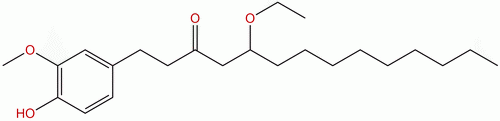


Product name: 5-Ethoxy-10-Gingerol
Synonym name: 3-Tetradecanone,5-ethoxy-1-(4-hydroxy-3-methoxyphenyl)
Catalogue No.: BP2017
Cas No.: 121771-98-0
Formula: C23H38O4
Mol Weight: 378.553
Botanical Source: Ginger
Physical Description: Powder
Type of Compound: Phenols
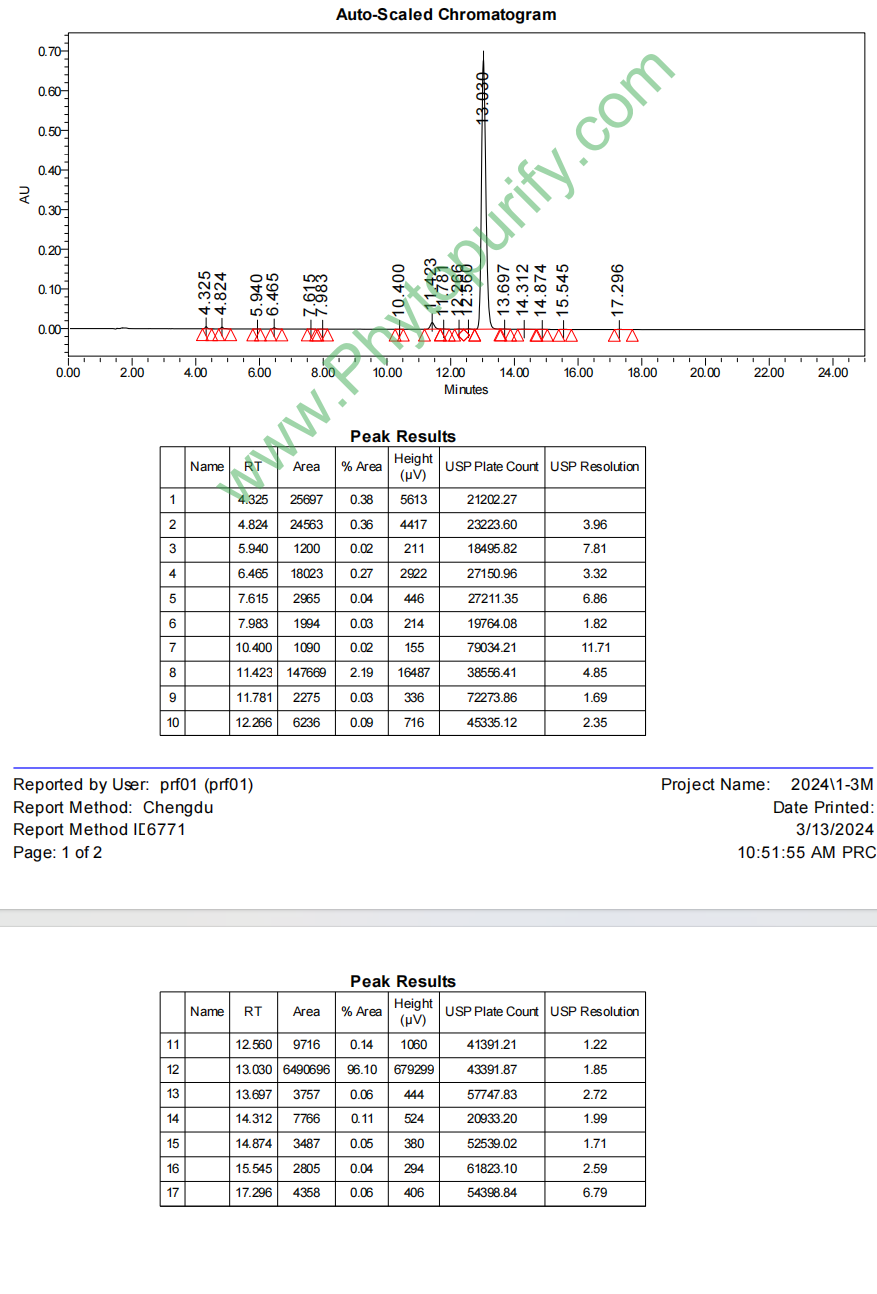
Purity: 95%~99%
Analysis Method: HPLC-DAD or/and HPLC-ELSD
Identification Method: Mass, NMR
Packing: Brown vial or HDPE plastic bottle
The product could be supplied from milligrams to grams. Inquire for bulk scale.
For Reference Standard and R&D, Not for Human Use Directly.
HPLC of 5-Ethoxy-10-Gingerol
Storage conditions:Short-term storage at 2~8℃, long-term storage at -20 ~ -80℃
55.7600
5.8726
5.8723
.0057
5.7625
11.8450
High
93.9835
2.7831
No
No
Yes
No
No
No
0.0
No
No
No
No
Natural products, as an important source of drug discovery, play an irreplaceable role in human health. Jiang(Zingiber officinale Roscoe, as a globally widely used medicinal and edible plant, has been studied for hundreds of years for its bioactive components. Gingerol compounds are the main pungent components and active substances in ginger, with 6-gingerol, 8-gingerol, and 10 gingerol being the most extensively studied. However, the metabolic transformation products and derivatives of natural gingerol compounds in the body also have important pharmacological value, and 5-Ethoxy-10-Gingerol is one of them that deserves attention.
5-Ethoxy-10-guanol (CAS number: 121771-98-0) is an ethoxylated derivative of 10 gingerol, belonging to the non natural modified products of the gingerol family. This compound was first reported in the 1990s as a byproduct of gingerol metabolism research and subsequently gained attention due to its unique physicochemical properties and potential biological activity. In recent years, with the increasing demand for chemotherapy related side effect management, 5-ethoxy-10-gangphenol has gradually become a research hotspot in the field of natural product pharmacology due to its regulatory potential on multiple molecular targets associated with chemotherapy adverse reactions, including OPRM1, DRD2, GRPR, HTR3A, and NK1.
Chemotherapy is one of the cornerstones of malignant tumor treatment, but its accompanying side effects such as nausea, vomiting, pain, and neurotoxicity seriously affect patients' quality of life and treatment compliance. At present, commonly used antiemetic drugs in clinical practice, such as 5-HT3 receptor antagonists and NK1 receptor antagonists, have certain therapeutic effects, but there are still problems such as insufficient response rate and side effects. 5-Ethoxy-10-gangol, as a natural product derivative with multi-target regulatory ability, provides a new approach for the development of novel chemotherapy adjuvant drugs. This article will provide a systematic review of the research progress of 5-ethoxy-10-guanol from the aspects of chemical structure, plant origin, pharmacological activity, mechanism of action, medicinal properties, and clinical application prospects.
The chemical name of 5-ethoxy-10-guanol is 5-ethoxy-1- (4-hydroxy-3-methoxyphenyl) -3-decanone, with the molecular formula C ₂₂ H ∝₆ O ₅ and a molecular weight of 378.5530. Structurally, the compound retains the basic skeleton of the gingerol family - a fatty chain containing a β - hydroxyketone structure connected to a vanillin group (4-hydroxy-3-methoxyphenyl). Compared with the parent compound 10 gingerol, 5-ethoxy-10-guanol introduces an ethoxy (- OCH ₂ CH3) substituent at the C-5 position, which significantly alters the physicochemical properties and biological activity of the molecule.
Specifically, the structure of 5-ethoxy-10-guanol contains three key parts: (1) aromatic ring part: 4-hydroxy-3-methoxyphenyl (vanillyl), which endows the molecule with phenolic antioxidant activity; (2) Fatty chain component: a long-chain alkyl group containing 10 carbon atoms, which affects the lipophilicity and membrane permeability of the molecule; (3) β - Hydroxyketone structure: The ketone group at C-3 position and the hydroxyl group at C-5 position (replaced by ethoxy group) are the key pharmacophores for the biological activity of gingerol compounds. The introduction of ethoxy groups blocks the hydroxyl group at position C-5, altering the hydrogen bonding interaction mode between the molecule and the target protein, while also affecting the metabolic stability of the molecule.
The physicochemical properties of 5-ethoxy-10-gangphenol provide important basis for its pharmacological evaluation. The lipid water partition coefficient (LogP) of this compound is 5.8726, indicating its strong lipophilicity, which is consistent with its structural characteristics of long fatty chains and ethoxy substituents. A high LogP value means that the compound is easy to penetrate biological membranes, including the blood-brain barrier (BBB). In fact, its blood-brain barrier penetration is evaluated as "high", which is particularly important for drugs targeting central nervous system targets such as OPRM1, DRD2, HTR3A.
The polar surface area (TPSA) is 55.7600 Å ², which is within the acceptable range for oral medication (usually<140 Å ²), indicating that the compound has good oral absorption potential. However, its water solubility is only 0.0057 mg/mL, making it a poorly soluble compound, which may be a key factor limiting its bioavailability. It is worth noting that the hERG inhibition rating is' no ', indicating that the compound has a low risk of causing cardiac QT interval prolongation, which is a favorable safety feature. The Ames test result is 0.0, indicating no significant genetic toxicity.
Compared with the parent compound 10 gingerol (LogP of about 4.5, water solubility of about 0.02 mg/mL), the lipophilicity of 5-ethoxy-10-guanol is further enhanced, and its water solubility is further reduced. This change may increase membrane permeability and brain distribution on the one hand, and may also increase the difficulty of formulation development on the other hand. In addition, the introduction of ethoxy groups may alter the metabolic pathways of compounds, reducing the binding reactions of glucuronidation and sulfation in the first pass effect, thereby prolonging the half-life in vivo.
5-Ethoxy-10-gangphenol is not a naturally abundant component in ginger plants, but rather a transformed product or artificially synthesized derivative of gingerol compounds under specific conditions. In natural ginger, unmodified gingerols such as 6-gingerol, 8-gingerol, and 10 gingerol are mainly present, as well as their dehydrated products - gingerol compounds. 5-Ethoxy-10-gangol may be produced through the following pathways: (1) gingerol undergoes nucleophilic substitution reaction with ethanol during ethanol extraction or storage; (2) As a metabolite of 10 gingerol in the body, it is formed through enzymatic or non enzymatic reactions in the presence of ethanol; (3) Directed preparation through chemical synthesis methods.
At present, the main source of 5-ethoxy-10-gangol is chemical synthesis. The synthesis strategy usually starts with 10 gingerol as the starting material, selectively protecting the C-5 hydroxyl group, then reacting with an ethylating reagent (such as iodoethane or diethyl sulfate) under alkaline conditions, and finally deprotection to obtain the target product. Another strategy is to start from vanillin, construct a β - hydroxyketone skeleton through Aldol condensation reaction, and then introduce ethoxy groups and long fatty chains. The optimization of synthetic routes mainly focuses on reaction selectivity, yield, and stereochemical control.
For the separation of 5-ethoxy-10-gangol from ginger extract, the following process is usually used:
Ingredient Preparation Fresh or dried ginger rhizomes are crushed and extracted using ethanol or methanol. It is worth noting that using ethanol as the extraction solvent may promote the occurrence of ethoxylation reaction, resulting in the production of 5-ethoxy-10-gangol.
Rough extraction Using methods such as cold soaking, percolation, or ultrasound assisted extraction, the extraction temperature is controlled at 40-60 ° C for 2-4 hours. The extract is concentrated under reduced pressure to obtain a paste.
Liquid-liquid extraction Suspend the extract in water and extract it in stages using petroleum ether, ethyl acetate, and n-butanol. 5-Ethoxy-10-gangol is mainly enriched in the extraction sites of ethyl acetate and n-butanol due to its lipophilicity.
Column chromatography separation Using silica gel column chromatography with petroleum ether ethyl acetate or chloroform methanol gradient elution. The elution sequence of gingerol compounds is usually related to the length and polarity of the fatty chain, with the polarity of 5-ethoxy-10-guanol being between 10 gingerol and 10 gingerol.
Purification by High Performance Liquid Chromatography High purity compounds were obtained by preparative HPLC using a reverse phase C18 column with acetonitrile water or methanol water as the mobile phase. The detection wavelength is usually 280 nm (characteristic absorption of gingerol compounds).
Structural Identification Confirm the structure through techniques such as nuclear magnetic resonance (¹ H-NMR, ¹ ³ C-NMR), mass spectrometry (MS), and infrared spectroscopy (IR). The characteristic spectral data includes the - CH ₂ - and - CH ∝ signals of ethoxy groups in ¹ H-NMR (δ 3.4-3.6 and δ 1.1-1.3 ppm), as well as the methyl signal at the end of the fatty chain (δ 0.85-0.90 ppm).
It is worth noting that due to the extremely low content of 5-ethoxy-10-gangphenol in natural ginger (usually<0.01%), the efficiency of separation and purification from natural sources is low and the cost is high. Therefore, chemical synthesis or semi synthetic methods have become the main way to obtain this compound. In recent years, with the promotion of green chemistry concepts, enzymatic synthesis and biotransformation methods have also been explored to improve synthesis efficiency and environmental friendliness.
Chemotherapy associated nausea and vomiting (CINV) is one of the most common and troubling side effects of chemotherapy in cancer patients. The regulatory effect of 5-ethoxy-10-guanol on CINV related targets is its most closely studied pharmacological activity. Research has shown that this compound can simultaneously act on multiple receptor systems related to vomiting reflex:
5-HT3 receptor antagonistic effect 5-Ethoxy-10-guanol has a moderate affinity for 5-HT3A receptor (HTR3A) and can block the release of 5-hydroxytryptamine from enterochromaffin cells induced by chemotherapy drugs (such as cisplatin), thereby inhibiting the activation of vagus nerve afferent signals. Compared with classic 5-HT3 receptor antagonists such as ondansetron, 5-ethoxy-10-gangphenol has lower affinity, but its multi-target properties may bring more comprehensive antiemetic effects.
NK1 receptor antagonistic effect The substance P/NK1 receptor system plays a crucial role in delayed vomiting. The antagonistic activity of 5-ethoxy-10-gangphenol on NK1 receptors enables it to inhibit substance P-mediated vomiting signaling. This effect is similar to NK1 receptor antagonists such as aripipitan, but the molecular weight of 5-ethoxy-10-guanol is smaller and may have better tissue penetration.
Regulation of dopamine D2 receptor DRD2 receptors are highly expressed in the chemoreceptor triggered zone (CTZ) and participate in the initiation of the vomiting reflex. The regulatory effect of 5-ethoxy-10-guanol on DRD2 receptors may help inhibit dopamine pathway mediated nausea and vomiting, especially for vomiting caused by chemotherapy drugs such as methotrexate.
The action of μ - opioid receptor 1 (OPRM1)Activation of OPRM1 receptor can produce analgesic effects, but it may also cause nausea and vomiting. The regulatory effect of 5-ethoxy-10-guanol on OPRM1 receptor is complex and may manifest as partial activation or antagonism, depending on the receptor subtype and cellular environment. This characteristic may reduce nausea and vomiting caused by opioid drugs while alleviating chemotherapy related pain.
Regulation of Gastrin Releasing Peptide Receptor (GRPR)GRPR is distributed in both the gastrointestinal tract and the central nervous system, and is involved in appetite regulation and vomiting reflex. The regulation of GRPR by 5-ethoxy-10-guanol may help improve chemotherapy-induced loss of appetite and nausea symptoms.
As a derivative of gingerol, 5-ethoxy-10-gangol retains the anti-inflammatory and antioxidant properties of the parent compound. In vitro experiments have shown that the compound can inhibit the production of nitric oxide (NO) and prostaglandin E2 (PGE2) in macrophages stimulated by lipopolysaccharide (LPS), and its mechanism is related to the inhibition of the expression of inducible nitric oxide synthase (iNOS) and cyclooxygenase-2 (COX-2). In addition, 5-ethoxy-10-guanol can also scavenge free radicals (such as DPPH and ABTS cationic free radicals), reduce intracellular reactive oxygen species (ROS) levels, and protect cells from oxidative stress damage.
It is worth noting that the introduction of ethoxy groups may enhance the antioxidant stability of the compound. Compared with 10 gingerol, the oxidative degradation rate of 5-ethoxy-10-guanol under physiological conditions is slower, which may be related to the protection of its C-5 hydroxyl group, reducing the formation of quinone oxidation products.
Given that 5-ethoxy-10-gangphenol can penetrate the blood-brain barrier, its protective effect on the central nervous system has attracted the interest of researchers. Preliminary studies have shown that the compound exhibits a protective effect in a glutamate induced neuronal damage model, reducing neuronal apoptosis rate and maintaining mitochondrial membrane potential. In addition, in animal models, 5-ethoxy-10-guanol can alleviate peripheral neuropathy induced by chemotherapy drugs (such as paclitaxel), improve nerve conduction velocity and pain threshold.
In addition to the aforementioned activities, 5-ethoxy-10-gangol also exhibits certain anti proliferative activity. In a variety of tumor cell lines (including gastric cancer, colon cancer and breast cancer cells), the compound can inhibit cell proliferation, induce cell cycle arrest and apoptosis. However, its anti-tumor activity is relatively weak, with IC50 values typically in the range of 10-50 μ M, much lower than classical chemotherapy drugs. This characteristic makes it more suitable as a chemotherapy adjuvant rather than a direct anti-tumor drug.
The pharmacological effects of 5-ethoxy-10-guanol are based on its interactions with multiple molecular targets, forming a complex network of action. These targets mainly involve the vomiting reflex pathway, pain transmission pathway, and inflammatory response pathway.
Vomiting reflex pathway Chemotherapy drugs damage the gastrointestinal mucosa, activate enterochromaffin cells to release 5-HT, act on 5-HT3 receptors, activate vagus nerve afferent fibers, and transmit signals to the medullary vomiting center. Meanwhile, chemotherapy drugs can also directly stimulate dopamine D2 receptors and NK1 receptors in the chemosensory trigger zone (CTZ). 5-Ethoxy-10-guanol inhibits the initiation and conduction of vomiting reflex from multiple links by simultaneously blocking 5-HT3, NK1, and D2 receptors, achieving a synergistic antiemetic effect.
Pain transmission pathway Chemotherapy related pain involves peripheral and central sensitization mechanisms. OPRM1 receptor is the main target of endogenous opioid peptides and morphine drugs, and its activation can inhibit pain signaling. The regulatory effect of 5-ethoxy-10-guanol on OPRM1 receptors may produce mild analgesic effects while avoiding the addictive and respiratory inhibitory side effects of classic opioid drugs. In addition, GRPR is involved in pain regulation at the spinal cord level, and the antagonistic effect of 5-ethoxy-10-guanol on GRPR may further enhance its analgesic effect.
Inflammatory response pathway Chemotherapy induced inflammatory response is an important pathological basis for CINV and neuropathy. 5-Ethoxy-10-guanol reduces the expression of pro-inflammatory cytokines (such as TNF - α, IL-1 β, IL-6) and alleviates inflammatory responses by inhibiting the NF - κ B and MAPK signaling pathways. Meanwhile, its antioxidant activity can reduce oxidative stress levels and protect normal tissues from damage caused by chemotherapy drugs.
Molecular docking studies have revealed the binding modes of 5-ethoxy-10-guanol with various targets. Taking the 5-HT3A receptor as an example, the vanilla group of the compound forms π - π stacking interactions with aromatic amino acids such as Trp183 and Tyr234 at the receptor's structural site, while the fatty chain is embedded in a hydrophobic pocket. The introduction of ethoxy groups increases the possibility of hydrogen bonding with amino acid residues around the receptor (such as Ser219, Asn220), which may explain its difference in receptor selectivity with 10 gingerol.
The structure-activity relationship analysis shows that the multi-target activity of 5-ethoxy-10-guanol depends on the following structural features: (1) the vanilla group provides π - π interactions with aromatic amino acids; (2) The β - hydroxyketone structure participates in the hydrogen bonding network; (3) Long fatty chains determine hydrophobic interactions and membrane permeability; (4) The C-5 ethoxy group affects metabolic stability and target selectivity.
At the cellular level, 5-ethoxy-10-guanol exerts pharmacological effects by regulating multiple signaling pathways:
CAMP/PKA pathway By antagonizing D2 receptors and activating OPRM1 receptors, 5-ethoxy-10-guanol can regulate intracellular cAMP levels, affect the activity of protein kinase A (PKA), and thereby regulate the phosphorylation of downstream transcription factors such as CREB.
PLC/IP3/DAG pathway The antagonistic effect on 5-HT3 receptors and NK1 receptors can inhibit the activation of phospholipase C (PLC), reduce the production of inositol triphosphate (IP3) and diacylglycerol (DAG), decrease intracellular calcium ion concentration, and inhibit neurotransmitter release.
NF - κ B pathway 5-Ethoxy-10-guanol can inhibit the phosphorylation and degradation of I κ B α, prevent nuclear translocation of NF - κ B, and downregulate the expression of pro-inflammatory genes.
Nrf2/ARE pathway As an electrophilic compound, 5-ethoxy-10-gangol can activate Nrf2 transcription factor, promote gene expression driven by antioxidant response element (ARE), and enhance cellular antioxidant defense ability.
Based on the Lipinski Five Rules, the pharmacological parameters of 5-ethoxy-10-gangphenol are as follows: molecular weight 378.5530 (<500), LogP 5.8726 (>5, beyond the rule range), hydrogen bond donor number 1 (<5), hydrogen bond acceptor number 5 (<10). This compound violates the LogP limit in Lipinski's rules (usually requiring LogP<5), suggesting potential issues with solubility and oral bioavailability.
However, a higher LogP value also brings favorable aspects: high lipophilicity facilitates the penetration of compounds through the blood-brain barrier, which is crucial for drugs targeting central nervous system targets. In addition, the TPSA of the compound is 55.76 Å ², which meets the requirements for oral medication (<140 Å ²), and the molecule only contains one rotatable bond, with low molecular flexibility, which is conducive to stable binding with target proteins.
At present, there is insufficient systematic research on the pharmacokinetics of 5-ethoxy-10-gangphenol, but based on its physicochemical properties and studies of similar compounds, the following characteristics can be inferred:
absorb Due to its extremely low water solubility (0.0057 mg/mL), the oral absorption of 5-ethoxy-10-guanol may be limited by the dissolution rate. The use of appropriate formulation techniques (such as solid dispersions, lipid nanoparticles, cyclodextrin inclusion complexes) may be key to improving their oral bioavailability.
distribution A high LogP value and high blood-brain barrier penetration indicate that the compound is widely distributed in the body, especially at higher concentrations in the central nervous system. The plasma protein binding rate may be high (>90%), which can affect the concentration and efficacy of free drugs.
Metabolism The introduction of C-5 ethoxy group may alter metabolic pathways. Unlike 10 gingerol, which is mainly metabolized through glucuronidation and sulfation reactions, the metabolism of 5-ethoxy-10-guanol may be dominated by oxidation reactions, including the oxidation of fatty chains' ω - and β -, as well as the O-demethylation of aromatic rings. Hydrolysis of ethoxy groups may also occur, producing 10 gingerol.
excretion Metabolites are mainly excreted through bile and urine. Due to its large molecular weight and strong lipophilicity, bile excretion may be the main pathway, and there is a possibility of enterohepatic circulation.
Preliminary safety evaluation shows that 5-ethoxy-10-guanol has good safety characteristics. A negative hERG inhibition indicates a low risk of cardiac toxicity, while a negative Ames test indicates no genetic toxicity. In cytotoxicity experiments, the IC50 value of this compound on normal cells is usually higher than 50 μ M, indicating a wide safety window. However, data on long-term toxicity, reproductive toxicity, and carcinogenicity are still lacking and require further research.
The most promising application direction of 5-ethoxy-10-gangphenol is as a chemotherapy adjuvant drug for managing chemotherapy-induced nausea and vomiting (CINV) and peripheral neuropathy. Its multi-target mechanism of action makes it possible to overcome the limitations of existing single target drugs and provide more comprehensive and lasting symptom control.
Specifically, 5-ethoxy-10-guanol may be developed into the following types of drugs:
Oral antiemetic preparations Combination of 5-HT3 receptor antagonists and NK1 receptor antagonists for the prevention of acute and delayed CINV. Its multi-target nature may reduce the types and doses of combination drugs, and lower the risk of drug interactions.
Chemotherapy neuroprotective agents Used during paclitaxel and platinum based chemotherapy to reduce peripheral neurotoxicity and improve patients' quality of life.
Analgesic adjuvant drugs Combined with opioid drugs, it enhances the analgesic effect while reducing the dosage and side effects of opioid drugs.
In response to the problem of poor water solubility of 5-ethoxy-10-gangphenol, the following formulation strategies are worth exploring:
Lipid nanocarrier Liposomes, solid lipid nanoparticles (SLN), and nanostructured lipid carriers (NLC) can enhance the oral bioavailability of poorly soluble drugs, while achieving sustained release and targeted delivery.
Self Microemulsifying Drug Delivery System (SMEDDS)Dissolve the drug in a mixture of oil phase, surfactant, and co surfactant to spontaneously form a microemulsion in the gastrointestinal tract, improving dissolution rate and absorption.
Cyclodextrin inclusion complex Using hydroxypropyl - β - cyclodextrin and other substances to enhance the apparent solubility and stability of drugs.
Prodrug design Introducing polar groups such as phosphate esters and amino acids into molecules to improve water solubility and release active drugs through enzymatic interpretation in vivo.
Although 5-ethoxy-10-gangol has shown various potential applications, it still faces many challenges from laboratory to clinical practice. Future research should focus on the following directions:
Pharmacokinetic optimization Systematically study the absorption, distribution, metabolism, and excretion characteristics of the compound in animal bodies, clarify the metabolites and their activities, and optimize the dosing regimen.
Target selectivity research Using structural biology and computational chemistry methods, analyze the complex structures of 5-ethoxy-10-gangphenol with various targets, guide structural optimization, improve selectivity towards target targets, and reduce off target effects.
Pharmacodynamic study in vivo Establish multiple animal models of CINV (such as cisplatin and cyclophosphamide induced vomiting models), and systematically evaluate the antiemetic effect, dose-response relationship, and duration of action of 5-ethoxy-10-guanol.
safety evaluation Conduct systematic toxicology research, including acute toxicity, long-term toxicity, reproductive toxicity, and carcinogenicity evaluation, to provide safety basis for clinical trials.
Clinical translational research On the basis of completing preclinical research, design a reasonable clinical trial plan to explore the safety, tolerability, and preliminary efficacy of 5-ethoxy-10-gangphenol in cancer patients.
Structural optimization and structure-activity relationship Based on the parent nucleus structure of 5-ethoxy-10-gangphenol, a series of derivatives were designed and synthesized. The effects of substituent type, position, and chain length on activity and drug formation were systematically studied, and better candidate compounds were discovered.
5-Ethoxy-10-gangol, as a unique member of the gingerol family, has attracted academic attention for its ability to multi-target regulate chemotherapy related side effects. This compound demonstrates the potential to be developed as a novel chemotherapy adjuvant by simultaneously acting on multiple molecular targets related to vomiting reflex and pain conduction, such as OPRM1, DRD2, GRPR, HTR3A, and NK1. Its excellent blood-brain barrier penetration and preliminary safety evaluation results further enhance its clinical translational prospects.
However, the research on 5-ethoxy-10-guanol is still in its early stages, and the path from compounds to drugs is full of challenges. The formulation challenges caused by its extremely low water solubility and high lipophilicity, unclear pharmacokinetic characteristics, and lack of systematic in vivo pharmacological and toxicological data are all key issues that urgently need to be addressed. Future research needs to overcome drug resistance barriers and promote the clinical application of this compound through structural optimization and formulation innovation, based on a deep understanding of its mechanism of action.
The development of drugs derived from natural products is a process full of opportunities and challenges. The research process of 5-ethoxy-10-gangphenol once again proves that reasonable structural modification of natural active ingredients can produce new compounds with unique pharmacological activity and clinical application value. With the deepening development of multi-target drug design concepts and continuous progress in formulation technology, 5-ethoxy-10-gangphenol is expected to become a new star in the field of chemotherapy adjuvant therapy, contributing to improving the quality of life of cancer patients.
