


Synonym name: alpha-mangostin; Mangostin
Catalogue No.: BP0155
Cas No.: 6147-11-1
Formula: C24H26O6
Mol Weight: 410.466
Botanical Source: Pigment from Garcinia mangostana
Purity: 95%~99%
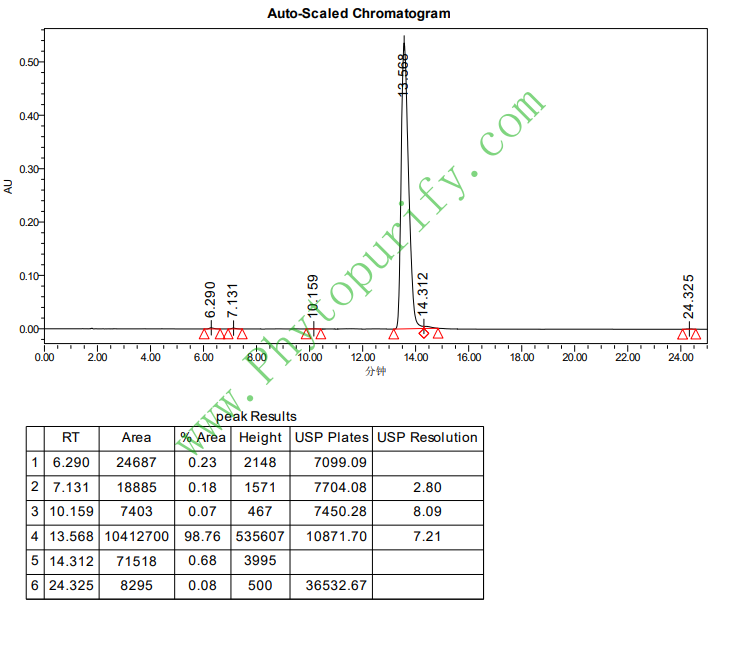
Analysis Method: HPLC-DAD or/and HPLC-ELSD
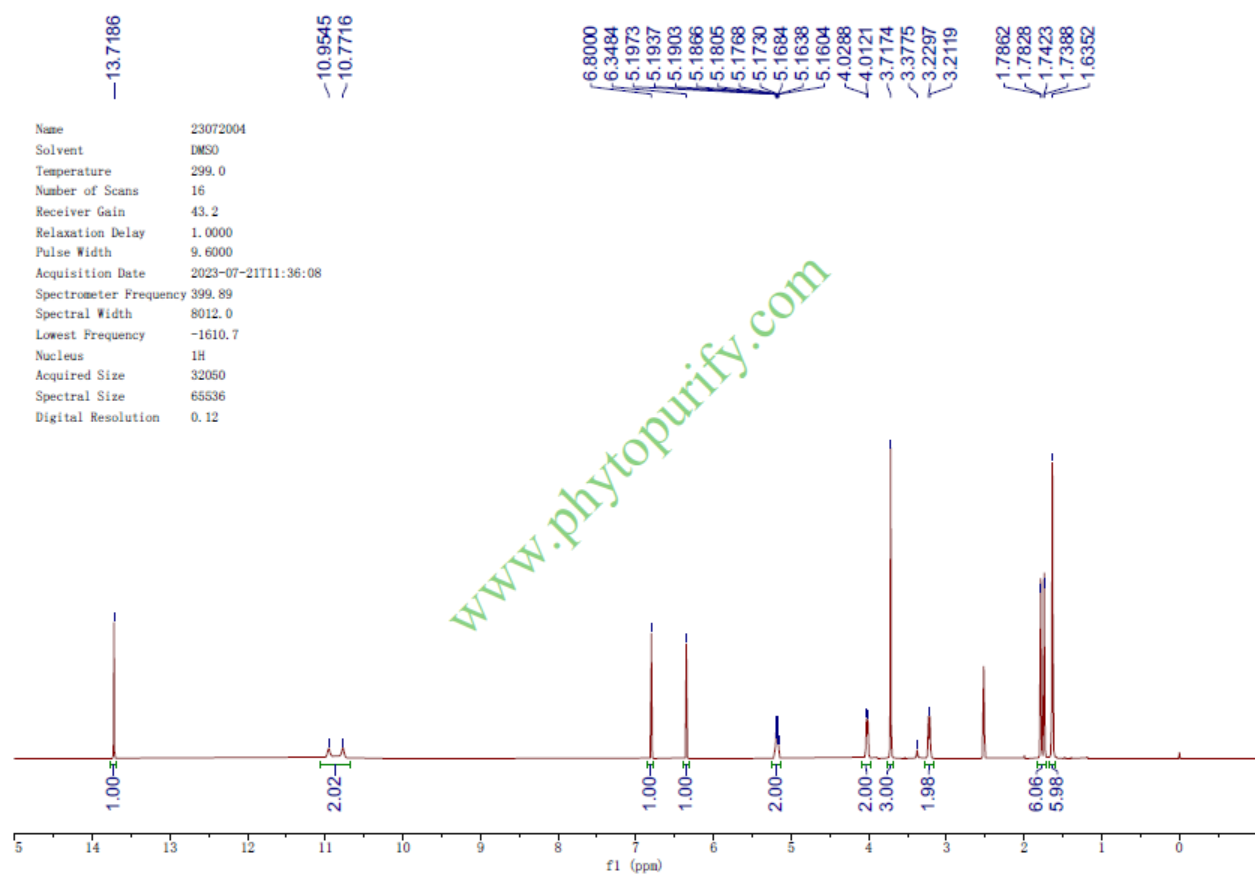
Identification Method: Mass, NMR
Packing: Brown vial or HDPE plastic bottle
Can be supplied from milligrams to grams, up to kilograms.
Inquire for bulk scale.
Storage conditions:Short-term storage at 2~8℃, long-term storage at -20 ~ -80℃
100.1300
4.6118
4.4859
.0192
4.4758
6.4500
Low
91.9442
3.1732
No
No
Yes
No
Yes
Yes
0.6
No
No
Yes
No
Alpha Mangostin (CAS number: 6147-11-1) is a natural plant derived xanthone compound that has attracted much attention due to its rich biological activity. As one of the main active ingredients extracted from the stem of Cratoxylum cochinchinense, α - hesperetin exhibits various pharmacological effects, including antioxidant, antibacterial, anti-tumor, anti-inflammatory, neuroprotective, and renal protective effects. In recent years, with the in-depth study of the pharmacological mechanisms of natural products, α - quercetin has shown significant therapeutic potential in various disease models, especially in the fields of tumors, neurodegenerative diseases, and endothelial dysfunction. This article aims to provide a systematic review of the chemical structure, plant origin, pharmacological activity, mechanism of action, pharmacological evaluation, and clinical application prospects of α - quercetin, in order to provide theoretical basis and research direction for its application in new drug development.
α - cyclodextrins belong to the class of xanthone compounds, with a core structure of 9H xanthone ring. The ring is substituted with hydroxyl groups at positions 1, 3, and 6, methoxy at position 7, oxo at position 9, and isoprene side chains at positions 2 and 8. This structure endows it with unique chemical properties and biological activity. Its molecular formula is C24H26O6, with a molecular weight of 410.4660 and a LogP value of 4.6118, indicating strong lipid solubility. The polar surface area (TPSA) is 100.13 Å ², indicating that it has certain polar groups that are conducive to interactions with biomolecules. Low water solubility (0.0192 mg/mL) limits its solubility and bioavailability in aqueous phase. The low permeability of the blood-brain barrier suggests limited penetration ability of the central nervous system, but this may also reduce the risk of central toxicity. The negative result of hERG channel inhibition experiment indicates a low risk of cardiac toxicity. The Ames mutagenicity test value is 0.6, indicating a low risk of genotoxicity and a good safety basis.
Alpha spinosad is mainly extracted from the stem of Cratoxylum cochinchinense, a plant belonging to the Primulaceae family and distributed in Southeast Asia. Traditionally, Cratoxylum plants have been used in folk medicine as anti-inflammatory, antibacterial, and detoxifying herbs. The extraction of α - spinosad is usually carried out by organic solvent extraction, and commonly used solvents include ethanol, methanol, and ethyl acetate. The extraction process generally includes the following steps:
In recent years, supercritical CO2 extraction and microwave-assisted extraction technologies have also been applied to improve extraction efficiency and purity, reduce the use of organic solvents, and conform to the concept of green chemistry.
Alpha spinosad exhibits broad-spectrum pharmacological activity with multiple targets and mechanisms, mainly including the following aspects:
As a natural xanthenone, α - quercetin has significant free radical scavenging ability. In vitro experiments have shown that it can effectively scavenge DPPH radicals, hydroxyl radicals, and superoxide anions, reducing oxidative stress damage. Its antioxidant effect is achieved by activating the nuclear factor E2 related factor 2 (NFE2L2) signaling pathway, promoting the expression of antioxidant enzymes such as superoxide dismutase (SOD) and glutathione peroxidase (GPx), and enhancing the antioxidant defense ability of cells.
Alpha spinosad exhibits inhibitory effects on various Gram positive and negative bacteria, particularly on Staphylococcus aureus, Escherichia coli, and fungi such as Candida albicans. Its antibacterial mechanism mainly involves cell membrane disruption, protein synthesis inhibition, and metabolic interference. In vitro experiments have shown that α - spinosad can inhibit the formation of bacterial biofilms and reduce the survival ability of drug-resistant strains.
Alpha spinosad has shown inhibitory effects on proliferation, induction of apoptosis, and inhibition of migration in various tumor cell lines. The mechanism includes:
Alpha endorphins exert peripheral and central analgesic effects by regulating opioid receptors, vanillic acid receptors, and glutamatergic system. In addition, it reduces neuroinflammation and oxidative stress by regulating the l-arginine/NO/cGMP/PKC/K (+) - ATP pathway, protecting nerve cells from damage. In animal models, α - quercetin significantly improves neurological dysfunction and reduces neuropathic pain.
Alpha rennin can inhibit the expression of various pro-inflammatory factors such as TNF - α, IL-1 β, and IL-6, suppress the activity of NF - κ B signaling pathway, and alleviate inflammatory response. In endothelial cells, it improves endothelial dysfunction by regulating signaling molecules such as STAT3 and PRKCA, and has potential cardiovascular protective effects.
Alpha lipocalin exhibits protective effects in renal injury models, mainly through antioxidant and anti-inflammatory mechanisms, reducing damage to renal tubular epithelial cells, inhibiting fibrosis processes, and improving renal function.
The multiple biological activities of α - quercetin depend on its interactions with multiple molecular targets, mainly involving the following key targets and signaling pathways:
In addition, alpha rennin, as a novel competitive histamine H1 receptor antagonist, exhibits anti allergic potential and may be used to treat allergic diseases.
The comprehensive evaluation of the pharmacological properties of α - quercetin shows that it has certain advantages and challenges:
Based on its multi-target and multi mechanism pharmacological activity, α - quercetin has shown broad clinical application potential in multiple disease fields:
Future research should focus on pharmacokinetic optimization, dosage form innovation, and systematic evaluation of clinical safety and efficacy, promoting its transition from laboratory research to clinical application.
As a natural xanthenone compound with rich biological activity, α - quercetin has shown broad application prospects in antioxidant, antibacterial, anti-tumor, neuroprotective, and anti-inflammatory fields due to its multi-target and multi mechanism pharmacological effects. Despite certain limitations in its water solubility and bioavailability, improvements in modern pharmaceutical formulation technology are expected to overcome these bottlenecks. In the future, combined with systematic pharmacokinetic studies and clinical trials, α - quercetin is expected to become an important candidate molecule for natural product drug development, providing new strategies and choices for the treatment of various complex diseases.
