


Product name: Corosolic acid
Synonym name: 2alpha-Hydroxyursolic acid
Catalogue No.: BP0395
Cas No.: 4547-24-4
Formula: C30H48O4
Mol Weight: 472.71
Botanical Source: Chamaenerion angustifolium (preferred genus name Epilobium), Arnebia euchroma, Tripetaleia paniculata and a number of other plants
Physical Description: Powder
Type of Compound: Triterpenoids
Purity: 95%~99%
Analysis Method: HPLC-DAD or/and HPLC-ELSD
Identification Method: Mass, NMR
Packing: Brown vial or HDPE plastic bottle
Storage: Store in a well closed container, protected from air and light. Put into refrigerate or freeze for long term storage.
Whenever possible, you should prepare and use solutions on the same day. However, if you need to make up stock solutions in advance, we recommend that you store the solution as aliquots in tightly sealed vials at -20℃. Generally, these will be useable for up to two weeks.
The product could be supplied from milligrams to grams, up to kilograms
Inquire for bulk scale.
Descriptions:
Corosolic acid (CRA), a constituent of banaba leaves, has been reported to have anti-inflammatory and hypoglycemic activities, it can ameliorate hypertension, abnormal lipid metabolism, and oxidative stress as well as the inflammatory state in SHR-cp rats, suggests CRA can be beneficial for preventing atherosclerosis-related diseases.[1]
Corosolic acid significantly inhibits cell viability in both a dose- and a time-dependent manner, induces apoptosis is associated with the activation of caspases via a mitochondrial pathway, suggests it could have strong potentials for clinical application in treating human cervix adenocarcinoma and improving cancer chemotherapy.[2]
Corosolic acid can suppress the M2 polarization of macrophages and tumor cell proliferation by inhibiting both STAT3 and NF-κB activation, thus, it might be a potential new tool for tumor prevention and therapy.[3]
Corosolic acid has antidiabetic effects(especially type 2 diabetes), can improve glucose metabolism by reducing insulin resistance, it inhibits the enzymatic activities of several diabetes-related non-receptor protein tyrosine phosphatases (PTPs) in vitro, such as PTP1B, T-cell-PTP, src homology phosphatase-1 and src homology phosphatase-2.[4,5]
Corosolic acid has antitumor effects in murine sarcoma model through significantly impairing subcutaneous tumor development and lung metastasis and targeting the immunosuppressive activity of myeloid-derived suppressor cells (MDSC), and can enhance the antitumor effects of adriamycin and cisplatin in in vitro.[6]
References:
[1] Yu Y, Yamada K, Yoshikawa N, et al. Life Sci, 2006, 79(26):2474-9.
[2] Xu Y, Ge R, Du J, et al. Cancer Lett, 2009, 284(2):229237.
[3] Fujiwara Y, Komohara Y, Ikeda T, et al. Cancer Sci, 2011, 102(1):206-11.
[4] Miura T, Ueda N, Yamada K, et al. Biolo Pharmal Bull, 2006, 29(3):585-7.
[5] Shi L, Zhang W, Zhou Y Y, et al. Eur J Pharmacol, 2008, 584(1):21-9.
[6] Hasita Horlad ?, Yukio Fujiwara ?, Takemura K, et al. Mol Nutr Food Res, 2013, 57(6):1046–54.
[7] Liu B, Yang Y F, He-Zhen W U. Chinese Journal of Pharmaceutical Analysis, 2011, 31(12):2217-9.
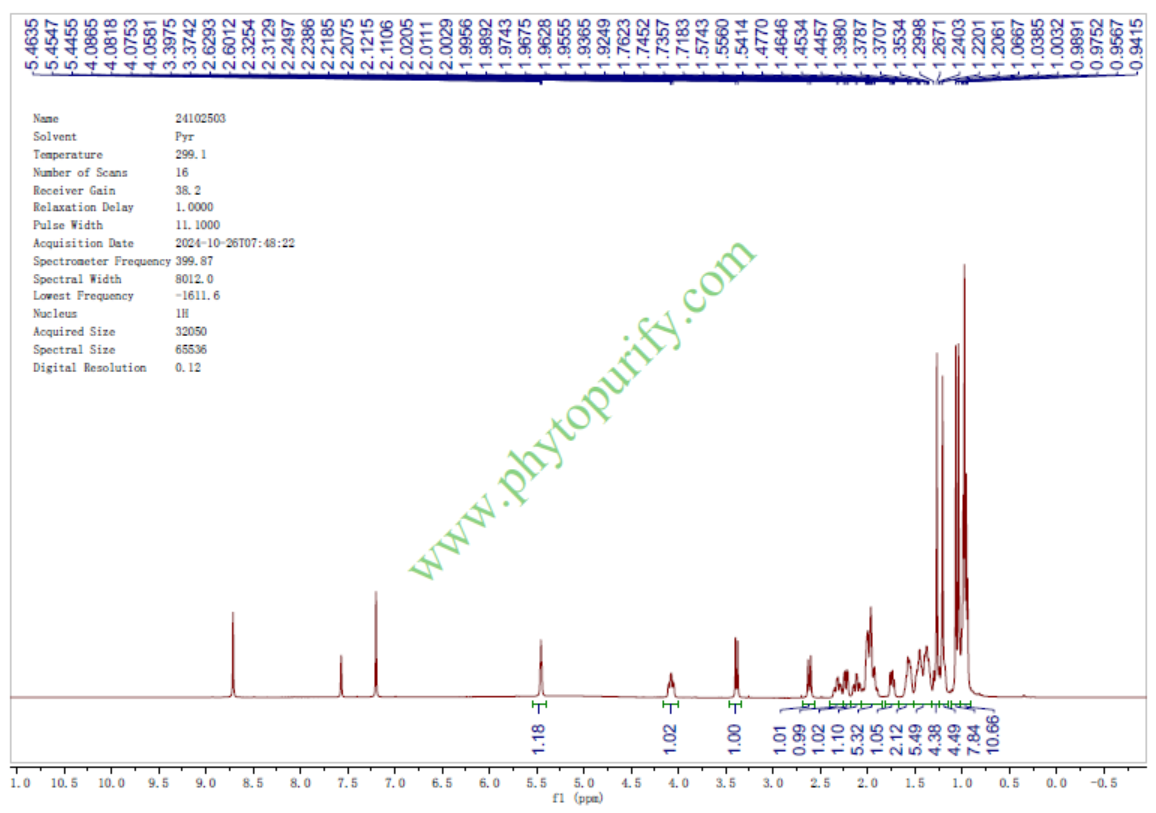
HNMR of Corosolic acid
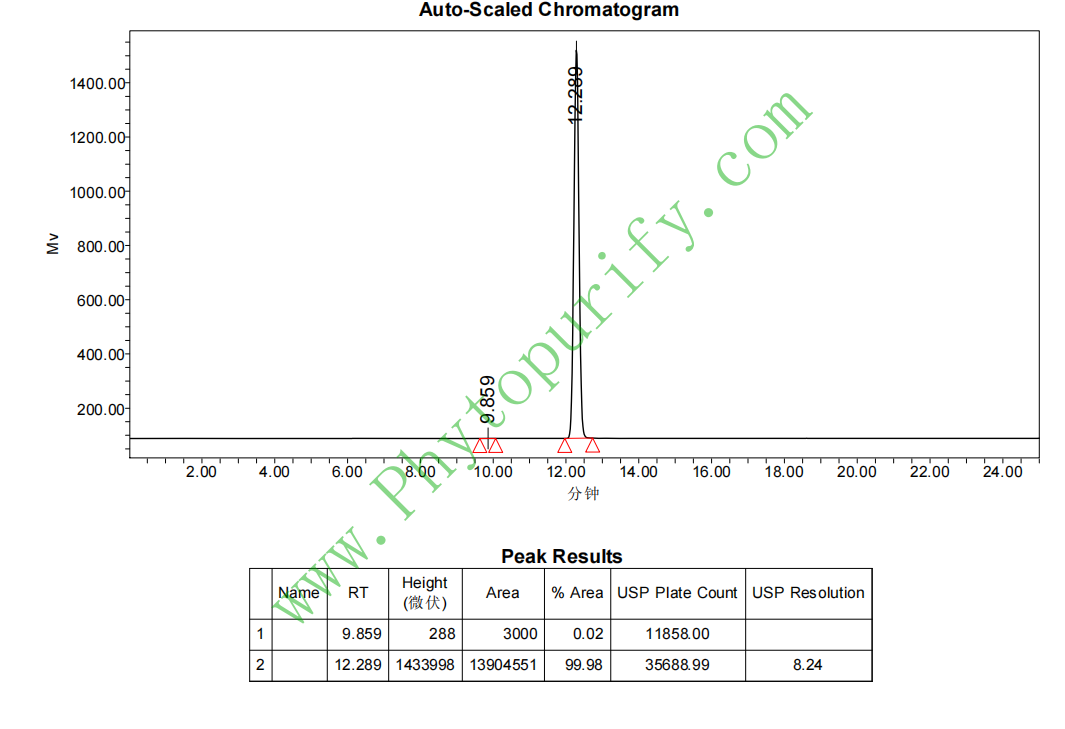
HPLC of Corosolic acid
Storage conditions:Short-term storage at 2~8℃, long-term storage at -20 ~ -80℃
77.7600
5.6400
4.0334
.0036
2.5613
5.6946
Low
93.0371
4.9071
No
No
No
No
No
No
0.0
No
No
Yes
No
In the broad field of natural product chemistry and pharmacology research, pentacyclic triterpenoids have attracted much attention due to their structural diversity and extensive biological activities. Corosolic acid, also known as 2 α - hydroxyursolic acid, is a pentacyclic triterpenoid acid of the Ursuline type isolated from various medicinal plants. Since its discovery, corosonic acid has been famous for its remarkable anti diabetes activity, known as "plant insulin", and has a long history in traditional medicine, especially in the application of herbal medicine in Asia. With the deepening of modern molecular biology and pharmacology research techniques, the biological activity spectrum of corosolic acid has been continuously expanded and confirmed. Its various pharmacological effects such as anti-tumor, anti-inflammatory, antioxidant, and anti obesity have gradually been revealed, especially its ability to induce cancer cell apoptosis, providing new potential candidate molecules for tumor treatment. This article aims to systematically review the chemical properties, plant sources, pharmacological activities, mechanisms of action, pharmacological evaluation, and clinical application prospects of corosolic acid, in order to provide comprehensive scientific references for the deep development and utilization of this natural product.
The chemical name of corosolic acid is (1S, 2R, 4aS, 6aS, 6bR, 8aR, 10S, 12aR, 12bR, 14bS) -10-carboxy-1,2,6a, 6b, 9,9,12a-heptamethyl-1,2,3,4,4a, 5,6,6a, 6b, 7,8,8a, 9,10,11,12,12a, 12b, 13,14b-exahydro-2-ol, and its CAS number is 4547-24-4. Its molecular formula is C30H48O4 and its molecular weight is 472.7100.
Structurally, corosolic acid belongs to the wurtzite type pentacyclic triterpenes, and its basic skeleton is composed of six isoprene units. Compared with common ursolic acid, corosolic acid has an additional α - configured hydroxyl group (2 α - OH) at the C-2 position, which has a significant impact on its physicochemical properties and biological activity due to this subtle structural difference. It also contains a C-4 carboxyl group (COOH) and a C-3 hydroxyl group (3 β - OH) in its structure. The presence of these polar functional groups gives it a certain hydrophilicity, but the overall molecule is still dominated by a hydrophobic skeleton.
Based on its structure, corosolic acid exhibits typical lipid solubility characteristics. Its calculated lipid water partition coefficient (LogP) is 5.64, indicating its high lipophilicity. The theoretical polar surface area (TPSA) is 77.76 Å ², reflecting its limited polarity. The water solubility is extremely low, about 0.0036 mg/mL, which poses a challenge for its formulation development and in vivo absorption. Preliminary pharmacological predictions indicate that the ability of corosolic acid to cross the blood-brain barrier is low, suggesting that it may not be suitable for the treatment of central nervous system diseases. In early safety screening, the hERG channel inhibition risk was negative, and the Ames test result was also negative (0.0), indicating a low potential risk of arrhythmia and gene mutations, providing preliminary safety evidence for its further development.
Korosolic acid is widely present in various plants, especially in plants of the Rosaceae, Euphorbiaceae, and Crassulaceae families, where its content is relatively abundant. Its most famous source is Giant Crape-myrtle The leaves of Lagerstroemia speciosa L. are often used to treat diabetes in Southeast Asian traditional medicine, and its hypoglycemic effect is mainly attributed to corosonic acid. In addition, other common sources include:
* hawthorn(Crataegus pinnatifida): Fruit and leaves.
* loquat(Eriobortya japonica): Leaves.
* rosemary Rosmarinus officinalis: aboveground part.
* Gotu Kola(Centella asiatica): Whole plant.
* Fructus Ligustri Lucidi Ligustrum Lucidum: Fruit.
* Wufan Tree(Vaccinium bracteatum) leaves, etc.
The extraction method of corosolic acid follows the conventional process of natural product chemistry. Firstly, dry and crush the plant materials. Common extraction solvents include methanol, ethanol, acetone, or their aqueous solutions. Triterpenoid components are extracted from plant cells using immersion, reflux, or ultrasound assisted extraction methods. After obtaining the crude extract, further separation and purification are required. The commonly used methods are:
1. Liquid-liquid extraction Using solvents of different polarities (such as petroleum ether, ethyl acetate, n-butanol) to segment the crude extract and preliminarily enrich the target components.
2. column chromatography This is the core step of purification, often using silica gel, reverse phase silica gel (such as C18) or macroporous adsorption resin as the stationary phase, and gradient elution with different ratios of organic solvents (such as chloroform methanol, petroleum ether ethyl acetate).
3. recrystallization After obtaining a higher purity sample, the pure product of corosolic acid can be obtained by selecting a suitable solvent for recrystallization.
Modern technologies such as high-speed countercurrent chromatography (HSCCC) and preparative high-performance liquid chromatography (Prep HPLC) are increasingly being used for the efficient and rapid preparation of corosolic acid. The optimization of extraction processes, such as solvent selection, temperature, time, and solid-liquid ratio, is crucial for improving the yield and purity of corosolic acid.
A large number of pharmacological experiments in vivo and in vitro have confirmed that corosonic acid has various biological activities, among which the anti diabetes and anti-tumor activities are the most prominent.
1. Anti diabetes activity
This is the earliest recognized and most extensively studied core activity of corosolic acid. In a variety of diabetes animal models (such as streptozotocin induced diabetes rats, db/db mice, high-fat diet induced obese mice), oral administration of cloxonic acid can significantly reduce fasting blood glucose and postprandial blood glucose levels, improve glucose tolerance, and increase insulin sensitivity. Its effect is similar to insulin, but its onset is relatively mild and long-lasting. Research also shows that it can alleviate diabetes related complications, such as kidney disease and oxidative stress.
2. Antitumor activity
Corosonic acid has growth inhibition and apoptosis promoting effects on a variety of human cancer cell lines, including liver cancer, breast cancer, lung cancer, cervical cancer, colon cancer, leukemia, etc. Its anti-tumor mechanisms are diverse. In addition to directly inducing cancer cell apoptosis, it can also inhibit cancer cell proliferation, migration, and invasion, induce cell cycle arrest (such as G1 phase arrest), and inhibit tumor angiogenesis. It is worth noting that some studies suggest that corosolic acid has relatively low toxicity to normal cells and has a certain degree of selectivity.
3. Other pharmacological activities
* Anti inflammatory and antioxidant properties Korosonic acid can inhibit the production of inflammatory factors (such as TNF - α, IL-6, NO) induced by lipopolysaccharides, and enhance the antioxidant defense ability of cells by activating pathways such as Nrf2.
* Anti obesity and regulation of lipid metabolism It can inhibit adipocyte differentiation, reduce fat accumulation, and regulate cholesterol and triglyceride levels in the blood.
* Liver protection and neuroprotection In chemical liver injury and neurodegenerative disease models, corosolic acid exhibits protective effects, which may be related to anti-inflammatory, antioxidant, and anti apoptotic mechanisms.
The multiple pharmacological effects of corosolic acid stem from its regulation of multiple key signaling pathways within cells. Its mechanism of action is complex and has networked characteristics, with the main targets and pathways as follows:
1. Anti diabetes mechanism
Korosonic acid mimics some of the functions of insulin and exerts hypoglycemic effects through multi-target and multi pathway synergy:
* Activate AMPK pathway Korosolic acid is a direct activator of AMP activated protein kinase (AMPK). Activation of AMPK (composed of subunits such as PRKAA1) can promote glucose uptake in skeletal muscle and liver (by upregulating glucose transporter 4, SLC2A4), inhibit hepatic gluconeogenesis, and enhance fatty acid oxidation, thereby improving overall energy metabolism and insulin sensitivity.
* Regulating the insulin signaling pathway Korosonic acid can enhance tyrosine phosphorylation of insulin receptor substrate 1 (IRS1) and activate the phosphatidylinositol 3-kinase (PI3K, whose regulatory subunit is PIK3R1)/protein kinase B (AKT1) pathway. This is the core pathway of insulin signaling, ultimately promoting membrane translocation and glucose utilization of SLC2A4.
* Acting on other targets It can also activate peroxisome proliferator activated receptor gamma (PPARG) and improve insulin sensitivity; Inhibit small intestine sodium glucose cotransporter 2 (SGLT2) and reduce renal reabsorption of glucose; Inhibit dipeptidyl peptidase-4 (DPP4) and increase endogenous glucagon like peptide-1 (GLP-1) levels; And activate glucokinase (GCK) to promote the liver's perception and utilization of glucose.
2. Mechanism of anti-tumor action
The induction of cancer cell apoptosis by corosolic acid is the core of its anti-tumor activity, mainly achieved through the following pathways:
* Mitochondrial apoptosis pathway Korosonic acid can induce a decrease in mitochondrial membrane potential, promote the release of cytochrome C, activate caspase-9 and caspase-3, and trigger cell apoptosis.
* Death receptor pathway In certain cells, it can upregulate the expression of death receptors (such as Fas) and their ligands, activating caspase-8.
* Inhibit survival signals Korosonic acid can inhibit survival signaling pathways such as PI3K/AKT and NF - κ B, and weaken the anti apoptotic ability of cancer cells.
* Inducing endoplasmic reticulum stress By interfering with intracellular calcium homeostasis or protein folding, the unfolded protein response is activated, ultimately leading to apoptosis.
* Regulating cell cycle proteins By downregulating Cyclin D1, CDK4, etc., the cell cycle is arrested in the G1 phase.
3. Anti inflammatory and antioxidant mechanisms
Mainly by inhibiting the NF - κ B and MAPK inflammatory signaling pathways, reducing the production of inflammatory mediators; Simultaneously activate the Nrf2/ARE pathway, upregulate the expression of phase II detoxifying enzymes and antioxidant enzymes such as heme oxygenase-1 (HO-1) and quinone oxidoreductase 1 (NQO1).
Although corosolic acid has a wide range of pharmacological activities, its pharmacological development still faces some challenges, mainly related to its physicochemical properties.
Pharmacokinetic characteristics Animal pharmacokinetic studies have shown that oral absorption of corosolic acid is rapid but incomplete, with low absolute bioavailability, which is related to its low water solubility and high LogP value resulting in dissolution and permeation limitations. After oral administration, it is widely distributed in tissues such as liver, kidney, and fat, but has poor blood-brain barrier permeability. In the body, corosolic acid mainly undergoes phase I metabolism (such as hydroxylation) and phase II metabolism (such as glucuronic acid binding), and its prototype drug and metabolites are mainly excreted through bile and urine. The half-life is relatively short and may require frequent administration or formulation modification to maintain effective blood drug concentration.
Challenges and improvement strategies for drug development:
1. Solubility and bioavailability The extremely low water solubility is the main bottleneck limiting its oral absorption. The current research strategies include:
* Formulation technology Preparation of solid dispersions, cyclodextrin inclusion complexes, liposomes, nanocrystals, self microemulsion delivery systems, etc. to improve their dissolution rate and gastrointestinal solubility.
* Prodrug modification Chemical modification of its carboxyl or hydroxyl groups to produce ester, salt, or amino acid conjugates with better water solubility, which can be hydrolyzed into the original drug in vivo.
2. Selective optimization Although corosolic acid has a wide range of targets, it may also lead to off target effects and potential side effects. Future research needs to more accurately elucidate its main targets under different pathological conditions, or improve its selectivity towards specific targets through structural modifications.
3. safety Long term toxicity, reproductive toxicity, and other system safety evaluation data are not yet sufficient, and further supplementation is needed to support clinical development.
As a multi-target and multifunctional natural lead compound, corosolic acid has broad clinical application prospects, but its development path also needs to be viewed rationally.
Potential application directions:
1. Adjuvant treatment of type 2 diabetes and its complications As a "plant insulin", cloxonic acid or its standardized extract is expected to be developed as a dietary supplement or plant medicine for early diabetes, pre diabetes or combined with existing hypoglycemic drugs to improve blood glucose control and reduce complications. Its regulation of lipid metabolism and anti-inflammatory properties are particularly beneficial for this.
2. Antitumor adjuvant therapy Given its ability to induce apoptosis and enhance chemotherapy sensitivity, corosolic acid may be used as a tumor chemopreventive agent or an adjuvant drug in combination with conventional chemotherapy/radiotherapy to reduce drug resistance, alleviate side effects, or improve efficacy.
3. Diseases related to metabolic syndrome Colossate has potential application value in nonalcoholic fatty liver disease, obesity, atherosclerosis and other diseases closely related to insulin resistance and inflammation.
4. Functional foods and cosmetics Its antioxidant and anti-inflammatory properties can be used to develop cosmetics or health foods with anti-aging and skin protective effects.
Future research prospects:
1. In depth mechanism research Using chemical biology methods such as affinity fishing, molecular docking, CRISPR screening to more accurately identify its direct target proteins and draw a complete pharmacological action network map.
2. Structural optimization and development of analogues Using corosolic acid as the parent nucleus, systematic structure-activity relationship studies and structural modifications are conducted with the aim of obtaining derivatives or analogues with stronger activity, higher selectivity, and better drug properties. For example, improving its water solubility, metabolic stability, and targeting.
3. Research on New Delivery Systems Continue to develop advanced nanocarrier systems (such as targeted nanoparticles and extracellular vesicle drug delivery) to enhance their tumor targeting, bioavailability, and therapeutic efficacy.
4. High quality clinical research At present, there are still few and limited clinical studies on corosolic acid in humans. It is urgent to design rigorous and large sample randomized controlled clinical trials to confirm its effectiveness and safety in humans, and provide solid evidence for its true translation into clinical drugs.
5. Research on the synergistic effect of multiple components Korosolic acid often coexists with other active ingredients in plants. Studying its synergistic effects with coexisting components such as other triterpenoids and flavonoids is of great significance for the development of compound drugs or health products based on whole extracts.
Korosolic acid, as a naturally occurring triterpenoid acid with abundant sources, has become a star molecule in natural product drug research due to its unique chemical structure and diverse pharmacological activities. From traditional hypoglycemic applications to cutting-edge research in modern anti-tumor and anti-inflammatory fields, the multi-target mechanism of action is constantly being revealed, demonstrating enormous therapeutic potential. However, its inherent pharmaceutical defects, especially low solubility and low bioavailability, are the main obstacles between laboratory research and clinical application. Future research should focus on overcoming these bottlenecks through interdisciplinary strategies, including medicinal chemistry, pharmacy, molecular pharmacology, and clinical medicine. By deeply understanding its molecular mechanism, rational design and optimization of its structure, innovative drug delivery technology, and promoting standardized clinical verification, corosolic acid is expected to successfully transform from a promising natural lead compound into an effective drug or functional product serving human health, and play its unique value in the prevention and treatment of major diseases such as metabolic disorders and tumors.
