


Product name: Arctiin
Synonym name:
Catalogue No.: BP0187
Cas No.: 20362-31-6
Formula: C27H34O11
Mol Weight: 534.558
Botanical Source: Arctium lappa L.(Burdock).
Physical Description: Powder
Type of Compound: Lignans
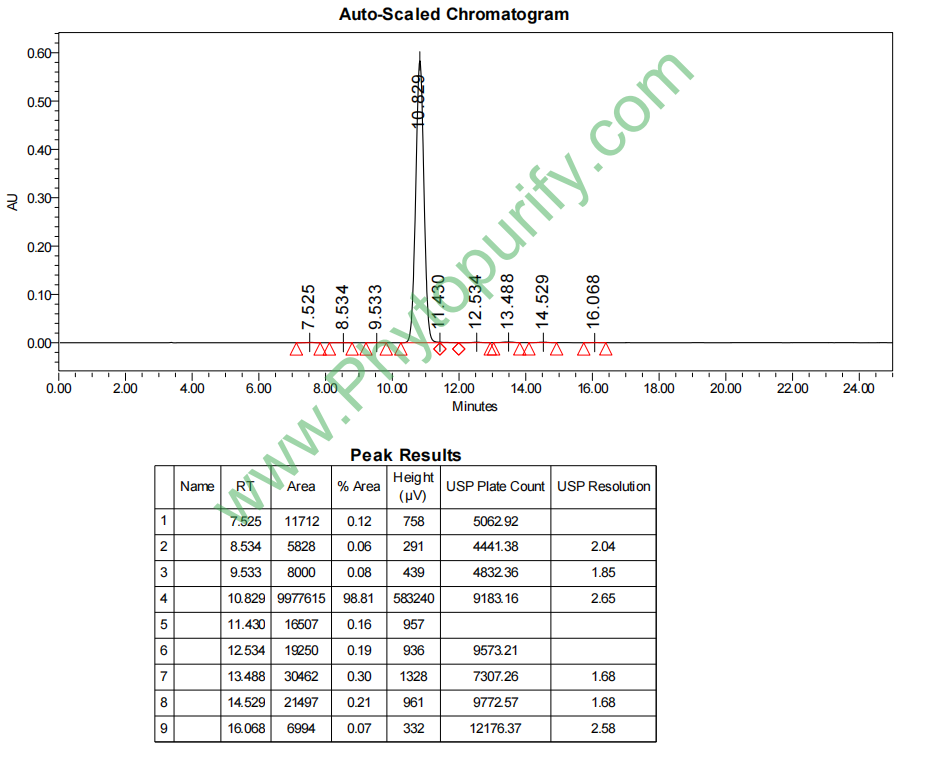
Purity: 95%~99%
Analysis Method: HPLC-DAD or/and HPLC-ELSD
Identification Method: Mass, NMR
Packing: Brown vial or HDPE plastic bottle
Storage: Store in a well closed container, protected from air and light. Put into refrigerate or freeze for long term storage.
Whenever possible, you should prepare and use solutions on the same day. However, if you need to make up stock solutions in advance, we recommend that you store the solution as aliquots in tightly sealed vials at -20℃. Generally, these will be useable for up to two weeks.
The product could be supplied from milligrams to grams, up to kilograms
Inquire for bulk scale.
Descriptions:
Arctiin, a lignan isolated from Arctium lappa (burdock) seeds, has a protective effect on 2-amino-1-methyl-6-phenylimidazo[4,5-b]pyridine (PhIP) -induced carcinogenesis particularly in the mammary gland in the promotion period, it may have a weak co-carcinogenic influence on MeIQx-induced hepatocarcinogenesis. [1]
Arctiin has been reported to have anti-inflammatory, anti-oxidant, antibacterial, and antiviral effects in vitro, it may exert anti-inflammatory effect by inhibiting the pro-inflammatory mediators through the inactivation of NF-kB.[2]
Arctiin significantly induces cell detachment and decreases the cell numbers via the up-regulation of MUC-1 mRNA and protein in PC-3 cells.[3]
Arctiin down-regulates cyclin D1 protein expression and that this at least partially contributes to the anti-proliferative effect of arctiin.[4]
Arctiin has ameliorative effects on glomerulonephritis is carried out mainly by suppression of NF-κB activation and nuclear translocation and the decreases in the levels of these pro-inflammatory cytokines, while SOD is involved in the inhibitory pathway of NF-κB activation; arctiin has favorable potency for the development of an inhibitory agent of NF-κB and further application to clinical treatment of glomerulonephritis, though clinical studies are required.[5]
Arctiin induces an UVB protective effect in human dermal fibroblast cells through microRNA expression changes.[6]
Arctigenin and arctiin have antiproliferative effect.[7]
References:
[1] Hirose M, Yamaguchi T, Cui L, et al. Cancer Lett, 2000, 155(1):79-88.
[2] Lee S, Shin S, Kim H, et al. J Inflamm, 2010, 8(1):321-4.
[3] Huang D M, Guh J H, Chueh S C, et al. Prostate, 2004, 59(3):260-7.
[4] Matsuzaki Y, Koyama M, Hitomi T, et al. Oncol Rep, 2008, 19(3):721-7.
[5] Wu J G, Wu J Z, Sun L N, et al. Phytomed Int J Phytother Phytopharmacol, 2009, 16(11):1033-41.
[6] Lee G T, Cha H J, Lee K S, et al. Int J Mole Med, 2014, 33(3):640-8.
[7] Shi Y R, Ahn J W, Kang Y H, et al. Arch Pharml Res, 1995, 18(6):462-3.
[8] Zheng L, Song Y. Pharm Clin Chinese Mat Med, 2011, 02(2):23-6.
HPLC of Arctiin
Storage conditions:Short-term storage at 2~8℃, long-term storage at -20 ~ -80℃
153.3700
1.0533
1.0533
1.8289
.6836
.2372
Low
78.4054
4.1080
No
No
No
No
No
No
0.0
Yes
Yes
No
Yes
As an important treasure trove for drug discovery and development, natural products continue to provide modern medicine with lead compounds with novel structures and diverse activities. Lignin compounds, as one of the important secondary metabolites, are widely distributed in the plant kingdom and have attracted the attention of pharmacological researchers for their diverse biological activities, such as anti-tumor, anti-inflammatory, antioxidant, and metabolic regulation. Arctiin (CAS number: 20362-31-6) is a typical lignan glycoside, mainly derived from the traditional Chinese medicine burdock(Arctium lappa L. The seeds. As a traditional Chinese medicine, burdock root has the effects of dispersing wind and heat, promoting lung and rash, detoxifying and clearing throat. Modern pharmacological studies have revealed that burdock root glycoside is one of its main active ingredients.
In recent years, with the development of molecular pharmacology and systems biology, the multidimensional pharmacological activities of arctiin have gradually been revealed. Research shows that it not only has anti-inflammatory, antioxidant, antibacterial, antiviral and other basic activities, but also shows potential therapeutic value in metabolic diseases (such as obesity, atherosclerosis), inflammation related diseases (such as glomerulonephritis), tumors, skin and hair health and other fields. It is worth noting that as a potential environmental endocrine disruptor, its mechanism of action is closely related to hormone metabolism and signal pathway regulation, providing a unique perspective for a deeper understanding of its dual pharmacological and toxicological properties. This article aims to systematically review the chemical properties, plant sources, pharmacological activities, molecular mechanisms of action, pharmacological evaluation, and clinical application prospects of arctiin, in order to provide comprehensive scientific references for the in-depth research and development of this natural product.
Burdock glycoside is a glycosidic lignan composed of lignans and glycosides. Its chemical name is (-) - (3R, 4R) -3,4-bis [(3,4-dimethoxyphenyl) methyl] dihydro-2 (3H) - furanone 4-yl - β - D-glucopyranoside. The molecular formula is C27H34O11 and the molecular weight is 534.5580.
Structurally, the core of arctiin is a dihydrofuran ring (butyrolactone ring) structure, with two 3,4-dimethoxybenzyl groups connected at positions 3 and 4, respectively, forming a typical lignin skeleton. This glycoside is linked to a molecule of β - D-glucose through a glycosidic bond, forming a relatively water-soluble glycoside form. This glycosylation modification has a significant impact on its bioavailability, in vivo distribution, and biological activity.
Based on its chemical structure, arctiin exhibits specific physicochemical properties. Its lipid water partition coefficient (LogP) is about 1.05, indicating that it has a certain degree of lipophilicity, but not high lipid solubility. The topologically polar surface area (TPSA) is as high as 153.37 Å ², mainly attributed to the numerous oxygen atoms in the molecule (from sugar, methoxy, and ester carbonyl groups), indicating its strong ability to form hydrogen bonds. Both calculation and experimental data show that its water solubility is moderate (about 1.83 mg/mL), which enables it to reach a certain concentration in aqueous media. These physical and chemical parameters collectively determine its pharmacological characteristics: moderate water solubility and moderate LogP value are beneficial for oral absorption, but larger TPSA and high molecular weight may limit its transmembrane permeability, especially its ability to pass through the blood-brain barrier, with predictions showing lower blood-brain barrier permeability. In addition, preliminary pharmacological risk assessment shows that its hERG inhibition risk and Ames mutagenicity risk are low, providing preliminary support for its relative safety.
Burdock glycoside is mainly derived from the burdock plant in the Asteraceae family(Arctium lappa L. The dried and ripe fruit of burdock, also known as the traditional Chinese medicine "burdock seed". Burdock, as a plant with medicinal and edible properties, has applications in its roots, leaves, and seeds. The content of lignans in burdock seeds is abundant, and arctigenin and its glycoside arctigenin are the most important active ingredients. In addition, in Forsythia suspensa(Forsythia suspensa)The presence of arctiin has also been found in a few other plants.
Efficient extraction of arctiin from plant materials is the foundation for its pharmacological research and application development. Traditional extraction methods include solvent extraction, commonly using methanol, ethanol, or their aqueous solutions for reflux or ultrasound assisted extraction. Due to the high polarity of arctiin glycosides, using solvents with moderate polarity (such as 50% -70% ethanol) can usually achieve good extraction rates. In recent years, some modern extraction techniques have been applied to optimize the extraction process, such as:
1. Microwave assisted extraction Using microwave energy to quickly heat the interior of cells, disrupt cell structure, and accelerate the dissolution of target components has the advantages of short time, high efficiency, and low solvent usage.
2. Ultrasound assisted extraction Utilizing the cavitation effect, mechanical effect, and thermal effect of ultrasound to enhance solvent permeability and component diffusion rate, and improve extraction efficiency.
3. Supercritical fluid extraction Supercritical CO ₂ is commonly used, but due to its weak polarity, its direct extraction effect on polar glycosides is limited. It often requires the addition of entrainers (such as ethanol) or derivatization after extracting its glycosides.
The crude extract after extraction usually requires further separation and purification to obtain high-purity arctiin. The conventional purification methods include macroporous adsorption resin chromatography (such as AB-8, D101 resin), which utilizes its adsorption and molecular sieve action to enrich lignin components; Silica gel column chromatography, reverse phase silica gel column chromatography (such as ODS-C18), and high-performance liquid chromatography (HPLC) preparative chromatography are key steps in obtaining monomeric compounds. Among them, reverse phase chromatography is a commonly used refining method due to its high polarity matching with arctiin.
A large number of in vitro and in vivo studies have confirmed that arctiin has a wide and diverse pharmacological activity, mainly covering the following aspects:
1. Anti inflammatory and immune regulatory activity
Arctiin has been identified as an orally active inhibitor of the nuclear factor kappa B (NF - κ B) signaling pathway. NF - κ B is a core transcription factor that regulates inflammatory response, cell survival, and proliferation. Arctiin can inhibit the activation of NF - κ B induced by stimuli such as lipopolysaccharide (LPS) and tumor necrosis factor - α (TNF - α), thereby downregulating the expression of target gene products such as inducible nitric oxide synthase (iNOS), cyclooxygenase-2 (COX-2), and various pro-inflammatory cytokines (such as TNF - α, interleukin-1 β, IL-6). In animal models of glomerulonephritis, colitis, arthritis, etc., arctiin significantly reduces tissue pathological damage and inflammatory cell infiltration through its anti-inflammatory effect.
2. Antioxidant and cell protective activities
Arctiin can effectively scavenge free radicals such as DPPH and ABTS, and enhance the intracellular antioxidant defense system, such as upregulating the activity of superoxide dismutase (SOD) and glutathione peroxidase (GSH Px), and reducing the levels of lipid peroxidation products such as malondialdehyde (MDA). In hair follicle papillary cells (HHDPC), arctiin has a protective effect against reactive oxygen species (ROS) - induced cellular dysfunction and apoptosis, providing a basis for its potential application in preventing and treating oxidative stress-related hair loss.
3. Antitumor activity
Arctiin exhibits growth inhibition and pro apoptotic effects on various human tumor cell lines. The mechanism involves multiple levels: inhibiting the expression of Cyclin D1, leading to cell cycle arrest; Regulating the expression of Bcl-2 family proteins (such as anti apoptotic proteins Bcl-2, Mcl-1, or affecting other members) to induce cell apoptosis through the mitochondrial pathway; Inhibit the invasion and metastasis of tumor cells. It has been reported that it can inhibit breast cancer, prostate cancer, liver cancer, stomach cancer and other cells.
4. Regulating metabolism and anti obesity activity
In the field of metabolic diseases, arctiin has shown potential in anti obesity and improving lipid metabolism. In the 3T3-L1 preadipocyte differentiation model, arctiin can significantly inhibit adipogenesis and reduce lipid accumulation. The mechanism is related to the activation of the adenylate activated protein kinase (AMPK) signaling pathway, while inhibiting the expression of key adipogenic transcription factors such as peroxisome proliferator activated receptor gamma (PPAR gamma) and CCAAT/enhancer binding protein beta (C/EBP beta). In addition, it can improve insulin resistance and liver steatosis in animal models induced by high-fat diet.
5. Cardiovascular protective activity (focusing on atherosclerosis)
Arctiin plays a multi target role in the prevention and treatment of atherosclerosis. It can down regulate the expression of scavenger receptor LOX-1, reduce the uptake of oxidized low density lipoprotein (ox LDL) and reduce the foam of endothelial cells. At the same time, it can activate AMPK signaling pathway, up regulate the expression of ATP binding cassette transporter A1 (ABCA1), promote the reverse transport of cholesterol, and thus play an anti atherosclerosis role. Its anti-inflammatory and antioxidant properties also contribute to stabilizing atherosclerotic plaques.
6. Antibacterial and antiviral activity
Research has shown that arctiin has certain inhibitory activity against certain bacteria such as Staphylococcus aureus and Escherichia coli, as well as viruses such as influenza virus and human immunodeficiency virus (HIV). However, its intensity and spectrum of action are usually weaker than specialized antibiotics or antiviral drugs, and its mechanism may be related to interfering with specific stages of the pathogen's life cycle.
The multiple pharmacological activities of arctiin stem from its regulation of multiple key signaling pathways within cells, and its target network is complex and interrelated.
Core signaling pathway:
1. Inhibition of NF - κ B pathway This is the core mechanism of the anti-inflammatory and partially anti-tumor effects of arctiin. It may globally inhibit the expression of inflammatory mediators and pro survival genes by intervening in the activation of upstream kinases (such as IKK complex) or affecting the degradation of I κ B α, preventing NF - κ B nuclear translocation.
2. AMPK pathway activation AMPK is the "main switch" for cellular energy metabolism. Arctiin can activate AMPK, which is crucial for its regulation of lipid metabolism (inhibition of fat production, promotion of fatty acid oxidation), improvement of insulin sensitivity, and up regulation of ABCA1 expression in endothelial cells to prevent atherosclerosis. The activation of AMPK may also indirectly inhibit synthetic metabolic pathways such as mTOR.
3. MAPK pathway regulation Arctiin can affect the phosphorylation levels of members of the mitogen activated protein kinase (MAPK) family, such as ERK, JNK, and p38. These pathways are involved in regulating cell proliferation, differentiation, stress response, and apoptosis, and are another layer of mechanism for its anti-tumor and anti-inflammatory effects.
Key molecular targets:
* Transcription factors and nuclear receptors PPAR γ, C/EBP β (regulation of adipogenesis); NF - κ B (inflammation and survival regulation).
* Cell cycle and apoptosis related proteins: Cyclin D1 (G1/S phase transition of cell cycle); Bcl-2 family proteins (Bcl-2, Mcl-1, etc., regulating apoptosis).
* Metabolism and transport related proteins AMPK (energy metabolism); ABCA1 (cholesterol efflux); LOX-1 (ox LDL uptake).
* Epigenetic modifying enzyme There are studies suggesting that arctiin may affect histone methyltransferase EHMT2 (G9a) and regulate gene expression at the epigenetic level, providing a new perspective for understanding its long-term and deep effects.
* DNA helicase There is literature mentioning a potential association with RECQ1, which is a DNA repair related helicase. This may be related to maintaining genomic stability or selective toxicity to specific tumor cells, but the specific mechanism needs to be further elucidated.
The action of arctiin exhibits multi-target and networked characteristics, and there may be cross-talk between different pathways and targets to coordinate its ultimate biological effects. For example, activation of AMPK can inhibit the activity of NF - κ B, which may also affect cellular metabolism.
Although arctiin has shown extensive biological activity in vitro, its pharmacological properties, especially its pharmacokinetic properties in vivo, are the key to determining whether it can be successfully converted into clinical drugs.
Pharmacokinetic characteristics:
As a glycoside, arctiin has unique oral absorption, distribution, metabolism, and excretion processes. Research has shown that after oral administration, arctiin can be hydrolyzed by β - glucosidase secreted by gut microbiota to remove glucose groups and convert them into its aglycones Arctigenin The lipid solubility of aglycones is significantly enhanced, making them more easily absorbed into the bloodstream by the intestine. Therefore, arctiin often exerts its main pharmacological effects in the form of aglycones in the body, belonging to the "prodrug" property. Arctiin can undergo extensive metabolism in the body, including methylation, hydroxylation, glucuronidation, and sulfation, forming various metabolites that are mainly excreted through urine and bile. Its absolute bioavailability is usually not high, which is related to its larger molecular weight, polarity, and first pass metabolism.
Analysis of pharmacological parameters:
Based on the provided parameters: the molecular weight (534.56) is slightly higher than the threshold (500) that is generally considered easy to penetrate; Moderate LogP (~1.05) is beneficial for balancing solubility and membrane permeability; However, the higher TPSA (>140 Å ²) and glycosidic structure limit its passive transmembrane diffusion ability, which is consistent with its predicted low blood-brain barrier permeability. The water solubility is still acceptable, which is beneficial for the development of formulations. HERG inhibition negative and Ames test negative are important early safety signals.
Challenge and Strategy:
The main challenge lies in Low oral bioavailability and Insufficient delivery efficiency of target tissue To enhance its medicinal properties, researchers are exploring various strategies:
1. Structural modification Chemical modification of the sugar moiety or glycoside benzene ring to improve its solubility, metabolic stability, and membrane permeability.
2. Formulation technology Adopting new drug delivery systems such as nanocrystals, liposomes, solid dispersions, and self microemulsions to improve their dissolution rate and intestinal absorption.
3. Prodrug strategy Design better prodrug molecules to efficiently convert them into active forms at specific sites or conditions.
4. combination therapy Combined use with drugs/ingredients that affect gut microbiota or metabolic enzymes may alter their metabolic fate and enhance therapeutic efficacy.
The multi-target pharmacological properties of arctiin provide broad prospects for its application in various disease fields, but its transformation still requires solid research.
Potential clinical application directions:
1. Chronic inflammatory diseases Such as chronic glomerulonephritis, ulcerative colitis, rheumatoid arthritis, etc. Its NF - κ B inhibitory properties are the main basis of action and may serve as an adjuvant anti-inflammatory drug.
2. Diseases related to metabolic syndrome: Includes obesity, nonalcoholic fatty liver disease (NAFLD), and type 2 diabetes. Its AMPK activation and fat generation inhibition are core advantages, and it may be developed as a plant medicine or functional food ingredient that regulates metabolism.
3. cardiovascular disease The key is to prevent atherosclerosis and stabilize plaque. Its ability to act on multiple targets such as LOX-1 and ABCA1 is quite attractive.
4. neoadjuvant therapy In view of its anti proliferation, pro apoptosis and anti-inflammatory effects, it may be used as an adjuvant of traditional radiotherapy and chemotherapy to enhance the efficacy or reduce side effects, especially in hormone related tumors (such as prostate cancer and breast cancer).
5. Skin and hair health Based on its antioxidant protective effect on hair follicle cells, it is expected to be used for the development of topical preparations for the prevention and treatment of androgenic alopecia or other oxidative stress-related hair diseases.
Future research prospects:
1. In depth mechanism exploration Using omics techniques (transcriptomics, proteomics, metabolomics) and gene editing tools, systematically elucidate its multi-target action network and key nodes, and clarify the specific mechanism and safety boundary of its "environmental endocrine disruptor" attribute.
2. Pharmacokinetic optimization Strengthen its in vivo ADME research and focus on improving its bioavailability through the aforementioned pharmaceutical strategies, developing formulations suitable for clinical administration.
3. High quality preclinical and clinical research We need to design rigorous and standardized animal models for research, and gradually advance them to human clinical trials to confirm their effectiveness and safety. The current clinical data is extremely lacking.
4. Research on Structure Activity Relationship Systematically study its derivatives and search for candidate compounds with stronger activity and better drug properties.
5. Re evaluation of safety A systematic evaluation of long-term toxicity, reproductive toxicity, and their endocrine disrupting potential is crucial, and it is necessary to clarify their treatment window.
As a natural lignan glycoside derived from traditional Chinese medicine, arctiin has become a hot molecule in natural product pharmacology research due to its multiple pharmacological activities such as anti-inflammatory, antioxidant, anti-tumor, and metabolic regulation. It acts on multiple molecular targets such as LOX-1, ABCA1, Cyclin D1, Bcl-2 family proteins, etc. by inhibiting core pathways such as NF - κ B and activating AMPK, forming a synergistic biological activity network. These characteristics demonstrate unique potential in the prevention and treatment of major chronic diseases such as inflammatory diseases, metabolic diseases, cardiovascular diseases, and tumors.
However, the path from laboratory research to clinical application is still full of challenges. The inherent pharmaceutical defects, especially the low oral bioavailability, are the main bottleneck restricting its development. Future research needs to focus on optimizing its pharmacokinetic properties through medicinal chemistry and pharmacology methods, based on a deep analysis of its complex mechanism of action, and conducting systematic and rigorous preclinical safety and efficacy evaluations to gradually promote clinical translation. Meanwhile, in-depth research on its environmental endocrine disruptor properties will help to comprehensively and dialectically understand its biological effects, ensuring its safe and rational application. In summary, arctiin is a highly valuable natural lead compound for research. Continuous and in-depth exploration of it is not only expected to develop new therapeutic drugs, but also to further enrich our understanding of the biological functions of lignans.
