


Product name: 6-Shogaol
Synonym name: 1-(4-Hydroxy-3-methoxyphenyl)-4-decen-3-one
Catalogue No.: BP0095
Cas No.: 555-66-8
Formula: C17H24O3
Mol Weight: 276.376
Botanical Source: grains of paradise (Amomum melegueta) and Zingiber officinale (ginger)
Physical Description: Oil
Type of Compound: Phenols
Purity: 95%~99%
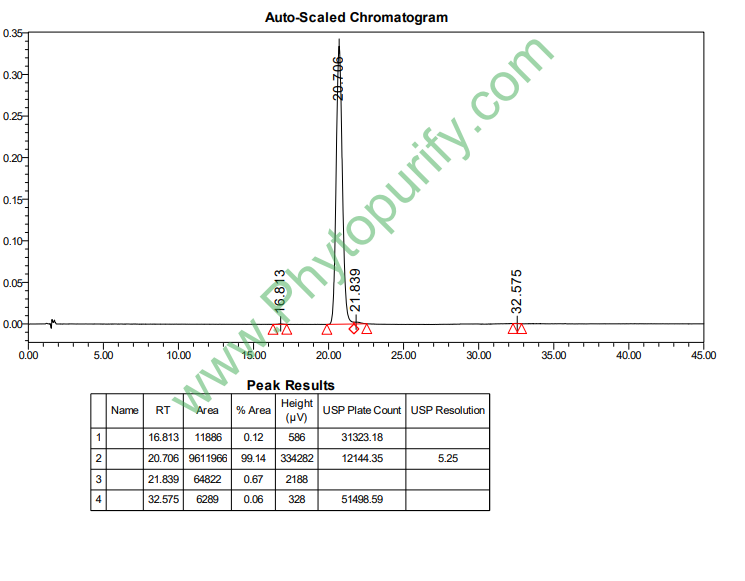
Analysis Method: HPLC-DAD or/and HPLC-ELSD
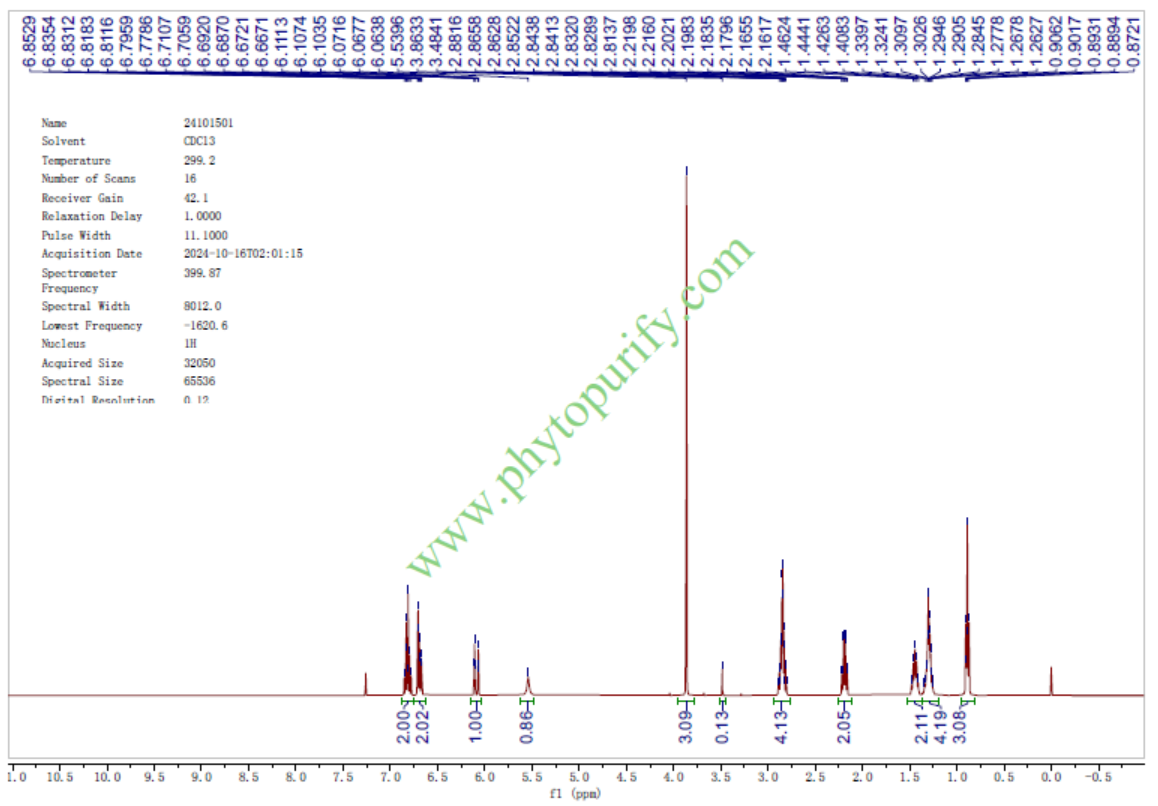
Identification Method: Mass, NMR
Packing: Brown vial or HDPE plastic bottle
Storage: Store in a well closed container, protected from air and light. Put into refrigerate or freeze for long term storage.
Whenever possible, you should prepare and use solutions on the same day. However, if you need to make up stock solutions in advance, we recommend that you store the solution as aliquots in tightly sealed vials at -20℃. Generally, these will be useable for up to two weeks.
The product could be supplied from milligrams to grams, up to kilograms
Inquire for bulk scale.
Descriptions:
6-Shogaol, an active constituent of ginger, is a potent inhibitor of MDA-MB-231 cell invasion, and the molecular mechanism involves at least in part the down-regulation of MMP-9 transcription by targeting the NF-κB activation cascade, thus has potential for clinical use as antimetastatic treatments. [1]
6-Shogaol and 6-gingerol might both exert anti-invasive activity against hepatoma cells through regulation of MMP-9 and TIMP-1 and that 6-shogaol could further regulate urokinase-type plasminogen activity.[2]
6-Shogaol exerts its anti-inflammatory effects by inhibiting the production of prostaglandin E2 (PGE2) and proinflammatory cytokines, such as interleukin-1β (IL-1β) and tumor necrosis factor-α (TNF-α), and by downregulating cyclooxygenase-2 (COX-2), p38 mitogen-activated protein kinase (MAPK), and nuclear factor kappa B (NF-κB) expression; it shows significant neuroprotective effects in vivo in transient global ischemia via the inhibition of microglia, suggests that it is an effective therapeutic agent for treating neurodegenerative diseases.[3]
6-Shogaol reduces the inflammatory response and protects the femoral cartilage from damage produced in a CFA monoarthritic model of the knee joint of rats.[4]
6-Shogaol induces apoptosis in human hepatocellular carcinoma cells in relation to caspase activation and endoplasmic reticulum (ER) stress signaling, affects the ER stress signaling by regulating unfolded protein response (UPR) sensor PERK and its downstream target eIF2α, thus, the PERK/eIF2α pathway plays an important role in 6-shogaol-mediated ER stress and apoptosis in SMMC-7721 cells in vitro and in vivo .[5]
6- Shogaol can prevent secondary pathological events in traumatic Spinal cord injury (SCI) and promotes recovery of motor functions in an animal model raises the issue of whether shogaol could be used therapeutically in humans after SCI.[6]
References:
[1] Ling H, Yang H, Tan S H, et al. Brit J Pharmacol, 2010, 161(8):1763–77.
[2] Chia-Jui Weng ?, Cheng-Feng Wu ?, Huang H W, et al. Mol Nutr Food Res, 2010, 54(11):1618–27.
[3] Sang K H, Moon E, Mi S J, et al. Neuropharmacology, 2012, 63(2):211-23.
[4] Levy A S, Simon O, Shelly J, et al. Bmc Pharmacology, 2006, 6(1):12.
[5] Hu R, Zhou P, Peng Y B, et al. Plos One, 2012, 7(6):1634.
[6] Kang S K, Gon J H, Geun K Y, et al. Eur J Neurosci, 2006, 24(4):1042-52.
[7] Zhang K W, Shen S, Cui X B, et al. J Chinese Pharm Sci, 2009, 44(22):1692-4.
HPLC of 6-Shogaol
HNMR of 6-Shogaol
Storage conditions:Short-term storage at 2~8℃, long-term storage at -20 ~ -80℃
49.6900
3.5900
3.3100
High
No
No
No
No
No
No
6-shogaol (CAS number: 555-66-8) is a ginger plant in the ginger family(Zingiber officinale)One of the important active natural products, belonging to the gingerol class compounds. As the main component derived from the dehydration of 6-gingerol during the drying process of ginger, 6-gingerol has attracted widespread attention for its unique chemical structure and significant biological activity. In recent years, with the advancement of natural product pharmacology and molecular biology techniques, 6-gingerol has shown strong potential in fields such as anti-cancer, neuroprotection, anti-inflammatory, and metabolic disease regulation, becoming a hot molecule in the treatment research of various diseases.
This review aims to systematically summarize the chemical properties, plant sources, and extraction methods of 6-gingerol, explore its pharmacological activity and mechanism of action, evaluate its pharmacological properties and pharmacokinetic characteristics, and prospect its clinical application prospects. By integrating the latest research progress, it is expected to provide scientific basis and theoretical support for the drug development and clinical translation of 6-gingerol.
The chemical formula of 6-gingerol is C17H24O3, with a molecular weight of 276.37, and it belongs to the dehydration product of the gingerol family structurally. Its core skeleton consists of aromatic phenols with α, β - unsaturated ketone structures, characterized by a benzene ring with an allyl side chain and a ketone group, giving it strong biological activity and reactivity.
In terms of physical and chemical properties, the LogP value of 6-gingerol is about 3.59, indicating its good lipid solubility, which is beneficial for cell membrane penetration and in vivo distribution. Its topological polar surface area (TPSA) is 49.69 Å ² and the number of hydrogen bond acceptors is 3, indicating its polarity and binding ability in intermolecular interactions. 6-gingerol can penetrate the blood-brain barrier (BBB) and has the potential to act on the nervous system. Toxicological evaluation shows that it has no significant hepatotoxicity, cardiotoxicity, or hERG channel inhibition, and the Ames mutagenicity test is negative, indicating high safety.
6-gingerol mainly exists in the dried rhizomes of ginger and is a secondary metabolite generated by dehydration reaction of 6-gingerol during heating or drying process. Ginger, as a traditional Chinese medicine and food ingredient, has a significant impact on the content of 6-gingerol through drying conditions such as temperature and time. Usually, the higher the drying temperature, the more 6-gingerol is generated.
There are various methods for extracting 6-gingerol, including solvent extraction, ultrasound assisted extraction, and supercritical fluid extraction. Common solvents include ethanol, methanol, ethyl acetate, etc. During the extraction process, temperature and time need to be controlled to prevent component degradation. Modern extraction techniques such as ultrasound assisted extraction can improve extraction efficiency and purity, and are more environmentally friendly. After extraction, liquid chromatography (HPLC) combined with mass spectrometry (MS) is usually used for qualitative and quantitative analysis to ensure the content and purity of 6-gingerol in the extract.
6-gingerol has shown significant anticancer activity in a variety of tumor models, especially in the research of pancreatic cancer and hepatocellular carcinoma. Research has shown that 6-gingerol can inhibit the proliferation of human pancreatic tumor cells and enhance the sensitivity of gemcitabine to tumor cells. The mechanism involves inhibiting tumor associated inflammatory signaling pathways, particularly by blocking the TLR4/NF - κ B signaling axis, reducing the expression of pro-inflammatory cytokines, and thus inhibiting the deterioration of the tumor microenvironment.
In hepatocellular carcinoma, 6-gingerol induces cell apoptosis and is closely related to the activation of caspases, while also activating the endoplasmic reticulum stress (ER stress) signaling pathway. It promotes the expression of apoptosis related genes by regulating the unfolded protein response (UPR) sensor PERK and its downstream target eIF2 α, ultimately leading to cancer cell death.
6-gingerol has good blood-brain barrier penetration ability and shows potential neuroprotective effects. It reduces nerve damage and inflammatory response by antioxidant, anti-inflammatory, and regulating neuronal apoptosis related pathways. Related studies have shown that 6-gingerol can inhibit the release of neuroinflammatory mediators, improve cognitive dysfunction, and has the potential to treat neurodegenerative diseases such as Alzheimer's disease and Parkinson's disease.
6-gingerol exhibits significant anti-inflammatory effects by regulating the inflammatory signaling pathway through multiple targets. Its main mechanism of action includes inhibiting signaling pathways such as NF - κ B and MAPK, and reducing the expression of pro-inflammatory cytokines such as TNF - α and IL-6. In addition, 6-gingerol can regulate the activity of immune cells, alleviate chronic inflammation, and is suitable for adjuvant therapy of inflammation related diseases.
In the study of hyperglycemia and diabetes, 6-gingerol has shown the role of regulating blood sugar and improving insulin sensitivity. Its target proteins involve various key proteins such as EHMT2, UBP2, PAI1, AMPK, SGLT2, GCK, APP, BACE1, CES1, and PTPN1. By activating the AMPK signaling pathway and regulating glucose metabolism enzyme activity, 6-gingerol helps to lower blood glucose levels and improve metabolic disorders.
The multiple pharmacological effects of 6-gingerol depend on its regulation of multiple signaling pathways and molecular targets:
TLR4/NF - κ B signaling pathway 6-gingerol inhibits TLR4 receptor activation, blocks nuclear translocation of downstream NF - κ B transcription factors, reduces pro-inflammatory gene expression, and suppresses tumor associated inflammation and immune escape.
Endoplasmic reticulum stress (ER stress) and UPR pathway 6-gingerol activates the PERK-eIF2 α axis, induces unfolded protein response, and promotes cancer cell apoptosis. This mechanism is particularly significant in hepatocellular carcinoma cells.
AMPK signaling pathway By activating AMPK, 6-gingerol promotes energy metabolism balance, enhances insulin sensitivity, and regulates glucose and lipid metabolism.
Caspase dependent apoptotic pathway 6-gingerol induces activation of caspases 3, 7, and 9, initiating programmed cell death.
Metabolic related targets EHMT2 (histone methyltransferase), UBP2 (ubiquitin specific protease), PAI1 (plasminogen activator inhibitor 1), SGLT2 (sodium glucose cotransporter 2), GCK (glucokinase), APP (amyloid precursor protein), BACE1 (β - secretase 1), CES1 (carboxylesterase 1), PTPN1 (protein tyrosine phosphatase 1B), etc. are all involved in its multiple functions of regulating metabolism and neuroprotection.
The pharmacological parameters of 6-gingerol show that it has good potential for drug development. The molecular weight is moderate (276.37), and the LogP value is 3.59, which conforms to Lipinski's rule. It has good lipid solubility and biofilm penetration ability. The TPSA value is 49.69 Å ² and the number of hydrogen bond acceptors is 3, indicating that its molecular polarity is moderate and conducive to oral absorption.
In terms of toxicological evaluation, 6-gingerol has no hepatotoxicity, cardiotoxicity, or hERG channel inhibition, and the Ames mutagenicity test is negative, indicating high safety. Its high blood-brain barrier permeability provides the possibility for the treatment of neurological diseases.
Pharmacokinetic studies have shown that 6-gingerol is rapidly absorbed and widely distributed after oral administration, especially at high concentrations in liver and brain tissues. Metabolism is mainly carried out through the liver enzyme system, and the activity of metabolites still needs further research. Its half-life is moderate and it has a certain degree of in vivo stability.
6-gingerol, as a multifunctional natural product, has shown broad clinical application prospects due to its multiple pharmacological effects such as anti-cancer, neuroprotective, and anti-inflammatory. In tumor treatment, 6-gingerol can be used as an adjuvant drug to enhance the efficacy of chemotherapy drugs, reduce drug resistance, and improve patient prognosis. Its ability to regulate the tumor microenvironment provides new ideas for tumor immunotherapy.
In the field of neurodegenerative diseases, 6-gingerol is expected to slow down disease progression and improve cognitive function through its antioxidant and anti-inflammatory effects. Its excellent blood-brain barrier penetration makes it an ideal candidate for the development of drugs for neurological diseases.
In addition, 6-gingerol shows potential in the regulation of metabolic diseases such as diabetes and hyperglycemia, and can be developed as an auxiliary therapeutic agent for metabolic syndrome in the future.
However, clinical research on 6-gingerol is still relatively limited, and further systematic clinical trials are needed to clarify its safety, effective dosage, and long-term efficacy. At the same time, improving its bioavailability and targeting, and developing new drug delivery systems, are also future research priorities.
6-gingerol, as an important active ingredient in ginger, has become a hot topic in natural product pharmacology research due to its unique chemical structure and diverse pharmacological activities. It has shown significant therapeutic potential in multiple fields such as anti-cancer, neuroprotection, anti-inflammatory, and metabolic regulation. Good drug properties and high safety have laid a solid foundation for its drug development.
In the future, with the in-depth analysis of molecular mechanisms and the advancement of clinical research, 6-gingerol is expected to become a new natural medicine or adjuvant drug for the treatment of various diseases. Strengthening its pharmacokinetic optimization and dosage form innovation will further promote its clinical translation process and contribute more value to human health.
