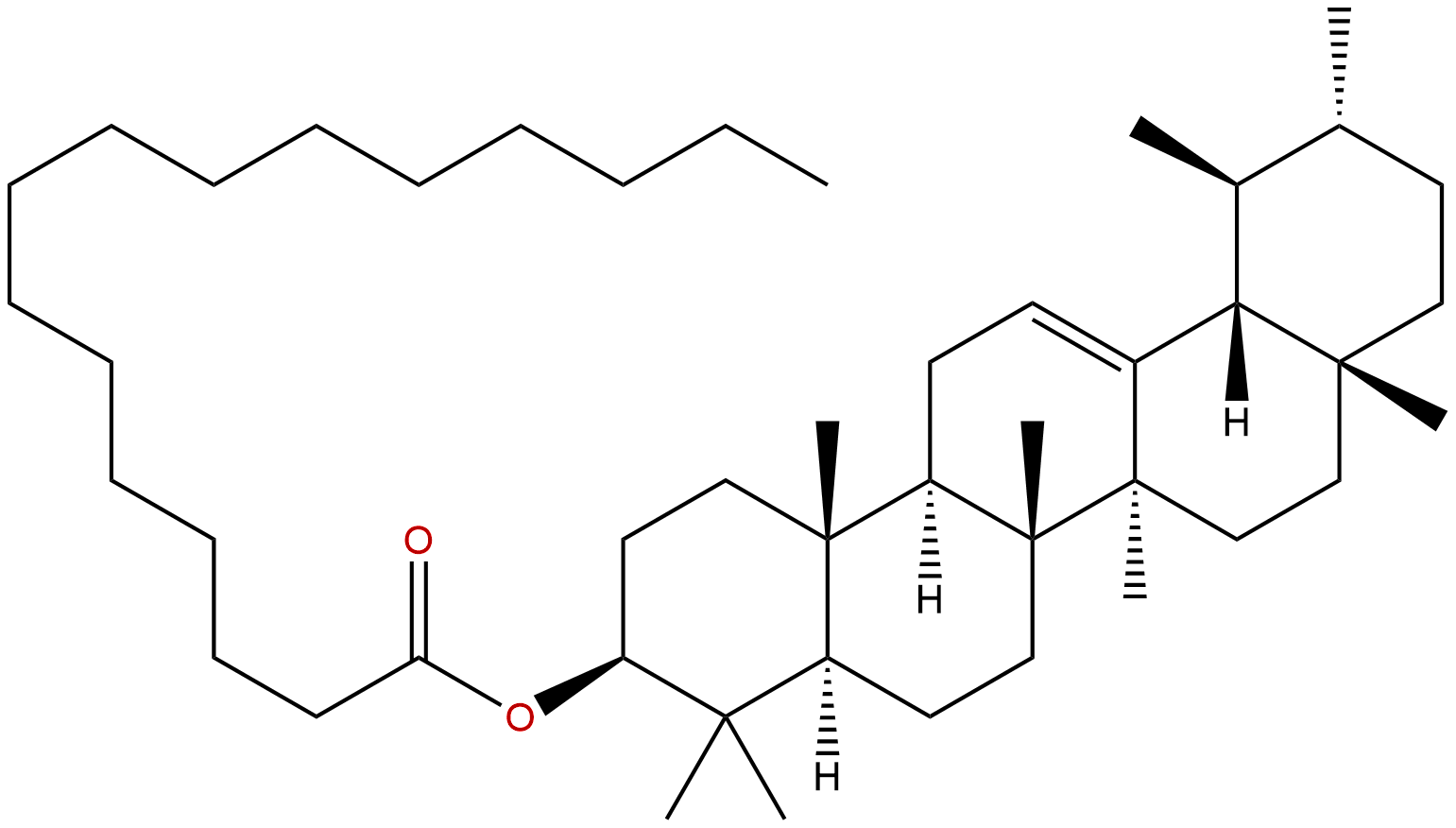
| Catalog No | Package | Original Price | Price | Inventory | Quantity | Operating |
|---|---|---|---|---|---|---|
| SBP01155-5mg | 5mg | $290.00 | Sign in |
|


Product name: α-Amyrin palmitate
Synonym name:
Catalogue No.: SBP01155
Cas No.: 22255-10-3
Formula: C46H80O2
Mol Weight: 665.144
Botanical Source:
Physical Description: Powder
Type of Compound: Triterpenoids
Purity: 95%~99%
Analysis Method: HPLC-DAD or/and HPLC-ELSD
Identification Method: Mass, NMR
Packing: Brown vial or HDPE plastic bottle
The product could be supplied from milligrams to grams. Inquire for bulk scale.
We provide solution to improve the water-solubility of compounds, thereby facilitating the variety of activity tests and clinic uses.
For Reference Standard and R&D, Not for Human Use Directly.
Storage conditions:Short-term storage at 2~8℃, long-term storage at -20 ~ -80℃
26.3000
14.0000
14.0000
.0000
7.9125
5.8217
High
96.6892
4.8454
No
No
No
Yes
No
No
0.0
No
No
No
No
Natural products, as an important source of drug discovery, play an irreplaceable role in the long history of human fight against diseases. Among them, pentacyclic triterpenoids have always been a hot topic in medicinal chemistry and pharmacology research due to their structural diversity, extensive biological activity, and relatively low toxicity. Alpha amyrin palmitate, as a typical pentacyclic triterpenoid ester compound, is a natural product formed by the ester bond between alpha amyrin and palmitic acid. Its unique chemical structure combines the rigid lipid ring of triterpenoid skeleton and the flexible hydrophobic tail of long-chain fatty acids, endowing it with unique physicochemical properties and biological activity.
Alpha resin palmitate is widely present in various medicinal plants and resins, such as frankincense(Boswellia)There are no medicinal herbs(Commiphora)And some Asteraceae plants. In traditional medicine, these plants are often used to treat inflammation, pain, ulcers and infectious diseases, and α - palmitate is considered as one of its important active ingredients. In recent years, with the advancement of separation and purification technology and biological activity screening methods, research on this compound has become increasingly in-depth, revealing its potential pharmacological value in multiple fields such as anti-inflammatory, antioxidant, anti-tumor, neuroprotective, and metabolic regulation.
However, despite its broad spectrum of activities, the pharmacological research of alpha cinnamyl palmitate is still in its infancy. Its extremely high lipid solubility (LogP up to 14.0) and extremely poor water solubility (0.0000 mg/mL) pose significant challenges for its development as an oral drug. Meanwhile, its potential hERG inhibitory activity also suggests a risk of cardiac toxicity. This article aims to systematically review the chemical structure, plant origin, pharmacological activity, mechanism of action, and pharmacological evaluation of alpha cinnamyl alcohol palmitate, in order to provide comprehensive scientific basis for the subsequent research and development of this natural product.
The chemical structure of alpha cinnamyl palmitate belongs to the Ursane type pentacyclic triterpenoid derivative. Its core skeleton is alpha aromatic resin alcohol, with five fused six membered rings (A/B/C/D/E rings), where A and B rings are trans fused, and E ring is a five membered ring. The C-3 hydroxyl group (- OH) of α - cinnamyl alcohol undergoes esterification reaction with the carboxyl group of palmitic acid (hexadecanoic acid) to form α - cinnamyl alcohol palmitate. This esterification reaction not only shields polar hydroxyl groups, but also introduces a long-chain fatty acid (C16:0), significantly altering the overall polarity and spatial conformation of the molecule.
From the perspective of physical and chemical properties, this compound exhibits typical "high-fat, low water" characteristics. Its molecular formula is C ₄₆ H ₈₀ O ₂, with a molecular weight of 665.1440 Da. According to calculations, its lipid water partition coefficient (LogP) is as high as 14.0000, indicating that it is extremely lipophilic and almost insoluble in water (with a water solubility of 0.0000 mg/mL). The topologically polar surface area (TPSA) is only 26.3000 Å ², much lower than the typical threshold for oral drugs (about 140 Å ²), consistent with its non-polar triterpenoid skeleton and long-chain alkane tail structure. The extremely low TPSA means that the molecule has almost no ability to form hydrogen bonds, which is beneficial for its penetration of biological membranes, but also severely limits its dissolution and distribution in aqueous environments such as blood and cytoplasm.
In addition, predicted data indicate that alpha cinnamyl palmitate has a high blood-brain barrier (BBB) penetration ability. This characteristic is closely related to its high lipid solubility and low polarity, suggesting that the compound may play a role in the central nervous system (CNS). However, it is also worth noting that the compound is predicted to be hERG inhibitory positive. The hERG (human Ether - à - go Related Gene) potassium ion channel is a key regulatory factor in cardiac repolarization, and its inhibition can lead to QT interval prolongation, increasing the risk of apical torsion type ventricular tachycardia, and is a key risk of cardiac toxicity that needs to be avoided in drug development. The Ames test result was 0.0, indicating that it did not exhibit mutagenicity in the bacterial recovery mutation test and had a low risk of genetic toxicity.
Alpha cinnamyl palmitate is widely distributed in nature and mainly exists in the resin, bark, leaves, and fruits of higher plants. One of its most famous sources is the frankincense plant (such as Boswellia serrata, Boswellia carterii)These resins are used in traditional Ayurvedic medicine and traditional Chinese medicine to treat arthritis, asthma, and inflammatory bowel disease. In addition, there are no medicinal plants (such as Commiphora myrrha)Resin, Asteraceae plants such as mugwort leaves(Artemisia argyi)And Aster(Aster tataricus)This ingredient is also found in the roots and stems of certain Moraceae and Fabaceae plants.
The extraction of alpha cinnamyl palmitate typically relies on organic solvent extraction methods. Due to its extremely high lipid solubility, traditional polar solvents such as water and ethanol are difficult to extract effectively. Therefore, non-polar or weakly polar solvents are preferred. Common extraction solvents include petroleum ether, n-hexane, chloroform, dichloromethane, and ethyl acetate. The extraction process usually includes the following steps: first, the dried plant material is crushed, and then soaked or refluxed with the above-mentioned solvent at room temperature or heating conditions for extraction. After filtration and vacuum concentration of the extract, the total extract is obtained. Due to the complex composition of plant extracts, further separation and purification steps are usually required.
Separation and purification mainly rely on chromatographic techniques. Silica gel column chromatography is the most commonly used method, typically using gradient elution, such as using petroleum ether ethyl acetate or n-hexane ethyl acetate systems. Alpha resin palmitate is usually eluted in fractions with a high proportion of non-polar solvents due to its extremely low polarity. In addition, high-performance liquid chromatography (HPLC) and preparative thin layer chromatography (PTLC) are also commonly used to obtain high-purity monomer compounds. In recent years, high-speed countercurrent chromatography (HSCCC) has been successfully applied as a liquid-liquid distribution chromatography technique for the separation of triterpenoids due to its advantages of irreversible adsorption and high sample recovery rate. The commonly used methods for identifying this compound include nuclear magnetic resonance spectroscopy (NMR, especially ¹ H-NMR and ¹ ³ C-NMR), mass spectrometry (MS, such as ESI-MS, HR-MS), and infrared spectroscopy (IR). Its characteristic NMR signals include multiple methyl unipeaks on the triterpene skeleton, olefin protons (usually located at C-12 position, δ 5.1-5.3 ppm), and long-chain methylene signals on the palmitic acid chain.
In recent years, significant progress has been made in the pharmacological activity research of alpha cinnamyl alcohol palmitate, mainly focusing on the following aspects:
1. Anti inflammatory activity
Anti inflammation is one of the most concerned pharmacological activities of alpha cinnamyl palmitate. Multiple in vitro and in vivo studies have shown that this compound can effectively inhibit the production of various inflammatory mediators. In a macrophage model stimulated by lipopolysaccharide (LPS), alpha cinnamyl palmitate can significantly reduce the levels of nitric oxide (NO), prostaglandin E ₂ (PGE ₂), and pro-inflammatory cytokines such as tumor necrosis factor - α (TNF - α), interleukin-1 β (IL-1 β), and interleukin-6 (IL-6). Its anti-inflammatory mechanism is closely related to the inhibition of the activation of nuclear factor kappa B (NF - κ B) and mitogen activated protein kinase (MAPK) signaling pathways. In animal models such as carrageenan induced paw swelling in rats and acetic acid induced increased intra-abdominal capillary permeability in mice, oral or local administration of alpha cinnamyl palmitate showed significant anti-inflammatory effects, and the effect was positively correlated with dose.
2. Antioxidant activity
Oxidative stress is a common pathological basis for various diseases, including inflammation, aging, neurodegenerative diseases, and cancer. Alpha resin alcohol palmitate exhibits certain free radical scavenging ability. In the DPPH (1,1-diphenyl-2-trinitrophenylhydrazine) and ABTS (2,2 '- diazobis (3-ethylbenzothiazoline-6-sulfonic acid) radical scavenging experiments, the compound exhibited moderate antioxidant activity. In addition, it can also protect cells from oxidative damage by upregulating the activity of intracellular antioxidant enzymes such as superoxide dismutase (SOD) and glutathione peroxidase (GPx), reducing the levels of lipid peroxidation products such as malondialdehyde (MDA). However, its antioxidant activity is relatively weak compared to some classic antioxidants such as vitamin C and vitamin E, and may be more of an auxiliary mechanism for its anti-inflammatory and cell protective effects.
3. Antitumor activity
Alpha cinnamyl palmitate exhibits cytotoxicity towards various tumor cell lines. Studies have shown that it can inhibit the proliferation of human liver cancer cells (HepG2), human breast cancer cells (MCF-7), human lung cancer cells (A549) and human melanoma cells (A375). Its anti-tumor mechanism involves inducing cell apoptosis and cell cycle arrest. For example, in HepG2 cells, this compound can activate the mitochondrial apoptosis pathway, upregulate the Bax/Bcl-2 ratio, release cytochrome c, and activate Caspase-3 and Caspase-9, ultimately leading to cell apoptosis. In addition, it can also arrest the cell cycle in the G0/G1 phase and inhibit DNA synthesis in tumor cells. It is worth noting that its toxicity to normal cells is usually lower than that to tumor cells, demonstrating a certain degree of selectivity.
4. Neuroprotective activity
Given its predicted high blood-brain barrier penetration, the neuroprotective effect of alpha cinnamyl palmitate has attracted the interest of researchers. In the neurotoxic model induced by β - amyloid protein (A β), this compound can reduce A β aggregation, lower oxidative stress levels, and inhibit neuroinflammatory responses, thereby protecting neurons from damage. In animal models, it may improve scopolamine induced memory impairment by regulating the cholinergic system and antioxidant defense mechanisms. These preliminary studies suggest that it has potential therapeutic value in neurodegenerative diseases such as Alzheimer's disease.
5. Other activities
In addition to the main activities mentioned above, alpha cinnamyl palmitate has also been reported to have anti ulcer, hepatoprotective, antibacterial, and antiviral activities. For example, in a rat gastric ulcer model, it can significantly reduce gastric acid secretion, increase gastric mucosal blood flow, and promote ulcer healing. In terms of liver protection, it can reduce the levels of transaminase in the serum of mice with carbon tetrachloride (CCl ₄) - induced liver injury, alleviate liver cell necrosis and steatosis.
The pharmacological activity of alpha cinnamyl palmitate is the result of multi-target and multi pathway synergistic effects. Its core mechanism of action can be summarized as follows:
1. Regulating the inflammatory signaling pathway
NF - κ B and MAPK are two key inflammatory signaling pathways. Alpha cinnamyl palmitate can inhibit the activity of I κ B kinase (IKK), prevent the phosphorylation and degradation of I κ B α, thereby inhibiting the nuclear translocation of NF - κ B and reducing the transcription of downstream pro-inflammatory genes such as TNF - α, IL-6, COX-2, iNOS. Meanwhile, it can also inhibit the phosphorylation of p38 MAPK and JNK, thereby blocking the cascade amplification of inflammatory signals. This dual inhibitory effect is the molecular basis of its anti-inflammatory activity.
2. Inducing cell apoptosis
In tumor cells, this compound mainly induces apoptosis through the mitochondrial pathway (endogenous pathway). It may directly or indirectly disrupt mitochondrial membrane potential, increase mitochondrial membrane permeability, and lead to the release of cytochrome c into the cytoplasm. Cytochrome c binds to Apaf-1 to form apoptotic bodies, which in turn activate Caspase-9 and ultimately activate executive Caspase-3/7, cleaving the cytoskeleton and DNA repair proteins, leading to cell death. In addition, it may also activate exogenous apoptotic pathways by upregulating the expression of death receptors such as Fas.
3. Adjust the redox balance
Alpha cinnamyl palmitate enhances cellular antioxidant defense by activating the nuclear factor E2 related factor 2 (Nrf2) signaling pathway. Nrf2 is a key transcription factor that regulates the expression of antioxidant enzymes and detoxifying enzymes. This compound may promote the dissociation of Nrf2 and Keap1, allowing them to enter the nucleus and bind to antioxidant response elements (ARE), thereby upregulating the expression of genes such as SOD, GPx, and heme oxygenase-1 (HO-1), enhancing the cell's ability to clear reactive oxygen species (ROS).
4. Potential molecular targets
Although the specific high affinity targets have not been fully identified, based on their structural characteristics and activity profiles, it is speculated that they may act on lipid rafts or specific membrane receptors on the cell membrane. Its long-chain fatty acid tail may enable it to embed into the cell membrane, altering membrane fluidity and microstructural domains, thereby affecting the function of membrane proteins such as receptors and ion channels. In addition, it may also directly interact with certain nuclear receptors (such as PPAR γ) or enzymes (such as COX-2, 5-LOX) to exert regulatory effects. Future research requires the use of techniques such as Drug Affinity Reaction Target Stability (DARTS), Cell Thermal Transition Analysis (CETSA), and Activity Based Proteomic Analysis (ABPP) to identify its exact molecular targets.
Although alpha cinnamyl palmitate has shown rich pharmacological activity in both in vitro and in vivo models, its pharmacological development faces severe challenges. According to Lipinski's' Rule of Five ', this compound has two obvious violations: molecular weight (665 Da>500 Da) and LogP (14.0>5). In addition, its water solubility is extremely poor (0.0000 mg/mL), which severely limits its dissolution and absorption in the gastrointestinal tract, resulting in extremely low oral bioavailability.
Pharmacokinetic characteristics:
At present, there is very limited systematic pharmacokinetic research on alpha cinnamyl palmitate. Based on its physical and chemical properties, it is speculated that:
- absorb Poor oral absorption and extremely low bioavailability. Its high lipid solubility may cause it to form micelles in the intestine or bind with fats in food, but the dissolution rate is the limiting step in its absorption. It may be absorbed through the lymphatic system, bypassing the first pass effect of the liver.
- distribution Once it enters the bloodstream, due to its high lipid solubility, its distribution volume will be large and tends to accumulate in adipose tissue and cell membranes. High BBB penetration suggests its ability to enter the central nervous system.
- Metabolism The main metabolic pathways may include I-phase metabolic reactions such as ester bond hydrolysis (producing α - cinnamyl alcohol and palmitic acid), hydroxylation, epoxidation, as well as II phase metabolic reactions such as glucuronic acid or sulfuric acid binding. The liver and intestines are the main metabolic organs.
- excretion Metabolites are mainly excreted into the intestine through bile and excreted with feces. Due to its high molecular weight and low polarity, the possibility of renal excretion is very small.
Toxicity risk assessment:
- HERG inhibition A positive prediction is a significant warning signal for its cardiac toxicity. Further in vitro electrophysiological experiments (such as patch clamp experiments) are needed to confirm its IC ₅₀ value and assess its clinical risk.
- Ames test Negative indicates no direct mutagenicity and low risk of genetic toxicity.
- Other toxicities Long term toxicity, reproductive toxicity, immune toxicity and other data are still blank.
Improvement strategy for drug properties:
Given the contradiction between its enormous development potential and poor drug efficacy, future research needs to focus on drug chemical modification and the development of new dosage forms:
1. Prodrug design Design alpha cinnamyl palmitate as a water-soluble prodrug, such as introducing phosphate esters, amino acid esters, or sugar groups to improve water solubility, and release the original drug after enzymatic hydrolysis in vivo.
2. Simplification and optimization of structure Retain its key pharmacophores, simplify the complex pentacyclic triterpenoid skeleton, or shorten long-chain fatty acids to reduce molecular weight and LogP while maintaining or enhancing activity.
3. Development of new dosage forms By utilizing nanotechnology such as liposomes, solid lipid nanoparticles (SLN), nanoemulsions, or polymer micelles, encapsulating them in nanocarriers can significantly improve their water solubility, bioavailability, and achieve targeted delivery.
4. Structural similarity screening Screening compounds with similar structures but better physical and chemical properties from natural product libraries or synthetic compound libraries.
The clinical application prospects of alpha cinnamyl palmitate are closely related to the degree to which it solves the problem of drug formation. At present, it is mainly used as a dietary supplement or as an ingredient in traditional medicines, but it will take some time to enter clinical practice as a single chemical drug.
Potential application areas:
1. Chronic inflammatory diseases Such as rheumatoid arthritis, inflammatory bowel disease, psoriasis. It has strong anti-inflammatory activity and may act through multiple targets, surpassing single target nonsteroidal anti-inflammatory drugs (NSAIDs). If the oral absorption problem can be solved, it is expected to be developed into a candidate drug for treating chronic inflammation.
2. Neurodegenerative diseases Such as Alzheimer's disease and Parkinson's disease. Its high BBB penetration, neuroprotective and anti-inflammatory effects make it a highly promising candidate for CNS drugs.
3. neoadjuvant therapy As a chemotherapy sensitizer or for preventing tumor recurrence. Its induction of apoptosis and anti proliferative activity, as well as low toxicity to normal cells, make it a potential adjuvant therapy for tumors.
4. Liver protection Used for treating non-alcoholic fatty liver disease (NAFLD) or drug-induced liver injury.
Future research directions:
1. In depth pharmacokinetic research Establish a sensitive LC-MS/MS detection method to systematically study its absorption, distribution, metabolism, and excretion characteristics under different administration routes, and clarify its metabolites and metabolic pathways.
2. Accurate identification of molecular targets Using chemical biology techniques such as photoaffinity labeling and click chemistry, we aim to identify and validate protein targets that directly interact with them, providing precise guidance for structural optimization.
3. Toxicological evaluation of the system Conduct comprehensive in vitro and in vivo toxicology studies, particularly on cardiac toxicity (hERG), hepatotoxicity, and neurotoxicity, to evaluate their safety window.
4. Collaborative research between medicinal chemistry and pharmaceutical formulation Develop new derivatives or formulations with good oral bioavailability and safety by combining prodrug design and nanoformulation technology.
5. Preclinical efficacy validation Validate its efficacy and mechanism of action in various animal models highly correlated with human diseases, such as transgenic mice and humanized mice.
As a pentacyclic triterpenoid ester derived from traditional medicinal plants, alpha cinnamyl palmitate has shown great potential as a lead compound for new drug development due to its unique chemical structure and extensive pharmacological activities, especially anti-inflammatory, anti-tumor, and neuroprotective effects. However, its extremely poor solubility and pharmacokinetic properties, as well as potential hERG inhibition risks, pose major obstacles to its translation into clinical drugs. Future research must break away from traditional activity screening models and adopt an integrated development strategy that combines medicinal chemistry, pharmacokinetics, and toxicology. Through structural modification, prodrug design, or advanced nanoformulation technology, it is expected to overcome its inherent drug defects and unleash its potential clinical value. The in-depth study of alpha cinnamyl palmitate not only helps to understand the scientific connotation of traditional plant medicine, but also provides valuable molecular templates and ideas for the development of new drugs for the treatment of complex diseases such as chronic inflammation and neurodegenerative diseases.
Batch can search by a CAS number,one per line
