| Catalog No | Package | Original Price | Price | Inventory | Quantity | Operating |
|---|---|---|---|---|---|---|
| SBP02189-5mg | 5mg | $490.00 | Sign in |
|


Product name: β-Amyrenonol
Synonym name:
Catalogue No.: SBP02189
Cas No.: 38242-02-3
Formula: C30H48O2
Mol Weight: 440.712
Botanical Source:
Type of Compound:
Purity: 95%~99%
Analysis Method: HPLC-DAD or/and HPLC-ELSD
Identification Method: Mass, NMR
Packing: Brown vial or HDPE plastic bottle
Storage: Store in a well closed container, protected from air and light. Put into refrigerate or freeze for long term storage.
Whenever possible, you should prepare and use solutions on the same day. However, if you need to make up stock solutions in advance, we recommend that you store the solution as aliquots in tightly sealed vials at -20℃. Generally, these will be useable for up to two weeks.
The product could be supplied from milligrams to grams
Inquire for bulk scale.
For Reference Standard and R&D, Not for Human Use Directly.
Storage conditions:Short-term storage at 2~8℃, long-term storage at -20 ~ -80℃
37.3000
7.0882
7.0887
.0003
8.4944
20.6593
High
90.2780
4.6321
No
No
No
No
No
No
0.0
No
No
Yes
No
Natural products, as an important source of drug discovery, play an irreplaceable role in the long struggle between humans and diseases. Pentacyclic triterpenoids, as a widely distributed, structurally diverse, and biologically active natural secondary metabolite, have long been a hot topic in medicinal chemistry and pharmacology research. These compounds are based on six isoprene units as the basic skeleton and form a rigid skeleton with five cyclic structures through complex cyclization reactions. Their structural diversity endows them with a wide range of pharmacological activities, including anti-inflammatory, anti-tumor, hepatoprotective, antiviral, immune regulatory, etc.
Among numerous pentacyclic triterpenoids, β - amyrin and its derivatives have attracted much attention due to their significant biological activity. β - Myrenonol, also known as 11 Oxo - β - amyrin, with CAS number 38242-02-3, is an oxidized derivative of β - Myrenonol with a carbonyl group introduced at the C-11 position. This structural modification not only changes the electronic distribution and spatial conformation of the molecule, but also endows it with a unique pharmacological activity spectrum. As a representative member of pentacyclic triterpenoids and cyclic terpenes, β - aromatic resin ketone alcohols are closely related in function to β - amyrin, but their C-11 carbonyl group makes their activity more prominent in anti-inflammatory, analgesic, and other fields.
In recent years, with the in-depth elucidation of the pathogenesis of inflammation related diseases such as rheumatoid arthritis, inflammatory bowel disease, and neuroinflammation, as well as the optimization of natural product drug development strategies, β - coumarinol has re entered the field of researchers due to its multi-target and multi pathway regulated anti-inflammatory mechanism. This article aims to systematically review the chemical structure characteristics, natural sources, extraction and separation methods, pharmacological activities, molecular mechanisms of action, pharmacological evaluation, and clinical application prospects of β - aromatic resin ketone alcohols, in order to provide comprehensive academic references for the in-depth research and development of this natural product.
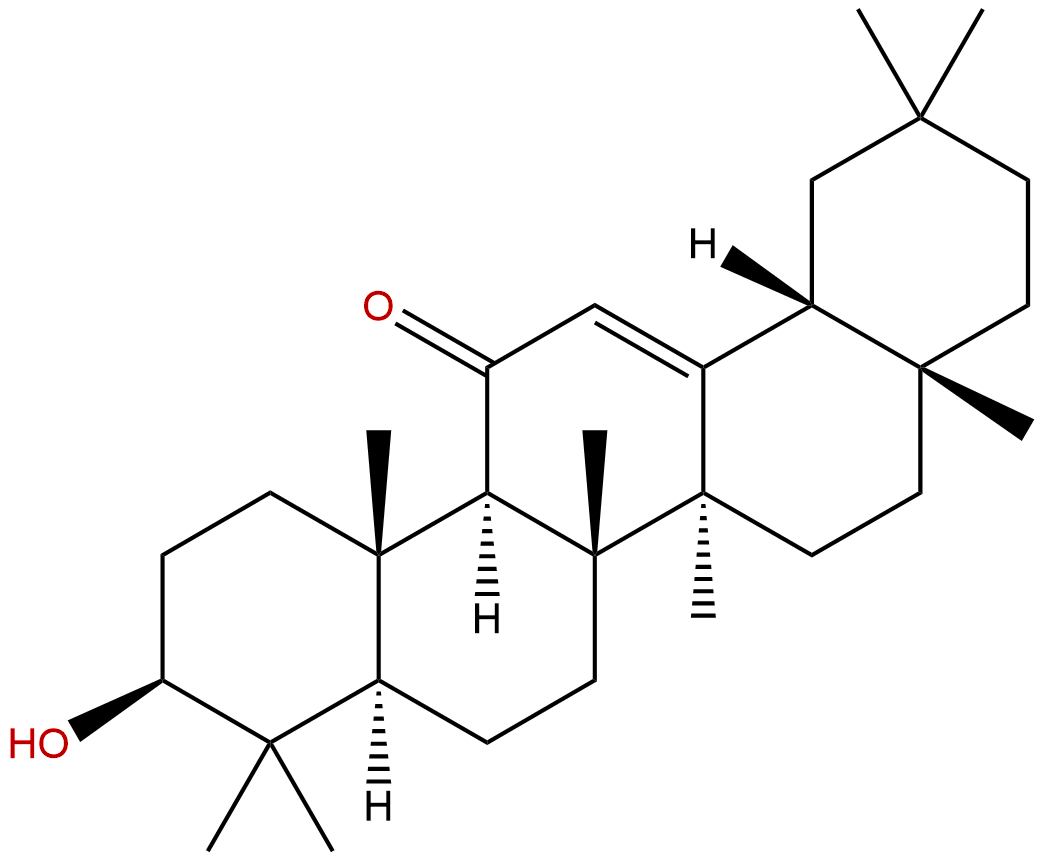
β - aromatic resin ketone alcohols belong to the Ursane type or Oleanane type skeleton derivatives of pentacyclic triterpenoids. According to its name "11 oxo - β - aromatic resin alcohol", its basic skeleton is β - aromatic resin alcohol (β - Amyrin), which is a representative compound of oleanane type pentacyclic triterpenoids and has a typical A/B/C/D/E pentacyclic fused system. The parent core structure of β - aromatic resin alcohol contains six isoprene units, which are formed into five cyclic structures through 1,2-addition and cyclization reactions. The A, B, C, and D rings are six membered rings, and the E ring is a five membered ring.
The key structural difference between β - aromatic resin ketone alcohols and β - aromatic resin alcohols lies in the C-11 position. In β - aromatic resin alcohols, the C-11 position is methylene (- CH ₂ -), while in β - aromatic resin ketone alcohols, this position is oxidized to carbonyl (C=O). This structural modification has important chemical and biological significance: firstly, the introduction of carbonyl groups increases the polarity of the molecule, changing its interaction mode with biomolecules such as proteins and enzymes; Secondly, carbonyl groups act as hydrogen bond acceptors and can participate in the formation of intermolecular hydrogen bonds, affecting the molecular recognition and target binding abilities of compounds; In addition, the presence of the C-11 carbonyl group may alter the electronic conjugation system of the entire molecule, thereby affecting its antioxidant and free radical scavenging activities.
From the perspective of stereochemistry, β - aromatic resin ketone alcohols retain the stereochemistry of β - aromatic resin alcohols, with the hydroxyl group at C-3 in the β - configuration and the methyl group at C-17 in the α - configuration. The rigid structure of the five ring skeleton gives the molecule a clear conformational preference, which is crucial for its specific binding to biological targets.
According to computational chemistry and experimental data, the key physicochemical parameters of β - aromatic resin ketone alcohols are as follows:
Based on the above parameters, β - aromatic resin ketone alcohols have typical physical and chemical characteristics of natural triterpenoids: high lipophilicity, low water solubility, good membrane permeability, and low toxicity risk. These properties provide favorable conditions for its pharmacological activity, but also pose challenges for its formulation development and clinical translation.
β - coumarinol, as an oxidative metabolite of β - coumarinol, is widely present in various medicinal plants, especially in plant groups such as Asteraceae, Araliaceae, Euphorbiaceae, Rutaceae, etc., where its content is relatively abundant. The following lists some plant species that have been reported to contain β - aromatic resin ketone alcohols:
Asteraceae plants Asteraceae is an important source of pentacyclic triterpenoids. For example, Aiye(Artemisia argyi)Artemisia scoparia, Artemisia scoparia(Artemisia capillaris)Artemisia annua(Artemisia annua)The presence of β - coumarin ketone alcohols has been detected in plants of the Artemisia genus. In addition, dandelions(Taraxacum mongolicum)Spinning flowers(Inula japonica)The compound is also present in medicinal plants of the Asteraceae family.
Araliaceae plants: Ginseng(Panax ginseng)Sanqi(Panax notoginseng)Ci Wu Jia(Acanthopanax senticosus)Plants in the Araliaceae family are rich in various triterpenoid saponins and their aglycones. β - coumarinol, as an oxidation product of β - coumarinol, is distributed in the roots, stems, and leaves of these plants.
Euphorbiaceae plants: Croaker(Croton tiglium)Chinese parasol tree(Sapium sebiferum)Castor bean(Ricinus communis)Euphorbiaceae plants are also potential sources of β - aromatic resin ketone alcohols.
Rutaceae plants Wu Zhuyu(Evodia rutaecarpa)Yellow Cypress(Phellodendron amurense)Rutaceae plants contain abundant triterpenoids, among which β - coumarin ketone alcohols are one of the important active ingredients.
Other plants In addition, β - coumarinol has also been reported in plant groups such as Lamiaceae, Fabaceae, and Moraceae.
It is worth noting that the content of β - aromatic resin ketone alcohols in plants is usually low and often coexists with β - aromatic resin alcohols, α - aromatic resin alcohols, and their oxidized derivatives. Its biosynthetic pathway involves the C-11 oxidation reaction of β - coumarin catalyzed by cytochrome P450 enzymes (such as the CYP450 family), which may be regulated by factors such as plant growth and development stages, environmental stress (such as drought, high temperature, and pathogen infection).
Due to the high lipophilicity and low water solubility of β - aromatic resin ketone alcohols, their extraction is usually carried out using organic solvent extraction method. Common extraction solvents include ethanol, methanol, ethyl acetate, chloroform, dichloromethane, etc. The following is a typical extraction and separation process:
1. Rough extraction
-Grind the dried plant material to an appropriate particle size (usually 20-40 mesh).
-Use 95% ethanol or methanol for cold soaking extraction (room temperature soaking for 24-48 hours) or hot reflux extraction (60-80 ° C, 2-4 hours).
-The extract was concentrated under reduced pressure to obtain the total extract.
2. Solvent fractionation extraction
-Suspend the total extract in an appropriate amount of distilled water and perform liquid-liquid extraction using petroleum ether, chloroform (or dichloromethane), ethyl acetate, and n-butanol in sequence.
-β - aromatic resin ketone alcohols are mainly enriched in the petroleum ether phase and chloroform phase due to their high lipophilicity.
3. Chromatographic separation
- Silica gel column chromatography Using silica gel (200-300 mesh) as the stationary phase, elute with petroleum ether ethyl acetate or chloroform methanol gradient. β - aromatic resin ketone alcohols typically peak in the elution component of petroleum ether ethyl acetate (10:1 to 5:1).
- Reverse phase column chromatography For further purification, ODS (C18) reverse phase silica gel column can be used, eluted with methanol water or acetonitrile water system.
- Preparation type high performance liquid chromatography (Prep HPLC)Using a C18 column as the stationary phase, methanol water (85:15 to 95:5) as the mobile phase, and UV detection wavelengths of 210 nm or 254 nm, high-purity β - aromatic resin ketone alcohols can be obtained.
4. Structural identification
-Determine the planar structure and relative configuration through nuclear magnetic resonance spectroscopy (¹ H-NMR, ¹ ³ C-NMR, DEPT, HSQC, HMBC, NOESY).
-High resolution mass spectrometry (HR-ESI-MS) was used to confirm the molecular weight and formula.
-Compare with spectral data reported in literature or confirm with standard samples by co chromatography.
5. Content determination method
-Quantitative analysis was performed using high-performance liquid chromatography ultraviolet detection (HPLC-UV) or liquid chromatography-mass spectrometry (LC-MS) methods.
-Chromatographic conditions: C18 reverse phase column (e.g. Agilent ZORBAX SB-C18, 4.6 × 250 mm, 5 μ m), mobile phase methanol water (90:10), flow rate 1.0 mL/min, detection wavelength 210 nm.
The most noteworthy pharmacological activity of β - aromatic resin ketone alcohols is their anti-inflammatory effect. Numerous in vitro and in vivo studies have confirmed that this compound can effectively inhibit inflammatory responses in various inflammatory models.
In vitro anti-inflammatory activity:
-In the RAW 264.7 macrophage model stimulated by lipopolysaccharide (LPS), β - coumarinol (1-30 μ M) inhibited the production of nitric oxide (NO) in a concentration dependent manner, with an IC50 value of approximately 5-10 μ M. At the same time, it can significantly reduce the release of prostaglandin E ₂ (PGE ₂).
-In LPS induced BV-2 microglia (neuroinflammatory model), β - coumarinol (0.1-10 μ M) effectively inhibits the mRNA expression and protein secretion of inflammatory factors TNF - α, IL-6, and IL-1 β.
-In SW982 human synovial sarcoma cells stimulated by IL-1 β (rheumatoid arthritis model), this compound inhibits the expression of matrix metalloproteinases (MMP-1, MMP-3, MMP-13), suggesting its potential in the treatment of osteoarthritis.
In vivo anti-inflammatory activity:
-In the carrageenan induced rat paw swelling model, β - coumarinol (10-50 mg/kg, intraperitoneal injection or oral administration) significantly inhibited paw swelling, and its effect was comparable to the positive control drug indomethacin.
-In a rat adjuvant arthritis model induced by complete Freund's adjuvant (CFA), continuous administration for 14 days (20 mg/kg/day, oral) significantly reduced joint swelling, decreased arthritis index, and inhibited inflammatory cell infiltration and vascular opacities formation in synovial tissue.
-In a mouse colitis model induced by dextran sulfate sodium (DSS), β - coumarinol (10 mg/kg/day, gavage) reduced colon shortening, lowered disease activity index (DAI), and inhibited myeloperoxidase (MPO) activity and pro-inflammatory cytokine expression in colon tissue.
The analgesic effect closely related to anti-inflammatory activity is another important pharmacological characteristic of β - aromatic resin ketone alcohols.
-In the acetic acid writhing test (chemical pain model), β - coumarinol (10-30 mg/kg, intraperitoneal injection) significantly reduced the number of writhing movements in mice, with an analgesic rate of 50-70%.
-In the hot plate test (thermal pain model), the compound (20-50 mg/kg) prolonged the latency period of foot licking in mice, indicating its central analgesic effect.
-In the formalin test, the inhibitory effect of β - coumarinol on the second phase (inflammatory pain) was stronger than that on the first phase (neuropathic pain), indicating that its analgesic effect is mainly achieved through anti-inflammatory mechanisms.
In addition to anti-inflammatory and analgesic effects, β - aromatic resin ketone alcohols also exhibit the following biological activities:
- antioxidant activity By scavenging DPPH free radicals, ABTS ⁺ free radicals, and inhibiting lipid peroxidation, β - aromatic resin ketone alcohols exhibit moderate antioxidant capacity.
- Hepatoprotective activity In the acute liver injury model induced by carbon tetrachloride (CCl ₄) in mice, this compound (10-30 mg/kg) reduces serum transaminase (ALT, AST) levels, alleviates liver cell necrosis and steatosis.
- Neuroprotective activity In the SH-SY5Y cell injury model induced by oxygen glucose deprivation/reoxygenation (OGD/R), β - coumarinol (1-10 μ M) increased cell survival rate, reduced lactate dehydrogenase (LDH) release and reactive oxygen species (ROS) levels.
- Antibacterial activity Regarding Staphylococcus aureus(Staphylococcus aureus)Escherichia coli(Escherichia coli)Common pathogenic bacteria exhibit certain inhibitory effects, with MIC values ranging from 50-200 μ g/mL.
The anti-inflammatory mechanism of β - aromatic resin ketone alcohol involves the synergistic regulation of multiple signaling pathways and molecular targets, reflecting the multi-target and multi pathway characteristics of natural products.
1. NF - κ B signaling pathway
NF - κ B (Nuclear Factor kappa-B) is a core transcription factor in inflammatory response. β - aromatic resin ketone alcohols inhibit the NF - κ B pathway through the following mechanisms:
-Inhibit the phosphorylation activation of I κ B kinases (IKK, including IKK α and IKK β). IKK β (IKBKB) is a key regulatory node in the NF - κ B pathway. β - coumarinol directly or indirectly inhibits the activity of IKK β, preventing the phosphorylation and degradation of I κ B α.
-Reduce nuclear translocation of p65 (RELA) subunit, thereby inhibiting the binding ability of NF - κ B to DNA.
-Downregulate the expression of NF - κ B target genes, including TNF - α, IL-6, IL-1 β, COX-2 (PTGS2), iNOS (NOS2), etc.
2. STAT3 signaling pathway
STAT3 (Signal Transformer and Activitor of Transcription 3) plays an important role in inflammation and immune response. β - coumarinol can inhibit IL-6-induced STAT3 phosphorylation (Tyr705 site), reduce STAT3 dimerization and nuclear translocation, thereby inhibiting its transcriptional activity. This effect is closely related to the negative regulation of the IL-6/STAT3 pathway.
3. MAPK signaling pathway
The mitogen activated protein kinase (MAPK) family includes ERK, JNK, and p38 MAPK. Research has shown that β - coumarinol can inhibit LPS induced phosphorylation of p38 MAPK and JNK, but has little effect on ERK phosphorylation. The inhibition of p38 MAPK and JNK further reduces the transcriptional activity of AP-1 (Activitor Protein-1), thereby downregulating the expression of inflammatory factors.
4. NLRP3 inflammasome pathway
NLRP3(NOD-like receptor family, pyrin domain containing 3) Inflammatory bodies are an important component of the innate immune system, and their abnormal activation is associated with various inflammatory diseases. β - aromatic resin ketone alcohol reduces the maturation and secretion of IL-1 β and IL-18 by inhibiting the activation of CASP1 (Caspase-1). This effect may be related to its inhibition of the NF - κ B pathway (reducing the expression of pro-IL-1 β) and direct inhibition of NLRP3 inflammasome assembly.
Based on existing research, the direct or indirect targets of β - aromatic resin ketone alcohols include:
| target | Gene symbol | mode of action | Function association |
|---|---|---|---|
| Interleukin-6 | IL-6 | Inhibit expression and secretion | Inflammatory cytokines, STAT3 pathway activators |
| Signal transduction and transcription activator 3 | STAT3 | Inhibit phosphorylation and nuclear translocation | Inflammation and immune response transcription factors |
| Cystatine-1 | CASP1 | Inhibit activation | NLRP3 inflammasome effector protein |
| Transient receptor potential vanillic acid subtype 1 | TRPV1 | Possible antagonist | Pain perception and neuroinflammation |
| Transcription factor p65 | RELA | Inhibit nuclear translocation | NF - κ B complex subunit |
| Prostaglandin endoperoxide synthase 1 | PTGS1 | Inhibitory activity | Prostaglandin synthase (COX-1) |
| tumor necrosis factor | TNF | Inhibit expression and secretion | Pro-inflammatory cytokines |
| Transient receptor potential anchor protein 1 | TRPA1 | Possible antagonist | Pain perception and chemical sensation |
| I κ B kinase β | IKBKB | Inhibition of kinase activity | Key kinases in the NF - κ B pathway |
| Nitric oxide synthase 2 | NOS2 | Inhibition of expression | Inducible nitric oxide synthase (iNOS) |
It is worth noting that the regulatory effects of β - aromatic resin ketone alcohols on TRPV1 and TRPA1 are particularly noteworthy. TRPV1 and TRPA1 are members of the transient receptor potential (TRP) channel family, playing critical roles in pain perception, neuroinflammation, and thermal sensation. β - aromatic resin ketone alcohols may exert analgesic and anti neuroinflammatory effects by directly binding or indirectly regulating the activity of these channels. This discovery provides potential lead compounds for the development of novel non opioid analgesic drugs.
Molecular simulation studies suggest that the C-11 carbonyl group of β - aromatic resin ketone alcohols may interact with key amino acid residues (such as Lys44, Glu61) in the ATP binding pocket of IKK β through hydrogen bonding, competitively inhibiting ATP binding and blocking IKK β kinase activity. In addition, its rigid five ring skeleton has good spatial matching with the hydrophobic pocket of TRPV1 channel, and the C-3 hydroxyl group forms hydrogen bonds with polar residues in the pore region of the channel, which may explain its TRPV1 antagonistic activity.
Structure Activity Relationship (SAR) analysis shows that:
-The C-11 carbonyl group is a key functional group for anti-inflammatory activity, and its activity is significantly reduced when reduced to a hydroxyl or methyl group.
-The esterification or glycosylation modification of the C-3 hydroxyl group can alter the water solubility and bioavailability of the compound, but may reduce its affinity for the target.
-The integrity and three-dimensional configuration of the five ring skeleton are crucial for maintaining activity, and opening the ring or flipping the configuration can lead to loss of activity.
Based on Lipinski's Rule of Five and Veber's Rule, the pharmacological characteristics of β - aromatic resin ketone alcohols are as follows:
| parameter | β - aromatic resin ketone alcohol | Drug like standard | Evaluation results |
|---|---|---|---|
| molecular weight | 440.7 Da | <500 Da | Comply with |
| LogP | 7.09 | <5 | not conform to |
| Hbond donor | 1(C3-OH) | <5 | Comply with |
| Number of hydrogen bond acceptors | 2(C3-OH, C11=O) | <10 | Comply with |
| Number of rotatable keys | 1 | <10 | Comply with |
| TPSA | 37.3 Ų | <140 Ų | Comply with |
The main pharmacological defect of β - aromatic resin ketone alcohols lies in their high LogP value (7.09), which is much higher than the Lipinski rule recommendation of<5. High lipophilicity leads to extremely poor water solubility (0.0003 mg/mL), which poses a serious challenge to its oral absorption and in vivo distribution. In addition, high LogP values may increase the risk of compound accumulation in adipose tissue, prolong half-life, and may cause non-specific binding and off target effects.
At present, there is insufficient systematic pharmacokinetic research on β - aromatic resin ketone alcohols, but based on their physicochemical properties and studies of similar compounds, the following characteristics can be inferred:
absorb:
-Oral absorption: Due to poor water solubility, the oral bioavailability of β - aromatic resin ketone alcohols may be low. High lipophilicity facilitates its penetration through intestinal epithelial cells through passive diffusion, but the rate of dissolution is the limiting step. The use of formulation techniques such as liposomes, cyclodextrin inclusion complexes, and solid dispersions can improve its solubility and oral absorption.
-Transdermal absorption: Its high lipophilicity gives it good transdermal penetration potential and can be used as a candidate drug for local administration.
distribution:
-High LogP values and low TPSA values indicate that it has a large distribution volume (Vd) and may be widely distributed in tissues and organs.
-The high penetrability of the blood-brain barrier suggests that it can enter the central nervous system and has therapeutic potential for neuroinflammation and neurodegenerative diseases.
-May bind highly to plasma proteins (especially albumin and lipoprotein), affecting the concentration of free drugs.
Metabolism:
-As a pentacyclic triterpenoid compound, β - coumarinol may undergo oxidative metabolism mainly through the liver cytochrome P450 enzyme system (CYP3A4, CYP2C9, etc.).
-The C-3 hydroxyl group may undergo glucuronic acid or sulfuric acid binding reactions, generating water-soluble metabolites to promote excretion.
-The C-11 carbonyl group may be reduced to a hydroxyl group, generating β - cinnamyl alcohol, which may be further metabolized.
excretion:
-The prototype drug and its metabolites are mainly excreted into the intestine through bile, and some may be reabsorbed through the enterohepatic circulation.
-A small amount of metabolites may be excreted through the kidneys via urine.
Based on the pharmacological activity spectrum and pharmacokinetic characteristics of β - aromatic resin ketone alcohols, they have potential clinical application value in the following disease fields:
1. Inflammatory diseases
- Rheumatoid arthritis By inhibiting the NF - κ B and STAT3 pathways, reducing joint synovitis and bone destruction, β - coumarinol can be used as an adjuvant therapy or alternative to anti rheumatic drugs (DMARDs) to improve the condition.
- Inflammatory bowel disease The effectiveness in DSS colitis model suggests its therapeutic potential for ulcerative colitis and Crohn's disease.
- Acute lung injury/acute respiratory distress syndrome By inhibiting the inflammatory response of alveolar macrophages and neutrophil infiltration, it may alleviate lung tissue damage.
2. Pain management
- Chronic inflammatory pain By inhibiting inflammatory mediators and regulating TRPV1/TRPA1 channels, β - coumarinol can serve as a substitute or supplement to nonsteroidal anti-inflammatory drugs (NSAIDs) or opioid drugs.
- Neuropathic Pain The penetrability of the central nervous system and its regulatory effect on TRP channels give it unique advantages in the treatment of neuropathic pain.
3. Neurodegenerative diseases
- Alzheimer disease By inhibiting neuroinflammation (activation of microglia) and oxidative stress, it may delay disease progression.
- Parkinson's disease Its anti-inflammatory and antioxidant effects may protect dopaminergic neurons from damage.
4. Metabolic disorders
- Non alcoholic fatty liver disease (NAFLD)Through anti-inflammatory and hepatoprotective effects, it may improve hepatic steatosis and inflammation.
1. Poor water solubility and low bioavailability
- Formulation strategy Develop new formulations such as liposomes, nanoparticles, self microemulsifying drug delivery systems (SMEDS), phospholipid complexes, etc. to improve solubility and oral bioavailability.
- Prodrug design Introducing hydrophilic groups such as phosphate esters, amino acid esters, or sugar groups at the C-3 position to improve water solubility and release prototype drugs through enzymatic interpretation in vivo.
2. Non specific binding caused by high lipophilicity
- structural optimization On the premise of maintaining the five ring skeleton and key functional groups (C-11 carbonyl, C-3 hydroxyl), appropriate polar groups (such as hydroxyl, carboxyl) are introduced to reduce the LogP value and improve target selectivity.
- Targeted delivery Using antibody drug conjugates (ADCs) or ligand modified nanocarriers to achieve targeted delivery and reduce off target effects.
3. Metabolic stability and half-life
- Structural modification By introducing fluorine atoms, methyl groups, and other functional groups to block metabolic sites, metabolic stability is improved.
- combination therapy Combined with CYP450 inhibitors (such as ritonavir) to increase drug exposure.
4. Security assessment
-A systematic long-term toxicity study (including chronic toxicity, reproductive toxicity, carcinogenicity) is needed to comprehensively evaluate its safety.
-Conduct research on drug interactions, particularly with CYP450 substrate drugs.
β - aromatic resin ketone alcohol, as an 11 oxo derivative of β - aromatic resin alcohol, is a brilliant pearl in the family of pentacyclic triterpenoid natural products. Its unique chemical structure - the introduction of the C-11 carbonyl group - endows it with a pharmacological activity spectrum that surpasses the parent compound, particularly demonstrating significant advantages in multi-target and multi pathway regulation in the fields of anti-inflammatory and analgesic effects. By inhibiting key signaling pathways such as NF - κ B, STAT3, MAPK, and NLRP3 inflammasomes, as well as regulating pain related ion channels such as TRPV1 and TRPA1, β - coumarinol has shown broad application prospects in the treatment of various inflammation related diseases such as rheumatoid arthritis, inflammatory bowel disease, and neuroinflammation.
However, the conversion of β - aromatic resin ketone alcohols from natural products to clinical drugs still faces many challenges. The bioavailability issue caused by its high lipophilicity and extremely low water solubility is the main bottleneck restricting its drug development. The development of modern medicinal chemistry and formulation provides various strategies to solve this problem, including prodrug design, nanomedicine, structural optimization, etc. In addition, further research is needed on its pharmacokinetic characteristics, long-term toxicity, and drug interactions.
Looking ahead, with advances in structural biology, computational chemistry, and drug delivery technologies, β - coumarinol and its derivatives are expected to become novel candidate drugs for the treatment of inflammatory diseases and pain. In depth research on natural products can not only reveal the scientific connotations of traditional medicinal plants, but also provide a continuous source of inspiration for modern drug discovery. The research process of β - aromatic resin ketone alcohols is a vivid example of the cross fusion of natural product chemistry and pharmacology, and the transformation of basic research into clinical applications. We have reason to believe that in the near future, this ancient and novel natural molecule will play a more important role in human health.
Batch can search by a CAS number,one per line
