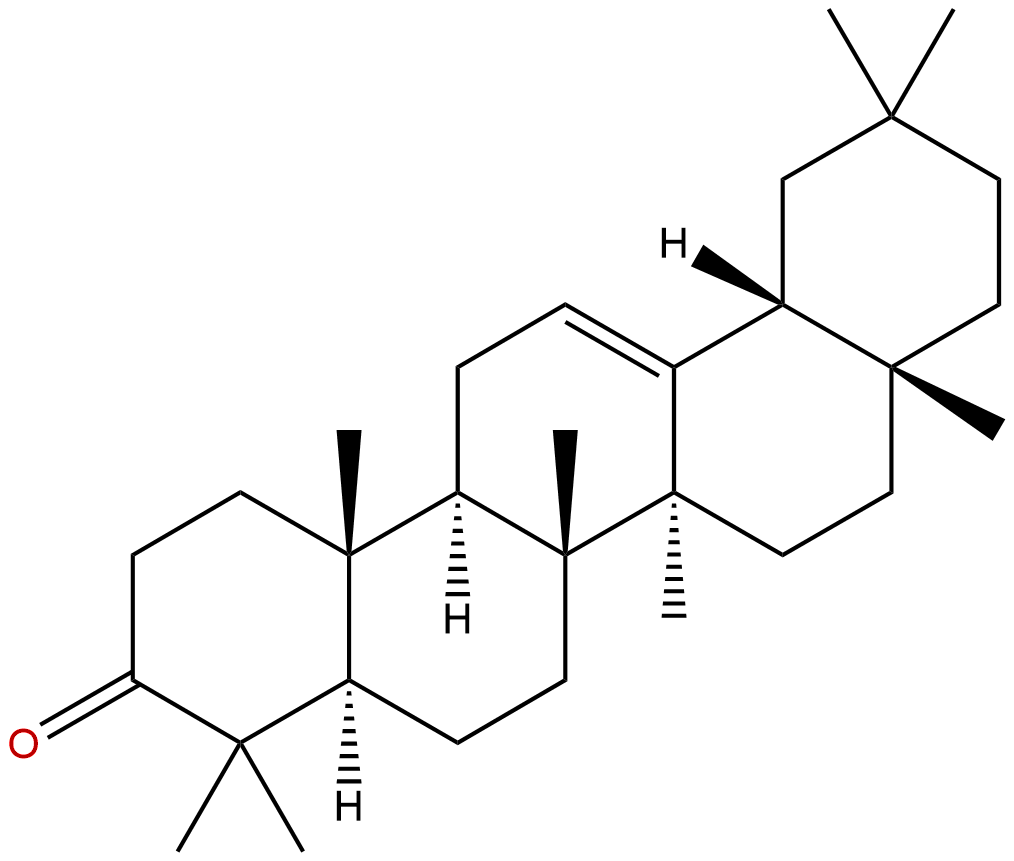
| Catalog No | Package | Original Price | Price | Inventory | Quantity | Operating |
|---|---|---|---|---|---|---|
| SBP01676-5mg | 5mg | $490.00 | Sign in |
|


Storage conditions:Short-term storage at 2~8℃, long-term storage at -20 ~ -80℃
β - Myrone (CAS number: 638-97-1) is a natural product belonging to the sesquiterpene class, widely present in resins and essential oils of various plants. As a natural compound with significant biological activity, β - coumarin has attracted widespread attention in the field of natural product pharmacology in recent years due to its unique chemical structure and multi-target pharmacological effects. Especially in terms of anti-inflammatory effects, β - coumarin exhibits good activity, involving multiple inflammation related signaling pathways and key molecular targets such as IL-6, STAT3, TNF, NFKB1, etc., demonstrating its potential value in the treatment of inflammatory diseases.
This article aims to systematically review the chemical structure and physicochemical properties, plant sources and extraction methods, pharmacological activity research, mechanism of action and molecular targets, pharmacological evaluation and pharmacokinetic characteristics of β - aromatic resin ketone, and explore its clinical application prospects and future research directions, providing scientific basis and theoretical support for the development and utilization of this natural product.
The molecular formula of β - aromatic resin ketone is C30H48O, with a molecular weight of 424.7130, belonging to sesquiterpene ketone compounds. Its structural features include a typical tricyclic terpene skeleton with ketone functional groups, endowing it with specific chemical reactivity. The LogP value of β - aromatic resin ketone is as high as 8.4091, indicating strong hydrophobicity and good affinity in lipid environments. However, its water solubility is extremely low (0.0001), which limits its direct application in aqueous solutions. Its topological polar surface area (TPSA) is 17.07 Å ², and its lower polarity is advantageous for penetrating cell membranes and the blood-brain barrier (BBB). Experimental data also confirms its high BBB permeability.
From the perspective of drug safety, β - coumarin did not exhibit hERG channel inhibition, indicating a low risk of cardiac toxicity; The Ames test result is 0.0, indicating no significant genotoxicity. These physicochemical and safety parameters provide a solid foundation for the drug development of β - aromatic resin ketone.
β - coumarins are mainly present in the resins and essential oils of various aromatic plants, especially in the coumarin family (such as the coumarin genus) and some pine family plants with high content. Its natural sources are abundant, and plant extracts often contain other sesquiterpenes and terpenoids, endowing it with complex pharmacological activities.
Traditional extraction methods often use solvent extraction combined with chromatographic separation technology. Common solvents include ethanol, methanol, ethyl acetate, etc. After extraction, purification is carried out by column chromatography (silica gel column, reverse phase C18 column). In recent years, supercritical CO2 extraction technology has also been used for the extraction of β - aromatic resin ketones due to its high efficiency, green and environmentally friendly characteristics, significantly improving the extraction purity and yield. In addition, the application of modern technologies such as microwave-assisted extraction and ultrasound assisted extraction has further optimized the extraction process, reducing energy consumption and time costs.
The pharmacological activity research of β - coumarin mainly focuses on its anti-inflammatory effect. Both in vitro cell models and in vivo animal experiments have shown that β - coumarin can significantly inhibit the release of inflammatory mediators and the activation of inflammatory signaling pathways. Specifically, it is manifested by inhibiting the expression of pro-inflammatory cytokines such as tumor necrosis factor alpha (TNF - α) and interleukin-6 (IL-6), reducing the activity of cyclooxygenase (PTGS1 and PTGS2), and thus alleviating the inflammatory response.
In addition, β - coumarin has a regulatory effect on inflammation related ion channels such as TRPV1 and TRPA1, which play a key role in pain and inflammation signaling. By regulating these targets, β - coumarin not only alleviates inflammation, but also alleviates inflammation related pain symptoms.
In recent years, studies have also found that β - coumarin plays a role in regulating the expression of apoptosis related enzymes CASP1 (cystathionine 1) and nitric oxide synthase 2 (NOS2), further revealing its multiple regulatory mechanisms in the inflammatory microenvironment.
The anti-inflammatory mechanism of β - coumarin involves multiple signaling pathways and key molecular targets. Firstly, it inhibits the nuclear factor kappa B (NFKB1) signaling pathway, blocks the transcriptional expression of pro-inflammatory genes, reduces the production of cytokines such as TNF - α and IL-6, and alleviates inflammatory responses. The NFKB signaling pathway is the core regulatory pathway of inflammatory response, and the effective inhibition of it by β - coumarin is the basis of its anti-inflammatory activity.
Secondly, β - coumarin affects the activity of signal transduction and transcription activator 3 (STAT3), which plays a crucial role in various inflammatory and immune responses. By regulating STAT3, β - coumarin can inhibit the activation of inflammatory cells and the release of inflammatory mediators.
In addition, the regulation of TRPV1 and TRPA1 ion channels by β - coumarin reduces the neural excitability and pain transmission caused by inflammatory stimuli, and has potential analgesic effects. CASP1, as the core enzyme of inflammasomes, participates in the maturation and release of pro-inflammatory cytokine IL-1 β. β - coumarinone inhibits the activity of CASP1, blocks the activation of inflammasomes, and further suppresses the inflammatory cascade reaction.
Finally, β - coumarin inhibits PTGS1 (COX-1) and PTGS2 (COX-2), reduces prostaglandin synthesis, and alleviates inflammation and pain. The inhibition of NOS2 reduces the excessive production of nitric oxide at the site of inflammation, alleviating oxidative stress and tissue damage.
In summary, β - coumarin achieves comprehensive regulation of inflammatory response through multi-target and multi pathway synergistic effects, demonstrating good anti-inflammatory potential.
The pharmacological evaluation of β - aromatic resin ketone shows certain advantages and challenges. Its high lipid solubility (LogP=8.4091) and low polarity (TPSA=17.07) give it good cell membrane permeability and blood-brain barrier penetration ability, making it suitable for drug development in central nervous system related diseases. However, its extremely low water solubility (0.0001) limits its bioavailability, and drug formulation techniques such as nanocarriers, liposomes, micelles, etc. are needed to improve its solubility and in vivo distribution.
In terms of safety, β - coumarin did not exhibit hERG channel inhibition, reducing the risk of cardiac toxicity; A negative Ames test indicates no significant genetic toxicity and meets the safety requirements of the drug.
Pharmacokinetic studies have shown that β - coumarin has good distribution characteristics in the body, especially the ability to penetrate the blood-brain barrier, making it suitable for the treatment of central nervous system inflammation and related diseases. Its metabolic pathway is not fully understood, but it is speculated that it is mainly metabolized through liver oxidation and reduction reactions, and the activity and safety of metabolites need further research.
Based on the multi-target mechanism of action and good safety of β - coumarin in the field of anti-inflammatory, its clinical application prospects are broad. Firstly, β - coumarin is expected to become a new natural medicine or adjuvant therapy for the treatment of chronic inflammatory diseases such as rheumatoid arthritis, inflammatory bowel disease, neuropathy, etc. Secondly, its regulatory effect on TRPV1 and TRPA1 gives it potential advantages in the management of inflammatory pain.
In addition, the high blood-brain barrier permeability of β - coumarin provides the possibility for its application in central nervous system inflammatory diseases such as multiple sclerosis, Alzheimer's disease, etc. In the future, improving its water solubility and bioavailability through structural modification and drug carrier technology will further enhance its clinical translational potential.
However, the current clinical research on β - coumarin is relatively limited, and there is an urgent need for systematic pharmacological, toxicological, and preclinical research support to clarify its pharmacokinetic characteristics, dosage range, and safety evaluation, laying the foundation for clinical trials.
β - coumarin, as a natural sesquiterpene ketone compound with significant anti-inflammatory activity, has shown great potential for drug development due to its multi-target and multi mechanism pharmacological effects. Its unique chemical structure endows it with excellent blood-brain barrier permeability and low toxicity risk, providing a theoretical basis for its application in the treatment of inflammatory diseases, especially central nervous system inflammation.
Future research should focus on optimizing its drug formulation, improving its water solubility and bioavailability, deeply analyzing its metabolic pathways and long-term safety, conducting systematic preclinical and clinical trials, promoting the transition of β - coumarin from laboratory to clinical application, and benefiting patients. The continuous development of natural product pharmacology will provide solid support for the innovative drug development of β - coumarin and similar compounds.
