


Product name: Oleanolic acid
Synonym name:
Catalogue No.: BP1026
Cas No.: 508-02-1
Formula: C30H48O3
Mol Weight: 456.711
Botanical Source: Occurs as glycosides in mistletoe, cloves (Syzygium aromaticum), sugar beet (Beta vulgaris), olive leaves, etc. Very widely distributed aglycone. a Black Sea alga, family Cladophoraceae and from Ulva fasciata
Physical Description: Powder
Type of Compound: Triterpenoids
Purity: 95%~99%
Analysis Method: HPLC-DAD or/and HPLC-ELSD
Identification Method: Mass, NMR
Packing: Brown vial or HDPE plastic bottle
Storage: Store in a well closed container, protected from air and light. Put into refrigerate or freeze for long term storage.
Whenever possible, you should prepare and use solutions on the same day. However, if you need to make up stock solutions in advance, we recommend that you store the solution as aliquots in tightly sealed vials at -20℃. Generally, these will be useable for up to two weeks.
The product could be supplied from milligrams to grams, up to kilograms
Inquire for bulk scale.
Descriptions:
Oleanolic acid is a pentacyclic triterpenoid compound with a widespread occurrence throughout the plant kingdom. In nature, the compound exists either as a free acid or as an aglycone precursor for triterpenoid saponins, in which it can be linked to one or more sugar chains. Oleanolic acid and its derivatives possess hepatoprotective effects, and anti-inflammatory, antioxidant, or anticancer activities. [1]
Oleanolic acid may be a promising agent to disturb adipocyte differentiation and suppress obesity-associated inflammation, 25mol/L oleanolic acid-treated adipocytes can significantly repress visfatin production possibly through blocking PPAR activation.[2]
Oleanolic acid and ursolic acid exhibit anti-HCV activity at least partly through suppressing HCV NS5B RdRp activity as noncompetitive inhibitors,could be used as potential HCV antivirals that can be applied to clinic trials either as monotherapy or in combination with other HCV antivirals.[3]
Oleanolic acid may be a possible bioactive agent that blunts adipogenesis and adipokine inflammation, can suppress adipocyte differentiation-associated resistin and adipogenesis production by disturbing the Tyk2-STAT1/3 signaling pathway and promoting SOCS3 expression. [4]
References:
[1] Pollier J, Goossens A. Phytochemistry, 2012, 77(5):10-15.
[2] Sung H Y, Kang S W, Kim J L, et al. Nutr Res, 2010, 30(12):831–39.
[3] Kong L, Li S, Liao Q, et al. Antivir Res,2013, 98(1):44-53.
[4] Kim H S, Sung H Y, Kim M S, et al. Nutr Res, 2013, 33(2):144-53.
[5] Zhou C, Chen K, Sun C, et al. Biomed Chromatogr, 2007, 21(7):755-61.
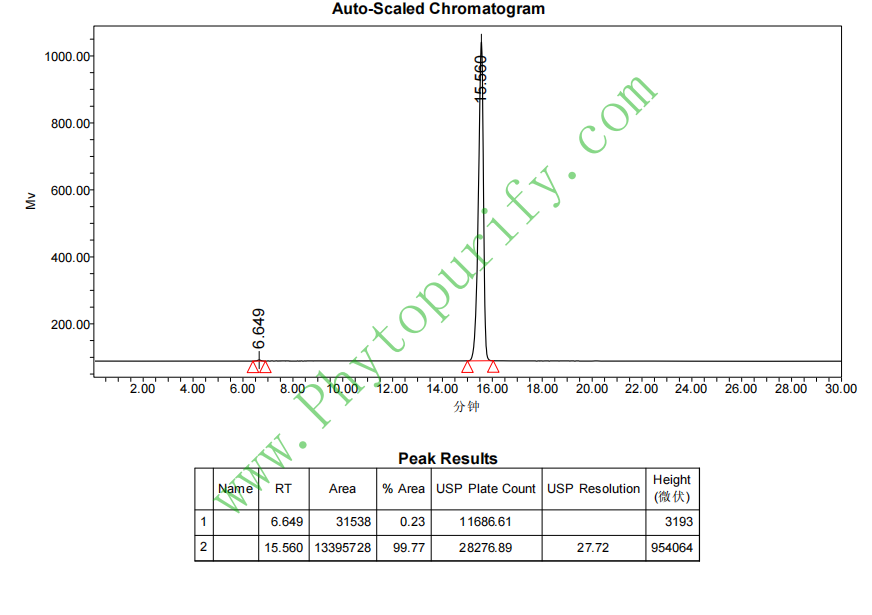
HPLC of Oleanolic acid
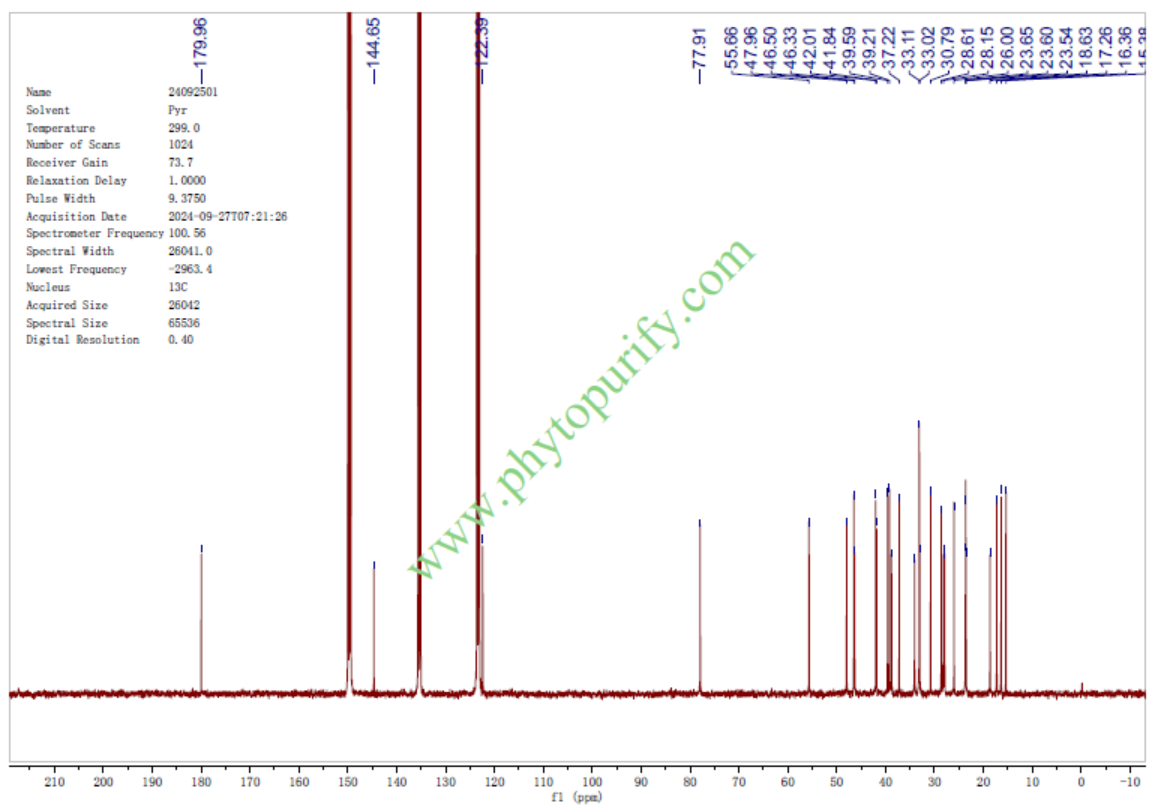
NMR of Oleanolic acid
Storage conditions:Short-term storage at 2~8℃, long-term storage at -20 ~ -80℃
57.5300
6.7681
5.0197
.0011
5.7981
5.5779
Low
92.4906
4.5891
No
No
No
No
No
No
0.0
No
No
Yes
No
Natural products, as an important source of drug discovery, play an irreplaceable role in human health maintenance and disease treatment. Among numerous natural compounds with biological activity, oleanolic acid (OA) has attracted sustained attention from researchers due to its unique chemical structure and extensive pharmacological activities. Oleanolic acid is a naturally occurring pentacyclic triterpenoid compound widely distributed in the plant kingdom and is one of the main active ingredients in many traditional medicinal plants. Since the 1970s, oleanolic acid has become a hot compound in natural product pharmacology due to its significant pharmacological activities such as liver protection, anti-inflammatory, anti-tumor, antioxidant and anti diabetes.
The chemical name of oleanolic acid is 3 β - hydroxyolean-12-en-28-oic acid, which belongs to the oleanane type pentacyclic triterpenoids. Its molecular skeleton is composed of six isoprene units, forming a six membered ring structure with five fused rings. The A and B rings are trans fused, the B and C rings are trans fused, the C and D rings are cis fused, and the D and E rings are trans fused. This unique rigid skeletal structure endows oleanolic acid with diverse biological activities. It is worth noting that oleanolic acid and ursolic acid are isomers, with only the methyl position on the E ring being different, but there are significant differences in their biological activities.
In recent years, with the deepening of research on natural products, the pharmacological mechanisms of oleanolic acid in liver protection, anti-tumor, anti-inflammatory, antiviral, immune regulation and other aspects have gradually been elucidated. Especially, significant progress has been made in the molecular mechanisms of activating the nuclear factor E2 related factor 2 (NRF2) signaling pathway, regulating oxidative stress response, and inducing tumor cell apoptosis. In addition, as a lead compound, the structural modification and derivative synthesis of oleanolic acid have also become hot topics in medicinal chemistry research. This article will provide a systematic review of oleanolic acid from the aspects of chemical structure, plant origin, pharmacological activity, mechanism of action, pharmacological evaluation, and clinical application prospects, in order to provide reference for the in-depth research and development of this compound.
The chemical structure of oleanolic acid has typical pentacyclic triterpenoid characteristics, with a molecular formula of C30H48O3 and a molecular weight of 456.7110 g/mol. Structurally, oleanolic acid belongs to the Oleanane type triterpenes, with its core skeleton composed of five hexagonal rings (A, B, C, D, E) fused together. There is a β - hydroxyl group (- OH) at C-3 and a carboxyl group (- COOH) at C-28, forming a double bond between C-12 and C-13. This structural feature gives it both a hydrophobic skeleton and hydrophilic functional groups, exhibiting the characteristics of amphiphilic molecules.
From the perspective of stereochemistry, there are multiple chiral centers in the molecule of oleanolic acid, including C-3, C-5, C-8, C-9, C-10, C-14, C-17, C-18, C-19, C-20, etc. Among them, the hydroxyl group at position C-3 is in the β configuration, meaning that the hydroxyl group is located above the ring plane. This specific stereoconfiguration is crucial for its interaction with biological targets. The molecular skeleton of oleanolic acid is relatively rigid, and its three-dimensional conformation is determined by the cohesion between the ring systems. This conformational feature allows it to specifically bind to various protein targets.
In terms of physicochemical properties, oleanolic acid exhibits typical characteristics of pentacyclic triterpenoids. The lipophilic water partition coefficient (LogP) of the compound is 6.7681, indicating strong lipophilicity, which is consistent with the hydrophobicity of its pentacyclic triterpenoid skeleton. A higher LogP value indicates that oleanolic acid is easily able to penetrate biofilms, but it may also lead to lower solubility in aqueous environments. In fact, the water solubility of oleanolic acid is only 0.0011 mg/mL, which is one of the main limiting factors for its pharmacokinetic properties.
The topological polar surface area (TPSA) of oleanolic acid is 57.53 Å ², which is mainly contributed by the hydroxyl group at C-3 and the carboxyl group at C-28. TPSA is an important parameter for predicting oral absorption and blood-brain barrier permeability of compounds. It is generally believed that compounds with TPSA less than 140 Å ² have good oral absorption potential, while compounds with TPSA less than 60 Å ² may have good blood-brain barrier penetration ability. The TPSA value of oleanolic acid indicates that it theoretically has good oral absorption potential, but its extremely low water solubility may become a barrier to actual absorption.
In terms of stability, oleanolic acid is relatively stable under conventional conditions, but the double bond at positions C-12/C-13 makes it more sensitive to oxidation and photolysis. In addition, the carboxyl group at position C-28 gives it weak acidity and can form salts under alkaline conditions, which provides the possibility for its formulation development. The melting point of oleanolic acid is 305-310 ° C, belonging to high melting point compounds, which is related to its intermolecular hydrogen bonds and van der Waals forces.
Oleanolic acid is widely distributed in the plant kingdom, mainly found in dicotyledonous plants, especially in families and genera such as Oleaceae, Araliaceae, Lamiaceae, and Rubiaceae, where its content is relatively high. Common medicinal plants rich in oleanolic acid include: Ligustrum lucidum(Ligustrum lucidum Ait.)、 Qidun fruit(Olea europaea L.)、 Papaya(Chaenomeles sinensis (Thouin) Koehne)、 Summer withered grass(Prunella vulgaris L.)、 Snow grass(Centella asiatica (L.) Urban)、 Forsythia suspensa(Forsythia suspensa (Thunb. Vahl) and others. Among them, the fruit of Ligustrum lucidum and the leaves of Oleander are important sources of oleanolic acid, with a content of 0.5% -2.0% of dry weight.
Oleanolic acid mainly exists in free form in plants, but it is also often present in glycoside form (such as oleanolic acid-3-O - β - D-glucoside, oleanolic acid-28-O - β - D-glucoside, etc.). The content of oleanolic acid varies significantly in different plant parts (roots, stems, leaves, fruits, seeds), with higher levels typically found in fruits and leaves. In addition, factors such as plant growth environment, harvest season, and processing methods can also affect the content of oleanolic acid.
The extraction methods of oleanolic acid mainly include traditional solvent extraction and modern assisted extraction techniques. Traditional solvent extraction methods usually use ethanol or methanol as extraction solvents, utilizing the good solubility of oleanolic acid in alcohol solvents for extraction. The specific process is as follows: after crushing the dried plant material, it is refluxed and extracted 2-3 times with 70% -95% ethanol at 60-80 ° C for 1-2 hours each time. The extracted liquids are combined and concentrated under reduced pressure to obtain the crude extract. The crude extract can be preliminarily purified by steps such as petroleum ether defatting and ethyl acetate extraction.
To improve extraction efficiency and purity, researchers have developed various modern assisted extraction techniques. Ultrasound assisted extraction (UAE) utilizes the cavitation effect of ultrasound to destroy plant cell walls, promote the release of oleanolic acid, significantly shorten extraction time, and improve yield. Microwave assisted extraction (MAE) utilizes the penetrability and selective heating properties of microwaves to rapidly raise the temperature of the solvent and accelerate the dissolution of the target compound. Supercritical fluid extraction (SFE) uses CO ₂ as the extractant to selectively extract oleanolic acid by adjusting pressure and temperature. It has the advantages of no solvent residue and environmental friendliness.
The purification of oleanolic acid is usually carried out using column chromatography technology. Silica gel column chromatography is the most commonly used method, which uses solvent systems such as chloroform methanol or petroleum ether acetone for gradient elution. In addition, macroporous adsorption resins (such as D101, AB-8, etc.) are also commonly used for the preliminary purification of oleanolic acid, utilizing their adsorption desorption properties to achieve enrichment of the target compound. High performance liquid chromatography (HPLC) and high-speed countercurrent chromatography (HSCCC) can be used for the preparation of high-purity oleanolic acid. In recent years, new separation methods such as molecular imprinting technology and membrane separation technology have also shown potential applications in the purification of oleanolic acid.
The most noteworthy pharmacological activity of oleanolic acid is its hepatoprotective effect. Numerous studies have confirmed that oleanolic acid has significant protective effects on various chemical liver injury models. In the acute liver injury model induced by carbon tetrachloride (CCl ₄), pretreatment with oleanolic acid can significantly reduce serum transaminase (ALT, AST) levels, alleviate liver cell necrosis and steatosis. In the liver toxicity model caused by excessive acetaminophen (APAP), oleanolic acid exerts a protective effect by enhancing liver detoxification ability, inhibiting oxidative stress and inflammatory response. In addition, oleanolic acid also exhibits protective effects against alcoholic liver injury, non-alcoholic fatty liver disease (NAFLD), and drug-induced liver injury.
The hepatoprotective mechanism of oleanolic acid involves multiple aspects. Firstly, oleanolic acid is a potent activator of nuclear factor E2 related factor 2 (NRF2). NRF2 is a key transcription factor in the cellular antioxidant defense system, regulating the expression of various antioxidant and detoxifying enzymes. Oleanolic acid promotes the dissociation of NRF2 and Keap1, increasing their nuclear translocation and upregulating the expression of downstream target genes such as superoxide dismutase 1 (SOD1), catalase (CAT), glutathione peroxidase 1 (GPX1), etc., enhancing the antioxidant capacity of the liver. Secondly, oleanolic acid can inhibit the activity of cytochrome P450 enzyme systems (such as CYP2E1) and reduce the production of toxic metabolites. Meanwhile, oleanolic acid can also upregulate the expression of glutathione S-transferase (GSTA1, GSTP1), promoting detoxification and excretion of toxic substances.
Oleanolic acid exhibits significant inhibitory effects on proliferation and induces apoptosis in various tumor cell lines. In vitro experiments show that oleanolic acid can inhibit the growth of many kinds of cancer cells, such as liver cancer, lung cancer, breast cancer, colon cancer, stomach cancer, prostate cancer, melanoma, and so on, and its IC ≮₀ value is usually within the range of 10-50 μ M. Oleanolic acid has relatively low toxicity to normal cells and exhibits certain selective anti-tumor activity.
The anti-tumor mechanism of oleanolic acid mainly includes inducing cell apoptosis, blocking cell cycle, inhibiting angiogenesis, and inducing autophagic death. In terms of apoptosis induction, oleanolic acid can exert its effects by activating the mitochondrial pathway (endogenous pathway) and the death receptor pathway (exogenous pathway). The mitochondrial pathway involves an increase in Bax/Bcl-2 ratio, a decrease in mitochondrial membrane potential, release of cytochrome c, and activation of caspase-9 and caspase-3. The death receptor pathway involves the activation of the Fas/FasL system and the activation of caspase-8. Oleanolic acid can also arrest the cell cycle in G0/G1 or G2/M phases, which is related to changes in the expression of cyclins and cyclin dependent kinases (CDKs).
Oleanolic acid exhibits significant anti-inflammatory effects in various inflammatory models. In a macrophage model stimulated by lipopolysaccharide (LPS), oleanolic acid can inhibit the production of pro-inflammatory factors such as tumor necrosis factor - α (TNF - α), interleukin-1 β (IL-1 β), interleukin-6 (IL-6), and nitric oxide (NO). In animal models, oleanolic acid has inhibitory effects on acute and chronic inflammation models such as carrageenan induced toe swelling, xylene induced ear swelling, and cotton ball granuloma.
The anti-inflammatory mechanism of oleanolic acid mainly involves the regulation of nuclear factor kappa B (NF - κ B) and mitogen activated protein kinase (MAPK) signaling pathways. Oleanolic acid can inhibit the phosphorylation and degradation of I κ B α, prevent the nuclear translocation of NF - κ B, and thus reduce the transcription of pro-inflammatory genes. Meanwhile, oleanolic acid can also inhibit the phosphorylation of p38 MAPK, JNK, and ERK1/2, blocking the cascade amplification of inflammatory signals. In addition, oleanolic acid can also activate the NRF2/ARE pathway, upregulate the expression of antioxidant enzymes, and alleviate oxidative stress-induced inflammatory responses.
In addition to the main activities mentioned above, oleanolic acid also has various other pharmacological effects. In terms of anti diabetes, oleanolic acid can improve insulin resistance, promote glucose uptake and utilization, inhibit α - glucosidase activity, and reduce blood sugar level. In terms of cardiovascular protection, oleanolic acid has the effects of reducing blood lipid, anti atherosclerosis, and anti myocardial ischemia reperfusion injury. In terms of antiviral activity, oleanolic acid exhibits inhibitory activity against hepatitis B virus (HBV), hepatitis C virus (HCV), human immunodeficiency virus (HIV), and other viruses. In addition, oleanolic acid also has activities such as immune regulation, antibacterial, antiparasitic, and anti osteoporosis.
The pharmacological activity of oleanolic acid originates from its interactions with various molecular targets. In recent years, with the development of systems pharmacology and network pharmacology, the multi-target action characteristics of oleanolic acid have gradually been revealed. The following will focus on the molecular mechanisms of oleanolic acid in liver protection and anti-tumor effects.
NRF2 is the core target of the hepatoprotective effect of oleanolic acid. Under normal physiological conditions, NRF2 binds to Keap1 protein in the cytoplasm and is continuously degraded through the ubiquitin proteasome pathway. When oleanolic acid enters the cell, its C-28 carboxyl group can covalently modify the cysteine residues of Keap1 protein (such as Cys151, Cys273, Cys288), causing a conformational change in Keap1. NRF2 is released from Keap1 and translocated into the nucleus. In the nucleus, NRF2 forms heterodimers with small Maf proteins and binds to antioxidant response elements (ARE) to initiate transcription of downstream target genes.
The NRF2 target genes upregulated by oleanolic acid include antioxidant enzymes (SOD1, CAT, GPX1), phase II detoxifying enzymes (GSTA1, GSTP1, NQO1), glutathione synthase (GCLc, GCLm), heme oxygenase-1 (HO-1), etc. The combined action of these enzymes enhances the antioxidant and detoxification abilities of cells, thereby protecting liver cells from oxidative stress and toxic substance damage. It is worth noting that oleanolic acid has moderate activation of NRF2 and does not cause excessive antioxidant reactions, which may be one of the reasons for its good safety.
The farnesol X receptor (FXR) is a member of the nuclear receptor superfamily and plays a key regulatory role in bile acid metabolism, lipid metabolism, and glucose metabolism. Research has shown that oleanolic acid can act as an agonist of FXR, activating the FXR signaling pathway. The activation of FXR can promote the synthesis and excretion of bile acids, inhibit the accumulation of bile acids in the liver, and thereby alleviate cholestatic liver injury. In addition, activation of FXR can inhibit the expression of steroid regulatory element binding protein-1c (SREBP-1c), reduce fatty acid synthesis, and improve non-alcoholic fatty liver disease.
Oleanolic acid has a bidirectional regulatory effect on the cytochrome P450 enzyme system. On the one hand, oleanolic acid can inhibit the activity of CYP2E1, reduce the metabolic activation of toxic substances such as CCl ₄ and APAP in the liver, and thus alleviate liver toxicity. On the other hand, oleanolic acid can induce the expression of CYP3A4, promote the metabolism and clearance of certain drugs. This selective regulatory effect may be related to its specific binding to the active site of P450 enzymes.
In the anti-tumor mechanism, oleanolic acid induces tumor cell apoptosis through various pathways. Firstly, oleanolic acid can upregulate the expression of pro apoptotic protein Bax and downregulate the expression of anti apoptotic protein Bcl-2, leading to an increase in the Bax/Bcl-2 ratio. This change leads to an increase in mitochondrial outer membrane permeability, release of cytochrome c into the cytoplasm, and formation of apoptotic bodies with Apaf-1 and caspase-9 precursors, activating caspase-9 and subsequently activating downstream caspase-3 and caspase-7, executing the cell apoptosis program.
Secondly, oleanolic acid can activate the death receptor pathway. Research has shown that oleanolic acid can upregulate the expression of Fas and FasL, promote the formation of death inducing signaling complex (DISC), and activate caspase-8. Caspase-8 can directly activate caspase-3 or engage in cross talk with the mitochondrial pathway by cleaving Bid protein (forming tBid).
In addition, oleanolic acid can promote tumor cell apoptosis by inhibiting the PI3K/Akt/mTOR signaling pathway, activating the p38 MAPK and JNK signaling pathways, and upregulating p53 expression. The regulation of these signaling pathways ultimately leads to tumor cell cycle arrest and apoptosis induction.
Oleanolic acid can also interact with various other molecular targets. For example, oleanolic acid can inhibit the activation of NF - κ B and reduce the production of pro-inflammatory factors; Can activate the AMPK signaling pathway and improve energy metabolism; Can inhibit the expression of vascular endothelial growth factor (VEGF) and exert anti angiogenic effects; Adjustable histone deacetylase (HDAC) activity affects epigenetic regulation. These multi-target action characteristics make oleanolic acid potentially advantageous in the treatment of complex diseases such as cancer and metabolic disorders.
Evaluate the pharmacological properties of oleanolic acid based on Lipinski's Rule of Five and Veber's Rule. The molecular weight of oleanolic acid is 456.71 Da (less than 500 Da), the LogP is 6.7681 (greater than 5), the number of hydrogen bond donors is 2 (less than 5), the number of hydrogen bond acceptors is 3 (less than 10), and the TPSA is 57.53 Å ² (less than 140 Å ²). According to Lipinski's rule, oleanolic acid violates the condition of LogP greater than 5, indicating the possibility of oral absorption issues. However, the TPSA value is within a reasonable range, indicating that it has good membrane permeability potential.
In terms of ADMET (absorption, distribution, metabolism, excretion, toxicity) prediction, oleanolic acid exhibits the following characteristics: low blood-brain barrier permeability, indicating a low risk of central nervous system side effects; HERG inhibition prediction is negative, indicating a low risk of cardiac toxicity; The Ames test result is 0.0, indicating no significant mutagenicity. These data indicate that oleanolic acid has good safety characteristics.
The pharmacokinetic study of oleanolic acid is mainly based on animal experiments and in vitro models. In terms of absorption, the oral bioavailability of oleanolic acid is relatively low, mainly due to its extremely low water solubility (0.0011 mg/mL) and poor intestinal permeability. Research has shown that the oral bioavailability of oleanolic acid in rats is approximately 0.7% -2.0%. The absorption mechanism may involve passive diffusion and carrier mediated transport, but the specific transport proteins have not been fully elucidated.
In terms of distribution, the volume of distribution of oleanolic acid after intravenous administration is relatively large, indicating its widespread distribution in tissues. Organizational distribution studies have shown that oleanolic acid has higher concentrations in tissues such as the liver, kidneys, lungs, and spleen, which is consistent with the liver as its main target of action. The binding rate of oleanolic acid to plasma proteins is relatively high (>95%), mainly binding to albumin.
In terms of metabolism, oleanolic acid mainly undergoes phase I and phase II metabolism. Phase I metabolism mainly involves hydroxylation reactions catalyzed by cytochrome P450 enzyme systems (such as CYP3A4), generating various hydroxylation metabolites. Phase II metabolism mainly involves the binding of glucuronic acid and sulfuric acid, generating more water-soluble complexes that promote excretion. It is worth noting that oleanolic acid can induce the expression of CYP3A4, which may affect the metabolism of other drugs.
In terms of excretion, oleanolic acid and its metabolites are mainly excreted through bile and feces, with a small amount excreted through urine. The elimination half-life (t ₁/₂) varies among different species, with a half-life of approximately 2-4 hours after intravenous administration in rats and 6-12 hours after oral administration.
To overcome the problems of poor water solubility and low oral bioavailability of oleanolic acid, researchers have developed various formulation strategies. New drug delivery systems such as liposomes, nanoparticles, microemulsions, solid dispersions, and cyclodextrin inclusion complexes have been used to enhance the solubility and bioavailability of oleanolic acid. For example, the oleanolic acid phospholipid complex can significantly enhance its oral absorption and increase its bioavailability by about 3-5 times. Poly (lactic acid glycolic acid) copolymer (PLGA) nanoparticles can achieve sustained release and targeted delivery of oleanolic acid.
Structural modification is another important strategy to enhance the pharmacological properties of oleanolic acid. The C-3 hydroxyl group, C-28 carboxyl group, and C-12/C-13 double bond are the main modification sites in the molecule of oleanolic acid. A large number of oleanolic acid derivatives have been synthesized through esterification, etherification, amidation, oxidation, reduction and other reactions. Among them, amide derivatives with C-28 carboxyl groups (such as oleanolic acid-28-amide) exhibit enhanced anti-tumor activity; Esterified derivatives of C-3 hydroxyl groups (such as oleanolic acid-3-acetate) have better lipid solubility and bioavailability; The introduction of derivatives containing nitrogen-containing heterocycles (such as pyridine, piperazine, etc.) can improve water solubility and targeting.
Oleanolic acid has been approved in China as a hepatoprotective drug for clinical use. At present, commercially available preparations of oleanolic acid include tablets, capsules, and injections, mainly used as adjunctive therapy for chronic hepatitis, cirrhosis, and drug-induced liver injury. Clinical studies have shown that oleanolic acid can significantly improve liver function indicators in patients with chronic hepatitis B, reduce serum transaminase levels, and alleviate the degree of liver fibrosis. However, due to the low oral bioavailability and large clinical dosage (usually 60-120 mg/day), there are significant individual differences.
Based on the multi-target pharmacological activity of oleanolic acid, it has potential clinical application value in the following disease fields:
Non alcoholic fatty liver disease (NAFLD)With the prevalence of obesity and metabolic syndrome, NAFLD has become the most common chronic liver disease worldwide. Oleanolic acid has shown significant therapeutic effects in NAFLD animal models by activating the NRF2 and FXR signaling pathways, improving lipid metabolism, reducing oxidative stress, and inflammatory responses. The preclinical research results support its potential as a therapeutic drug for NAFLD.
liver cancer Oleanolic acid has selective toxicity to liver cancer cells and can enhance the sensitivity of chemotherapy drugs. Its combination with chemotherapy drugs such as sorafenib and cisplatin has shown synergistic effects in in vitro and in vivo studies. In addition, oleanolic acid can also inhibit the characteristics of liver cancer stem cells and reduce the risk of tumor recurrence and metastasis.
Metabolic diseases The effects of oleanolic acid on lowering blood sugar, blood lipid and anti-inflammatory make it have a promising application in the treatment of type 2 diabetes and atherosclerosis. Studies have shown that oleanolic acid can improve insulin resistance, protect the function of pancreatic islet β cells, and inhibit the formation of atherosclerotic plaque.
Inflammatory diseases The anti-inflammatory activity of oleanolic acid makes it potentially valuable in the treatment of chronic inflammatory diseases such as rheumatoid arthritis, inflammatory bowel disease, and asthma. It may provide safety features superior to traditional anti-inflammatory drugs by regulating the inflammatory signaling pathway through multiple targets.
The clinical translation of oleanolic acid faces multiple challenges. Firstly, low oral bioavailability is its main bottleneck, requiring the development of efficient formulation technologies or prodrug strategies. Secondly, although the multi-target action characteristics of oleanolic acid are beneficial for the treatment of complex diseases, they also increase the complexity of studying the mechanism of action and selecting clinical indications. In addition, the long-term toxicity, drug interactions, and individual differences of oleanolic acid still require systematic research.
To address these challenges, future research should focus on the following directions: developing novel drug delivery systems based on nanotechnology to improve the bioavailability and targeting of oleanolic acid; Design and synthesize derivatives of oleanolic acid with higher activity and selectivity; Using systems pharmacology and network pharmacology methods, elucidate the multi-target action network of oleanolic acid; Conduct high-quality clinical trials to validate the efficacy and safety of oleanolic acid in specific diseases.
Oleanolic acid, as a typical natural pentacyclic triterpenoid compound, occupies an important position in the field of natural product pharmacology due to its unique chemical structure and extensive pharmacological activity. From the discovery of liver protective effect to the revelation of multiple activities such as anti-tumor, anti-inflammatory and anti diabetes, the research process of oleanolic acid reflects the transformation of natural products from empirical medication to scientific cognition. It exerts pharmacological effects through multi-target mechanisms such as activating the NRF2 signaling pathway, regulating FXR activity, modulating the cytochrome P450 enzyme system, and inducing tumor cell apoptosis, demonstrating the unique advantages of natural compounds in the treatment of complex diseases.
Despite the shortcomings of poor water solubility and low oral bioavailability in the medicinal properties of oleanolic acid, these issues are gradually being resolved through improvements in formulation technology and structural modifications. With a deeper understanding of the mechanism of action of oleanolic acid and the development of new drug delivery systems, its clinical application prospects in fields such as liver disease, tumors, and metabolic diseases are worth looking forward to. In the future, oleanolic acid and its derivatives are expected to become an important class of natural source drugs, making greater contributions to human health.
