


Synonym name: 8-Deoxygartanin
Catalogue No.: BP0106
Cas No.: 33390-41-9
Formula: C23H24O5
Mol Weight: 380.44
Botanical Source: Garcinia mangostana (mangosteen) and Clusia spp.. Also prod. by Streptomyces rishiriensis 265-P5921
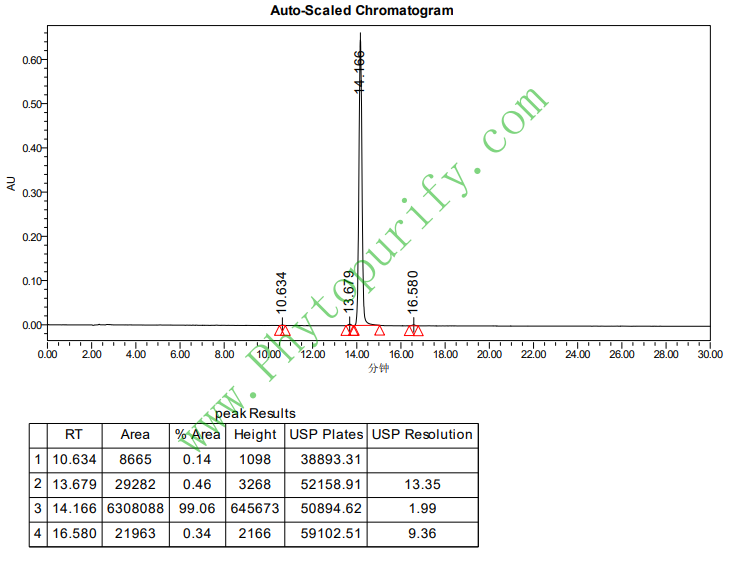
Purity: 95%~99%
Analysis Method: HPLC-DAD or/and HPLC-ELSD
Identification Method: Mass, NMR
Packing: Brown vial or HDPE plastic bottle
Can be supplied from milligrams to grams.
For Reference Standard and R&D, Not for Human Use Directly.
Inquire for bulk scale.
HPLC of 8-Desoxygartanin
Storage conditions:Short-term storage at 2~8℃, long-term storage at -20 ~ -80℃
90.9000
4.9277
4.8472
.0228
3.7751
6.1021
Low
91.5310
3.0723
Yes
No
Yes
No
Yes
Yes
0.6
Yes
Yes
Yes
No
Atherosclerosis (AS) is the main pathological basis of cardiovascular and cerebrovascular diseases. Its occurrence and development involve many complex biological processes such as lipid metabolism disorder, endothelial dysfunction, chronic inflammatory reaction, oxidative stress and apoptosis. Although lipid-lowering therapies such as statins have achieved significant results, residual cardiovascular risks still exist, and some patients may have intolerance. Therefore, it is always an important direction for drug research and development to explore new anti atherosclerosis lead compounds with multi target and multi pathway regulatory effects from natural products.
Xanthone is a type of natural compound with a unique benzopyranone skeleton structure, widely present in plants such as the Caryophyllaceae and Theaceae families. Numerous studies have shown that anthraquinone compounds have a wide range of pharmacological activities, including anti-inflammatory, antioxidant, anti-tumor, lipid-lowering, and cardiovascular protective effects. 8-Desoxygartanin (8-deoxyguanhuangning, CAS: 33390-41-9) is a member of the xanthone family. In recent years, its anti atherosclerosis potential has gradually attracted attention. Preliminary studies have revealed that this compound can intervene in the process of atherosclerosis by regulating lipid metabolism, inhibiting inflammatory reaction, regulating apoptosis and other aspects, and its role involves LOX-1, AMPK, EHMT2, MCL1, BCL2, RECQ1, ABCA1 and other key targets. This article aims to provide a systematic review of the chemical properties, plant sources, pharmacological activities, mechanisms of action, and medicinal properties of 8-Desoxygartanin, in order to provide comprehensive scientific references for the in-depth research and development of this natural product.
The chemical name of 8-Desoxygartanin is 1,3,6-trihydroxy-7-methoxy-2,8-di (3-methylbut-2-enyl) -9H-oxaanthracene-9-one. Its molecular formula is C ₂₄ H ₂₈ O ₆, and its molecular weight is 380.4400 g/mol. Structurally, it possesses a typical oxanthrone tricyclic skeleton (benzopyranone), characterized by the presence of isoprene side chains attached to the A and C rings, respectively. This is a common feature of many oxanthrone species with significant biological activity. Specifically, the 2nd and 8th positions are replaced by 3-methyl-2-butenyl (isopentenyl), the 7th position is methoxy, and the 1st, 3rd, and 6th positions are hydroxyl groups. Compared to gartanin, which has a similar structure, the "8-Desoxy" in its name refers to the absence of a hydroxyl group at position 8.
These structural features determine its physicochemical properties. The calculated lipid water partition coefficient (LogP) is 4.9277, indicating that the compound has high lipophilicity, which is consistent with its isoprene group and aromatic ring structure in the molecule. The topological polar surface area (TPSA) is 90.9000 Å ², mainly derived from hydroxyl and carbonyl oxygen atoms in the molecule. Its water solubility is poor, with a calculated value of approximately 0.0228 mg/mL. This suggests that structural modification or the use of solubilization techniques may be necessary in formulation development to improve its bioavailability. A higher lipophilicity also means that it may easily penetrate the cell membrane and act on intracellular targets, but at the same time, it may affect its distribution and absorption in aqueous media.
8-Desoxygartanin mainly comes from plants of the Garcinia genus in the Clusiaceae family. Plants of this genus, such as Garcinia mangostana and Garcinia oblongifolia, are abundant sources of anthraquinone compounds. Their skin, leaves, trunk, and other parts often contain various structurally similar isopentenyl anthraquinone compounds.
The extraction of 8-Desoxygartanin from plant materials typically follows the conventional process of natural product chemistry. Firstly, crush the dried plant tissue (such as bamboo peel) and extract it using organic solvents. Common solvents include methanol, ethanol, ethyl acetate, or mixed solvents of different proportions, which are used for crude extraction by Soxhlet extraction or room temperature impregnation. Due to its moderate polarity and strong lipophilicity, 8-Desoxygartanin can often be effectively extracted using solvents with moderate polarity such as ethyl acetate or chloroform methanol mixtures.
After obtaining the crude extract, it needs to undergo systematic separation and purification. Silica gel column chromatography is commonly used as a preliminary separation method, using gradient elution systems such as petroleum ether ethyl acetate or chloroform methanol to separate different components based on polarity differences. The fraction containing the target compound can be further purified by preparative thin layer chromatography (PTLC), reverse phase silica gel column chromatography (such as C18 packing with methanol water as the mobile phase), or high performance liquid chromatography (HPLC). Modern separation techniques, such as high-speed countercurrent chromatography (HSCCC), are also commonly used for the preparation of such compounds due to their high efficiency in separating structurally similar compounds. Through nuclear magnetic resonance (NMR, including ¹ H and ¹ ³ C NMR), mass spectrometry (MS), and comparison with literature data, its structure can be ultimately identified as 8-Desoxygartanin.
Existing research, especially based on network pharmacology prediction and preliminary in vitro experiments, strongly suggests that 8-Desoxygartanin has various pharmacological activities in anti atherosclerosis.
1. Lipid regulation and anti foam cell formation: The initial link of atherosclerosis is the deposition of lipids, especially oxidized low density lipoprotein (ox LDL) under the endothelium and the formation of foam cells by macrophages. Studies have shown that 8-Desoxygartanin may promote cholesterol efflux in macrophages by up regulating the expression of ATP binding cassette transporter A1 (ABCA1), thereby reducing intracellular lipid accumulation and inhibiting the formation of foam cells. This is one of the core links of its anti atherosclerosis effect.
2. Anti inflammatory effect: Chronic inflammation runs through the whole process of atherosclerosis. 8-Desoxygartanin is predicted to inhibit lectin like oxidized low-density lipoprotein receptor-1 (LOX-1). LOX-1 is the main receptor on endothelial cells and macrophages that recognizes and uptake ox LDL. Its activation triggers inflammatory signaling pathways such as NF - κ B, leading to increased expression of various inflammatory factors such as TNF - α, IL-6, IL-1 β. Inhibiting LOX-1 can alleviate the inflammatory response induced by ox LDL from the source.
3. Antioxidant stress: Ox LDL itself is a product and promoter of oxidative stress. The phenolic hydroxyl group in the 8-Desoxygartanin structure endows it with potential antioxidant capacity, which may directly eliminate reactive oxygen species (ROS) or indirectly enhance the cell's antioxidant defense ability by activating the AMP activated protein kinase (AMPK) pathway, thereby protecting vascular endothelial cells from oxidative damage.
4. Regulating cell apoptosis and proliferation: Abnormal apoptosis or proliferation of vascular smooth muscle cells (VSMCs) and macrophages are involved in the instability and progression of plaques. The targets of 8-Desoxygartanin involve anti apoptotic proteins such as B-cell lymphoma-2 (BCL2) and myeloid leukemia 1 (MCL1), as well as RecQ helicase 1 (RECQ1). These targets are closely related to cell cycle and apoptosis regulation. By regulating these targets, the compound may help maintain cellular homeostasis within plaques, prevent excessive cell apoptosis leading to the enlargement of necrotic cores in plaques, or inhibit the thickening/narrowing of fibrous caps caused by excessive proliferation of VSMCs.
5. Epigenetic regulation: One potential target worth noting is histone lysine methyltransferase 2 (EHMT2, also known as G9a). EHMT2 catalyzes the dimethylation of histone H3 lysine 9 (H3K9me2), which is an epigenetic marker associated with gene transcription inhibition. In atherosclerosis, EHMT2 may be involved in regulating the expression of inflammation and fibrosis related genes. The potential inhibitory effect of 8-Desoxygartanin on EHMT2 provides a novel perspective for its intervention in diseases through epigenetic pathways.
Based on the available information, the mechanism of 8-Desoxygartanin anti atherosclerosis can be integrated into a multi-target, multi-channel network model, and its core targets and pathways are as follows:
1. LOX-1/NF - κ B inflammatory pathway: LOX-1 is a key molecule that connects lipid metabolism and inflammation. 8-Desoxygartanin may inhibit the expression or activity of LOX-1 directly or indirectly, thereby blocking the internalization of ox LDL and its downstream signaling. This leads to the inhibition of NF - κ B activation, thereby reducing the production of inflammatory factors such as TNF - α, IL-6, MCP-1, and alleviating the inflammatory infiltration of vascular walls.
2. AMPK signaling pathway: AMPK is a core regulator of cellular energy metabolism and stress response. Activating AMPK can bring multiple benefits: (a) upregulating ABCA1 expression and promoting cholesterol reverse transport; (b) Inhibit the synthesis of fatty acids and cholesterol; (c) Enhance antioxidant capacity (such as by activating the Nrf2 pathway); (d) Inhibit inflammatory response. 8-Desoxygartanin may act as an activator of AMPK, coordinating lipid-lowering, anti-inflammatory, and antioxidant effects through this central node.
3. Apoptosis regulatory network: This compound may regulate the apoptosis sensitivity of macrophages and VSMCs by affecting the balance of BCL2 family proteins, such as pro apoptotic protein BAX and anti apoptotic proteins BCL2 and MCL1. Meanwhile, its potential role in RECQ1 (a helicase involved in DNA repair and genome stability) may affect the survival and proliferation of cells under stress. Maintaining an appropriate survival rate of cells within the plaque is crucial for stabilizing the plaque.
4. Epigenetic regulatory target EHMT2: Inhibition of EHMT2 can reduce the global H3K9me2 level, leading to the re expression of some protective genes (such as some antioxidant or anti-inflammatory genes) that are abnormally silenced in atherosclerosis. This provides the possibility of long-term and stable regulation of 8-Desoxygartanin at the transcriptional level.
5. ABCA1 mediated cholesterol efflux: This is the direct execution link of its lipid-lowering effect. Upregulation of ABCA1, 8-Desoxygartanin on the surface of macrophages through AMPK dependent or independent pathways can enhance apolipoprotein A-I (apoA-I) mediated cholesterol efflux, which is the first step of high-density lipoprotein (HDL) biosynthesis and the key to cholesterol reverse transport, directly fighting against the formation of foam cells.
To sum up, 8-Desoxygartanin does not act on a single target, but cooperatively plays an anti atherosclerosis role through a network of interrelated targets from multiple dimensions, such as reducing pathogenic factors (ox LDL), enhancing protective mechanisms (cholesterol efflux, antioxidant), regulating cell fate (apoptosis/survival), and reshaping gene expression (epigenetic).
Based on the provided pharmacological parameters, a preliminary evaluation of the class of 8-Desoxygartanin can be conducted.
Absorption and distribution: The molecular weight of 380.44 conforms to the "Five Rules" for generic drugs (<500). A higher LogP value (4.93) indicates strong lipid solubility, which is beneficial for passive transmembrane absorption, but may also lead to its dissolution in the gastrointestinal water environment becoming the rate limiting step of absorption (with a water solubility of only 0.0228 mg/mL). Its TPSA is 90.9 Å ², and it is generally believed that TPSA<140 Å ² is beneficial for cell infiltration and oral absorption. Overall, its oral absorption may be moderate, but the absorption process is greatly influenced by the formulation technology. The prediction of "low blood-brain barrier permeability" means that it mainly acts on the peripheral system, with a lower risk of central nervous system side effects, which is usually an acceptable characteristic for cardiovascular drugs.
Metabolism and excretion: Currently, there is a lack of specific metabolic research data. As an anthraquinone compound, the phenolic hydroxyl and isoprene groups in its structure are potential metabolic sites, which may undergo II phase and I phase metabolic reactions such as glucuronidation, sulfation, oxidation (especially epoxidation or hydroxylation of isopentenyl), etc. Its metabolic stability, main metabolites, and enzymatic mechanism (whether involving CYP450 enzyme) need to be experimentally elucidated.
Preliminary safety assessment: Two key safety indicators show positive signals. Firstly, predicting no inhibition of hERG potassium channels ("no") suggests a lower risk of inducing QT interval prolongation and apical torsion ventricular tachycardia, which is a crucial safety consideration in cardiovascular drug development. Secondly, the Ames test result is 0.6 (usually negative with a mutagenic index MI ≤ 2), indicating that there is no significant genetic toxicity, but it needs to be confirmed in a more comprehensive genetic toxicity testing system.
Pharmacokinetic (PK) gap: The complete PK characteristics of 8-Desoxygartanin, including oral bioavailability, plasma protein binding rate, tissue distribution, half-life, clearance pathway, etc., are currently unknown. This is a key data gap that must be filled to push it from an active compound to a lead drug.
8-Desoxygartanin, as a natural xanthone with the potential of multi-target anti atherosclerosis, has broad clinical application prospects, but the road is long, and it needs to be explored from the following directions:
As a novel multi-target anti AS lead compound: Its biggest advantage lies in its ability to act on multiple targets closely related to AS, such as LOX-1, AMPK, ABCA1, EHMT2, etc., which may produce synergistic therapeutic effects, especially suitable for addressing the multifactorial disease of AS. It is expected to be developed as an adjuvant therapy for the primary prevention or stabilization of atherosclerotic cardiovascular disease (ASCVD).
2. Potential for combination therapy: Given that its mechanism of action is different from existing mainstream drugs such as statins (which mainly inhibit cholesterol synthesis) and PCSK9 inhibitors (which enhance LDL clearance), the possibility of combining it with these drugs can be explored in the future to more comprehensively control blood lipids, inflammation, and plaque stability, and further reduce residual risks.
3. Structural optimization and derivative development: Its poor solubility and unknown metabolic properties are the main obstacles to drug development. By using medicinal chemical methods for structural modification, such as introducing hydrophilic groups, preparing prodrugs, or optimizing isopentenyl side chains, it is expected to significantly improve its water solubility, metabolic stability, and oral bioavailability while retaining or enhancing its pharmacological activity.
4. In depth validation of the mechanism of action: The current target network is mainly based on prediction and preliminary correlation. It is urgent to use techniques such as gene knockout/knockout, reporter genes, co immunoprecipitation, chromatin immunoprecipitation, etc. in cell and animal models (such as ApoE ⁻/⁻ mice) to verify their direct effects, intensity of action, and detailed impact on upstream and downstream signaling pathways on the above targets one by one.
5. Comprehensive preclinical development research: After clarifying its core pharmacological mechanism, it is necessary to conduct standardized preclinical studies, including extensive pharmacological evaluations (using different AS animal models), detailed pharmacokinetic studies, safety pharmacology (comprehensive evaluations of the cardiovascular and respiratory systems, except for hERG), repeated dose toxicity trials, etc., to provide solid data support for its application for clinical trials.
6. Explore other indications: Its targets (such as AMPK, EHMT2, MCL1, etc.) are also involved in the processes of metabolic syndrome, non-alcoholic fatty liver disease, cancer, and other diseases. Therefore, the therapeutic potential of 8-Desoxygartanin in these related fields is also worth exploring.
8-Desoxygartanin is a natural compound of isopentenyl anthraquinone derived from plants of the genus Garcinia. Although its research is still in the early stage, the existing bioinformatics analysis and preliminary experimental evidence reveal that it has demonstrated the comprehensive potential to fight atherosclerosis in the aspects of lipid regulation, anti-inflammatory, antioxidant, apoptosis regulation and potential epigenetic regulation by regulating LOX-1, AMPK, ABCA1, EHMT2, BCL2/MCL1 and other key targets. Its molecular characteristics that conform to drug like properties and preliminary good safety predictions (no hERG inhibition, Ames test negative) have laid the foundation for its further development. However, its poor water solubility and completely blank system pharmacokinetic information are key issues that urgently need to be addressed. Future research needs to focus on confirming its complex mechanism of action network through experiments and optimizing its drug properties using medicinal chemistry strategies. In conclusion, 8-Desoxygartanin is an attractive multi target lead compound against atherosclerosis. Its in-depth research and development will not only help to reveal the new mechanism of cardiovascular protection of xanthones, but also may provide new candidate drugs for the prevention and treatment of atherosclerotic diseases.
