Introduction/Overview
Oxyanthrone compounds are a type of natural product widely found in plants such as the Theaceae and Gentianaceae families, with a core structure of 9H-xhenton-9-one. These compounds have long been a hot topic in natural product chemistry and medicinal chemistry research due to their structural diversity and wide range of biological activities, such as anti-inflammatory, antioxidant, anti-tumor, antibacterial, etc. In recent years, with the in-depth exploration of plant derived active ingredients, a series of structurally novel and uniquely active anthraquinone compounds have been discovered, providing valuable lead compounds for the development of new therapeutic drugs.
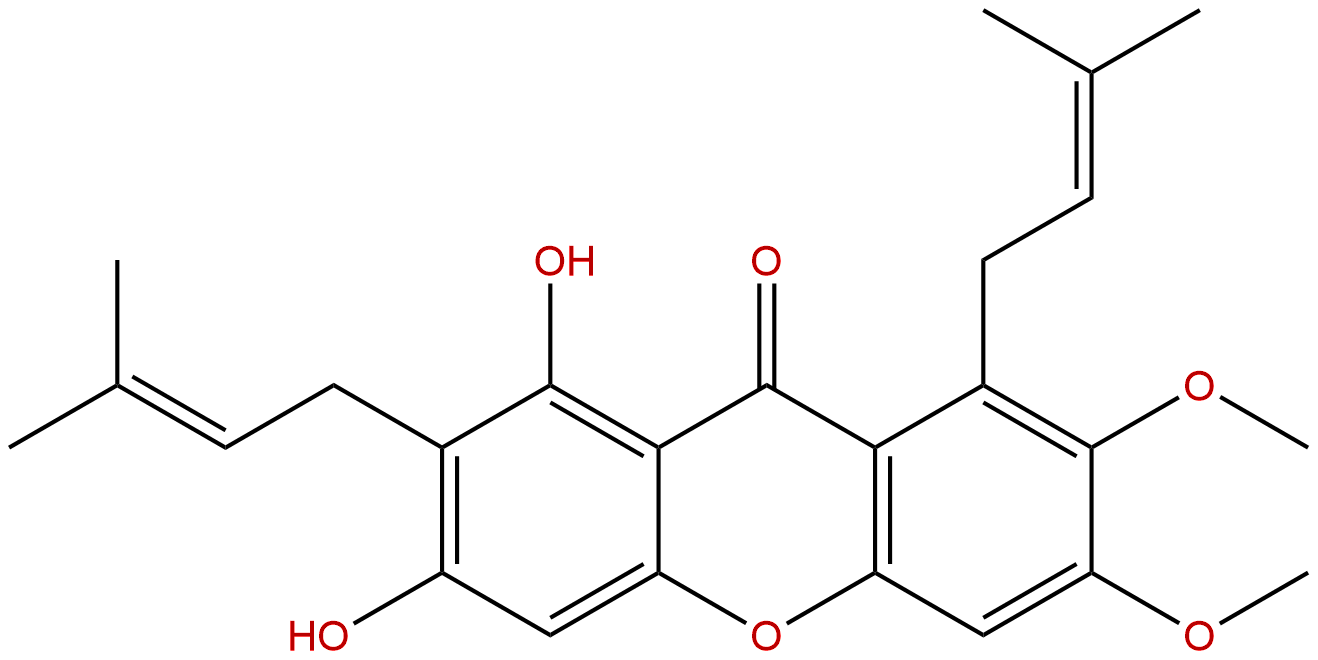
Cowaxanthone B (CAS number: 212842-64-3) is one example. It was isolated from the fruit of small leaved vine yellow, and preliminary studies have shown that it has antibacterial activity, but the activity is relatively weak. However, further research has revealed its potential pharmacological value in anti-tumor, especially in the treatment of malignant melanoma, demonstrating multi-target and multi pathway regulation. Melanoma is a highly malignant tumor originating from melanocytes, with strong invasiveness, easy metastasis, and resistance to traditional chemotherapy. Clinical treatment is urgently needed. Therefore, it is of great significance to search for novel drug molecules that can act on key targets in the occurrence and development of melanoma. This article aims to provide a systematic review of the chemical structure, plant origin, pharmacological activity, especially the mechanism of action and potential molecular targets of Cowaxanthone B against melanoma, as well as its pharmacological properties. It also looks forward to its future research and application prospects.
Chemical structure and physicochemical properties
Cowaxanthone B is a natural derivative of anthraquinone. Its basic parent nucleus is xanthenone, which is formed by the fusion of two benzene rings (A ring and C ring) through an oxygen-containing heterocyclic ring (B ring, pyranone ring). Compared with simple xanthenone, Cowaxanthone B has multiple substituents attached to its structure, including methoxy, hydroxyl, and possibly isopentenyl. The type, position, and quantity of these substituents collectively determine its unique physicochemical properties and biological activity.
Based on its molecular weight of 424.4930 g/mol, it can be inferred that its molecular formula may be C ₂₄ H ₂₄ O ₇ or a similar structure. Its lipid water partition coefficient (LogP) is 4.8917, indicating that the compound has high lipophilicity, which is beneficial for its penetration of cell membranes, but may also affect its water solubility and in vivo distribution. The topological polar surface area (TPSA) is 89.13 Å ², reflecting the degree of exposure of polar atoms (such as oxygen atoms) in the molecule, and the value is moderate. Its water solubility parameter is 0.0219 mg/mL, which belongs to insoluble compounds. This suggests that solubilization strategies may need to be adopted in subsequent formulation development, such as making nano formulations, cyclodextrin inclusion complexes, or prodrugs.
From the preliminary parameters of drug development, the blood-brain barrier permeability of Cowaxanthone B is predicted to be "low", indicating that it may not easily enter the central nervous system, which may reduce potential central nervous system side effects for the treatment of peripheral tumors (such as skin melanoma). The inhibition of hERG channel is' no ', which is a positive signal indicating a low potential for inducing QT interval prolongation in the heart (a serious risk of arrhythmia). The Ames test result is 0.6 (usually expressed as mutation rate, less than 2.0 is considered negative), which suggests that it may not have direct genetic toxicity, but further in vitro and in vivo genetic toxicity experiments are needed to confirm.
Plant sources and extraction methods
Cowaxanthone B mainly comes from the fruit of the small leaved vine yellow plant in the family Theaceae. Plants of the Tenghuang genus are widely distributed in tropical regions such as Asia and Africa, and are often used in traditional medicine to treat various diseases. Its fruit, resin, and bark are rich in various bioactive compounds, especially the structurally diverse anthraquinone compounds, making it a treasure trove for discovering new natural products.
The separation and purification of Cowaxanthone B from plant materials usually follow the classic natural product chemistry research process. Firstly, the dried small leaved rattan fruit is crushed and subjected to cold soaking or heating reflux extraction using organic solvents such as methanol, ethanol, or acetone to fully dissolve the polar and moderately polar components. After vacuum concentration, the crude extract obtained is subjected to preliminary separation using solvent partitioning method (such as extraction with petroleum ether, ethyl acetate, and n-butanol in sequence). Cowaxanthone B is usually enriched in the ethyl acetate extraction site due to its equal polarity.
Subsequently, various modern chromatographic techniques were comprehensively utilized for separation and purification. Usually, silica gel column chromatography is used first, with different ratios of petroleum ether ethyl acetate or chloroform methanol gradient elution, to preliminarily separate complex mixtures into multiple fractions. Through thin layer chromatography (TLC) or high performance liquid chromatography (HPLC) monitoring, the flow containing the target component is further finely separated by reverse phase silica gel column chromatography (such as ODS column, eluted with methanol water system), dextran gel column chromatography (such as Sephadex LH-20) or preparative high-performance liquid chromatography (prep HPLC). Finally, the pure compound obtained was identified as Cowaxanthone B through nuclear magnetic resonance (NMR, including ¹ H-NMR, ¹ ³ C-NMR, 2D-NMR), mass spectrometry (MS), and comparison with literature data. Optimizing the extraction solvent, chromatographic conditions, and separation strategy is the key to improving its yield.
Pharmacological activity research
Early research reported that Cowaxanthone B has weak antibacterial activity, which may be consistent with the broad-spectrum antibacterial properties of other natural anthraquinone compounds. However, its more notable pharmacological activity is concentrated in the field of anti-tumor, especially against malignant melanoma.
In vitro cell experiments have shown that Cowaxanthone B can significantly inhibit the proliferation activity of various melanoma cell lines (such as A375, SK-MEL-28, B16-F10, etc.) in a dose-dependent and time-dependent manner. Its half maximal inhibitory concentration (IC ₅₀) value is usually in the micromolar range, indicating a certain degree of cytotoxicity. More importantly, it not only inhibits cell proliferation but also induces apoptosis in melanoma cells. Through the Annexin V/PI double staining method of flow cytometry, it was observed that the proportion of early and late apoptotic cells significantly increased after treatment with Cowaxanthone B. In addition, the study also found that Cowaxanthone B can inhibit the migration and invasion ability of melanoma cells, which was confirmed in scratch experiments and Transwell chamber invasion experiments, suggesting its potential for anti-tumor metastasis.
In addition to its direct cytotoxic and pro apoptotic effects, Cowaxanthone B may also affect the activity of tyrosinase (TYR), a key enzyme involved in melanin production. Although its specific function of inhibition or regulation still needs to be clarified, this provides clues for studying its intervention in melanoma cell pigment metabolism or for use in pigmentary skin diseases. The comparison between its weak antibacterial activity and significant anti melanoma activity indicates that its biological activity has significant selectivity and specificity, mainly targeting specific signaling pathways within eukaryotic cells, especially tumor cells.
Mechanism of action and molecular targets
The molecular mechanism of Cowaxanthone B's anti melanoma activity is complex, involving the regulation of multiple key signaling pathways and target proteins, which is consistent with its multi-target natural product characteristics. According to existing research, its potential targets mainly include:
-
AMPK signaling pathway AMPK (AMP activated protein kinase, encoded by PRKAA1, etc.) is a core regulatory factor of cellular energy metabolism, and its activation can inhibit tumor growth. Cowaxanthone B may inhibit the downstream mammalian rapamycin target protein (mTOR) pathway by activating AMPK, leading to protein synthesis obstruction, cell cycle arrest, and induction of autophagy or apoptosis.
-
Apoptosis regulatory targets Cowaxanthone B can downregulate the expression of anti apoptotic protein Bcl-2, while possibly affecting the levels of pro apoptotic proteins such as Bax, disrupting mitochondrial membrane potential, leading to the release of cytochrome C, thereby activating the Caspase cascade reaction and inducing endogenous apoptotic pathways.
-
STAT3 signaling pathway Signal transducer and activator of transcription factor 3 (STAT3) is continuously activated in melanoma, promoting cell proliferation, survival, and immune escape. Cowaxanthone B can inhibit the phosphorylation (activation) of STAT3, block its nuclear translocation, and inhibit the transcription of downstream target genes (such as Cyclin D1, Bcl-2, MMP-2, etc.), thereby exerting anti-tumor effects.
-
Protein kinase C (PKC) and MAPT PKC α (encoded by PRKCA) is involved in the regulation of cell proliferation, differentiation, and migration. Cowaxanthone B may interfere with downstream signals by inhibiting PKC α activity. The abnormal phosphorylation of microtubule associated protein tau (MAPT) is associated with cytoskeletal disorder and tumor progression, and Cowaxanthone B may have a regulatory effect on it.
-
Invasion and metastasis related targets Matrix metalloproteinase-2 (MMP-2) is a key enzyme that degrades extracellular matrix and promotes tumor invasion and metastasis. Cowaxanthone B can significantly inhibit the expression and activity of MMP-2, which is consistent with its experimental results in inhibiting cell migration and invasion.
-
Oxidative stress and hypoxia response Nuclear factor E2 related factor 2 (Nrf2, encoded by NFE2L2) is the main regulator of antioxidant response. Cowaxanthone B may affect the oxidative stress levels of tumor cells by regulating the Nrf2 pathway. In addition, it can also inhibit the stability or activity of hypoxia inducible factor-1 alpha (HIF-1 alpha), thereby interfering with the adaptation and survival of tumor cells in the hypoxic microenvironment.
-
Endothelin receptor B (EDNRB)The endothelin system plays an important role in the growth, angiogenesis, and metastasis of melanoma. Cowaxanthone B may act as a regulator of EDNRB, interfering with endothelin-1 mediated signaling.
In summary, Cowaxanthone B exerts anti melanoma effects through synergistic effects on multiple targets such as AMPK, STAT3, Bcl-2, MMP-2, etc., from inhibiting proliferation, inducing apoptosis, blocking the cell cycle, inhibiting invasion and metastasis, and regulating the tumor microenvironment, demonstrating the advantages of multi pathway synergistic intervention.
Evaluation of drug properties and pharmacokinetics
Based on its physicochemical parameters and preliminary biological data, a preliminary evaluation of the pharmacological properties of Cowaxanthone B is conducted
Advantage:
1. Clear in vitro activity Has shown multi-target inhibitory effects on melanoma at the cellular level.
2. Potential security Preliminary hERG inhibition negative and Ames test negative results suggest a low risk of cardiac and genetic toxicity.
3. Structural modifiability As a natural lead compound, its parent nucleus and substituents of anthraquinone provide space for subsequent structural optimization to improve its properties.
challenge:
1. Solubility and permeability Low water solubility (0.0219 mg/mL) and high LogP value (4.89) are the main obstacles to its oral absorption, which may lead to low bioavailability. Pharmaceutical strategies such as nanocrystals, liposomes, and solid dispersions will be the key to solving this problem.
2. Metabolic stability The structure of anthraquinone may be susceptible to the action of liver phase I and phase II metabolic enzymes (such as CYP450, UGT), leading to rapid clearance in the body. In vitro study on the metabolic stability of liver microsomes is required.
3. Low blood-brain barrier permeability Although it may be beneficial for treating peripheral tumors, its efficacy may be limited if melanoma develops brain metastases.
4. Unknown in vivo efficacy and toxicity Currently, there is a lack of systematic animal in vivo pharmacological, pharmacokinetic, and toxicological research data. The absorption, distribution, metabolism, excretion (ADME) process, effective dose, toxic dose, and target organ toxicity of it in the body are all unknown.
Prospects of pharmacokinetics Future research needs to first establish sensitive and specific biological analysis methods (such as LC-MS/MS) for the determination of Cowaxanthone B and its metabolites in biological samples. Conduct pharmacokinetic studies in mouse or rat models to clarify their oral bioavailability, peak time, half-life, tissue distribution (especially accumulation in tumor tissue), and main excretion pathways. At the same time, in vitro metabolic phenotype studies were conducted to identify the main metabolic enzymes and metabolites, providing a basis for potential drug drug interaction assessments.
Clinical application prospects and prospects
Cowaxanthone B, as a natural oxanthrone with multi-target anti melanoma potential, its clinical application prospects depend on the results of future in-depth research.
Potential application directions:
1. Adjuvant therapy or combination therapy for melanoma Given its multi-target nature, Cowaxanthone B or its optimized derivatives may be used as a single drug for early-stage or insensitive melanoma patients to existing targeted drugs. It is more likely that when used in combination with existing chemotherapy drugs (such as dacarbazine), targeted drugs (such as BRAF inhibitors), or immune checkpoint inhibitors (such as PD-1 antibodies), synergistic effects can be achieved through different mechanisms to overcome drug resistance.
2. Topical medication for the skin For primary or superficial melanoma, developing its topical preparations (such as cream and gel) and utilizing its potential TYR regulation and anti proliferation effects may be a low systemic toxicity treatment strategy.
3. Exploration of other tumors: Its targets (such as STAT3, AMPK and Bcl-2) are abnormally activated in many solid tumors and hematomas, so it is necessary to explore its activity against other types of cancer (such as liver cancer, breast cancer and leukemia).
Future research focus:
1. Research on Structural Optimization and Structure Performance Relationship Systematically studying the structure-activity relationship of Cowaxanthone B, modifying its parent nucleus and side chains through chemical synthesis or semi synthesis methods, aiming to improve water solubility, metabolic stability, target affinity and selectivity, while reducing potential toxicity.
2. In depth validation of in vivo drug efficacy and mechanisms Establish a melanoma xenograft mouse model (subcutaneous transplantation or tail vein injection metastasis model) to evaluate the in vivo anti-tumor effect, anti metastasis ability, and survival prolonging effect of Cowaxanthone B or its optimized product. Using techniques such as gene knockout, RNA interference, and reporter genes, further validate its key targets in vitro and in vivo.
3. Comprehensive preclinical development Complete systematic pharmacokinetic, safety pharmacology, and repeated administration toxicology studies (including acute toxicity, long-term toxicity, reproductive toxicity, etc.) that comply with the guidelines for preclinical research of new drugs, and clarify their safety windows.
4. Development of a new delivery system Due to its poor solubility, actively developing nano targeted delivery systems (such as folate modified nanoparticles and exosome drug carriers) to improve its tumor targeting, bioavailability, and therapeutic efficacy.
Conclusion
Cowaxanthone B is a natural anthraquinone with research value isolated from small leaved rattan. Although initially only reported to have weak antibacterial activity, subsequent studies have revealed its remarkable multi-target pharmacological activity in the treatment of melanoma. It exhibits inhibitory effects on proliferation, induction of apoptosis, and resistance to invasion and metastasis at the cellular level by regulating multiple key targets and signaling pathways closely related to the occurrence and development of melanoma, such as AMPK, STAT3, Bcl-2, MMP-2, etc. However, its poor solubility, unknown metabolic fate in vivo, and lack of systematic preclinical data are currently the main bottlenecks in pushing it towards clinical application.
In the future, through interdisciplinary collaboration, combined with systematic research in medicinal chemistry, pharmacy, pharmacology, and toxicology, structural optimization, formulation improvement, and in-depth preclinical evaluation of Cowaxanthone B are expected to be developed into a novel candidate drug or lead compound for anti melanoma treatment, providing new ideas and weapons for overcoming the treatment challenges of melanoma. The continuous exploration of Cowaxanthone B also reflects the enormous potential and value of extracting modern therapeutic drugs from traditional medicinal plants.