Introduction/Overview
Antibiotic resistance has become a major threat to global public health, and the World Health Organization (WHO) has listed it as one of the top ten threats to human health. As the efficacy of traditional antibiotics continues to weaken due to the widespread spread of bacterial resistance mechanisms, it is urgent to develop new antibiotics with novel structures or unique mechanisms of action. In this context, natural products have once again become an important treasure trove for new drug development due to their diverse chemical structures and rich biological activities. Among them, mountain ketone compounds are a class of secondary metabolites widely present in the plant kingdom, with the core structure being oxanthracen-9-one. They have attracted much attention due to their significant pharmacological activities such as antibacterial, anti-inflammatory, antioxidant, and anti-tumor effects.
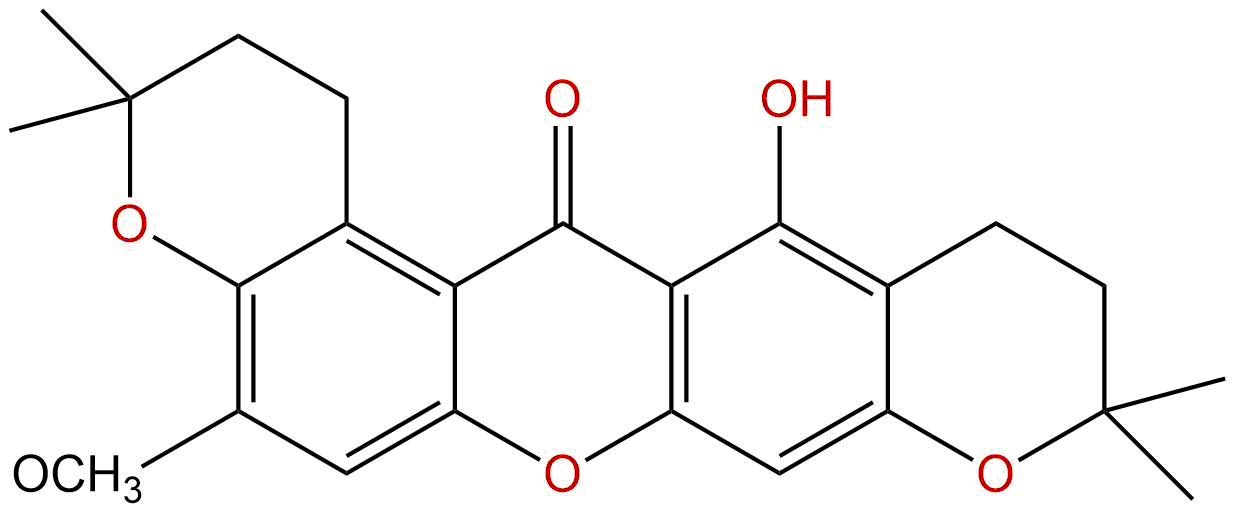
6-methoxy-bispyranoxanone (CAS: 115713-10-5) is a unique member of the ketone family, characterized by the condensation of two pyran rings on the ketone core and the presence of a methoxy substituent. Since its discovery, the potential antibacterial activity of this compound, especially against the increasingly severe problem of drug-resistant bacterial infections, has gradually become a research hotspot. Preliminary studies have shown that 6-methoxy-dipyranose ketone exhibits inhibitory activity against multiple drug-resistant strains, and its effects may involve multiple key bacterial targets, providing new possibilities for overcoming the single target resistance of existing antibiotics. This article aims to provide a systematic review of the chemical properties, plant sources, pharmacological activities, mechanisms of action, and pharmacological potential of 6-methoxy-dipyranose ketone, in order to provide comprehensive scientific references for the in-depth research and development of this compound.
Chemical structure and physicochemical properties
The molecular formula of 6-methoxy-dipyranose ketone is C24H26O6, with a molecular weight of 410.4660. Its core structure is 9H-oxaanthracene-9-one, which is fused with two dihydropyran rings at specific positions (usually 1,3-position or similar positions) in the parent nucleus, forming a unique "dihydropyran ketone" skeleton, and connected to a methoxy (- OCH3) substituent at position 6 of the ketone ring. This dense ring system increases the rigidity and hydrophobicity of the molecule, while the introduction of methoxy groups may affect its electron distribution and interaction with biomolecules.
According to its pharmacological parameters, the lipid water partition coefficient (LogP) of the compound is 4.7668, indicating its strong lipophilicity. The topological polar surface area (TPSA) is 78.13 Å ², which is relatively moderate. Its water solubility is extremely low, only 0.0034 mg/mL, which is consistent with its high LogP value, indicating that it may be necessary to improve its solubility in formulation development through salt formation, preparation into nano formulations, or use of solubilizers. In terms of absorption and distribution, the ability of the compound to cross the blood-brain barrier is predicted to be "low", which may be a disadvantageous factor for drugs aimed at treating central nervous system infections, but may also reduce the potential risk of neurotoxicity. Preliminary safety assessment shows that it has no inhibitory activity on hERG potassium channels (predicted as' no '), suggesting a low risk of causing QT interval prolongation in the heart. The Ames test result is 0.6 (usually expressed as a mutagenicity index, less than 2 is considered a negative tendency), which suggests that its mutagenic risk may be low, but further experimental verification is still needed. These physicochemical and preliminary ADMET (absorption, distribution, metabolism, excretion, and toxicity) properties provide key basis for their subsequent chemical modifications and formulation design.
Plant sources and extraction methods
6-methoxy-dipyranose ketone is mainly derived from Clusiaceae and Hypericaceae plants, which are rich sources of ketone compounds. Common genera containing such compounds include Garcinia, Calophyllum, and Hypericum. For example, in the bark, leaves, or fruits of certain plants of the Tenghuang genus, various polycyclic ketones, including 6-methoxy-dipyranose ketone, can often be isolated.
Its extraction and separation usually follow the standard process of natural product chemistry. Firstly, the dried plant material is crushed and extracted using organic solvents. Common solvents include methanol, ethanol, acetone, or mixtures of these solvents with water. Cold soaking, hot reflux, or ultrasound assisted extraction methods are used to improve efficiency. After vacuum concentration, the crude extract is subjected to preliminary fractionation using solvent partitioning method (such as extraction with petroleum ether, ethyl acetate, and n-butanol in sequence). Due to its equipolarity, this compound is usually enriched in the ethyl acetate extraction site.
Further purification relies on various chromatographic techniques. Silica gel column chromatography is commonly used for preliminary separation, with different ratios of petroleum ether ethyl acetate or chloroform methanol gradient elution. Then, fine purification was carried out by combining reversed-phase silica gel column chromatography (such as C18 packing, methanol water as mobile phase), dextran gel column chromatography (Sephadex LH-20) and high performance liquid chromatography (HPLC, preparative or semi preparative) to finally obtain high-purity 6-methoxy-dipyranone monomer. Structural identification is accomplished through spectroscopic techniques such as nuclear magnetic resonance (NMR, including 1H, 13C, and 2D NMR), mass spectrometry (MS), infrared spectroscopy (IR), and ultraviolet spectroscopy (UV).
Pharmacological activity research
Numerous in vitro pharmacological studies have shown that the most notable activity of 6-methoxy-dipyranose ketone lies in its inhibitory effect on multiple drug-resistant bacteria.
1. Antibacterial activity spectrum:
This compound exhibits significant inhibitory activity against Gram positive resistant bacteria, particularly against clinically challenging pathogens such as methicillin-resistant Staphylococcus aureus (MRSA), vancomycin resistant Enterococcus (VRE), and penicillin resistant Streptococcus pneumoniae. It also has some activity against some Gram negative bacteria, but is usually weaker than its effect on Gram positive bacteria. Studies on the minimum inhibitory concentration (MIC) values have shown that its MIC against certain MRSA strains can reach micromolar or even sub micromolar levels, with activity comparable to or more advantageous than certain first-line antibiotics.
2. Anti biofilm activity:
The formation of bacterial biofilm is an important cause of chronic infections and antibiotic resistance. Research has found that 6-methoxy-dipyranose ketone can interfere with the biofilm formation process of bacteria such as Staphylococcus aureus at sub inhibitory concentrations, reduce their adhesion ability and extracellular matrix production, and enhance the penetration and clearance of traditional antibiotics on formed biofilms.
3. Synergistic antibacterial effect:
When combined with existing antibiotics such as beta lactams, fluoroquinolones, and aminoglycosides, this compound often exhibits synergistic or additive effects. For example, it can restore the sensitivity of MRSA to beta lactam antibiotics and significantly reduce its MIC value, providing ideas for developing antibiotic enhancers based on this compound.
4. Other potential activities:
In addition to its core antibacterial activity, preliminary studies also suggest that this compound may have moderate anti-inflammatory and antioxidant activities, which may help regulate the host's excessive inflammatory response during infection, but its main research focus and advantages are still concentrated in the field of anti drug resistant bacteria.
Mechanism of action and molecular targets
The anti drug resistance activity of 6-methoxy-dipyranose ketone is not achieved through a single mechanism. Studies have shown that it may simultaneously act on multiple key targets of bacteria, and this multi-target characteristic is an effective strategy to overcome single target resistance. Its potential mechanism of action involves the following aspects:
1. Interference with DNA replication and topological structure:
This compound may interfere with DNA replication, transcription, and repair processes by inhibiting bacterial DNA gyrase (GyrA subunit) and topoisomerase IV (ParC/GyrB subunit). This is the main mechanism of action of fluoroquinolone antibiotics, and 6-methoxy-dipyranose ketone may act on these targets in different binding modes, thus being effective against quinolone resistant bacteria.
2. Inhibit folate metabolism:
Dihydrofolate reductase (DHFR) is a key enzyme in the bacterial folate synthesis pathway, catalyzing the reduction of dihydrofolate to tetrahydrofolate. Inhibiting DHFR can block bacterial nucleic acid synthesis. This compound may act as a competitive inhibitor of DHFR, interfering with bacterial proliferation.
3. Disruption of cell wall synthesis:
For drug-resistant Gram positive bacteria, this compound may affect key proteins involved in cell wall synthesis. For example, it may interfere with penicillin binding protein 2a (PBP2a, encoded by the mecA gene), which is the main determinant of MRSA resistance to beta lactams; Or it may affect enzymes related to cell wall peptidoglycan cross-linking, such as FemA (involved in glycine bridging formation) and SrtB (sorting enzyme responsible for surface protein anchoring).
4. Inhibit cell membrane function and efflux pumps:
Bacterial cell membrane related proteins are also potential targets. For example, it may affect certain functional proteins within the cell membrane, such as Vra. More importantly, studies have shown that this compound may be an effective inhibitor of bacterial multidrug efflux pumps, such as the NorA pump of Staphylococcus aureus. By inhibiting efflux pumps such as NorA, it is possible to prevent antibiotics from being actively pumped out of cells, thereby restoring the sensitivity of bacterial strains to multiple antibiotics, which is one of the important mechanisms for their synergistic effect.
5. Multi target synergistic effect:
Overall, 6-methoxy-dipyranose ketone may produce a multi pronged bactericidal or bacteriostatic effect by simultaneously weakening the bacterial DNA replication system, energy metabolism, cell wall integrity, and efflux defense system. This "multi-target attack" mode makes it difficult for bacteria to resist all effects simultaneously through a single gene mutation, thereby reducing the risk of drug resistance.
Evaluation of drug properties and pharmacokinetics
Although 6-methoxy-dipyranose ketone exhibits excellent antibacterial activity in vitro, its conversion into clinically available drugs still requires overcoming challenges in terms of drug formulation.
1. Pharmacokinetic prediction and challenges:
As mentioned earlier, its extremely low water solubility and high lipophilicity (LogP 4.77) may lead to poor oral absorption and low bioavailability. The distribution in the body may lean towards adipose tissue, while the distribution towards aqueous body fluids (such as plasma) is limited. Its metabolic pathway is not yet clear, but ketone compounds are usually prone to metabolic reactions such as oxidation, demethylation, glucuronidation, and sulfation in the liver. It is necessary to investigate whether it is a substrate or inhibitor of cytochrome P450 enzymes, as well as the activity and toxicity of its metabolites. The main pathways of excretion may be through bile and feces.
2. Preliminary safety assessment:
The existing computational prediction data (hERG negative, Ames test tendency negative) provide preliminary safety signals, but must be confirmed through systematic preclinical toxicology studies, including acute toxicity, subchronic toxicity, genetic toxicity, reproductive toxicity, etc. Whether its antibacterial activity has a significant impact on the normal gut microbiota also needs to be evaluated.
3. Formulation development strategy:
In order to improve its medicinal properties, future research may focus on:
- Structural modification By chemically synthesizing its derivatives or analogues, hydrophilic groups are introduced to reduce LogP and improve solubility while retaining activity.
- New drug delivery system Using nanotechnology, such as preparing liposomes, polymer nanoparticles, solid dispersions, or cyclodextrin inclusion complexes, to significantly improve their solubility and bioavailability, and potentially achieve targeted delivery.
- Prodrug strategy Design water-soluble prodrugs that can be hydrolyzed into active ingredients in the body.
Clinical application prospects and prospects
6-methoxy-dipyranose ketone, as a natural lead compound with multi-target antimicrobial activity, has the following clinical application prospects:
1. Development of new antibacterial drugs:
It is an excellent starting point for developing new structural categories of antibacterial drugs. Through systematic structure-activity relationship research and structural optimization, it is expected to obtain candidate drugs with stronger activity, better drug properties, and higher safety for the treatment of skin and soft tissue infections, bacteremia, pneumonia, etc. caused by MRSA, VRE, etc.
2. Antibiotic enhancers (resistance reversal agents):
Given its significant efflux pump inhibitory activity and synergistic effect with existing antibiotics, developing it as an antibiotic enhancer has enormous potential. The combination of low-dose 6-methoxy-dipyranose derivatives with existing antibiotics can restore the sensitivity of drug-resistant bacteria to the latter and prolong the life cycle of existing antibiotics. This is a more cost-effective and rapidly feasible development strategy.
3. Anti biofilm infection treatment agents:
Its ability to inhibit biofilm formation makes it valuable for the treatment of chronic biofilm infections such as catheter-related infections and artificial joint infections in medical devices.
4. Future research directions:
- In depth mechanism research Using techniques such as molecular docking, surface plasmon resonance, and X-ray crystallography, accurately elucidate its binding modes and affinities with various speculated targets (GyrA, DHFR, NorA, etc.).
- Analysis of System Structure Performance Relationship Synthesize a series of structurally similar compounds, clarify their pharmacophores and toxic groups for antibacterial activity, and guide rational drug design.
- Complete preclinical development Conduct standardized pharmacological (in vivo infection model), pharmacokinetic, and toxicological studies to lay the foundation for its entry into clinical trials.
- Explore combination therapy regimens In vitro and in vivo models, the system screens the optimal combination with various antibiotics to provide a plan for future clinical combination therapy.
Conclusion
In the face of the global antibiotic resistance crisis, finding lead compounds with novel structures and unique mechanisms from natural products is one of the important ways to address the challenge. 6-methoxy-dipyranose ketone, with its unique dipyranose fused ketone structure, exhibits significant inhibitory activity against multidrug-resistant bacteria, especially Gram positive resistant bacteria. Its multi-target mechanism of action and potential for antibiotic enhancement are particularly noteworthy. Although it faces challenges in solubility and pharmacokinetics, these challenges are expected to be gradually overcome through modern medicinal chemistry and pharmacology methods. In the future, through interdisciplinary and in-depth research, 6-methoxy-dipyranose ketone is expected to be developed into a new type of antibacterial drug or highly effective drug resistance reversal agent, contributing significantly to the fight against drug-resistant bacterial infections and providing a successful example for innovative drug development in natural products.