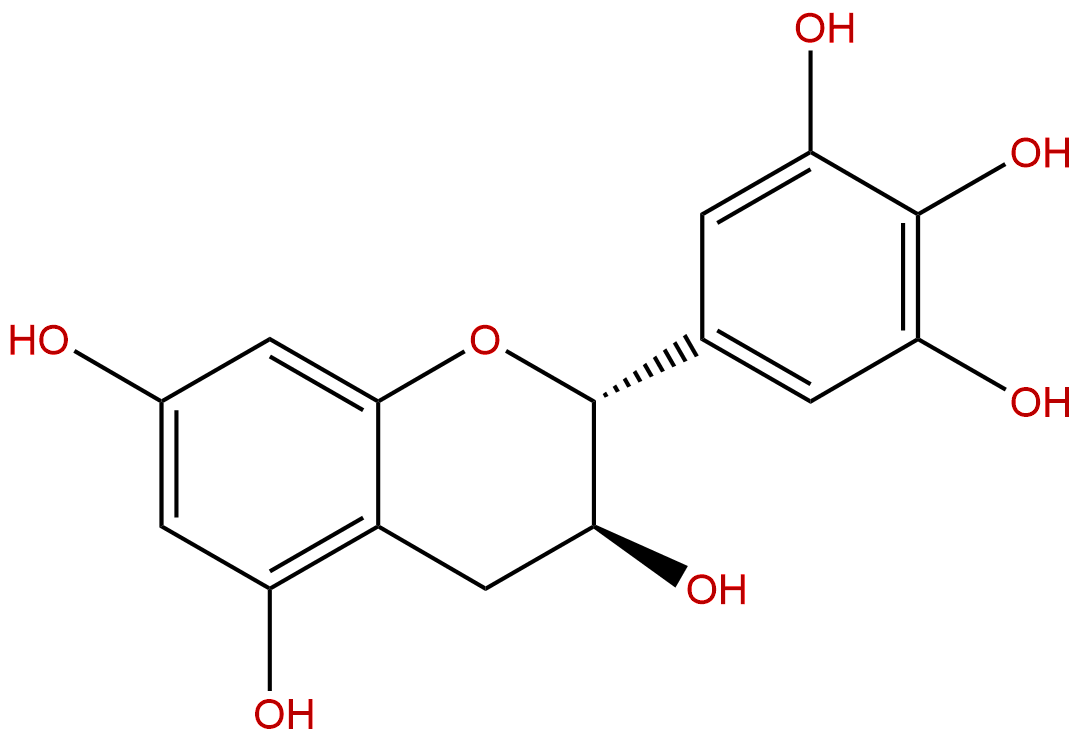


Product name: (+)-Gallocatechin
Synonym name:
Catalogue No.: BP1779
Cas No.: 970-73-0
Formula: C15H14O7
Mol Weight: 306.27
Botanical Source:
Physical Description: White powder
Type of Compound: Flavonoids
Purity: 95%~99%
Analysis Method: HPLC-DAD or/and HPLC-ELSD
Identification Method: Mass, NMR
Packing: Brown vial or HDPE plastic bottle
The product could be supplied from milligrams to grams. Inquire for bulk scale.
We provide solution to improve the water-solubility of compounds, thereby facilitating the variety of activity tests and clinic uses.
For Reference Standard and R&D, Not for Human Use Directly.
Description:
(+)-Gallocatechin as a bio-antimutagenic compound against UV-induced mutation in Escherichia coli. It is potent in scavenging Fremy’s salt, a synthetic free radical, it possesses antioxidant capacities that is higher or comparable to that of ascorbic acid or Trolox.
References:
Phytochemistry. 1994 Jul;36(4):1027-9.
Identification of (+)-gallocatechin as a bio-antimutagenic compound in Psidium guava leaves.[Pubmed: 7765204]
From the MeOH-extract of guava leaves, (+)-Gallocatechin was isolated as a bio-antimutagenic compound against UV-induced mutation in Escherichia coli. This strengthens the evidence that phenolic compounds require three neighbouring-OH groups in order to possess this activity.
Eur Food Res. Technol., 2004, 219(6):605-13.
Antioxidant gallocatechins, dimeric and trimeric proanthocyanidins from sea buckthorn (Hippophaë rhamnoides) pomace[Reference: WebLink]
Residues such as peels and seeds that result from fruit juice production may contain substantial amounts of valuable natural antioxidants.
METHODS AND RESULTS:
In order to isolate the potential antioxidants gallocatechins and proanthocyanidins, pomace from sea buckthorn (Hippophaë rhamnoides) berries was extracted by acetone-water (75:25, v/v) and fractionated by Sephadex LH-20 gel chromatography and semipreparative HPLC. The structures of the monomeric flavan-3-ols isolated, (+)-Gallocatechin and (−)-epigallocatechin, were elucidated by electrospray mass spectrometry (ESI-MS) and 1H and 13C NMR spectroscopy. Five dimeric proanthocyanidins were identified by HPLC-ESI-MS(-MS) and by acid-catalyzed cleavage in the presence of phloroglucinol. Moreover, nine trimeric proanthocyanidins were tentatively identified by HPLC-ESI-MS(-MS) in the Sephadex fractions of sea buckthorn pomace. The isolated flavan-3-ols and proanthocyanidins were potent in scavenging Fremy’s salt, a synthetic free radical.
CONCLUSIONS:
They possessed antioxidant capacities that were higher or comparable to that of ascorbic acid or Trolox. On comparing the antioxidant capacities of monomeric flavan-3-ols and dimeric proanthocyanidins, no significant influence from the degree of polymerization (DP) was observed.
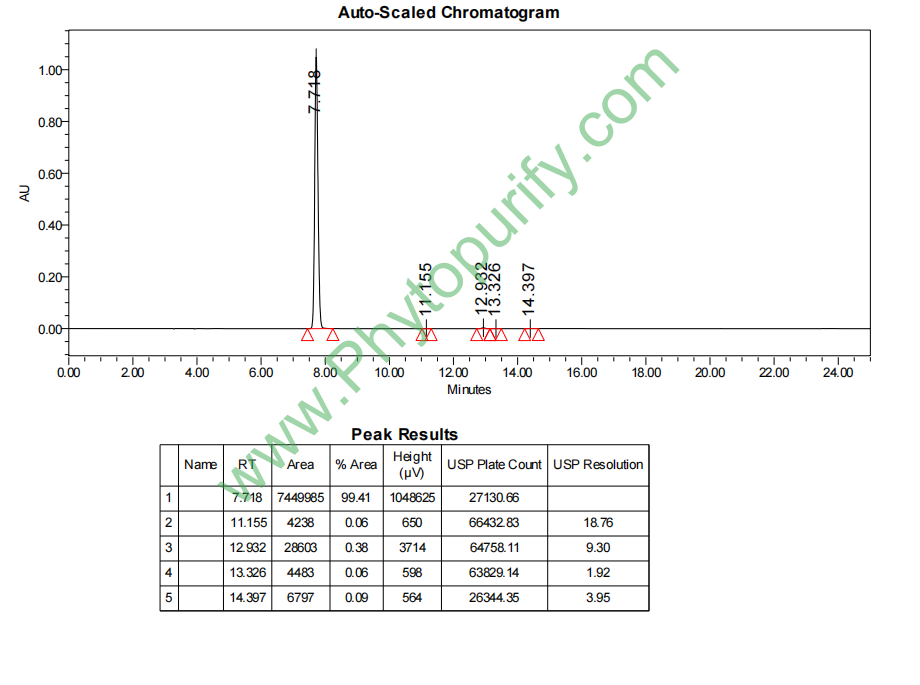
HPLC of (+)-Gallocatechin
Storage conditions:Short-term storage at 2~8℃, long-term storage at -20 ~ -80℃
130.6100
.8217
.7561
.8459
1.6700
.1563
Low
68.6470
3.5209
Yes
Yes
No
No
Yes
No
0.6
Yes
No
Yes
No
Natural products, as a treasure trove for drug discovery and development, have played an irreplaceable role in the long history of human fight against diseases. Among them, flavan-3-ol compounds, especially the catechin family, have attracted much attention due to their extensive biological activity and good safety. (+) - gallocatechin (GC), as an important member of the catechin family, is a polyphenolic compound found in various plants. Compared with the more well-known epigallocatechin gallate (EGCG), although GC lacks a galloyl group in its structure, its unique chemical skeleton endows it with equally remarkable biological activity. In recent years, with the in-depth study of the pathogenesis of cardiovascular diseases, especially atherosclerosis (AS), the anti atherosclerosis potential of GC has gradually emerged. Studies have shown that GC can interfere with the occurrence and development of atherosclerosis by regulating oxidative stress, inflammatory reaction, lipid metabolism, cell apoptosis, vascular endothelial function and other key links. The purpose of this paper is to systematically review the chemical properties, plant sources and pharmacological activities of (+) - gallocatechin, especially to deeply explore its multi target mechanism of action against atherosclerosis, pharmaceutical evaluation and clinical application prospects, in order to provide scientific basis for the in-depth development and utilization of this natural product.
(+) - Epicatechin gallate (CAS number: 970-73-0), chemical name (2R, 3S) -2- (3,4,5-trihydroxyphenyl) -3,4-dihydro-2H-1-benzopyran-3,5,7-triol, molecular formula C15H14O7, molecular weight 306.27 g/mol. Its structure belongs to flavan-3-alcohols, specifically, it is a derivative of flavan-3,3 ', 4', 5 ', 5', and 7 substituted with hydroxyl groups at positions 3, 3 ', 4', 5 ', and 7 of the flavan-skeleton, namely flavan-3,3', 4 ', 5,5', 7-hexanol. Its C2 and C3 positions are trans configured (2R, 3S) and belong to non phenotypic catechins.
The chemical structure of GC is the basis of its biological activity. The abundant phenolic hydroxyl groups endow it with strong antioxidant capacity, which can effectively eliminate free radicals and chelate metal ions. Its LogP value is about 0.82, indicating that the compound has moderate lipophilicity, but overall it still leans towards hydrophilicity. Its topological polar surface area (TPSA) is as high as 130.61 Å ², which is consistent with its multiple hydroxyl structures and also indicates its strong ability to form hydrogen bonds. The water solubility data shows that it has a certain solubility in water (about 0.85 mg/mL), which is beneficial for its absorption and distribution in organisms. However, higher polarity also means that its transmembrane transport, especially its ability to cross the blood-brain barrier (BBB), is weaker, predicted to be low-permeability, which to some extent limits its potential application in central nervous system diseases. In terms of safety, the preliminary pharmacological parameters show a negative risk of hERG channel inhibition, and the Ames test result is 0.6 (usually considered negative if<1.5), indicating a low potential mutagenic risk and providing preliminary safety support for its further development.
(+) - Epicatechins are widely distributed in nature and are an important component of many secondary metabolites in plants. It was originally isolated from plants of the Acacia genus. Subsequent research has found that GC is a common active ingredient in tea (especially green tea), grape seeds, red wine, cocoa beans, certain fruits (such as apples, strawberries), and various medicinal plants (such as large leaved purple pearls, sweet seeds, etc.). In tea, GC is an important component of the total amount of catechins, and its content varies depending on the tea variety, origin, harvesting season, and processing technology (especially the degree of fermentation). Usually, unfermented green tea has a higher GC content than semi fermented oolong tea and fully fermented black tea.
The extraction of GC from plant materials is usually carried out using solvent extraction method. The most commonly used solvents include water, methanol, ethanol, acetone, and their mixed solutions in different proportions (such as water ethanol, water acetone). In order to improve extraction efficiency, modern extraction techniques such as ultrasound assisted extraction (UAE), microwave-assisted extraction (MAE), and pressurized liquid extraction (PLE) have been widely used. These techniques destroy plant cell walls through physical means, accelerate solvent permeation and solute diffusion, and can achieve higher GC yields in a shorter time and with less solvent.
The components of the extracted crude extract are complex, and high purity GC can be obtained only after further separation and purification. The conventional purification steps include: preliminary enrichment using macroporous adsorption resins (such as AB-8, D101, HP-20), and then subdivision using column chromatography technology, such as silica gel column chromatography, Sephadex gel column chromatography. High performance liquid chromatography (HPLC), especially preparative HPLC, is the key means to ultimately obtain high-purity GC monomers. A gradient elution system using a reverse phase C18 chromatography column combined with water methanol or water acetonitrile (often containing small amounts of formic acid or acetic acid to improve peak shape) is a commonly used method for analyzing and preparing GC.
A large number of in vitro and in vivo studies have revealed a wide range of pharmacological activities of (+) - gallocatechin. Its core functions revolve around antioxidation, anti-inflammatory, anti apoptosis, regulation of metabolism and protection of vascular endothelium. These activities jointly point to its potential to prevent and treat cardiovascular system, especially atherosclerosis.
1. Antioxidant activity: GC is a potent natural antioxidant. Multiple phenolic hydroxyl groups in its molecule can directly scavenge reactive oxygen species/nitrogen species (ROS/RNS) such as superoxide anions (O ₂⁻ ·), hydroxyl radicals (· OH), and peroxynitrite (ONOO ⁻). In addition, GC can upregulate the endogenous antioxidant defense system of cells, such as enhancing the activity of superoxide dismutase (SOD), catalase (CAT), glutathione peroxidase (GPx), and promoting the synthesis of reduced glutathione (GSH). In atherosclerosis models, GC can effectively inhibit the oxidative modification of low-density lipoprotein (LDL), and oxidized low-density lipoprotein (ox LDL) is the initial and key factor driving the formation of atherosclerotic plaque.
2. Anti inflammatory effect: Chronic inflammation runs through the whole process of atherosclerosis. GC can significantly inhibit the expression and release of pro-inflammatory mediators, including tumor necrosis factor - α (TNF - α), interleukin-6 (IL-6), interleukin-1 β (IL-1 β), and monocyte chemoattractant protein-1 (MCP-1), induced by lipopolysaccharide (LPS) or ox LDL in macrophages, endothelial cells, and smooth muscle cells. Its anti-inflammatory mechanism involves inhibiting the activation of key inflammatory signaling pathways such as nuclear factor kappa B (NF - κ B) and mitogen activated protein kinases (MAPKs).
3. Regulating lipid metabolism and cholesterol efflux: GC can inhibit the absorption of cholesterol in the intestine and regulate the expression of liver lipid metabolism related genes, thereby reducing serum total cholesterol (TC), triglycerides (TG), and low-density lipoprotein cholesterol (LDL-C) levels. More importantly, GC can promote the outflow of cholesterol from macrophages, which is a key step in the regression of atherosclerotic plaque. Research has shown that GC can upregulate the expression of ATP binding cassette transporter A1 (ABCA1), which is responsible for transporting intracellular cholesterol to apolipoprotein A-I (apoA-I), forming high-density lipoprotein (HDL) precursors and initiating cholesterol reverse transport (RCT) processes.
4. Anti apoptosis and protection of vascular endothelium: Vascular endothelial dysfunction is an early event of atherosclerosis. GC can alleviate oxidative stress and inflammation induced endothelial cell apoptosis, maintaining endothelial integrity. Its anti apoptotic effect is related to regulating the balance of B-cell lymphoma 2 (BCL2) family proteins, including upregulating the expression of anti apoptotic protein BCL2 and myeloid leukemia 1 (MCL1), while possibly inhibiting the expression of pro apoptotic proteins. In addition, GC can promote the activation of endothelial nitric oxide synthase (eNOS), increase the production of nitric oxide (NO) with vasodilatory, anti-inflammatory, and antiplatelet aggregation effects, thereby improving endothelial function.
5. Other activities: The study also suggests that GC has antiplatelet aggregation, inhibition of abnormal proliferation and migration of vascular smooth muscle cells, and potential anti-tumor activity, which are related to its regulation of cell cycle and induction of tumor cell apoptosis.
The anti atherosclerotic effect of (+) - gallocatechin does not pass through a single target, but presents the network regulation characteristics of multiple targets and multiple pathways. According to the provided target information, its core mechanism of action can be summarized as follows:
1. Targeting LOX-1, blocking the atherogenic signal of ox LDL: Lectin like oxidized low-density lipoprotein receptor-1 (LOX-1, encoded by the OLR1 gene) is the main receptor for recognizing and uptake of ox LDL on endothelial cells, macrophages, and smooth muscle cells. GC has been shown to downregulate the expression or inhibit the activity of LOX-1. By blocking LOX-1, GC can effectively reduce the endocytosis of ox LDL, thereby inhibiting the chain reaction of ROS burst, activation of NF - κ B inflammatory pathway, endothelial cell apoptosis and foam cell formation, and inhibiting the development of plaque from the source.
2. Activate AMPK to regulate energy metabolism and cellular homeostasis: AMP activated protein kinase (AMPK) is a core regulator of cellular energy metabolism. GC can activate AMPK (PRKAA1 is its catalytic subunit). The activation of AMPK produces multiple beneficial effects: (a) inhibition of key enzymes involved in cholesterol and fatty acid synthesis, such as HMG CoA reductase and acetyl CoA carboxylase; (b) Promote fatty acid oxidation and glucose uptake, improve metabolism; (c) Upregulation of ABCA1 expression promotes cholesterol efflux; (d) Inhibiting the mTOR pathway, reducing inflammation and cell proliferation; (e) Activate eNOS and improve endothelial function. Therefore, AMPK is the core hub target for GC to exert comprehensive effects such as lipid-lowering, anti-inflammatory, and endothelial protection.
3. Regulating the epigenetic modifying enzyme EHMT2: Histone lysine methyltransferase 2 (EHMT2, also known as G9a) is an epigenetic modifying enzyme, and its overexpression is associated with abnormal activation of inflammatory genes and atherosclerosis. GC may inhibit the activity of EHMT2 and reduce the levels of inhibitory histone markers (such as H3K9me2) in the promoter region of pro-inflammatory genes, thereby suppressing inflammatory responses at the epigenetic level and providing a new perspective for AS treatment.
4. Regulating apoptosis related proteins BCL2 and MCL1: GC can enhance the viability of vascular endothelial cells and myocardial cells under stress conditions by up regulating the expression of anti apoptotic proteins BCL2 and MCL1, reduce apoptosis in atherosclerotic lesions, help stabilize plaque, and prevent plaque rupture and acute cardiovascular events.
5. Affects DNA helicase RECQ1: RECQ1 helicase plays a crucial role in DNA replication, repair, and maintaining genomic stability. Although its direct association with atherosclerosis needs more research, DNA damage caused by oxidative stress is one of the pathological factors of AS. GC may indirectly protect DNA through its antioxidant effect, or maintain the genomic stability of vascular cells by affecting repair proteins such as RECQ1, delaying cell aging and functional impairment.
6. Upregulation of key effector molecule ABCA1: As mentioned earlier, GC significantly upregulates the expression of ABCA1 through AMPK dependent or non dependent pathways. This is one of the most direct and critical molecular mechanisms by which it promotes macrophage cholesterol efflux, enhances cholesterol efflux, and induces plaque regression.
In summary, GC acts on multiple targets such as LOX-1, AMPK, EHMT2, BCL2/MCL1, ABCA1, etc., forming a complete functional network that inhibits pathogenic factor uptake (ox LDL), regulates core metabolism and inflammatory pathways, protects cell survival, and promotes pathological product clearance (cholesterol).
Although (+) - gallocatechin gallate has shown excellent biological activity in vitro, its potential to become an ideal drug still needs to be comprehensively evaluated.
Pharmacokinetic characteristics: GC is mainly absorbed in the small intestine after oral administration. Due to its polyphenolic structure, the absorption rate is usually not high and is greatly influenced by gut microbiota and first pass effects. The GC absorbed into the body rapidly undergoes extensive phase II metabolism, mainly binding with glucuronic acid, sulfuric acid, or methyl to form corresponding complexes. These metabolites are the main forms of their existence in plasma, and the concentration of the prototype drug is usually very low. GC and its metabolites are widely distributed throughout the body, but due to their hydrophilicity and high binding rate to plasma proteins, their distribution volume is limited and they are difficult to penetrate the blood-brain barrier. It is mainly excreted through the kidneys with urine, and partially enters the intestine through bile, resulting in enterohepatic circulation. The shorter half-life and lower systemic exposure are the main pharmacokinetic bottlenecks limiting its in vivo efficacy.
Formulation and delivery strategy challenges: In order to improve the bioavailability and targeting of GC, researchers are exploring various novel delivery systems: 1) Nano delivery system: For example, liposomes, nano emulsions, polymer nanoparticles, etc. can wrap GC, improve its solubility, protect it from premature metabolism, extend the cycle time, and enrich in atherosclerotic lesions through passive targeting (enhanced permeability and retention effect, EPR) or active targeting (modification of specific ligands). 2) Prodrug strategy By chemical modification, GC is prepared into a more lipophilic prodrug, improving its membrane permeability, and then converted into an active form in vivo. 3) Phospholipid complex Forming a complex with phospholipids can significantly enhance their lipophilicity and oral absorption. 4) Co administration strategy Combined with bioavailability enhancers such as vitamin C and piperine, or with other natural products with synergistic effects (such as other catechins and resveratrol) to form a compound to improve overall efficacy.
Safety evaluation: The existing data indicates that GC has low toxicity. The Ames test result is negative, indicating no direct mutagenicity. The negative inhibition of hERG indicates a lower risk of causing QT interval prolongation and apical torsion ventricular tachycardia in the heart. However, there have been case reports of high-dose catechins causing liver toxicity, and the safety of their long-term use, especially the toxicological data under high doses or special formulations, still needs to be improved through systematic preclinical and clinical studies.
As a candidate natural drug for anti atherosclerosis, (+) - gallocatechin has broad prospects for clinical application, but also faces challenges.
Potential application directions:
1. Dietary supplements or functional food additives for primary/secondary prevention of cardiovascular disease As a natural ingredient extracted from tea and other foods, GC is safe and suitable for developing health products to prevent hyperlipidemia, hypertension and early atherosclerosis.
2. Adjuvant therapy drugs Combined use with existing statins, antihypertensive drugs, etc. may produce synergistic effects. For example, the antioxidant, anti-inflammatory, and cholesterol efflux promoting effects of GC can compensate for the shortcomings of statins in reducing oxidative stress and inflammation, achieving a multi link intervention.
3. Targeted therapy for specific pathological processes With the development of delivery technology, it is possible to develop GC nanoparticles targeting atherosclerotic plaque in the future, which can be used for local administration (such as intravascular stent coating, targeted injection) or active targeting after systematic administration, directly acting on the lesion site, improving the efficacy and reducing systemic side effects.
Future research prospects:
1. In depth mechanism research Further precise elucidation of the interaction network between GC targets and their contribution weights in the overall animal model requires the use of gene knockout/knock in animal models, proteomics, metabolomics, and other techniques.
2. Optimize delivery and dosage form Strengthen the research and development of new nanocarriers, conduct systematic formulation studies, and solve the fundamental problem of low bioavailability.
3. Conduct standardized clinical research Currently, there is still a lack of high-quality human clinical trial data on GC. In the future, a rigorous randomized controlled trial (RCT) needs to be designed to evaluate its effectiveness, safety, optimal dose and administration scheme in patients with atherosclerosis at different stages.
4. Exploring structural modifications On the basis of retaining its core pharmacophore, reasonable chemical structural modifications are carried out on GC in order to obtain derivatives with stronger activity, more stable metabolism, and higher bioavailability.
(+) - Epigallocatechin gallate, as a naturally occurring flavan-3-ol compound, exhibits diverse pharmacological activities based on its strong antioxidant capacity due to its multi hydroxyl chemical structure. Its role in anti atherosclerosis is particularly prominent. Through targeting LOX-1, activating the AMPK central regulator, regulating the epigenetic modification of EHMT2, balancing BCL2/MCL1 mediated apoptosis, and up regulating ABCA1 to promote the reverse transport of cholesterol and other multiple mechanisms, it has formed a collaborative and interactive network to intervene in the complex pathological process of atherosclerosis from multiple levels. Although it faces challenges such as low oral bioavailability and rapid metabolism in terms of drug efficacy, the development of modern pharmacy and nanotechnology provides the possibility to overcome these bottlenecks. In the future, by deepening mechanism understanding, innovating drug delivery system and promoting rigorous clinical transformation research, (+) - gallocatechin is expected to develop from a potential natural active molecule into a new drug or efficient functional product for preventing and treating atherosclerosis and related cardiovascular diseases, contributing its unique value to human cardiovascular health.
