


Product name: Catechin
Synonym name: (+)-Catechin; Cianidanol; Dexcyanidanol; Cianidol; Catergen; Drenoliver; Biocatechin; Tanningenic acid; Cyanidol
Catalogue No.: BP0322
Cas No.: 154-23-4
Formula: C15H14O6
Mol Weight: 290.271
Botanical Source: Green Tea
Physical Description:
Type of Compound: Polyphenols
Purity: 95%~99%
Analysis Method: HPLC-DAD or/and HPLC-ELSD
Identification Method: Mass, NMR
Packing: Brown vial or HDPE plastic bottle
Storage: Store in a well closed container, protected from air and light. Put into refrigerate or freeze for long term storage.
Whenever possible, you should prepare and use solutions on the same day. However, if you need to make up stock solutions in advance, we recommend that you store the solution as aliquots in tightly sealed vials at -20℃. Generally, these will be useable for up to two weeks.
The product could be supplied from milligrams to grams
Inquire for bulk scale.
Chengdu Biopurify Phytochemicals Ltd. is a leading company in the research, development, manufacture and marketing of High Quality Phytochemicals and Extracts(especially Active Ingredients from Traditional Chinese Medicine,TCM), Natural Active Pharmaceutical Ingredients worldwide.
The main services:
A. Supply active ingredients and reference standards of TCM, from mgs to kgs scale
B. Custom extraction and purification, target Herb Active Ingredients
C. Custom synthesis and semi-synthesis for Natural Active Ingredients
D. CR(contract research), CM(contract manufacture) and PD(process development) services from lab scale, pilot scale to commercial scale(GMP is also available)
E. TCM compounds library for drug screen,more than 3000 compounds available, many of them are rare and unique.
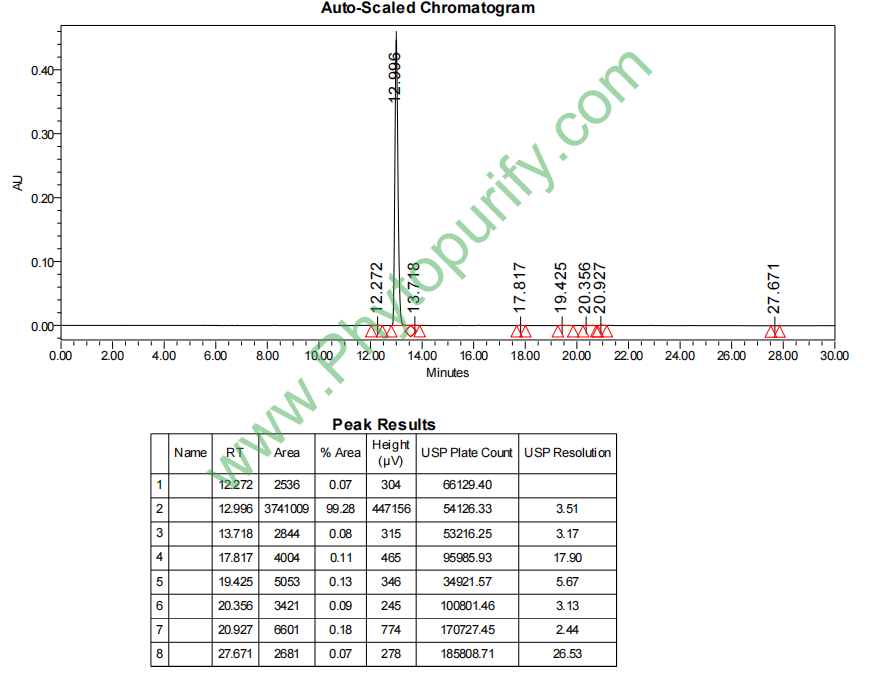
HPLC of Catechin
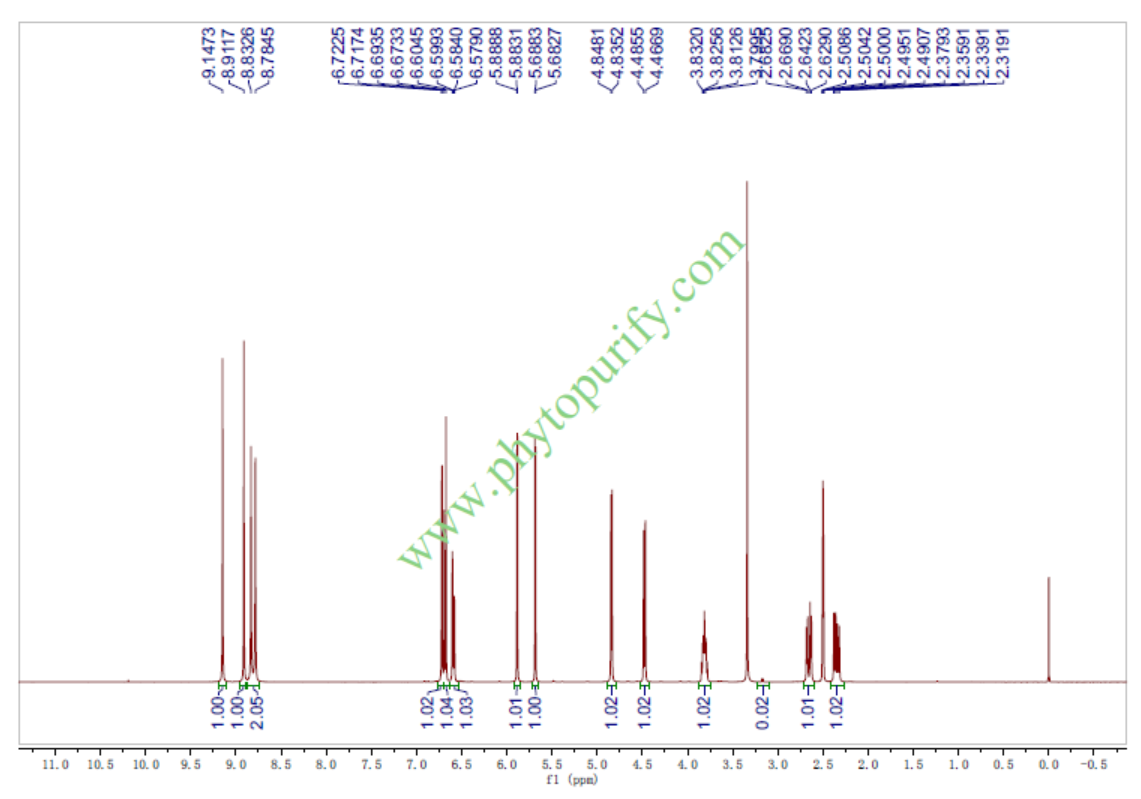
HNMR of Catechin
Storage conditions:Short-term storage at 2~8℃, long-term storage at -20 ~ -80℃
110.3800
.9710
.9543
.7536
1.8371
.1940
Low
66.2594
3.3441
Yes
No
No
No
Yes
No
0.0
Yes
No
Yes
No
Natural products, as a treasure trove for drug discovery and development, play an irreplaceable role in the history of human disease prevention and treatment. Among them, catechins, especially their right-handed isomer (+) - catechins, have become a hot topic in pharmacological research due to their widespread presence in daily beverages (such as tea) and various medicinal plants, and their diverse biological activities. Epicatechins are not only the main astringent components in tea, but also one of the core material foundations for their health benefits. Early studies have revealed its significant antioxidant properties, but with the development of molecular pharmacology, its effects extend far beyond this. Research has shown that (+) - catechins can specifically inhibit cyclooxygenase-1 (COX-1) with IC50 values as low as 1.4 μ M, suggesting their potential pharmacological effects such as anti-inflammatory and antiplatelet aggregation. More importantly, it has been proven that catechins can construct a powerful defense network at the cellular and body levels by regulating a series of key targets, such as the transcription factor NRF2 (encoded by the NFE2L2 gene) and its downstream antioxidant enzyme system (SOD, CAT, GPX, etc.), around the core pathological link of antioxidant damage. This article aims to systematically review the chemical properties, plant sources, pharmacological activities, molecular mechanisms of action, medicinal characteristics, and clinical application potential of catechins, in order to provide comprehensive scientific basis for the deep development and rational application of this natural product.
Epicatechin, chemical name (2R, 3S) -2- (3,4-dihydroxyphenyl) -3,4-dihydro-2H-1-benzopyran-3,5,7-triol, CAS number 154-23-4. Its molecular formula is C15H14O6 and its molecular weight is 290.27 g/mol. Structurally, (+) - catechins belong to flavan-3-alcohols, and their basic skeleton consists of two benzene rings (A and B rings) and one oxygen-containing heterocyclic ring (C ring, dihydropyran ring). The A ring is usually of the triphenylphenol type, with hydroxyl groups at positions 5 and 7; The B ring is of the catechol type, with hydroxyl groups at positions 3 'and 4'; The 2nd and 3rd positions of the C ring are chiral carbon atoms, with the absolute configuration of (+) - catechin being 2R, 3S. The presence of this catechol structure and multiple phenolic hydroxyl groups is the chemical basis for its strong antioxidant activity and metal ion chelating ability.
Its physicochemical properties are closely related to its medicinal properties. The calculated lipid water partition coefficient (LogP) is approximately 0.97, indicating that the compound has a certain degree of lipophilicity but overall leans towards hydrophilicity. The topological polar surface area (TPSA) is 110.38 Å ², reflecting the strong polarity brought by its multiple hydroxyl groups. The water solubility measured in the experiment is about 0.75 mg/mL, which belongs to the range of slightly soluble to soluble, which has a significant impact on its absorption and distribution in organisms. These parameters collectively determine the pharmacokinetic behavior of catechins in vivo, such as their ability to cross the blood-brain barrier being predicted to be "low," which limits their direct effects on central nervous system diseases. Preliminary safety predictions indicate that there is no risk of hERG potassium channel inhibition (low arrhythmogenic potential), and the Ames test results are negative (no mutagenicity), providing preliminary favorable evidence for its safety.
Catechins are widely distributed in nature, especially abundant in the plant kingdom. Its most famous source is the leaves of Camellia sinensis (L.) O. Ktze., which is one of the main monomeric catechins in tea leaves such as green tea, black tea, and oolong tea. In addition, it is also commonly found in many medicinal and edible plants, such as the heartwood of the legume Acacia catechu (L.f. Willd.) (the main component of catechu paste), the skin of the rose plant Malus pumila Mill., the seed skin of the grape plant Vitis vinifera L., as well as cocoa beans, fruits, vegetables, and various traditional Chinese medicinal materials.
The extraction of catechins from plant materials is usually carried out using solvent extraction method. Due to the high polarity and sensitivity to heat and oxidation of catechins, commonly used extraction solvents include water, methanol, ethanol, acetone, and their different ratios of aqueous solutions. In order to improve extraction efficiency and protect the structure of catechins, physical techniques such as ultrasound, microwave, or high-pressure homogenization are often used. For example, using a 60-70% ethanol aqueous solution for reflux extraction under mild heating (50-60 ° C) is a commonly used method in laboratory and industrial settings. After being filtered and concentrated, the extract can be separated and purified by various chromatographic techniques, such as macroporous adsorption resin column chromatography (such as AB-8, D101), silica gel column chromatography, Sephadex gel column chromatography (LH-20) and high performance liquid chromatography (HPLC). Among them, Sephadex LH-20 column chromatography utilizes molecular sieves and distribution principles to achieve good separation of catechin compounds, which is a key step in obtaining high-purity (+) - catechin monomers. In recent years, green extraction technologies such as supercritical CO2 extraction (which requires the addition of entrainers such as ethanol) have also been explored to reduce the use of organic solvents.
Numerous in vitro and in vivo studies have confirmed that catechins have broad and complex pharmacological activities, centered around antioxidant, anti-inflammatory, cardiovascular protection, neuroprotection, and potential anti-tumor effects.
The multiple pharmacological activities of catechins stem from their regulation of multiple molecular targets and signaling pathways, with the activation of the antioxidant damage pathway being its core mechanism.
Core target: NRF2/ARE signaling pathway This is the most important defense system for cells to cope with oxidative stress and electrophilic stress. In the resting state, the transcription factor NRF2 (encoded by the NFE2L2 gene) binds to its inhibitory protein Keap1 in the cytoplasm and is degraded by ubiquitination. When catechins (or their metabolites) act as electrophilic substances or indirectly through the production of reactive oxygen species (ROS), they can modify key cysteine residues on Keap1, causing conformational changes in Keap1 and releasing NRF2. NRF2 subsequently translocates to the nucleus and binds to antioxidant response elements (ARE), initiating the transcriptional expression of a series of phase II detoxifying enzymes and antioxidant proteins. The key downstream targets regulated by catechins include:
Inflammatory related targets:
Other signaling pathways Catechins can also affect the mitogen activated protein kinase (MAPK) pathway (such as ERK, JNK, p38), phosphatidylinositol 3-kinase/protein kinase B (PI3K/Akt) pathway, and apoptosis related pathways. The cross-talk of these pathways collectively mediates complex effects such as cell protection, proliferation regulation, and apoptosis induction.
Although catechins have a wide range of biological activities, their direct application as drugs faces some challenges in terms of their pharmacokinetic properties.
Epicatechins have been widely used as dietary supplements and functional food ingredients, but their development as therapeutic drugs is still in the research stage, with broad prospects but challenges.
Current application and development direction:
Future prospects and challenges:
Epicatechins, a flavan-3-ol compound derived from natural plants such as tea, have shown remarkable pharmacological potential in fields such as antioxidant damage, anti-inflammatory, and cardiovascular and cerebrovascular protection due to their unique chemical structure and multi-target mechanism of action. It constructs a multi-level protective network at the cellular and molecular levels by directly clearing free radicals, activating the NRF2/ARE core defense pathway, and inhibiting key enzymes such as COX-1. However, its relatively poor pharmacokinetic properties, such as low oral bioavailability and rapid metabolism, constitute the main bottleneck for its conversion into therapeutic drugs. Future research should focus on using modern pharmaceutical technologies to overcome drug resistance barriers and validate its efficacy and safety through rigorous clinical studies. With a deeper understanding of the complex biological effects of catechins and their metabolites, as well as continuous innovation in delivery technology, this ancient natural molecule is expected to shine with new vitality in the fields of preventive medicine and adjuvant therapy, contributing more precise and powerful power to human health.
