


Product name: Oleuropein
Synonym name:
Catalogue No.: BP1028
Cas No.: 32619-42-4
Formula: C25H32O13
Mol Weight: 540.518
Botanical Source: Oliver
Physical Description:
Type of Compound: Iridoids
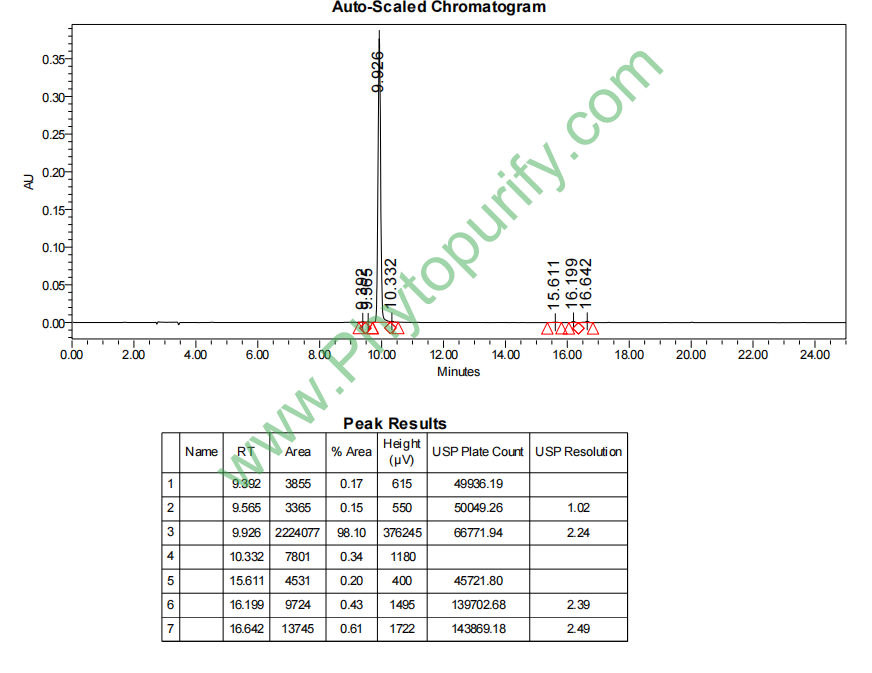
Purity: 95%~99%
Analysis Method: HPLC-DAD or/and HPLC-ELSD
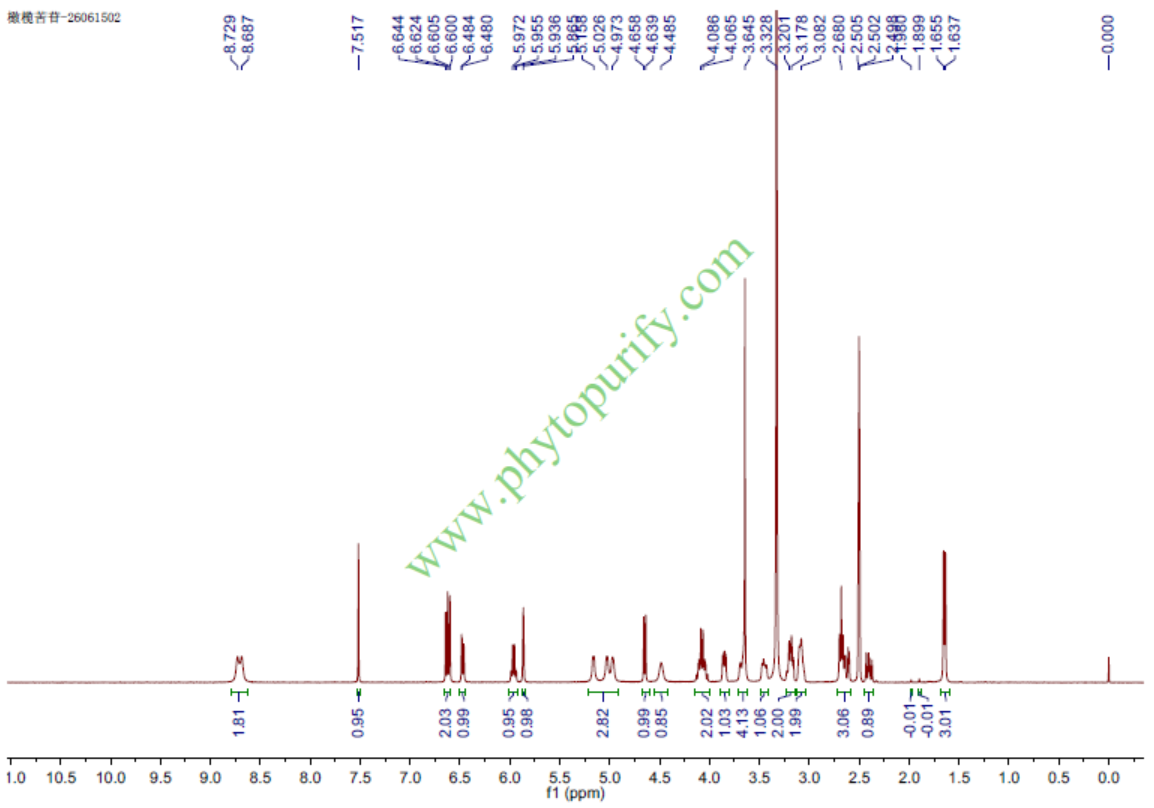
Identification Method: Mass, NMR
Packing: Brown vial or HDPE plastic bottle
Storage: Store in a well closed container, protected from air and light. Put into refrigerate or freeze for long term storage.
Whenever possible, you should prepare and use solutions on the same day. However, if you need to make up stock solutions in advance, we recommend that you store the solution as aliquots in tightly sealed vials at -20℃. Generally, these will be useable for up to two weeks.
The product could be supplied from milligrams to grams
Inquire for bulk scale.
Description:
Oleuropein exhibits anti-ischemic, antioxidative, hypolipidemic, in vitro antimycoplasmal , anti-inflammatory, and anti-cancer effects., it also may be helpful in the prevention of diabetic complications associated with oxidative stress. Oleuropein prevents oxidative myocardial injury induced by ischemia and reperfusion, and reduces viremia in duck hepatitis B virus (DHBV)-infected ducks. Oleuropein reduces TLR and MAPK signaling.
References:
Mol Med Rep. 2015 Jun;11(6):4617-24.
Oleuropein induces apoptosis via activation of caspases and suppression of phosphatidylinositol 3-kinase/protein kinase B pathway in HepG2 human hepatoma cell line.
Oleuropein is a polyphenol, that is found in extra‑virgin olive oil. Previous studies have shown that Oleuropein inhibits cell proliferation and induces apoptosis in breast cancer, colorectal cancer and thyroid cancer. The aim of the present study was to investigate the effects of Oleuropein in hepatocellular carcinoma (HCC) cells.
METHODS AND RESULTS:
The results of Cell Counting Kit 8 and flow cytometric analysis indicated that Oleuropein effectively inhibited cell viability and induced apoptosis in HepG2 human hepatoma cells in a dose‑dependent manner, through activation of the caspase pathway. Proapoptotic Bcl‑2 family members, BAX and Bcl‑2, were involved in Oleuropein‑induced apoptosis. The phosphatidylinositol 3‑kinase/protein kinase B (PI3K/AKT) signaling pathway was also shown to be involved in this process. Oleuropein was demonstrated to suppress the expression of activated AKT. In addition, AKT overexpression promoted cell survival following treatment with Oleuropein, while inhibition of AKT promoted cell death. Furthermore, the data demonstrated that Oleuropein induces the production of reactive oxygen species (ROS) and that the function of Oleuropein is, at least partially, ROS‑dependent.
CONCLUSIONS:
These results suggest that Oleuropein may be a promising novel chemotherapeutic agent in hepatocellular carcinoma.
Int J Antimicrob Agents. 2002 Oct;20(4):293-6.
In vitro antimycoplasmal activity of oleuropein.
METHODS AND RESULTS:
The activity of Oleuropein, a phenolic glycoside contained in olive oil, was investigated in vitro against Mycoplasma hominis, Mycoplasma fermentans, Mycoplasma pneumoniae and Mycoplasma pirum. Oleuropein inhibited mycoplasmas at concentrations from 20 to 320 mg/l.
CONCLUSIONS:
The MICs of Oleuropein to M. pneumoniae, M. pirum, M. hominis and M. fermentans were 160, 320, 20 and 20 mg/l, respectively.
J Nutr Biochem. 2004 Aug;15(8):461-6.
Oleuropein prevents oxidative myocardial injury induced by ischemia and reperfusion.
The potential protective effects of Oleuropein, a dietary antioxidant of olive oil, has been investigated in the isolated rat heart.
METHODS AND RESULTS:
The organs were subjected to 30 minutes of no-flow global ischemia and then reperfused. At different time intervals, the coronary effluent was collected and assayed for creatine kinase activity as well as for reduced and oxidized glutathione. In addition, the extent of lipid peroxidation was evaluated by measuring thiobarbituric acid reactive substance concentration in cardiac muscle. Pretreatment with 20 microg/g Oleuropein before ischemia resulted in a significant decrease in creatine kinase and reduced glutathione release in the perfusate. The protective effect of Oleuropeinagainst the post-ischemic oxidative burst was investigated by measuring the release, in the coronary effluent, of oxidized glutathione, a sensitive marker of heart's exposure to oxidative stress. Reflow in ischemic hearts was accompanied by a prompt release of oxidized glutathione; in ischemic hearts pretreated with Oleuropein, this release was significantly reduced. Membrane lipid peroxidation was also prevented by Oleuropein. The reported data provide the first experimental evidence of a direct cardioprotective effect of Oleuropein in the acute events that follow coronary occlusion, likely because of its antioxidant properties.
CONCLUSIONS:
This finding strengthens the hypothesis that the nutritional benefit of olive oil in the prevention of coronary heart disease can be also related to the high content of Oleuropein and its derivatives. Moreover, our data, together with the well documented antithrombotic and antiatherogenic activity of olive oil polyphenols, indicate these antioxidants as possible therapeutic tools for the pharmacological treatment of coronary heart disease as well as in the case of cardiac surgery, including transplantation.
J Ethnopharmacol. 2009 Sep 7;125(2):265-8.
Antiviral efficacy against hepatitis B virus replication of oleuropein isolated from Jasminum officinale L. var. grandiflorum.
Jasminum officinale L. var. grandiflorum (JOG) is a folk medicine used for the treatment of hepatitis in south of China. Phytochemical studies showed that secoiridoid glycosides are the typical constituents of this plant. The present study was undertaken to evaluate the effect of Oleuropein (Ole) derived from the flowers of JOG on hepatitis B virus (HBV) replication in HepG2 2.2.15 cell line in vitro and duck hepatitis B virus (DHBV) replication in ducklings in vivo.
METHODS AND RESULTS:
The extracellular hepatitis B e antigen (HBeAg) and hepatitis B surface antigen (HBsAg) concentrations in cell culture medium were determined by ELISA. DHBV in duck serum was analyzed by dot blot. Ole blocks effectively HBsAg secretion in HepG2 2.2.15 cells in a dose-dependent manner (IC(50)=23.2 microg/ml). Ole (80 mg/kg, intraperitoneally, twice daily) also reduced viremia in DHBV-infected ducks.
CONCLUSIONS:
Ole therefore warrants further investigation as a potential therapeutic agent for HBV infection.
HPLC of Oleuropein
HNMR of Oleuropein
Storage conditions:Short-term storage at 2~8℃, long-term storage at -20 ~ -80℃
201.6700
.0344
.0310
9.5680
.5106
.1776
Low
70.9137
4.6766
Yes
No
No
No
No
No
0.0
Yes
No
Yes
Yes
Oleuropein is a naturally occurring iridoid glycoside, mainly distributed in plants of the Oleaceae family, especially in olive oil(Olea europaea L. The leaves, fruits, and bark of the plant are rich in content. As one of the important bioactive components in the Mediterranean diet, oleuropein has long been considered a major contributor to the health benefits of olive oil and olive products. In recent years, with the in-depth study of natural product pharmacology, the biological activities of oleuropein in antioxidant, anti-inflammatory, anti atherosclerosis, anti-tumor, anti-virus and metabolic regulation have been gradually revealed, and its multi target action characteristics have attracted extensive attention.
The chemical structure of oleuropein is composed of hydroxytyrosol and cyclohexene ether terpenoid glycosides connected by ester bonds, which endows it with rich pharmacological activity. Studies have shown that oleuropein can play an antioxidant and anti-inflammatory role by directly inhibiting the transcriptional activity of peroxisome proliferator activated receptor γ (PPAR γ), thereby inhibiting the occurrence and development of atherosclerosis. In the field of tumor, oleuropein regulates the expression of Bax and Bcl-2 genes through p53 dependent pathway, induces apoptosis of breast cancer cells, and also inhibits aromatase activity, showing a multi pathway anti-tumor potential. In addition, oleuropein also exhibits broad-spectrum activity in the field of antiviral activity, with intervention effects on various viral targets such as MPO, UL42, UL54, ICP27, TK, gD, CCR5, CXCR4, HIV1-PR, and INT.
This article aims to systematically review the chemical properties, plant sources, pharmacological activities, mechanisms of action, and pharmacological characteristics of oleuropein, evaluate its potential as a lead compound or candidate drug, and prospect its application prospects in clinical translation.
The chemical name of oleuropein is (2S, 3E, 4S) -3-ethynyl-2- (β - D-glucopyranosyl) -3,4-dihydro-5- (methoxycarbonyl) -2H-pyran-4-acetic acid 2- (3,4-dihydroxyphenyl) ethyl ester, with a molecular formula of C ₂₅ H ∝₂ O ₁ h3 and a molecular weight of 540.5180 g/mol. Its structural core is a cyclohexene ether terpene skeleton, which is connected to glucose through glycosidic bonds and to hydroxytyrosol units through ester bonds. This structural feature allows oleuropein to possess both hydrophilic sugar moiety and hydrophobic phenolic hydroxyl moiety, forming an amphiphilic molecule.
From the perspective of physicochemical properties, the lipid water partition coefficient (LogP) of oleuropein is 0.0344, indicating its strong hydrophilicity, which is closely related to the presence of multiple hydroxyl and sugar groups in the molecule. Its topological polar surface area (TPSA) is as high as 201.6700 Å ², far exceeding the recommended upper limit of 140 Å ² for oral medications, suggesting that its transmembrane permeability may be limited. The water solubility parameter is 9.5680, indicating good solubility in aqueous solution, which is beneficial for formulation development. It is worth noting that oleuropein has a low blood-brain barrier penetration ability, which limits its application in central nervous system diseases and reduces the potential risk of neurotoxicity. In addition, the hERG inhibition test result was negative, and the Ames test result was 0.0, indicating that oleuropein has good safety in terms of cardiac toxicity and genetic toxicity.
Olive bitter glycoside is relatively stable under acidic and neutral conditions, but it is prone to hydrolysis in alkaline environments, producing hydroxytyrosol and cyclohexene ether terpenoid glycosides. This hydrolysis characteristic is closely related to its metabolic transformation in vivo, and also provides important reference for formulation process design.
Olive bitter glycoside is mainly derived from plants in the family Rhinoceros, among which olive oil(Olea europaea L. It is the most important natural source. The content of oleuropein in olive leaves is the highest, reaching 6% -9% of dry weight, followed by olive fruit (0.5% -2%) and bark. Different varieties, growth environments, harvest seasons, and processing methods can all affect the content of oleuropein. Generally speaking, olive varieties grown in the Mediterranean region such as "Coratina" and "Moraiolo" have higher content. In addition, Ligustrum lucidum(Ligustrum lucidum)Japanese Privet(Ligustrum japonicum)Oleuropein is also found in plants of the Oleaceae family, but its content is relatively low.
The extraction methods of oleuropein mainly include solvent extraction, ultrasound assisted extraction, microwave-assisted extraction, supercritical fluid extraction, and enzyme assisted extraction. Traditional solvent extraction methods often use methanol, ethanol, or ethanol water mixed solvents as extraction media, and extract by heating reflux or cold soaking. Research has shown that extracting olive leaves with a 70% ethanol aqueous solution at 60 ℃ can achieve the highest yield of oleuropein. Ultrasonic assisted extraction method utilizes cavitation effect to destroy cell wall structure, which can significantly shorten extraction time and improve extraction efficiency. Typically, 30 minutes of ultrasonic treatment can achieve the extraction effect of traditional methods for several hours. The microwave-assisted extraction method generates heat through the rapid vibration of polar molecules in a microwave field, accelerating the dissolution of target components, and is suitable for industrial production.
In recent years, green extraction technology has received widespread attention. The supercritical CO ₂ extraction method can be operated at lower temperatures to avoid degradation of thermosensitive components, but polar modifiers need to be added to improve the extraction rate of oleuropein. Enzyme assisted extraction method utilizes cellulase, pectinase and other enzymes to degrade cell wall polysaccharides, which can improve the release efficiency of oleuropein under mild and environmentally friendly conditions. In addition, deep eutectic solvents (DES) have shown promising application prospects as a new type of green solvent in the extraction of oleuropein.
The crude extract after extraction needs to be purified to obtain high-purity oleuropein. Common purification methods include macroporous adsorption resin column chromatography, silica gel column chromatography, preparative high-performance liquid chromatography (HPLC), and high-speed countercurrent chromatography (HSCCC). Among them, the macroporous adsorption resin method is the most widely used in industrial purification due to its advantages of easy operation, low cost, and scalable production.
The antioxidant activity of oleuropein is one of its most classic and extensively studied pharmacological effects. The catechol hydroxyl group (catechol structure) in its molecular structure can effectively chelate transition metal ions (such as Fe ² ⁺, Cu ² ⁺) and inhibit the hydroxyl radicals generated by the Fenton reaction; Meanwhile, phenolic hydroxyl groups can directly scavenge various reactive oxygen species (ROS) and reactive nitrogen species (RNS), including superoxide anions, hydrogen peroxide, singlet oxygen, and peroxynitrite. In vitro experiments have shown that oleuropein exhibits significant scavenging activity against DPPH free radicals, ABTS cationic free radicals, and oxygen free radical absorption capacity (ORAC), and its antioxidant capacity is comparable to or even stronger than vitamin E.
At the cellular level, oleuropein can activate the nuclear factor E2 related factor 2 (Nrf2)/antioxidant response element (ARE) signaling pathway, upregulate the expression of antioxidant enzymes such as superoxide dismutase (SOD), glutathione peroxidase (GPx), and heme oxygenase-1 (HO-1), and enhance the intracellular antioxidant defense system. In addition, oleuropein can inhibit the activity of NADPH oxidase and reduce the production of endogenous ROS in cells.
The anti-inflammatory effect of oleuropein involves the regulation of multiple signaling pathways. Research has shown that oleuropein can significantly inhibit the production of nitric oxide (NO), prostaglandin E ₂ (PGE ₂), and pro-inflammatory cytokines such as tumor necrosis factor - α (TNF - α), interleukin-1 β (IL-1 β), and interleukin-6 (IL-6) in macrophages induced by lipopolysaccharide (LPS). Its mechanism is closely related to the inhibition of nuclear factor kappa B (NF - κ B) activation. Olive bitter glycoside can block the phosphorylation and degradation of I κ B α, prevent the translocation of NF - κ B p65 subunit into the nucleus, and thus inhibit the transcription of downstream inflammatory genes.
In addition, oleuropein can exert anti-inflammatory effects by inhibiting the mitogen activated protein kinase (MAPK) signaling pathway, including phosphorylation of p38, JNK, and ERK. In animal models, oral administration of oleuropein can alleviate carrageenan induced paw swelling, collagen induced arthritis, and dextran sulfate induced colitis in rats, demonstrating in vivo anti-inflammatory activity.
The antiatherosclerotic effect of oleuropein is closely related to its multiple mechanisms of antioxidation, anti-inflammatory and regulation of lipid metabolism. It was found that oleuropein could reduce the formation of foam cells by directly inhibiting the transcriptional activity of PPAR γ. PPAR γ is a key transcription factor for adipocyte differentiation and lipid metabolism, and its over activation is closely related to the formation of atherosclerotic plaque. The direct interaction between oleuropein and the PPAR γ ligand binding domain can interfere with its binding to co activators, thereby inhibiting the expression of target genes.
In endothelial cells, oleuropein can inhibit endothelial cell damage induced by oxidized low-density lipoprotein (ox LDL), reduce the expression of adhesion molecules such as vascular cell adhesion molecule-1 (VCAM-1) and intercellular adhesion molecule-1 (ICAM-1), and decrease the adhesion and migration of monocytes to the endothelium. In addition, oleuropicrin can inhibit the proliferation and migration of vascular smooth muscle cells, stabilize atherosclerotic plaque, and reduce the risk of plaque rupture.
Olivuropein has shown anti proliferation and pro apoptosis activities in a variety of tumor cell lines, of which breast cancer is the most in-depth study. In MCF-7 and MDA-MB-231 breast cancer cells, oleuropein can induce apoptosis through p53 dependent pathway. Specifically, oleuropein can upregulate the expression of p53 protein, thereby activating its downstream target gene Bax, while inhibiting the expression of anti apoptotic protein Bcl-2, resulting in an increase in Bax/Bcl-2 ratio, a decrease in mitochondrial membrane potential, release of cytochrome c, and ultimately activating caspase-9 and caspase-3, activating the endogenous apoptotic pathway.
It is worth noting that oleuropein can also inhibit the activity of aromatase. Aromatase is a key enzyme in estrogen biosynthesis, catalyzing the conversion of androstenedione and testosterone to estrone and estradiol. In estrogen receptor positive breast cancer, the overexpression of aromatase leads to the increase of local estrogen level and promotes tumor growth. The inhibitory effect of oleuropein on aromatase can reduce the estrogen level, thereby inhibiting the proliferation of hormone dependent breast cancer. This finding suggests that oleuropein may have an anti breast cancer effect similar to aromatase inhibitors (such as letrozole and anastrozole), and may provide lower side effects through natural products.
In addition, oleuropein also exhibits certain anti-tumor activity against colon cancer, liver cancer, prostate cancer, melanoma, etc. Its mechanism involves cell cycle arrest, induction of autophagy, and inhibition of angiogenesis.
Olive bitter glycoside exhibits broad-spectrum activity in the field of antiviral activity and has inhibitory effects on various viruses. Research has shown that oleuropein can exert antiviral effects by acting on multiple targets throughout the lifecycle of viruses. In the fight against herpes simplex virus (HSV), oleuropein can inhibit the activity of virus DNA polymerase (UL42) and DNA replication related protein (UL54), while interfering with the function of virus transcription regulatory factor ICP27, thereby inhibiting the replication and transcription of the virus genome. In addition, oleuropein can also inhibit the expression of thymidine kinase (TK) and viral envelope glycoprotein gD, affecting the assembly and invasion of viral particles.
In the fight against human immunodeficiency virus (HIV), oleuropein can act on the CCR5 and CXCR4 co receptors, blocking the binding and fusion of the virus with host cells. Meanwhile, oleuropein can also inhibit the activity of HIV-1 protease (HIV1-PR) and integrase (INT), interfering with virus maturation and genome integration processes. This multi-target action characteristic makes oleuropein have a lower risk of drug resistance in antiviral therapy.
In addition, oleuropein also exhibits certain inhibitory activity against influenza virus, respiratory syncytial virus, and coxsackievirus, and its mechanism may involve interfering with the fusion process between the viral envelope and the host cell membrane.
The pharmacological activity of oleuropein originates from its interactions with multiple molecular targets, exhibiting typical multi-target drug characteristics. The following systematically explains its key mechanisms of action at the molecular level.
PPAR γ is a member of the nuclear receptor superfamily and plays a central role in adipocyte differentiation, lipid metabolism, and inflammation regulation. Olive bitter glycoside can directly bind to the ligand binding domain of PPAR γ, but its mode of action is different from classical PPAR γ agonists (such as thiazolidinedione drugs). Research has shown that the binding of oleuropein to PPAR γ can induce receptor conformational changes, inhibit its interaction with co activators such as steroid receptor co activator protein-1 (SRC-1) and peroxisome proliferator activated receptor gamma co activator protein-1 alpha (PGC-1 alpha), and thus reduce the transcriptional activity of PPAR γ. This mechanism explains the role of oleuropein in inhibiting adipocyte differentiation and reducing the formation of foam cells.
In tumor cells, oleuropein induces apoptosis by activating the p53 signaling pathway. The p53 protein, as a "guardian of the genome," plays a crucial role in DNA damage response. Olive bitter glycoside can promote the phosphorylation and stabilization of p53, increase its nuclear accumulation, and activate the expression of pro apoptotic gene Bax through transcription, while inhibiting the transcription of anti apoptotic gene Bcl-2. The increase in Bax/Bcl-2 ratio leads to an increase in mitochondrial outer membrane permeability, the release of cytochrome c, the activation of caspase cascade reaction, and ultimately the execution of apoptosis program. In addition, p53 can also participate in the activation of exogenous apoptotic pathways by upregulating the expression of death receptors such as Fas and DR5.
Aromatase (CYP19A1) is a member of the cytochrome P450 enzyme family, catalyzing the conversion of androgens to estrogens. The inhibitory effect of oleuropein on aromatase may be attributed to the chelation between the phenolic hydroxyl group in its molecular structure and the iron ion in the enzyme's active center, or through competitive inhibition of substrate enzyme binding. Molecular docking studies have shown that oleuropein can form hydrogen bonds and hydrophobic interactions with key amino acid residues in the active site of aromatase, stabilizing enzyme inhibitor complexes. This mechanism provides a molecular basis for the application of oleuropein in the treatment of hormone dependent breast cancer.
The antiviral activity of oleuropein involves multiple viral targets. In HSV, oleuropein can inhibit the activity of UL42 (DNA polymerase helper protein) and UL54 (DNA polymerase catalytic subunit), interfering with viral DNA replication; Simultaneously inhibiting the nuclear localization function of ICP27 (immediate early protein) and affecting viral gene transcription. In HIV, oleuropein can block the binding of virus gp120 to host cells by interacting with CCR5 and CXCR4 co receptors; In addition, it can inhibit the catalytic activity of HIV-1 protease and integrase, interfering with virus maturation and genome integration.
In addition to the main targets mentioned above, oleuropein can also act on multiple signaling pathways such as NF - κ B, MAPK, Nrf2, AMPK, and mTOR. For example, oleuropein can inhibit the activity of I κ B kinase (IKK) and block the activation of NF - κ B; By activating AMPK, promoting fatty acid oxidation and glucose uptake, metabolic disorders can be improved; By inhibiting mTOR signaling, inducing cellular autophagy, and exerting anti-aging and neuroprotective effects.
Based on Lipinski's "Five Rules" and Veber's Rules, the pharmacological characteristics of oleuropein are as follows: molecular weight 540.5180 Da, slightly above the threshold of 500 Da; LogP is 0.0344, which meets the requirements for lipid solubility; The number of hydrogen bond donors (phenolic hydroxyl and alcohol hydroxyl) is about 8, and the number of hydrogen bond acceptors (oxygen atoms) is about 13, both exceeding the limit of hydrogen bond donors ≤ 5 and acceptors ≤ 10 in the "Five Rules"; The TPSA is as high as 201.6700 Å ², far exceeding the recommended upper limit of 140 Å ². These parameters suggest that the oral bioavailability of oleuropein may be low, with the main challenges being intestinal absorption and transmembrane permeability.
However, oleuropein performs well in terms of safety: the hERG inhibition test is negative, indicating a low risk of cardiac toxicity; The Ames test result is 0.0, indicating no genetic toxicity. In addition, the blood-brain barrier has low penetration ability, which can reduce the risk of adverse reactions in the central nervous system.
The pharmacokinetic behavior of oleuropein in vivo is closely related to its chemical structure. After oral administration, oleuropein is partially hydrolyzed in the gastrointestinal tract into hydroxytyrosol and iridoid glycosides, which are further metabolized into various active metabolites. Studies have shown that the oral bioavailability of oleuropein is relatively low (about 5% -10%), but metabolites such as hydroxytyrosol have higher bioavailability and stronger antioxidant activity, suggesting that oleuropein may act as a prodrug.
In terms of absorption, oleuropein is mainly taken up by intestinal epithelial cells through passive diffusion and carrier mediated transport. Glucose transporters such as SGLT1 and GLUT2 may be involved in their absorption process. In terms of distribution, oleuropein and its metabolites are widely distributed in liver, kidney, heart, and vascular tissues, but have lower concentrations in brain tissue, consistent with the low blood-brain barrier penetration ability.
In terms of metabolism, oleuropein undergoes extensive first pass metabolism in the liver and intestines. The main metabolic pathways include: hydrolysis of ester bonds to produce hydroxytyrosol and cyclohexene ether terpenoid glycosides; Hydroxytyrosol undergoes further glucuronidation, sulfation, and methylation modifications; Secyclic iridoid glycosides generate various metabolites through ring opening, reduction, and oxidation reactions. In terms of excretion, oleuropein and its metabolites are mainly excreted through urine and bile, with a half-life of about 2-4 hours.
Various formulation strategies have been explored to address the issue of low oral bioavailability of oleuropein. New delivery systems such as liposomes, nanoparticles, phospholipid complexes, and cyclodextrin inclusion complexes can significantly improve the solubility and intestinal permeability of oleuropein. For example, the oral bioavailability of oleuropein phospholipid complex is 3-5 times higher than that of free drugs. In addition, enteric coating technology can protect oleuropein from degradation by gastric acid and improve its release and absorption in the intestine.
Based on its antioxidant, anti-inflammatory and anti atherosclerosis activities, oleuropein has broad application prospects in the prevention and treatment of cardiovascular diseases. Clinical studies have shown that olive leaf extract rich in oleuropein can reduce systolic and diastolic blood pressure in hypertensive patients, improve endothelial function, and lower levels of oxidative stress markers. In addition, oleuropein can regulate the blood lipid profile, reduce total cholesterol and low-density lipoprotein cholesterol levels, and increase high-density lipoprotein cholesterol levels. These findings support the use of oleuropein as a dietary supplement or adjuvant therapy for primary and secondary prevention of cardiovascular disease.
The anti breast cancer effect of oleuropein through the dual mechanism of p53 dependent apoptosis pathway and aromatase inhibition provides a theoretical basis for its application in tumor adjuvant therapy. Considering that aromatase inhibitors are widely used in the treatment of hormone receptor positive breast cancer in clinic, oleuropicrin, as a natural aromatase inhibitor, may have lower side effects and better tolerance. However, there is currently a lack of clinical research data on the anti-tumor effects of oleuropein, and its efficacy and safety still need to be validated through rigorous clinical trials.
The multi-target antiviral activity of oleuropein gives it a unique advantage in the development of antiviral drugs. Especially its dual inhibitory effect on HIV-1 protease and integrase, as well as its mechanism of blocking virus invasion through CCR5/CXCR4 co receptors, suggest that oleuropein may become a candidate compound for multi-target combination therapy against HIV. In addition, the inhibitory effect of oleuropein on HSV and influenza viruses also deserves further research, especially in the context of the increasing number of drug-resistant virus strains. Natural sources of multi-target antiviral drugs may provide new treatment options.
The regulatory effect of oleuropicrin on PPAR γ activity and its antioxidant and anti-inflammatory properties make it have potential in the treatment of metabolic diseases such as metabolic syndrome, type 2 diabetes and non-alcoholic fatty liver disease. Animal experiments have shown that oleuropein can improve insulin sensitivity, reduce blood glucose and glycated hemoglobin levels, and alleviate liver steatosis. These findings suggest that oleuropein may serve as an auxiliary tool in the comprehensive management of metabolic diseases.
Despite the rich pharmacological activity and good safety of oleuropein, its clinical translation still faces multiple challenges. Firstly, the low oral bioavailability is the main bottleneck restricting its clinical application, and efficient delivery systems need to be developed to improve bioavailability. Secondly, although the multi-target action characteristics of oleuropein are beneficial for exerting synergistic effects, they also increase the complexity of mechanism of action research and the risk of drug drug interactions. In addition, the pharmacological activity research of oleuropein is mainly based on in vitro and animal experiments, lacking large-scale, multicenter clinical research data support.
Future research should focus on the following aspects: firstly, to thoroughly elucidate the in vivo pharmacological substance basis of oleuropein and its metabolites; The second is to develop new formulation technologies to improve their oral bioavailability; Thirdly, conduct high-quality clinical research to verify its efficacy and safety in cardiovascular diseases, tumors, and metabolic diseases; The fourth is to explore the synergistic effect of oleuropein with other drugs and develop multi-target combination therapy plans.
As a rich natural secoiridoid glycoside in Oleaceae plants, oleuropein, with its unique chemical structure and multi-target pharmacological activity, has shown significant biological activity in the fields of antioxidant, anti-inflammatory, anti atherosclerosis, anti-tumor and anti-virus. It provides new ideas for the treatment of related diseases by inhibiting PPAR γ transcriptional activity, activating the p53/Bax/Bcl-2 apoptotic pathway, inhibiting aromatase, and acting on various viral targets through molecular mechanisms. Although the challenges of low oral bioavailability and drug development still need to be overcome, the excellent safety characteristics and abundant natural sources of oleuropein make it of significant development value. With the advancement of formulation technology and the deepening of clinical research, oleuropein is expected to play an important role in the prevention and treatment of major diseases such as cardiovascular disease, tumors, and viral infections, and become one of the models for the development of natural product drugs.
