Introduction/Overview
Diabetes is a global chronic metabolic disease, its incidence rate continues to rise, has become a serious public health challenge. Although modern medical therapies represented by insulin and various oral hypoglycemic drugs have made significant progress, the side effects, drug resistance, and limited control of complications of these drugs have prompted researchers to continuously explore safer, multi-target new treatment strategies from natural products. Ligustrum lucidum, as an essential traditional Chinese medicine for nourishing the liver and kidneys, improving vision and hair, has been recorded for its hypoglycemic activity in both ancient books and modern research. Ligustrum lucidum glycoside ((8Z) - Nuzhenide), as a characteristic secoiridoid glycoside isolated from Ligustrum lucidum, has attracted much attention in recent years due to its multi target pharmacological activity in anti diabetes. Its unique chemical structure endows it with multiple biological effects, such as regulating glucose and lipid metabolism and improving insulin resistance. This article aims to systematically review the chemical properties, plant sources, pharmacological activities, molecular mechanisms of action, pharmacological evaluation, and clinical application prospects of Ligustrum lucidum glycoside, in order to provide scientific basis for the deep development and utilization of this natural product.
Chemical structure and physicochemical properties
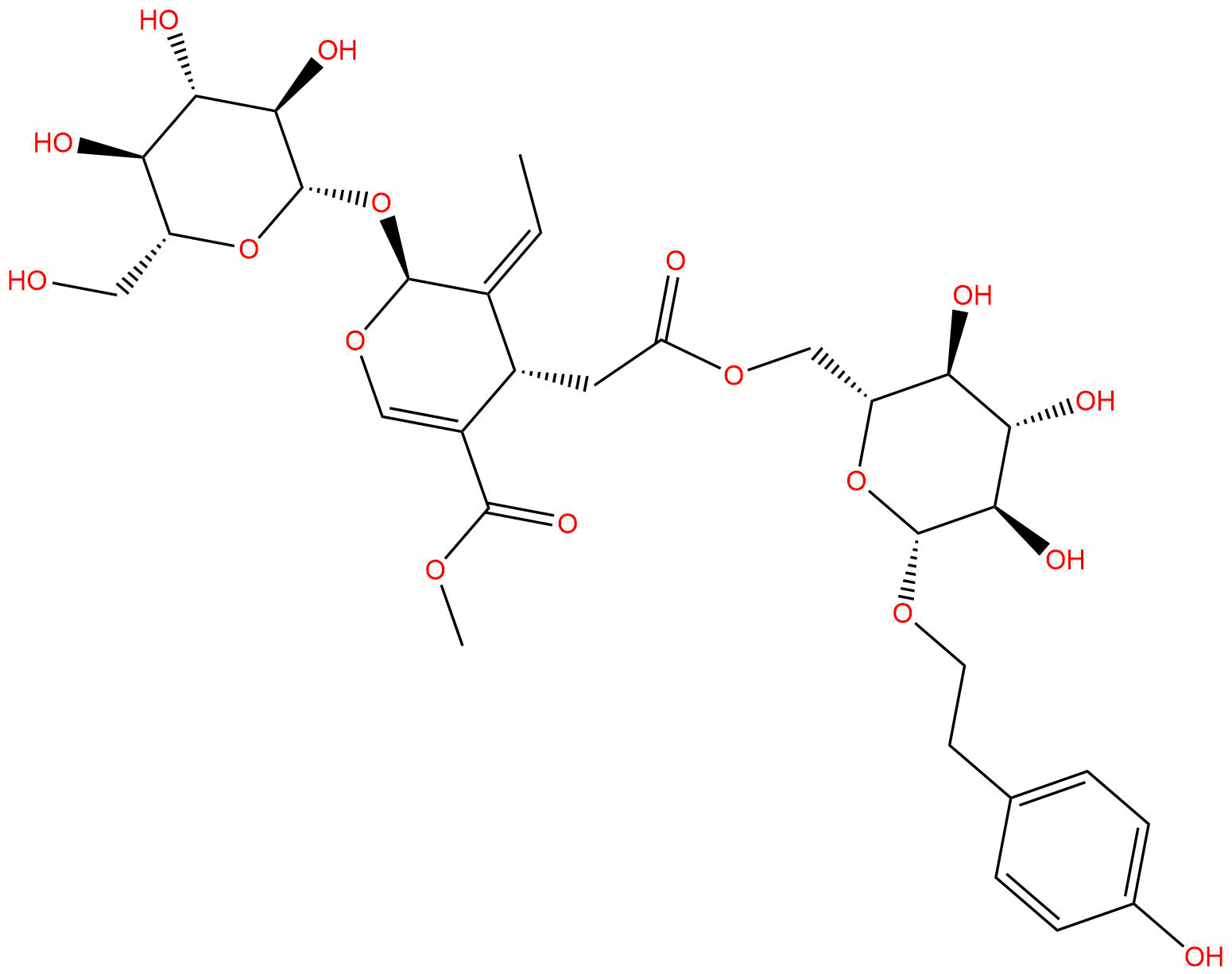
Ligustrum lucidum glycoside (8Z) - Nuzhenide), CAS number 449733-84-0, is a structurally complex iridoid glycoside. Its molecular formula is C31H42O18 and its molecular weight is 686.6600. Its core structure consists of two parts: one is the cyclohexene ether terpenoid glycoside, which is connected to the phenethyl alcohol unit through a double bond (8Z configuration); The second is that the glycoside is connected to multiple sugar groups, usually including glucose and xylose, forming its high polarity characteristic.
Based on its chemical structure, Ligustrum lucidum glycoside exhibits typical hydrophilic characteristics. The calculated lipid water partition coefficient (LogP) is -0.6802, indicating that its hydrophilicity is slightly stronger than its lipophilicity. The topologically polar surface area (TPSA) is as high as 260.5900 Å ², mainly attributed to the abundant hydroxyl and glycosyl structures in the molecule, which are strong donors and acceptors of hydrogen bonds. The high TPSA value directly affects its solubility and membrane permeability. Experimental or predictive data shows that it has good water solubility, with a value of approximately 9.0910 mg/mL, which is beneficial for its formulation development in aqueous media. However, high polarity and high molecular weight also mean that its transmembrane transport capacity is limited, and it is preliminarily predicted that its blood-brain barrier permeability is low, which to some extent limits its potential application in central nervous system related diseases, but may also reduce the risk of central side effects. In addition, preliminary pharmacological risk assessment showed that the hERG channel inhibition risk was "no", and the Ames test result was 0.0 (negative), indicating a low potential risk of arrhythmia and genotoxicity, providing preliminary positive signals for its safety evaluation.
Plant sources and extraction methods
Ligustrum lucidum glycoside mainly comes from plants in the genus Ligustrum in the family Rhinoceros Glossy Privet The dried and ripe fruit, also known as the traditional Chinese medicine "Ligustrum lucidum". As a traditional Chinese medicine, Ligustrum lucidum is abundant in resources and widely distributed in China. Other plants belonging to the same genus besides Ligustrum lucidum, such as Small wax It may also contain this ingredient or its analogues, but there may be differences in content and structure.
Efficient extraction and purification of Ligustrum lucidum glycosides from plant materials are the basis for studying their activity. The commonly used extraction methods currently include:
1. Solvent extraction method The most traditional method often uses methanol, ethanol, or ethanol water systems with different ratios for reflux extraction or ultrasound assisted extraction. Ethanol water system is commonly used due to its low cost and low toxicity.
2. Modern assisted extraction technology As follows:Microwave assisted extraction and Ultrasound assisted extraction These technologies utilize physical field effects to destroy plant cell walls, significantly reducing extraction time, improving extraction efficiency, and reducing solvent consumption.
3. Purification Method After the crude extract is preliminarily enriched by macroporous adsorption resins (such as D101, AB-8), it is further processed using Silica gel column chromatography、Reverse phase silica gel column chromatography、Dextran gel chromatography and High performance liquid chromatography Wait for technology to separate and purify. Preparation HPLC is currently the key technology for obtaining high-purity Ligustrum lucidum glycoside monomers.
The optimization of extraction process is usually based on the yield and purity of Ligustrum lucidum glycosides, and factors such as solvent type and concentration, solid-liquid ratio, extraction temperature, time, and frequency are considered. Establish a fast and accurate system High performance liquid chromatography-mass spectrometry or High performance liquid chromatography ultraviolet detection The analysis method is crucial for monitoring the extraction process and controlling product quality.
Pharmacological activity research
A large number of pharmacological studies in vitro and in vivo have confirmed that ligustroside has a wide range of activities against diabetes and related metabolic disorders.
1. Hypoglycemic effect: In the model of streptozotocin induced diabetes rats or the model of type 2 diabetes induced by high-fat diet combined with low-dose streptozotocin, ligustroside by gavage can significantly reduce the levels of fasting blood glucose, postprandial blood glucose and glycosylated hemoglobin. The intensity of its action shows a certain dose dependence.
2. Improve insulin resistance In cell and animal models of insulin resistance, ligustilide can enhance insulin sensitivity. For example, in palmitic acid-induced insulin resistance HepG2 liver cells or L6 myotube cells, ligustilide can promote glucose consumption and uptake. In animal models, it can improve insulin tolerance, reduce fasting insulin levels, and increase insulin sensitivity index.
3. Regulating lipid metabolism: Ligustroside can improve the lipid metabolism disorder often associated with diabetes. It can reduce the levels of total cholesterol, triglyceride and low-density lipoprotein cholesterol in the serum of diabetes model animals, increase the beneficial level of high-density lipoprotein cholesterol, and reduce liver steatosis.
4. Protect pancreatic beta cells: Studies have shown that ligustroside has a protective effect on islet β cell damage induced by chemical toxins or high glucose and fat environment, can inhibit cell apoptosis, and promote insulin secretion, which may help delay the course of diabetes.
5. Anti inflammatory and antioxidant properties Chronic low-grade inflammation and oxidative stress are the core links of insulin resistance and complications of diabetes. Ligustrum lucidum glycoside can inhibit the expression of pro-inflammatory factors such as tumor necrosis factor - α and interleukin-6, while enhancing the activity of superoxide dismutase and glutathione peroxidase, reducing malondialdehyde levels, and thus alleviating oxidative damage.
These various pharmacological activities together constitute the pharmacodynamic basis of the anti diabetes effect of ligustroside.
Mechanism of action and molecular targets
The anti diabetes effect of ligustroside is not achieved through a single pathway, but involves a complex multi target network regulation. Existing research has revealed that its mechanism of action is closely related to the following key targets and pathways:
1. Activate the AMPK signaling pathway Adenosine activated protein kinase is a core sensor of cellular energy metabolism. Ligustrum lucidum glycoside has been shown to directly or indirectly activate AMPK (composed of subunits such as PRKAA1). The activation of AMPK can generate a series of downstream effects:a) Promote the translocation of glucose transporter 4 from skeletal muscle and adipocyte membranes to the cell membrane, increasing glucose uptake;b) Inhibit the expression of key enzymes involved in hepatic gluconeogenesis and reduce hepatic glucose output;c) Promote fatty acid oxidation, inhibit fat synthesis, and thus improve lipid metabolism. This is one of the core mechanisms for its effectiveness.
2. Regulating the insulin signaling pathway Ligustrum lucidum glycoside can enhance tyrosine phosphorylation of insulin receptor substrate 1, activate the regulatory subunit PIK3R1 of phosphatidylinositol 3-kinase, and promote protein kinase B phosphorylation activation. Activated AKT1 further promotes the transport of SLC2A4 stored in vesicles to the cell membrane, promoting glucose uptake. Meanwhile, this pathway also participates in regulating glycogen synthesis and protein synthesis.
3. Affects nuclear receptor PPARG Peroxisome proliferator activated receptor gamma is a key nuclear transcription factor that regulates adipocyte differentiation and glucose and lipid metabolism. Ligustrum lucidum glycoside may act as a regulator of PPARG, affecting its transcriptional activity and improving systemic insulin sensitivity. But its mode of action may be different from classical thiazolidinedione drugs, and it may have better safety.
4. Inhibit related metabolic enzymes and transporters:
* Inhibit SGLT2 Sodium glucose cotransporter 2 is a key protein responsible for glucose reabsorption in the renal proximal tubules. Ligustrum lucidum glycoside may lower blood sugar by inhibiting SGLT2 and increasing urinary glucose excretion, similar to the effect of the novel hypoglycemic drug SGLT2 inhibitor.
* Inhibit DPP4 Dipeptidyl peptidase-4 can rapidly degrade intestinal proinsulin. Inhibiting DPP4 can prolong the activity of glucagon like peptide-1 and promote glucose dependent insulin secretion. Ligustrum lucidum glycoside exhibits certain DPP4 inhibitory activity.
* Activate GCK Glucokinase is a "glucose sensor" in the liver and pancreatic beta cells. Activation of GCK can promote hepatic glycogen synthesis and insulin secretion in pancreatic beta cells. Ligustrum lucidum glycoside may have a positive regulatory effect on it.
5. Anti inflammatory and antioxidant pathways Ligustrum lucidum glycoside can inhibit the activation of inflammatory signaling pathways such as nuclear factor kappa B and activate the antioxidant pathway of nuclear factor E2 related factor 2, thereby alleviating insulin resistance upstream.
To sum up, ligustroside plays an anti diabetes role from multiple dimensions, such as increasing insulin sensitivity, promoting glucose utilization, reducing glucose sources, and protecting pancreatic islet function, through synergistic action on multiple key targets such as AMPK, insulin signaling, PPARG, and inhibiting SGLT2, DPP4, etc.
Evaluation of drug properties and pharmacokinetics
Although Ligustrum lucidum glycoside shows great potential in pharmacological activity, its successful development as a drug depends on its pharmacological properties, including pharmacokinetic properties and formulation feasibility.
pharmacokinetics Currently, pharmacokinetic studies on the Ligustrum lucidum glycoside system are relatively limited. Based on its physicochemical properties (high polarity, high molecular weight, high TPSA), it can be inferred that its oral bioavailability may face challenges. Glycoside compounds are easily hydrolyzed by the gut microbiota and converted into aglycones or secondary metabolites, which may be the true active forms. Preliminary research suggests that Ligustrum lucidum glycoside is moderately absorbed after oral administration and widely distributed in the body, but its specific tissue distribution characteristics are not yet clear. Its metabolic pathways may involve hydrolysis, deglycosylation, oxidation, and binding reactions. The main pathways of excretion may be through the kidneys and bile. In the future, it is necessary to use technologies such as liquid chromatography tandem mass spectrometry to conduct detailed studies on absolute bioavailability, tissue distribution, metabolite identification, and excretion.
Formulation strategy To improve its oral bioavailability, advanced formulation technology may be required
1. Solid dispersion Co dissolving or co grinding Ligustrum lucidum glycoside with carrier material in an amorphous form can significantly improve its solubility and dissolution rate.
2. Cyclodextrin inclusion complex Using the cavity structure of cyclodextrin to encapsulate Ligustrum lucidum glycoside, enhancing its water solubility and stability.
3. nano-formulation Such as liposomes, nanoemulsions, polymer nanoparticles, etc. These nanocarriers can protect drugs from degradation, promote their absorption through intestinal lymphatic channels or enhance cellular bypass transport, and improve their bioavailability.
4. Prodrug design Preparation of lipophilic prodrugs through chemical modification to improve their membrane permeability and convert them back into active ingredients in vivo.
Preliminary evaluation of safety As mentioned earlier, its hERG inhibition and Ames mutagenicity risk are low, providing support for early safety. However, comprehensive preclinical toxicology studies are still needed, including acute toxicity, long-term toxicity, reproductive toxicity, etc., to evaluate its safety window.
Clinical application prospects and prospects
As a multi target and multi efficacy natural anti diabetes candidate compound, ligustroside has broad clinical application prospects, but also faces many challenges.
Potential application directions:
1. Development of new oral anti diabetes drugs/health products: Take it as the core ingredient to develop single or compound drugs for type 2 diabetes, especially for patients with insulin resistance and lipid metabolism disorder. Given its multi-target nature, it may reduce the types and doses of combination therapy.
2. Prevention and treatment of complications of diabetes Its anti-inflammatory and antioxidant activities suggest that ligustroside may have potential value in the prevention and treatment of chronic complications such as diabetes nephropathy, retinopathy, neuropathy, etc.
3. Comprehensive management of metabolic syndrome In addition to lowering blood sugar, its lipid-lowering and insulin resistance improving effects make it suitable for the comprehensive management of metabolic syndrome.
4. Modernization of Traditional Chinese Medicine and Quality Markers As one of the main active ingredients of Ligustrum lucidum, Ligustrum lucidum glycoside can be used as a quantitative indicator for quality control of this medicinal herb and its preparations, promoting the standardization and internationalization of traditional Chinese medicine Ligustrum lucidum.
Challenges faced and future research directions:
1. Deep analysis of the mechanism of action Currently, most target research is based on pharmacological phenotype and molecular docking prediction, requiring more direct evidence such as target binding constant determination, gene knockout/knockdown validation, and co crystallization structure analysis to clarify their direct targets and precise molecular mechanisms.
2. Optimization of drug properties in the system It is necessary to address pharmacokinetic bottlenecks such as poor oral absorption and rapid metabolism. This requires interdisciplinary collaboration in formulation, medicinal chemistry, and pharmacokinetics.
3. Research on active metabolites It is necessary to clarify the main metabolites in the body and evaluate the activity and toxicity of these metabolites, which may discover candidate molecules with stronger activity or better properties.
4. Preclinical and clinical research After completing the pharmacological, pharmacokinetic, and toxicological studies of the system, it is necessary to gradually advance clinical trials to verify its effectiveness and safety in humans.
5. Structural modification and development of analogues By using it as the parent nucleus and carrying out reasonable structural modifications, it is expected to obtain derivatives with higher activity and better drug properties.
Conclusion
Ligustroside is a natural compound with clear anti diabetes activity contained in the traditional Chinese medicine Ligustrum lucidum. It exhibits comprehensive advantages in regulating glucose and lipid metabolism, improving insulin resistance, protecting pancreatic function, and anti-inflammatory and antioxidant effects by activating AMPK, enhancing insulin signaling, regulating PPARG, inhibiting SGLT2 and DPP4, and other multi-target synergistic effects. Its good water solubility and preliminary safety prediction have laid the foundation for its development. However, its poor membrane permeability and potential oral bioavailability issues are key technical challenges that must be overcome in future translational research. With the continuous progress of modern drug research technology, through in-depth mechanism exploration, innovative preparation strategies and systematic clinical evaluation, ligustroside is expected to develop from a potential natural lead compound into a new drug for the treatment of diabetes and its complications, not only providing new options for diabetes patients, but also providing a model for the modern research of active ingredients of traditional Chinese medicine.