


Synonym name: Oleanonic acid
Catalogue No.: BP0071
Cas No.: 17990-42-0
Formula: C30H46O3
Mol Weight: 454.695
Botanical Source: Hedyotis lawsonii and various other plants
Purity: 95%~99%
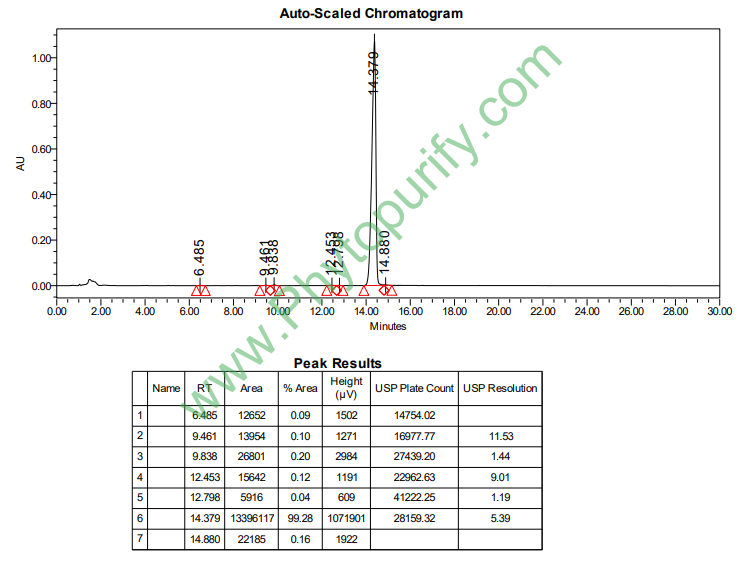
Analysis Method: HPLC-DAD or/and HPLC-ELSD
Identification Method: Mass, NMR
Packing: Brown vial or HDPE plastic bottle
Can be supplied from milligrams to grams.
For Reference Standard and R&D, Not for Human Use Directly.
Inquire for bulk scale.
Description:
3-oxo-Olean-12-en-28-oic acid and kulinone have cytotoxic effects, with IC50 values of 5.6-21.2 μg/mL.
References:
Planta Med., 2011, 77(9):922-8.
Cytotoxic triterpenoids and steroids from the bark of Melia azedarach.
Two new triterpenoids (1, 2) and two new steroids (3, 4) along with twelve related known compounds (5-16) were isolated from the bark of Melia azedarach.
METHODS AND RESULTS:
The new structures were elucidated by means of spectroscopic methods and molecular modeling studies and found to be 21,24-cycloeupha-7-ene-3 β,16 β,21 α,25-tetrol (1), 3 β-acetoxy-12 β-hydroxy-eupha-7,24-dien-21,16 β-olide (2), 29-hydroperoxy-stigmasta-7,24(28) E-dien-3 β-ol (3), and 24 ξ-hydroperoxy-24-vinyl-lathosterol (4). All isolated compounds were tested for their cytotoxic activity against three human cancer cell lines (A549, H460, HGC27) using the CellTiter Glo™ luminescent cell viability assay.
CONCLUSIONS:
Among them, compounds 2- 4, 24 ξ-hydroperoxy-24-vinyl-cholesterol (6), kulinone (7), meliastatin 3 ( 8), 3-oxo-Olean-12-en-28-oic acid (10), and (22 E,24 S)-5 α,8 α-epidioxy-24-methyl-cholesta-6,22-dien-3 β-ol (12) were found to have cytotoxic effects, with IC₅₀ values of 5.6-21.2 μg/mL.
HPLC of Oleanonic acid
Storage conditions:Short-term storage at 2~8℃, long-term storage at -20 ~ -80℃
57.5300
5.6500
4.9500
Low
No
No
No
No
No
No
Oleanonic acid is a natural triterpenoid compound with significant pharmacological activity, with the molecular formula C30H46O4 and CAS number 17990-42-0. As a derivative of oleanolic acid compounds, oleanolic acid has received widespread attention in the field of natural product pharmacology in recent years due to its significant anti-inflammatory, antioxidant, and multi-target regulatory effects. It showed significant improvement in oxidative stress, autophagy deficiency, iron death, mitochondrial damage, and endoplasmic reticulum stress induced by amyloid - β precursor protein in vitro experiments; In vivo studies have shown that quercetin can effectively alleviate myocardial hypertrophy in rats, demonstrating good cardiovascular protective potential. In addition, oleanolic acid has a regulatory effect on a variety of metabolic disease related targets, such as AMPK, PTPN1, STAT3, which indicates its potential application in the treatment of metabolic syndrome, diabetes and related chronic diseases. This article will provide a systematic review of the chemical structure, plant origin, pharmacological activity, mechanism of action, pharmacological evaluation, and clinical application prospects of quercetin, aiming to provide theoretical basis and research reference for its subsequent drug development and clinical translation.
Oleanolic acid belongs to the pentacyclic triterpenoid class and is an oxidized derivative of oleanolic acid with a molecular weight of 454.68 Da. Its molecular structure contains a typical oleanolic acid skeleton with functional groups such as carboxyl and carbonyl groups. Its LogP value is 5.65, indicating strong lipid solubility, which is beneficial for cell membrane penetration but may limit water solubility. Its topological polar surface area (TPSA) is 57.53 Å ² and the number of hydrogen bond acceptors is 3, indicating that the molecule has moderate polarity that facilitates binding to protein targets. The low blood-brain barrier penetration ability of quercetin suggests that its efficacy in the central nervous system may be limited, but this also reduces the risk of central nervous system toxicity and side effects. Toxicological evaluation shows that it has no hepatotoxicity, cardiotoxicity, or hERG channel inhibition effect, and the Ames mutagenicity test is negative, demonstrating good safety and potential for drug development.
The detailed analysis of the chemical structure shows that the carbonyl and carboxyl functional groups of oleanolic acid play a key role in the formation of intermolecular hydrogen bonds and target binding. At the same time, its triterpenoid skeleton endows the molecule with strong hydrophobicity, which is conducive to penetrating the cell membrane and regulating intracellular signaling pathways. These structural features lay the foundation for its multi-target pharmacological activity.
Quercetin acid is mainly present in various plants, especially in the Quercetin family such as Terminalia chebula and related species, which are abundant in content. In traditional Chinese medicine, Qi Dun Guo and its preparations are widely used in anti-inflammatory, antibacterial, and metabolic regulation. Modern chemical analysis techniques such as high-performance liquid chromatography (HPLC), gas chromatography-mass spectrometry (GC-MS), and nuclear magnetic resonance (NMR) have been used for qualitative and quantitative analysis of oleanolic acid.
Extraction methods often use organic solvent extraction combined with column chromatography for separation and purification. Common solvents include ethanol, methanol, ethyl acetate, etc. The optimization of extraction process focuses on the balance between extraction rate and purity. In recent years, the application of ultrasound assisted extraction, microwave-assisted extraction, and supercritical fluid extraction technologies has improved the extraction efficiency and environmental friendliness of oleanolic acid. During the purification process, silica gel column chromatography and reverse phase high-performance liquid chromatography are commonly used methods to obtain high-purity oleanolic acid to meet the needs of pharmacological research.
In addition, the diversity of plant sources and growth environment have a significant impact on the ketone acid content of oleander. Relevant studies have shown that there are differences in ketone acid content in plants from different origins and harvesting periods, indicating the importance of standardized planting and harvesting to ensure the quality of raw materials.
The pharmacological activity research of quercetin covers multiple aspects such as anti-inflammatory, antioxidant, insect resistant, and cardiovascular protection, demonstrating its multifunctional potential as a natural medicine.
Qi Dun Guo ketone acid exhibits significant anti-inflammatory activity in various inflammatory models. In vitro experiments have shown that it can inhibit the production of inflammatory mediators such as TNF - α, IL-6, and NO, and alleviate inflammatory reactions. Mechanistically, quercetin exerts anti-inflammatory effects by regulating the NF - κ B signaling pathway and inhibiting the expression of inflammation related enzymes such as COX-2 and iNOS. Animal model studies further confirm its protective effect in inflammatory diseases, providing a theoretical basis for the development of anti-inflammatory drugs.
Quercetin acid can effectively alleviate oxidative stress induced by amyloid - β precursor protein, reduce reactive oxygen species (ROS) generation, and protect cells from oxidative damage. It enhances the expression of intracellular antioxidant enzymes such as superoxide dismutase (SOD) and glutathione peroxidase (GPx) by activating the NFE2L2 (Nrf2) signaling pathway, thereby improving cellular antioxidant capacity. In addition, quercetin has a protective effect on mitochondrial function, reducing mitochondrial membrane potential loss and preventing cell apoptosis.
Autophagy defects and ferroptosis are key links in the pathogenesis of various diseases. Quercetin acid can promote autophagy, restore cellular homeostasis, and reduce cell damage. Meanwhile, its regulation of iron death related signaling pathways, inhibition of lipid peroxidation and iron ion accumulation, and protection of cells from iron death induced damage demonstrate its potential application value in neurodegenerative and metabolic diseases.
In vivo rat model studies have shown that quercetin can significantly improve myocardial hypertrophy, alleviate cardiac structural and functional abnormalities. Its mechanism of action involves AMPK activation, inhibition of excessive proliferation and fibrosis of myocardial cells, regulation of myocardial energy metabolism, alleviation of oxidative stress and inflammatory response. This effect provides experimental evidence for the application of quercetin in the prevention and treatment of cardiovascular diseases.
Qidun fruit ketone acid exhibits certain insect resistance activity and can inhibit the growth and reproduction of various parasites and pests. Its anti insect mechanism may be related to the destruction of insect cell membrane structure, interference with insect metabolism, and induction of insect oxidative stress, indicating its potential application in agriculture and veterinary fields.
The multi-target mechanism of action of quercetin is the basis for its diverse pharmacological activities. Its main target involves key proteins and signaling pathways related to metabolic diseases.
AMPK, as a key regulatory factor in cellular energy metabolism, participates in the regulation of lipid metabolism, glucose metabolism, and cellular autophagy. Qi Dun Guo ketone acid can activate AMPK, promote energy metabolism balance, inhibit fat accumulation and inflammatory response, and improve metabolic disorders.
PTPN1 is a negative regulator of the insulin signaling pathway, and inhibiting its activity can help improve insulin resistance. Oleanolic acid can inhibit PTPN1, enhance insulin sensitivity, promote glucose metabolism, and has potential anti diabetes effect.
The STAT3 signaling pathway plays an important role in inflammation, cell proliferation, and apoptosis. Qi Dun Guo ketone acid exerts anti-inflammatory and anti fibrotic effects by regulating the activity of STAT3, inhibiting inflammatory responses and abnormal cell proliferation.
ABCB1 is involved in drug efflux and multidrug resistance formation. The regulation of ABCB1 by quercetin may affect drug metabolism and intracellular drug concentration, suggesting its potential role in combination therapy.
ALOX15 is involved in lipid peroxidation and inflammatory reactions, while oleanolic acid inhibits ALOX15 activity, reduces the production of inflammatory mediators, and alleviates oxidative stress.
PRKCA regulates cell signaling and is involved in myocardial hypertrophy and metabolic regulation. The regulation of PRKCA by quercetin can help protect the myocardium and improve metabolic status.
Nrf2 is a key transcription factor for cellular antioxidant defense. Qi Dun Guo ketone acid activates the Nrf2 signaling pathway, enhances antioxidant enzyme expression, and reduces oxidative damage.
SHBG regulates the biological activity of sex hormones, and the effect of quercetin on it may indirectly regulate metabolism and endocrine function.
TOP1 is involved in DNA replication and repair, and the regulation of TOP1 by quercetin may affect cell proliferation and gene stability.
HIF1A plays a central role in hypoxia response and metabolic regulation. Qi Dun Guo ketone acid regulates HIF1A, which helps improve tissue hypoxia and metabolic abnormalities.
In summary, quercetin exhibits a wide range of pharmacological activities through multi-target and multi pathway synergistic regulation, demonstrating its potential as a natural multifunctional drug.
The pharmacological evaluation of quercetin shows that it has good potential for drug development. Its molecular weight is 454.68 Da, which meets the molecular weight limit of Lipinski rule; LogP is 5.65, slightly higher than the ideal range, indicating strong lipid solubility, which may affect oral bioavailability and water solubility, but also facilitate cell membrane penetration. The TPSA is 57.53 Å ² and the number of hydrogen bond acceptors is 3, indicating that its molecular polarity is moderate and conducive to binding to the target.
In toxicology evaluation, oleanolic acid has no hepatotoxicity, cardiotoxicity, or hERG channel inhibition, and the Ames mutagenicity test is negative, indicating its high safety. The blood-brain barrier has a low permeability, which limits the direct action of the central nervous system, but reduces the potential risk of central neurotoxicity.
In terms of pharmacokinetics, there is currently limited systematic research on quercetin. Preliminary data suggests that it has good oral absorption, but its bioavailability is limited by its high lipid solubility and low water solubility. The metabolic pathway may involve oxidation and binding reactions of liver enzymes, with excretion mainly through bile and urine. Further pharmacokinetic, metabolic, and in vivo distribution studies are needed in the future to optimize dosage forms and administration regimens.
Qidun fruit ketone acid has shown broad clinical application prospects due to its multi-target regulation and multiple pharmacological activities. It has potential therapeutic value in metabolic diseases (such as diabetes, obesity, fatty liver), cardiovascular diseases (myocardial hypertrophy, heart failure), neurodegenerative diseases (Alzheimer's disease related oxidative stress and autophagy defects) and other fields.
Future clinical translation should focus on the following directions:
Formulation development and improvement of bioavailability
By using advanced drug delivery systems such as nanocarriers, liposomes, and solid dispersions, the water solubility and oral bioavailability of quercetin are improved, enhancing its in vivo stability and targeting.
In depth study of multi-target synergistic mechanism
Using systems biology and multi omics techniques, analyze the global regulatory network of quercetin in cell and animal models, identify its key functional nodes, and provide a basis for precision medication.
Safety and pharmacokinetic system evaluation
Conduct long-term toxicology and preclinical pharmacokinetic studies to ensure their safety and reasonable dosage range, laying the foundation for clinical trials.
Clinical trial design and implementation
Design randomized controlled clinical trials for metabolic and cardiovascular diseases to evaluate the efficacy and safety of quercetin and promote its clinical application.
Exploration of Combination Medication Strategy
The study on the synergistic effect of quercetin with existing drugs, especially in combination with insulin sensitizers and anti-inflammatory drugs, may enhance therapeutic efficacy and reduce drug tolerance.
As a natural triterpenoid compound with multiple pharmacological activities, quercetin has demonstrated broad prospects for drug development due to its various biological functions such as anti-inflammatory, antioxidant, autophagy and iron death regulation, cardiovascular protection, etc. Its multi-target mechanism of action and good safety provide a solid foundation for it to become a new candidate drug for the treatment of metabolic diseases and related chronic diseases. In the future, through in-depth mechanism research, pharmacological optimization, and clinical validation, quercetin is expected to become an important breakthrough in the field of natural product pharmacology, contributing new therapeutic strategies to human health.
