Introduction/Overview
Neurodegenerative diseases such as Alzheimer's disease (AD) and Parkinson's disease (PD) have become major global public health challenges. With the aging of the population, its incidence rate continues to rise, bringing heavy burdens to society and individuals. However, the drugs currently used in clinical practice are mostly limited to symptom relief, making it difficult to effectively prevent or reverse the pathological progression of the disease, and often accompanied by significant side effects. Therefore, exploring neuroprotective lead compounds with multiple targets, high efficiency, and low toxicity from natural products has become an important strategy for new drug development.
As an important member of the terpenoid family, sesquiterpenes have attracted much attention in the field of drug discovery due to their structural diversity and wide range of biological activities. Alpha oxymatrine (CAS: 596-55-4) is one of them. This compound was initially isolated from plants in the Caryophyllaceae family, and its unique chemical structure has attracted the interest of natural product chemists. In recent years, with the deepening of research, α - berberine has shown remarkable neuroprotective activity, which involves regulating cell apoptosis, reducing oxidative stress, inhibiting tau protein hyperphosphorylation, and regulating β - amyloid protein (A β) metabolism and other pathological processes closely related to neurodegenerative diseases. Its excellent blood-brain barrier permeability makes it a potential candidate molecule for treating central nervous system diseases.
This article aims to systematically review the chemical structure, plant origin, pharmacological activity, molecular mechanism of action, pharmacological characteristics, and clinical application prospects of α - Yubai alkaloid, in order to provide comprehensive scientific references for the in-depth research and development of this compound.
Chemical structure and physicochemical properties
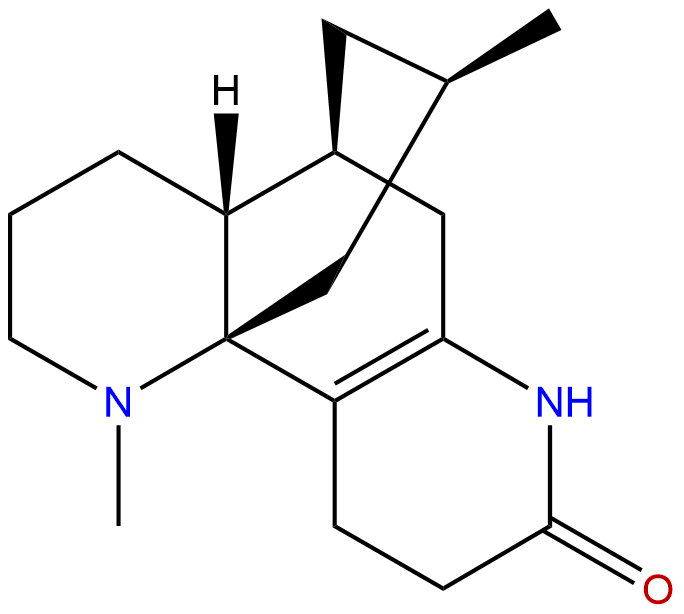
Alpha Yubai alkaloid is a sesquiterpene alkaloid with a unique skeleton. Its molecular formula is C ₁₆ H ₂₂ N ₂ O, and its molecular weight is 274.4080. Structurally, it belongs to the family of lycorine alkaloids, typically consisting of a complex four or five ring fused system that combines terpenoid skeletons and nitrogen-containing heterocycles. Its core structural characteristics determine its physicochemical properties and biological activity.
The key physicochemical parameters are the basis for evaluating its pharmacological properties:
* Lipid water partition coefficient (LogP)The calculated value is approximately 2.4518, indicating that α - Yubai alkaloid has moderate lipophilicity. This characteristic is beneficial for its penetration through cell membranes, including the blood-brain barrier, but excessive LogP may also lead to solubility and metabolic issues. The current value is within the ideal range (1-3) of common drug molecules, indicating that it has good membrane permeation potential.
* Topological Polarity Surface Area (TPSA)Approximately 32.34 Å ². The lower TPSA value further supports its good membrane permeability, which is one of the important characteristics of active compounds in the central nervous system.
* Water solubility The predicted value is approximately 1.3471mg/L, belonging to the category of slightly soluble to poorly soluble. This suggests that in the process of formulation development, it may be necessary to improve its solubility through strategies such as salt formation, use of solubilizers, or development of nano formulations to enhance oral bioavailability.
* Blood-brain barrier permeability Based on its moderate molecular weight, suitable LogP, and low TPSA structural characteristics, it is predicted that it has tall The ability to pass through the blood-brain barrier. This is its core advantage as a neuroprotective agent, ensuring that active molecules can effectively reach the affected areas of the central nervous system.
These physical and chemical properties together outline the basic profile of alpha berberine as a lead compound with good potential for brain distribution.
Plant sources and extraction methods
α - Yubai alkaloid mainly comes from Lycopodiaceae plants, especially Yubai Shisong(Lycopodium obscurum L. And its closely related species. The lycophyte is an ancient fern plant commonly used in traditional medicine to treat rheumatism, inflammation, and cognitive impairment, providing ethnic pharmacological clues for the study of its active ingredients.
The extraction and separation of α - berberine from plant materials usually follow the standard process of natural product chemistry:
1. Extract Dried and crushed whole plants or specific parts (such as spores and stems) are first extracted or refluxed with organic solvents (such as methanol, ethanol, or chloroform methanol mixed solvents) to maximize the extraction of secondary metabolites, including alkaloids.
2. Rough classification The extract obtained by concentrating the extract is often dissolved in acidic water (such as dilute hydrochloric acid or citric acid solution) to convert alkaloids into salts and dissolve them in the aqueous phase, separating them from non alkaline components. After alkalization (such as ammonia or sodium hydroxide), the total alkaloid fraction is obtained by back extraction with organic solvents (such as chloroform, ethyl acetate).
3. Separation and Purification The total alkaloid fraction is finely separated using various chromatographic techniques. Silica gel column chromatography is often used for preliminary separation, and then combined with reverse phase silica gel column chromatography (such as C18 column), gel chromatography (such as Sephadex LH-20) and high performance liquid chromatography (HPLC) to further purify, and finally obtain high-purity α - yupai alkaloid monomer. Modern analytical techniques such as liquid chromatography-mass spectrometry (LC-MS) and nuclear magnetic resonance (NMR) are used for online monitoring and final structural confirmation.
It is worth noting that the content of α - berberine in plants is usually low, and its structure is complex, making total synthesis quite challenging. Therefore, developing sustainable plant cultivation techniques, optimizing extraction processes, or exploring feasible semi synthetic routes are crucial for ensuring the supply of compounds needed for future in-depth research and development.
Pharmacological activity research
A large number of in vitro and in vivo pharmacological studies have shown that the core biological activity of α - berberine is concentrated in neuroprotection In various neural injury models, it has shown significant protective effects.
- Anti apoptotic effect In neuronal cell injury models induced by hydrogen peroxide (H ₂ O ₂), glutamate, or β - amyloid protein (A β), such as PC12 cells, SH-SY5Y cells, and primary cortical neurons, α - berberine can significantly increase cell survival rate and reduce lactate dehydrogenase (LDH) leakage. Its function is closely related to inhibiting the activation of apoptosis executing proteins such as caspase-3 and caspase-9.
- anti-oxidative stress Alpha Yubai alkaloid can effectively scavenge free radicals (such as DPPH free radicals and ABTS free radicals), enhance the activity of endogenous antioxidant enzymes (such as superoxide dismutase (SOD) and glutathione peroxidase (GSH Px)) in cells, and reduce the levels of reactive oxygen species (ROS) and malondialdehyde (MDA). This indicates that it can enhance the defense ability of neurons against oxidative damage.
- Improve mitochondrial function Mitochondrial dysfunction is an early event in neurodegenerative diseases. Research has found that alpha berberine can stabilize mitochondrial membrane potential, reduce the release of cytochrome C from mitochondria to cytoplasm, and thus block the mitochondrial mediated apoptosis pathway.
- In vivo model validation In Alzheimer's disease model mice (such as APP/PS1 transgenic mice), administration of α - berberine can improve the learning and memory abilities of mice (performed better in Morris water maze and new object recognition experiments), and alleviate the deposition of A β plaques and neuroinflammatory responses in the brain. In Parkinson's disease models such as MPTP induced mice, it can protect dopaminergic neurons and improve motor coordination.
These multifaceted pharmacological activities together form the basis for the powerful neuroprotective effect of alpha berberine.
Mechanism of action and molecular targets
The neuroprotective effect of α - berberine is not achieved through a single target, but rather acts on a network closely related to neuronal survival, redox balance, and protein homeostasis. Existing research has revealed its interactions with multiple key target proteins:
-
Regulating the apoptotic pathway of cells:
- BCL2 family Alpha Yubai alkaloid can upregulate the expression of anti apoptotic protein BCL2, while possibly inhibiting the activity of pro apoptotic proteins such as BAX, thereby maintaining mitochondrial outer membrane integrity and preventing apoptosis initiation.
- CASP9 As a key initiator of the mitochondrial apoptosis pathway, the activation of caspase-9 is effectively inhibited by alpha berberine, thereby blocking the downstream cascade reaction of caspase-3.
- MAPK1 (ERK)Alpha berberine can activate the extracellular signal regulated kinase (ERK) pathway. The activation of the ERK signaling pathway is usually associated with cell proliferation, differentiation, and survival, and is one of the important mechanisms by which it exerts its neurotrophic and protective effects.
-
Fight against the core pathology of Alzheimer's disease:
- APP and BACE1 Research has shown that alpha berberine may reduce the generation of neurotoxic A β - ₁₋₄₂ peptides by affecting the processing of amyloid precursor protein (APP) or inhibiting the activity of β - site APP lyase 1 (BACE1).
- MAPT (Tau protein) and GSK3 βOverphosphorylated Tau protein is the main component of neurofibrillary tangles. Alpha berberine can inhibit the activity of glycogen synthase kinase-3 β (GSK3 β). GSK3 β is one of the most important phosphorylation kinases of Tau protein, and its inhibition can significantly reduce the abnormal phosphorylation level of Tau protein.
-
Activate endogenous defense system:
- NFE2L2 (Nrf2)Nuclear factor E2 related factor 2 (Nrf2) is a key transcription factor that regulates antioxidant response elements (ARE). Alpha Yubai alkaloid can promote Nrf2 nuclear translocation, thereby upregulating the expression of a series of II phase detoxifying enzymes and antioxidant proteins such as heme oxygenase-1 (HO-1) and quinone oxidoreductase 1 (NQO1), systematically enhancing the antioxidant capacity of cells.
- SIRT1 Silent Information Regulatory Factor 1 (SIRT1) is an NAD ⁺ - dependent deacetylase involved in regulating energy metabolism, stress response, and cell lifespan. Alpha Yubai alkaloid has been shown to activate SIRT1, regulate downstream targets such as PGC-1 α and FOXOs through deacetylation, improve mitochondrial biosynthesis, enhance antioxidant defense, and inhibit inflammation, exerting a multifunctional neuroprotective effect.
In summary, α - Yubai alkaloid forms a synergistic "multi-target" network by simultaneously acting on multiple key nodes such as apoptosis (BCL2, CASP9), oxidative stress (NFE2L2), tau pathology (GSK3B/MATP), A β production (APP/ACE1), and cellular energy and stress regulatory centers (SIRT1, MAPK1). This mode of action may be more effective in addressing the complex pathological network of neurodegenerative diseases than single target drugs, and has significant advantages.
Evaluation of drug properties and pharmacokinetics
Based on computational predictions and preliminary experimental data, α - berberine exhibits promising potential as a lead compound for neurological drugs, but there are also some aspects that need to be optimized.
Clinical application prospects and prospects
The multi-target neuroprotective properties of α - berberine have depicted broad prospects for its application in the field of neurodegenerative diseases, but its clinical application still faces a series of challenges and opportunities.
-
Potential indications:
- Alzheimer's disease (AD)Given its dual inhibitory effects on A β production and Tau phosphorylation, as well as its strong antioxidant and anti apoptotic abilities, α - Yubai alkaloid is expected to be developed as a drug for early intervention or disease modification therapy in AD.
- Parkinson's disease (PD)Its protective effect on dopaminergic neurons and improvement of mitochondrial function make it potential for PD treatment and may be used to delay disease progression.
- Other neurological disorders In models such as cerebral ischemia/reperfusion injury (stroke), traumatic brain injury, and amyotrophic lateral sclerosis (ALS), the core neuroprotective mechanisms may also play a role.
-
Development Challenge:
- Resources and Synthesis Plant sources are limited, the total synthesis route is complex and the yield is low, requiring the establishment of a stable and economical raw material supply system.
- Balance between efficacy and safety It is necessary to comprehensively evaluate its long-term efficacy and safety in animal models that are closer to human diseases, such as non-human primate models, and clarify its treatment window.
- Preparation and delivery We must overcome the problem of poor water solubility and develop dosage forms suitable for clinical administration.
- The complexity of multi-target mechanism More precise elucidation of its priority roles and network regulatory details in different disease stages and cell types is needed to avoid unpredictable off target effects.
-
Future Prospects:
- structural optimization Using α - Yubai alkaloid as the parent nucleus, reasonable structural modifications are carried out to improve its activity, water solubility, metabolic stability, and further reduce potential toxicity, in order to obtain derivatives with better properties.
- combination therapy Consider combining it with existing symptomatic treatment drugs (such as donepezil, memantine) or other neuroprotective agents with complementary mechanisms of action, which may produce synergistic effects and improve efficacy.
- precision medicine Future research can explore whether its efficacy is related to specific biomarkers or genotypes, thereby achieving precise medication for suitable patients.
- New drug delivery system Using nanotechnology, brain targeted delivery systems, etc. to improve its targeting and bioavailability in the brain.
Conclusion
As a sesquiterpene alkaloid derived from the family Cymbiaceae, α - Yubai alkaloid has shown great potential in the field of neuroprotection due to its unique chemical structure and multi-target mechanism of action. It provides new ideas for combating complex neurodegenerative diseases by synergistically regulating core pathological processes such as apoptosis, oxidative stress, protein misfolding and clearance. Its excellent blood-brain barrier permeability has pushed it to the forefront of leading compounds for the treatment of central nervous system diseases.
Although there are still challenges in plant resources, solubility, systemic pharmacokinetics, and preclinical safety evaluation, these challenges are expected to be gradually solved with the cross fusion and technological advancement of natural product chemistry, pharmacology, and pharmaceutical formulation. The continuous in-depth research on α - berberine is expected to not only lead to the development of a new neuroprotective drug, but also deepen our understanding of the "multi-target" treatment strategy of natural products. It represents the ancient and vibrant research direction of excavating modern therapeutic drugs from traditional medicinal plants, and continues to contribute valuable scientific clues and material basis for overcoming the century old problem of neurodegenerative diseases.