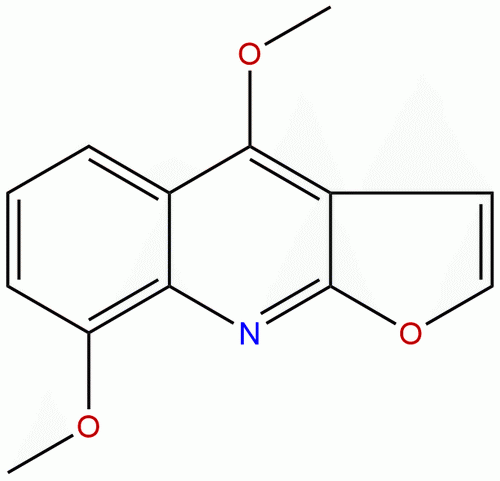
Yajiao alkaloid (γ - Fagarin): a multi-target analgesic natural product derived from white fresh skin
1. Overview
Gamma Fagarin, also known as gamma piperine, is a natural alkaloid with a unique heterocyclic structure. Its CAS number is 524-15-2, molecular formula is C13H11NO3, and molecular weight is 229.2350 g/mol. As a typical organic heterocyclic compound, it contains both nitrogen and oxygen atoms, belonging to the fusion system of oxygen and nitrogen heterocycles. Yanjiao alkaloid mainly comes from Rutaceae plant Bai Xian(Dictamnus dasycarpus Turcz.'s root bark is one of the main active ingredients in the traditional Chinese medicine "Bai Xian Pi". White fresh skin has a long history of application in traditional Chinese medicine clinical practice, commonly used for clearing heat and dampness, dispelling wind and detoxifying, treating eczema, scabies, rheumatism and pain, etc. Modern pharmacological research has gradually revealed that piperidine is one of the key substance bases for its pharmacological effects such as analgesia and anti-inflammatory.
In recent years, with the deepening of research on pain mechanisms and the urgent need for new analgesic drugs, the search for efficient and low toxicity analgesic lead compounds from natural products has become a research hotspot. Due to its unique chemical structure and preliminary multi-target analgesic activity, piperidine has attracted the attention of researchers in natural product pharmacology and neuropharmacology. According to database information, piperidine interacts with multiple key pain related receptor targets, including transient receptor potential vanillic acid subtype 1 (TRPV1), cannabinoid receptor 1 (CNR1), and three opioid receptors (OPRD1, OPRM1, OPRK1), suggesting that it may exert analgesic effects by synergistically regulating multiple pain pathways. This article will provide a systematic and professional scientific introduction to the chemical properties, plant sources, pharmacological mechanisms, medicinal evaluation, and research prospects of piperidine.
2. Chemical structure and physicochemical properties
The chemical structure of piperidine is the material basis for its biological activity. Its SMILES is represented as COc1c2ccoc2nc2c (OC) cccc12, clearly depicting its core skeleton: a condensed furano quinoline ring system. Specifically, it is composed of a fused quinoline ring (nitrogen-containing heterocyclic ring) and a furan ring (oxygen-containing heterocyclic ring), with two methoxy groups (- OCH3) attached at specific positions on the quinoline ring. This fused heterocyclic structure gives the molecule good planarity and rigidity, which facilitates interaction with specific hydrophobic pockets or planar regions of biomolecule targets, such as embedding DNA base pairs or forming π - π stacking with aromatic amino acid residues of receptors.
From the analysis of physical and chemical properties, the molecular weight (MW) of piperidine is 229.24 g/mol, which is in line with the typical range of small molecule drugs. The logarithm of its lipid water partition coefficient (LogP) is 2.4007, and the LogD (usually 7.4 at a specific pH) is 2.4006, indicating that the compound has moderate to high lipophilicity. This is related to the high proportion of aromatic rings and the lack of strong polar groups in its structure. Moderate lipophilicity is usually beneficial for compounds to penetrate cell membranes, but it may also affect their water solubility. Its water solubility is 0.0240 (usually measured in mg/mL or mol/L, where the value is lower), confirming its poor water solubility.
Topological polar surface area (TPSA) is another important parameter for predicting molecular permeability and solubility, with a TPSA of 44.49 Å ² for piperidine. Typically, compounds with TPSA values less than 60 Å ² are considered to have good potential for intestinal absorption and blood-brain barrier penetration. Combined with its high Caco-2 cell permeability data (41.0141, indicating good intestinal absorption model prediction) and clearly labeled "high" BBB (blood-brain barrier) permeability, it can be inferred that piperidine can be effectively absorbed from the gastrointestinal tract and enter the central nervous system. This is crucial for its action on opioid receptors and CNR1 receptors in the central nervous system. The plasma protein binding rate (PPB) is 86.31%, which is a relatively high level. This means that most drugs in the blood bind to plasma proteins (mainly albumin), which may affect their free drug concentration and pharmacokinetic characteristics.
3. Plant sources and traditional applications
The main natural source of piperine is the white and fresh plant of the Rutaceae family(Dictamnus dasycarpus)The root bark. Rutaceae plants are known for their high content of secondary metabolites such as coumarins, alkaloids, and volatile oils, and many species have important medicinal value. Bai Xian is mainly distributed in China, South Korea, Mongolia, and the Far East of Russia. Its dried root bark has been used as a traditional Chinese medicine called "Bai Xian Pi" for more than two thousand years.
In traditional Chinese medicine theory, Bai Xianpi has a bitter and cold nature, and belongs to the spleen, stomach, and bladder meridians. Its core efficacy is "clearing heat and dampness, dispelling wind and detoxifying". Clinically, it is mainly used for:
1. Damp heat ulcer toxin To treat eczema, wet sores, scabies, skin itching, etc., it is often combined with Sophora flavescens, Phellodendron amurense, etc., and taken orally or washed externally in decoction.
2. Rheumatic fever and rheumatism Used for patients with joint redness, swelling, heat pain, rheumatoid arthritis, and other conditions that belong to the damp heat obstruction syndrome, it is often used interchangeably with Fangji and Qinhuai.
3. Jaundice, red urine Due to its heat clearing and dampness relieving effects, it is also used for damp heat jaundice.
These traditional applications, especially in the treatment of rheumatoid arthritis and skin ulcer pain, suggest that white leather has analgesic and anti-inflammatory activities. Modern plant chemistry research has isolated and identified various alkaloids, including camptothecin and sophocarpine, as well as limonoids, coumarins, and volatile oil components, from the white peel. Among them, furan quinoline alkaloids (such as piperidine) are considered to be an important group of active ingredients. The traditional form of using water decoction means that alkaloids such as piperidine can be extracted to a certain extent and absorbed by the human body, thereby exerting medicinal effects. This provides a material basis and research clues for interpreting its traditional efficacy from a modern scientific perspective.
4. Pharmacological activity and mechanism of action
The most notable pharmacological activity of piperidine is its potential analgesic effect, which is clearly associated with "Analgesia" in databases. Its analgesic mechanism is not through a single pathway, but manifests as a multi-target mode of action, as evidenced by its ability to interact with five key pain related receptor targets.
(1) Acting on the opioid receptor system (OPRD1, OPRM1, OPRK1)
Opioid receptors are the core targets of endogenous and exogenous analgesia mediated within the central nervous system. Activation of the OPRM1 receptor produces potent analgesia, accompanied by side effects such as respiratory depression and addiction; Activation of the δ receptor (OPRD1) and the κ receptor (OPRK1) also produces analgesia, but the spectrum of side effects is different. Yanjiao alkaloid can simultaneously interact with these three subtypes, suggesting that it may be a multi subtype opioid receptor modulator. This multi-target characteristic may bring unique advantages: by moderately balancing the activation of different subtypes, while producing effective analgesia, it may alleviate or avoid the serious side effects (such as respiratory depression and high addiction) caused by a single potent mu receptor agonist. However, further in vitro binding and functional experiments are needed to clarify whether it acts as an agonist, antagonist, or partial agonist on these receptors, as well as its affinity and selectivity.
(2) Acting on TRPV1 receptor
TRPV1, Also known as capsaicin receptor, it is a non selective cation channel widely distributed on sensory neurons. It can be activated by capsaicin, heat (>43 ° C), protons (acidic environment), etc., triggering calcium ion influx, producing burning pain and neuropeptide release, and is a key molecule mediating inflammatory pain and thermal pain. The effect of piperidine on TRPV1 deserves further investigation. If it is a TRPV1 antagonist, it can treat inflammatory pain and neuropathic pain by inhibiting the overactivated TRPV1 channel, reducing the transmission of pain signals to the central nervous system. Currently, some TRPV1 antagonists have entered clinical research. The target of piperidine increases the possibility of peripheral mechanisms for its analgesic effect.
(3) Acting on cannabinoid receptor 1 (CNR1)
CNR1 is the main central receptor of the endocannabinoid system, and its activation can inhibit neurotransmitter release, regulate pain, emotion, memory, etc. Cannabinoid receptor agonists have been proven to have analgesic, anti-inflammatory, and anti anxiety effects, but they also have side effects such as psychoactive effects. The interaction between camptothecin and CNR1 suggests that it may affect the pain pathway by regulating the endogenous cannabinoid system. Combined or synergistic use with the opioid system may result in stronger analgesic effects or reduce the respective dosages used.
Hypothesis of multi-target collaborative analgesia:
The analgesic effect of piperidine is likely to be achieved through the synergy or superposition of multiple targets mentioned above. For example, it may simultaneously inhibit pain upregulation at the central level through opioid receptors and CNR1, and inhibit the transduction of nociceptive stimuli at the peripheral level through TRPV1. This "multi pronged" mode of action may be more effective for complex pain states, such as chronic neuropathic pain, which typically does not respond well to single mechanism drugs. In addition, multi-target drugs can sometimes achieve a better balance between efficacy and side effects by gently regulating multiple pathways.
In addition to pain relief, based on its chemical structure (planar polycyclic aromatic hydrocarbons), piperidine may also have other biological activities. Some toxicity warning indicators in the database (such as positive chromosomal aberration and phototoxicity) also suggest that we need to comprehensively evaluate their biological effects. Its anti-inflammatory, antibacterial, or anti-tumor potential also needs to be explored.
5. Evaluation of drug properties
Based on the provided pharmacological parameters, we can conduct a preliminary evaluation of the development potential of piperidine as an oral analgesic lead compound. Evaluation usually refers to empirical rules such as Lipinski's Rule of Five.
Comprehensive Assessment:
Yanjiao Alkali Pharmaceutical properties Excellent performance in various aspects: small molecule size, moderate lipid solubility, excellent oral absorption and brain permeability prediction, fully in line with drug like rules, making it a very attractive lead compound skeleton. However, it Toxicity characteristics It is currently the main obstacle to clinical promotion. Especially with positive chromosomal aberrations, it suggests that it may have the potential for gene damage, which needs to be confirmed through more comprehensive genetic toxicity testing combinations (such as micronucleus test, comet assay), and its mechanism (whether it is related to DNA insertion) should be explored? ). The hepatotoxic signals also need to be further validated in vitro liver cell models and in vivo animal experiments. In subsequent drug chemistry optimization, the goal should be to eliminate or significantly reduce its genetic and organ toxicity through structural modifications (such as introducing or altering specific functional groups) while retaining its multi-target analgesic activity and good pharmacokinetic properties.
6. Research Status and Application Prospects
At present, the research on piperidine is still in the stage of discovering the pharmacological activity of natural products and exploring the preliminary mechanism. Most studies have focused on the activity of total extracts or alkaloid parts from its plant source (white fresh), and there is relatively limited in-depth and systematic pharmacological and medicinal chemistry research on the monomeric compounds of piperidine. The existing data clearly indicates its potential for multi-target analgesia and excellent physicochemical basis of drug like properties, but at the same time, it also reveals significant toxicity risks that cannot be ignored.
Research Status:
1. Activity confirmation Preliminary studies have confirmed that the white fresh extract containing piperidine has anti-inflammatory and analgesic effects. More direct in vitro and in vivo analgesic model evidence is needed to confirm the potency and strength of the monomers of piperidine.
2. Mechanism Exploration Based on the target information in the database, the multi-target mechanism of action is still a hypothesis, and it is necessary to verify its specific types of action (excitation/antagonism), affinity (Ki value), and functional effects on TRPV1, CNR1, and various opioid receptor subtypes through methods such as radioligand binding experiments, calcium flow detection, and electrophysiology.
3. Toxicity assessment The discovered genetic toxicity and potential hepatotoxicity are currently the focus and difficulty of research. It is necessary to clarify whether these toxicities are inherent to the compound or related to specific metabolites.
Application prospects and future directions:
1. As a novel multi-target analgesic lead compound The core value of piperidine lies in its unique chemical structure and multi-target action characteristics. Future research should first focus on structural optimization through medicinal chemical methods, with the aim of "detoxification and retention of activity". For example, its furan ring, quinoline ring, or methoxy group can be modified to synthesize a series of derivatives, and the structure-activity relationship between its analgesic activity and various toxicities can be systematically evaluated to find optimized molecules that retain or even enhance activity while significantly reducing toxicity.
2. Exploring the mechanism of collaborative analgesia Study the effects of piperidine or its optimized derivatives in various pain models (acute pain, inflammatory pain, neuropathic pain), and use selective receptor antagonists and other tool drugs to analyze the contribution of different targets in the overall analgesic effect, and clarify the scientific connotation of its multi-target synergistic effect.
3. Expand other potential uses In addition to pain relief, its structural characteristics also suggest that it may have anti-tumor, anti parasitic and other activities, which are worth exploring appropriately.
4. Interpretation of Modernization of Traditional Chinese Medicine The in-depth study of piperidine is a specific practice of interpreting the traditional efficacy of Chinese medicine Bai Xianpi in dispelling wind and relieving pain from the perspectives of modern pharmacology and chemistry, which helps to promote the precise understanding and development of active ingredients in Chinese medicine.
In short, piperidine is a double-edged sword, which not only demonstrates the good absorption and distribution characteristics required for an ideal candidate for central analgesic drugs, but also carries toxicity warnings that must be taken seriously. The future research challenge lies in transforming it into safe and effective candidate drugs through rational structural design and rigorous biological evaluation. As a natural molecule derived from traditional Chinese medicine, it provides a valuable starting point and unique approach for the development of multi-target analgesic drugs with novel mechanisms of action.