


Product name: Theaflavin
Synonym name:
Catalogue No.: BP1384
Cas No.: 4670-05-7
Formula: C29H24O12
Mol Weight: 564.499
Botanical Source: black tea (Camellia sinensis)
Physical Description: Powder
Type of Compound: Polyphenols
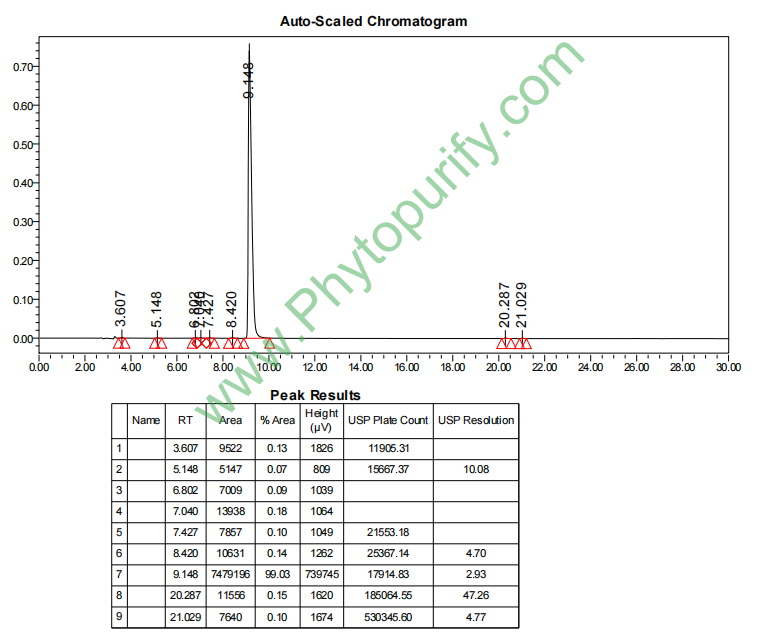
Purity: 95%~99%
Analysis Method: HPLC-DAD or/and HPLC-ELSD
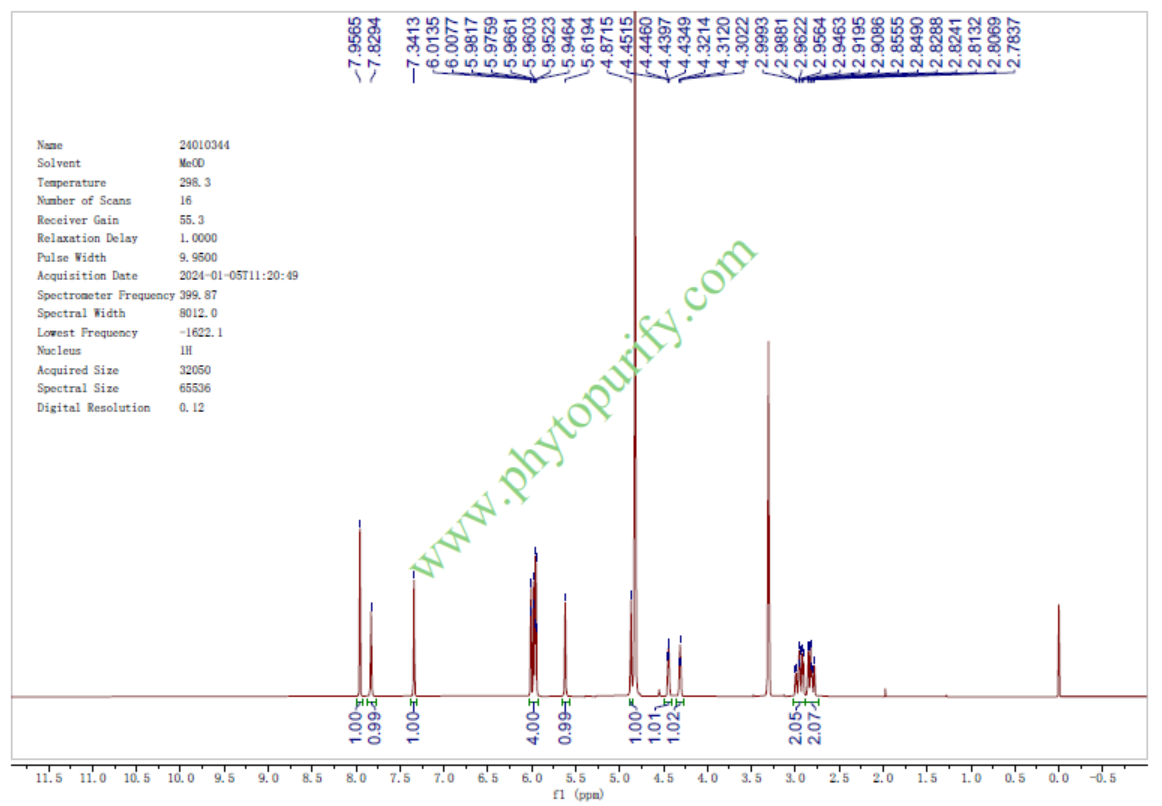
Identification Method: Mass, NMR
Packing: Brown vial or HDPE plastic bottle
Storage: Store in a well closed container, protected from air and light. Put into refrigerate or freeze for long term storage.
Whenever possible, you should prepare and use solutions on the same day. However, if you need to make up stock solutions in advance, we recommend that you store the solution as aliquots in tightly sealed vials at -20℃. Generally, these will be useable for up to two weeks.
The product could be supplied from milligrams to grams, up to kilograms
Inquire for bulk scale.
Descriptions:
Theaflavins(TF) has antioxidant activity, the TF present in black tea possess at least the same antioxidant potency as catechins present in green tea, and that the conversion of catechins to TF during fermentation in making black tea does not alter significantly their free radical-scavenging activity.[1,2]
Theaflavins significantly reduce lipid accumulation, suppressed fatty acid synthesis, and stimulate fatty acid oxidation, also inhibits acetyl-coenzyme A carboxylase activities by stimulating AMP-activated protein kinase (AMPK) through the LKB1 and reactive oxygen species pathways; it is bioavailable both in vitro and in vivo and may be active in the prevention of fatty liver and obesity.[3]
Theaflavins induce G2/M arrest by modulating expression of p21 waf1/cip1 , cdc25C and cyclin B in human prostate carcinoma PC-3 cells, it acts as an effective anti-proliferative agent by modulating cell growth regulators in prostate cancer cells.[4]
Theaflavins from Black Tea, have inhibition of ultraviolet B&ndash and induces AP‐1 activation.[5]
Theaflavins inhibit 4-(methylnitrosamino)-1-(3-pyridyl)-1-butanone (NNK)-induced lung tumorigenesis in A/J mice.[6]
Theaflavins and thearubigins have antimutagenic effects in Ames Salmonella assays.[7]
HPLC of Theaflavin
HNMR of Theaflavin
Storage conditions:Short-term storage at 2~8℃, long-term storage at -20 ~ -80℃
217.6000
1.4227
1.1526
.1717
1.1629
.1570
Low
87.7056
4.6154
No
No
No
No
Yes
No
0.6
Yes
No
Yes
No
Theaflavin (CAS number: 4670-05-7) is a characteristic polyphenol oxidized polymer formed during the fermentation process of black tea, belonging to the class of flavonoids. As the main contributor to the color of black tea soup, theaflavins are not only a key indicator determining the quality of black tea, but also an active ingredient that has attracted much attention in the field of natural product pharmacology research in recent years. Traditionally, the health benefits of black tea have been attributed to catechins, but with the advancement of separation and identification techniques, the unique chemical structure and extensive biological activities of theaflavins have gradually been revealed. Research has shown that theaflavins not only possess excellent antioxidant capacity, but also show great potential in antiviral (such as acting as a neuraminidase inhibitor for H1N1 influenza virus), anti-inflammatory, antibacterial, anti-tumor, lipid metabolism regulation, and cardiovascular protection. Its multi target and multi pathway characteristics make it have unique advantages in the prevention and treatment of modern chronic diseases and infectious diseases. This article aims to systematically review the chemical properties, sources, pharmacological activities, molecular mechanisms of action, and medicinal properties of theaflavins, and to explore their clinical application prospects, in order to provide scientific references for the deep development and utilization of this natural product.
Theaflavins are a class of flavonoids composed of two molecules of catechins (mainly epigallocatechin gallate, EGCG, and epicatechin gallate, ECG) connected by a benzocycloheptenone structure. Its basic chemical structure is 3,4,5-trihydroxybenzocyclohepten-6-one, which is replaced by a (2R, 3R) -3,5,7-trihydroxy-3,4-dihydro-2H-benzopyran-2-yl (i.e. flavan-3-ol structural unit) at positions 1 and 8, respectively. This unique biphenyl bridge structure endows theaflavins with planarity and rigidity, which is the structural basis for their strong antioxidant activity.
Theaflavins are actually a mixture, mainly including theaflavins (TF1), theaflavin-3-gallate (TF2A), theaflavin-3 '- gallate (TF2B), and theaflavin-3,3' - digallate (TF3). Among them, TF3 is usually the most active due to its presence of two galloyl groups. Its molecular weight is 564.4990, and the calculated LogP value is 1.4227, indicating that it has a certain lipophilicity, but not highly lipophilic. Its topological polar surface area (TPSA) is as high as 217.60 Å ², mainly due to the numerous phenolic hydroxyl groups in the molecule, which are the main sources of hydrogen bond donors and acceptors, and also result in relatively low water solubility (about 0.1717 mg/mL). This "amphiphilic" but hydrophilic characteristic affects its absorption and distribution in organisms. Theaflavins are relatively stable under acidic conditions, but they are prone to oxidation, polymerization, or degradation in neutral or alkaline environments, which poses challenges to their extraction, preservation, and in vivo bioavailability.
Theaflavins are not inherent components in tea leaves, but rather key products during the "fermentation" (actually enzymatic oxidation) stage of black tea processing. After withering and rolling of fresh tea leaves, the cellular structure is disrupted, and polyphenol oxidase (PPO) and peroxidase (POD) in vacuoles come into contact with catechins substrates (especially EGC and EGCG) in the cytoplasm, undergoing complex oxidation and polymerization reactions, thereby generating a series of oxidative polymers such as theaflavins and thearubigins. Therefore, black tea is the main natural source of theaflavins, accounting for about 1% -5% of the dry weight of black tea. It is a core chemical indicator for measuring the quality of black tea, especially the brightness of the soup color and the freshness of the taste.
Efficient and high-purity extraction and separation of theaflavins from black tea is a prerequisite for studying its activity. Traditional methods include solvent extraction, which often uses ethyl acetate, acetone water systems, etc. for initial enrichment. This is because theaflavins have a higher solubility in ethyl acetate and can be initially separated from more polar thearubigins and less polar caffeine. Subsequently, column chromatography is often used for purification, such as Sephadex LH-20 gel column, MCI gel CHP-20P or preparative high performance liquid chromatography (HPLC). In recent years, high-speed countercurrent chromatography (HSCCC) technology has shown unique advantages in the separation and preparation of theaflavins monomers due to its advantages such as no need for solid phase carriers, high sample recovery rates, and large preparation quantities. In addition, in order to overcome the limitations of natural sources, research on the synthesis of theaflavins using in vitro simulated enzymatic oxidation systems (catalyzed by polyphenol oxidase, peroxidase, or metal ions) is also underway, providing a potential pathway for large-scale production.
Numerous in vitro and in vivo studies have confirmed that theaflavins have diverse and significant pharmacological activities.
antioxidant activity This is the most fundamental and important activity of theaflavins. The multiple phenolic hydroxyl groups in its molecule can effectively scavenge free radicals (such as DPPH, ABTS ⁺, superoxide anions, hydroxyl radicals), and have strong chelating ability for metal ions (such as Fe ² ⁺, Cu ² ⁺), thereby inhibiting the Fenton reaction and blocking the lipid peroxidation chain reaction. Its antioxidant efficacy is usually stronger than classical antioxidants such as monomeric catechins and vitamins C and E.
Antiviral activity Theaflavins, especially TF3, have been proven to be effective inhibitors of neuraminidase (NA) of influenza A viruses (including H1N1). Neuraminidase is a key enzyme involved in the release and transmission of viruses from host cells. Theaflavins competitively inhibit the activity of NA by directly binding to its active site, thereby preventing the release and spread of viral particles. They have shown anti influenza virus effects in both cell and mouse models.
Anti inflammatory and immune regulation Tea yellow pigment can significantly inhibit the excessive production of nitric oxide (NO), prostaglandin E2 (PGE2), and pro-inflammatory cytokines (such as TNF - α, IL-1 β, IL-6) induced by lipopolysaccharides (LPS) and other factors in macrophages. Its anti-inflammatory effect is closely related to the inhibition of key inflammatory signaling pathways such as nuclear factor kappa B (NF - κ B) and mitogen activated protein kinase (MAPK) activation.
Antitumor activity Studies have shown that theaflavin can inhibit the growth of many cancer cell lines (such as breast cancer, prostate cancer, colon cancer, liver cancer), and can induce cell cycle arrest and apoptosis. The mechanism involves regulating the Bcl-2/Bax ratio, activating the caspase cascade, inhibiting the expression and activity of matrix metalloproteinases (MMPs) to resist invasion and metastasis, and inhibiting angiogenesis.
Cardiovascular protective effect Tea yellow pigment can regulate blood lipids by reducing serum total cholesterol, low-density lipoprotein cholesterol (LDL-C), and triglyceride levels, while increasing high-density lipoprotein cholesterol (HDL-C). In addition, it can inhibit the oxidative modification (ox LDL) of low-density lipoprotein (LDL), which is a key step in the initiation of atherosclerosis; It can also improve endothelial function, inhibit abnormal platelet aggregation, and has multiple anti atherosclerosis potential.
Antibacterial and Oral Health Theaflavins have inhibitory effects on various oral pathogens such as Streptococcus mutans and Porphyromonas gingivalis, reducing plaque formation and inhibiting bacterial glycosyltransferase activity. They have potential applications in preventing dental caries and periodontal disease.
The various pharmacological activities of theaflavins stem from their interactions with multiple biomolecules, achieved by regulating key signaling pathways.
Core antioxidant pathway - Nrf2/ARE system Theaflavins are effective activators of Nrf2 (encoded by the NFE2L2 gene). Under oxidative stress, theaflavins can promote the dissociation and translocation of Nrf2 and Keap1 to the nucleus, where they bind to antioxidant response elements (ARE), thereby initiating the transcriptional expression of a series of downstream phase II detoxifying enzymes and antioxidant proteins, including heme oxygenase-1 (HMOX1), superoxide dismutase (SOD1, SOD2), catalase (CAT), glutathione peroxidase (GPX1), etc. This is the core molecular mechanism of its cellular defense against oxidative damage.
Anti inflammatory and immune regulatory pathways Theaflavins inhibit the activation of I κ B kinase (IKK), prevent the phosphorylation and degradation of I κ B α, and thus retain the NF - κ B p65 subunit in the cytoplasm, blocking its nuclear translocation and transcription of downstream inflammatory genes. Meanwhile, it can also inhibit the phosphorylation of JNK, ERK, and p38 in the MAPK pathway, thereby suppressing the production of inflammatory mediators through multiple pathways.
Direct interaction with specific enzymes:
Epigenetic regulation In recent years, studies have found that theaflavins can also affect the expression of related genes by regulating epigenetic mechanisms such as histone modification and non coding RNA (such as miRNA) expression, providing a new explanatory dimension for their pleiotropy.
Although theaflavins have excellent pharmacological activity, their medicinal properties face challenges, mainly due to their poor bioavailability.
Absorption, Distribution, Metabolism, and Excretion (ADME):
safety evaluation The existing toxicological data indicate that theaflavins are relatively safe. The Ames test result is 0.6 (usually considered to have mutagenic risk if>2), indicating no significant genetic toxicity. The hERG inhibition test was negative, indicating a low risk of causing QT interval prolongation in the heart. No serious adverse reactions were observed in long-term animal toxicity tests. However, attention should still be paid to the potential impact of metal chelation on trace element absorption at high doses.
Formulation improvement strategy To improve bioavailability, researchers are exploring various novel delivery systems, including nanoemulsions, liposomes, solid lipid nanoparticles, phospholipid complexes, cyclodextrin inclusion complexes, etc. These technologies can enhance the solubility of theaflavins, protect them from gastrointestinal environmental damage, promote intestinal lymphatic absorption or delay metabolism, thereby significantly improving their oral bioavailability and targeting.
As a multifunctional natural active molecule, theaflavins have broad prospects for clinical application development, but challenges also need to be viewed rationally.
As a functional food and dietary supplement This is currently the most direct application method. Black tea extract rich in theaflavins has been widely used in the development of health foods claiming to have antioxidant properties, blood lipid regulation, and immune enhancement. More precise dose-response relationship studies and population intervention trials are needed in the future to support its health claims.
Prevention and Adjuvant Treatment of Chronic Diseases In the fields of cardiovascular disease, metabolic syndrome, neurodegenerative diseases (such as Alzheimer's disease, although BBB penetration is low, it can indirectly benefit through anti peripheral inflammation), and chemoprevention of cancer, theaflavins can be used as a long-term, low toxicity preventive strategy or as an adjuvant therapy in combination with existing drugs, which may reduce the dosage and side effects of conventional drugs.
Development of antiviral drugs Regarding influenza virus, theaflavins and their structurally optimized derivatives are expected to be developed as novel NA inhibitors, especially for potential drug-resistant strains. Its multi-target effects, such as simultaneously inhibiting virus replication and regulating host excessive inflammatory response, may bring synergistic therapeutic effects.
Oral care products Based on its antibacterial, anti-inflammatory, and anti cariogenic biofilm formation abilities, theaflavins can be added to oral care products such as toothpaste and mouthwash to maintain oral health.
Challenges and Future Directions:
Theaflavins, a red spirit originating from ancient beverages, have become a model for connecting traditional wisdom with modern life science research due to their unique dual flavonoid chemical structure. Starting from the powerful antioxidant foundation, its pharmacological activity network has expanded to multiple important fields such as antiviral, anti-inflammatory, anti-tumor, and cardiovascular and cerebrovascular protection. Its mechanism of action involves key signaling pathways such as Nrf2 and NF - κ B, as well as multiple specific enzyme targets. Although poor bioavailability is an important bottleneck for its clinical drug development, this challenge is gradually being overcome through new pharmaceutical technologies, structural optimization, and in-depth basic research. In the future, theaflavins will not only continue to serve as an important ingredient in functional foods and supplements for public health, but also have the potential to play a more professional role in preventive medicine and the treatment of certain specific diseases (such as influenza and oral diseases) due to their multi-target and low toxicity characteristics. The continuous in-depth research on theaflavins will provide valuable scientific basis and inspiration for us to explore and create a new generation of health products from the treasure trove of natural products.
