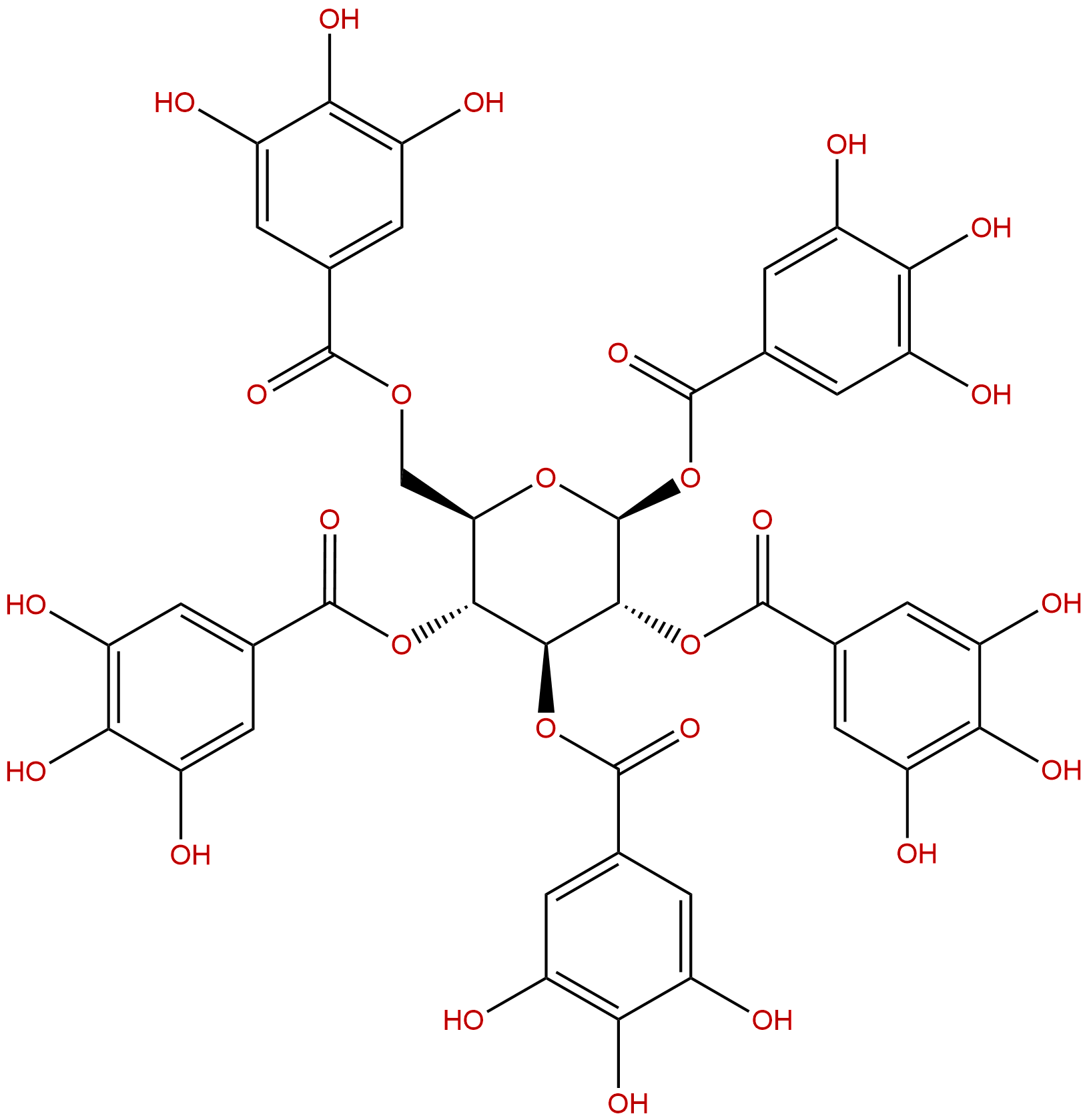


Synonym name: Beta-1,2,3,4,6-Pentagalloylglucose
Catalogue No.: BP0001
Cas No.: 14937-32-7
Formula: C41H32O26
Mol Weight: 940.681
Botanical Source: several Acer spp., Quercus spp., Rhus spp. and Rubus spp.
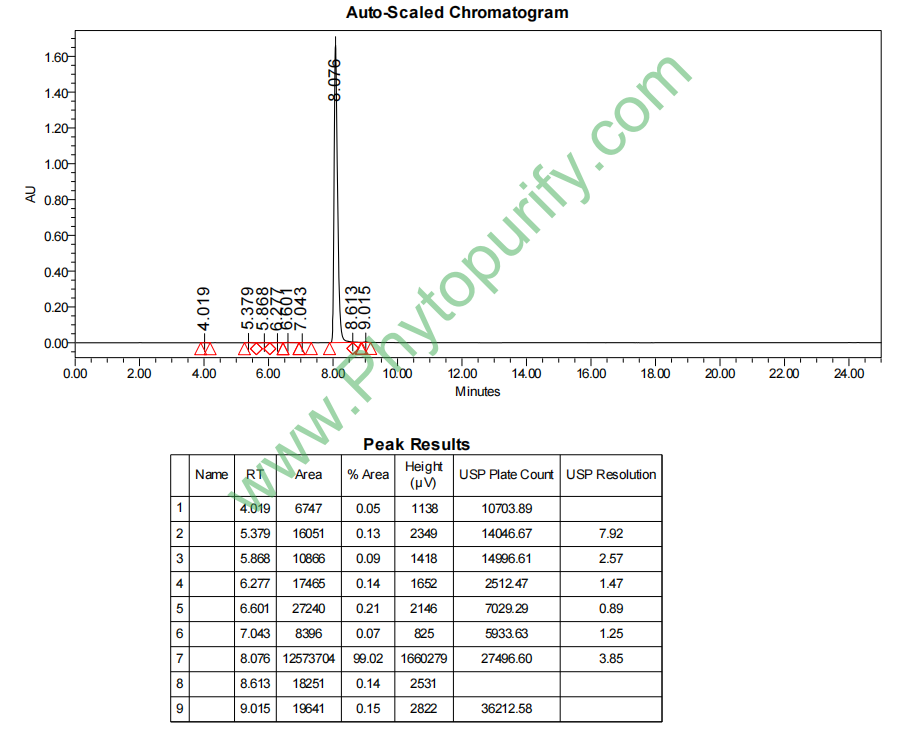
Purity: 99%
Analysis Method: HPLC-DAD or/and HPLC-ELSD
Identification Method: Mass, NMR
Packing: Brown vial or HDPE plastic bottle
Can be supplied from milligrams to grams, up to kilograms.
Except the reference standerd, we can supply this product with 80%~95% for food supplements, health care products, cosmetics etc.
Inquire for bulk scale.
References
1, Anti-Cancer, Anti-Diabetic and Other Pharmacologic and Biological Activities of Penta-Galloyl-Glucose
Pharmaceutical Research September 2009, Volume 26, Issue 9, pp 2066-2080
Abstract
1, 2, 3, 4, 6-penta-O-galloyl-β-D-glucose (PGG) is a polyphenolic compound highly enriched in a number of medicinal herbals. Several in vitro and a handful of in vivo studies have shown that PGG exhibits multiple biological activities which implicate a great potential for PGG in the therapy and prevention of several major diseases including cancer and diabetes. Chemically and functionally, PGG appears to be distinct from its constituent gallic acid or tea polyphenols. For anti-cancer activity, three published in vivo preclinical cancer model studies with PGG support promising efficacy to selectively inhibit malignancy without host toxicity. Potential mechanisms include anti-angiogenesis; anti-proliferative actions through inhibition of DNA replicative synthesis, S-phase arrest, and G1arrest; induction of apoptosis; anti-inflammation; and anti-oxidation. Putative molecular targets include p53, Stat3, Cox-2, VEGFR1, AP-1, SP-1, Nrf-2, and MMP-9. For anti-diabetic activity, PGG and analogues appear to improve glucose uptake. However, very little is known about the absorption, pharmacokinetics, and metabolism of PGG, or its toxicity profile. The lack of a large quantity of highly pure PGG has been a bottleneck limiting in vivo validation of cancer preventive and therapeutic efficacies in clinically relevant models.
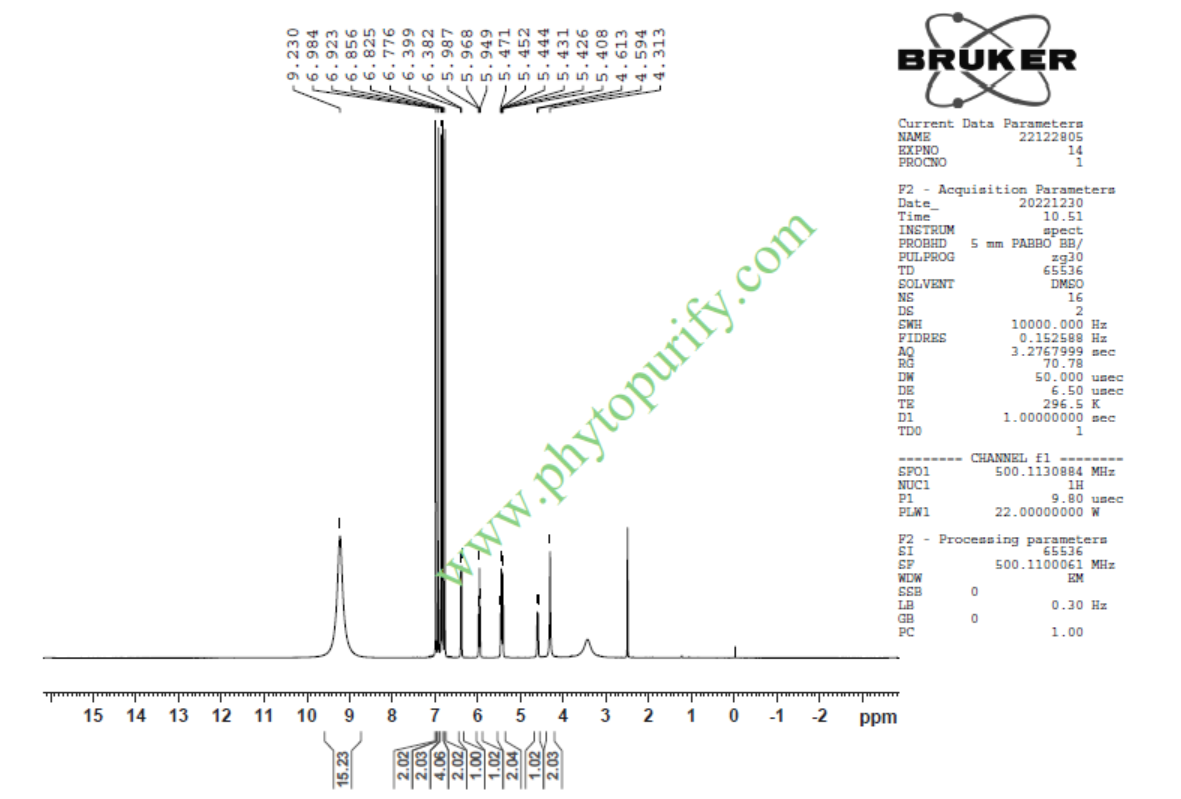
HNMR of 1,2,3,4,6-Pentagalloylglucose
HPLC of 1,2,3,4,6-Pentagalloylglucose
Storage conditions:Short-term storage at 2~8℃, long-term storage at -20 ~ -80℃
444.1800
1.8423
1.8422
.0095
.7927
.0819
Low
89.2917
4.7531
Yes
Yes
Yes
No
Yes
No
0.6
Yes
No
Yes
No
1,2,3,4,6-O-Pentagalloylglucose (PGG) is a natural polyphenolic compound with unique structure and wide biological activity. Its CAS number is 14937-32-7, molecular formula is C41H32O26, and molecular weight is as high as 940.68 g/mol. The core structure of PGG is a β - D-glucose molecule, which is connected to a galloyl group through ester bonds at carbon positions 1, 2, 3, 4, and 6. This dense acylation modification makes it an important class of hydrolyzed tannins (precursors of tanning tannins), endowing it with strong antioxidant, protein binding, and multi-target regulatory abilities.
PGG mainly comes from the traditional Chinese medicine Galla chinensis, which is one of the key active ingredients in Galla chinensis that exert pharmacological effects. Modern pharmacological research has revealed that PGG has extremely rich biological activities, including anti-tumor, anti-inflammatory, antioxidant, liver protection, radiation protection, blood glucose lowering, and potential anti-aging (elderly protection) effects. Its mechanism of action is complex, involving multi-level regulation of cellular signaling pathways, enzyme activity, receptor function, and gene expression. The database information shows that PGG interacts with as many as 26 potential targets and is associated with hyperglycemia, acute lymphoblastic leukemia, atherosclerosis and other diseases, which makes it an attractive research object in the field of natural product drug research and development. This article will provide a systematic professional interpretation of PGG from multiple dimensions, including chemistry, pharmacology, drug properties, and prospects.
The chemical structure of PGG is the material basis for its multifunctionality. The SMILES string accurately describes its stereoconfiguration: all five hydroxyl groups of a central glucose molecule ([C @ H] and [C @ @ H] represent chiral centers) are esterified with gallic acid. Each galloyl group (3,4,5-trihydroxybenzoyl) is rich in phenolic hydroxyl groups, making the entire molecule a highly hydrophilic polyphenol "cluster" with strong hydrogen bond donor/acceptor capabilities.
Analyzing its physicochemical properties from the parameters of drug properties:
- Molecular weight (MW):940.68 g/mol, Far beyond conventional small molecule drugs (usually<500 Da), this poses the primary challenge for their oral absorption and transmembrane transport.
- Lipid water partition coefficient (LogP/LogD)Approximately 1.84. This value indicates that the molecule has a certain degree of lipophilicity, but considering its huge molecular weight and polarity, its overall properties are more inclined towards hydrophilicity. The LogP value does not exceed 5, which complies with one of Lipinski's rules, but exceeding the molecular weight limit is the main limitation.
- Topological Polarity Surface Area (TPSA)Up to 444.18 Å ². TPSA is a key parameter for predicting molecular membrane permeability, and molecules with TPSA>140 Å ² typically have poor membrane permeability. The extremely high TPSA of PGG directly indicates that its cell membrane permeability (Caco-2 permeability: 0.0819) and blood-brain barrier penetration ability (BBB permeability: low) will be very limited, which is closely related to its polyphenol structure's tendency to form intramolecular/intermolecular hydrogen bonds and strong hydration.
- Water solubility Only 0.0095 (usually measured in mg/mL or mol/L, with lower values here) indicates that although it has polar functional groups, its large hydrophobic aromatic ring system results in less than ideal water solubility, which may affect its formulation development.
- Plasma protein binding rate (PPB)As high as 89.29%, this means that the vast majority of PGG entering the bloodstream binds to plasma proteins (such as albumin), with only a small amount of free drugs exerting pharmacological effects, which can affect their efficacy and pharmacokinetic characteristics.
In summary, PGG is a typical natural polyphenol with large molecules, high polarity, and high protein binding rate. Its physicochemical properties determine that it will face many challenges in the process of absorption, distribution, metabolism, and excretion (ADME) in the body.
The main natural source of PGG is gallnut(Galla chinensis)。 Galla chinensis is not the plant itself, but a plant of the Anacardiaceae family, such as the salt bark wood Rhus chinensis)The galls formed by the parasitism of galls on young branches or petioles by aphids. Ancient Chinese physicians recognized the medicinal value of gallnuts early on, and their collection history is long, recorded in classics such as "Kaibao Bencao" and "Bencao Gangmu".
In traditional Chinese medicine theory, galls are cold in nature, sour and astringent in taste, and belong to the lung, large intestine, and kidney meridians. Its core function is Consolidate the lungs and reduce internal heat, astringent intestines to stop diarrhea, reduce sweating and stop bleeding, and reduce dampness and sores In clinical practice, it is commonly used to treat lung deficiency, chronic cough, chronic diarrhea and dysentery, spontaneous sweating and night sweats, bleeding from collapse, as well as external bleeding, ulcers and swelling, and skin dampness. These benefits are mostly related to the rich tannins they contain. Tannins can denature and coagulate proteins, forming a protective film on mucous membranes or wounds, playing a role in convergence, hemostasis, and antibacterial effects. PGG, as a key hydrolyzed tannin component in gallnuts, is undoubtedly one of the important material foundations for achieving these traditional effects. Modern research provides scientific annotations for its traditional applications, such as its anti-inflammatory and antioxidant activities corresponding to "clearing heat and reducing fire", its astringent protein properties corresponding to "stopping bleeding and healing sores", and its function of regulating gut microbiota and intestinal barrier may partially explain the role of "astringent intestines and stopping diarrhea".
The pharmacological activity spectrum of PGG is very broad, and the core of its mechanism of action lies in Multi target synergistic effect Based on the 26 target information provided by the database, we can summarize their main pharmacological effects into the following directions and explain them in conjunction with related diseases:
4.1 Antitumor and Induction of Cell Apoptosis
PGG exhibits inhibitory activity on proliferation and induces apoptosis in various tumor cells, particularly in relation to Acute lymphoblastic leukemia (ALL) relevant.
- Target regulation PGG can downregulate anti apoptotic proteins BCL-2 and MCL-1 The expression of caspase can release the inhibition of mitochondrial apoptosis pathway, promote the release of cytochrome C, activate the Caspase cascade reaction, and ultimately lead to tumor cell apoptosis.
- Epigenetic regulation It can inhibit histone methyltransferase EHMT2(G9a), Reduce H3K9me2 modification in the promoter region of tumor suppressor genes, promote their re expression, and inhibit tumor growth.
- DNA metabolism interference PGG can inhibit DNA helicase BLM and RECQ1 These helicases play a crucial role in DNA replication, repair, and maintaining genomic stability, especially in rapidly proliferating cancer cells where demand is high. Inhibiting them can lead to increased DNA replication pressure and genomic instability, selectively killing cancer cells.
4.2 Lowering blood sugar and improving metabolic syndrome
PGG is improving Hyperglycemia And diabetes complications.
- glucose metabolism PGG can activate key cellular energy sensors AMPK AMPK activation can promote glucose uptake (via GLUT4 transporter), inhibit liver gluconeogenesis, and improve insulin sensitivity.
- Glucose absorption Research suggests that PGG may inhibit the sodium glucose cotransporter protein 2 in the kidneys(SGLT2)Reducing the reabsorption of glucose by the kidneys and increasing urinary glucose excretion is a mechanism of action similar to current SGLT2 inhibitor drugs.
- Pancreatic islet function: Its effect on glucokinase(GCK)The potential regulation may affect glucose perception and insulin secretion of pancreatic beta cells.
4.3 Anti atherosclerosis and cardiovascular protection
PGG for Atherosclerosis Multiple stages have intervention effects.
- Antioxidant and anti-inflammatory properties Its powerful free radical scavenging ability (as a free radical scavenger) can inhibit the oxidation of low-density lipoprotein (LDL), and oxidative LDL is a key initiating factor of atherosclerosis. Meanwhile, it exerts anti-inflammatory effects by inhibiting inflammatory pathways such as NF - κ B.
- Lipid reverse transport PGG can upregulate ATP binding cassette transporter A1(ABCA1)The expression. ABCA1 is responsible for transporting intracellular cholesterol to apolipoprotein A-I, forming new high-density lipoprotein (HDL), which is the first step in cholesterol reverse transport. This is crucial for clearing cholesterol deposits in arterial wall macrophages.
- Endothelial protection Inhibition of lectin like oxidized low-density lipoprotein receptor-1(LOX-1)It can reduce the uptake of oxidized LDL by endothelial cells, alleviate endothelial cell damage and dysfunction.
- Fibrinolytic system Reduce plasminogen activator inhibitor-1(PAI1)At a certain level, it helps to enhance fibrinolytic activity and prevent thrombosis.
4.4 Other important activities
- Liver protection Reduce chemical or metabolic liver injury through antioxidant, anti-inflammatory, and anti apoptotic pathways.
- Neuroprotection and anti-aging Its role as an "aging protectant" may stem from clearing free radicals, reducing oxidative stress, inhibiting the senescence associated secretory phenotype (SASP), and regulating NOTCH1 Signal pathways related to cell fate determination and aging.
- radiation protection Strong antioxidant capacity helps to eliminate reactive oxygen species (ROS) generated by ionizing radiation and protect normal cells.
Despite the excellent pharmacological activity of PGG, developing it into a traditional oral small molecule drug faces significant challenges in terms of drug development. We conducted a systematic evaluation using Lipinski's Rule of Five (Ro5) and other ADMET parameters
Violation of Lipinski rules:
Absorption and distribution:
Metabolism and toxicity:
Comprehensive Assessment PGG is a typical "Beyond Rule of Five" compound. Its prospects as a traditional oral small molecule drug are bleak. However, this does not mean the end of its medicinal value. Its development strategy may need to shift towards:
- Prodrug modification Esterification or etherification modification of some phenolic hydroxyl groups to reduce polarity, improve lipid solubility and membrane permeability, and release the original drug after hydrolysis in vivo.
- New drug delivery system Using delivery technologies such as nanoparticles, liposomes, and micelles to encapsulate PGG, improving its solubility, protecting it from premature metabolism, and enhancing target site accumulation (such as EPR effect in tumors).
- Local medication: Use its astringent, antibacterial and anti-inflammatory properties to develop topical preparations (such as gel, cream and powder) for skin infection, ulcer and bleeding, so as to avoid systemic absorption problems.
- As a lead compound Using its structure as a template, simplify or optimize to find derivatives that retain core activity but have smaller molecular weights and better drug properties.
At present, research on PGG mainly focuses on Exploration of Pharmacological Mechanisms On the level. A large number of in vitro and animal experiments have confirmed its significant effects in anti-tumor, anti metabolic disease, anti-inflammatory and antioxidant aspects, and continuously revealed its new targets and pathways, such as regulating intestinal microbiota and affecting autophagy. However, due to its poor drug properties, there are relatively few reports pushing it into clinical research, and most studies are still in the preclinical stage.
Looking ahead, the research and application of PGG may have the following directions:
1. Deep exploration of mechanisms Using techniques such as chemical biology, network pharmacology, and molecular docking, further elucidate the specific patterns, sequences, and spatiotemporal dynamics of its interactions with 26 or even more targets, and draw a multi-target action network diagram to provide theoretical basis for precision medicine.
2. Structural optimization and synthesis Conduct systematic structure-activity relationship research to explore whether a complete pentagalloyl structure is necessary to exert specific activity. Develop chemical or enzymatic synthesis processes to solve the problems of limited natural extraction yield and mixed structural isomers, and provide a foundation for structural modification.
3. High end formulation development This is the most realistic path to promote the clinical application of PGG. For specific indications (such as colorectal cancer, diabetes skin ulcer), intelligent responsive nano drug delivery system is designed to achieve intestinal targeted release, tumor targeted delivery or accumulation of inflammatory sites, maximize efficacy and minimize system toxicity.
4. Interpretation of Modernization of Traditional Chinese Medicine: As the symbolic component of Chinese nutgall, we will deeply study how PGG cooperates with other components, scientifically interpret the modern connotation of Chinese nutgall's traditional efficacy of "astringency, astringency, and clarity" from the perspective of multi-component, multi target, and multi pathway, and promote the secondary development of classic famous prescriptions and traditional Chinese patent medicines and simple preparations.
5. Functional food and cosmetic additives On the basis of strict safety evaluation, PGG can be used as a potent natural antioxidant and anti-inflammatory agent in health food or high-end skincare products.
In summary, 1,2,3,4,6-O-pentagalloylglucose is a complex and intricate chemical entity bestowed by nature, acting like a multi toothed key that can simultaneously act on multiple key nodes in the network of life. Although its "large and extreme" chemical properties have set obstacles for traditional drug development, this is also a reflection of its uniqueness. Through the clever transformation and targeted delivery of modern pharmaceutical technology, this' natural key 'is expected to open new doors for the treatment of specific diseases in the future, especially in the fields of complex diseases and local treatments, demonstrating irreplaceable application potential. Continuous and in-depth research on it will undoubtedly provide valuable experience and inspiration for the development of innovative drugs for natural products.
