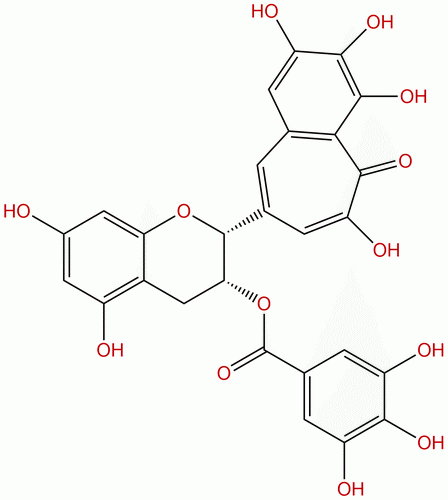


Product name: Epitheaflagallin 3-O-gallate
Synonym name:
Catalogue No.: BP2022
Cas No.: 102067-92-5
Formula: C27H20O13
Mol Weight: 552.444
Botanical Source: Black Tea
Physical Description:
Type of Compound:
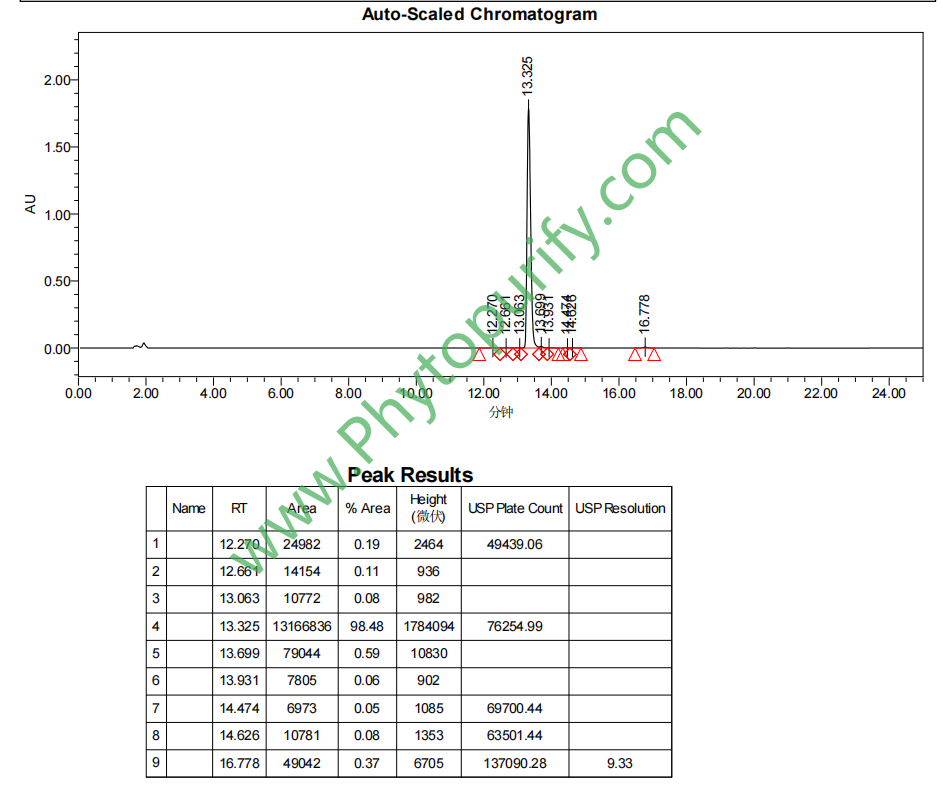
Purity: 95%~99%
Analysis Method: HPLC-DAD or/and HPLC-ELSD
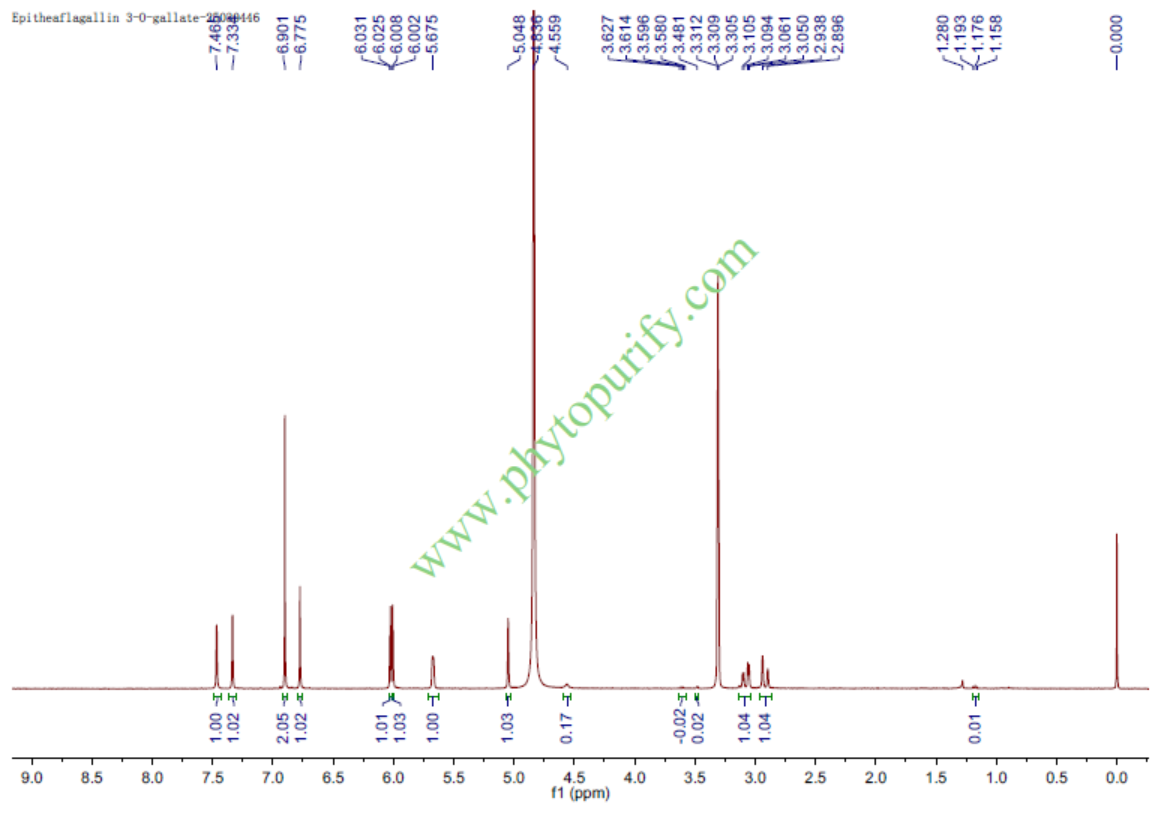
Identification Method: Mass, NMR
Packing: Brown vial or HDPE plastic bottle
The product could be supplied from milligrams to grams. Inquire for bulk scale.
For Reference Standard and R&D, Not for Human Use Directly.
HPLC of Epitheaflagallin 3-O-gallate
HNMR of Epitheaflagallin 3-O-gallate
Storage conditions:Short-term storage at 2~8℃, long-term storage at -20 ~ -80℃
234.6700
1.9633
.0534
.1250
1.8986
.1319
Low
89.8249
4.0715
No
Yes
No
No
Yes
No
0.6
Yes
No
Yes
No
Black tea, as one of the most consumed types of tea globally, its unique color, aroma, and health benefits are largely attributed to the complex chemical transformations that occur during tea processing. In fresh tea, catechins such as epigallocatechin gallate (EGCG) are the main polyphenolic components. However, during the fermentation process of black tea (i.e. enzymatic oxidation), these catechins undergo oxidative polymerization, condensation and other reactions under the catalysis of polyphenol oxidase and peroxidase, generating a more complex and larger molecular weight pigment and polyphenol polymer, namely theaflavins and thearubigins. For a long time, theaflavins have been considered the main active ingredients in black tea, and their biological activities such as antioxidant, anti-inflammatory, and anti-tumor have been widely studied. However, the chemical diversity of black tea polyphenols goes far beyond this, and some secondary metabolites with relatively low content but unique structures are also worth paying attention to, such as Epitheaflavaglin 3-O-gallate (ETFG).
Epitheaflagallin 3-O-gallate, The Chinese name can be directly translated as "Epicatechin-3-O-gallate", which is a minor polyphenol with relatively low content in black tea. Its chemical structure has distinct features: the core skeleton is the unique benzotropolone structure of theaflavins, which is formed by the oxidative condensation of two catechin units (usually one epigallocatechin gallate and one catechin). The uniqueness of ETFG lies in the fact that a galloyl group in its molecule is connected to a specific position (3-O position) of the theaflavins skeleton through an ester bond. This subtle structural difference endows ETFG with unique physicochemical properties and biological activity profiles that differ from classical theaflavins such as theaflavins and theaflavin-3-gallic acid esters.
Although the content of ETFG in black tea is much lower than that of theaflavins, recent studies have revealed that this "minor polyphenol" exhibits remarkable potential in various physiological activities. From the early antioxidant activity and enzyme inhibitory activity (such as pancreatic lipase and glycosyltransferase) to the recent discoveries in the regulation of extracellular matrix (ECM) metabolism, anti-inflammatory and potential neuroprotective effects, ETFG is gradually moving from the "supporting role" of black tea polyphenols to the "leading role". Especially its role in regulating the activity of matrix metalloproteinases (MMPs) and protecting gingival fibroblasts provides new ideas for the field of oral health. Meanwhile, based on its potential association with classical antioxidant pathways such as Nrf2/ARE, the value of ETFG in the prevention and treatment of neurodegenerative diseases has also sparked preliminary exploration.
This article aims to provide a systematic professional review of Epithaflagallin 3-O-gallate, a natural product. We will start from its chemical structure and physicochemical properties, trace its plant origin and extraction methods, deeply analyze its reported pharmacological activities, explore its mechanism of action and molecular targets, and evaluate its pharmacokinetic properties based on its pharmacological parameters. Finally, we will look forward to its prospects and challenges in clinical applications. Through this article, we aim to provide researchers in the field of natural product pharmacology with a comprehensive, in-depth, and cutting-edge academic reference on ETFG.
The chemical structure of Epithaflagallin 3-O-gallate is the basis for all its biological activities. From the naming, its structural features can be seen: "Epitheaflavaglin" indicates that its core skeleton is "Epitheaflavanone", which is a benzophenone derivative with a similar structure to Theaflavin, except that it may have more hydroxyl substituents on its B (or D) ring. The "3-O-gallate" clearly indicates that a galloyl group (i.e. gallic acid residue) is connected to the hydroxyl group at position 3 of the core skeleton through an ester bond.
Specifically, the molecular formula of ETFG is C ₂₉ H ₂₄ O ₁∝, with a molecular weight of 552.4440 g/mol. Its core structure is composed of a benzophenone ring system, which is a characteristic structure of theaflavins. It is formed by the fusion of a seven membered ring (benzophenone ring) and a benzene ring. This benzophenone ring contains carbonyl and hydroxyl groups, endowing the molecule with strong ability to chelate metal ions and scavenge free radicals. In ETFG, this core skeleton is connected to multiple phenolic hydroxyl groups, which are the main hydrogen donating groups for antioxidant activity. In addition, the galloyl group present in the molecule itself is a powerful antioxidant unit, and its three adjacent phenolic hydroxyl groups make it an efficient free radical scavenger and metal ion chelating agent. Therefore, ETFG molecules contain at least two powerful antioxidant modules: the benzophenone core and the galloyl group, which may theoretically enhance their antioxidant capacity compared to simple theaflavins without galloyl groups.
In terms of physical and chemical properties, ETFG exhibits typical characteristics of polyphenolic compounds. Its lipophilic water partition coefficient (LogP) is 1.9633, indicating that the compound has a certain degree of lipophilicity, but overall tends to be hydrophilic. This moderate lipophilicity allows it to penetrate biological membranes to a certain extent, while also being well soluble in aqueous environments. Its topological polar surface area (TPSA) is as high as 234.6700 Å ², mainly attributed to the large number of phenolic hydroxyl and carbonyl groups in the molecule. A high TPSA value usually indicates that the molecule has lower membrane permeability, especially in crossing the blood-brain barrier (BBB). The predicted ETFG blood-brain barrier penetration ability is "low", which is consistent with high TPSA values, indicating a low possibility of its direct effect in the brain, but it may indirectly affect the central nervous system by acting on peripheral targets or regulating peripheral signals.
Water solubility is a key factor affecting the bioavailability of natural products. The predicted water solubility of ETFG is 0.1250 mg/mL, which belongs to the category of slight solubility. Although this value is lower than that of highly water-soluble catechins such as EGCG, it is still at a moderate level among polyphenolic compounds. Its water solubility is greatly affected by pH value and is relatively stable in neutral or weakly acidic environments, but it is easily oxidized and degraded under alkaline conditions. In addition, ETFG is also sensitive to light and heat, and needs to be protected during extraction, storage, and formulation processes.
Overall, the chemical structure of ETFG determines its potential for both antioxidant, metal chelation, and enzyme inhibition. Its physicochemical properties, such as moderate lipophilicity, high polar surface area, and slightly soluble water solubility, provide a basic framework for its absorption, distribution, metabolism, and excretion (ADME) process in vivo, and also provide important references for subsequent drug efficacy evaluation.
Epitheaflagellin 3-O-gallate is mainly derived from black tea (Camellia sinensis). It is a secondary metabolite generated by enzymatic oxidation polymerization of catechins during the processing of tea into black tea. Specifically, during the fermentation stage of black tea, polyphenol oxidase (PPO) and peroxidase (POD) in tea cells are activated, catalyzing oxidative coupling reactions of substrates such as catechins (such as gallocatechin gallate, GCG) and epigallocatechin gallate (EGC). The formation of ETFG is believed to involve the oxidative condensation of a gallate catechin unit and a gallate catechin unit, ultimately forming a unique structure containing a benzophenone ring and a galloyl group.
It is worth noting that the content of ETFG in black tea is usually much lower than that of major theaflavins such as theaflavin, theaflavin-3-gallic acid ester (TF-3-G), and theaflavin-3 '- gallic acid ester (TF-3' - G). Its content is influenced by various factors, including tea tree variety, harvesting season, fermentation process (temperature, humidity, time), and subsequent drying and storage conditions. Generally speaking, the content of ETFG in heavily fermented black tea may be relatively high, but overall it still belongs to trace or secondary components. Therefore, directly extracting and purifying ETFG from black tea faces challenges of low yield and high cost.
At present, the acquisition of ETFG mainly relies on separation and purification from black tea extracts. The classic extraction process usually includes the following steps:
Raw material preparation and preliminary extraction Select high-quality dried black tea leaves, crush them, and extract them using hot water or organic solvents containing water (such as ethanol, methanol). Hot water extraction has low cost and high safety, but there are many impurities in the extract; Organic solvents have higher extraction efficiency, but require subsequent desolvation. The crude extract is obtained by filtering and concentrating the extract.
Liquid-liquid extraction Selective dissolution of polyphenolic compounds using different solvents for preliminary separation. For example, extracting crude extract with ethyl acetate can enrich theaflavins (including ETFG) and some catechins in the organic phase, while water-soluble impurities such as sugars and proteins remain in the aqueous phase.
Column chromatography separation This is the core step of purifying ETFG. The commonly used column chromatography methods include:
High performance liquid chromatography (HPLC)For high purity (such as>98%) ETFG, it is usually necessary to use preparative HPLC for final purification. High purity ETFG monomers can be obtained by using a C18 reverse phase chromatography column with acetonitrile water acid (such as formic acid, trifluoroacetic acid) as the mobile phase and elution through isocratic or gradient elution.
Structural Identification The purified compound needs to be structurally confirmed by spectroscopic methods such as nuclear magnetic resonance (NMR) and mass spectrometry (MS) to confirm its identity as Epitheaflagellin 3-O-gallate.
Due to the extremely low content of ETFG in black tea, traditional extraction and purification methods are inefficient and expensive. In recent years, some new technologies such as supercritical fluid extraction (SFE), microwave-assisted extraction (MAE), and enzyme assisted extraction (EAE) have been attempted to improve the extraction efficiency of black tea polyphenols, but specific extraction methods for ETFG still need to be developed. In addition, chemical synthesis or biosynthetic pathways (such as in vitro synthesis using recombinant enzymes) may be potential directions for solving the problem of ETFG sources in the future.
Although Epitheaflavaglin 3-O-gallate has a low content in black tea, its reported pharmacological activities are quite extensive and distinctive, covering multiple aspects such as antioxidant, enzyme inhibition, anti-inflammatory, and extracellular matrix regulation.
As a member of the tea polyphenol family, ETFG was first confirmed to have significant antioxidant activity. The benzophenone core and galloyl group in its molecular structure contain multiple phenolic hydroxyl groups, which can effectively scavenge various free radicals, such as 1,1-diphenyl-2-trinitrophenylhydrazine (DPPH) free radical, 2,2 '- diazobis (3-ethylbenzothiazoline-6-sulfonic acid) (ABTS) cationic free radical, and superoxide anion free radical. Research has shown that the antioxidant capacity of ETFG is usually stronger than classical antioxidants such as vitamin C and vitamin E, and even surpasses its structural analogue theaflavins in some systems. Its antioxidant mechanism mainly includes direct clearance of free radicals, chelation of transition metal ions (such as Fe ² ⁺, Cu ² ⁺) to inhibit Fenton reaction, and activation of endogenous antioxidant defense system in cells (such as Nrf2/ARE pathway, see later for details).
Obesity is one of the major health challenges facing today's society. Pancreatic lipase is a key enzyme in the digestion and absorption of dietary fats. Inhibiting its activity can effectively reduce fat absorption, thereby achieving the goal of weight control. Research has found that ETFG is an effective pancreatic lipase inhibitor in black tea polyphenols. The inhibitory mechanism may be related to hydrogen bonding and hydrophobic interactions between the galloyl and phenolic hydroxyl groups in the molecule and key amino acid residues at the enzyme active site (such as Ser152, His263, Asp176). This inhibitory effect is reversible, non competitive, or mixed. Compared to other theaflavins, ETFG has stronger inhibitory activity on pancreatic lipase, making it a potential lead compound for developing natural weight loss products.
Oral health, especially the prevention of dental caries, is another important application area. Streptococcus mutans is the main pathogenic bacterium that causes dental caries. Its glycosyltransferases (Gtfs) can use sucrose to synthesize insoluble glucans, which are the main matrix of dental plaque biofilm and provide conditions for bacterial adhesion and acid production. Research has shown that ETFG can effectively inhibit the glycosyltransferase activity of Streptococcus mutans, thereby reducing the synthesis of insoluble pectin and inhibiting the formation of dental plaque. This activity suggests that ETFG may be added as a natural anti caries agent to oral care products.
Matrix metalloproteinases (MMPs) are a class of zinc dependent endopeptidases responsible for degrading extracellular matrix (ECM) components. In oral diseases such as periodontitis, overexpression and increased activity of MMPs (especially MMP-1 and MMP-3) can lead to the destruction of periodontal tissue. Human gingival fibroblasts (HGFs) are the main cells of periodontal connective tissue, responsible for synthesizing and maintaining the homeostasis of ECM. An important study has found that ETFG can simultaneously exert dual protective effects: on the one hand, it can directly inhibit the enzymatic activity of MMP-1 and MMP-3; On the other hand, it can also inhibit the synthesis of MMP-1 and MMP-3 in HGFs induced by inflammatory factors such as interleukin-1 β and IL-1 β. The ability to regulate MMPs from both enzyme activity and gene expression levels gives ETFG a unique advantage in treating diseases characterized by excessive degradation of ECM, such as periodontitis. In addition, the study also found that ETFG can promote the proliferation of HGFs and the synthesis of collagen, which is further beneficial for the repair and regeneration of periodontal tissue.
Despite the low blood-brain barrier penetration ability of ETFG, increasing evidence suggests that many natural polyphenols can indirectly exert neuroprotective effects by regulating peripheral signals, such as improving gut microbiota, reducing systemic inflammation, and oxidative stress. The strong antioxidant and anti-inflammatory activities of ETFG provide a theoretical basis for its potential neuroprotective effects. Especially, ETFG is predicted to activate the NFE2L2 (Nrf2) pathway. Nrf2 is a core transcription factor for cells to cope with oxidative stress, and its downstream target genes include a series of antioxidant and detoxifying enzymes, such as SOD1 (superoxide dismutase 1), CAT (catalase), GPX1 (glutathione peroxidase 1), and HMOX1 (heme oxygenase 1). By activating the Nrf2 pathway, ETFG is expected to enhance the antioxidant defense ability of nerve cells, alleviate oxidative stress-induced neuronal damage, and thus play a role in the prevention and treatment of neurodegenerative diseases such as Alzheimer's disease and Parkinson's disease. However, there is currently a lack of in vivo research on the direct neuroprotective effects of ETFG, and this field urgently needs further exploration.
The pharmacological activity of Epitheaflagellin 3-O-gallate is the result of its interaction with specific biomolecules. A deep understanding of its mechanism of action and molecular targets is crucial for developing it into drugs or functional food ingredients.
The antioxidant effect of ETFG is mainly achieved through two pathways:
* Direct free radical scavenging ETFG molecules are rich in phenolic hydroxyl groups, which can serve as hydrogen atom donors and directly neutralize free radicals such as • OH, O ₂⁻ • ROO•), Generate relatively stable semiquinone radicals to block the chain reaction of free radicals. The conjugated system in its benzophenone structure helps to stabilize the generated free radical intermediates.
* Activate Nrf2/ARE pathway This is the core mechanism of ETFG's indirect antioxidant effect. Nrf2 (NFE2L2) is the intracellular 'antioxidant master switch'. Under normal physiological conditions, Nrf2 binds to the inhibitory protein Keap1 in the cytoplasm and is in an inactive state. When cells are stimulated by oxidative stress or electrophilic agents (such as ETFG and its metabolites), the conformation of Keap1 changes, releasing Nrf2. Nrf2 then translocates into the nucleus and binds to antioxidant response elements (ARE), initiating the transcription of a series of downstream protective genes, including:
* SOD1 Encode copper zinc superoxide dismutase, catalyzing the dismutation of superoxide anions into hydrogen peroxide and oxygen.
* CAT Encoding catalase, which decomposes hydrogen peroxide into water and oxygen.
* GPX1 Encode glutathione peroxidase 1, which uses glutathione to reduce hydrogen peroxide and organic peroxides.
* HMOX1 Encoding heme oxygenase 1, it catalyzes the degradation of heme, producing biliverdin, carbon monoxide, and free iron, all of which have antioxidant and anti-inflammatory effects.
By activating the Nrf2 pathway, ETFG can enhance the overall antioxidant defense ability of cells, which is a more persistent and efficient antioxidant strategy than directly clearing free radicals.
The inhibitory effect of ETFG on multiple enzymes is another important pharmacological feature.
* Pancreatic lipase inhibition ETFG inhibits the entry of substrates (triglycerides) into the active site of pancreatic lipase by interacting with the "lid" domain and catalytic triad (Ser152, His263, Asp176). Molecular docking studies suggest that the galloyl and benzophenone rings of ETFG form multiple hydrogen bonds and π - π stacking interactions with the enzyme, stabilizing the enzyme inhibitor complex and leading to reversible inhibition.
* Glycosyltransferase inhibition ETFG may competitively inhibit sucrose hydrolysis and glucan synthesis by binding to the sucrose or glucan binding sites of Gtfs. Its polyphenol structure can form extensive non covalent interactions with amino acid residues of enzyme proteins, interfering with the catalytic function of enzymes.
* Matrix metalloproteinase inhibition The activity of MMPs depends on the Zn ² ⁺ ion in the active center. The phenolic hydroxyl group of ETFG has strong metal chelating ability, which may directly inhibit the enzymatic activity of MMPs by chelating the Zn ² ⁺ of their active centers. In addition, ETFG may also downregulate the gene expression of MMP-1 and MMP-3 induced by inflammatory factors (such as IL-1 β) by inhibiting upstream signaling pathways (such as MAPK and NF - κ B pathways).
In addition to directly acting on enzyme molecules, ETFG can also regulate multiple cellular signaling pathways.
* Anti inflammatory pathway ETFG may reduce the production of pro-inflammatory cytokines (such as IL-1 β, TNF - α) and chemokines by inhibiting the activation of the NF - κ B pathway. This is of great significance for its application in inflammatory diseases such as periodontitis.
* Extracellular matrix synthesis pathway ETFG has been found to promote collagen synthesis in gingival fibroblasts. This may be related to the activation of the TGF - β/Smad signaling pathway, which is the main pathway regulating ECM synthesis.
In summary, the mechanism of action of ETFG is multi-level and multi-target. It can serve as a direct antioxidant and enzyme inhibitor, as well as indirectly regulate cellular defense and repair systems by activating key transcription factors such as Nrf2. This "multi-target, multi pathway" mode of action is a unique advantage of natural products over single target synthetic drugs, and provides a theoretical basis for their application in complex diseases such as neurodegenerative diseases, metabolic syndrome, and periodontitis.
To push natural products from laboratory research to clinical applications, strict pharmacological evaluations must be conducted. Based on the provided pharmacological parameters and existing literature, we conducted a preliminary evaluation of the pharmacological properties of Epithaflagallin 3-O-gallate.
The main challenges faced by ETFG in drug formulation are Oral bioavailability is extremely low This is a common problem with most polyphenolic natural products. To improve its medicinal properties, the following strategies can be considered:
Overall, ETFG has certain potential as a drug, especially in local applications or as a functional food ingredient. However, its oral administration system faces a huge challenge of low bioavailability, which needs to be overcome through modern pharmaceutical methods or structural modifications.
Based on the unique pharmacological activity spectrum of Epithaflagallin 3-O-gallate, its clinical application prospects mainly focus on the following areas:
This is the most promising application direction for ETFG conversion. Its dual inhibitory effects on MMP-1 and MMP-3 (inhibitory activity and synthesis), as well as its protective effect on gingival fibroblasts, make it an ideal candidate molecule for treating periodontitis. Compared with traditional MMP inhibitors such as doxycycline, ETFG, as a natural product, may have higher safety. The development of ETFG containing periodontal sustained-release gel, mouthwash or toothpaste for auxiliary treatment or prevention of periodontitis is an achievable goal in the near future. At the same time, its inhibition of the activity of Streptococcus mutans glycosyltransferase also provides a basis for its application in anti caries products.
ETFG, as a pancreatic lipase inhibitor, has the potential to be developed into a natural weight loss product. By inhibiting the absorption of dietary fat, it can help control weight and improve blood lipids. However, the problem of low oral bioavailability is particularly prominent in this application. The key to research and development is how to effectively release and act on pancreatic lipase in the gastrointestinal tract through formulation techniques, such as encapsulating it in liposomes or combining it with dietary fiber. In addition, its antioxidant and anti-inflammatory activities may also be beneficial for obesity related insulin resistance and fatty liver.
Although ETFG is difficult to penetrate the blood-brain barrier, its strong antioxidant and anti-inflammatory activities, especially its ability to activate the Nrf2 pathway, make it promising to exert indirect neuroprotective effects through the "gut brain axis" or "peripheral central" signaling pathways. For example, by improving gut microbiota, reducing systemic inflammatory response, or upregulating peripheral antioxidant enzyme levels, ETFG may delay or alleviate the pathological progression of diseases such as Alzheimer's disease and Parkinson's disease. However, research in this field is still in a very early stage and requires extensive in vivo animal experiments and preclinical studies to confirm its effectiveness and mechanism of action.
The excessive activation of MMPs is an important cause of skin photoaging and natural aging. ETFG, as an MMP inhibitor, theoretically can inhibit the degradation of skin collagen induced by ultraviolet radiation and other factors, thus having the effects of anti wrinkle and firming the skin. Its strong antioxidant activity can also help resist the damage of environmental factors to the skin. Therefore, ETFG is expected to be added as an active ingredient to anti-aging skincare products.
Despite its broad prospects, the clinical translation of ETFG still faces many challenges:
Epitheaflagallin 3-O-gallate, The secondary polyphenols in this black tea exhibit rich biological activity beyond their content due to their unique benzophenone gallate structure. From clearing free radicals, inhibiting key metabolic enzymes (pancreatic lipase, glycosyltransferase), to finely regulating extracellular matrix metabolism (inhibiting MMPs, promoting collagen synthesis), and then activating the cellular core defense system (Nrf2 pathway), the mechanism of action of ETFG presents a multi-target and multi-level networked feature. Its potential application value in oral health, metabolic regulation, and even neuroprotection makes it a natural product lead compound worthy of further exploration.
However, the road from laboratory discovery to clinical application of ETFG is still long and challenging. Low oral bioavailability, limited natural sources, and a lack of in vivo pharmacological data are the three major obstacles standing in front of it. Future research requires the collaboration of chemists, pharmacologists, pharmacologists, and clinical physicians to overcome pharmacokinetic deficiencies through structural modifications and novel formulation technologies, and to elucidate pharmacological mechanisms and safety through systematic in vitro and in vivo studies.
Despite the long road ahead, ETFG's research provides us with an excellent example: unexpected treasures are often hidden in seemingly 'secondary' natural products. The in-depth exploration of ETFG is not only expected to bring new treatment strategies for specific diseases such as periodontitis, but also to further enrich our understanding of the health benefits of black tea and promote the development of natural product pharmacology towards more precise and in-depth directions.
