


Product name: Gallic acid
Synonym name: 3,4,5-Trihydroxybenzoic acid
Catalogue No.: BP0608
Cas No.: 149-91-7
Formula: C7H6O5
Mol Weight: 170.12
Botanical Source: Isol. by Scheele in 1786 from fermented galls. Occurs in many tannins. Specific flowering inhibitor in leaves of Kalanchoe bloesfeldiana
Physical Description: Powder
Type of Compound: Phenols
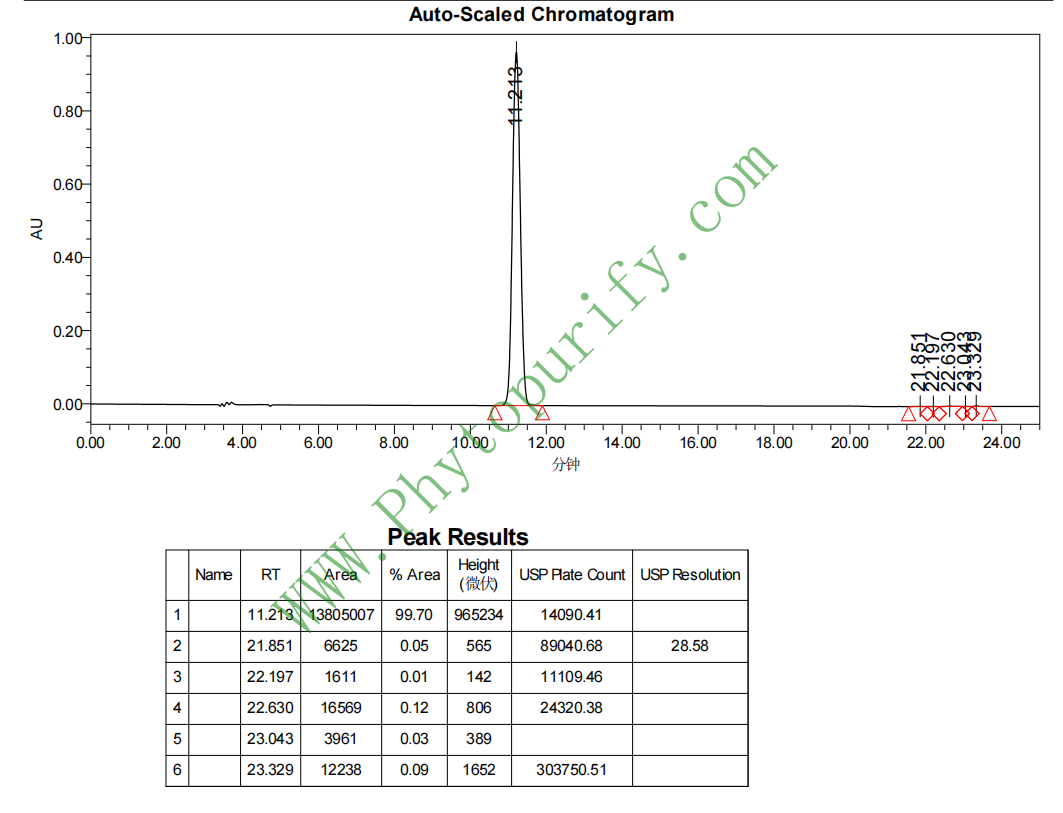
Purity: 95%~99%
Analysis Method: HPLC-DAD or/and HPLC-ELSD
Identification Method: Mass, NMR
Packing: Brown vial or HDPE plastic bottle
Storage: Store in a well closed container, protected from air and light. Put into refrigerate or freeze for long term storage.
Whenever possible, you should prepare and use solutions on the same day. However, if you need to make up stock solutions in advance, we recommend that you store the solution as aliquots in tightly sealed vials at -20℃. Generally, these will be useable for up to two weeks.
The product could be supplied from milligrams to grams, up to kilograms
Inquire for bulk scale.
Descriptions:
Gallic acid and curcumin are natural phenolic compounds, both have cytotoxic activity in relation to their radical modulating activity, induce apoptosis by different mechanisms, and gallic acid produces higher amounts of radicals and more efficiently scavenged the superoxide anion radical.[1]
Gallic acid has antioxidant activities at a higher concentration is mainly due to the scavenging of hydrogen peroxide in this system, and the pro-oxidant mechanism is most likely due to the strong reducing power and weak metalchelating ability.[2]
Gallic acid (GA) has a strong anti-tyrosinase activity (IC50=3.59x10(-6) M), effectively suppresses murine tyrosinase action and the amount of melanin, down-regulates the RS generation and enhanced the glutathione (GSH)/oxidized glutathione (GSSG) ratio, indicates that GA exerts antimelanogenic activity coupled with antioxidant properties by suppressing RS generation and maintaining a higher glutathione (GSH)/oxidized glutathione (GSSG) ratio.[3]
Gallic acid, a histone acetyltransferase inhibitor, can efficiently block neuronal cell death by downregulating the expression of cytokines and the in vivo levels of NF-κB acetylation, suggest that GA is a possible therapeutic approach for alleviating the inflammatory progression of Alzheimer disease.[4]
Gallic acid is a potent inhibitor of brush border sucrase and other disaccharidases and thus could potentially interfere with the digestive functions of the intestine.[5]
Gallic acid has anti-tumor activity, combination of gallic acid and cisplatin increased the tumor cell apoptosis compared with the treatment with cisplatin alone, suggests that the combination of gallic acid with an anti-cancer drug, including cisplatin, may be an effective protocol for lung cancer therapy.[6]
References:
[1] Nogaki A, Satoh K, Iwasaka K, et al. Anticancer Res, 1998, 18(5A):3487-91.
[2] Yen G C, Duh P D, Tsai H L. Food Chem, 2002, 79(3):307-13.
[3] Kim Y J. Biol Pharm Bull, 2007, 30(6):1052-5.
[4] Kim M J, Seong A R, Yoo J Y, et al. Mol Nut Food Res, 2011, 55(12):1798–808.
[5] Gupta N, Gupta S, Mahmood A. Nut Res, 2007, 27(4):230-5.
[6] Kawada M, Ohno Y, Ri Y, et al. Anti-cancer Drugs, 2001, 12(10):847-52.
[7] Sawant L, Prabhakar B, Pandita N. J Anal Bioanal Techniques, 2010, 1(1):1-4.
HPLC of Gallic acid
Storage conditions:Short-term storage at 2~8℃, long-term storage at -20 ~ -80℃
97.9900
.8760
-1.6873
6.1134
2.3934
1.2437
Low
69.7566
2.0953
Yes
No
No
No
Yes
No
0.0
Yes
No
Yes
Yes
Gallic acid (GA), also known as 3,4,5-trihydroxybenzoic acid, is a polyphenolic compound widely present in nature. Its CAS number is 149-91-7 and its molecular formula is C7H6O5. Since its first isolation and identification in the 19th century, gallic acid and its derivatives (such as gallic acid esters, tannic acid, etc.) have attracted much attention due to their wide range of biological activities. Traditionally, plant extracts rich in gallic acid have been used in various traditional medical systems to treat inflammation, infections, and bleeding. Modern pharmacological research has confirmed that gallic acid not only has strong antioxidant, anti-inflammatory, and antibacterial activities, but also shows great potential in fields such as anti-tumor, neuroprotective, and cardiovascular protection. Its core mechanism of action is closely related to clearing free radicals, regulating oxidative stress signaling pathways, and inhibiting key inflammatory mediators such as cyclooxygenase-2. With the deepening understanding of the molecular mechanisms of diseases, especially the core role of oxidative damage in aging, cancer, neurodegenerative diseases, and metabolic syndrome, the research value of gallic acid as a natural, multi-target active molecule is increasingly prominent. This article aims to systematically review the chemical properties, plant sources, pharmacological activities, molecular mechanisms of action, pharmacological evaluation, and clinical application prospects of gallic acid, in order to provide comprehensive scientific references for the deep development and transformation of this natural product.
Gallic acid is a simple derivative of trihydroxybenzoic acid. Its chemical structure consists of a benzene ring as the parent nucleus, with a hydroxyl group (- OH) connected to positions 3, 4, and 5 of the benzene ring, and a carboxyl group (- COOH) connected to position 1. The structure of adjacent polyphenolic hydroxyl groups is the chemical basis for their strong biological activity.
From the analysis of physical and chemical properties, the molecular weight of gallic acid is 170.12 g/mol. The calculated lipid water partition coefficient (LogP) is approximately 0.88, indicating that the molecule has a certain degree of hydrophilicity. The topological polar surface area (TPSA) is 97.99 Å ², and a higher TPSA value typically indicates stronger polarity. Experimental data confirms that it has good water solubility, approximately 6.11 mg/mL, which is beneficial for its absorption and distribution in living organisms. Gallic acid crystals are usually white or light yellow needle shaped crystals that are stable in air, but aqueous solutions are prone to oxidation and darken in color under alkaline or metal ion conditions.
Its phenolic hydroxyl structure makes it an excellent electron donor, capable of effectively neutralizing various reactive oxygen species (ROS) and reactive nitrogen species (RNS) such as peroxyl radicals (ROO ·), hydroxyl radicals (· OH), and superoxide anions (O ₂·⁻), which is a direct manifestation of its excellent antioxidant capacity. At the same time, the presence of carboxyl and phenolic hydroxyl groups also makes them prone to complex with metal ions (such as Fe ³ ⁺, Cu ² ⁺), which may participate in their antioxidant mechanisms (such as inhibiting Fenton reactions), as well as affect their extraction and analysis methods.
Gallic acid is widely distributed in the plant kingdom, existing in both free acid form and often as a hydrolysis product or structural unit of complex polyphenols such as tannins and flavonoids.
Main plant sources:
1. gallnut Traditionally, the most important commercial source is the galls formed on the leaves of plants such as Rhus chinensis after being parasitized by aphids. These galls are rich in galls, which can be hydrolyzed to produce a large amount of gallic acid.
2. tea Especially green tea and oolong tea contain gallic acid and its esters (such as epigallocatechin gallate, EGCG).
3. fruit Such as grapes (especially seeds and skins), strawberries, bananas, mangoes, walnuts, etc.
4. medicinal plants Many traditional Chinese medicine materials, such as rhubarb, cloves, dogwood, peony bark, hezi, pomegranate bark, etc., contain high levels of gallic acid.
5. Other Oak bark, lacquer tree, eucalyptus tree, etc.
Extraction and Separation Methods:
The extraction technology of gallic acid has evolved from traditional methods to modern and efficient separation techniques.
1. Solvent extraction method The most commonly used method. Water, methanol, ethanol, acetone, or their aqueous solutions are commonly used as solvents. Due to the strong polarity of gallic acid, aqueous ethanol (such as 50-70%) is an efficient and environmentally friendly choice. The extraction efficiency is affected by solvent polarity, solid-liquid ratio, temperature, and time.
2. Acid/alkali hydrolysis extraction method For bound gallic acid (such as tannins), acid (such as sulfuric acid, hydrochloric acid) or base (such as sodium hydroxide) is often first hydrolyzed to release it from the macromolecule, and then purified by organic solvent extraction.
3. Modern extraction techniques:
* Ultrasonic assisted extraction Utilizing cavitation effect to destroy plant cell walls significantly improves extraction efficiency and shortens time.
* Microwave assisted extraction By microwave heating, the water inside the cells is vaporized, and the pressure increases, leading to cell rupture and promoting the dissolution of the target substance.
* Supercritical fluid extraction CO ₂ is commonly used as a fluid, and its solubility can be changed by adjusting temperature and pressure. This method has no solvent residue, but the equipment cost is high.
4. Separation and Purification After preliminary filtration and concentration, the crude extract can be purified using column chromatography techniques such as silica gel column, macroporous adsorption resin column, and polyamide column. High performance liquid chromatography (HPLC) is a standard method for analyzing, identifying, and preparing high-purity gallic acid.
Numerous in vitro and in vivo studies have confirmed that gallic acid has diverse pharmacological activities.
1. Antioxidant activity This is the most fundamental activity of gallic acid. Its phenolic hydroxyl group can directly scavenge various free radicals, inhibit lipid peroxidation, and protect biomolecules such as DNA and proteins from oxidative damage. Its antioxidant capacity (such as DPPH, ABTS free radical scavenging ability, FRAP iron reducing ability) ranks among the top in many natural phenolic compounds.
2. Anti inflammatory activity Gallic acid can significantly inhibit inflammatory reactions. Research has shown that it can downregulate the production of pro-inflammatory cytokines (such as TNF - α, IL-1 β, IL-6) induced by lipopolysaccharides (LPS), and inhibit the expression of key inflammatory mediators cyclooxygenase-2 (COX-2) and inducible nitric oxide synthase (iNOS), thereby reducing the production of prostaglandin E2 (PGE2) and nitric oxide (NO).
3. Antibacterial and antiviral activity Gallic acid has inhibitory effects on various Gram positive bacteria (such as Staphylococcus aureus and Bacillus subtilis) and Gram negative bacteria (such as Escherichia coli and Pseudomonas aeruginosa), and its mechanism may be related to the destruction of bacterial cell membrane integrity and inhibition of enzyme activity. In addition, studies have shown that it also has a certain inhibitory effect on herpes simplex virus, influenza virus, etc.
4. Antitumor activity Gallic acid can inhibit proliferation, induce apoptosis and block cell cycle in many cancer cell lines (such as breast cancer, lung cancer, liver cancer, prostate cancer, colon cancer). The mechanism of promoting apoptosis involves mitochondrial pathways (such as reducing mitochondrial membrane potential, releasing cytochrome c), death receptor pathways, and activation of endoplasmic reticulum stress.
5. Other activities:
* neuroprotection In animal models such as Alzheimer's disease and Parkinson's disease, gallic acid can alleviate oxidative stress and neuroinflammation, inhibit β - amyloid protein aggregation and tau protein hyperphosphorylation, and improve cognitive function.
* Cardiovascular protection It has the effects of lowering blood pressure, anti atherosclerosis, protecting myocardial ischemia-reperfusion injury, and is related to antioxidant, anti-inflammatory, and improving endothelial function.
* Protecting liver and lowering blood sugar It has a protective effect on chemical liver injury and can improve insulin resistance and lower blood sugar.
The multiple pharmacological effects of gallic acid stem from its extensive regulation of cellular signaling pathways, and its core mechanism revolves around anti-oxidative stress open.
1. Activate the Nrf2/ARE antioxidant defense pathway This is the key molecular mechanism by which gallic acid exerts antioxidant and cell protective effects. Under oxidative stress, gallic acid can promote the dissociation of transcription factor NFE2L2 (NRF2) from cytoplasmic chaperone protein Keap1, leading to the translocation of NRF2 to the nucleus. In the nucleus, NRF2 binds to antioxidant response elements (ARE) and initiates gene transcription of a series of downstream phase II detoxifying enzymes and antioxidant proteins, including:
* Heme oxygenase-1 Catalyze the breakdown of hemoglobin to produce bilirubin and CO, which have antioxidant and anti-inflammatory effects.
* Superoxide Dismutase Catalytic conversion of superoxide anions into hydrogen peroxide.
* catalase Decompose hydrogen peroxide into water and oxygen.
* Glutathione peroxidase Using glutathione to reduce hydrogen peroxide and lipid peroxides.
* Glutamylcysteine ligase Promote the synthesis of glutathione.
Through this pathway, gallic acid systematically enhances the endogenous antioxidant defense ability of cells.
2. Inhibit the NF - κ B inflammatory pathway Gallic acid can inhibit the activation of I κ B kinase, prevent the phosphorylation and degradation of I κ B protein, and thus block the nuclear translocation of NF - κ B p65 subunit. This leads to downregulation of downstream COX-2, iNOS, and various pro-inflammatory cytokine gene expression, which is the main mechanism of its anti-inflammatory effect.
3. Regulating the MAPK and PI3K/Akt pathways These pathways are involved in the regulation of cell proliferation, survival, and apoptosis. Gallic acid can exert pro apoptotic (tumor cells) or anti apoptotic (normal cells) effects in different cellular environments by inhibiting ERK, JNK, p38 MAPK, or PI3K/Akt signaling.
4. Directly inhibit enzyme activity In addition to regulating gene expression, gallic acid can also directly inhibit the activity of certain enzymes, such as COX-2, matrix metalloproteinases (MMPs), telomerase, etc. These effects are directly related to its anti-inflammatory and anti-tumor activities.
5. Inducing autophagy and apoptosis In tumor cells, gallic acid can upregulate pro apoptotic proteins (Bax, Bak), downregulate anti apoptotic proteins (Bcl-2, Bcl xL), activate the caspase cascade reaction, and induce protective or lethal autophagy, collectively leading to cancer cell death.
Although gallic acid has significant biological activity, its drug likeness poses certain challenges and requires comprehensive evaluation.
Analysis of drug properties parameters:
* molecular weight 170.12, meets the requirements for small molecule drugs (<500 Da).
* fat-soluble:LogP ~0.88, Indicating that it is a hydrophilic molecule, which is beneficial for water solubility and oral absorption, but may limit its transmembrane passive diffusion.
* Polarity TPSA~98 Å ², with high polarity, may affect its ability to pass through the blood-brain barrier. It is predicted that its blood-brain barrier permeability is low, which is consistent with most research results.
* Preliminary safety warning The prediction of hERG inhibition risk is' no ', indicating a low risk of cardiac toxicity. The Ames test predicted a value of 0.0, indicating that its mutagenic risk may be low.
Pharmacokinetic study:
Pharmacokinetic studies are key to evaluating whether it can become a drug.
* absorb After oral administration, it is mainly absorbed in the gastrointestinal tract, and the absorption rate and degree are affected by factors such as dosage form and food. Its hydrophilicity may limit its completely passive diffusion, but there may be an active transport mechanism.
* distribution After absorption, it is widely distributed in various tissues throughout the body, but due to poor blood-brain barrier permeability, its concentration in brain tissue is usually low. Moderate binding rate to plasma proteins.
* Metabolism Gallic acid is rapidly and complexly metabolized in the body. The main metabolic pathways include:methylation Under the action of catechol-O-methyltransferase, 4-O-methylgallic acid is generated Sulfation and Glucuronidation These II binding reactions are the main pre elimination metabolic steps and greatly affect their biological activity and half-life.
* excretion Mainly excreted in the form of metabolites through urine, with a small amount excreted through bile and feces. The half-life of the prototype drug is relatively short.
Challenges and Strategies in Drug Development:
1. Low bioavailability The strong first pass effect and fast metabolism are its main limitations. The strategy includes:Structural modification(Preparation of prodrugs such as gallic acid esters, or synthesis of derivatives with better pharmacokinetic properties);Using a new drug delivery system(such as liposomes, nanoparticles, microemulsions, phospholipid complexes) to improve their solubility, stability, and targeting;Combined with metabolic enzyme inhibitors。
2. Insufficient targeting Developing targeted delivery systems based on nanotechnology can enhance their accumulation at tumor or inflammatory sites.
3. Stability Attention should be paid to its easily oxidizable properties in the formulation, and antioxidants or encapsulation techniques should be added.
The transition of gallic acid from laboratory research to clinical application has broad prospects, but the road ahead is tortuous.
Current application and development stage:
* Food and Health Products As a natural antioxidant and preservative, it is widely used in food, beverages, and dietary supplements.
* cosmetics Utilizing its antioxidant, anti-inflammatory, and whitening (inhibiting tyrosinase) properties for anti-aging, sun protection, and soothing skincare products.
* pharmaceutical field At present, there is no dual purity gallic acid marketed as a chemical drug, but it exists as an active ingredient in some compound Chinese medicine or herbal preparations. A large amount of research focuses on its role as lead compound Develop new therapeutic drugs, especially in the following areas:
1. Cancer adjuvant therapy Combined with conventional chemotherapy/radiotherapy to enhance efficacy and reduce side effects.
2. Neurodegenerative diseases Develop derivatives or delivery systems that can improve blood-brain barrier permeability for the prevention and treatment of Alzheimer's disease and Parkinson's disease.
3. Metabolic diseases: It is used for the management of diabetes and its complications (such as diabetes nephropathy and neuropathy).
4. Inflammatory bowel disease and skin diseases Utilize its local anti-inflammatory and antioxidant effects.
Future research directions and prospects:
1. In depth mechanism exploration Using omics techniques (proteomics, metabolomics) and gene editing tools, systematically elucidate the precise network of action and cell specific effects of gallic acid in multi disease models.
2. Structural optimization and drug design Based on the parent nucleus of gallic acid, rational drug design is carried out to synthesize a series of derivatives aimed at improving their activity, selectivity, metabolic stability, and bioavailability. For example, by esterification, etherification, or introducing other pharmacophores for modification.
3. Advanced delivery system development This is the key to promoting its clinical application. Research focuses include: stimulus responsive nanocarriers (released in tumor microenvironment or inflammatory sites), nanosystems that penetrate the blood-brain barrier, and gel or patches for local administration.
4. Clinical translational research Conduct rigorously designed preclinical toxicology studies and standardized clinical trials (phases I-IV) to evaluate their safety, efficacy, and optimal dosing regimens in different indications.
5. Collaborative effect research Conduct in-depth research on the synergistic effects of gallic acid with other natural products or synthetic drugs, and develop compound formulations with enhanced efficacy and reduced toxicity.
Gallic acid, as a natural polyphenolic compound with a simple structure but powerful functions, has been studied across multiple fields including chemistry, pharmacology, and medicine. From its powerful free radical scavenging ability to its precise regulation of key signaling pathways such as Nrf2 and NF - κ B, from basic antioxidant and anti-inflammatory properties to cutting-edge anti-tumor and neuroprotective effects, gallic acid exhibits multi-target and multi pathway effects, meeting the needs of modern disease complex pathological network interventions. Although it faces challenges such as low bioavailability and rapid metabolism in terms of medicinal properties, this also provides a clear direction for research in medicinal chemistry and pharmacy. Through strategies such as structural modification and novel delivery systems, it is expected to overcome these bottlenecks. In the future, with a deeper understanding of the mechanism of action of gallic acid and the continuous advancement of translational medicine research, this ancient natural molecule is highly likely to rejuvenate and develop from a widely existing plant component into a new type of drug or functional preparation for the prevention and treatment of oxidative stress-related diseases (such as cancer, neurodegenerative diseases, metabolic syndrome), contributing important value to human health. The research process also fully reflects the eternal charm and enormous potential of searching for drug lead compounds from natural products.
