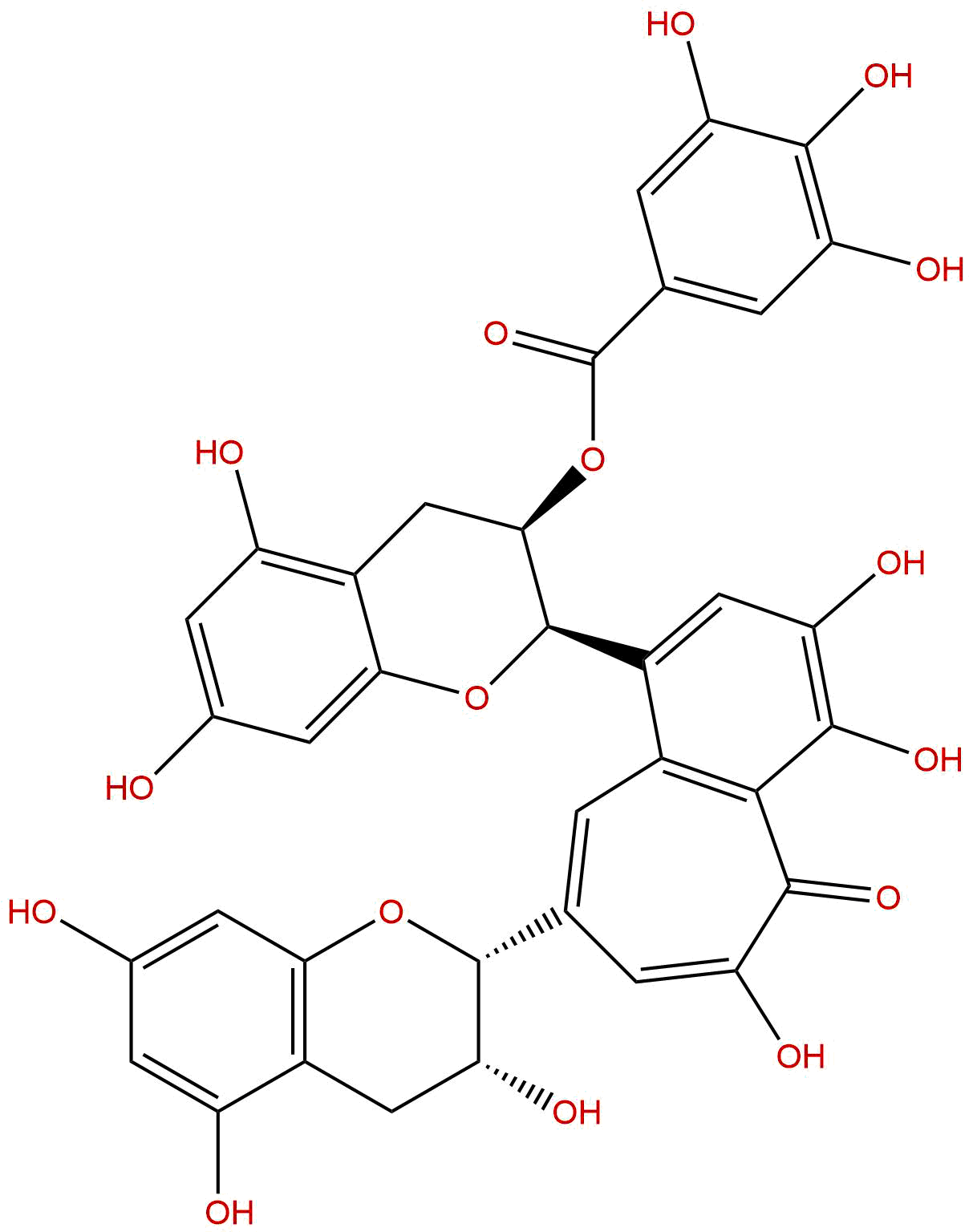


Product name: Theaflavin-3'-gallate
Synonym name: 3′-O-(3,4,5-Trihydroxybenzoyl)
Catalogue No.: BP1386
Cas No.: 28543-07-9
Formula: C36H28O16
Mol Weight: 716.604
Botanical Source: Black Tea
Physical Description:
Type of Compound: Polyphenols
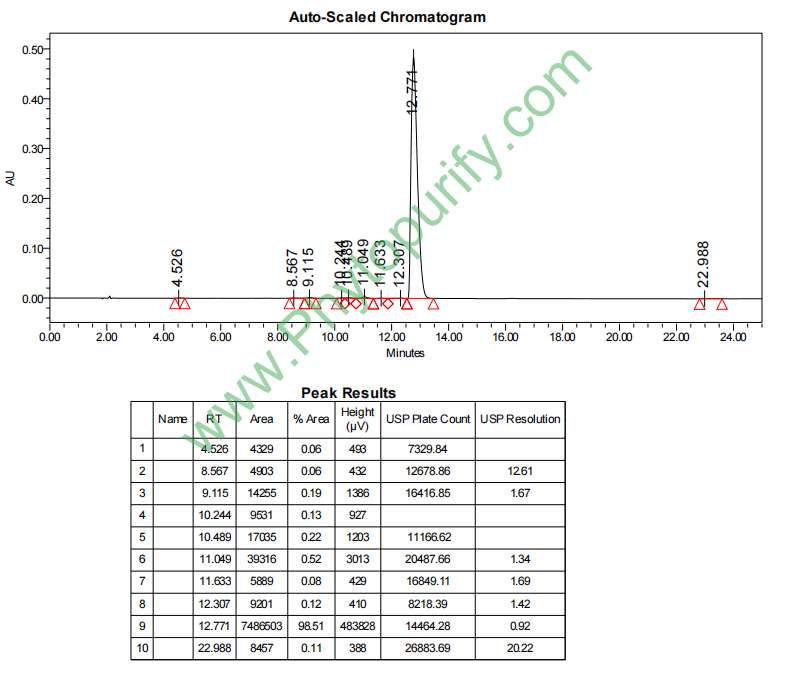
Purity: 95%~99%
Analysis Method: HPLC-DAD or/and HPLC-ELSD
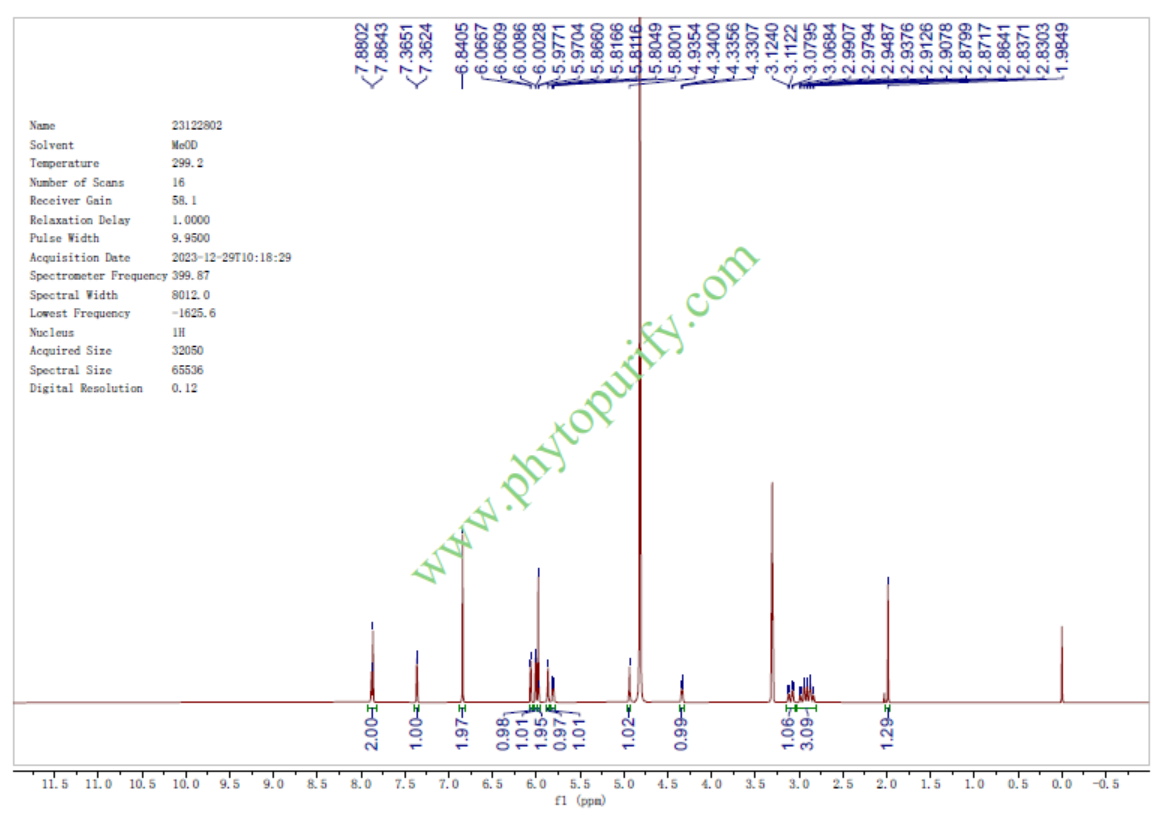
Identification Method: Mass, NMR
Packing: Brown vial or HDPE plastic bottle
Storage: Store in a well closed container, protected from air and light. Put into refrigerate or freeze for long term storage.
Whenever possible, you should prepare and use solutions on the same day. However, if you need to make up stock solutions in advance, we recommend that you store the solution as aliquots in tightly sealed vials at -20℃. Generally, these will be useable for up to two weeks.
The product could be supplied from milligrams to grams
Inquire for bulk scale.
Description:
Theaflavin-3'-gallate, acts as prooxidants and induces oxidative stress, with carcinoma cells more sensitive than normal fibroblasts.
References:
Basic Clin Pharmacol Toxicol. 2008 Jul;103(1):66-74.
Theaflavin-3-gallate and theaflavin-3'-gallate, polyphenols in black tea with prooxidant properties.
This study compared the in vitro responses of human gingival fibroblasts and of carcinoma cells derived from the tongue to theaflavin-3-gallate (TF-2A) and Theaflavin-3'-gallate (TF-2B), polyphenols in black tea.
METHODS AND RESULTS:
In a cell-free assay, TF-2A and Theaflavin-3'-gallate reacted directly with reduced glutathione (GSH), in a time- and concentration-dependent manner. Intracellular storages of GSH were depleted on treatment of the cells with the theaflavin monomers. Depletion of intracellular GSH was more extensive with TF-2A than with Theaflavin-3'-gallate and was more pronounced in the carcinoma, than in the normal, cells. The toxicities of the theaflavins were potentiated when the cells were cotreated with the GSH depleter, d,l-buthionine-[S,R]-sulfoximine. In the presence of catalase, pyruvate and divalent cobalt, all scavengers of reactive oxygen species, the cytotoxicities of the theaflavins were lessened. TF-2A and Theaflavin-3'-gallate induced lipid peroxidation in the carcinoma cells, whereas in the fibroblasts, peroxidation was evident upon exposure to TF-2A, but not to Theaflavin-3'-gallate.
CONCLUSIONS:
These studies demonstrated that the black tea theaflavin monomers, TF-2A and Theaflavin-3'-gallate, act as prooxidants and induce oxidative stress, with carcinoma cells more sensitive than normal fibroblasts.
HPLC of Theaflavin-3'-gallate
HNMR of Theaflavin-3'-gallate
Storage conditions:Short-term storage at 2~8℃, long-term storage at -20 ~ -80℃
Theaflavin-3 '- gallate (TF3'g) is an important natural polyphenolic compound belonging to the Theaflavins family, widely present in fermented tea leaves, especially black tea. As one of the main bioactive components in tea, TF3'g has received widespread attention in the field of natural product pharmacology in recent years due to its unique chemical structure and diverse biological activities. Its potential role in the prevention and treatment of various diseases such as antioxidant, anti-inflammatory, anti-tumor, and cardiovascular protection provides a rich research foundation for the development of natural medicines.
This article will provide a systematic review of the chemical structure and physicochemical properties, plant sources and extraction methods, pharmacological activity, mechanism of action and molecular targets, pharmacological evaluation and pharmacokinetic characteristics of TF3'g. Combined with the current clinical application prospects and future research directions, it aims to provide comprehensive and in-depth reference materials for natural product pharmacology researchers and scientists in related fields.
The molecular formula of TF3'g is C37H30O16, with a molecular weight of 716.6040 and a CAS number of 28543-07-9. Its structure belongs to the class of theaflavins, which are complex polyphenols formed by ester bonds between catechin and gallic acid. The core structure of TF3'g contains a dimer framework of flavonoids, with the 3 'hydroxyl group esterified by gallic acid, endowing it with unique chemical properties and biological activity.
In terms of physical and chemical properties, the LogP value of TF3'g is 2.1042, indicating that it has moderate lipophilicity and is conducive to membrane permeation; The TPSA (topological polar surface area) is 284.3600, and a higher polar surface area suggests better solubility in polar environments, but lower water solubility (0.0402), which may limit its oral bioavailability. The low penetration ability of the blood-brain barrier suggests that its role in the central nervous system is limited. The hERG inhibition experiment result was negative, indicating that TF3'g has a low risk of toxicity to cardiac potassium channels. The Ames test result is 0.6, indicating a low risk of genotoxicity.
TF3'g mainly exists in fermented tea leaves, especially in black tea (Camellia sinensis), which is formed by the oxidation and polymerization of catechins during the fermentation process. The fermentation process of tea uses polyphenol oxidase (PPO) and peroxidase (POD) to catalyze the oxidation of catechins, generating various theaflavins derivatives including TF3'g.
The methods for extracting TF3'g mainly include solvent extraction, liquid chromatography separation, and purification techniques. Common solvents include ethanol, water, methanol, etc. Combined with ultrasound assisted extraction or heating reflux, the extraction efficiency can be improved. Subsequently, the compound is separated and purified by high-performance liquid chromatography (HPLC) or preparative HPLC to ensure its purity and activity. In recent years, supercritical fluid extraction (SFE) and membrane separation technologies have also been applied to the extraction of theaflavins, enhancing the feasibility of industrial production.
TF3'g, as a polyphenolic natural product, has significant antioxidant capacity. It can effectively eliminate free radicals such as hydroxyl radicals (· OH), superoxide anions (O2 · -), and hydrogen peroxide (H2O2), reducing oxidative stress damage to cells. Both in vitro DPPH radical scavenging experiments and cell models have confirmed its excellent antioxidant properties.
Multiple studies have shown that TF3'g can significantly inhibit the expression of inflammatory factors, including tumor necrosis factor alpha (TNF - α), interleukin-6 (IL-6), and nitric oxide synthase (iNOS). It demonstrates potential anti-inflammatory therapeutic value by regulating the NF - κ B signaling pathway, inhibiting inflammatory responses, and reducing tissue damage.
TF3'g exhibits the ability to inhibit cell proliferation, induce apoptosis, and block the cell cycle in various tumor cell lines. Its mechanism of action involves regulating multiple signaling pathways, such as PI3K/Akt, MAPK, and p53 pathways, promoting programmed cell death of cancer cells, and inhibiting tumor invasion and metastasis.
TF3'G can improve vascular endothelial function, reduce low-density lipoprotein oxidation (ox LDL) and prevent atherosclerosis through antioxidant and anti-inflammatory effects. In addition, its inhibitory effect on platelet aggregation also helps prevent thrombosis, demonstrating good cardiovascular protection potential.
TF3'g also exhibits multiple biological activities such as antibacterial, antiviral, neuroprotective, and regulation of glucose and lipid metabolism, providing theoretical basis for its application in the prevention and treatment of various diseases.
The pharmacological effects of TF3'g are mainly achieved through multiple targets and pathways. Its key molecular targets include:
In addition, TF3'g also affects cell metabolism and proliferation by regulating mitochondrial function, calcium homeostasis, and cyclin expression, demonstrating its multidimensional pharmacological regulatory ability.
The pharmacological parameters of TF3'g indicate its potential for development. Although the molecular weight of 716.6 is relatively large, LogP 2.1 is moderate and conducive to cell membrane penetration. The higher TPSA and lower water solubility suggest that oral absorption may be limited, and pharmacological measures are needed to improve bioavailability. The low penetration ability of the blood-brain barrier limits its application in central nervous system diseases, but reduces the risk of central neurotoxicity.
The negative inhibition of hERG channel indicates good cardiac safety, and the Ames test results show a low risk of genotoxicity, meeting safety requirements. Pharmacokinetic studies have shown that TF3'g is metabolically stable in vivo, mainly metabolized through the liver enzyme system, and the metabolites are mostly water-soluble complexes that facilitate excretion. Its half-life is moderate and has a certain duration in the body.
In response to the pharmacokinetic bottleneck of TF3'g, strategies such as nanocarriers, liposome encapsulation, and structural modification have been proposed to improve its bioavailability and targeting.
Based on its rich pharmacological activity and good safety, TF3'g has demonstrated broad clinical application potential in the prevention and treatment of various diseases. Its antioxidant and anti-inflammatory effects provide new treatment ideas for chronic inflammatory diseases (such as atherosclerosis, diabetes, chronic arthritis). The anti-tumor activity makes it a powerful candidate molecule for adjuvant therapy of tumors, especially in combination chemotherapy and radiotherapy, which may exert synergistic effects.
Although there are currently no large-scale clinical trials reported, the natural source and low toxicity of TF3'g have laid the foundation for its clinical translation. Future research needs to focus on pharmacokinetic optimization, formulation development, and in-depth mechanism analysis to promote its transition from laboratory research to clinical application.
In addition, combining modern drug design technologies such as computer-aided drug design (CADD), high-throughput screening, and multi omics analysis will help discover new targets and indications for TF3'g, expanding its application areas.
As an important natural polyphenolic compound in tea, theaflavin-3 '- gallate has shown broad research and application prospects in the fields of antioxidant, anti-inflammatory, anti-tumor, and cardiovascular protection due to its unique chemical structure and diverse biological activities. Its good safety and pharmacological parameters provide a solid foundation for drug development.
In the future, combining modern drug research and development technology, in-depth exploration of its mechanism of action, optimization of pharmacokinetic properties, and systematic clinical research will help promote TF3'g as an important member of new natural medicines and contribute more value to human health.
