


Product name: Gallocatechin gallate
Synonym name: (-)-Gallocatechin gallate; GCG
Catalogue No.: BP0611
Cas No.: 4233-96-9
Formula: C22H18O11
Mol Weight: 458.375
Botanical Source: Green Tea
Physical Description:
Type of Compound: Polyphenols
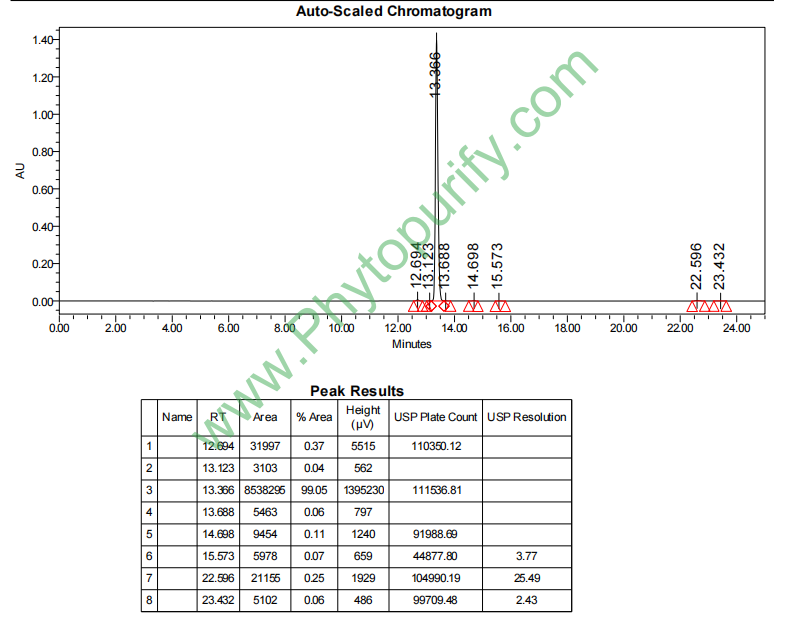
Purity: 95%~99%
Analysis Method: HPLC-DAD or/and HPLC-ELSD
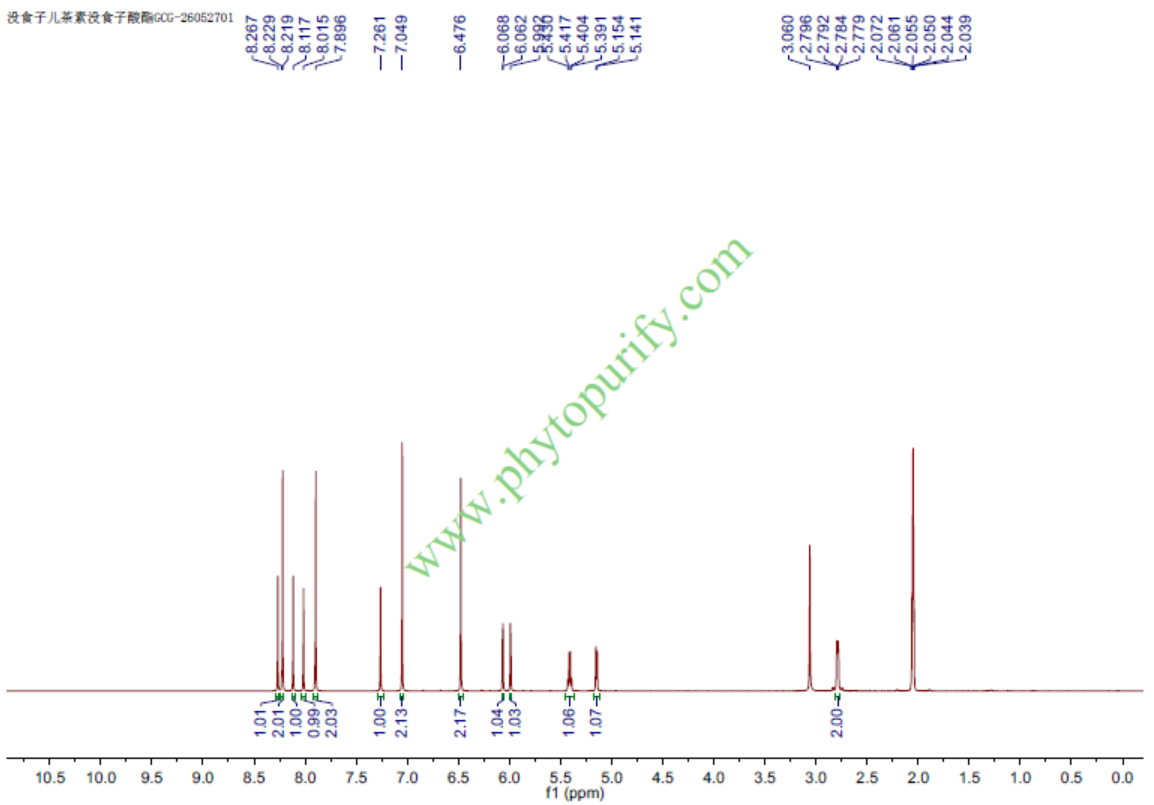
Identification Method: Mass, NMR
Packing: Brown vial or HDPE plastic bottle
Storage: Store in a well closed container, protected from air and light. Put into refrigerate or freeze for long term storage.
Whenever possible, you should prepare and use solutions on the same day. However, if you need to make up stock solutions in advance, we recommend that you store the solution as aliquots in tightly sealed vials at -20℃. Generally, these will be useable for up to two weeks.
The product could be supplied from milligrams to grams
Inquire for bulk scale.
Description:
(-)-Gallocatechin gallate has cancer-preventive activities, it can precipitate cholesterol, decreasee osteoclastogenesis at 20 microM.
References:
J Agric Food Chem. 2009 Aug 26;57(16):7293-7.
Effects of tea catechins, epigallocatechin, gallocatechin, and gallocatechin gallate, on bone metabolism.
METHODS AND RESULTS:
In this study, three tea catechins, epigallocatechin (EGC), gallocatechin (GC), and (-)-Gallocatechin gallate (GCG), were investigated for their effects on bone metabolism. The effects of the tea catechins on bone formation were evaluated using cultured rat osteoblast-like osteosarcoma cell line UMR-106. EGC stimulated alkaline phosphatase activity significantly at concentrations of 10 and 20 microM. The amount of mineralization also increased significantly with EGC. On another cell culture platform, EGC significantly inhibited osteoclast formations from RAW 264.7 cells upon receptor activation of nuclear factor-kappaB ligand induction on the fourth day of treatment, at a concentration of 10 microM. EGC also dose-dependently inhibited the mRNA expression of tatrate-resistant acid phosphatase. GC and GCG could decrease osteoclastogenesis at 20 microM.
CONCLUSIONS:
The present study illustrated that the tea catechins, EGC in particular, had positive effects on bone metabolism through a double process of promoting osteoblastic activity and inhibiting osteoclast differentiations.
J Agric Food Chem. 2003 Dec 3;51(25):7303-7.
Heat-epimerized tea catechins rich in gallocatechin gallate and catechin gallate are more effective to inhibit cholesterol absorption than tea catechins rich in epigallocatechin gallate and epicatechin gallate.
It has been known that tea catechins, (-)-epicatechin (1), (-)-epigallocatechin (2), (-)-epicatechin gallate (3), and (-)-epigallocatechin gallate (4) are epimerized to(-)-catechin (5), (-)-gallocatechin (6), (-)-catechin gallate (7), and (-)-Gallocatechin gallate (8), respectively, during retort pasteurization. We previously reported that tea catechins, mainly composed of 3 and 4, effectively inhibit cholesterol absorption in rats.
METHODS AND RESULTS:
In this study, the effect of heat-epimerized catechins on cholesterol absorption was compared with tea catechins. Both tea catechins and heat-epimerized catechins lowered lymphatic recovery of cholesterol in rats cannulated in the thoracic duct and epimerized catechins were more effective than tea catechins. The effect of purified catechins on micellar solubility of cholesterol was examined in an in vitro study. The addition of gallate esters of catechins reduced micellar solubility of cholesterol by precipitating cholesterol from bile salt micelles. Compounds 7 and 8 were more effective to precipitate cholesterol than 3 and 4, respectively.
CONCLUSIONS:
These observations strongly suggest that heat-epimerized catechins may be more hypocholesterolemic than tea catechins.
HPLC of Gallocatechin gallate
HNMR of Gallocatechin gallate
Storage conditions:Short-term storage at 2~8℃, long-term storage at -20 ~ -80℃
197.3700
1.9840
1.1640
.3279
1.7731
.0816
Low
87.9322
3.7398
No
Yes
No
No
Yes
No
0.6
Yes
No
Yes
No
Natural products have always been an important source of innovative drug discovery, among which flavonoids have attracted much attention due to their wide range of biological activities. As an important catechin polyphenol compound, gallocatechin gallate (GCG) is one of the naturally occurring active ingredients in green tea. Its CAS number is 4233-96-9, and its chemical structure belongs to the gallate ester of (-) - gallocatechin gallate. GCG not only exists as a plant metabolite, but has also been proven to have various pharmacological activities, including potential anti-tumor effects, inhibitory activity against the main protease of SARS coronavirus (EC 3.4.22.69), and participation in body regulation as a human exogenous metabolite. In recent years, with the deepening understanding of the core role of oxidative stress in various chronic diseases such as cancer, neurodegenerative diseases, and cardiovascular diseases, the powerful antioxidant capacity of GCG and its underlying molecular mechanisms have become a research hotspot. This article aims to systematically review the chemical properties, plant sources, pharmacological activities of GCG, especially its molecular mechanism of exerting antioxidant effects by regulating key targets such as NRF2, and evaluate and prospect its pharmacological properties and clinical application prospects.
The molecular formula of gallocatechin gallate (GCG) is C22H18O11, with a molecular weight of 458.3750. The core of its structure is the flavan-3-ol skeleton, specifically, it is formed by ester bonding between the (3R) - hydroxyl group on the C ring of (-) - gallocatechin and the carboxyl group of gallic acid. This structure gives it the chemical characteristics of both catechin nucleus and galloyl group, belonging to the subclass of catechin gallate esters in polyphenolic compounds.
Its chemical structure determines its unique physicochemical properties. GCG molecules contain multiple phenolic hydroxyl groups, which give them strong polarity and hydrogen bond donor/acceptor ability. Their topologically polar surface area (TPSA) is as high as 197.3700 Å ². Their lipid water partition coefficient (LogP) is approximately 1.9840, indicating a certain degree of lipophilicity, but overall they still tend to be hydrophilic. The water solubility measured in the experiment is about 0.3279 mg/mL, which belongs to the category of slight solubility. These properties directly affect their bioavailability and in vivo distribution. It is worth noting that there are multiple chiral centers in GCG molecules, and their natural forms usually have specific stereoconfigurations, which are closely related to their biological activity. In addition, the catechol structure and galloyl group in GCG molecules make them highly susceptible to oxidation, which is also the chemical basis for their strong antioxidant and free radical scavenging abilities.
GCG is relatively concentrated in nature, with the main plant source being Camellia sinensis, particularly tea trees. In green tea, GCG is one of the catechins with a content second only to epigallocatechin gallate (EGCG). In addition, literature reports indicate that it can also be isolated from medicinal plants such as Celastrus orbiculatus in the family Celastraceae. Under the influence of different tea tree varieties, planting conditions, harvesting seasons, and tea processing techniques (especially fermentation degree), there will be significant differences in the content of GCG in tea. Usually, non fermented green tea retains higher levels of ester catechins such as GCG.
The extraction of GCG from plant materials usually follows the general extraction strategy for polyphenolic compounds. The solvent extraction method is the most commonly used method, among which water, methanol, ethanol, acetone, and their different ratios of aqueous solutions are common extraction solvents. In order to improve extraction efficiency and selectivity, modern extraction techniques such as ultrasound assisted extraction, microwave-assisted extraction, and pressurized liquid extraction have been widely used. These technologies accelerate solvent penetration and compound dissolution through physical effects such as cavitation, heating, and pressure, shorten extraction time, and reduce solvent consumption.
The crude extract after extraction needs to undergo a series of separation and purification steps to obtain high-purity GCG. The conventional process includes: using organic solvents such as ethyl acetate for liquid-liquid extraction and enrichment of polyphenols; Subsequently, column chromatography techniques such as silica gel column chromatography, polyamide column chromatography or Sephadex LH-20 column chromatography were used for preliminary separation. Sephadex LH-20 column chromatography is highly recommended due to its excellent separation efficiency for polyphenolic compounds. The final high-purity preparation usually relies on high-performance liquid chromatography (HPLC), especially preparative or semi preparative HPLC. A gradient elution system using a reverse phase C18 chromatography column combined with water methanol or water acetonitrile (often containing small amounts of formic acid or acetic acid to improve peak shape) is an effective method for separating GCG and its isomers (such as EGCG). The optimization of extraction and separation processes requires comprehensive consideration of the purity, yield, environmental friendliness, and cost of the target product.
Numerous in vitro and in vivo studies have confirmed that GCG has diverse and significant pharmacological activities.
1. Antioxidant damage activity: This is the most fundamental and core biological activity of GCG. The abundant phenolic hydroxyl groups in its molecules can effectively scavenge various reactive oxygen species (ROS) and reactive nitrogen species (RNS), such as superoxide anions, hydroxyl radicals, peroxynitrite anions, etc. In cell models, GCG can significantly alleviate oxidative stress damage induced by hydrogen peroxide (H2O2), ultraviolet radiation, chemical toxins, etc., improve cell survival rate, reduce levels of lipid peroxidation products (such as MDA), and protect proteins and DNA from oxidative damage. In animal models, GCG has shown good protective effects against oxidative stress-related liver injury, kidney injury, nerve injury, etc.
2. Antitumor activity: GCG can inhibit the growth and promote apoptosis of many tumor cell lines, including breast cancer, prostate cancer, liver cancer, colon cancer, lung cancer, etc. Its anti-tumor mechanism is multifaceted, including inducing cell cycle arrest (often in G1 or G2/M phase), activating mitochondrial and death receptor pathways to induce apoptosis, inhibiting the expression of tumor cell invasion and metastasis related proteins (such as MMPs), inhibiting tumor angiogenesis (anti VEGF signaling), and indirectly affecting the tumor microenvironment through the aforementioned antioxidant effects.
3. Antiviral activity: Research has shown that GCG can inhibit the activity of the main protease of SARS coronavirus (3CLpro, EC 3.4.22.69), which is crucial for virus replication, suggesting that GCG or its structural derivatives may have the potential to resist coronavirus infection. In addition, it also has a certain inhibitory effect on other viruses such as influenza virus and HIV.
4. Other activities: GCG also exhibits potential activities such as anti-inflammatory, cardiovascular protection (improving endothelial function, lowering blood lipids), neuroprotection (in Alzheimer's and Parkinson's disease models), anti obesity, and improving insulin resistance. These activities are often intertwined with their powerful antioxidant and anti-inflammatory properties.
The pharmacological effects of GCG, especially its core role in combating oxidative damage, are achieved by regulating complex cellular signaling networks and acting on multiple molecular targets. Its mechanism of action is not a single pathway, but rather multi-target and multi-level.
1. The core regulatory role of NRF2/ARE signaling pathway:
This is the most critical molecular mechanism by which GCG exerts its antioxidant stress response. Nuclear factor E2 related factor 2 (NRF2, encoded by NFE2L2 gene) is a central regulatory factor of cellular antioxidant response. In the resting state, NRF2 binds to its inhibitory protein Keap1 in the cytoplasm and is degraded by ubiquitination. When stimulated by oxidative stress or electrophilic compounds such as GCG, the conformation of Keap1 changes, leading to the dissociation, stabilization, and transfer of NRF2 to the nucleus. In the nucleus, NRF2 binds to antioxidant response elements (ARE), initiating the transcription of a series of phase II detoxifying enzymes and antioxidant proteins.
GCG can directly or indirectly interfere with the Keap1-NRF2 interaction, promoting nuclear translocation and activation of NRF2. Research has shown that the galloyl portion of GCG may act as an electrophilic molecule, undergoing Michael addition reactions with key cysteine residues in Keap1 protein to stabilize NRF2. Activated NRF2 subsequently upregulates the expression of a series of key antioxidant and cell protective genes, including:
- Superoxide dismutase (SOD1, SOD2): Catalytic dismutation of superoxide anions into H2O2 and O2.
- Catalase (CAT): Decompose H2O2 into water and oxygen.
- Glutathione peroxidase 1 (GPX1): Reduce H2O2 and organic peroxides using glutathione.
- Heme oxygenase-1 (HMOX1): Catalyze the degradation of hemoglobin to produce biliverdin and carbon monoxide, which have antioxidant and anti-inflammatory effects.
Through this core pathway, GCG systematically enhances the endogenous antioxidant defense ability of cells.
2. Directly eliminate free radicals and chelate with metal ions:
In addition to activating endogenous pathways, GCG itself, as a polyphenol molecule, can directly neutralize free radicals and terminate free radical chain reactions by providing hydrogen atoms or electrons. In addition, its catechol structure can effectively chelate transition metal ions (such as Fe2+, Cu2+), preventing these ions from catalyzing the production of highly toxic hydroxyl radicals through the Fenton reaction.
3. Effects on other signaling pathways:
The activity of GCG is not limited to antioxidant. It also plays a broad role by regulating other signaling pathways:
- Anti inflammatory effect: Inhibit the activation of nuclear factor kappa B (NF - κ B) and activator protein-1 (AP-1), thereby downregulating the expression of inflammatory factors such as TNF - α, IL-6, COX-2, iNOS.
- Promoting apoptosis and anti proliferative effects: Regulating signaling pathways such as PI3K/Akt, MAPK (ERK, JNK, p38), p53, etc., affects the survival, proliferation, and apoptosis of tumor cells.
- Metabolic regulation: Activate the AMPK pathway, affecting energy metabolism and fatty acid oxidation.
In summary, GCG has formed a networked mechanism through direct chemical reactions and indirect signal regulation, with the activation of the NRF2 pathway as the core, synergistically regulating multiple pathways such as inflammation, apoptosis, and metabolism. This provides a molecular basis for its pleiotropic pharmacological activity.
Although GCG exhibits excellent biological activity in vitro, its drug development faces a series of challenges, mainly due to its physicochemical properties and in vivo metabolic characteristics.
1. Physical and chemical properties, absorption, and distribution:
The moderate polarity of GCG (LogP~1.98) gives it a certain membrane permeability, but its high molecular weight and TPSA, as well as its potential as a substrate for P-glycoprotein, limit its passive diffusion efficiency. After oral administration, GCG is incompletely and unstably absorbed in the gastrointestinal tract, and is prone to undergo differential isomerization (transformation into phenotypic isomers) and oxidation in alkaline intestinal fluid. Its blood-brain barrier permeability is predicted to be 'low', which may limit its therapeutic effect on central nervous system diseases.
2. Metabolism and elimination:
GCG undergoes extensive metabolism in the body. The first pass effect is significant, and the main metabolic sites include the gut, liver, and colon microbiota. Metabolic pathways include:Phase I metabolism(such as methylation and hydroxylation catalyzed by catechol-O-methyltransferase COMT)II combined metabolism(Combined with glucuronic acid and sulfuric acid) and Microbial metabolism(Decomposed into smaller phenolic acids in the colon, such as gallic acid and valerolactone derivatives). Most of these metabolites have increased polarity and are quickly excreted from the body through urine or bile. Therefore, the concentration of the prototype drug of GCG in plasma is usually low and its half-life is short (about a few hours), which limits its bioavailability.
3. Preliminary safety evaluation:
According to the provided pharmacological parameters, GCG has no significant inhibitory effect on hERG potassium channels (hERG inhibition: No), indicating a low risk of causing QT interval prolongation in the heart. The Ames test result is 0.6 (usually considered negative if it is less than 2), indicating that it has no significant genetic toxicity. However, high-dose catechins (especially EGCG) have been reported to be associated with liver toxicity, and the safety of GCG, especially the toxicological characteristics of long-term, high-dose administration, still needs to be evaluated through systematic preclinical and clinical studies.
4. Formulation strategy:
In order to improve the bioavailability and stability of GCG, researchers are exploring various advanced drug delivery strategies, including:
- Liposome/nanoparticle encapsulation: Improve its solubility and stability in aqueous media, protect it from degradation, and potentially achieve passive targeting.
- Phospholipid complex: Improve its lipid solubility and membrane permeability.
- Predrug modification: Improve its stability and absorption through chemical modifications such as esterification and glycosylation.
- Co administration strategy: Used in combination with substances such as vitamin C and piperine to inhibit their metabolism or oxidation.
GCG, as a multi-target and multifunctional natural active molecule, has shown broad application prospects in the prevention and treatment of various chronic diseases closely related to oxidative stress.
1. Disease prevention and nutritional supplements:
As one of the main components of green tea extract, GCG has been widely used in dietary supplements and functional foods for daily antioxidant, immune enhancement, and metabolic health assistance. It has potential value in cancer chemoprevention (especially for high-risk populations), primary prevention of cardiovascular disease, and early intervention for neurodegenerative diseases.
2. Development of therapeutic drugs:
- Tumor adjuvant therapy: GCG can be used in combination with conventional chemotherapy and radiotherapy, and may have the effects of sensitization and attenuation (reducing oxidative damage side effects). One direction is to develop more targeted GCG derivatives or nanomaterials for specific tumor types, such as those dependent on the NRF2 pathway.
- Metabolic disorders: Based on its AMPK activation and anti-inflammatory effects, GCG has research value in the prevention and treatment of nonalcoholic fatty liver disease, type 2 diabetes and its complications.
- Viral diseases: Regarding its inhibitory activity against SARS-CoV-2 3CLpro, structural optimization can be carried out to develop novel anti coronavirus lead compounds.
- Skin diseases and photoprotection: Its antioxidant and anti-inflammatory properties can be used to develop topical formulations for treating dermatitis, psoriasis, or preventing UV skin damage.
3. Challenges and Future Directions:
Future research needs to focus on addressing the following key issues:
- Bottleneck of bioavailability: The continuous development of efficient and safe delivery systems is the core driving force for their conversion into drugs.
- Deep analysis of mechanism: More precise elucidation of the role nodes of GCG in complex biological networks is needed, especially the balance and regulatory conditions between its different activities (such as promoting survival and apoptosis), to avoid potential double-edged sword effects (such as the pro survival effect of NRF2 in specific tumors).
- Accumulation of clinical evidence: At present, most of the evidence comes from preclinical studies, and there is an urgent need to design rigorous human clinical trials to confirm their effectiveness, optimal dosage, and long-term safety in different disease contexts.
- Structural optimization and synthesis: The rational approach to obtaining better candidate drugs is to modify the structure of GCG through medicinal chemical methods, while preserving its core pharmacophore and improving its pharmacokinetic properties and targeting.
Epigallocatechin gallate (GCG) is a polyphenolic compound endowed by nature with rich biological activity. Its strong antioxidant capacity is mainly achieved by activating the NRF2/ARE cell defense switch, synergistically upregulating the expression of a series of endogenous antioxidant enzymes such as SOD, CAT, GPX, HMOX1, etc. This core mechanism forms the common basis for its multiple pharmacological activities such as anti-tumor, anti-inflammatory, neuroprotective, and cardiovascular protection. Despite facing challenges such as low bioavailability and rapid metabolism in terms of drug efficacy, these obstacles are gradually being overcome with the advancement of drug delivery technology and the deepening understanding of its mechanism of action. From being a functional food ingredient to a lead compound for therapeutic drugs, the research value of GCG is increasingly prominent. In the future, through interdisciplinary collaboration, the discoveries of basic research will be transformed into clinical applications. GCG and its derivatives are expected to play a more important role in the process of combating oxidative stress-related diseases in humans, demonstrating the lasting vitality of natural products in modern pharmacy.
