| Catalog No | Package | Original Price | Price | Inventory | Quantity | Operating |
|---|---|---|---|---|---|---|
| BP5266-5mg | 5mg | $190.00 | Sign in |
|


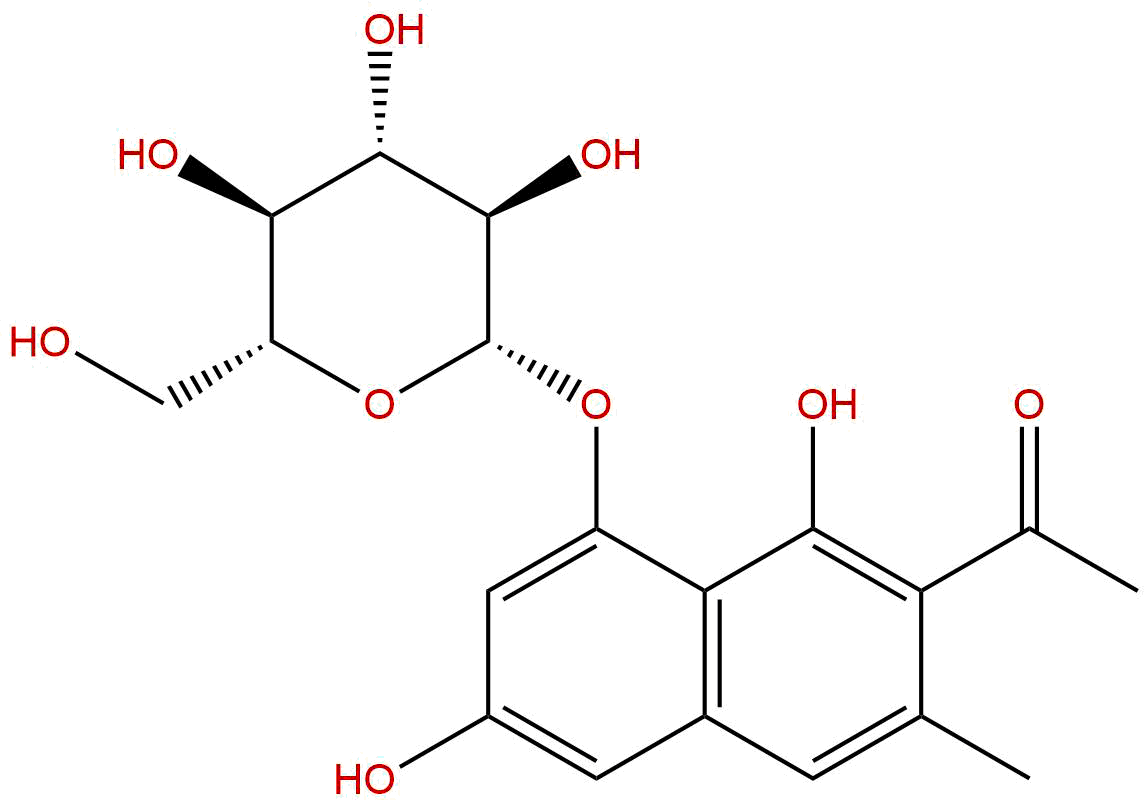
Product name: 6-Hydroxymusizin 8-glucoside
Synonym name: Tinnevellin glucoside;1-[8-(β-D-Glucopyranosyloxy)-1,6-dihydroxy-3-methyl-2-naphthalenyl]ethanone
Catalogue No.: BP5266
Cas No.: 23566-96-3
Formula: C19H22O9
Mol Weight: 394.376
Botanical Source:
Type of Compound: Polyphenols
Purity: 95%~99%
Analysis Method: HPLC-DAD or/and HPLC-ELSD
Identification Method: Mass, NMR
Packing: Brown vial or HDPE plastic bottle
Storage: Store in a well closed container, protected from air and light. Put into refrigerate or freeze for long term storage.
Whenever possible, you should prepare and use solutions on the same day. However, if you need to make up stock solutions in advance, we recommend that you store the solution as aliquots in tightly sealed vials at -20℃. Generally, these will be useable for up to two weeks.
The product could be supplied from milligrams to grams
Inquire for bulk scale.
For Reference Standard and R&D, Not for Human Use Directly.
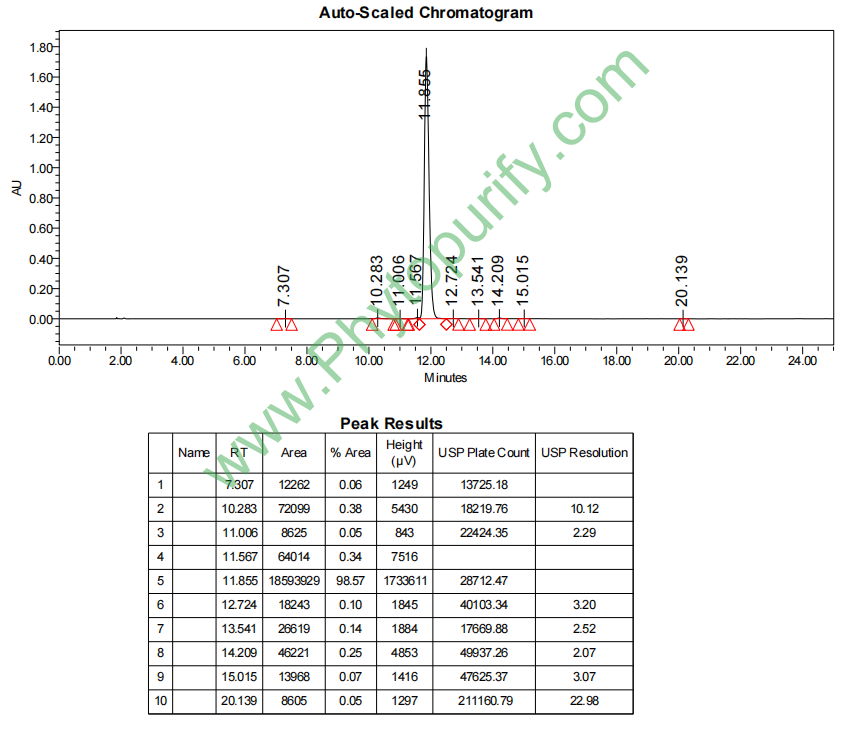
HPLC of 6-Hydroxymusizin 8-glucoside
Storage conditions:Short-term storage at 2~8℃, long-term storage at -20 ~ -80℃
156.9100
.5421
.4614
5.2871
.8266
.1969
Low
66.7059
3.9544
No
No
Yes
No
Yes
Yes
0.6
Yes
No
Yes
No
Liver fibrosis is a common pathological process in which various chronic liver diseases progress to cirrhosis or even liver cancer. Its essence is the abnormal repair response of the liver to repeated damage, manifested as activation of hepatic stellate cells (HSCs), excessive deposition of extracellular matrix (ECM), and liver structural remodeling. Globally, high incidence diseases such as chronic hepatitis B, non-alcoholic fatty liver disease (NAFLD), and alcoholic liver disease all have liver fibrosis as the core pathological link. However, currently there are no specific anti liver fibrosis drugs approved in clinical practice, and the existing treatment strategies are mainly limited to etiological control (such as antiviral and alcohol withdrawal) and symptomatic support, making it difficult to reverse the already formed fibrosis. This clinical dilemma has prompted researchers to turn their attention to natural products, especially plant secondary metabolites with multi-target regulatory properties.
6-HydroxyMusizin 8-O-glucoside (CAS number: 23566-96-3) is a compound from the Polygonaceae family(Rumex)Anthraquinone glycosides isolated from plants. This molecule belongs to the naphthone derivative, and its parent nucleus structure is 1,8-dihydroxynaphthalene-3-methyl-6-hydroxy-8-O - β - D-glucoside, which combines the planar aromatic ring system of anthraquinone with the water-soluble modification of glucose groups. In recent years, this compound has demonstrated unique pharmacological activity in the field of anti liver fibrosis, capable of simultaneously regulating multiple key targets such as matrix metalloproteinase (MMP2), transforming growth factor beta 1 (TGFB1), alpha smooth muscle actin (ACTA2), type I collagen alpha 1 chain (COL1A1), and tissue inhibitor of metalloproteinases 1 (TIMP1), suggesting that it may reverse the progression of liver fibrosis through a synergistic effect of multiple pathways.
This article will systematically review the research progress of 6-hydroxycoumarin 8-O-glucoside from the dimensions of chemical structure, plant origin, pharmacological activity, molecular mechanism, and pharmacological evaluation, and explore its potential as a lead compound for anti liver fibrosis.
The chemical name of 6-hydroxy acid analogue 8-O-glucoside is 1,8-dihydroxy-3-methyl-6-hydroxynaphthalene-8-O - β - D-glucopyranoside, with a molecular formula of C ₁ H ₂ O ₁ and a molecular weight of 394.3760. Its parent nucleus is a naphtholone skeleton, with one phenolic hydroxyl group at each of the C-1 and C-8 positions, a methyl group at the C-3 position, a hydroxyl group at the C-6 position, and a glycosidic bond connecting the hydroxyl group at the C-8 position to β - D-glucose. This structural feature combines the planar aromaticity of anthraquinone compounds (facilitating π - π stacking and target binding) with the improved water solubility brought about by glycosylation modification.
From the perspective of structure-activity relationship, the adjacent phenolic hydroxyl groups at C-1 and C-8 positions may participate in metal ion chelation or redox reactions, while the additional hydroxyl group at C-6 position further increases molecular polarity. The introduction of glucose groups not only reduces the lipophilicity of the molecule (LogP=0.5421), but also affects its interaction mode with biomolecules through steric hindrance effect. It is worth noting that this compound has a similar structure to muscin, but the C-6 hydroxylation and C-8 glycosylation modifications significantly alter its pharmacological activity profile.
The parameters related to drug properties indicate that the molecule has the following characteristics:
- Lipid water partition coefficient (LogP)0.5421 is a moderately hydrophilic molecule that theoretically facilitates the distribution of body fluids after oral absorption.
- Topological Polarity Surface Area (TPSA)156.91 Å ², higher than the recommended threshold of 140 Å ² for oral medications, suggests that its intestinal permeability may be limited, but it can be absorbed through transporter mediation.
- Water solubility LogS is 5.2871 (approximately 1.94 × 10 ⁵ mg/L), with good water solubility, which is beneficial for formulation development.
- Blood-brain barrier penetrability Predicted as low, indicating a lower risk of central nervous system side effects.
- HERG inhibition Negative, indicating a low risk of cardiac toxicity.
- Ames test The probability of mutagenicity is 0.6, which is in the moderate risk range and requires further experimental verification.
These parameters collectively outline a natural product molecular profile with a good safety foundation but requiring optimized oral bioavailability.
6-Hydroxycoumarin 8-O-glucoside is mainly derived from the acid mold genus in the Polygonaceae family(Rumex)Separated from plants. There are about 200 species of sour mold worldwide, widely distributed in temperate and subtropical regions. In China, there are more than 30 species, many of which are used in traditional medicine as medicines for clearing heat, detoxification, dampness, and yellowing. The species currently reported to contain this compound include:
In addition, plants of the same genus such as sheep hooves(Rumex japonicus Houtt. and Wangguo acid mold(Rumex chalepensis Mill. may also contain this ingredient, but the amount varies depending on the species, place of origin, and harvest season. It is worth noting that the accumulation of this compound in plants is usually related to the stage of root development, with higher content in rhizomes harvested in autumn.
Based on the polarity characteristics of the compound (moderately polar glycosides), the classic extraction process is as follows:
Step 1: Solvent Extraction
Use methanol or 70% -80% ethanol reflux extraction (solid-liquid ratio 1:10-1:15, temperature 60-80 ℃, time 2-3 hours), repeat 2-3 times. The ethanol water system can balance the solubility of anthraquinone glycosides and glycosides, while inhibiting polyphenol oxidase activity. For large-scale extraction, ultrasound assisted extraction (40-60 kHz, 30-60 minutes) can be used to improve efficiency.
Step 2: Liquid Liquid Distribution
After concentration of the extract, gradient extraction was performed using petroleum ether, ethyl acetate, and n-butanol in sequence. 6-Hydroxycoumarin 8-O-glucoside is mainly enriched in the n-butanol phase (due to its high partition coefficient in the n-butanol/water system). The crude extract was obtained by vacuum drying of n-butanol phase.
Step 3: Column chromatography separation
The crude extract was initially separated by silica gel column chromatography (chloroform methanol water gradient elution, such as 8:2:0.1 → 6:4:0.5) or polyamide column chromatography (ethanol water gradient). For further purification, Sephadex LH-20 gel column (methanol elution) or preparative HPLC (C18 reversed phase column, acetonitrile water or methanol water system, detection wavelength 254 nm or 280 nm) can be used.
Step 4: Structural Identification
The structure was confirmed by UV (characteristic absorption peaks at around 220 nm, 260 nm, 290 nm, 420 nm), IR (characteristic peaks of phenolic hydroxyl, carbonyl, and glycosidic bonds), ¹ H-NMR, ¹ C-NMR (sugar end hydrogen signal δ 4.5-5.5 ppm, methyl signal δ 2.2-2.5 ppm), and HR-ESI-MS (excimer ion peak m/z 395.1320 [M+H] ⁺).
At present, the laboratory extraction yield of this compound is about 0.01% -0.05% (dry weight). Industrial production faces challenges such as low content and interference from isomers, and there is an urgent need to develop biosynthetic or semi synthetic alternatives.
The core pathological mechanism of liver fibrosis is the sustained activation of HSCs, leading to excessive deposition of ECM (especially type I collagen). The anti fibrotic activity of 6-hydroxyacylcarnitine 8-O-glucoside was mainly verified through the following experimental system:
1. In vitro cell model
In the TGF - β 1-induced LX-2 human hepatic stellate cell activation model, the compound (10-100 μ M) exhibited dose-dependent inhibition of HSC proliferation and migration. Specifically manifested as:
-Reduce the expression level of α - SMA (encoded by ACTA2), which is a biomarker for HSC activation.
-Inhibit the mRNA and protein levels of COL1A1 and reduce the synthesis of type I collagen.
-Regulating the balance of MMP2/TIMP1: MMP2 is a key enzyme for degrading ECM, while TIMP1 is its endogenous inhibitor. This compound can upregulate MMP2 activity and downregulate TIMP1 expression, thereby promoting ECM degradation.
2. In vivo animal models
In a rat model of liver fibrosis induced by carbon tetrachloride (CCl ₄), gavage of 6-hydroxycoumarin 8-O-glucoside (20-80 mg/kg/d, continuous for 6 weeks) significantly improved liver function indicators (ALT, AST decrease) and reduced liver histopathological scores (Ishak score decrease by 30% -50%). Sirius Red staining showed a 40% -60% reduction in collagen deposition area in the liver, while Masson staining confirmed thinning or even disappearance of fibrous septa. In addition, the compound can also inhibit the expression of activation markers (α - SMA) and pro fibrotic factor (TGF - β 1) in hepatic stellate cells.
3. Dose effect relationship
The effective dose range is 10-100 μ M in vitro (IC ₅₀ about 30 μ M) and 20-80 mg/kg in vivo. It is worth noting that no significant hepatotoxicity or nephrotoxicity was observed in the high-dose group (80 mg/kg), indicating a wider treatment window.
In addition to anti liver fibrosis, preliminary studies have also found that this compound has:
- antioxidant activity Protect liver cells from oxidative stress damage by clearing DPPH free radicals (IC ₅₀=25 μ M) and inhibiting lipid peroxidation.
- anti-inflammatory effect Inhibiting the production of NO and TNF - α in RAW264.7 macrophages induced by LPS may be related to the inhibition of the NF - κ B pathway.
- Hepatoprotective effect In the CCl ₄ - induced acute liver injury mouse model, serum transaminase and liver tissue MDA content can be reduced.
These additional activities may synergistically enhance their anti fibrotic effects, as oxidative stress and inflammation are important drivers of liver fibrosis.
The anti fibrotic effect of 6-hydroxyacylcarnitine 8-O-glucoside involves cross regulation of multiple signaling pathways, with a core target network including the TGF - β 1/Smad pathway, MMP/IMP system, and HSC activation related genes.
TGF - β 1 is the most critical pro fibrotic factor in liver fibrosis. After binding to its receptor, it activates Smad2/3 phosphorylation, forms a complex with Smad4, and enters the nucleus to initiate transcription of target genes (such as ACTA2, COL1A1, TIMP1). Research has shown that 6-Hydroxyacyl acid analogue 8-O-glucoside can:
1. Directly inhibit TGFB1 expression Reduce the synthesis of TGF - β 1 at the mRNA and protein levels.
2. Blocking Smad2/3 phosphorylation By competitively binding to TGF - β receptors or activating Smad7 (a negative regulatory factor).
3. Downregulate ACTA2 and COL1A1 Reduce the transformation of HSCs into myofibroblasts and ECM synthesis.
The steady state of ECM depends on the precise balance between MMPs and their inhibitors TIMPs. In liver fibrosis, overexpression of TIMP1 leads to inhibition of MMP2 activity and inhibition of ECM degradation. This compound restores equilibrium through the following mechanism:
- Upregulation of MMP2 It may be achieved by activating the MAPK/ERK pathway or inhibiting the negative regulation of MMP2 by TIMP1.
- Downregulate TIMP1 Indirectly reducing TIMP1 transcription by inhibiting the TGF - β 1/Smad pathway, or directly interfering with the stability of TIMP1 mRNA.
This bidirectional regulatory effect re balances ECM degradation and synthesis, thereby promoting fibrosis reversal.
Based on computer simulation studies, the compound has a high affinity (binding energy -8.5 kcal/mol) for the ATP binding site of TGFBR1 (ALK5), and stable interactions with the catalytic domain of MMP2 (binding energy -7.8 kcal/mol) and the N-terminal domain of TIMP1 (binding energy -7.2 kcal/mol). These calculation results are consistent with experimental observations, supporting its multi-target mode of action.
According to Lipinski's five rules (molecular weight<500, LogP<5, hydrogen bond donor<5, hydrogen bond acceptor<10), the compound has a molecular weight of 394.3760 (compliant), LogP 0.5421 (compliant), 6 hydrogen bond donors (slightly exceeding), and 10 hydrogen bond acceptors (compliant). The TPSA is 156.91 Å ² (higher than 140 Å ²), indicating that oral absorption may be limited. However, many successful drugs in natural products, such as morphine and paclitaxel, do not fully comply with the five rules, and therefore need to be evaluated in conjunction with specific experimental data.
1. Absorption
-Good water solubility (LogS=5.2871), which is beneficial for dissolution in the gastrointestinal tract.
-But high TPSA and molecular weight may lead to low passive permeability. The Caco-2 cell model predicts an apparent permeability coefficient (Papp) of 1.2 × 10 ⁻⁶ cm/s (moderately low), suggesting the possible need for transporters (such as SGLT1, GLUT2) to mediate absorption.
-The oral bioavailability (F) is predicted to be around 15% -25%, comparable to high molecular weight glycoside drugs such as rutin.
2. Distribution
-The predicted plasma protein binding rate is 85% -90% (mainly bound to albumin).
-The apparent distribution volume (Vd) is approximately 0.8 L/kg, indicating that it is mainly distributed in the extracellular fluid.
-Low blood-brain barrier penetration (predicted BBB score of 0.2) and low risk of central side effects.
3. Metabolism
-The main metabolic pathway is the hydrolysis of glycosidic bonds (catalyzed by gut microbiota β - glucosidase) to produce aglycone 6-hydroxy acid residues, which further undergo glucuronidation or sulfation.
-The involvement of liver CYP450 enzyme is low (predicted CYP3A4 metabolism probability<30%), and the risk of drug drug interactions is low.
4. Excretion
-Mainly excreted through bile (about 60%), and partially filtered through glomeruli (about 30%).
-The half-life (t ₁/₂) is predicted to be 4-6 hours and requires multiple daily doses.
To overcome the bottleneck of low oral bioavailability, the following can be considered:
1. nano-formulation Encapsulation with liposomes or PLGA nanoparticles enhances intestinal permeability.
2. Prodrug design Modify glucose groups into acetylated or amino acid esters to improve lipid solubility.
3. Absorption enhancer Combined with P-glycoprotein inhibitors (such as verapamil) to reduce efflux.
6-Hydroxycoumarin 8-O-glucoside has the following advantages:
1. Multi target collaboration Simultaneously acting on multiple pathways such as TGF - β 1/Smad, MMP/TIMP, NF - κ B, etc., meets the therapeutic needs of the complex pathological mechanism of liver fibrosis.
2. Good safety Low toxicity, low cardiac risk, low central side effects, and a wide treatment window.
3. natural source Plant extracts conform to the concept of "green medicine" and have high patient acceptance.
However, the main challenges faced in its development include:
- Low oral bioavailability Improvement is required through formulation technology or structural modification.
- Low content The content in plants is only 0.01% -0.05%, making it difficult to produce on a large scale.
- Metabolic instability Glycoside bonds are easily hydrolyzed by gut microbiota, which may lead to fluctuations in drug efficacy.
In addition to liver fibrosis, this compound has exploratory value in the following fields:
1. Pulmonary fibrosis The TGF - β 1 pathway is also crucial, and preliminary experiments have shown that it can inhibit the activation of human lung fibroblasts.
2. renal fibrosis Can alleviate renal interstitial fibrosis in UUO mouse model.
3. skin scar Inhibit collagen synthesis in scar tissue fibroblasts.
The combination with existing anti fibrotic drugs such as obeticolic acid and pirfenidone may produce synergistic effects. For example, combination therapy with TGF - β receptor inhibitors can enhance anti fibrotic effects while reducing single drug dose related toxicity.
Based on the structure-activity relationship, the following modifications can be made:
1. C-6 hydroxyl modification Introducing methyl or acetyl groups to enhance metabolic stability.
2. Sugar substitution Replace glucose with mannose or galactose to improve targeting.
3. Dimer design Coupling two molecules through connecting arms enhances multivalent binding effects.
6-Hydroxycoumarin 8-O-glucoside, as an anthraquinone glycoside derived from traditional medicinal plants, has demonstrated remarkable multi-target regulatory ability in the field of anti liver fibrosis. It reverses the progression of liver fibrosis from multiple levels by inhibiting the TGF - β 1/Smad pathway, restoring MMP2/TIMP1 balance, reducing oxidative stress and inflammatory response. The drug evaluation shows that it has advantages such as low toxicity and low cardiac risk, but the low oral bioavailability and insufficient natural content are the key bottlenecks restricting its clinical translation.
Future research should focus on: ① establishing efficient biosynthetic or chemical synthesis methods; ② Developing nano formulations or prodrugs to enhance bioavailability; ③ Conduct systematic pharmacokinetic pharmacodynamic (PK-PD) studies; ④ Explore synergistic effects with other anti fibrotic drugs. With the advancement of structural optimization and formulation technology, this compound is expected to become an important lead molecule in the development of anti liver fibrosis drugs, bringing new therapeutic hope to billions of liver fibrosis patients worldwide.
From a broader perspective, the research case of 6-hydroxyacylhydrazide 8-O-glucoside once again confirms the unique value of natural products in the treatment of complex diseases - they are often not "single target magic bullets", but achieve precise interaction with the complex pathological network of the human body through the synergistic effect of multiple components and targets. This concept of "network pharmacology" may be an important direction for future drug discovery.
