| Catalog No | Package | Original Price | Price | Inventory | Quantity | Operating |
|---|---|---|---|---|---|---|
| BP4708-5mg | 5mg | $420.00 | Sign in |
|


Storage conditions:Short-term storage at 2~8℃, long-term storage at -20 ~ -80℃
Agrimoniin, CAS number 82203-01-8, is a typical dimeric hydrolyzable tannin mainly found in the traditional Chinese medicine plant Agrimonia Pilosa Ledeb. As a natural polyphenolic compound, Xianhecaosu has attracted widespread attention in the field of natural product pharmacology in recent years due to its unique chemical structure and diverse biological activities. Its anti-tumor activity and ability to regulate the immune factor interleukin-1 suggest its potential application value in tumor treatment and immune regulation. In addition, the role of Xianhecaosu in hemostasis mechanism and its interactions with various coagulation factors and plasma proteins provide new ideas for its clinical development.
This article aims to systematically review the chemical structure and physicochemical properties, plant sources and extraction methods, pharmacological activity and mechanism of action, pharmacological evaluation and pharmacokinetic characteristics of Xianhecaosu. Combined with its clinical application prospects, it comprehensively evaluates its potential as a natural drug candidate molecule and promotes the in-depth development of its basic research and clinical translation.
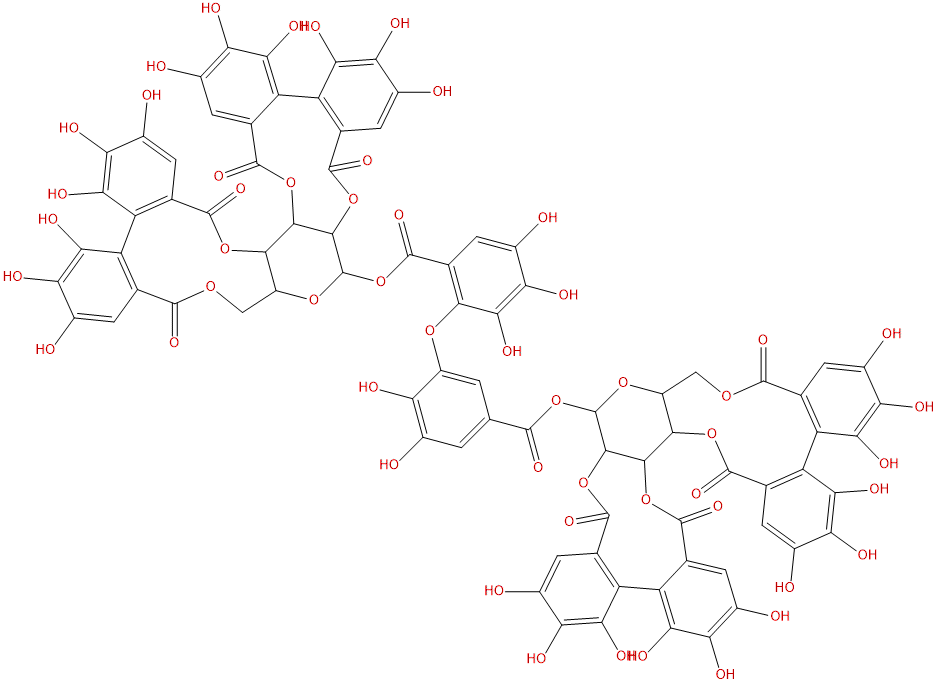
Xianhecaosu is a dimeric hydrolyzable tannin with a molecular weight of up to 1871.2820 and a complex structure. Its molecule is formed by the bridging of two monomers of ellagitannin through dehydroxahydroxydiphenyll (DHHDP). This structure endows it with abundant phenolic hydroxyl groups, resulting in extremely high polarity and a large topological polar surface area (TPSA of 877.36 Å ²), which also explains its extremely low water solubility (about 0.0001 mg/mL) and low lipid solubility (LogP of about 2.56).
The chemical skeleton of Xianhecaosu includes multiple phenolic hydroxyl groups and ester bonds, which are easily hydrolyzed and belong to typical hydrolytic tannins. Its complex polyphenol structure endows it with strong antioxidant capacity, while also limiting its metabolism and bioavailability in the body. Due to its high molecular weight and polarity, Xianhecaosu is difficult to penetrate the blood-brain barrier (BBB permeability is low), and in vitro hERG channel inhibition experiments show no significant risk of cardiac toxicity. The Ames mutagenicity test result is 0.6, indicating a low risk of genotoxicity and good safety.
Xianhecaosu is mainly found in the plants of the genus Agrimonia Pilosa Ledeb, especially in their aboveground parts (stems and leaves) where the content is relatively high. Potentilla frutescens is widely used in traditional Chinese medicine for hemostasis, anti-inflammatory, antibacterial, and anti-tumor purposes. Its pharmacological activity is partly attributed to its rich polyphenolic compounds, especially resveratrol.
The common methods for extracting Xianhecaosu include:
In recent years, supercritical fluid extraction and membrane separation technologies have also been attempted to be applied to the extraction and purification of resveratrol, aiming to improve yield and environmental friendliness.
The pharmacological effects of Xianhecaosu include multiple aspects such as anti-tumor, anti-inflammatory, immune regulation, and hemostasis.
Numerous in vitro cell experiments and animal model studies have shown that Xianhecaosu has significant anti-tumor activity. The mechanism mainly includes:
Xianhecaosu can regulate various inflammatory mediators and signaling pathways, exerting anti-inflammatory effects. Its ability to induce interleukin-1 suggests its important role in immune regulation, possibly by activating macrophages and other immune cells to enhance the body's defense function.
The research on Xianhecaosu in the field of hemostasis is relatively novel. It regulates the coagulation cascade reaction and promotes blood hemostasis by interacting with various coagulation factors (such as F2, F7, F9, F10) and plasma proteins (such as plasma protein C, PROC, and von Willebrand factor VWF). Its regulatory effect on SERPINE1 (plasma plasminogen activator inhibitor 1) further affects the fibrinolytic system, maintaining the balance between hemostasis and fibrinolysis.
The multi-target mechanism of action of Xianhecaosu is the basis of its multiple pharmacological effects.
Xianhecaosu regulates the hemostatic process through multiple targets:
These effects collectively promote rapid hemostasis, reduce bleeding time, and have potential clinical application value.
The pharmacological evaluation of Xianhecaosu shows that it has certain challenges:
At present, there are relatively few pharmacokinetic studies on Xianhecaosu. Preliminary data indicate that its oral absorption rate is low, and its metabolism in vivo is mainly through intestinal microbiota degradation and liver metabolism. Metabolites may have certain biological activity. Further in vivo pharmacokinetic and metabolic studies are needed in the future to optimize the routes of administration and dosage form design.
As a natural polyphenolic drug candidate molecule, Xianhecaosu has multi-target and multi pathway pharmacological activities, demonstrating broad clinical application potential.
Future research should focus on:
As a typical dimeric hydrolyzed tannin, Xianhecaosu exhibits significant anti-tumor, hemostatic, and immunomodulatory potential due to its complex chemical structure and diverse biological activities. Although its high molecular weight and polarity pose certain challenges for drug development, with the assistance of modern drug research and development technology, it is expected to overcome these limitations and achieve clinical applications. In the future, combining systems pharmacology, pharmacokinetics, and clinical research, Xianhecaosu is expected to become an important candidate molecule for natural product drug development, providing new treatment strategies for tumor therapy and hemostatic management.
