


Product name: Theaflavine-3,3'-digallate
Synonym name: Theaflavine bisgallate; Teaflavin digallate; Theaflavine-3,3'-digallate; Other Cas, 33377-72-9
Catalogue No.: BP1385
Cas No.: 30462-35-2
Formula: C43H32O20
Mol Weight: 868.709
Botanical Source: Black Tea
Physical Description:
Type of Compound: Polyphenols
Purity: 95%~99%
Analysis Method: HPLC-DAD or/and HPLC-ELSD
Identification Method: Mass, NMR
Packing: Brown vial or HDPE plastic bottle
Storage: Store in a well closed container, protected from air and light. Put into refrigerate or freeze for long term storage.
Whenever possible, you should prepare and use solutions on the same day. However, if you need to make up stock solutions in advance, we recommend that you store the solution as aliquots in tightly sealed vials at -20℃. Generally, these will be useable for up to two weeks.
The product could be supplied from grams to kilograms.
Inquire for bulk scale.
Description:
Theaflavin-3,3'-digallate(TF3), an inducer of oxidative stress, which has anti-inflammatory and cancer chemopreventive actions, it reduces tumor angiogenesis by downregulating HIF-1αand VEGF; suggests that TF3 might serve as a potential anti-angiogenic agent for cancer treatment. TF3 and lactic acid combinations can reduce Herpes Simplex Virus(HSV) infectivity.
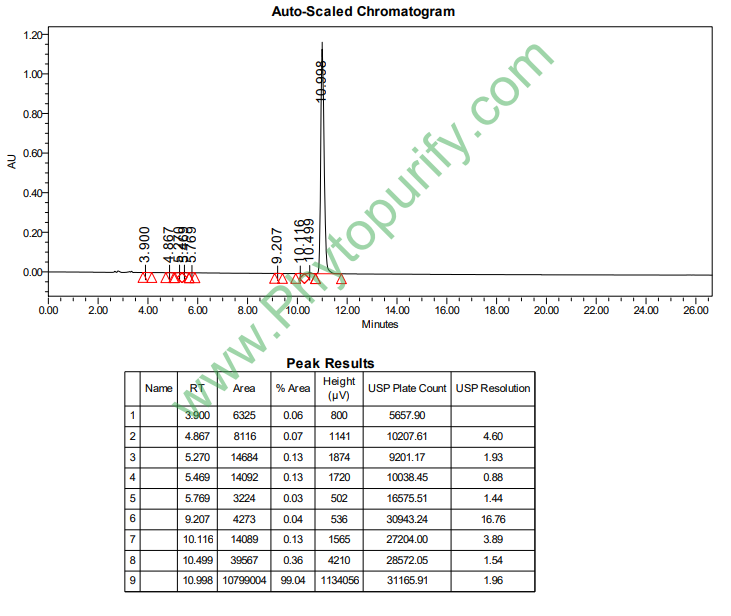
HPLC of Theaflavin digallate
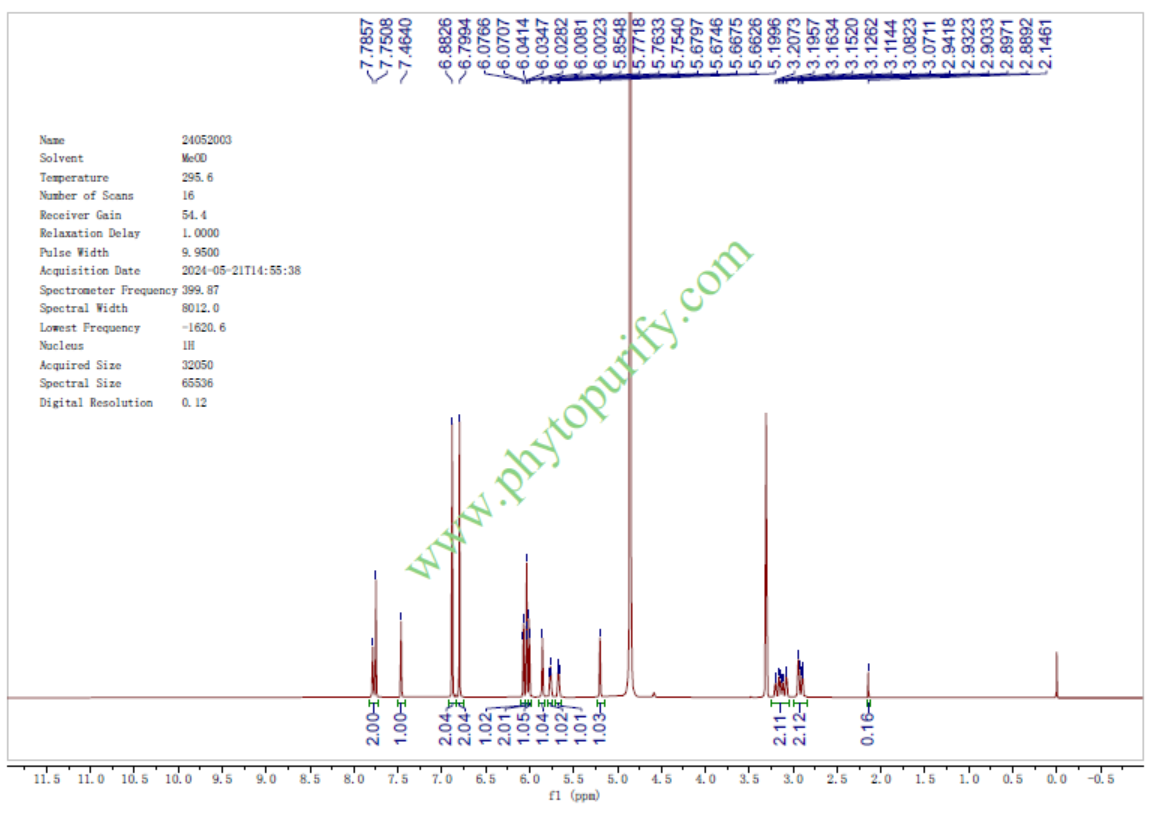
HNMR of Theaflavin digallate
Storage conditions:Short-term storage at 2~8℃, long-term storage at -20 ~ -80℃
351.1200
2.7219
2.7221
.0046
1.4441
.0975
Low
90.9711
5.1325
No
No
No
No
Yes
No
0.6
Yes
No
Yes
No
Theaflavin-3,3 '- digallate (TF3) is a class of benzophenone compounds formed by the oxidative polymerization of catechins during black tea fermentation. It is one of the most complex and biologically active members of the theaflavins family. As a unique active ingredient in tea, TF3 has been continuously attracting researchers' attention due to its unique chemical structure and extensive pharmacological activities since it was first isolated and identified from black tea in the 1950s. In recent years, with the deepening development of natural product chemistry and molecular pharmacology, the potential application value of TF3 in multiple fields such as antiviral, anti-inflammatory, antioxidant, and anti-tumor has been gradually revealed, especially as a research result of the neuraminidase inhibitor of influenza A virus (H1N1), making it an important lead compound for the development of anti influenza drugs.
It is worth noting that the pharmacological activity of TF3 is not limited to the antiviral field. More and more evidence suggests that this compound has significant therapeutic potential for various inflammation related diseases, and its targets include key inflammatory signaling molecules such as IL-6, STAT3, CASP1, TRPV1, RELA, PTGS1, TNF, TRPA1, IKBKB, NOS2, etc. This multi-target action characteristic endows TF3 with unique therapeutic advantages, making it promising for intervention in inflammatory diseases, metabolic diseases, and even neurodegenerative diseases. This article will provide a systematic review of the research progress of TF3 from the aspects of chemical structure, plant origin, pharmacological activity, mechanism of action, pharmacological evaluation, and clinical application prospects, in order to provide reference for the in-depth development and clinical translation of this natural product.
The chemical name of TF3 is 2- {1- [5,7-dihydroxy-3- (3,4,5-trihydroxybenzoyloxy) -3,4-dihydro-2H-1-benzopyran-2-yl] -3,4,6-trihydroxy-5-oxo-5H-benzo [7] cyclo-8-yl} -5,7-dihydroxy-3,4-dihydro-2H-1-benzopyran-3-yl 3,4,5-trihydroxybenzoate, with a molecular formula of C43H32O20 and a molecular weight of 868.7090. Its core structure is composed of two catechin units connected by a benzophenone ring, and the C-3 hydroxyl group of each catechin unit forms an ester bond with gallic acid, forming a digallate structure.
From the perspective of stereochemistry, TF3 molecules contain multiple chiral centers, and their absolute configurations have a significant impact on their biological activity. The benzophenone ring system endows TF3 with unique planarity and rigidity, while the two galloyl groups provide abundant phenolic hydroxyl groups. These structural features collectively determine the physicochemical properties and biological activity of TF3. It is worth noting that the abundant phenolic hydroxyl groups in TF3 molecules endow it with strong antioxidant capacity, while also affecting its solubility and bioavailability.
According to the analysis of pharmacological parameters, the lipid water partition coefficient (LogP) of TF3 is 2.7219, indicating that it has a certain degree of lipid solubility, but overall tends to be hydrophilic. The topological polar surface area (TPSA) is as high as 351.1200 Å ², which is much higher than the recommended upper limit of 140 Å ² for oral medications, indicating that TF3 may have poor intestinal permeability. The water-soluble data is 0.0046 mg/mL, which belongs to insoluble compounds, posing significant challenges to their formulation development and in vivo absorption.
In terms of pharmacokinetic parameters, the blood-brain barrier penetration ability of TF3 was evaluated as "low", which is closely related to its high polarity surface area and molecular weight. The hERG inhibition assessment result is' no ', indicating a low risk of cardiac toxicity. The Ames test result is 0.6, indicating that the compound may have a slight genetic toxicity risk, but further validation is needed. These parameters collectively outline the basic profile of TF3 as a candidate drug: strong activity but low oral bioavailability, requiring the use of formulation techniques or structural modifications to improve its pharmacokinetic properties.
TF3 mainly exists in black tea (Camellia sinensis) and its fermented products. During the tea processing, catechins in fresh leaves (such as epicatechin gallate, epigallocatechin gallate, etc.) undergo oxidative polymerization under the catalysis of polyphenol oxidase and peroxidase, forming theaflavins. Among them, TF3 is a relatively low content component in the theaflavins family, usually accounting for 0.1% -0.5% of the dry weight of black tea, much lower than theaflavins (TF1) and theaflavin-3-gallic acid esters (TF2A/TF2B).
Besides black tea, TF3 can also be detected in some oolong teas with higher fermentation levels, but it is almost absent in green tea. It is worth noting that different tea raw materials from different regions and varieties, as well as different fermentation process parameters (temperature, humidity, fermentation time), will significantly affect the final content of TF3. Generally speaking, black tea products made from Yunnan large leaf tea trees and fully fermented have relatively high TF3 content.
The extraction of TF3 usually adopts the strategy of organic solvent extraction combined with chromatographic separation. The traditional method uses ethanol water mixed solvent (70% -80% ethanol) as the extraction agent, and performs reflux extraction at 50-60 ℃. After concentration, the extract is extracted and enriched with ethyl acetate to obtain theaflavins. However, due to the low content of TF3 in the theaflavins mixture and its similar structure to other theaflavins, conventional solvent extraction is difficult to obtain high-purity products.
Modern separation technology has significantly improved the purification efficiency of TF3. High speed counter current chromatography (HSCCC) utilizes the difference in distribution coefficients of compounds in a two-phase solvent system to achieve separation, and has been successfully applied to the preparation type separation of TF3. In addition, a preparative high-performance liquid chromatography (Prep HPLC) combined with a C18 reverse phase chromatography column using acetonitrile water formic acid as the mobile phase can achieve high-purity separation of TF3, with a purity of over 98%. In recent years, new separation methods such as molecular imprinting technology and supercritical fluid chromatography have also been applied to the purification of TF3, showing promising application prospects.
It is worth noting that TF3 has relatively poor chemical stability and is easily degraded under alkaline conditions, high temperatures, or light exposure. Therefore, it is necessary to strictly control the pH value (recommended pH 3-5), temperature (below 40 ℃), and light avoidance conditions during the extraction and purification process to ensure the stability and biological activity of the product.
The most notable pharmacological activity of TF3 is its inhibitory effect on the neuraminidase (NA) of influenza A virus (H1N1). Neuraminidase is an important glycoprotein on the surface of influenza virus, responsible for cleaving sialic acid receptors on the host cell surface, promoting the release and diffusion of virus particles. Research has shown that TF3 exhibits significant inhibitory activity against H1N1 neuraminidase, with IC50 values at the micromolar level, comparable to the clinically used anti influenza drug oseltamivir. Molecular docking studies have revealed that the galloyl group in TF3 molecule can form hydrogen bonds and π - π stacking interactions with key amino acid residues at the active site of neuraminidase (such as Arg152, Arg371, Tyr406, etc.), thereby competitively inhibiting substrate binding.
In addition to H1N1, TF3 also exhibits broad-spectrum antiviral activity against various influenza virus subtypes (including H3N2, H5N1, etc.). More importantly, TF3 is equally effective against oseltamivir resistant virus strains, providing strong support for its unique value in the development of anti influenza drugs. In addition, preliminary studies have also found that TF3 has inhibitory effects on respiratory syncytial virus (RSV), enterovirus 71 (EV71), and other viruses, suggesting that it may have a broader antiviral spectrum.
The anti-inflammatory activity of TF3 is another important pharmacological characteristic. Numerous in vitro and in vivo studies have confirmed that TF3 can significantly inhibit lipopolysaccharide (LPS) - induced macrophage inflammatory response, reduce the production of pro-inflammatory cytokines such as tumor necrosis factor - α (TNF - α), interleukin-6 (IL-6), and interleukin-1 β (IL-1 β). In animal models, TF3 exhibits protective effects against various inflammatory diseases such as acute lung injury, colitis, and arthritis.
It is worth noting that the anti-inflammatory mechanism of TF3 involves multiple signaling pathways and molecular targets. It can not only inhibit the activation of the nuclear factor kappa B (NF - κ B) signaling pathway, but also regulate the phosphorylation levels of signal transduction and transcription activator 3 (STAT3). In addition, TF3 also has a regulatory effect on the assembly and activation of inflammasomes, which can inhibit the activity of caspase-1 (CASP1), thereby reducing the maturation and secretion of IL-1 β.
As a polyphenolic compound, TF3 has strong free radical scavenging ability. The abundant phenolic hydroxyl groups in its molecules can directly neutralize reactive oxygen species (ROS) and reactive nitrogen species (RNS), protecting cells from oxidative stress damage. Research has shown that the antioxidant activity of TF3 is even stronger than that of vitamin C and vitamin E, and its oxygen free radical absorption capacity (ORAC) value is the highest in the theaflavins family.
The antioxidant effect of TF3 is not only reflected in the direct clearance of free radicals, but also by activating the nuclear factor E2 related factor 2 (Nrf2) signaling pathway, upregulating the expression of antioxidant enzymes such as superoxide dismutase (SOD), glutathione peroxidase (GPx), and heme oxygenase-1 (HO-1), thereby enhancing the endogenous antioxidant defense ability of cells.
In addition to the aforementioned activities, TF3 also exhibits various pharmacological effects such as anti-tumor, antibacterial, neuroprotective, and cardiovascular protection. In terms of anti-tumor effects, TF3 can inhibit the proliferation of various cancer cells, induce apoptosis, and exert anti-cancer effects by regulating signaling pathways such as Wnt/β - catenin and PI3K/Akt. In terms of neuroprotection, TF3 can improve cognitive function in Alzheimer's disease model animals by inhibiting β - amyloid protein aggregation and reducing neuroinflammatory responses. These diverse pharmacological activities further highlight the development value of TF3 as a multifunctional natural product.
The core mechanism of TF3 against influenza virus is to inhibit the activity of neuraminidase. However, recent studies have revealed that its antiviral effect is not limited to this. TF3 can also interfere with the binding of influenza virus hemagglutinin (HA) to host cell receptors, preventing virus adsorption and entry into cells. In addition, TF3 can inhibit virus replication by regulating the innate immune response of host cells, enhancing the interferon signaling pathway. This multi-target antiviral mechanism helps reduce the risk of developing viral resistance.
The anti-inflammatory effect of TF3 involves cross regulation of multiple signaling pathways. Firstly, TF3 can directly inhibit the activity of I κ B kinase β (IKBKB), prevent the phosphorylation and degradation of I κ B α, and thus inhibit the nuclear translocation and transcriptional activity of NF - κ B. NF - κ B is a core transcription factor in inflammatory response, regulating the expression of various pro-inflammatory genes such as TNF - α, IL-6, and inducible nitric oxide synthase (NOS2).
Secondly, TF3 has a dual regulatory effect on the STAT3 signaling pathway. On the one hand, it can inhibit IL-6-induced STAT3 phosphorylation and reduce the production of pro-inflammatory cytokines; On the other hand, under specific conditions, TF3 can also activate the cell protective function of STAT3 and promote the expression of anti-inflammatory factors such as IL-10. This sophisticated regulatory mechanism helps maintain the balance of inflammatory response.
In addition, TF3 also has a regulatory effect on the transient receptor potential (TRP) channel family members TRPV1 and TRPA1. TRPV1 and TRPA1 are nociceptors involved in the regulation of pain and neurogenic inflammation. TF3 can inhibit the activation of these channels, thereby exerting analgesic and anti-inflammatory effects.
The regulation of inflammasome pathway by TF3 is an important component of its anti-inflammatory mechanism. Research has shown that TF3 can inhibit the assembly and activation of NLRP3 inflammasomes, reduce the activation of CASP1, and thus block the maturation and secretion of IL-1 β and IL-18. In addition, TF3 can inhibit the cleavage of gasdermin D (GSDMD), prevent the occurrence of pyroptosis, and alleviate the release of inflammatory mediators and tissue damage.
TF3 also has an inhibitory effect on cyclooxygenase (COX) activity. Research has shown that TF3 can directly bind to and inhibit the activity of PTGS1 (COX-1), reducing the synthesis of prostaglandin E2 (PGE2). This effect is similar to traditional nonsteroidal anti-inflammatory drugs (NSAIDs), but TF3 has lower selectivity for COX-2, which may help reduce gastrointestinal side effects.
Based on the aforementioned pharmacological parameters, the molecular weight of TF3 (868.71 Da) far exceeds the threshold of 500 Da in Lipinski's five rules, and the TPSA (351.12 Å ²) is significantly higher than the recommended upper limit of 140 Å ². These parameters suggest that the oral bioavailability of TF3 may be low and the intestinal permeability may be poor. The LogP value (2.72) is within a reasonable range, but the water solubility (0.0046 mg/mL) is extremely poor, belonging to BCS IV class drugs, which are low solubility and low-permeability compounds.
In terms of safety, a negative hERG inhibition indicates a low risk of cardiac toxicity, but the Ames test result (0.6) suggests a possible genetic toxicity risk that needs further validation through in vivo experiments. Overall, the pharmaceutical challenge of TF3 mainly lies in improving its solubility and bioavailability.
At present, systematic research on the pharmacokinetics of TF3 is relatively limited. Existing data shows that TF3 has poor absorption after oral administration, and its absolute bioavailability may be less than 5%. This is mainly attributed to its low permeability caused by high molecular weight and strong polarity, as well as the efflux of P-glycoprotein (P-gp). In addition, TF3 may undergo metabolic transformations in the intestine, including deglycosylation, methylation, and glucuronidation, further reducing the exposure of its prototype drug.
After intravenous administration, the distribution volume of TF3 in the body is relatively small, indicating that it is mainly distributed in plasma and extracellular fluid. Due to its low ability to penetrate the blood-brain barrier, the distribution of TF3 in the central nervous system is limited, which not only limits its application in the treatment of neurological diseases but also reduces the risk of central nervous system toxicity. The elimination of TF3 is mainly through bile excretion and liver metabolism, with a short half-life and requiring frequent administration to maintain effective blood drug concentration.
To overcome the pharmacokinetic deficiencies of TF3, researchers have developed various formulation strategies. New delivery systems such as liposomes, nanoparticles, and phospholipid complexes can significantly improve the solubility and oral bioavailability of TF3. For example, TF3 liposomes prepared by thin film dispersion method can increase their oral bioavailability by 3-5 times. In addition, forming an inclusion complex between TF3 and cyclodextrin can also improve its water solubility and stability.
In terms of structural modification, prodrug design is an effective strategy to improve the oral bioavailability of TF3. By acetylation, phosphorylation, or amino acid esterification modification of phenolic hydroxyl groups, the polarity of TF3 and the number of hydrogen bond donors can be temporarily reduced, thereby improving intestinal permeability. After entering the body, these prodrugs release their original form under the action of esterase or phosphatase, exerting pharmacological activity. In addition, the strategy of simplifying the molecular skeleton is also worth exploring. By retaining key pharmacophores and reducing molecular weight, it is possible to obtain derivatives with better drug properties.
TF3, as a natural neuraminidase inhibitor, has unique advantages in the development of anti influenza drugs. Compared with the existing drug oseltamivir, TF3 is effective against drug-resistant virus strains, and its mechanism of action involves multiple targets, reducing the risk of drug resistance. However, its low oral bioavailability limits its clinical application. Future research should focus on developing inhaled or injectable forms of TF3 that directly act on the respiratory mucosa or enter the systemic circulation to bypass oral absorption barriers. In addition, the combination therapy strategy of TF3 with other anti influenza drugs such as favipiravir and balosavir is also worth exploring, as it may produce synergistic antiviral effects.
The multi-target anti-inflammatory properties of TF3 make it potentially valuable for the treatment of chronic inflammatory diseases. In inflammatory bowel disease (IBD), local administration of TF3 (such as enemas or colon targeted preparations) may effectively alleviate intestinal inflammation while avoiding systemic side effects. In the treatment of rheumatoid arthritis, TF3 can alleviate joint synovitis and bone destruction by inhibiting the NF - κ B and STAT3 signaling pathways. In addition, TF3 also has a protective effect on acute inflammatory reactions such as acute lung injury and sepsis, and may be used as an adjuvant therapy in the field of intensive care.
More and more evidence shows that chronic low-grade inflammation is an important pathological basis of metabolic diseases such as metabolic syndrome, type 2 diabetes and atherosclerosis. The anti-inflammatory and antioxidant effects of TF3 may help improve insulin resistance, regulate lipid metabolism, and protect endothelial function. In terms of neurodegenerative diseases, although TF3 has limited ability to penetrate the blood-brain barrier, it is still possible to achieve effective drug concentrations in the central nervous system through nano delivery systems or nasal administration pathways, providing new options for the treatment of Alzheimer's and Parkinson's diseases.
Although TF3 has shown good safety in vitro and animal experiments, systematic toxicological evaluation is still needed to promote its clinical application. Long term toxicity, reproductive toxicity, and carcinogenicity research are essential components. In addition, the interactions between TF3 and other drugs also need to be considered, especially the pharmacokinetic or pharmacodynamic interactions that may occur when used in combination with anticoagulants, immunosuppressants, etc.
In terms of clinical translation, TF3 has not yet entered the formal clinical trial stage. In the future, it is necessary to conduct rigorously designed Phase I clinical trials to evaluate their safety, tolerability, and pharmacokinetic characteristics in humans. On this basis, phase II/III clinical trials targeting specific indications will validate their clinical efficacy. Considering the natural product properties and multi-target action characteristics of TF3, its application in functional foods and dietary supplements may occur before drug development, accumulating safety data for subsequent clinical studies.
As a unique active ingredient in black tea, theaflavin-3,3 '- digallate has shown significant value in the field of natural product drug development due to its unique chemical structure and multi-target pharmacological activity. The research process of TF3 reflects a typical paradigm of the cross fusion of natural product chemistry and pharmacology, from the discovery of anti influenza virus neuraminidase inhibitors to the revelation of multiple pharmacological effects such as anti-inflammatory, antioxidant, and anti-tumor. However, the inherent defects of this compound in terms of drug efficacy - low solubility, low permeability, and low oral bioavailability - constitute the main bottleneck for its clinical translation.
Looking ahead, research on TF3 should focus on the following directions: firstly, improving its pharmacokinetic properties through formulation technology or structural modification; The second is to thoroughly elucidate its multi-target mechanism of action, providing theoretical basis for precision therapy; Thirdly, conduct systematic toxicology and preclinical research to lay the foundation for clinical trials; The fourth is to explore its application in the fields of functional food and health products, achieving diversified development from "medicine" to "food". With the continuous progress of modern medicinal chemistry and nanomedicine, we have reason to believe that this natural molecule derived from traditional tea has the potential to exert greater clinical value in the fields of antiviral and anti-inflammatory treatment, and contribute to human health.
