


Product name: Lithospermoside
Synonym name:
Catalogue No.: BP0879
Cas No.: 63492-69-3
Formula: C14H19NO8
Mol Weight: 329.305
Botanical Source: Lithospermum officinale, Lithospermum caerulum and Thalictrum orientale
Physical Description: Powder
Type of Compound: Miscellaneous
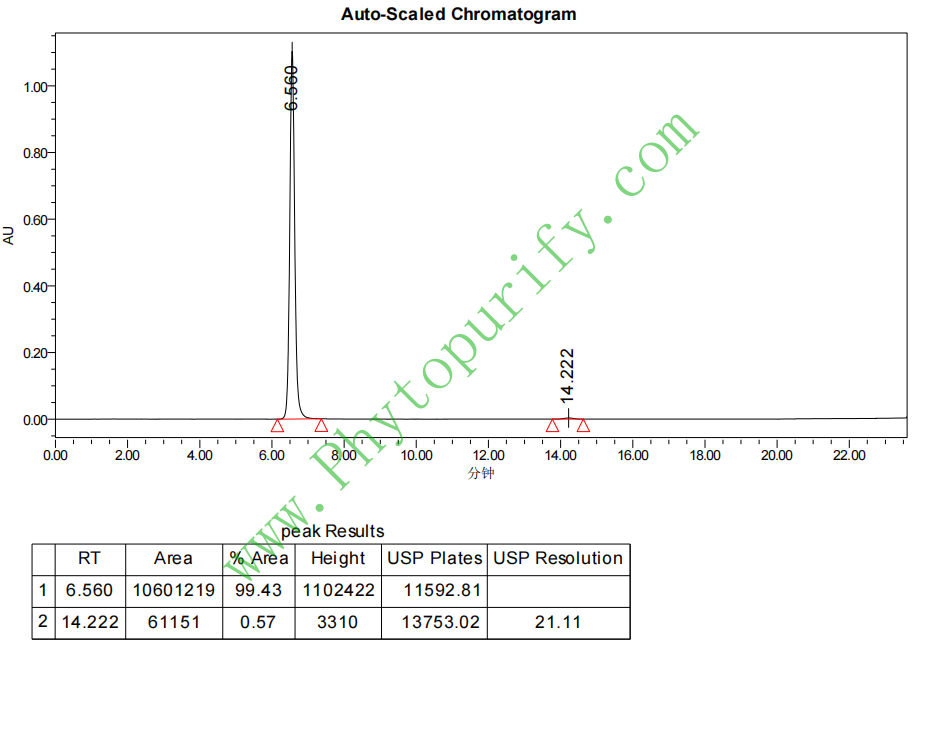
Purity: 95%~99%
Analysis Method: HPLC-DAD or/and HPLC-ELSD
Identification Method: Mass, NMR
Packing: Brown vial or HDPE plastic bottle
Storage: Store in a well closed container, protected from air and light. Put into refrigerate or freeze for long term storage.
Whenever possible, you should prepare and use solutions on the same day. However, if you need to make up stock solutions in advance, we recommend that you store the solution as aliquots in tightly sealed vials at -20℃. Generally, these will be useable for up to two weeks.
The product could be supplied from milligrams to grams, up to kilograms
Inquire for bulk scale.
Descriptions:
Lithospermoside possesses strong inhibitory effects onEpstein-Barr virus early antigen (EBV-EA) activation, the potencies of which were either comparable to or stronger than that of a green tea polyphenol, it also exerts anti-tumor promoting activity in two-stage mouse skin carcinogenesis using 7,12-dimethylbenz[a]anthracene (DMBA) and 12-O-tetradecanoylphorbol-13-acetate (TPA).[1]
Lithospermoside has anti-inflammatory activity.[2]
Lithospermoside has anti-oxidant activity.[3]
References:
[1] Ito H, Miyake M, Nishitani E, et al. Cancer Lett, 1999, 143(1):5-13.
[2] Liu F. Shenyang Pharmaceutical University, 2006.
[3] Zhou R, Xu R, Xiao W, et al. Chinese Journal of Experimental Traditional Medical Formulae, 2015 (15): 116-9.
HPLC of Lithospermoside
Storage conditions:Short-term storage at 2~8℃, long-term storage at -20 ~ -80℃
163.6300
-1.4037
-1.4037
89.2968
.4783
.1936
Low
25.9130
4.8600
Yes
No
No
No
Yes
No
0.0
Yes
Yes
Yes
Yes
Natural products, as an important source of drug discovery, play an irreplaceable role in the history of human fight against diseases. In recent years, with the development of systems biology and chemical biology, mining natural small molecule compounds with clear pharmacological activity from traditional medicinal plants has become one of the important strategies for new drug development. Lithospermoside, also known as Griffonin, is a plant derived from the Ranunculaceae family, Solanum nigrum(Semiaquilegia adoxoides)Cyanogenides natural products isolated from stem bark. This compound initially attracted attention due to its unique chemical structure and potential biological activity, and a series of subsequent studies revealed its significant value in the field of anti-inflammatory.
Inflammation is a defensive response of the body to harmful stimuli, but excessive or sustained inflammation is closely related to the occurrence and development of various diseases, including rheumatoid arthritis, inflammatory bowel disease, neurodegenerative diseases, and cancer. The commonly used anti-inflammatory drugs in clinical practice, such as nonsteroidal anti-inflammatory drugs (NSAIDs) and glucocorticoids, although effective, often come with significant side effects such as gastrointestinal injury, cardiovascular risk, and immunosuppression when used for a long time. Therefore, the search for efficient and low toxicity new anti-inflammatory drugs has become a hot research direction in pharmacy. Zicao cyanide glycoside has shown great potential as a lead compound or candidate drug due to its unique chemical skeleton and multiple anti-inflammatory target regulation abilities. This article will provide a systematic review of the research progress of purple violet glycoside from the aspects of chemical structure, plant origin, pharmacological activity, mechanism of action, medicinal properties, and clinical application prospects.
The chemical name of purpurin is Lithosperside, with a CAS registration number of 63492-69-3, a molecular formula of C ₁₄ H ₁₉ NO ₈, and a molecular weight of 329.3050. From a structural classification perspective, purpurin belongs to the cyanoglycoside class of compounds, and its core structure is composed of a cyano group (- CN) connected to the glycosyl portion through a glycosidic bond. Specifically, the glycoside part of purple violet glycoside contains a cyclopentenone structural unit, with the cyanide group attached to the ring system, and the sugar part is β - D-glucose. This unique structure endows purple cyanidin with a series of special physicochemical properties.
In terms of lipophilicity, the calculated LogP value of purpurin glycoside is -1.4037, indicating that the compound has a high degree of hydrophilicity, which is closely related to the presence of multiple hydroxyl and sugar groups in the molecule. The extremely low LogP value indicates that purpurin has good solubility in aqueous phase, with a water solubility parameter of up to 89.2968 mg/mL. This characteristic provides favorable conditions for its absorption and distribution in organisms. The topological polar surface area (TPSA) is 163.6300 Å ², which is much higher than the recommended threshold of 140 Å ² for oral drugs, indicating to some extent that the compound may have lower membrane permeability. It is worth noting that the blood-brain barrier penetration ability of shikonin has been evaluated as "low", which may be an advantage for anti-inflammatory drugs that need to avoid central nervous system side effects. In addition, the hERG inhibition risk assessment was negative, and the Ames test result was 0.0, indicating that the compound did not exhibit significant genotoxicity or cardiotoxicity risks in the preliminary safety evaluation.
From the perspective of chemical stability, cyanogenic compounds may undergo hydrolysis under acidic or specific enzyme conditions, releasing hydrogen cyanide (HCN), which is a potential source of toxicity for these compounds. However, further in-depth research is needed on the stability and in vivo metabolic pathways of purpurin under physiological conditions. Overall, the physicochemical properties of shikonin provide a good starting point for its development as an anti-inflammatory candidate drug, especially its excellent water solubility and preliminary safety data.
Zicao cyanide glycoside was originally derived from the Ranunculaceae plant Tiankui(Semiaquilegia adoxoides)Separated from the stem bark. Tiankui is a perennial herbaceous plant mainly distributed in East Asian regions such as China, Japan, and the Korean Peninsula. In traditional Chinese medicine, the root of Tiankui is called "Tiankui Zi", which has the effects of clearing heat and detoxifying, reducing swelling and dispersing nodules. It is commonly used to treat inflammation related diseases such as abscesses, sores, scrofula, and phlegm nuclei. The discovery of purpurin provides an important material basis for the anti-inflammatory activity of Solanum nigrum.
In addition to okra, there have also been reports of distribution of cyanidin in other plants. For example, the Boraginaceae plant Boraginaceae(Lithospermum erythrorhizon)It also contains this compound, which may be the origin of its English name "Lithosperside". In addition, the presence of shikonin has also been detected in some Rosaceae plants. The distribution characteristics of this cross family genus suggest that shikonin may have conserved physiological functions, such as defense, in certain plant groups.
The extraction and separation of cyanidin from purple grass are usually carried out using classical natural product chemistry methods. Due to the high water solubility of the compound, traditional organic solvent extraction methods (such as ethanol or methanol reflux extraction) often have limited efficiency. Modern research often uses water extraction or dilute alcohol extraction as the first step. The specific process usually includes: crushing the dried sunflower stem bark, soaking and extracting it in a 50% -70% ethanol aqueous solution at room temperature or heating conditions, concentrating the extract under reduced pressure, and then performing liquid-liquid extraction with petroleum ether, ethyl acetate, and n-butanol in sequence. Zicao cyanide glycoside is mainly enriched in the n-butanol extraction layer. Subsequently, high-purity shikonin monomers can be obtained through separation methods such as silica gel column chromatography, ODS reverse phase column chromatography, and preparative high-performance liquid chromatography (Prep HPLC). In recent years, new separation techniques such as high-speed countercurrent chromatography (HSCCC) have also been applied to the purification of this type of compound, significantly improving separation efficiency and yield.
It is worth noting that the content of purpurin in plants is usually low, and its separation process is susceptible to interference from other polar similar components. Therefore, establishing efficient and green extraction processes, as well as developing rapid quantitative analysis methods based on LC-MS, are of great significance for the in-depth study and subsequent development of this compound.
The pharmacological activity research of purpurin glycoside mainly focuses on the anti-inflammatory field, and multiple in vitro and in vivo experiments have confirmed its significant anti-inflammatory effects.
In vitro cell models, purpurin can effectively inhibit the production of inflammatory mediators in macrophages (such as RAW264.7 cells) stimulated by lipopolysaccharide (LPS). Research has shown that purpurin can significantly reduce the release of nitric oxide (NO) and prostaglandin E ₂ (PGE ₂), while inhibiting the mRNA and protein expression levels of pro-inflammatory cytokines such as tumor necrosis factor - α (TNF - α), interleukin-6 (IL-6), and interleukin-1 β (IL-1 β). These effects are concentration dependent and no significant cytotoxicity was observed within the non-toxic concentration range (typically 1-100 μ M).
In animal models, the anti-inflammatory activity of purpurin glycoside has also been validated. In the rat model of toe swelling induced by carrageenan, intraperitoneal injection or oral administration of shikonin can significantly reduce the degree of toe swelling, and its effect is comparable to the positive control drug indomethacin. In the acetic acid-induced model of increased peritoneal capillary permeability in mice, purpurin also showed significant inhibitory effects. In addition, in chronic inflammation models such as adjuvant arthritis rat models, purpurin can alleviate joint swelling, reduce serum levels of inflammatory factors, and improve pathological changes in joint tissue.
In addition to its classic anti-inflammatory effects, purpurin also exhibits certain analgesic activity. In hot plate and formalin experiments, purpurin can prolong the latency of pain threshold in mice and reduce pain response, suggesting that it may exert analgesic effects by inhibiting the production of inflammatory mediators or directly acting on pain transmission pathways. It is worth noting that the analgesic effect of shikonin is not related to opioid receptors, which provides the possibility for its development as a non addictive analgesic drug.
In addition, preliminary studies suggest that purpurin may have antioxidant and immunomodulatory activities. For example, it can scavenge DPPH free radicals, reduce intracellular reactive oxygen species (ROS) levels, and regulate the differentiation of T cell subsets. These pleiotropic pharmacological effects further expand the potential application range of purpurin glycoside.
The anti-inflammatory mechanism of purpurin involves the synergistic regulation of multiple signaling pathways and molecular targets, reflecting the multi-target effect of natural products. According to existing research, its core mechanism can be summarized into the following aspects.
1. Inhibit the NF - κ B signaling pathway
Nuclear factor kappa B (NF - κ B) is the core transcription factor of inflammatory response, regulating the expression of a large number of pro-inflammatory genes. Zicao cyanide glycoside can inhibit the activity of I κ B kinase β (IKBKB), prevent the phosphorylation and degradation of I κ B α, and thus block the nuclear translocation of NF - κ B. Specifically, purpurin can reduce the phosphorylation level of RELA (p65) subunit and its binding ability to DNA, thereby downregulating the transcription of NF - κ B target genes such as TNF, IL6, NOS2, and PTGS1 (COX-1). This mechanism is the basis for the broad-spectrum anti-inflammatory effect of purpurin glycoside.
2. Regulating the STAT3 signaling pathway
Signal transducer and activator of transcription factor 3 (STAT3) plays a crucial role in inflammation and immune responses. Zicao cyanide glycoside has been found to inhibit the phosphorylation activation of STAT3, especially in cell models stimulated by IL-6. By blocking the activation of STAT3, purpurin can reduce the inflammatory amplification effect mediated by IL-6 and inhibit the expression of downstream pro-inflammatory genes. It is worth noting that the abnormal activation of STAT3 is associated with various autoimmune diseases and tumors, therefore, the regulatory effect of shikonin on STAT3 has important therapeutic significance.
3. Regulating NLRP3 inflammasome and CASP1 activity
The NLRP3 inflammasome is an important component of the innate immune system, and its activation leads to cleavage activation of caspase-1 (CASP1), which in turn promotes the maturation and secretion of IL-1 β and IL-18. Research has shown that shikonin can inhibit the assembly of NLRP3 inflammasomes, reduce the activity of CASP1, and thus decrease the production of mature IL-1 β. This mechanism explains why shikonin inhibits the release of IL-1 β in various inflammatory models, and provides a theoretical basis for its application in gout, diabetes and other NLRP3 related diseases.
4. Adjust TRP channel activity
Transient receptor potential (TRP) channels, particularly TRPV1 and TRPA1, are key molecules for pain and inflammation perception. Zicao cyanide glycoside has been found to directly or indirectly regulate the activity of these channels. For example, it may alleviate inflammatory pain by inhibiting phosphorylation of TRPV1 or reducing its membrane expression levels, reducing calcium influx. In addition, the regulatory effect of TRPA1 may also be involved in its analgesic effect. This mechanism links the anti-inflammatory and analgesic activities of shikonin at the molecular level.
5. Inhibit inducible nitric oxide synthase (NOS2) and cyclooxygenase (PTGS1)
Zicao cyanide glycoside can directly inhibit the expression and activity of NOS2 (iNOS) and PTGS1 (COX-1). The inhibition of NOS2 reduces the excessive production of NO, while the inhibition of PTGS1 reduces the synthesis of PGE ₂. These two inflammatory mediators play a key role in the inflammatory response, and their reduction is a direct manifestation of the anti-inflammatory activity of shikonin.
In summary, purpurin glycoside forms a multi-level anti-inflammatory network by simultaneously acting on multiple targets such as IKBKB/NF - κ B, STAT3, CASP1/NLRP3, TRPV1/TRPA1, and NOS2/PTGS1. This multi-target regulatory mode not only enhances its anti-inflammatory effect, but may also reduce the risk of common resistance and side effects of single target drugs.
Based on previous pharmacological activity studies, purpurin has shown promising development prospects, but its pharmacological properties still need to be systematically evaluated. From the perspective of medicinal chemistry, the molecular weight of purpurin glycoside is 329.3050, which meets the basic requirements of small molecule drugs. Its LogP value is -1.4037, indicating excellent water solubility, which is beneficial for the development of the formulation, but may also lead to poor oral absorption. The high TPSA value (163.63 Å ²) further suggests that its membrane permeability may be limited.
In terms of pharmacokinetics, there is currently insufficient research on the in vivo processes of shikonin. Preliminary animal experiments have shown that the absorption rate of purpurin glycoside is slower after oral administration, and its bioavailability may be lower, which is consistent with its high hydrophilicity and polarity characteristics. After intravenous administration, the half-life of the compound in the blood is relatively short, indicating that it may be rapidly distributed or cleared. In terms of distribution, due to its low ability to penetrate the blood-brain barrier, shikonin is mainly distributed in the blood and peripheral tissues, with less entry into the central nervous system. This is a favorable characteristic for anti-inflammatory drugs that need to avoid central side effects. In terms of metabolic pathways, it is speculated that shikonin may undergo glycosidic bond hydrolysis under the action of gut microbiota or liver enzymes, releasing aglycones and glucose. However, the specific metabolites and metabolic enzymes still need to be identified. The excretion pathway may be mainly through renal excretion, as it has high water solubility and the original drug or metabolites are easily excreted with urine.
Safety evaluation is a crucial step in the assessment of drug properties. The existing preliminary data shows that the result of purpurin glycoside in Ames test is negative, indicating no mutagenicity. The risk assessment of hERG inhibition is negative, indicating a low risk of causing QT interval prolongation in the heart. In acute toxicity experiments, the LD ₅₀ value of purpurin glycoside is relatively high, indicating a wide safety window. However, there is still a lack of data on long-term toxicity, reproductive toxicity, and carcinogenicity, which must be supplemented in subsequent development.
In response to potential issues regarding the pharmacological properties of purple violet glycoside, such as low oral bioavailability, drug chemical modification strategies may be considered. For example, through prodrug design, ester or phosphate groups are introduced into the sugar moiety to enhance its lipid solubility; Alternatively, new drug delivery systems such as nano formulations and liposomes can be used to improve their absorption and targeting properties. In addition, structural optimization is also an important way to enhance activity and pharmacokinetic properties, such as modifying the glycoside ring system to enhance its binding affinity with the target.
Zicao cyanide glycoside, with its unique chemical structure and multi-target anti-inflammatory mechanism, has shown broad application prospects in the treatment of various inflammation related diseases.
1. Autoimmune inflammatory diseases
The characteristic of autoimmune diseases such as rheumatoid arthritis and inflammatory bowel disease is chronic inflammation caused by immune system dysfunction. The dual inhibition of NF - κ B and STAT3 signaling pathways by purpurin glycoside, as well as its regulation of NLRP3 inflammasome, make it potential for the treatment of such diseases. The preliminary results in animal models have shown its improvement effect on arthritis, and its efficacy can be further validated in more clinical models in the future.
2. Acute inflammation and infectious inflammation
Excessive cytokine storm is the main cause of organ damage in acute inflammatory reactions such as sepsis and acute lung injury. Zicao cyanide glycoside can rapidly inhibit the production of TNF - α, IL-6, and IL-1 β, which may help control excessive inflammation. Its good water solubility also facilitates the development of injectable forms for the treatment of acute phase.
3. Inflammatory pain
Zicao cyanide glycoside has dual anti-inflammatory and analgesic effects by inhibiting the production of inflammatory mediators and regulating the activity of TRPV1/TRPA1 channels. For chronic inflammatory pain, such as osteoarthritis pain, purpurin may provide a non opioid treatment option to avoid addiction and tolerance issues.
4. Metabolic inflammation
In recent years, obesity, type 2 diabetes and other metabolic diseases are considered to be closely related to low-grade chronic inflammation. The inhibitory effect of purpurin on NLRP3 inflammasome may have a positive significance in improving insulin resistance and metabolic disorders, which opens up new directions for its application in the field of metabolic diseases.
However, the clinical translation of purpurin glycoside still faces many challenges. Firstly, the issue of low oral bioavailability needs to be addressed through pharmaceutical or prodrug strategies. Secondly, the potential cyanide release risk of cyanide glycoside compounds requires strict toxicological evaluation. Although no significant toxicity has been observed so far, the safety of long-term use still needs to be confirmed. In addition, the development of large-scale and high-quality chemical or biological synthesis processes is an important prerequisite for ensuring subsequent research and supply.
Future research directions should include: (1) in-depth elucidation of the in vivo metabolic pathways and pharmacokinetic characteristics of shikonin; (2) Using structural biology and computational chemistry methods, analyze its binding mode with key targets such as IKBKB and STAT3, and guide structural optimization; (3) Conduct systematic toxicology research, especially long-term toxicity and reproductive toxicity evaluation; (4) Explore the synergistic effects of purple violet cyanide glycoside and other anti-inflammatory drugs, and develop a combination therapy plan; (5) Utilizing modern biotechnology, such as synthetic biology, to construct a heterologous synthesis pathway for shikonin and achieve its sustainable production.
As a natural product of cyanide glycosides isolated from the traditional medicinal plant Tiankui, purple purple purple glycoside has attracted widespread attention in the field of natural product pharmacology due to its unique chemical structure and multi-target anti-inflammatory mechanism. From a chemical structure perspective, its cyanogenic backbone and abundant hydroxyl groups endow it with excellent water solubility and preliminary safety characteristics; From the perspective of pharmacological activity, its regulation of multiple inflammation related targets such as NF - κ B, STAT3, NLRP3 inflammasome, TRP channel, etc. constitutes the molecular basis of its anti-inflammatory and analgesic effects. Although there are still challenges in terms of oral bioavailability and long-term safety, shikonin is undoubtedly a highly promising anti-inflammatory lead compound.
With the continuous advancement of modern medicinal chemistry, pharmacology, and formulation technology, the issue of the pharmacological properties of purple violet glycoside is expected to be resolved. In the future, through structural optimization, development of new formulations, and in-depth mechanism research, shikonin and its derivatives are expected to provide new options for the treatment of inflammatory diseases. This natural product discovered from traditional Chinese medicine once again confirms the irreplaceable value of natural products in modern drug discovery, and provides important molecular evidence for us to understand the scientific connotation of traditional medicine.
