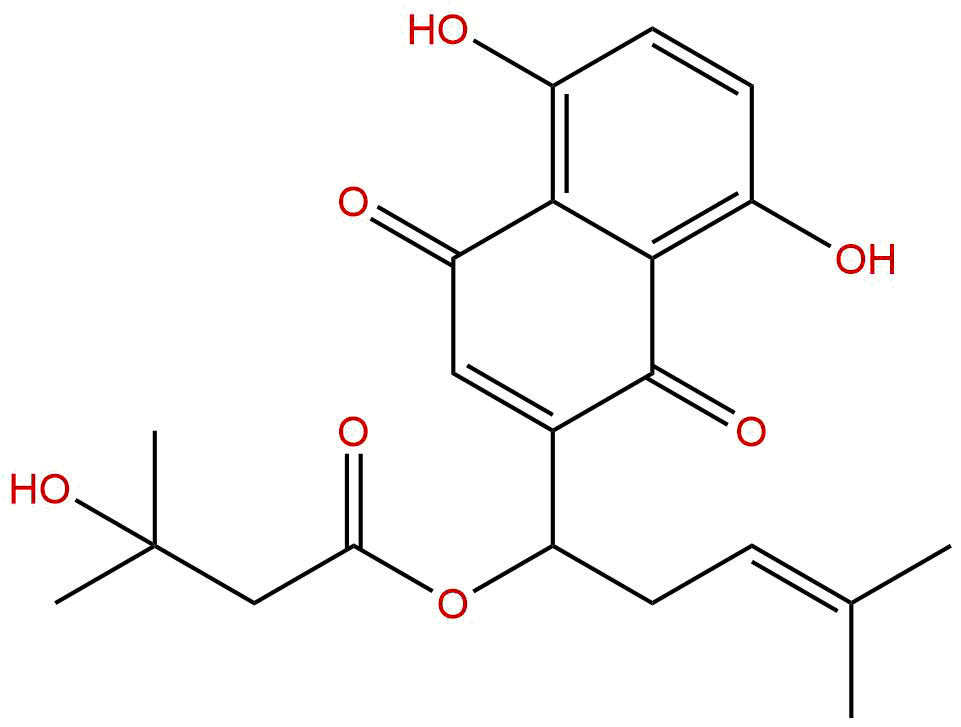


Product name: Beta-Hydroxylsovalerylshikonin
Synonym name:
Catalogue No.: BP3943
Cas No.: 7415-78-3
Formula: C21H24O7
Mol Weight: 388.42
Botanical Source: Arnebiae radix
Physical Description:
Type of Compound: Quinones
Purity: 95%~99%
Analysis Method: HPLC-DAD or/and HPLC-ELSD
Identification Method: Mass, NMR
Packing: Brown vial or HDPE plastic bottle
Storage: Store in a well closed container, protected from air and light. Put into refrigerate or freeze for long term storage.
Whenever possible, you should prepare and use solutions on the same day. However, if you need to make up stock solutions in advance, we recommend that you store the solution as aliquots in tightly sealed vials at -20℃. Generally, these will be useable for up to two weeks.
The product could be supplied from milligrams to grams
Inquire for bulk scale.
For Reference Standard and R&D, Not for Human Use Directly.
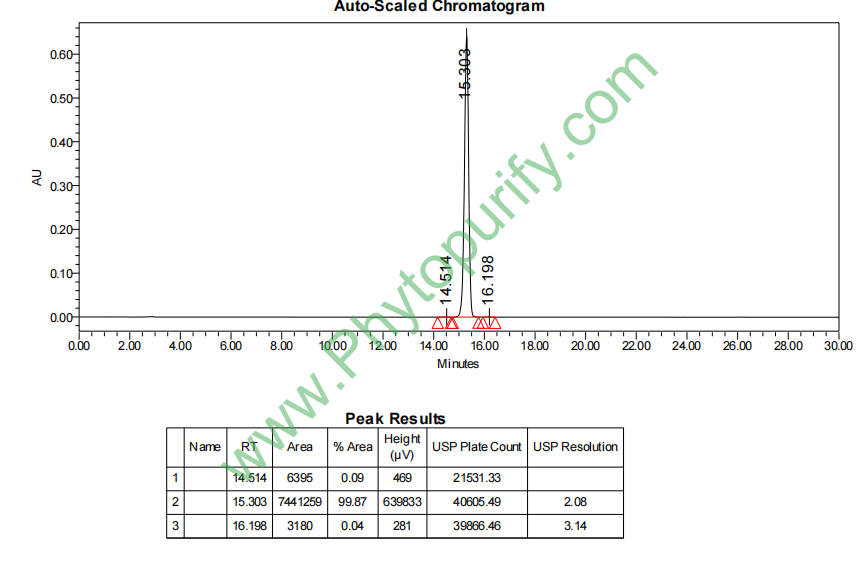
HPLC of Beta-Hydroxylsovalerylshikonin
Storage conditions:Short-term storage at 2~8℃, long-term storage at -20 ~ -80℃
121.1300
3.0382
2.7742
.3247
2.4039
10.6213
Low
86.6526
3.6258
Yes
No
Yes
No
No
Yes
0.0
Yes
Yes
Yes
Yes
Natural products, as an important source of drug discovery, play an irreplaceable role in the long history of human fight against diseases. Zicao compounds, as a class of naphthoquinone natural pigments derived from Boraginaceae plants, have attracted much attention due to their significant pharmacological activities. Among them, Beta Hydroxyisovalerylshikonin (β - HIVS), as an important derivative of purpurin, has attracted strong interest from researchers in the field of natural product pharmacology in recent years due to its unique chemical structure and extensive biological activity.
The chemical structure of β - HIVS is characterized by the presence of a β - hydroxyisovaleric group attached to the side chain of its naphthoquinone parent nucleus, which endows it with unique physicochemical properties and biological activity distinct from other shikonin compounds. From the perspective of traditional Chinese medicine, Arnebia euchroma or Lithospermum erythrorhizon has the effects of clearing heat, cooling blood, promoting blood circulation, detoxifying, and eliminating rashes and spots. Its active ingredients, shikonin compounds, are widely used in the treatment of various diseases such as burns, inflammation, and viral infections. Modern pharmacological research has further revealed the enormous potential of β - HIVS in anti-inflammatory, anti-tumor, antibacterial, antioxidant and other aspects, especially in regulating inflammation related signaling pathways and targets, demonstrating unique advantages.
With the continuous deepening of understanding of the pathogenesis of inflammatory diseases and the gastrointestinal and cardiovascular side effects of traditional anti-inflammatory drugs (such as nonsteroidal anti-inflammatory drugs), the development of new, efficient, and low toxicity anti-inflammatory drugs has become a hot topic in current drug research and development. β - HIVS, as a naturally occurring small molecule compound, has unique advantages in the development of anti-inflammatory drugs due to its multi-target and multi pathway properties. This article will provide a systematic review of the research progress of β - HIVS from the aspects of chemical structure and physicochemical properties, plant sources and extraction methods, pharmacological activity, mechanism of action, evaluation of drug properties, and clinical application prospects, in order to provide reference for the in-depth research and development of this compound.
The chemical structure of β - hydroxyisovalerylshikonin belongs to the shikonin class of compounds, with a core skeleton of 1,4-naphthoquinone structure connected to a six carbon side chain at C-2 position. Compared with shikonin, the hydroxyl group at the end of the side chain of β - HIVS is replaced by a β - hydroxyisovaleryl group, forming an ester bond. This structural modification significantly alters the spatial configuration and electronic distribution of the molecule, thereby affecting its interaction mode with biological targets. The molecular formula of β - HIVS is C ₂₁ H ₂₄ O ₇, with a molecular weight of 388.4160 g/mol and a CAS number of 7415-78-3.
From the perspective of physical and chemical properties, β - HIVS exhibits typical characteristics of naphthoquinone compounds. Its LogP value is 3.0382, indicating that the compound has moderate lipid solubility and can effectively distribute in the lipid bilayer, which is beneficial for transmembrane transport and interaction with membrane proteins. At the same time, its topological polar surface area (TPSA) is 121.1300 Å ², which is higher than the recommended upper limit of 140 Å ² for oral drugs, indicating that it may have certain polarity characteristics that facilitate hydrogen bonding interactions with target proteins. The water solubility of β - HIVS is 0.3247 mg/mL, which belongs to low water solubility compounds. This to some extent limits its bioavailability, but also provides conditions for its enrichment in lipid environments.
It is worth noting that the blood-brain barrier penetration ability of β - HIVS has been evaluated as' low ', which may be an advantage for the development of peripheral anti-inflammatory drugs as it can avoid central nervous system side effects. In addition, the risk assessment of hERG inhibition is' no ', indicating that the compound has good safety in terms of cardiac toxicity. The Ames test result is 0.0, indicating no significant mutagenicity, which provides preliminary support for its safety as a candidate drug. The chemical structure of β - HIVS contains multiple phenolic hydroxyl and carbonyl groups, which give it strong reducibility and free radical scavenging ability, which is also an important structural basis for its antioxidant and anti-inflammatory activities.
β - Hydroxyisovalerylshikonin is mainly derived from plants in the family Verbenaceae, including Xinjiang purple grass (Arnebia euchroma), purple grass (Lithospermum erythrorhizon), Yunnan purple grass (Onosma paniculatum), etc. These plants are widely distributed in parts of China, Japan, Central Asia, and Europe, with Xinjiang purple grass and purple grass being the most common. The content of β - HIVS in plants varies significantly depending on species, place of origin, harvest season, and tissue location. Usually, the content of purple grass is highest in the roots, especially in the root bark, while the content is lower in the stems and leaves.
The traditional extraction method mainly uses organic solvent extraction, and commonly used solvents include ethanol, methanol, ethyl acetate, etc. Due to the good lipid solubility of β - HIVS, ethanol water mixed solvents (such as 70% -95% ethanol) are often used for extraction. During the extraction process, it is usually necessary to crush the purple root and perform multiple extractions at room temperature or heating conditions, followed by purification through steps such as vacuum concentration, extraction, and column chromatography. Silica gel column chromatography is a classic method for separating shikonin compounds. By gradient elution with different ratios of petroleum ether ethyl acetate or chloroform methanol system, high-purity β - HIVS can be obtained.
With the development of modern separation technology, advanced techniques such as high-performance liquid chromatography (HPLC) and high-speed countercurrent chromatography (HSCCC) have been applied to the separation and purification of β - HIVS. HPLC method has the advantages of high separation efficiency and good reproducibility, and is suitable for preparation grade separation; HSCCC utilizes the liquid-liquid distribution principle to avoid irreversible adsorption problems that may arise from solid stationary phases, making it particularly suitable for the separation of naphthoquinone compounds. In addition, supercritical fluid extraction (SFE) technology has also been attempted for the extraction of shikonin compounds, which has the advantages of low operating temperature, no solvent residue, and is conducive to maintaining the activity of the compounds.
It is worth noting that shikonin compounds are sensitive to light, heat, and oxygen, and are prone to oxidative degradation during extraction and storage. Therefore, the extraction process should be carried out under dark and low-temperature conditions, and an appropriate amount of antioxidants (such as vitamin C or BHT) should be added. In addition, plant cell culture technology also provides a new approach for the sustainable production of β - HIVS. By optimizing the cultivation conditions (such as adding precursor substances, inducers, etc.), the production of β - HIVS in purple grass hairy roots or suspended cells can be significantly increased, which provides the possibility for large-scale production.
The most noteworthy pharmacological activity of β - hydroxyisovalerylshikonin is its anti-inflammatory effect. Numerous studies have shown that β - HIVS exhibits significant anti-inflammatory effects in various inflammatory models. In the lipopolysaccharide (LPS) - induced macrophage inflammation model, β - HIVS can significantly inhibit the production of pro-inflammatory cytokines such as tumor necrosis factor - α (TNF - α), interleukin-6 (IL-6), and interleukin-1 β (IL-1 β). In addition, β - HIVS can also reduce the levels of nitric oxide (NO) and prostaglandin E ₂ (PGE ₂), which is closely related to its inhibitory effects on inducible nitric oxide synthase (NOS2) and cyclooxygenase-2 (PTGS2).
In animal models, β - HIVS has shown good therapeutic effects on acute inflammation (such as carrageenan induced toe swelling) and chronic inflammation (such as collagen induced arthritis). Localized application of β - HIVS can significantly alleviate skin inflammatory reactions, including erythema, edema, and thermal hyperalgesia. It is worth noting that the anti-inflammatory activity of β - HIVS is closely related to the β - hydroxyisoamyl group in its structure, which enhances the compound's ability to regulate the inflammatory signaling pathway.
In addition to its anti-inflammatory effects, the anti-tumor activity of β - HIVS has also attracted widespread attention. Studies have shown that β - HIVS can inhibit the proliferation and induce apoptosis of many tumor cell lines (including breast cancer, lung cancer, liver cancer, colon cancer, melanoma, etc.). Its anti-tumor mechanism involves multiple aspects: firstly, β - HIVS can promote tumor cell apoptosis by inhibiting the activation of the STAT3 signaling pathway, downregulating the expression of anti apoptotic proteins (such as Bcl-2, Bcl xL, and Survivors); Secondly, β - HIVS can induce the production of reactive oxygen species (ROS), leading to the loss of mitochondrial membrane potential and the release of cytochrome c, activating the mitochondrial apoptosis pathway; In addition, β - HIVS can also inhibit the migration and invasion ability of tumor cells, which is related to the downregulation of matrix metalloproteinases (MMPs) expression.
β - HIVS also exhibits antibacterial, antioxidant, and neuroprotective activities. In terms of antibacterial activity, β - HIVS has inhibitory effects on common pathogenic microorganisms such as Staphylococcus aureus, Escherichia coli, and Candida albicans, and its mechanism may be related to the destruction of bacterial cell membrane integrity. In terms of antioxidant activity, β - HIVS can directly scavenge free radicals such as DPPH and ABTS, and enhance the activity of endogenous antioxidant enzymes in cells such as superoxide dismutase (SOD) and glutathione peroxidase (GPx). In terms of neuroprotection, β - HIVS can alleviate the neurotoxicity induced by β - amyloid protein and inhibit the excessive activation of microglia, indicating its potential application value in neurodegenerative diseases such as Alzheimer's disease.
The pharmacological effects of β - hydroxyisovalerylshikonin involve multiple molecular targets and signaling pathways, and its multi-target nature gives it unique advantages in the treatment of complex diseases. The following will focus on elucidating its main mechanisms of action in anti-inflammatory and anti-tumor aspects.
The anti-inflammatory effect of β - HIVS is mainly achieved by regulating multiple inflammatory signaling pathways. Among them, the nuclear factor kappa B (NF - κ B) signaling pathway is one of the core targets of β - HIVS action. β - HIVS can inhibit the activity of I κ B kinase (IKBKB), prevent the phosphorylation and degradation of I κ B α, and thus inhibit the nuclear translocation and transcriptional activity of NF - κ B (composed of subunits such as RELA). This effect leads to downregulation of downstream pro-inflammatory genes such as TNF, IL6, NOS2, PTGS1, etc. It is worth noting that the inhibitory effect of β - HIVS on the NF - κ B pathway is selective, mainly affecting the classical NF - κ B pathway, and having a smaller impact on non classical pathways.
In addition, β - HIVS can also regulate the signal transduction and transcription activator 3 (STAT3) signaling pathway. STAT3 is a key transcription factor in inflammation and tumor development. β - HIVS can directly bind to the SH2 domain of STAT3, inhibit its phosphorylation and dimerization, and thus block the transcriptional activity of STAT3. This effect not only reduces the production of pro-inflammatory factors such as IL-6, but also inhibits the expression of inflammation related genes.
The regulation of inflammasomes by β - HIVS is also an important mechanism of its anti-inflammatory effect. Research has shown that β - HIVS can inhibit the activation of NLRP3 inflammasome, reduce the activation of cysteine containing aspartic acid protease 1 (CASP1), and thus decrease the maturation and secretion of IL-1 β and IL-18. In addition, β - HIVS can regulate the activity of transient receptor potential channels (TRP channels), including TRPV1 and TRPA1. These channels play an important role in pain and inflammation signaling, and the antagonistic effect of β - HIVS on TRPV1 and TRPA1 helps alleviate inflammation related pain and itching.
In terms of anti-tumor effects, the mechanism of action of β - HIVS involves multiple levels. Firstly, β - HIVS can induce tumor cell apoptosis by inhibiting the STAT3 signaling pathway, downregulating the expression of anti apoptotic proteins. Secondly, β - HIVS can activate the p53 signaling pathway, promote cell cycle arrest and apoptosis. In addition, β - HIVS can also inhibit the proliferation and metabolism of tumor cells by suppressing the PI3K/Akt/mTOR signaling pathway.
The regulation of tumor microenvironment by β - HIVS is also an important aspect of its anti-tumor effect. β - HIVS can inhibit M2 polarization of tumor associated macrophages (TAMs), reduce the production of immunosuppressive cytokines, and enhance anti-tumor immune response. In addition, β - HIVS can also inhibit the expression of vascular endothelial growth factor (VEGF), reduce tumor angiogenesis, and limit the nutritional supply of tumors.
The target network of β - HIVS involves multiple key nodes, including IL-6, STAT3, CASP1, TRPV1, RELA, PTGS1, TNF, TRPA1, IKBKB, and NOS2. There are complex interactions between these targets, forming a regulatory network for inflammation and tumor development. β - HIVS can more effectively block the transmission of disease-related signaling pathways by acting on multiple targets simultaneously, which is one of the reasons why its pharmacological activity is superior to single target drugs.
The pharmacological evaluation of β - hydroxyisovalerylshikonin involves multiple aspects, including physicochemical properties, pharmacokinetic properties, safety, etc. From the perspective of physicochemical properties, the molecular weight of β - HIVS is 388.4160 g/mol, which is within the typical range of small molecule drugs (<500 Da). Its LogP value is 3.0382, which is within the ideal range of oral drug lipophilicity (1-3), which is beneficial for drug absorption and distribution. However, its water solubility is low (0.3247 mg/mL), which may affect oral bioavailability and needs to be improved through formulation techniques such as liposomes, nanoparticles, cyclodextrin inclusion complexes, etc.
The TPSA of β - HIVS is 121.1300 Å ², which is slightly higher than the ideal upper limit of oral medication (140 Å ²), but still within an acceptable range. A higher TPSA value is beneficial for forming hydrogen bonds with target proteins, enhancing binding affinity, but may reduce membrane permeability. The blood-brain barrier penetration ability is evaluated as' low ', which is a favorable characteristic for peripheral anti-inflammatory drugs and can avoid side effects on the central nervous system. The risk assessment of hERG inhibition is' no ', indicating that the compound has good safety in terms of cardiac toxicity. The Ames test result is 0.0, indicating no significant mutagenicity.
The pharmacokinetic research on β - HIVS is relatively limited, but some key characteristics have been revealed in previous studies. In terms of absorption, the oral bioavailability of β - HIVS is relatively low, which may be related to its poor water solubility and first pass effect. Research has shown that the absorption of β - HIVS in the intestine may be influenced by the efflux of P-glycoprotein (P-gp). The oral bioavailability can be significantly improved through formulation methods such as liposomes, nanoemulsions, solid dispersions, etc.
In terms of distribution, β - HIVS has a high plasma protein binding rate, mainly binding to albumin. Its large distribution volume suggests that the drug is widely distributed in tissues. Due to its low ability to penetrate the blood-brain barrier, the concentration of β - HIVS in the central nervous system is low, which helps to reduce neurotoxicity. In terms of metabolism, β - HIVS is mainly metabolized by the liver, involving oxidative metabolism of cytochrome P450 enzymes (especially CYP3A4 and CYP2C9), as well as phase II metabolism of glucuronosyltransferases (UGTs). Metabolites are mainly excreted through bile and urine.
The half-life of β - HIVS is relatively short and requires multiple administrations to maintain effective blood drug concentrations. Its clearance pathways mainly include liver metabolism and bile excretion, with renal excretion accounting for a relatively small proportion. It is worth noting that the metabolites of β - HIVS may have different pharmacological activities and require further research.
Preliminary safety evaluations indicate that β - HIVS has good safety. In cytotoxicity experiments, β - HIVS showed significantly lower toxicity to normal cells than to tumor cells, demonstrating a certain degree of selectivity. In animal experiments, the acute toxicity of β - HIVS is low and the LD ₅₀ value is high. Long term toxicity experiments have shown that β - HIVS does not cause significant liver, kidney toxicity, or hematological abnormalities at therapeutic doses. However, high-dose or long-term use may cause side effects such as gastrointestinal discomfort.
Based on the significant anti-inflammatory activity and multi-target action characteristics of β - hydroxyisovalerylshikonin, it has broad prospects in the development of anti-inflammatory drugs. Especially for chronic inflammatory diseases such as rheumatoid arthritis, inflammatory bowel disease, psoriasis, etc., β - HIVS may provide a new treatment option. Compared with traditional nonsteroidal anti-inflammatory drugs (NSAIDs) and glucocorticoids, β - HIVS has a different mechanism of action, which may avoid or reduce the side effects of these drugs.
In the treatment of skin inflammation, β - HIVS local application agents (such as ointment, gel, cream, etc.) have great development potential. The synergistic effect of its anti-inflammatory, antioxidant, and antibacterial activities gives it an advantage in treating eczema, contact dermatitis, burns, and other conditions. In addition, the regulatory effect of β - HIVS on TRPV1 and TRPA1 makes it uniquely valuable in alleviating inflammation related pain and itching.
β - HIVS has also shown potential in the development of anti-tumor drugs. Its multi-target action characteristics enable it to simultaneously act on multiple processes such as tumor cell proliferation, apoptosis, invasion, and angiogenesis, which may overcome the resistance problem of single target drugs. Especially for tumor types with over activated STAT3 signaling pathway (such as breast cancer, liver cancer, pancreatic cancer, etc.), β - HIVS may have a better therapeutic effect.
However, β - HIVS as an anti-tumor drug faces some challenges, including low oral bioavailability, short half-life, and potential systemic toxicity. These issues can be improved through structural modifications (such as prodrug design, molecular optimization) and formulation techniques (such as targeted delivery systems). For example, combining β - HIVS with nanocarriers can achieve tumor targeted delivery, improve therapeutic efficacy, and reduce systemic side effects.
The combination use of β - HIVS with other drugs may produce synergistic effects. In anti-inflammatory treatment, the combination of β - HIVS with low-dose corticosteroids or NSAIDs may reduce the dosage and side effects of the latter. In anti-tumor therapy, the combination of β - HIVS with chemotherapy drugs (such as cisplatin, paclitaxel) or targeted drugs (such as sorafenib, imatinib) may enhance anti-tumor efficacy and overcome drug resistance. In addition, the combination of β - HIVS and immune checkpoint inhibitors (such as PD-1/PD-L1 inhibitors) may enhance the efficacy of immunotherapy by regulating the tumor microenvironment.
Although β - hydroxyisovalerylshikonin has multiple pharmacological activities and good drug properties, its clinical translation still faces some challenges. Firstly, low water solubility and oral bioavailability are the main obstacles limiting its clinical application, which need to be addressed through formulation techniques or structural modifications. Secondly, although the multi-target effect of β - HIVS is beneficial for treating complex diseases, it may also lead to off target effects and potential side effects, and further research is needed to investigate its selectivity. In addition, further research is needed on the metabolites and metabolic pathways of β - HIVS to evaluate its safety and efficacy.
Future research directions include: optimizing the chemical structure of β - HIVS through structure-activity relationship (SAR) studies, improving its selectivity and pharmacokinetic properties; Develop new delivery systems, such as liposomes, nanoparticles, polymer micelles, etc., to improve their bioavailability and targeting; Conduct systematic pharmacokinetic and toxicological studies to provide data support for preclinical and clinical research; Explore the therapeutic effects of β - HIVS in more disease models and expand its application scope.
β - Hydroxyisovalerylshikonin, as an important member of the shikonin class of compounds, has shown significant research value and application potential in the field of natural product pharmacology due to its unique chemical structure and multi-target pharmacological activity. From a chemical structure perspective, the introduction of β - hydroxyisoamyl groups endows this compound with unique properties that distinguish it from other shikonin derivatives, making it exhibit significant activity in anti-inflammatory, anti-tumor, and other aspects. From the perspective of its mechanism of action, β - HIVS exerts its anti-inflammatory and anti-tumor effects by regulating multiple signaling pathways such as NF - κ B, STAT3, NLRP3 inflammasome, and TRP channel, reflecting the multi-target and multi pathway nature of natural products.
In terms of drug properties, β - HIVS has moderate lipid solubility, good safety features (no hERG inhibition, no mutagenicity), and low blood-brain barrier penetration ability, which provide favorable conditions for its development as a peripheral anti-inflammatory drug. However, low water solubility and oral bioavailability remain the main bottlenecks restricting its clinical application, which need to be overcome through formulation technology and structural optimization.
Looking ahead, with a deeper understanding of the pharmacological mechanism of β - HIVS and the continuous development of formulation technology, this compound is expected to play an important role in the development of anti-inflammatory and anti-tumor drugs. Especially its potential application in the treatment of chronic inflammatory diseases and STAT3 related tumors deserves further in-depth research. Meanwhile, structural optimization and derivative development based on β - HIVS may lead to candidate drugs with better pharmacokinetic properties and selectivity. In summary, β - hydroxyisovalerylshikonin, as a natural product with important research value, its in-depth research and development will provide new ideas and directions for innovative drug discovery.
