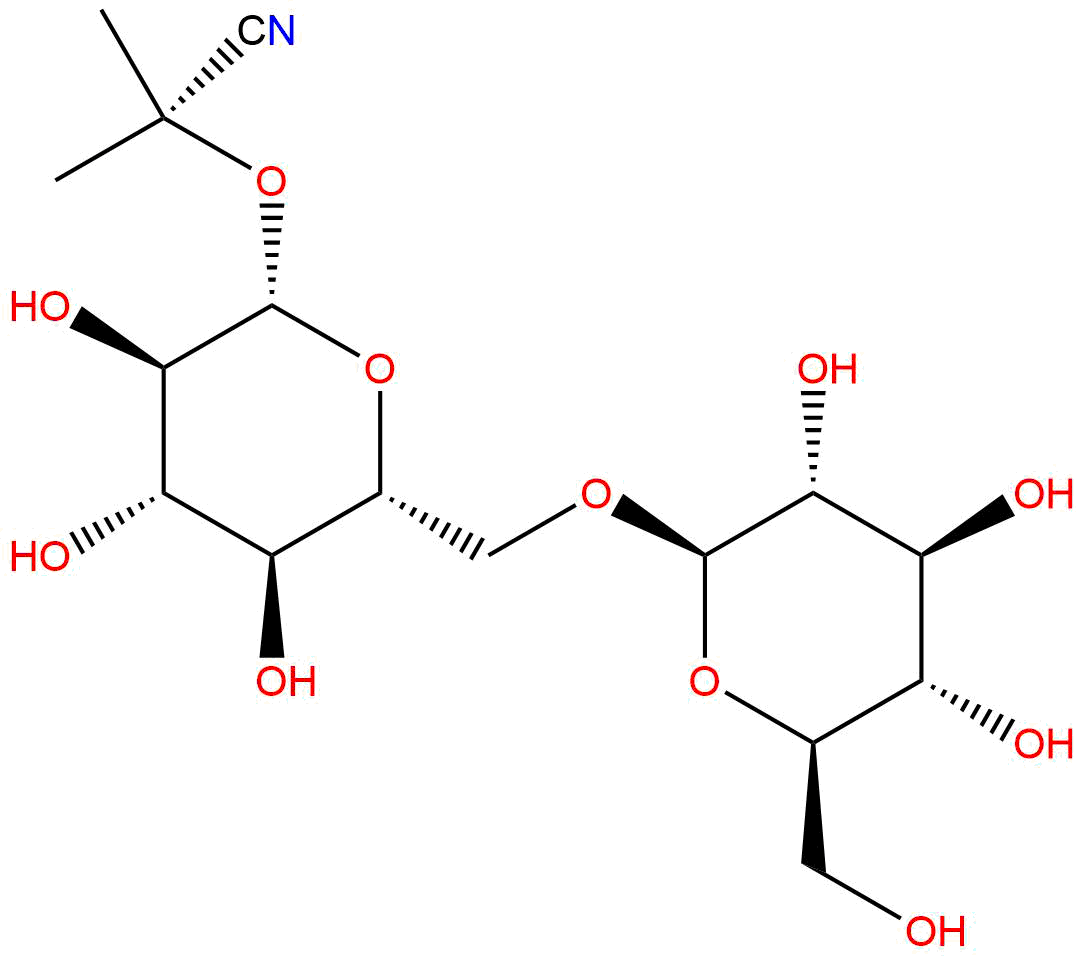


Product name: Linustatin
Synonym name: 2-[(6-O-b-D-Glucopyranosyl-b-D-glucopyranosyl)oxy]-2-methylpropanenitrile
Catalogue No.: BP4497
Cas No.: 72229-40-4
Formula: C16H27NO11
Mol Weight: 409.388
Botanical Source: Linseed
Type of Compound:
Purity: 95%~99%
Analysis Method: HPLC-DAD or/and HPLC-ELSD
Identification Method: Mass, NMR
Packing: Brown vial or HDPE plastic bottle
Storage: Store in a well closed container, protected from air and light. Put into refrigerate or freeze for long term storage.
Whenever possible, you should prepare and use solutions on the same day. However, if you need to make up stock solutions in advance, we recommend that you store the solution as aliquots in tightly sealed vials at -20℃. Generally, these will be useable for up to two weeks.
The product could be supplied from milligrams to grams
Inquire for bulk scale.
For Reference Standard and R&D, Not for Human Use Directly.
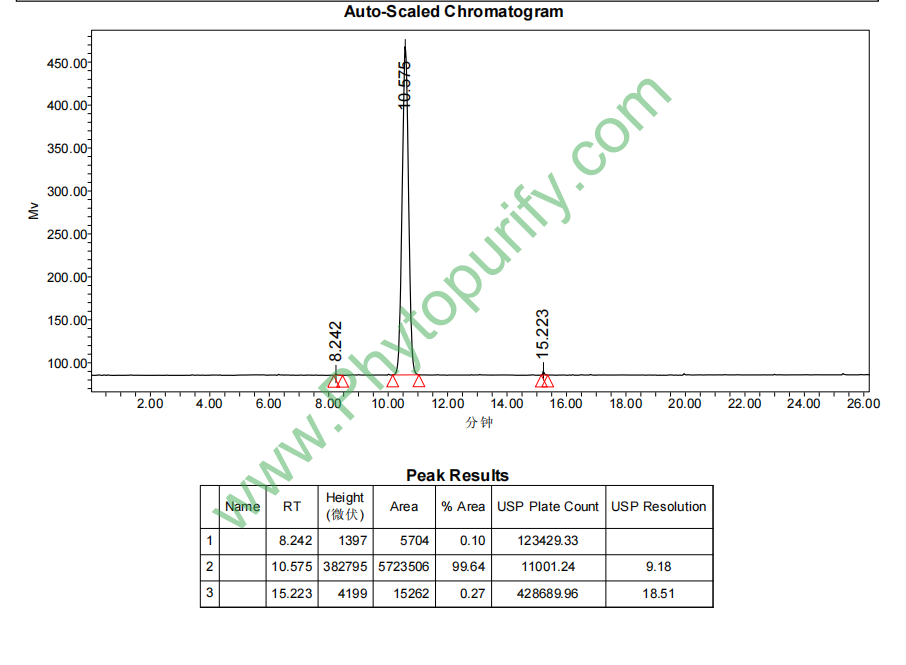
HPLC of Linustatin
Storage conditions:Short-term storage at 2~8℃, long-term storage at -20 ~ -80℃
202.3200
-1.8504
-1.8504
72.1861
.4476
.2629
Low
17.6224
4.6182
Yes
No
No
No
Yes
No
0.0
Yes
Yes
Yes
Yes
Natural products, as an important treasure trove for drug discovery, play an irreplaceable role in the history of human disease prevention and treatment. Cyanide glycosides are a class of secondary metabolites widely distributed in the plant kingdom. Their structural characteristics are that alpha hydroxynitriles are linked to sugar groups and can be enzymatically interpreted to release hydrogen cyanide in organisms. Therefore, they are traditionally associated with toxicity. However, with the deepening of modern pharmacological research, some cyanogenic glycosides and their derivatives have shown diverse biological activities beyond their traditional understanding, especially in the fields of anti-inflammatory, analgesic, and neuroprotective effects, demonstrating potential application value. Linustatin, as a cyanide glycoside isolated from flaxseed meal, is one of the representative molecules in this type of research. In recent years, research on its anti-inflammatory activity has gradually increased, revealing its potential for multi-target anti-inflammatory effects by intervening in key inflammatory signaling pathways such as interleukin-6 (IL-6), signal transduction and transcription activator 3 (STAT3), nuclear factor kappa B (NF - κ B), as well as regulating targets such as cyclooxygenase (COX) and transient receptor potential (TRP) channels. This article aims to systematically review the chemical properties, plant sources, extraction methods, pharmacological activities, mechanisms of action, pharmacological evaluation, and clinical application prospects of alpha linolenic acid, in order to provide comprehensive scientific references for the in-depth research and development of this natural product.
Linustatin, also known as (R) -2- [(β - D-glucopyranosyl) (phenyl) methyl] -2-hydroxyphenylacetonitrile - β - D-gentiopicroside, has a CAS registration number of 72229-40-4. Structurally, it is a disaccharide cyanoglycoside, with its glycoside moiety being phenylacetaldehyde cyanohydrin. It connects one molecule of glucose and one molecule of gentian disaccharide (formed by two molecules of glucose connected by a β -1,6 bond) through glycosidic bonds, forming a relatively complex sugar chain structure. This structure determines its fundamental physicochemical properties.
Its molecular formula is C20H27NO11, with a molecular weight of 409.3880 g/mol. The molecule is rich in multiple hydroxyl groups, resulting in a theoretical topological polar surface area (TPSA) of up to 202.32 Å ², indicating its strong hydrophilicity. The calculated lipid water partition coefficient (LogP) is -1.8504, further confirming its hydrophilic and lipophilic properties. Consistent with this, its water solubility prediction value is good, about 72.1861 mg/L, indicating that the compound is easily soluble in aqueous systems. These physical and chemical parameters collectively point to a conclusion: alpha linolenic acid is a highly polar and water-soluble natural product, which will have a significant impact on its absorption, distribution, metabolism, and excretion (ADME) processes in organisms. The cyanide group (- CN) in its structure is the characteristic group of cyanogenic glycosides and the key structural basis for its potential biological activity (including possible toxicity).
Linoleic cyanide glycoside mainly comes from flax(Linum usitatissimum L. The seeds, more precisely, are the by-products of flaxseed oil extraction - flaxseed meal. Flaxseed is not only rich in oil and protein, but also contains various cyanogenic glycosides. Linamarin is one of them and often coexists with other cyanogenic glycosides such as linamarin. In intact seeds, cyanogenic glycosides are spatially isolated from their specific β - glucosidase enzymes (such as flaxseed glycosidase). When seed tissue is damaged (such as crushing or extraction), enzymes come into contact with substrates, catalyzing the hydrolysis of cyanogenic glycosides to produce cyanoalcohols and further releasing hydrogen cyanide (HCN). This process has a defensive effect on the plant itself, but also poses challenges to safe extraction.
Therefore, the key to efficiently and safely extracting alpha linolenic acid from flaxseed meal is to inhibit or avoid the activity of endogenous β - glucosidase. The conventional extraction process usually includes the following steps:
1. Raw material pretreatment Dry and crush flaxseed meal at low temperature. To inactivate enzymes, soaking in hot methanol or ethanol, boiling water bath treatment, or adjusting the pH value of the extraction solvent to an acidic or alkaline environment are commonly used to inactivate the enzymes.
2. Solvent extraction The most commonly used extraction solvents are methanol, ethanol, or a methanol water mixture solution. Cold soaking, Soxhlet extraction, or ultrasound assisted extraction are used under controlled temperature conditions to maximize extraction efficiency while minimizing enzymatic hydrolysis.
3. Separation and purification After filtration and concentration, the crude extract is usually separated preliminarily using column chromatography technology. Normal phase silica gel column chromatography using gradient elution systems such as chloroform methanol water is a common choice. Further purification can be achieved using reverse phase high performance liquid chromatography (RP-HPLC, commonly C18 column, with methanol water or acetonitrile water as mobile phase) or preparative thin layer chromatography (PTLC). The purified product was structurally identified using techniques such as nuclear magnetic resonance (NMR) and mass spectrometry (MS).
4. Safety precautions The entire extraction and purification process should be carried out in a well ventilated environment, and operators should have safety awareness, as even if inhibitory measures are taken, there may still be a risk of trace HCN release.
The core pharmacological activity of alpha linolenic acid focuses on anti-inflammatory effect Related studies have revealed its effectiveness in various inflammatory models.
In vitro anti-inflammatory activity In the lipopolysaccharide (LPS) - induced macrophage (such as RAW264.7 cells) inflammation model, alpha linolenic acid can dose dependently inhibit the excessive production of nitric oxide (NO) and prostaglandin E2 (PGE2), which are key effector molecules of the inflammatory response. At the same time, it can significantly downregulate the expression of various pro-inflammatory cytokines (such as TNF - α, IL-6, IL-1 β) at the mRNA and protein levels. These results indicate that alpha linolenic acid has a direct cellular anti-inflammatory effect.
In vivo anti-inflammatory and analgesic activity In the rat paw swelling model induced by carrageenan or formalin, intraperitoneal injection or oral administration of alpha linolenic acid showed significant anti-inflammatory effects, reducing tissue edema and inflammatory cell infiltration. Its analgesic effect was confirmed in the second phase (inflammatory pain) of acetic acid-induced writhing test and formalin test in mice, indicating that its analgesic effect is closely related to the anti-inflammatory mechanism.
Potential effects on neuroinflammation Given the crucial role of inflammation in neurodegenerative diseases, preliminary research has explored the effect of alpha linolenic acid on neuroinflammation. In the LPS induced activation model of microglia, alpha linolenic acid showed the ability to inhibit excessive activation of microglia and reduce the release of neurotoxic factors, suggesting its potential neuroprotective potential. This provides clues for its application research in diseases such as Alzheimer's disease and Parkinson's disease.
Other potential activities In addition to its clear anti-inflammatory effect, based on its cyanide glycoside structural characteristics, some studies speculate that it may indirectly exert antioxidant or cell protective effects by slowly releasing trace amounts of cyanide ions, simulating certain effects of low-dose cyanide at the cellular level, such as affecting mitochondrial respiratory chain and activating specific signaling pathways (such as Nrf2 antioxidant pathway), but this requires more experimental evidence to support.
The anti-inflammatory effect of alpha linolenic acid is not achieved through a single target, but exhibits the characteristics of multi-target and multi pathway intervention, and its action network involves multiple key inflammatory mediators and signal transduction molecules. According to existing research, its main mechanism of action is closely related to the following targets:
Inhibition of NF - κ B signaling pathway Nuclear factor kappa B (NF - κ B) is the core transcription factor in inflammatory response. Linoleic cyanide glycoside can inhibit the degradation of I κ B α protein induced by LPS, thereby preventing the translocation of NF - κ B p65 subunit to the nucleus. This directly leads to a reduction in transcription of a series of pro-inflammatory genes downstream, including TNF-α、IL-6、Inducible nitric oxide synthase (iNOS/NOS2) and Cyclooxygenase-2 (COX-2/PTGS2)This is one of the main mechanisms by which it exerts broad-spectrum anti-inflammatory effects.
Regulating the STAT3 signaling pathway After binding to its receptor, IL-6 can activate Janus kinase (JAK), which is then phosphorylated and activated Signal Transduction and Transcription Activation Factor 3 (STAT3)Activated STAT3 enters the nucleus to regulate inflammation related genes. Research has shown that alpha linolenic acid can inhibit the phosphorylation activation of STAT3, thereby interrupting the important pro-inflammatory signaling axis of IL-6/JAK/STAT3 and enhancing its anti-inflammatory effect.
Regulating cyclooxygenase (COX) activity Prostaglandins are important inflammatory mediators synthesized by COX catalysis. Linoleic cyanide glycoside can significantly inhibit COX-2(PTGS2) Reduce the expression and activity of PGE2, and decrease the production of PGE2. Meanwhile, research suggests that it has an impact on COX-1(PTGS1) There may also be a slight regulatory effect, which may affect its gastrointestinal side effect spectrum, but further confirmation is needed.
Intervention in inflammasome activation The assembly and activation of inflammasomes (such as NLRP3) can lead to Cystatine-1 (CASP1) Activation of pro-IL-1 β and pro-IL-18 leads to the production of mature cytokines with strong inflammatory effects. Preliminary evidence suggests that alpha linolenic acid may inhibit the activation of inflammasomes, reduce the activity of CASP1, and decrease the release of IL-1 β.
Regulating transient receptor potential (TRP) channels:TRPV1 and TRPA1 Channels are key molecules that perceive harmful stimuli (such as heat and chemicals) and participate in the transmission of inflammatory pain signals. Linoleic cyanide glycoside or its metabolites may act as regulators to affect the activity of these channels, which may be an important peripheral mechanism for their analgesic effects, especially in combating inflammatory pain.
In summary, alpha linolenic acid synergistically acts on multiple targets such as NF - κ B, STAT3, COX-2, inflammasomes, and TRP channels, constructing a three-dimensional anti-inflammatory network that effectively inhibits the initiation, amplification, and generation of pain signals in inflammatory responses.
Based on its physical and chemical properties and preliminary biological data, the pharmacological properties of alpha linolenic acid can be preliminarily evaluated.
Preliminary analysis of drug properties According to its pharmacological parameters, the molecular weight of alpha linolenic acid is moderate (409), but its extremely high TPSA (>200 Å ²) and negative LogP value indicate strong hydrophilicity and poor lipid solubility. This is in line with the warning about the number of hydrogen bond donors/acceptors in the "Five Rules", indicating its possible existence Low oral bioavailability The problem is that it is difficult to passively cross the lipid bilayer of intestinal epithelial cells.
Absorption and distribution Its high water solubility and low fat solubility result in poor transmembrane permeability. The predictive model shows that it Low permeability of blood-brain barrier (BBB)This means that without modification, it is difficult for it to enter the central nervous system in large quantities, which may be a challenge for treating central nervous system inflammation but may also reduce the risk of central side effects. It may be mainly absorbed through paracellular pathways or rely on specific transporters for limited absorption.
Metabolism and excretion As a cyanide glycoside, its fate in the body is crucial. After oral administration, the β - glucosidase in the gut microbiota may hydrolyze it, releasing glycosides (cyanogens) and glycosides. Glycosides can be further decomposed in the body to produce benzaldehyde and hydrogen cyanide (HCN). Trace amounts of HCN may be converted into less toxic thiocyanates by thiocyanate enzyme and excreted in urine. Therefore, its efficacy and toxicity may be partially attributed to its metabolites. There is currently a lack of systematic in vivo research data on the detailed pharmacokinetic parameters of its prototype drug and metabolites, such as Tmax, Cmax, t1/2, AUC, etc.
Preliminary Safety Prediction According to the provided pharmacological parameters, it HERG inhibition risk prediction is' no 'The potential risk of causing prolonged QT interval in the heart is low.The predicted value of Ames test is 0.0 It indicates that there may be no direct genetic toxicity risk. However,These are only computer predicted results, and their actual toxicity, especially long-term administration toxicity and subchronic toxicity under cyanide glycoside background (such as effects on thyroid function, as thiocyanate is a competitive inhibitor of thyroid peroxidase), must be evaluated through rigorous in vitro and in vivo toxicology experiments.
Flaxseed cyanide glycoside, as a natural product with multi-target anti-inflammatory activity, has broad clinical application prospects, but also faces many challenges.
Potential application directions:
1. Chronic inflammatory diseases Its multi-target mechanism of action makes it potential for the treatment of chronic inflammatory diseases such as rheumatoid arthritis, inflammatory bowel disease, psoriasis, etc. It may serve as a supplement or alternative to existing anti-inflammatory drugs, especially for patients who have poor response to traditional nonsteroidal anti-inflammatory drugs (NSAIDs) or biologics.
2. Inflammatory pain management By inhibiting COX-2 and regulating TRPV1/TRPA1 channels, alpha linolenic acid can be used to develop novel analgesic drugs, particularly for neuropathic pain and inflammatory pain, which may have better tolerance than traditional NSAIDs.
3. Adjuvant therapy for neurodegenerative diseases Although BBB has poor penetration, its inhibitory effect on microglial activation and neuroinflammation suggests that through dosage form improvements (such as nano drug delivery systems) or the development of derivatives that can enter the central nervous system, it may become a part of anti neuroinflammatory strategies in diseases such as Alzheimer's disease and Parkinson's disease.
4. Functional foods and health products Flaxseed itself is a healthy food. After clarifying the safe dosage window of alpha linolenic acid, flaxseed extracts rich in this ingredient may be developed as dietary supplements with anti-inflammatory and health benefits.
Challenges and future research directions:
1. Improved bioavailability This is the biggest bottleneck for its clinical application. Future research needs to focus on dosage form innovation, such as developing phospholipid complexes, cyclodextrin inclusion complexes, nanoemulsions, liposomes, and other delivery systems, or modifying their sugar based parts through prodrug strategies to improve their lipid solubility and intestinal absorption.
2. Systematic pharmacokinetics and toxicology research It is urgent to conduct comprehensive in vivo ADME research and long-term toxicity evaluation to clarify its safe dose range, especially to assess the potential risks of chronic exposure to cyanide under long-term use (such as thyroid function and neurological effects).
3. Deep analysis of the mechanism of action More precise clarification is needed on whether it directly acts on various targets or primarily exerts its effects through its metabolites. Confirm its direct interaction with targets such as STAT3 and TRP channels using techniques such as molecular docking and surface plasmon resonance.
4. Structural optimization and derivative development Based on its pharmacophore, structural modification is carried out to improve its pharmacokinetic properties (such as enhancing BBB penetration) while retaining or enhancing anti-inflammatory activity, and completely eliminate the toxicity hazards related to cyanide glycosides.
5. Preclinical and clinical research After completing sufficient preclinical research, it is necessary to gradually advance clinical trials to verify its effectiveness, safety, and optimal dosing regimen in humans.
Linoleic cyanide glycoside is a natural compound of cyanide glycoside with significant multi-target anti-inflammatory activity discovered from flaxseed meal. It exhibits effective inhibitory effects on various inflammatory models by intervening in key inflammatory signaling nodes such as NF - κ B, STAT3, COX-2, inflammasomes, and TRP channels. Although its excellent in vitro activity and multi-target properties are encouraging, the low oral bioavailability caused by its polar chemical structure, as well as the potential metabolic toxicity risk as a cyanide glycoside, constitute the main obstacles on its path to drug conversion. Future research should strive to improve its delivery efficiency through advanced pharmaceutical methods, clarify its safety boundary through systematic pharmacokinetic toxicology studies, and deeply reveal its precise mechanism of action through chemical biology methods. Only by overcoming these challenges can alpha linolenic acid potentially transform from an interesting phytochemical into a novel drug candidate for treating chronic inflammatory diseases, or become a safe and effective functional ingredient, thus truly realizing its potential medical and health value. This process once again confirms the long and rigorous scientific journey of natural product research from discovery, mechanism elucidation to ultimate development.
