| Catalog No | Package | Original Price | Price | Inventory | Quantity | Operating |
|---|---|---|---|---|---|---|
| BPF8384-5mg | 5mg | $450.00 | Sign in |
|


Storage conditions:Short-term storage at 2~8℃, long-term storage at -20 ~ -80℃
51.1600
2.8736
2.6825
.0562
7.5310
18.4667
High
88.7586
2.9307
No
No
No
No
No
No
0.6
No
No
No
No
Natural products have always been an important source of drug discovery and development, especially in traditional Chinese medicine, where numerous active ingredients derived from plants are used to treat various diseases. Purple violet genus(Corydalis)Plants, as a large genus of Papaveraceae, have more than 400 species worldwide, many of which have a long history of application in traditional Asian medicine systems, especially in traditional Chinese medicine and Tibetan medicine. Purple violet plants are known for their abundant isoquinoline alkaloids, which exhibit a wide range of pharmacological activities including pain relief, anti-inflammatory, sedative, antiarrhythmic, and anti-tumor effects. Among them, Yanhusuo(Corydalis yanhusuo)As a famous analgesic traditional Chinese medicine, the research on its active ingredients is particularly in-depth.
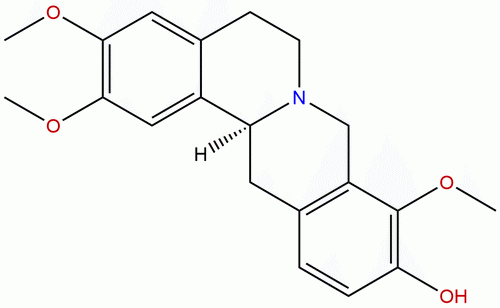
Corydalmine (CAS number: 30413-84-4) is a tetrahydroprotoberberine (THPB) isoquinoline alkaloid isolated from plants of the genus Corydalis. As one of the active ingredients in Corydalis yanhusuo, purpurin alkaloids are structurally similar to compounds of the same class as tetrahydropalmatine (THP), but their unique stereoconfiguration and substituent pattern give them a specific spectrum of biological activity. In recent years, with the increasing demand for the treatment of chronic pain and neurological and psychiatric disorders, as well as the prominent issues of addiction and side effects associated with traditional analgesics such as opioids, berberine has received increasing attention for its potential analgesic, sedative, and antipsychotic activities. Especially its multi-target action characteristics have demonstrated unique advantages in the development of new, low addictive analgesic drugs. This article aims to provide a systematic review of the chemical properties, plant sources, pharmacological activities, mechanisms of action, medicinal properties, and clinical application prospects of berberine, in order to provide reference for the in-depth research and development of this natural product.
The chemical name of Corydalis alkaloids is (13S, 13aR) -2,3,9,10-Tetramethoxy-5,8,13,13a-Tetrahydro-6H-isoquinoline [3,2-a] isoquinoline, belonging to the tetrahydroberberine (THPB) family. Its core skeleton is composed of two fused isoquinoline rings, forming a partially saturated six ring system. This molecule has two chiral centers located at positions C13 and C13a. The naturally occurring (-) - Corydalmine has a specific left-handed configuration, with an absolute configuration of (13S, 13aR). The four methoxy groups (- OCH ∝) on the molecular structure are respectively connected to the C2 and C3 positions of the A ring and the C9 and C10 positions of the D ring. This specific substitution pattern is the key to distinguishing it from other THPB alkaloids, such as berberine, whose methoxy groups are located at C2, C3, C9, and C10.
From the perspective of physical and chemical properties, the molecular weight of Corydalis alkaloids is 341.4070 g/mol. Its lipid water partition coefficient (LogP) is 2.8736, indicating that the compound has moderate lipophilicity, which is beneficial for its penetration into biological membranes. The topological polar surface area (TPSA) is 51.16 Å ², which is lower than the threshold commonly believed to be able to penetrate the blood-brain barrier well (about 60-70 Å ²), indicating its good ability to penetrate the central nervous system (CNS). In fact, its blood-brain barrier penetration has been evaluated as' high ', which is highly consistent with its potential as a central analgesic and sedative drug. In terms of water solubility, the water solubility of berberine is relatively low (0.0562 mg/mL), which may be one of the factors limiting its oral bioavailability. This compound has good solubility in conventional organic solvents such as methanol, ethanol, and chloroform. These physical and chemical properties collectively determine the pharmacokinetic characteristics and the choice of administration route of Corydalis alkaloids.
Corydalis alkaloids mainly come from plants of the genus Corydalis in the family Papaveraceae. Among them, the most famous source is the traditional Chinese medicine Yanhusuo(Corydalis yanhusuo W.T. Wang), Its dried tubers are an important traditional medicinal herb for pain relief, blood circulation, and qi circulation. In addition, the compound is also present in other species of the genus Corydalis, such as the Northeastern Corydalis(Corydalis ambigua)Dental valve Corydalis yanhusuo(Corydalis turtschaninovii)And Fusheng Zijin(Corydalis decumbens Not available in summer, etc. There are significant differences in the content of berberine in plant materials from different species, regions, and harvesting periods. Usually, the total alkaloid content in the tubers of Corydalis yanhusuo is relatively high, and berberine, as one of the minor or major components, is influenced by both genetic and environmental factors.
Traditional extraction methods are mostly based on the acid-base properties of alkaloids. The classic process involves percolating or soaking dried and crushed plant materials in an acidic aqueous solution (such as dilute hydrochloric acid or dilute sulfuric acid) to dissolve alkaloids into salts. After filtration, alkalize the acidic extract with alkaline solution (such as ammonia or sodium hydroxide) to pH 9-10 to free the alkaloids, and then extract with organic solvents (such as chloroform, ether, or ethyl acetate). Combine the organic phases and recover the solvent to obtain a crude extract of total alkaloids. Subsequently, by utilizing the differences in polarity or alkalinity between purple violet alkaloids and other alkaloids, separation and purification were carried out through repeated silica gel column chromatography, alumina column chromatography, or preparative thin-layer chromatography. Common elution systems include mixed solvents with different ratios such as chloroform methanol and petroleum ether acetone.
Modern separation technology has greatly improved extraction efficiency and purity. High performance liquid chromatography (HPLC), especially preparative HPLC, has become the standard method for separating and purifying scopolamine alkaloids. By using a reverse phase C18 chromatography column and acetonitrile water (often with a small amount of acid or buffer salt added, such as triethylamine or ammonium formate) as the mobile phase, efficient separation of berberine can be achieved. In addition, high-speed countercurrent chromatography (HSCCC), as a liquid-liquid distribution chromatography technique, has been successfully applied to the separation of alkaloids in the genus Corydalis due to its advantages of irreversible adsorption and high sample recovery rate. In recent years, with the promotion of green chemistry concepts, some new extraction techniques such as ultrasound assisted extraction, microwave-assisted extraction, and deep eutectic solvent extraction have also been explored to improve the extraction rate and shorten the extraction time of berberine. For its quantitative analysis, HPLC-UV or liquid chromatography-mass spectrometry (LC-MS) methods are usually used, which have the characteristics of high sensitivity and high specificity.
The pharmacological activity research of berberine mainly focuses on its effects on the central nervous system, especially in pain relief and sedation, while also involving other fields such as anti-inflammatory and antipsychotic effects.
1. Analgesic effect
Analgesia is the most concerned pharmacological activity of berberine. Multiple animal experiments have confirmed that berberine has significant analgesic effects in various pain models. In the classic acetic acid writhing test, intraperitoneal injection of berberine can dose dependently reduce the number of writhing events in mice, indicating its effectiveness in alleviating visceral pain caused by chemical stimulation. In the hot plate and tail flick models, berberine can prolong the latency of pain threshold in mice, indicating its inhibitory effect on acute pain caused by thermal stimulation. More importantly, in chronic pain models such as neuropathic pain induced by chronic sciatic nerve compression injury (CCI) and inflammatory pain induced by complete Freund's adjuvant (CFA), berberine can effectively alleviate mechanical hyperalgesia and thermal hyperalgesia. It is worth noting that its analgesic effect is different from classical opioid drugs such as morphine, and no significant tolerance or physical dependence has been observed after long-term administration, making it an ideal candidate molecule for developing non addictive analgesics.
2. Sedative and hypnotic effects
Corydalis alkaloids have a significant inhibitory effect on the central nervous system. Animal experiments have shown that it can reduce spontaneous activity in mice, synergize with the hypnotic effect of pentobarbital sodium, shorten sleep latency, and prolong sleep time. This sedative effect may be related to its antagonistic effect on dopamine receptors. Compared with classic antipsychotic drugs, the sedative effect caused by berberine is milder and less likely to cause extrapyramidal side effects such as tetanic syncope.
3. Anti inflammatory effect
In addition to directly acting on the nervous system, berberine also exhibits direct anti-inflammatory activity. In a macrophage model stimulated by lipopolysaccharide (LPS), berberine can significantly inhibit the production of pro-inflammatory cytokines such as tumor necrosis factor - α (TNF - α), interleukin-1 β (IL-1 β), and interleukin-6 (IL-6). In animal inflammation models, it can also alleviate ear swelling and toe swelling. Its anti-inflammatory mechanism may be related to the inhibition of the activation of the nuclear factor kappa B (NF - κ B) signaling pathway.
4. Other pharmacological activities
Preliminary studies also suggest that berberine may have the potential to treat depression, anxiety, and drug addiction. In behavioral despair models such as forced swimming and tail suspension experiments, berberine can reduce immobility time in mice and exhibit antidepressant like effects. In addition, studies have shown that it can weaken morphine induced conditioned place preference (CPP), suggesting its potential value in intervening in opioid addiction.
The pharmacological effects of berberine are the result of the synergistic action of multiple targets and pathways, which is consistent with its complex chemical structure. Based on known research and the commonality of THPB alkaloids to which it belongs, its mechanism of action mainly involves the following aspects:
1. Dopamine receptor system
This is one of the most core targets of action for berberine. As a typical characteristic of THPB alkaloids, berberine has a high affinity for dopamine receptors, especially D2 like receptors (including DRD2), and mainly exhibits antagonistic effects. By blocking central dopamine receptors, it can regulate reward, motor, and mental activity. This explains its sedative, antipsychotic, and potential anti addictive effects. The antagonism of DRD2 is also an important part of its analgesic effect, as the dopamine system is involved in the perception and regulation of pain.
2. Opioid receptor system
Although berberine is not entirely a classical opioid receptor agonist, it has complex interactions with the opioid receptor system. Research has shown that berberine has a certain affinity for the μ - opioid receptor (OPRM1), δ - opioid receptor (OPRD1), and κ - opioid receptor (OPRK1), but usually has a lower affinity than morphine. Its analgesic effect can be partially reversed by the non selective opioid receptor antagonist naloxone, indicating that the opioid receptor system is involved in its analgesic effect. However, due to its mode of action potentially involving partial excitation or allosteric regulation rather than potent complete excitation, it is not prone to typical opioid side effects. Especially the effect on the kappa opioid receptor may be related to its anti-inflammatory and anti itch effects.
3. Transient receptor potential (TRP) channel
The target list of Corydalis alkaloids clearly includes TRPV1 and TRPA1. TRPV1 (capsaicin receptor) and TRPA1 (mustard oil receptor) are non selective cation channels expressed on primary sensory neurons, and are key molecules for sensing and transmitting pain signals, especially inflammatory and neuropathic pain. Corydalis alkaloids may directly inhibit peripheral and central pain signal transduction by antagonizing or desensitizing these channels. This provides a direct molecular basis for explaining its good effects in neuropathic pain and inflammatory pain.
4. Cyclooxygenase (COX) system
The targets of purpurin alkaloids also include PTGS1 (COX-1) and PTGS2 (COX-2). COX is a key enzyme in prostaglandin synthesis, and prostaglandins are important inflammatory and painful substances. The inhibitory effect of berberine on COX, especially its selective inhibitory potential on COX-2, is another important mechanism for its anti-inflammatory and analgesic effects. This makes its mechanism of action similar to nonsteroidal anti-inflammatory drugs (NSAIDs), but may have a different selectivity spectrum.
5. Serotonin transporter (SERT)
The SLC6A4 in the target list encodes the 5-hydroxytryptamine transporter (SERT). Corydalis alkaloids may activate the descending inhibitory pathway by inhibiting SERT, increasing the concentration of serotonin (5-HT) in synaptic cleft, and producing analgesic and antidepressant effects. This further enriches its analgesic mechanism and explains its potential antidepressant activity.
6. Cannabinoid receptor
The target CNR1 encodes cannabinoid receptor 1 (CB1). CB1 receptors are widely distributed in the central nervous system and participate in the regulation of pain, emotion, and appetite. The interaction between berberine and CB1 receptors, whether as agonists, antagonists, or allosteric modulators, may add a new dimension to its analgesic and neuropsychiatric regulatory effects.
In summary, berberine forms a synergistic network regulatory mechanism by simultaneously acting on multiple targets closely related to pain and emotion regulation, such as dopamine, opioid, TRP channels, COX, 5-HT, and cannabinoids. This multi-target mode of action is the key to its low addiction and high efficacy, and is also in line with the concept of "multi-target therapy" in modern drug discovery.
A comprehensive evaluation of the pharmacological properties of Corydalis alkaloids is required to develop them into clinical drugs. The physical and chemical properties parameters provide preliminary clues. The molecular weight (341.4 Da) conforms to the Lipinski five rule (<500 Da), and the LogP (2.87) is also within the ideal range (<5), indicating its good membrane permeability potential. TPSA (51.16 Å ²) and high blood-brain barrier penetration prediction confirm its potential as a central nervous system drug. In addition, hERG inhibition is predicted as' no ', reducing its risk of causing cardiac QT interval prolongation and arrhythmia, which is an important safety advantage. The Ames test result is 0.6, usually interpreted as no mutagenicity or extremely low risk of mutagenicity, indicating low genetic toxicity. These preliminary toxicological predictions are encouraging.
However, the pharmacokinetic properties of berberine also face challenges. Its water solubility (0.0562 mg/mL) is poor, which may lead to incomplete oral absorption and low bioavailability. This is a common problem faced by many natural alkaloids. At present, the detailed pharmacokinetic parameters (such as half-life, clearance rate, distribution volume, and absolute bioavailability) of Corydalis yanhusuo alkaloids are not yet fully available publicly. However, based on the study of its analogue, Corydalis yanhusuo, it can be inferred that it may undergo first pass metabolism and have lower plasma concentrations after oral administration. Its metabolic pathway may involve O-demethylation and glucuronic acid binding reactions mediated by the liver cytochrome P450 enzyme system.
In order to enhance its pharmacological properties, medicinal chemists are exploring various strategies. For example, by preparing its prodrugs, salts (such as hydrochloride and phosphate), or using novel drug delivery systems (such as liposomes, nanoparticles, phospholipid complexes) to improve its water solubility and oral bioavailability. In addition, structural modification is also an important direction, by introducing specific functional groups on its skeleton to optimize its target selectivity and pharmacokinetic properties, while reducing potential toxic side effects.
The unique pharmacological activity and multi-target mechanism of action of berberine have opened up broad prospects for its clinical application, especially in the following directions:
1. Development of new analgesic drugs
This is the most direct application prospect of berberine. Given the addiction crisis of existing opioid drugs and the gastrointestinal and cardiovascular side effects of NSAIDs, there is an urgent need to develop new, safe, and effective non addictive analgesics. The effectiveness of berberine in various pain models, especially chronic neuropathic pain and inflammatory pain, coupled with its low addiction and low hERG risk, make it a highly promising lead compound. In the future, through structural optimization, it is expected to develop highly selective and active derivatives for specific pain types (such as cancer pain, diabetes neuropathy pain).
2. Adjuvant treatment for mental and neurological disorders
Based on its regulatory effects on the dopamine and serotonin systems, berberine or its derivatives may play a role in the treatment of schizophrenia, depression, anxiety disorders, and drug addiction. Its sedative effect is mild, with minimal extrapyramidal side effects, and it may be used as an adjuvant medication for antipsychotic drugs. Its antidepressant and anti addiction potential also deserves further validation through preclinical and clinical studies.
3. Supplement of anti-inflammatory drugs
The anti-inflammatory activity of berberine, especially its dual inhibition of COX and TRP channels, makes it potential for the treatment of inflammation related diseases such as arthritis and enteritis. Its mechanism of action overlaps with classical NSAIDs but differs, potentially providing a new anti-inflammatory strategy.
Outlook and Challenges:
Despite the bright prospects, the clinical translation of berberine still faces many challenges. Firstly, its low oral bioavailability is the biggest bottleneck, which requires advanced formulation technology or structural modification to solve. Secondly, although the preliminary toxicological predictions are good, the systematic preclinical toxicological evaluation (including long-term toxicity, reproductive toxicity, neurotoxicity, etc.) still needs to be improved. Thirdly, its multi-target effect is both an advantage and a challenge, which may lead to off target effects and potential drug drug interactions, requiring careful evaluation in clinical studies. Finally, the cost of directly extracting and isolating from plants is high, and establishing efficient and green chemical synthesis or semi synthesis routes is crucial for their large-scale production and promotion.
Future research should focus on: (1) further elucidating the molecular mechanisms underlying its interactions with various targets, particularly in allosteric regulation and biased signal transduction; (2) Design and synthesize new derivatives with higher selectivity and better pharmacokinetic properties based on structure-activity relationship (SAR) research; (3) Develop new drug delivery systems, such as brain targeted nano formulations, to enhance their brain concentration and therapeutic efficacy; (4) Conduct rigorous clinical trials to validate its effectiveness and safety in specific diseases such as chronic pain and depression.
As a tetrahydroberberine alkaloid derived from traditional Chinese medicine plants of the genus Corydalis, Corydalis alkaloids have become a prominent star in the field of natural product drug development due to their unique chemical structure and multi-target pharmacological activity, especially their significant analgesic, sedative, and anti-inflammatory effects. Its mechanism of action involves multiple systems closely related to pain and neuropsychiatric regulation, such as dopamine, opioid, TRP channels, COX, 5-HT, and cannabinoids. This synergistic mode of action provides a reasonable explanation for its low addiction and high efficacy. Preliminary drug evaluation shows that it has good central permeability potential and low risks of cardiac and genetic toxicity, but poor water solubility and potential low oral bioavailability are the main obstacles to its clinical translation.
From the analgesic experience of traditional Chinese medicine to the in-depth analysis of modern molecular pharmacology, the research process of Corydalis alkaloids reflects the classic path of natural product drug discovery. It is not only the key to understanding the material basis of traditional drug efficacy, but also a valuable template for modern innovative drug design. Faced with the urgent demand for safer and more effective analgesic drugs worldwide, the development of berberine and its derivatives undoubtedly has important scientific significance and clinical value. Through the collaborative efforts of multiple disciplines such as medicinal chemistry, pharmacology, pharmacy, and clinical medicine, and overcoming the bottleneck of drug development, Corydalis alkaloids are expected to become a new type of drug for the treatment of chronic pain, neurological and psychiatric disorders, and make contributions to human health in the future.
Batch can search by a CAS number,one per line
