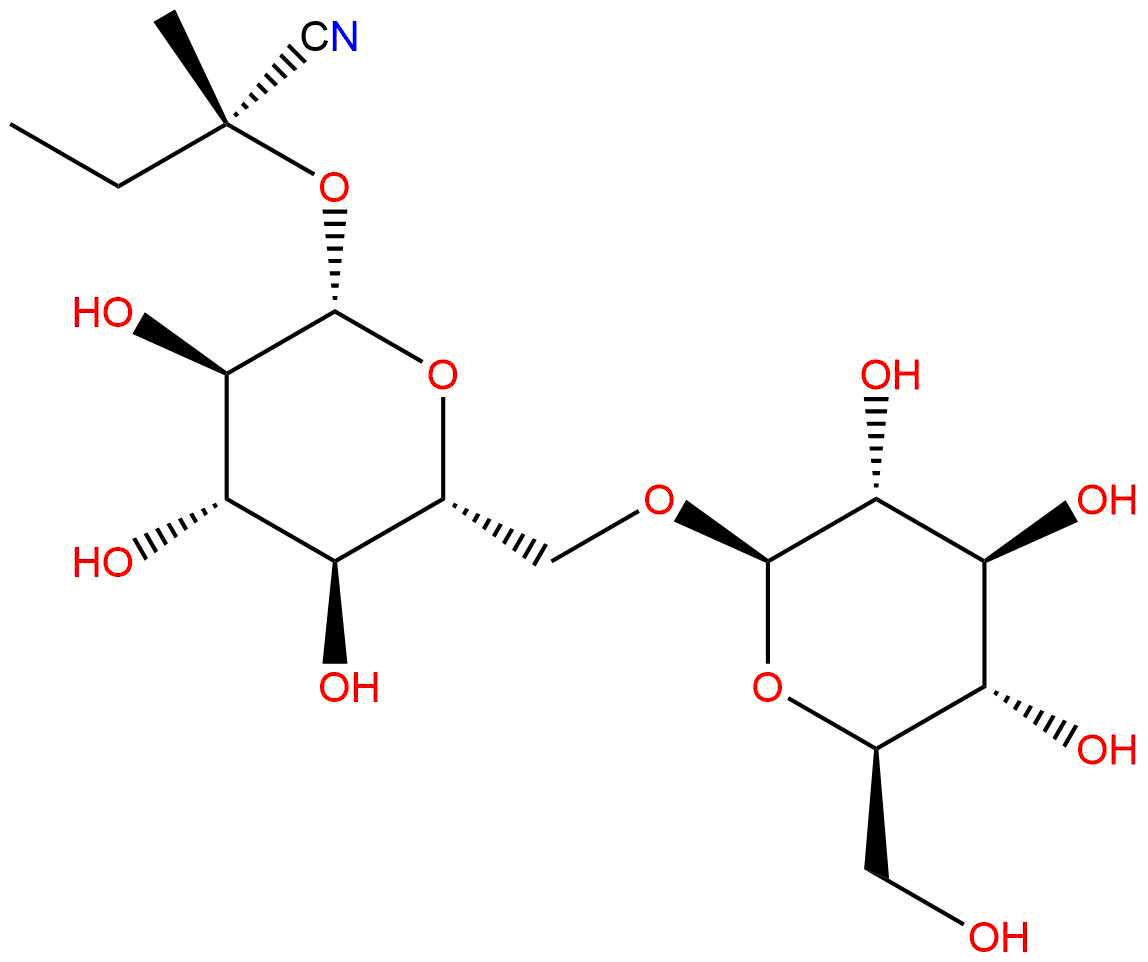


Product name: Neolinustatin
Synonym name:
Catalogue No.: BP4496
Cas No.: 72229-42-6
Formula: C17H29NO11
Mol Weight: 423.415
Botanical Source: Linseed
Type of Compound:
Purity: 95%~99%
Analysis Method: HPLC-DAD or/and HPLC-ELSD
Identification Method: Mass, NMR
Packing: Brown vial or HDPE plastic bottle
Storage: Store in a well closed container, protected from air and light. Put into refrigerate or freeze for long term storage.
Whenever possible, you should prepare and use solutions on the same day. However, if you need to make up stock solutions in advance, we recommend that you store the solution as aliquots in tightly sealed vials at -20℃. Generally, these will be useable for up to two weeks.
The product could be supplied from milligrams to grams
Inquire for bulk scale.
For Reference Standard and R&D, Not for Human Use Directly.
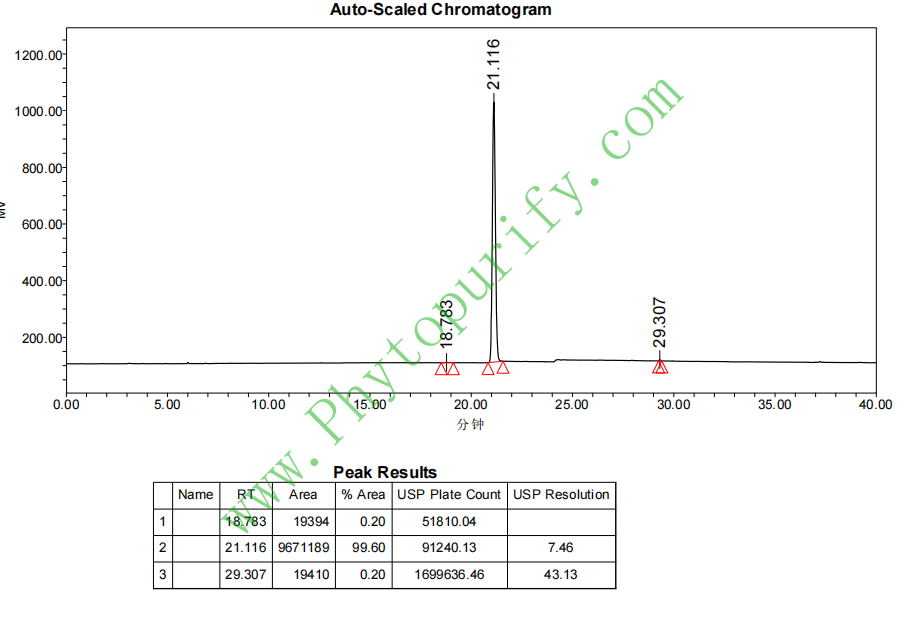
HPLC of Neolinustatin
Storage conditions:Short-term storage at 2~8℃, long-term storage at -20 ~ -80℃
202.3200
-1.6189
-1.6189
51.1941
.4540
.3169
Low
20.7414
4.7748
Yes
No
No
No
Yes
No
0.0
Yes
Yes
Yes
Yes
Natural products, as an important treasure trove for drug discovery, play an irreplaceable role in the history of human disease treatment. Cyanogenides are a class of secondary metabolites widely distributed in the plant kingdom, characterized by the connection of α - hydroxynitriles and glycosides through glycosidic bonds. These compounds have long been considered potential toxic substances due to their ability to metabolize and release hydrogen cyanide in the body. However, recent studies have gradually revealed that many cyanogenic glycosides and their derivatives have significant anti-tumor, anti-inflammatory, analgesic and other biological activities, demonstrating unique medicinal potential. Neolinustatin (CAS: 72229-42-6) is one of the highly anticipated natural cyanogenic glycosides. It is mainly isolated from the seeds of the traditional economic crop flax (Linum usitatissimum L.). Flaxseed is widely known as a functional food ingredient rich in alpha linolenic acid, lignans, and dietary fiber. However, the pharmacological value of its cyanogenic glycosides, such as neolinolenic cyanogenic glycosides, has only been gradually discovered in recent decades. Preliminary studies have shown that the new alpha linolenic acid glycoside exhibits clear anti-tumor activity in various in vitro and in vivo models. Its effects involve inducing apoptosis, inhibiting proliferation, anti angiogenesis, and interacting with multiple key tumor related targets such as MCL1, BCL2, STAT3, MMP2, etc. The purpose of this article is to systematically review the chemical properties, plant sources, pharmacological activities, mechanisms of action, and medicinal properties of the new cyanogenic glycoside from flax, in order to provide comprehensive scientific references for the in-depth research and potential drug development of this natural product.
New flax cyanoglycoside is a typical cyanoglycoside compound. Its chemical name is (R) -2- [(β - D-glucopyranosyloxy) methyl] -3-butenitrile, with a molecular formula of C16H25NO10 and a molecular weight of 423.4150. Its core structure is composed of an (R) - configured alpha hydroxynitrile (cyanohydrin) moiety connected to a β - D-glucose unit via an oxygen glycosidic bond, with the cyanohydrin moiety having a 3-butenyl side chain. This structure makes it an important member of a series of cyanogenic glycosides in flaxseed, such as linamarin and linaamarin.
Based on its chemical structure, the new cyanogenic glycoside of flax exhibits specific physicochemical properties, which directly affect its biological activity, extraction and separation strategies, and pharmaceutical potential. The calculated and experimentally measured parameters related to drug properties show that the logarithm of its lipid water partition coefficient (LogP) is -1.6189, indicating that the compound has a high degree of hydrophilicity, which is consistent with the structural characteristics of being rich in hydroxyl and sugar groups in the molecule. The topologically polar surface area (TPSA) is as high as 202.32 Å ², further confirming its strong polarity characteristics. High hydrophilicity also brings good water solubility, with a calculated value of about 51.1941 mg/L, which is beneficial for its treatment in aqueous media and in vitro experiments. However, this high polarity also limits its ability to penetrate the lipid bilayer, indicating low blood-brain barrier permeability and suggesting that its direct effects on central nervous system related diseases may be limited. In terms of preliminary safety prediction, the risk of inhibition of hERG potassium channels by neonicotinoid glycosides is "no", indicating a low potential risk of causing QT interval prolongation in the heart. In addition, the Ames test predicted a value of 0.0, indicating that it has no mutagenicity under the current model prediction, providing preliminary positive signals for its safety assessment. These physicochemical and preliminary ADMET (absorption, distribution, metabolism, excretion, and toxicity) properties lay the foundation for the subsequent research of new alpha linolenic acid.
The new cyanogenic glycosides mainly come from the seeds of Linum usitatissimum L., a plant in the family Flaxseed. The content of cyanogenic glycosides in flaxseed varies greatly depending on the variety, planting area, climate conditions, and harvest time, usually ranging from 0.1% to 1%. The new cyanogenic glycoside often coexists with another major cyanogenic glycoside, linamarin, and is one of the key components that contribute to the potential "cyanogenic" properties of flaxseed. In intact seeds, these cyanogenic glycosides are spatially isolated from specific β - glucosidase enzymes. When seed tissue is damaged (such as chewing or grinding), enzymes come into contact with substrates and catalyze the hydrolysis of cyanogenic glycosides to produce acetone cyanohydrin and glucose. The former can further spontaneously or under the action of hydroxynitrile lyase to decompose into acetone and toxic hydrogen cyanide. The cyanide process is a defense mechanism of plants, but it also poses technical challenges for the stable acquisition of complete cyanide glycoside molecules from raw materials.
The extraction and isolation of new cyanogenic glycosides from flaxseed require strategies that effectively inactivate endogenous enzymes and prevent their degradation. The conventional extraction process includes: first, pretreatment of flaxseed powder, commonly using methods such as boiling water or hot methanol instantaneous treatment to denature enzymes, or low-temperature crushing after freeze-drying. Subsequently, polar solvents such as methanol, ethanol, or methanol water mixed solvents are commonly used for extraction because they can effectively dissolve cyanogenic glycosides and further inhibit enzyme activity. After filtration and concentration of the extract, crude extract is obtained.
Due to the complex composition of the crude extract, which contains various substances such as oil, protein, lignin, and other cyanogenic glycosides, further separation and purification are required to obtain high-purity new linolenic cyanogenic glycosides. Chromatography technology is commonly used for separation: firstly, macroporous adsorption resin (such as Diaion HP-20) can be used for decolorization and preliminary enrichment; Then, it is subdivided by normal or reverse phase silica gel column chromatography, often using chloroform methanol or water methanol as elution systems; Finally, the preparation of high-purity monomers often relies on high-performance liquid chromatography (HPLC), especially preparative reverse phase C18 column chromatography. Throughout the process, low-temperature or rapid operation is required to reduce degradation, and tracking and identification are carried out through thin layer chromatography (TLC), high-performance liquid chromatography ultraviolet detection (HPLC-UV), or liquid chromatography-mass spectrometry (LC-MS). Nuclear magnetic resonance (NMR) and mass spectrometry (MS) are the core technologies for ultimately confirming the chemical structure of the new cyanogenic glycoside.
The most notable pharmacological activity of new alpha linolenic acid is its extensive anti-tumor effects. Numerous in vitro studies have shown that it has proliferative inhibitory and cytotoxic effects on various human tumor cell lines.
Antitumor activity: Research shows that neoflax cyanoside can inhibit the activity of many kinds of cancer cells in a dose-dependent manner, such as breast cancer (such as MCF-7, MDA MB-231), liver cancer (such as HepG2, SMMC-7721), colon cancer (such as HCT-116, HT-29), lung cancer (such as A549), etc. Its function is not limited to inhibiting proliferation, but can also effectively induce apoptosis of tumor cells. In vivo studies using mouse transplant tumor models (such as S180 sarcoma and H22 liver cancer) have shown that intraperitoneal injection or gavage of neonicotinoid glycosides can significantly inhibit tumor growth, and within a certain dose range, the toxicity to mouse body weight and major organs (such as heart, liver, spleen, lungs, and kidneys) is relatively small, demonstrating a certain therapeutic window.
Relationship between Activity and Structure The anti-tumor activity of the new cyanogenic glycoside is closely related to its complete cyanogenic glycoside structure. Its mechanism of action is not solely dependent on the non selective toxicity caused by the complete hydrolysis and release of hydrogen cyanide in the body. Research has shown that its parent molecules or specific metabolic intermediates can directly intervene in the signaling pathways of tumor cells. The sugar moiety may play an important role in its water solubility and recognition of certain targets, while the cyanohydrin moiety is a key pharmacophore for its biological activity. Compared with some other cyanogenic glycosides, the specific olefin side chain of the new flax cyanogenic glycoside may endow it with a unique biological activity spectrum and target selectivity.
Other potential activities In addition to anti-tumor effects, based on the common anti-inflammatory and antioxidant properties of cyanogenic compounds, new flax cyanogenic glycosides may also have activity in these areas. However, there are few specialized research reports on this topic, which is a direction worth exploring in the future.
The anti-tumor effect of new alpha linolenic acid involves multi-target and multi pathway synergistic mechanisms, and its molecular target network is complex, mainly including the following categories:
Regulating cell apoptosis pathway (targeting BCL2 family)New alpha linolenic acid can upregulate the expression of pro apoptotic proteins such as Bax and Bak, while downregulating anti apoptotic proteins BCL2 and MCL1 The expression. By disrupting the balance of BCL2 family proteins, increasing mitochondrial outer membrane permeability leads to the release of cytochrome C, activating the caspase cascade reaction and ultimately inducing tumor cell apoptosis. The inhibition of MCL1 is particularly crucial, as MCL1 is an important factor in many tumor cells' resistance to apoptosis.
Inhibition of survival signals and transcriptional activation (targeting STAT3)Signal Transduction and Transcription Activation Factor 3(STAT3)It is a key oncogenic transcription factor, and the continuously activated STAT3 promotes cell proliferation, survival, and immune escape. Research has shown that neonicotinoid glycosides can inhibit the phosphorylation (activation) of STAT3, prevent its nuclear translocation, and inhibit the transcription of downstream target genes (such as Cyclin D1, Bcl-2, VEGF), thereby suppressing tumor growth.
Intervention in Cell Cycle and DNA Metabolism (Targeting TOP1/TOP2A)New alpha linolenic acid may affect Topoisomerase I (TOP1) and Topoisomerase II alpha (TOP2A) The activity of interfering with DNA replication and transcription processes. This interference may lead to the accumulation of DNA damage, activate the DNA damage response pathway, block cells at specific cell cycle checkpoints (such as G2/M phase), and ultimately lead to apoptosis or aging.
Inhibition of invasion and metastasis (targeting MMP2, HIF1A)Tumor metastasis is the main cause of cancer treatment failure. New Linoleic Cyanide Can Downregulate Matrix Metalloproteinase 2(MMP2)Expression and activity. MMP2 is a key enzyme for degrading extracellular matrix (ECM), and inhibition of its activity can significantly reduce the invasion and migration ability of tumor cells. In addition, it can also inhibit hypoxia inducible factor 1 α(HIF1A)Stability and activation. HIF1A is a core regulatory factor for tumors to adapt to the hypoxic microenvironment, regulating the expression of angiogenic genes such as VEGF. Inhibiting HIF1A can indirectly suppress angiogenesis and also affect tumor energy metabolism and invasiveness.
Regulating kinase signaling pathway (targeting MAPK1)Mitogen activated protein kinase 1(MAPK1 ERK2 is a core member of the MAPK/ERK pathway, which regulates cell growth and differentiation. New alpha linolenic acid may affect the abnormal activation of this pathway through upstream action, thereby inhibiting tumor cell proliferation driven by excessive stimulation of growth factors.
Affects hormone related pathways (targeting ESR1, CYP19A1): For hormone dependent tumors (such as breast cancer), neolinolenin showed a significant effect on estrogen receptor alpha(ESR1)The regulatory role of signaling pathways may function in a manner similar to selective estrogen receptor modulators (SERMs). Meanwhile, studies suggest that it may have an impact on aromatase(CYP19A1)It has an inhibitory effect and is a key enzyme in estrogen synthesis. Inhibiting its activity can lower estrogen levels in the body, thereby inhibiting the growth of estrogen dependent tumors.
In summary, the new alpha linolenic acid forms a multi-target anti-tumor network by acting on key nodes in apoptosis regulation, survival signaling, DNA metabolism, invasion and metastasis, kinase signaling, and hormone pathways, which helps overcome the problem of resistance to single target drugs.
Although the new alpha linolenic acid glycoside has shown good anti-tumor activity in vitro and preliminary in vivo models, its development into a drug still depends on the systematic drug efficacy evaluation and pharmacokinetic properties.
Absorption, distribution, metabolism, excretion (ADME):
Toxicological considerations Although predicting no hERG inhibition or mutagenic risk, the core safety issue of cyanogenic glycosides lies in their potential cyanogenic toxicity. Excessive intake may lead to cyanide poisoning, with symptoms including headache, difficulty breathing, arrhythmia, coma, and even death. Therefore, it is crucial to determine the therapeutic index (the ratio of effective dose to toxic dose) of new alpha linolenic acid. It is necessary to conduct systematic acute toxicity, subchronic toxicity, and genetic toxicity experiments, and explore whether the dose limiting toxicity is cyanide poisoning. Meanwhile, studying the mechanism of selective toxicity (strong killing effect on tumor cells and minimal impact on normal cells) in different tumor models is the key to developing safe drugs.
Formulation strategy In order to improve its oral bioavailability or alter its distribution characteristics, advanced drug delivery technologies may be required. For example, it can be made into phospholipid complexes, cyclodextrin inclusion complexes, nanoliposomes, or polymer nanoparticles to enhance membrane permeability, improve stability, achieve targeted delivery or controlled release, thereby reducing systemic toxicity while improving therapeutic efficacy.
As a multi-target anti-tumor natural product, the clinical application prospects of new alpha linolenic acid are broad, but it also faces many challenges. Future research can be conducted in the following directions:
Combination therapy strategy Given its multi-target mechanism of action, the combination of new alpha linolenic acid glycosides with existing chemotherapy drugs (such as topoisomerase inhibitors, microtubule inhibitors) or targeted drugs may produce synergistic effects, reduce their respective dosages, minimize toxic side effects, and overcome or delay the development of drug resistance. For example, combination with BCL2 inhibitors such as Venetoclax may be more effective in inducing apoptosis.
Structural modification and optimization Using it as a lead compound for structural modification is an important way to improve its drug properties. Through glycosylation modification, side chain modification, or preparation of prodrugs, it is possible to improve their metabolic stability, oral bioavailability, targeting selectivity, and reduce their cyanide production potential. For example, designing prodrugs that are only activated and release active molecules in the tumor microenvironment (such as high expression of specific enzymes) can achieve tumor specific killing.
In depth mechanism research and discovery of new targets By utilizing modern omics technologies (proteomics, metabolomics) and gene editing tools (CRISPR-Cas9 screening), we aim to comprehensively and unbiased reveal the cellular network of action of new alpha linolenic acid glycosides, discover new direct targets and signaling pathways, and provide a basis for their indication expansion and biomarker development.
Exploring expanded indications In addition to anti-tumor effects, based on the role of STAT3, MAPK and other targets in inflammation and autoimmune diseases, the therapeutic potential of new alpha linolenic acid glycosides in rheumatoid arthritis, inflammatory bowel disease and other diseases can be explored.
Standardization and Quality Control To achieve its conversion into drugs, it is necessary to establish standardized production processes from flaxseed raw materials to final products (extracts or pure compounds), strict quality control standards (content determination, impurity control), and stable formulation processes to ensure consistency between batches and reproducibility of clinical efficacy.
New cyanogenic glycoside is a natural cyanogenic glycoside with significant anti-tumor activity isolated from flaxseed. Its chemical structure is clear, with high hydrophilicity and good water solubility. Pharmacological studies have shown that it can effectively inhibit the growth of various tumor cells through multi-target mechanisms, including inducing apoptosis (regulating MCL1, BCL2), inhibiting survival signals (inhibiting STAT3), interfering with DNA metabolism (affecting TOP1/TOP2A), resisting invasion and metastasis (downregulating MMP2, HIF1A), and regulating kinase and hormone pathways (acting on MAPK1, ESR1, CYP19A1, etc.). Despite the challenges of poor oral absorption and potential cyanogenic toxicity in its pharmacological properties, these challenges are expected to be overcome through systematic pharmacokinetic studies, toxicological evaluations, structural optimization, and advanced drug delivery technologies. In the future, through in-depth mechanism exploration, rational combination therapy design, and continuous promotion of preclinical research, the new alpha linolenic acid glycoside is expected to develop from a potential natural product lead compound into an anti-tumor drug or adjuvant therapy with clinical application value, providing new choices for cancer treatment. At the same time, in-depth research on it will further reveal the unique value of cyanogenic glycosides in the field of medicine, and promote the development of natural product pharmacology.
