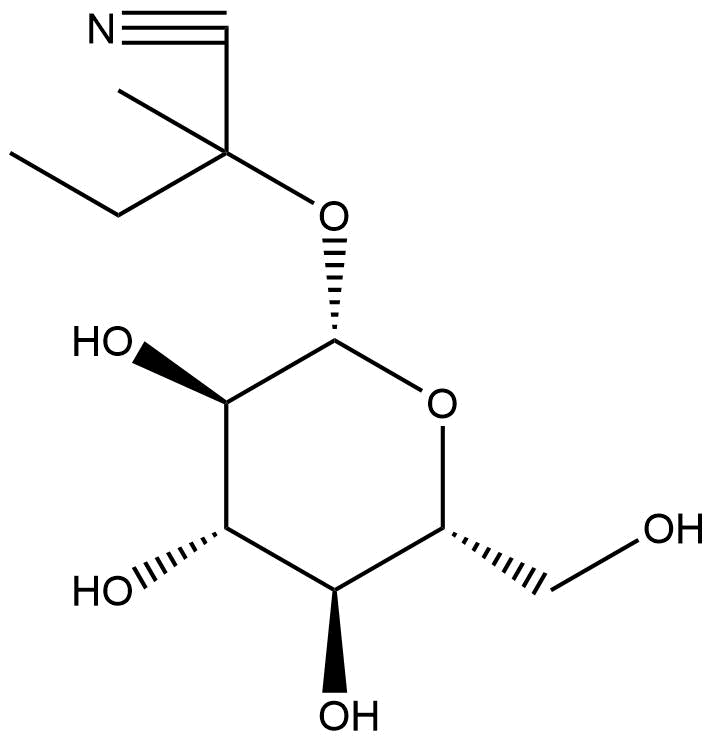


Product name: Lotaustralin
Synonym name: (2RS)-Lotaustralin; 534-67-8; (2R)-Lotaustralin
Catalogue No.: BP4191
Cas No.: 1973415-50-7
Formula: C11H19NO6
Mol Weight: 261.274
Botanical Source:
Type of Compound:
Purity: 95%~99%
Analysis Method: HPLC-DAD or/and HPLC-ELSD
Identification Method: Mass, NMR
Packing: Brown vial or HDPE plastic bottle
Storage: Store in a well closed container, protected from air and light. Put into refrigerate or freeze for long term storage.
Whenever possible, you should prepare and use solutions on the same day. However, if you need to make up stock solutions in advance, we recommend that you store the solution as aliquots in tightly sealed vials at -20℃. Generally, these will be useable for up to two weeks.
The product could be supplied from milligrams to grams
Inquire for bulk scale.
For Reference Standard and R&D, Not for Human Use Directly.
Storage conditions:Short-term storage at 2~8℃, long-term storage at -20 ~ -80℃
123.1700
-.8450
-.8453
59.8040
.5130
.6950
High
18.9553
4.2792
Yes
No
No
No
Yes
No
0.0
Yes
Yes
Yes
Yes
Hyaluronic acid glycoside (2RS) - Lutaurin is a natural product with significant biological activity, which has attracted widespread attention in the field of natural product pharmacology in recent years. As an important plant derived secondary metabolite, baicalin has become a hot topic in drug development and disease prevention and control research due to its unique chemical structure and diverse biological functions, especially its potential application value in the field of antioxidant. Oxidative stress, as a key pathological mechanism in various chronic diseases and aging processes, has prompted scientists to continuously explore natural antioxidants in order to discover candidate drugs with high efficacy and low toxicity. Baimaigen glycoside has shown promising clinical application prospects due to its excellent antioxidant properties and good pharmacological parameters.
This article provides a systematic review of the chemical structure and physicochemical properties, plant sources, and extraction methods of baicalin. It delves into its pharmacological activity and mechanism of action, and combines drug evaluation and pharmacokinetic data to explore its potential and development direction in clinical applications. The aim is to provide comprehensive theoretical support and practical guidance for related research.
The chemical name of Baimaigen glycoside is (2RS) - Lutautralin, with a molecular formula of C12H19NO6 and a molecular weight of 261.2740. Its structure belongs to the cyano glycoside class compounds, with typical cyano (- CN) functional groups and glycoside structural units. The stereoconfiguration of this compound is an R/S mixture of 2-position carbon atoms, exhibiting a certain degree of stereoisomerism.
In terms of physicochemical properties, the LogP value of baicalin is -0.8450, indicating its strong hydrophilicity and good water solubility (59.8040 mg/mL), which is beneficial for its absorption and distribution in organisms. Its polar surface area (TPSA) is 123.1700 Å ², indicating that the molecule has high polarity, which may affect its cell membrane penetration ability. It is worth noting that baicalin has a high blood-brain barrier penetration ability, which provides the possibility for its treatment in central nervous system diseases. In addition, the compound did not exhibit hERG channel inhibitory activity, indicating a low risk of cardiac toxicity. The Ames test result was 0.0, indicating no significant mutagenicity and good safety.
Baimai root glycosides are mainly found in various traditional Chinese medicinal materials and wild plants, with Baimai root (Lotaustralin genus plants) being the main source. This type of plant is widely distributed in temperate and subtropical regions of Asia and has always been used in folk herbal medicine to treat various diseases. The content of baicalin is greatly influenced by factors such as plant species, growth environment, harvesting time, and processing technology.
The extraction process usually adopts solvent extraction method, and commonly used solvents include ethanol, water, and their mixed solvent systems. Modern extraction techniques such as ultrasound assisted extraction, microwave-assisted extraction, and high-performance liquid chromatography (HPLC) purification have been widely used for the extraction and separation of baicalin. The specific steps generally include: plant drying and crushing → solvent extraction → filtrate concentration → crude extract separation and purification → pure product identification. During the purification process, thin layer chromatography (TLC), mass spectrometry (MS), and nuclear magnetic resonance (NMR) techniques were used to confirm the structure and detect the purity of baicalin.
The pharmacological activity research of Baimaigen glycoside mainly focuses on its antioxidant function and the potential for prevention and treatment of related diseases. Numerous in vitro and in vivo experiments have shown that baicalin can effectively scavenge free radicals, alleviate oxidative stress damage to cells, and protect cellular functional integrity.
antioxidant activity
Baimaigen glycoside exerts antioxidant effects through various mechanisms, including direct clearance of reactive oxygen species (ROS), enhancement of endogenous antioxidant enzyme activity (such as SOD, CAT, GPX), and regulation of antioxidant related gene expression. It showed significant effects in DPPH radical scavenging experiments, ABTS radical scavenging experiments, and oxidative damage repair in cell models.
anti-inflammatory effect
Oxidative stress is closely related to inflammatory response, and baicalin exhibits certain anti-inflammatory activity by inhibiting the release of inflammatory factors and regulating related signaling pathways. Related studies have shown that it can downregulate the expression of matrix metalloproteinases such as MMP1 and MMP3, and alleviate tissue damage.
Neuroprotective effect
Given the excellent blood-brain barrier penetration ability of baicalin, researchers are exploring its application in neurodegenerative diseases. Preliminary studies have shown that baicalin can alleviate oxidative damage to nerve cells, promote nerve cell survival, and has potential neuroprotective effects.
Other potential activities
Some studies suggest that baicalin also has certain potential in cardiovascular protection, anti-tumor, and immune regulation, but the relevant mechanisms still need further clarification.
The biological effects of baicalin are mainly achieved by regulating various antioxidant related targets. The key targets include:
The mechanism of action of Baimaigen glycoside reflects its multi-target and multi pathway synergistic regulation characteristics, which not only directly scavenges free radicals, but also activates the intracellular antioxidant defense system, forming an effective antioxidant network.
From the perspective of pharmacological parameters, baicalin has great potential for drug development. Its molecular weight is 261.2740, which conforms to the ideal range of Lipinski rule. A negative LogP value (-0.8450) indicates good hydrophilicity, which is beneficial for in vivo dissolution and absorption. The TPSA value is 123.1700, indicating that it has moderate polarity and can balance biofilm penetration and water solubility.
Baimaigen glycoside exhibits high blood-brain barrier penetration ability, supporting its potential application in central nervous system diseases. The negative result of hERG channel inhibition experiment indicates a low risk of cardiac toxicity and good safety. The negative result of Ames test further confirms its non mutagenicity and suitability for long-term clinical application.
In terms of pharmacokinetics, although the in vivo metabolic and kinetic data of the system are currently limited, preliminary studies have shown that baicalin is well absorbed and widely distributed after oral administration, especially enriched in brain tissue. Its metabolic pathway may involve glycoside hydrolysis and oxidation reactions in the liver enzyme system, and the metabolites need to be further identified. Excretion is mainly through the renal and biliary pathways, with a moderate half-life and suitable for clinical administration.
Baimai root glycoside, as a natural antioxidant, has broad clinical application potential. Its multiple activities in antioxidant, anti-inflammatory, and neuroprotective aspects are particularly suitable for adjuvant therapy and prevention of oxidative stress-related diseases.
Neurodegenerative diseases
Oxidative stress plays an important role in the pathogenesis of neurodegenerative diseases such as Alzheimer's disease and Parkinson's disease. The excellent blood-brain barrier penetration and neuroprotective effects of Baimaigan provide a theoretical basis for it to become a candidate drug for neurological diseases.
cardiovascular disease
Oxidative stress is an important pathological factor of cardiovascular diseases such as atherosclerosis and hypertension. Baimaigen glycoside may alleviate vascular damage and improve vascular function by regulating MMPs and antioxidant enzymes.
Skin Protection and Beauty
The regulatory effect of baicalin on tyrosinase suggests its potential in preventing and treating skin photoaging and pigmentation, and it can be developed as a functional skincare ingredient in the future.
Other potential applications
It includes diabetes complications, tumor adjuvant therapy, immune regulation and other fields. The multi-target mechanism of thymoside provides the possibility for its diversified development.
Future research should focus on the preclinical safety evaluation, pharmacokinetic optimization, formulation development, and clinical trial design of baicalin, in order to promote its transition from laboratory research to clinical application.
Baimaigen glycoside, as a natural product with unique structure and significant antioxidant activity, has shown broad prospects for drug development. Its multi-target and multi mechanism antioxidant effects provide new ideas for the treatment of various oxidative stress-related diseases. Combining good pharmacological parameters and safety data, Baimaigan is expected to become an important candidate drug in the field of natural antioxidants.
In the future, deepening research on its mechanism of action, improving pharmacokinetic and toxicological evaluations, and conducting systematic preclinical and clinical studies will lay a solid foundation for the drug development and clinical application of baicalin, promoting its widespread application in natural product pharmacology and modern medicine.
