


Product name: Amygdalin
Synonym name: Amygdaloside; Mandelonitrile gentiobioside; Glucoprunasin; Laetrile; Vitamin B17
Catalogue No.: BP0162
Cas No.: 29883-15-6
Formula: C20H27NO11
Mol Weight: 457.432
Botanical Source: Bitter glycoside of the Rosaceae, found esp. in kernels of cherries, peaches and apricots. Present in cold pressed bitter almond oil from the above sources prior to enzymic hydrolysis and steam distillation for food use
Physical Description: Powder
Type of Compound: Phenols
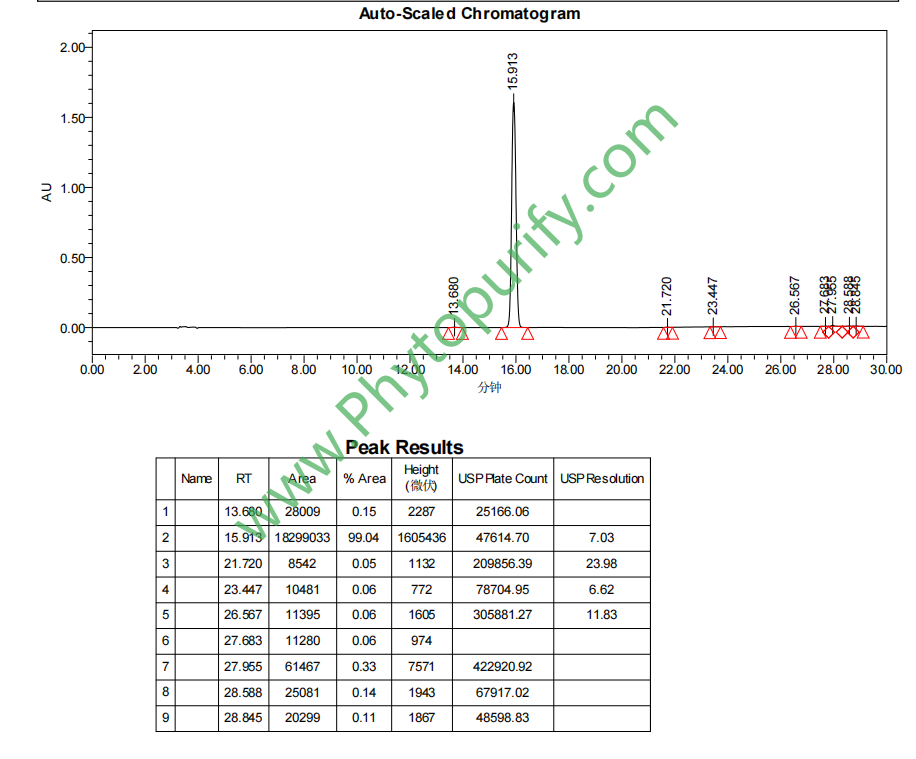
Purity: 95%~99%
Analysis Method: HPLC-DAD or/and HPLC-ELSD
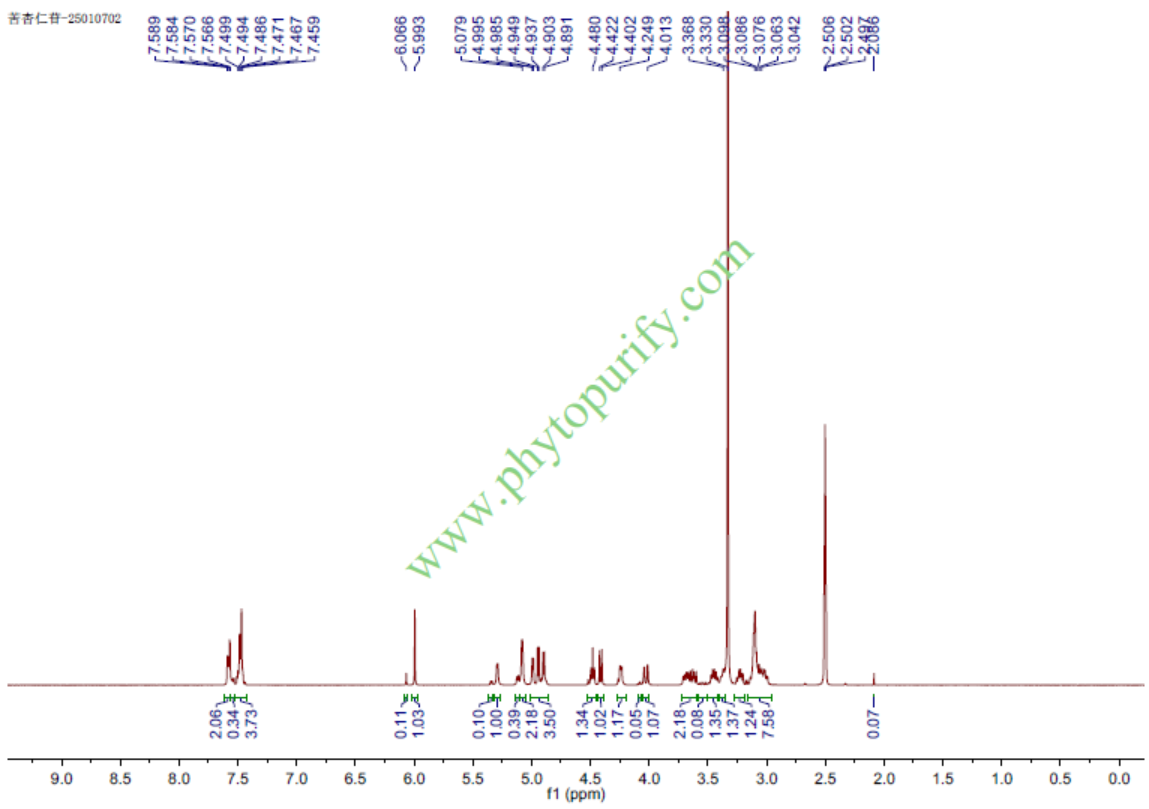
Identification Method: Mass, NMR
Packing: Brown vial or HDPE plastic bottle
Storage: Store in a well closed container, protected from air and light. Put into refrigerate or freeze for long term storage.
Whenever possible, you should prepare and use solutions on the same day. However, if you need to make up stock solutions in advance, we recommend that you store the solution as aliquots in tightly sealed vials at -20℃. Generally, these will be useable for up to two weeks.
The product could be supplied from milligrams to grams, up to kilograms
Inquire for bulk scale.
Descriptions:
Amygdalin induces apoptotic cell death in human DU145 and LNCaP prostate cancer cells by caspase-3 activation through down-regulation of Bcl-2 and up-regulation of Bax,suggests it may offer a valuable option for the treatment of prostate cancers.[1]
Amygdalin suppresses the prostaglandin E(2) synthesis and the nitric oxide production by inhibiting the LPS-stimulated mRNA expressions of COX-2 and iNOS in the mouse BV2 cells.[2]
Amygdalin can inhibit genes related to cell cycle in SNU-C4 human colon cancer cells.[3]
References:
[1] Chang H K, Shin M S, Yang H Y, et al. Biol Pharm Bull, 2006, 29(8):1597-602.
[2] Yang H Y, Chang H K, Lee J W, et al. Neurol Res, 2013, 29 suppl 1(1):59-64(6).
[3] Park H J, Yoon S H, Han L S, et al. World J Gastroentero, 2005, 11(33):5156-61.
[4] Zhou C, Chen K, Sun C, et al. Biomed Chromatogr, 2007, 21(7):755-61.
HPLC of Amygdalin
HNMR of Amygdalin
Storage conditions:Short-term storage at 2~8℃, long-term storage at -20 ~ -80℃
202.3200
-1.1079
-1.1076
54.2116
.5025
.2141
Low
28.1522
4.5124
Yes
No
No
No
Yes
No
0.0
Yes
Yes
No
Yes
Amygdalin, also known as vitamin B17, is a cyanide glycoside natural product widely found in the fruit kernels of Rosaceae plants. Its CAS number is 29883-15-6, and its chemical structure is (R) - configuration of almond nitrile - β - gentiopicroside. Since its isolation in the 19th century, amygdalin has attracted much attention for its potential anti-tumor activity, but it has also been controversial for a long time due to its ability to metabolize and release highly toxic hydrogen cyanide in the body. In traditional medicine, medicinal herbs such as almonds are commonly used to relieve cough and asthma. Modern pharmacological studies have revealed their biological activities in various aspects such as anti-tumor, anti-inflammatory, anti fibrotic, and neuroprotective effects. In recent years, with the development of molecular biology technology, the study of the mechanism of action of amygdalin has deepened to the level of signaling pathways and molecular targets, providing new scientific basis for its potential therapeutic applications. This article aims to systematically review the chemical properties, plant sources, pharmacological activities, molecular mechanisms, medicinal properties, and clinical application prospects of amygdalin, in order to provide comprehensive academic references for the in-depth research and rational development of this compound.
The molecular formula of amygdalin is C20H27NO11, with a molecular weight of 457.4320. Its chemical structure consists of three parts: (R) - mandelonitrile as a glycoside, connected to gentiobiose (two glucose molecules linked by a β -1,6 bond) through a β - glycosidic bond. This structure is the basis of its biological activity and toxicity.
In terms of physicochemical properties, amygdalin is a white crystalline or crystalline powder with a bitter taste. Its lipid water partition coefficient (LogP) is -1.1079, indicating strong hydrophilicity. The topologically polar surface area (TPSA) is as high as 202.32 Å ², which is consistent with the presence of multiple hydroxyl and glycosyl structures in its molecule. It has good water solubility, with a calculated value of approximately 54.2116 mg/L. These parameters collectively determine its poor membrane permeability. Bitter almond glycoside itself is relatively stable, but it can be hydrolyzed by β - glucosidase (such as enzymes in gut microbiota or tumor tissue) in the body, which in turn produces gentian disaccharide and almond nitrile. The latter can be further decomposed into benzaldehyde and highly toxic hydrogen cyanide (HCN) under the action of hydroxynitrile lyase. This metabolic pathway is the core chemical basis for its pharmacological effects (especially cytotoxicity) and toxic side effects.
Bitter almond glycoside mainly comes from the nuclei, seeds, and stem bark of various plants in the Rosaceae family. Common plants rich in amygdalin include apricots(Prunus armeniaca)Peach(Prunus persica)Bitter almonds(Prunus dulcis var. amara)Cherry(Prunus avium)And plums(Prunus domestica)Wait. Among them, bitter almonds and apricot kernels are particularly rich in content.
The traditional extraction method is mainly based on solvent extraction. The common process includes: degreasing the dried and crushed raw materials, using water, alcohol (such as methanol, ethanol) or alcohol water mixed solvents for heating reflux or ultrasound assisted extraction. After concentration, the extract can be separated and purified by methods such as macroporous adsorption resin column chromatography, silica gel column chromatography, or high-performance liquid chromatography (HPLC) to obtain high-purity amygdalin. Modern extraction techniques such as microwave-assisted extraction and supercritical fluid extraction have also been explored to improve extraction efficiency and selectivity. It should be noted that during the extraction process, conditions such as pH and temperature need to be controlled to avoid enzymatic or chemical degradation of amygdalin. Different plant sources, origins, harvest seasons, and parts can all affect the content of amygdalin, so standardized planting and extraction processes are crucial to ensuring the quality of raw materials.
A large number of in vitro and in vivo studies have revealed the extensive pharmacological activities of amygdalin, mainly focusing on the following aspects:
Antitumor activity This is the most highly regarded activity of amygdalin. Studies have shown that amygdalin can inhibit the proliferation of many cancer cell lines, including prostate cancer (such as DU145, LNCaP cells), breast cancer, bladder cancer, colon cancer and cervical cancer cells. Its function is not limited to cytotoxicity, but can also induce cell cycle arrest and apoptosis. For example, in prostate cancer cells, amygdalin can significantly induce apoptosis, and its effect is closely related to the regulation of apoptosis related proteins.
Anti inflammatory and analgesic activity Bitter almond glycoside has shown anti-inflammatory effects in various animal models of acute and chronic inflammation, reducing swelling and lowering levels of inflammatory factors. Its analgesic effect has also been confirmed in chemical stimulation and hot plate experiments. Research has shown that its anti-inflammatory mechanism may be related to the inhibition of cyclooxygenase-2 (COX-2), nitric oxide (NO), and the production of pro-inflammatory cytokines such as TNF - α, IL-1 β, IL-6.
Anti fibrotic activity In liver fibrosis and pulmonary fibrosis models, amygdalin exhibits inhibitory effects on collagen deposition and reduces fibrotic lesions. This suggests its potential in treating organ fibrosis diseases.
Protective effect on intervertebral disc degeneration Research has shown that the combination of amygdalin and hydroxysafflor yellow A (HSYA) can synergistically inhibit the degeneration of rat intervertebral disc endplate chondrocytes induced by interleukin-1 β (IL-1 β), and the effect is better than that of a single component. This provides a new combination strategy for treating degenerative diseases such as osteoarthritis and intervertebral disc herniation.
Potential protective effect on subarachnoid hemorrhage Based on network pharmacology and experimental verification, amygdalin may exert neuroprotective effects by acting on multiple targets related to early brain injury and inflammatory response after subarachnoid hemorrhage (such as NOTCH1, STAT3, etc.), reducing brain edema and neurological dysfunction.
The pharmacological effects of amygdalin involve a complex regulatory network of multiple pathways and targets, and its core mechanism is closely related to inducing cell apoptosis and regulating inflammatory signaling pathways.
Mechanism of inducing cell apoptosis In tumor cells, amygdalin induced apoptosis mainly occurs through the mitochondrial pathway. Research has shown that it can downregulate the expression of anti apoptotic protein Bcl-2 and upregulate the expression of pro apoptotic protein Bax, leading to a decrease in mitochondrial membrane potential and the release of cytochrome C into the cytoplasm. Subsequently, cytochrome C binds to Apaf-1 to activate caspase-9, which in turn activates downstream executor caspase-3, ultimately leading to cell apoptosis. In addition, studies suggest that it may be involved in the death receptor pathway and endoplasmic reticulum stress pathway.
Anti inflammatory and immune regulatory mechanisms Bitter almond glycoside can inhibit the activation of key inflammatory signaling pathways such as NF - κ B and MAPK (such as p38 and JNK), thereby reducing the production of downstream inflammatory mediators. In neuroinflammatory models such as subarachnoid hemorrhage, the potential target network includes:
Other mechanisms It also includes inhibiting angiogenesis, regulating autophagy, and improving oxidative stress.
According to the provided pharmacological parameters, the preliminary pharmacological characteristics of amygdalin are as follows: moderate molecular weight (457.43), but extremely high TPSA (>140 Å ²) and negative LogP values indicate that it belongs to a highly polar, low fat soluble compound, which may result in low oral bioavailability and difficulty in crossing the blood-brain barrier (predicted as low permeability). It has good water solubility, which is beneficial for making injection and other dosage forms. In terms of safety, the predicted data shows no risk of hERG potassium channel inhibition (indicating low risk of cardiac toxicity), and the Ames test predicts a negative result (indicating low risk of mutagenicity). However, these computational predictions need to be validated through experiments.
Pharmacokinetic studies have shown that amygdalin is mainly absorbed in the small intestine after oral administration, but the absorption is incomplete. It is widely distributed in the body, but its entry into the central nervous system is limited. Metabolism is its key link: amygdalin itself has no direct toxicity, but under the action of β - glucosidase in the intestinal microbiota, it is hydrolyzed in the intestine or absorbed in the liver, kidneys, and certain tumor tissues, releasing HCN. HCN has extremely strong toxicity and can bind with trivalent iron of cytochrome oxidase, inhibiting cellular respiration, leading to tissue hypoxia and even death. Benzaldehyde is metabolized into benzoic acid, which is ultimately excreted in the form of uric acid through urine. Therefore, the therapeutic window of amygdalin is narrow, dosage control is crucial, and the risk of toxicity is a major obstacle to its clinical application. Developing targeted delivery systems (such as combining them with prodrug forms that can be specifically activated by tumor overexpressed β - glucosidase), or using them in combination with β - glucosidase inhibitors, is an important strategy to improve their safety and achieve tumor selective toxicity.
The clinical application prospects of amygdalin present both opportunities and challenges.
Potential application directions:
1. Antitumor adjuvant therapy As an adjuvant to traditional chemotherapy or radiotherapy, especially for cancer types such as prostate cancer that have shown sensitivity. The focus is on achieving specific activation of tumor sites, maximizing chemotherapy efficacy, and minimizing systemic toxicity through delivery technologies such as nanomaterials, liposomes, or antibody conjugated drugs.
2. Chronic inflammatory diseases Such as osteoarthritis, rheumatoid arthritis, intervertebral disc degeneration, etc. Its anti-inflammatory and cartilage protective effects, especially its synergistic effects with drugs such as HSYA, are worth further exploration.
3. Organ fibrosis It may have a place in the treatment of liver, lung, and kidney fibrosis.
4. Neurological disorders The potential protective effect on early brain injury after subarachnoid hemorrhage provides a new approach for the treatment of cerebrovascular diseases, but the problem of poor blood-brain barrier permeability needs to be overcome.
Challenges and Prospects Faced:
1. security issue The toxicity of hydrogen cyanide is the core obstacle limiting its clinical application. Future research must focus on how to precisely control its metabolic activation sites and rates.
2. Deep analysis of the mechanism of action At present, the understanding of the target of amygdalin is still mainly based on network prediction and preliminary verification, and more direct molecular interaction evidence (such as binding experiments and co crystallization structures) is needed to clarify its exact starting point of action.
3. Lack of clinical evidence High quality randomized controlled clinical trial data is severely lacking, and its effectiveness and safety have not been fully confirmed in humans.
4. Formulation innovation Developing intelligent responsive drug delivery systems (such as pH sensitive and enzyme sensitive nanoparticles) is a key breakthrough in enhancing the pharmacological properties of amygdalin.
5. Combination therapy strategy Explore the rational combination therapy of amygdalin with other anti-tumor drugs, anti-inflammatory drugs, or active ingredients of traditional Chinese medicine to achieve synergistic effects and reduce toxic side effects.
As a natural cyanide glycoside with a long history, amygdalin's complex duality - potential broad pharmacological activity and inherent metabolic toxicity - constitutes the core tension of its research. Modern pharmacological research has surpassed its simple "toxicity" or "folk remedy" labels, gradually revealing its multi-target mechanisms in inducing tumor cell apoptosis, regulating inflammatory networks, and protecting tissues from degenerative diseases. Especially in combination therapy and targeting specific diseases such as intervertebral disc degeneration and subarachnoid hemorrhage, it has shown promising potential. However, its poor drug properties, especially the serious safety risks caused by the metabolic production of hydrogen cyanide, are the main obstacles on its path to clinical success. Future research should focus on utilizing advanced pharmaceutical chemistry and delivery technologies to design more selective and safe derivatives or formulations of amygdalin, while verifying their efficacy and safety through rigorous clinical studies. Only through rational development based on a profound understanding of its scientific connotation can this ancient natural molecule be revitalized and make possible contributions to the cause of human health.
