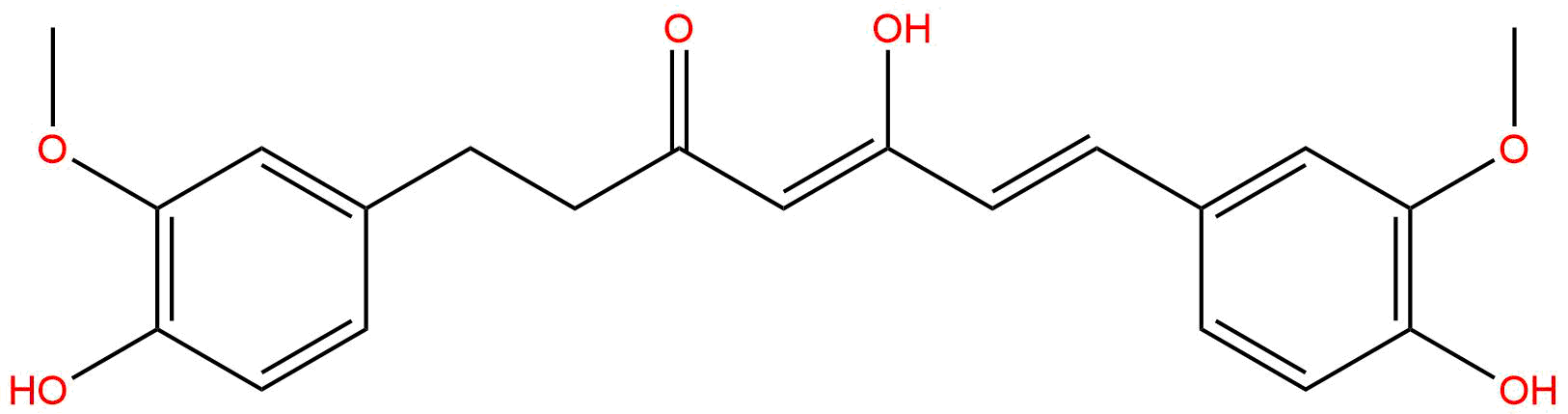


Synonym name: Letestuianin B
Catalogue No.: BP0494
Cas No.: 76474-56-1
Formula: C21H22O6
Mol Weight: 370.401
Botanical Source: Curcuma longa and the seeds of Aframomum letestuianum
Purity: 95%~99%
Analysis Method: HPLC-DAD or/and HPLC-ELSD
Identification Method: Mass, NMR
Packing: Brown vial or HDPE plastic bottle
Can be supplied from milligrams to grams.
For Reference Standard and R&D, Not for Human Use Directly.
Inquire for bulk scale.
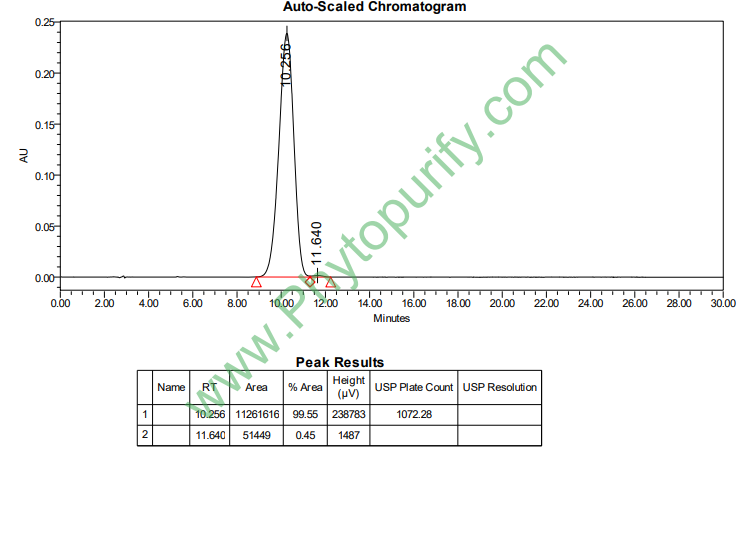
HPLC of Dihydrocurcumin
Storage conditions:Short-term storage at 2~8℃, long-term storage at -20 ~ -80℃
93.0600
2.7933
2.7782
.0412
5.6850
7.2125
High
92.7172
2.3726
Yes
Yes
Yes
No
Yes
No
0.0
No
Yes
No
Yes
Dihydrocurcumin (DHC) is one of the main metabolites of curcumin and belongs to the polyphenolic natural products. As a reduced form of curcumin, dihydrocurcumin has important physiological activities in vivo, especially exhibiting significant pharmacological effects in antioxidant, anti-inflammatory, anti-tumor, and lipid metabolism regulation. In recent years, with the deepening of research on the pharmacological mechanisms of natural products, dihydrocurcumin has become one of the hotspots in natural product pharmacology research due to its unique molecular structure and multi-target regulatory ability.
Dihydrocurcumin can not only regulate the expression of lipid metabolism related genes, reduce lipid accumulation and oxidative stress, but also exert cellular protective effects by regulating multiple signaling pathways. Its anti-tumor activity involves multiple key molecular targets, including MCL1, BCL2, STAT3, etc., demonstrating broad clinical application potential. This article provides a systematic review of the chemical structure and physicochemical properties, plant sources and extraction methods, pharmacological activity and mechanism of action, pharmacological evaluation, and clinical application prospects of dihydrocurcumin. The aim is to provide a theoretical basis and reference for further research and development of this natural product.
The chemical name of dihydrocurcumin is (1E, 6E) -1,7-dihydroxy-3-methoxy-1,6-octadiene-3,5-dione, with a molecular formula of C21H22O6 and a molecular weight of 370.4010. Its CAS number is 76474-56-1. Dihydrocurcumin is a reduced product of curcumin, with the main difference being that its double bonds are reduced and its structure contains two hydroxyl groups and one methoxy group, giving it strong polarity and antioxidant capacity.
In terms of physical and chemical properties, the LogP value of dihydrocurcumin is 2.7933, indicating that it has moderate lipid solubility and is beneficial for cell membrane penetration. Its topological polar surface area (TPSA) is 93.0600, reflecting the molecule's certain polarity and hydrogen bond donor/acceptor ability. The low water solubility (0.0412 mg/mL) limits its solubility and bioavailability in the aqueous phase. The high permeability of the blood-brain barrier suggests its potential role in the central nervous system. The negative result of hERG channel inhibition experiment indicates a low risk of cardiac toxicity; The Ames mutagenicity test result is 0.0, indicating a low risk of genetic toxicity.
Dihydrocurcumin has good structural stability, but there is still a risk of degradation under light and high temperature conditions, which needs to be taken into account in the development of formulations. The phenolic hydroxyl and methoxy groups in its molecular structure are important chemical foundations for its antioxidant activity.
Dihydrocurcumin is mainly found in the ginger plant Curcuma longa L., and is a metabolite generated by the reductase action of curcumin in the body. In its natural state, dihydrocurcumin has a relatively low content and is usually obtained through in vitro reduction of curcumin or separation and purification from biological metabolites.
Traditional extraction methods often use organic solvent extraction combined with chromatographic separation technology. The specific steps include:
In recent years, green extraction techniques such as ultrasound assisted extraction, microwave-assisted extraction, and biocatalysis have also been applied to the preparation of dihydrocurcumin, improving extraction efficiency and environmental friendliness.
Dihydrocurcumin exhibits significant antioxidant activity, effectively clearing reactive oxygen species (ROS) and nitric oxide (NO), and reducing oxidative stress damage. It activates the Nrf2 (nuclear factor erythroid 2-related factor 2) signaling pathway, promotes the expression of downstream antioxidant enzymes such as glutathione peroxidase (GPx), superoxide dismutase (SOD), and catalytic enzyme (CAT), and enhances cellular antioxidant defense capabilities.
In addition, dihydrocurcumin inhibits the release of pro-inflammatory factors such as TNF - α, IL-6, and IL-1 β, reduces inflammatory responses, and demonstrates good anti-inflammatory effects. Its anti-inflammatory mechanism involves inhibition of the NF - κ B signaling pathway, reducing the expression of inflammatory mediators.
Dihydrocurcumin can regulate the expression of genes related to lipid metabolism, reduce lipid accumulation and fatty liver formation. Research has shown that dihydrocurcumin downregulates the key transcription factors SREBP-1C (sterol regulatory element binding protein-1C) and PNPLA3 (lipase family member 3) for lipid synthesis, while upregulating the expression of the fatty acid oxidation regulatory factor PPAR α (peroxisome proliferator activated receptor alpha), promoting lipid metabolism balance.
In addition, dihydrocurcumin enhances the activity of the PI3K/AKT signaling pathway, improves insulin signaling, and further promotes lipid metabolism and energy homeostasis.
Dihydrocurcumin exhibits anti proliferative, pro apoptotic, and anti metastatic effects in various tumor cell models. Its target involves multiple key proteins, including:
In summary, dihydrocurcumin exhibits broad anti-tumor potential through multi-target and multi pathway synergistic effects.
The pharmacological mechanism of dihydrocurcumin is complex and diverse, mainly involving the following aspects:
As the main antioxidant regulator in cells, Nrf2 protects cells from oxidative damage by regulating the expression of antioxidant enzyme genes. Dihydrocurcumin promotes the translocation of Nrf2 from the cytoplasm to the nucleus, enhances its transcriptional activity, significantly reduces intracellular ROS and NO levels, and alleviates oxidative stress.
The PI3K/AKT signaling pathway plays a critical role in cell growth, metabolism, and survival. Dihydrocurcumin can increase the expression of PI3K and pAKT proteins, promote insulin signaling, regulate lipid metabolism and cell survival, and prevent fatty liver and metabolic disorders.
By regulating the mRNA and protein levels of SREBP-1C, PNPLA3, and PPAR α, dihydrocurcumin achieves comprehensive regulation of lipid synthesis, breakdown, and oxidation, maintains lipid homeostasis, and prevents fatty liver and related metabolic diseases.
Dihydrocurcumin affects cell cycle, apoptosis, and invasion ability by regulating the expression of various tumor related proteins. Its inhibition of MCL1 and BCL2 promotes cell apoptosis; Blocking tumor signaling pathways by regulating STAT3, HIF1A, and MAPK1; Inhibition of MMP2 reduces tumor metastasis; The impact on TOP1 and TOP2A interferes with DNA replication and inhibits tumor cell proliferation.
These multi-target synergistic effects make dihydrocurcumin a potential candidate for multifunctional anti-tumor drugs.
The molecular weight of dihydrocurcumin is 370.4010, which meets the drug affinity criteria of Lipinski rule. The LogP value of 2.7933 indicates that it has moderate lipid solubility, which is beneficial for cell membrane penetration and in vivo distribution. The TPSA is 93.0600, indicating that it has a certain polarity that may affect oral absorption and bioavailability.
Low water solubility (0.0412 mg/mL) is a limiting factor for its clinical application, and it is necessary to improve solubility and stability through drug formulation techniques such as nanocarriers, liposomes, or solid dispersions.
The high permeability of the blood-brain barrier indicates that dihydrocurcumin has potential pharmacological activity in the central nervous system and is suitable for developing therapeutic drugs for neurological related diseases.
The hERG channel inhibition experiment was negative, indicating good cardiac safety. The Ames test result is 0.0, indicating a low risk of genetic toxicity, which is beneficial for clinical development.
At present, there is limited systematic pharmacokinetic research on dihydrocurcumin. Previous studies have shown that dihydrocurcumin is rapidly absorbed in vivo, but its bioavailability is low due to poor water solubility and first pass effects in the gut and liver. Its metabolism is mainly carried out through the liver enzyme system, with a large amount of metabolites and a moderate half-life.
In terms of distribution, dihydrocurcumin can penetrate the blood-brain barrier and is distributed in the central nervous system and other important organs. The main excretion pathways are bile and urine.
Further systematic pharmacokinetic and toxicological studies are needed in the future to clarify its in vivo pharmacokinetic characteristics and safety, providing a basis for clinical application.
Dihydrocurcumin has shown extensive clinical potential due to its multi-target and multi pathway pharmacological activities. Its main application prospects include:
Dihydrocurcumin targets multiple tumor related targets and has the effects of inhibiting tumor proliferation, inducing apoptosis, and inhibiting metastasis. In the future, it can be used as an adjuvant drug for monotherapy or combination chemotherapy to enhance anti-tumor effects and reduce the toxic side effects of chemotherapy drugs.
By regulating lipid metabolism related genes, dihydrocurcumin is expected to be used in the treatment of metabolic syndrome such as non-alcoholic fatty liver disease, obesity and diabetes, and improve lipid metabolism disorder and insulin resistance.
Its excellent antioxidant activity and blood-brain barrier penetration ability make it a potential candidate drug for the prevention and treatment of neurodegenerative diseases such as Alzheimer's disease and Parkinson's disease.
The anti-inflammatory effect of dihydrocurcumin is suitable for chronic inflammatory diseases such as rheumatoid arthritis and inflammatory bowel disease, and has good application prospects.
Although dihydrocurcumin has good pharmacological activity and safety, its poor water solubility and low bioavailability limit its clinical application. Future research should focus on:
Dihydrocurcumin, as the main metabolite of curcumin, exhibits a wide range of pharmacological activities in antioxidant, anti-inflammatory, lipid metabolism regulation, and anti-tumor fields due to its unique chemical structure and multi-target regulatory ability. Its good pharmaceutical properties and low toxicity risk make it a strong candidate for natural product drug development.
In the future, with the advancement of formulation technology and molecular pharmacology, dihydrocurcumin is expected to overcome existing pharmacokinetic limitations and become an effective drug for treating various diseases. The in-depth mechanism research and clinical validation of the system will lay a solid foundation for its clinical translation, promoting the application and development of natural products in modern medicine.
