Introduction/Overview
Natural products, as an important source of drug discovery, play an irreplaceable role in the long history of human fight against diseases. Among them, polyphenolic compounds derived from plants, especially oligostilbeneids, have long been a hot topic in natural product chemistry and pharmacology research due to their complex and diverse structures and significant biological activities. α - Viniferin, as a typical nine membered macrocyclic stilbene oligomer, originated from the legume plant Jinjia(Caragana chamlague Since its first separation in Lamarck, it has attracted widespread attention due to its unique chemical structure and potential biological activity.
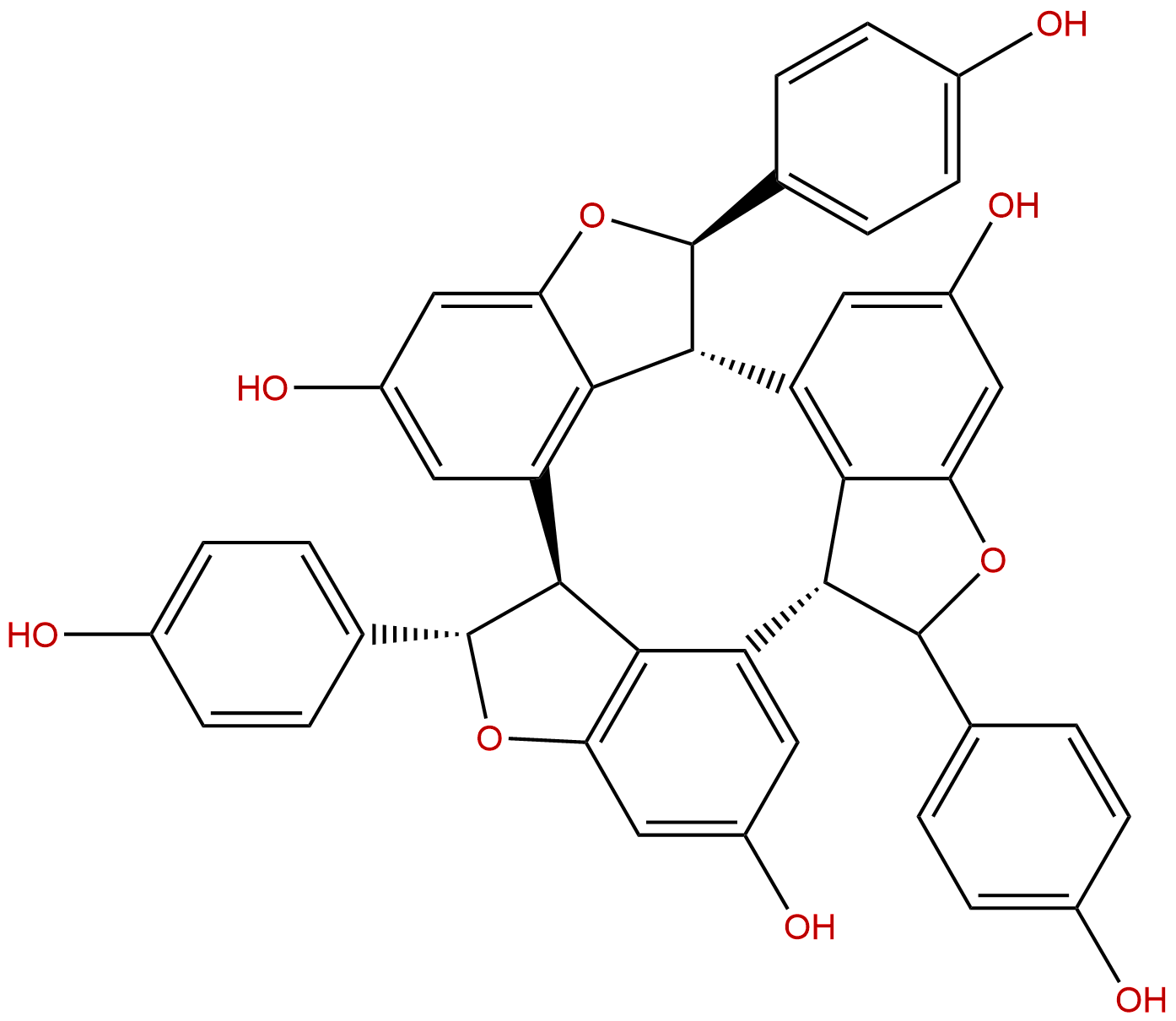
Alpha glucan belongs to the oligomeric family of resveratrol, and its structural core is a nine membered macrocycle composed of three dihydrobenzofuran units connected by a cyclic skeleton. This unique spatial configuration endows it with physicochemical properties and biological activity that distinguish it from monomers. Early research revealed that alpha glucosinolate is a potent acetylcholinesterase (AChE) inhibitor, opening up possibilities for its therapeutic application in neurodegenerative diseases, particularly Alzheimer's disease (AD). In addition, subsequent research has continuously expanded its pharmacological activity spectrum, including significant anti-inflammatory, antioxidant, anti-tumor, and antibacterial effects.
Given the potential value of alpha glucan in the treatment of multiple diseases, a systematic understanding of its chemistry, sources, pharmacology, and drug properties is particularly important. This article aims to comprehensively review the research progress of alpha glucosinolate, explore its chemical structure and physicochemical properties, plant sources and extraction methods, pharmacological activity, mechanism of action, drug evaluation, and clinical application prospects, in order to provide reference for the in-depth research and development of this natural product.
Chemical structure and physicochemical properties
chemical structure
The chemical structure of alpha glucan is the basis of its biological activity. Its molecular formula is C ₄₂ H ∝₀ O ₉, and its molecular weight is 646.68 g/mol. Structurally, it belongs to the trimer of resveratrol, and its core skeleton is a unique nine membered macrocycle. This macrocycle consists of three structural units, each essentially a 6-hydroxy-2- (4-hydroxyphenyl) -2,3-dihydro-1-benzofuran moiety. These units are connected by specific carbon carbon and ether bonds, forming a highly rigid and stereospecific cyclic structure.
Specifically, the structure of alpha glucan can be seen as the polymerization of three resveratrol monomers through oxidative coupling reaction. Each monomer undergoes cyclization to form a dihydrobenzofuran ring, and three such furan ring fragments are further covalently linked to form a closed macrocycle. This structure gives alpha glucan a clear three-dimensional conformation, with multiple chiral centers present in its molecule, giving it optical activity and typically existing in the form of (+) - alpha glucan. The phenolic hydroxyl group (- OH) abundant in the molecule is a key functional group for its biological activities such as antioxidant and protein interaction.
Physicochemical properties
Alpha glucan is a polyphenolic compound whose physicochemical properties are mainly determined by its molecular structure.
- solubility As a polyphenol, alpha glucosinolate has low solubility in water, but is easily soluble in organic solvents such as methanol, ethanol, dimethyl sulfoxide (DMSO), ethyl acetate, etc. Its high lipophilicity (LogP=4.500) indicates strong lipophilicity, making it easy to penetrate biological membranes, but it may also limit its distribution in polar environments such as blood.
- Stability Alpha glucosinolates are relatively stable under acidic conditions, but may degrade under alkaline conditions or exposure to strong light and high temperatures. The phenolic hydroxyl groups in its molecules are easily oxidized, so they usually need to be stored away from light and at low temperatures, and antioxidants are often added to maintain their stability.
- Acidity and Spectral Characteristics Due to the presence of multiple phenolic hydroxyl groups, alpha glucan exhibits weak acidity. It has characteristic absorption in the UV visible region, usually with strong absorption peaks in the 280-320 nm range, which is related to the conjugated system present in its molecule. In addition, its infrared spectrum and nuclear magnetic resonance spectrum (especially ¹ H NMR and ¹ ³ C NMR) are important tools for identifying its structure.
- key parameters According to the provided pharmacological parameters, the topological polar surface area (TPSA) of alpha glucan is 167.31 Å ², which is much higher than the threshold commonly believed to be able to pass through the blood-brain barrier (about 60-70 Å ²). This is consistent with the prediction of "blood-brain barrier: No", indicating that it is difficult for it to enter the central nervous system through passive diffusion. Its hydrogen bond acceptor number is 9, further confirming its properties as a polyphenol.
Plant sources and extraction methods
Plant-based
Alpha glucosinolates were originally derived from the leguminous plant Jinjia(Caragana chamlague Obtained by separating the roots of Lamarck. Jinjia plants are widely distributed in arid and semi-arid regions of Asia and Europe, and have traditionally been used to treat various diseases. In addition to Jinjier, alpha glucosinolates have also been found to be present in various other plants, especially in Vitaceae and Fabaceae plants.
The main sources of plants include:
- Grape genus(Vitis spp.)In grapes(Vitis vinifera)It has been found in the roots, stems, leaves, and fruits of grape vines, especially in the xylem where the content is relatively high. It is one of the main oligomers of astragalus in grapes.
- Snake grape genus(Ampelopsis spp.)Like Guangdong Snake Grape(Ampelopsis cantoniensis)Wait.
- Jinjier genus(Caragana spp.)As follows:Caragana sinica、Caragana chamlague Wait.
- Other In the purchase of the Hemp Vine genus(Gnetum)Jueming belongs to(Cassia)There are also reports in plants.
The content of alpha glucan in plants is influenced by various factors, including plant species, growth environment, season, tissue location, and stress conditions such as ultraviolet radiation and fungal infection. Usually, the content is higher in the lignified tissues of plants, such as roots and stems.
extraction method
The extraction of alpha glucosinolates usually follows the classic process of natural product chemistry, which mainly includes three steps: extraction, separation, and purification.
-
Extract:
- Solvent extraction method This is the most commonly used method. After crushing the dried plant materials, soak or percolate them using polar organic solvents for extraction. Common solvents include methanol, ethanol, acetone, or their aqueous solutions. In order to improve extraction efficiency, heating reflux or ultrasound assisted extraction is often used. Due to the sensitivity of α - glucosinolate to heat, the extraction process should be temperature controlled to avoid prolonged high temperatures.
- Other auxiliary extraction techniques In recent years, some green extraction techniques have also been applied to the extraction of alpha glucosinolates, such as microwave-assisted extraction, supercritical fluid extraction (usually using CO ₂), etc. These methods have the advantages of short extraction time, low solvent dosage, and environmental friendliness.
-
Separation and Purification:
- Preliminary separation After concentration, the extraction solution is usually separated preliminarily using liquid-liquid extraction method. For example, different polar solvents such as petroleum ether, ethyl acetate, and n-butanol are sequentially used for extraction to enrich alpha glucosinolate in the moderately polar ethyl acetate extraction site.
- chromatographic separation This is the core step in purifying alpha glucosinolates. Common chromatographic techniques include:
- Silica gel column chromatography Use solvent systems such as chloroform methanol and ethyl acetate methanol with different ratios for gradient elution.
- Sephadex gel column chromatography (Sephadex LH-20)By utilizing the molecular sieve effect and adsorption, it has a good separation effect on polyphenolic compounds, commonly eluted with methanol or ethanol water system.
- High performance liquid chromatography (HPLC)Especially for preparative HPLC, it is the ultimate means to obtain high-purity alpha glucan monomers. Usually, a reverse phase C18 chromatography column is used, with acetonitrile water or methanol water (often with a small amount of formic acid or acetic acid added) as the mobile phase for isocratic or gradient elution.
- Structural Identification The isolated compounds were structurally confirmed by techniques such as nuclear magnetic resonance spectroscopy (NMR), mass spectrometry (MS), ultraviolet spectroscopy (UV), infrared spectroscopy (IR), and circular dichroism (CD).
Pharmacological activity research
Alpha glucosinolates exhibit broad and significant pharmacological activities, covering multiple fields such as the nervous system, immune system, and tumors.
Neuroprotection and anti Alzheimer's disease activity
The core activity initially focused on by alpha glucan was its potent inhibitory effect on acetylcholinesterase (AChE). AChE is a key enzyme that degrades the neurotransmitter acetylcholine. In the brains of Alzheimer's disease (AD) patients, the degeneration of cholinergic neurons leads to a decrease in acetylcholine levels, and inhibiting AChE is currently one of the main strategies for treating AD. Research has shown that the inhibitory activity of alpha glucan on AChE (with IC ₅₀ values typically at the micromolar level) is significantly stronger than its monomeric resveratrol, and even comparable to some clinically used AChE inhibitors such as tacrine. The inhibitory mechanism may be through the formation of multiple hydrogen bonds and π - π stacking between multiple phenolic hydroxyl groups on its macrocyclic structure and the active sites of AChE (especially the catalytic triad Ser His Glu and anionic sub sites), thereby blocking the entry of substrate acetylcholine.
In addition, alpha glucosinolates also exhibit other neuroprotective mechanisms:
- anti-oxidative stress By clearing free radicals and chelating metal ions (such as Fe ² ⁺, Cu ² ⁺), the damage to neurons caused by oxidative stress can be alleviated.
- Anti β - amyloid protein (A β) aggregation The abnormal aggregation and deposition of A β is another key pathological feature of AD. Alpha glucagon has been reported to inhibit the fibrosis formation of A β and depolymerize the formed A β fibers, thereby reducing their neurotoxicity.
- Anti neuroinflammation Inhibit the excessive activation of microglia and astrocytes, and reduce the release of pro-inflammatory cytokines.
anti-inflammatory activity
Alpha glucagon is an effective anti-inflammatory agent. Its anti-inflammatory effect is mainly achieved by inhibiting multiple inflammatory signaling pathways:
- Inhibition of NF - κ B pathway Nuclear factor kappa B (NF - κ B) is the core transcription factor in inflammatory response. Alpha glucagon can inhibit the phosphorylation and degradation of I κ B α, thereby preventing nuclear translocation of NF - κ B and downregulating its downstream target genes, such as cyclooxygenase-2 (COX-2), inducible nitric oxide synthase (iNOS), tumor necrosis factor - α (TNF - α), interleukin-6 (IL-6), and interleukin-1 β (IL-1 β) expression.
- Inhibition of MAPK pathway The mitogen activated protein kinase (MAPK) pathway (such as p38, JNK, ERK) plays an important role in inflammatory signaling. Alpha glucagon can inhibit the phosphorylation of these kinases, thereby reducing the production of inflammatory mediators.
- Inhibition of arachidonic acid metabolism By inhibiting the activity of COX-2 and 5-lipoxygenase (5-LOX), the synthesis of pro-inflammatory mediators such as prostaglandins and leukotrienes is reduced.
Antitumor activity
Alpha glucagon exhibits anti proliferative and pro apoptotic activity in various cancer cell lines, with diverse mechanisms of action
- Inducing cell cycle arrest By upregulating cyclin dependent kinase inhibitors (CDKIs) such as p21 and p27, or downregulating cyclins and CDKs, the cell cycle is arrested in the G0/G1 or G2/M phase.
- Inducing cell apoptosis By activating endogenous (mitochondrial) and exogenous (death receptor) apoptotic pathways. For example, upregulating pro apoptotic proteins Bax and Bad, downregulating anti apoptotic proteins Bcl-2 and Bcl xL, leads to loss of mitochondrial membrane potential, release of cytochrome c, and activation of the Caspase-9 and Caspase-3 cascade reaction. At the same time, it can also upregulate the expression of death receptors such as Fas and DR5.
- Inhibit angiogenesis By inhibiting the expression of vascular endothelial growth factor (VEGF) and its receptor (VEGFR), as well as suppressing the activity of hypoxia inducible factor-1 alpha (HIF-1 alpha), the formation of tumor neovascularization is blocked, limiting tumor growth and metastasis.
- Regulating signal pathways Inhibition of signaling pathways closely related to cell proliferation and survival, such as PI3K/Akt/mTOR and Wnt/β - catenin.
Other activities
- antioxidant activity Its polyphenol structure makes it an effective free radical scavenger and reducing agent, which can protect cells from oxidative damage.
- Antibacterial activity It exhibits inhibitory effects on certain Gram positive bacteria (such as Staphylococcus aureus) and fungi (such as Candida albicans).
- Antiviral activity There are studies reporting that it has inhibitory effects on the replication of certain viruses, such as human immunodeficiency virus (HIV) and herpes simplex virus (HSV).
- Cardiovascular protection Through mechanisms such as antioxidant, anti-inflammatory, and inhibition of platelet aggregation, it may have a protective effect on the cardiovascular system.
Mechanism of action and molecular targets
The pharmacological activity of alpha glucan is multi-target and multi pathway. Its core mechanism of action can be summarized as follows:
Enzyme inhibitory activity
- Acetylcholinesterase (AChE)This is the most classic and distinctive molecular target of alpha glucan. Molecular docking and dynamic simulation studies have shown that the macrocyclic structure of α - glucosinolate can perfectly embed into the active site canyon of AChE. The multiple phenolic hydroxyl groups on its molecule form a stable hydrogen bond network with key amino acid residues such as Ser203, His447, and Trp286, Tyr341 in the AChE catalyzed triad, as well as the peripheral anion site (PAS). At the same time, its aromatic ring forms π - π stacking interactions with residues such as Trp286 and Tyr124 in PAS. This multiple non covalent interaction endows alpha glucan with high affinity and strong inhibitory activity towards AChE. It is worth noting that its inhibition mode is usually mixed or non competitive, indicating that it can bind not only to free enzymes but also to enzyme substrate complexes.
- Other enzymes: α - glucosidase can also inhibit other disease related enzymes, such as COX-2, 5-LOX, protein tyrosine phosphatase 1B (PTP1B, related to diabetes), α - glucosidase (related to diabetes), etc.
Signal pathway regulation
- NF - κ B signaling pathway Alpha glucagon inhibits the activity of I κ B kinase (IKK), preventing the phosphorylation and ubiquitination degradation of I κ B α, thereby anchoring NF - κ B (p65/p50 dimer) in the cytoplasm and preventing it from entering the nucleus to initiate the transcription of pro-inflammatory genes (such as TNF - α, IL-6, COX-2, iNOS) and anti apoptotic genes (such as Bcl xL, XIAP).
- MAPK signaling pathway Alpha glucagon can inhibit the phosphorylation of p38, JNK, and ERK1/2 induced by stimuli such as TNF - α and lipopolysaccharide (LPS), thereby blocking the downstream inflammatory response and cell proliferation signals of these kinases.
- PI3K/Akt/mTOR pathway In tumor cells, alpha glucagon inhibits the activity of PI3K, leading to a decrease in Akt phosphorylation levels, which in turn suppresses its downstream effector factor mTOR, ultimately inhibiting protein synthesis and cell proliferation, and inducing autophagy and apoptosis.
- Wnt/β - catenin pathway Alpha glucagon can upregulate the expression of proteins such as Axin and GSK-3 β, promote the phosphorylation and degradation of β - catenin, thereby inhibiting the transcription of Wnt target genes (such as c-Myc and Cyclin D1) and exerting anti-tumor effects.
Direct chemical interaction
- free radical scavenging The phenolic hydroxyl group in α - glucosinolate molecules can serve as a hydrogen atom donor, directly neutralizing reactive oxygen species (ROS) and reactive nitrogen species (RNS) such as hydroxyl radicals (· OH), superoxide anions (O ₂⁻·), peroxynitrite (ONOO ⁻), etc., thereby blocking oxidative chain reactions.
- Metal ion chelation The adjacent phenolic hydroxyl structure can chelate transition metal ions (such as Fe ² ⁺, Cu ² ⁺), inhibit Fenton reaction, and reduce the generation of highly active · OH.
Evaluation of drug properties and pharmacokinetics
Despite exhibiting strong pharmacological activity in vitro and in vivo (animal models), the development of alpha glucosinolates faces significant challenges due to their unfavorable pharmacokinetic (PK) properties.
Drugability assessment
According to the provided parameters, there are significant shortcomings in the pharmacological properties of alpha glucan
- Molecular weight (MW):646.68 Da, Far exceeding the threshold of MW<500 in Lipinski's Rule of Five. High molecular weight typically leads to poor oral absorption and low bioavailability.
- Lipid water partition coefficient (LogP)4.5, in compliance with the rule (LogP<5), indicating moderate lipophilicity and favorable penetration of the cell membrane.
- Hydrogen bond donor/acceptor Although the number of donors is not directly given, based on its structure (9 hydrogen bond acceptors, multiple phenolic hydroxyl groups), the number of hydrogen bond donors is likely to exceed 5 (the upper limit of the rule). Excessive hydrogen bond donors/acceptors are not conducive to transmembrane passive diffusion.
- Topological Polarity Surface Area (TPSA)167.31 Å ², much higher than the commonly believed threshold for crossing the blood-brain barrier (<60-70 Å ²), which is consistent with the prediction of "blood-brain barrier: No". This is a huge obstacle for treating central nervous system diseases such as AD.
- Toxicological prediction At present, the data on liver toxicity, hERG inhibition, and Ames test are all "unknown", indicating a lack of systematic toxicological evaluation. However, due to its polyphenolic structure and potential pro oxidative activity, there may be certain toxicity risks at high doses.
pharmacokinetics
At present, research on the in vivo PK of alpha glucosinolates is relatively limited, but it can be foreseen that the main problems it faces are:
- absorb Oral bioavailability is extremely low. The structure of macromolecules and polyphenols makes it difficult for them to pass through gastrointestinal epithelial cells. It may be metabolized by enzymes in the intestine or combined with intestinal contents, resulting in extremely low absorption rates.
- distribution Due to its high lipophilicity, it may be widely distributed in tissues after absorption, especially in lipid rich tissues. But as mentioned earlier, it is difficult to pass through the blood-brain barrier, which limits its concentration in the brain.
- Metabolism Alpha glucosinolates undergo extensive phase II metabolism in the body, mainly including glucuronidation and sulfation. These metabolic processes occur in the intestine and liver, producing more water-soluble metabolites that accelerate their clearance from the body. In addition, phase I metabolism (such as oxidation) may also occur.
- excretion The water-soluble products after metabolism are mainly excreted through bile and urine.
Summary Alpha glucosinolate is a typical natural product with high activity and low medicinal properties. The poor oral bioavailability and difficulty in entering the central nervous system are major bottlenecks in its development as a drug. Future research directions should focus on improving its PK properties through medicinal chemical methods such as prodrug design, nano formulations, and structural modifications.
Clinical application prospects and prospects
Despite the challenges in drug development, the unique chemical structure and strong pharmacological activity of alpha glucosinolates still have enormous potential for application in specific therapeutic fields.
Potential application areas
-
Alzheimer's disease (AD)This is the area of most concern for alpha glucosinolates. Although it is difficult to cross the blood-brain barrier, it can be overcome through the following strategies:
- nasal delivery To bypass the blood-brain barrier and deliver drugs directly to the brain.
- nanocarrier Using carriers such as liposomes, polymer nanoparticles, and solid lipid nanoparticles to encapsulate alpha glucagon and improve its brain delivery efficiency.
- Prodrug design Design prodrugs that can be recognized by blood-brain barrier transporters (such as amino acid transporters) and release active ingredients in the brain.
- Peripheral effects Considering the systemic inflammation and metabolic disorders of AD, the anti-inflammatory and antioxidant effects of α - glucagon in the periphery may also indirectly have beneficial effects on AD.
-
Inflammatory diseases The potent anti-inflammatory activity of α - glucosinolate makes it potential for the treatment of chronic inflammatory diseases such as rheumatoid arthritis, inflammatory bowel disease, and dermatitis. The problem of poor oral absorption can be avoided by local administration (such as skin patches, enemas) or injection administration.
-
cancer As a chemotherapy adjuvant or prophylactic. Its multi-target properties enable it to simultaneously act on multiple survival pathways of tumor cells, which may help overcome drug resistance. Similarly, it is necessary to develop appropriate drug delivery systems to improve their bioavailability and tumor targeting.
-
Metabolic diseases Its inhibition of PTP1B and α - glucosidase suggests its potential in the treatment of type 2 diabetes.
Future research directions
- Research on Structural Optimization and Structure Activity Relationship (SAR)Systematically study the effects of different phenolic hydroxyl groups, chiral centers, and macrocyclic structures on the activity of α - glucosinolate molecules, and search for derivatives with stronger activity, higher selectivity, and better PK properties.
- Development of a new drug delivery system This is the key to pushing alpha glucosinolates into clinical applications. Focus on developing nano delivery systems that can improve their oral bioavailability and achieve brain or tumor targeting.
- In depth pharmacokinetic and toxicological studies Conduct comprehensive ADME (absorption, distribution, metabolism, excretion) and long-term toxicity studies in animal models to evaluate their safety and efficacy.
- Combination therapy research Exploring the synergistic effect of alpha glucagon with existing clinical drugs such as AChE inhibitor donepezil and chemotherapy drug cisplatin, in order to reduce dosage, minimize side effects, and improve efficacy.
- Biological synthesis research Utilizing synthetic biology techniques to construct a biosynthetic pathway for alpha glucosinolates in microorganisms such as yeast and Escherichia coli, achieving sustainable and low-cost production.
Conclusion
Alpha glucosinolate, as a naturally occurring nine membered macrocyclic polyphenol with a unique structure, holds an important position in the field of natural product pharmacology due to its potent inhibitory activity against acetylcholinesterase and extensive pharmacological effects such as anti-inflammatory and anti-tumor effects. Its complex chemical structure not only endows it with diverse biological activities, but also brings enormous challenges to its pharmaceutical potential, especially the extremely low oral bioavailability and difficulty in crossing the blood-brain barrier.
Despite these obstacles, research on alpha glucosinolates is far from over. On the contrary, as a typical case, it inspires researchers to explore how to transform "high activity, low potency" natural products into clinically usable drugs. The future research focus will shift from simple activity discovery to structural optimization, formulation innovation, and mechanism exploration. Through the interdisciplinary integration of medicinal chemistry, pharmacy, pharmacology, and synthetic biology, alpha glucan and its derivatives are expected to play their due value in the treatment of major diseases such as Alzheimer's disease, chronic inflammation, and cancer. The in-depth study of alpha glucosinolates is not only an exploration of a specific compound, but also a beneficial practice for the paradigm of natural product drug development.