


Product name: Curcumin
Synonym name: Diferuloylmethane
Catalogue No.: BP0421
Cas No.: 458-37-7
Formula: C21H20O6
Mol Weight: 368.385
Botanical Source: Curcuma zedoaria, other Curcuma spp. and other spp.
Physical Description: Orange powder
Type of Compound: Phenols
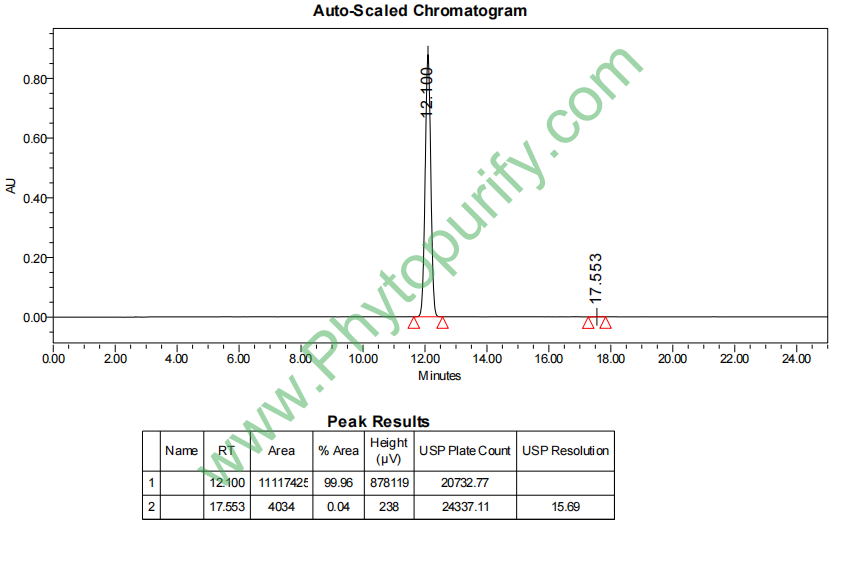
Purity: 95%~99%
Analysis Method: HPLC-DAD or/and HPLC-ELSD
Identification Method: Mass, NMR
Packing: Brown vial or HDPE plastic bottle
Storage: Store in a well closed container, protected from air and light. Put into refrigerate or freeze for long term storage.
Whenever possible, you should prepare and use solutions on the same day. However, if you need to make up stock solutions in advance, we recommend that you store the solution as aliquots in tightly sealed vials at -20℃. Generally, these will be useable for up to two weeks.
The product could be supplied from milligrams to grams, up to kilograms
Inquire for bulk scale.
Descriptions:
Curcumin, a polyphenolic compound derived from dietary spice turmeric, possesses diverse pharmacologic effects including anti-inflammatory, antioxidant, antiproliferative and antiangiogenic activities, it has effective activity against including cancer, cardio-
vascular diseases, diabetes, arthritis, neurological diseases and Crohn's disease; it is safe even at high doses (12 g/day) in humans but exhibits poor bioavailability, to improve its bioavailability , numerous approaches have been undertaken, such as, first, the use of adjuvant like piperine that interferes with glucuronidation; second, the use of liposomal curcumin; third, curcumin nanoparticles; fourth, the use of curcumin phospholipid complex; and fifth, the use of structural analogues of curcumin (e.g., EF-24). [1,2]
Curcumin is reported against leukemia and lymphoma, gastrointestinal cancers, genitourinary cancers, breast cancer, ovarian cancer, head and neck squamous cell carcinoma, lung cancer, melanoma, neurological cancers, and sarcoma reflects its ability to affect multiple targets, shows to interfere with multiple cell signaling pathways, including cell cycle (cyclin D1 and cyclin E), apoptosis (activation of caspases and down-regulation of antiapoptotic gene products), proliferation (HER-2, EGFR, and AP-1), survival (PI3K/AKT pathway), invasion (MMP-9 and adhesion molecules), angiogenesis (VEGF), metastasis (CXCR-4) and inflammation (NF-κB, TNF, IL-6, IL-1, COX-2, and 5-LOX). [3]
Curcumin has anti-inflammation activity, can regulate numerous transcription factors, cytokines, protein kinases, adhesion molecules, redox status and enzymes that have been linked to inflammation, has been shown to play a major role in most chronic illnesses, including neurodegenerative, cardiovascular, pulmonary, metabolic, autoimmune and neoplastic diseases.[4]
References:
[1] Anand P, Kunnumakkara A B, Newman R A, et al. Mole Pharm, 2007, 4(6):807-18.
[2] Duvoix A, Blasius R, Delhalle S, et al. Cancer Lett, 2005, 223(2):181-190.
[3] Preetha Anand, Chitra Sundaram, Sonia Jhurani, et al.Cancer Lett, 2008, 267(1):133-64.
[4] Aggarwal B B, Harikumar K B. Int J Biochem Cell B, 2009, 41(1):40-59.
[5] Jadhav B K, Mahadik K R, Paradkar A R. Chromatographia, 2007, 65(7):483-8.
HPLC of Curcumin
Storage conditions:Short-term storage at 2~8℃, long-term storage at -20 ~ -80℃
93.0600
2.7749
2.7471
.0310
5.1822
4.1532
Low
90.6379
2.4257
Yes
Yes
Yes
No
Yes
No
0.0
No
Yes
Yes
Yes
Curcumin (CAS: 458-37-7), also known as DiFeruloylmethane, is a natural polyphenolic compound extracted from the rhizome of the ginger plant Curcuma longa L. As the main active ingredient of traditional Chinese medicine turmeric, its application history can be traced back thousands of years to Ayurvedic medicine and traditional Chinese medicine systems, commonly used to treat inflammation, skin diseases, and digestive system diseases. Modern pharmacological research has revealed that curcumin exhibits a wide range of biological activities, including anti-inflammatory, antioxidant, anti proliferative, anti angiogenic, antimicrobial, and neuroprotective effects, making it one of the most highly regarded star molecules in the field of natural product research. Its multi-target properties, especially in regulating key signaling pathways such as nuclear factor kappa B (NF - κ B), mitogen activated protein kinases (MAPKs), and signal transduction and transcription activating factor 3 (STAT3), as well as activating the antioxidant pathway of nuclear factor E2 related factor 2 (Nrf2), have laid the foundation for its potential therapeutic value in various chronic diseases, especially cancer, neurodegenerative diseases, and metabolic diseases. Despite its excellent pharmacological activity, the inherent pharmacological defects of curcumin, such as low oral bioavailability, rapid metabolism, and poor water solubility, pose significant challenges for its clinical translation. This article aims to systematically review the chemical properties, pharmacological activities, molecular mechanisms of action, pharmacological evaluation, and clinical application prospects of curcumin, in order to provide a comprehensive academic perspective for the in-depth research and development of this important natural product.
Curcumin is a symmetrical linear diarylheptane compound with the molecular formula C21H20O6 and a molecular weight of 368.3850. Its core structure is composed of two adjacent methoxyphenol groups connected by a seven carbon chain (including a β - diketone structure). This unique β - diketone enol structure endows curcumin with pH dependent tautomerization properties, mainly existing in enol form under acidic or neutral conditions, and mainly in ketone form under alkaline conditions. The enol structure is considered to be the key to its antioxidant activity.
In terms of physicochemical properties, curcumin exhibits typical lipophilic characteristics, with a calculated lipid water partition coefficient (LogP) of approximately 2.77, indicating its good lipid solubility. However, its water solubility is extremely low, only about 0.031 mg/mL, which severely limits its absorption and distribution in organisms. Its topological polar surface area (TPSA) is 93.06 Å ², which falls within the common range of drug like molecules. Curcumin appears as orange yellow crystalline powder in solid state, and its solution is sensitive to light, heat, and alkaline environment, making it prone to degradation. Under physiological pH conditions, the chemical stability of curcumin is relatively poor, which is related to its easily hydrolyzed β - diketone structure. These physicochemical properties are the physical and chemical basis for its poor pharmacokinetic behavior.
Curcumin mainly comes from the dried rhizomes of the Curcuma longa L. plant in the ginger family. Turmeric, as a spice (one of the main components of curry) and medicinal herb, is widely cultivated in Southeast Asia, India, and China. In the rhizome of turmeric, curcumin does not exist alone, but together with demethoxycurcumin and bis demethoxycurcumin, it forms a "curcumin like compound". Among them, curcumin content is usually the highest, accounting for about 60-70% of the total curcumin like compounds.
The traditional extraction method mainly uses organic solvent extraction. Common solvents include ethanol, acetone, ethyl acetate, etc. The Soxhlet extraction method is a classic method commonly used in laboratories. In order to improve extraction efficiency and environmental friendliness, modern extraction technology has been widely applied:
1. Ultrasound assisted extraction Utilizing ultrasonic cavitation effect to destroy plant cell walls, accelerate solvent penetration, improve extraction efficiency, and shorten time.
2. Microwave assisted extraction Microwave heating vaporizes water inside cells, increasing pressure and causing cell rupture, thereby efficiently releasing target components.
3. Supercritical fluid extraction Supercritical CO ₂ is commonly used, which has no solvent residue and good selectivity, but has higher equipment costs and is more suitable for extracting high value-added products.
4. Enzyme assisted extraction Using cellulase, pectinase and other enzymes to decompose cell wall polysaccharides and increase the release rate of curcumin.
The crude extract usually needs to be further separated and purified by column chromatography (such as silica gel column, macroporous resin column), recrystallization, or preparative high-performance liquid chromatography to obtain high-purity curcumin monomer.
A large number of in vitro and in vivo studies have confirmed that curcumin has diverse pharmacological activities, which is a manifestation of its multi-target therapeutic potential.
1. Anti inflammatory activity Curcumin is a classic natural anti-inflammatory agent. It can significantly inhibit the production of inflammatory mediators induced by stimuli such as lipopolysaccharide (LPS) and tumor necrosis factor alpha (TNF - α), including prostaglandin E2 (PGE2), nitric oxide (NO), interleukin-1 β (IL-1 β), IL-6, IL-8, as well as the expression of inducible nitric oxide synthase (iNOS) and cyclooxygenase-2 (COX-2). It has shown good therapeutic effects in various animal models of acute and chronic inflammation, such as arthritis, colitis, and pancreatitis.
2. Antioxidant activity Curcumin has both direct and indirect antioxidant properties. The direct action originates from its phenolic hydroxyl structure, which can effectively scavenge oxygen free radicals (ROS), nitrogen free radicals (RNS), and chelate metal ions. The indirect effect is achieved by activating the cell's own antioxidant defense system, mainly relying on the upregulation of the Nrf2/ARE pathway.
3. Antitumor activity Curcumin has growth inhibition and apoptosis promoting effects on many tumor cell lines (such as colon cancer, breast cancer, lung cancer, prostate cancer, pancreatic cancer, etc.). Its anti-tumor effects are multifaceted: inhibiting cell proliferation, inducing cell cycle arrest (often in G2/M phase), triggering cell apoptosis through mitochondrial and death receptor pathways, inhibiting tumor invasion and metastasis, and anti angiogenesis. In colon cancer, its activity is particularly prominent.
4. Antibacterial, antiviral, and antifungal activity Curcumin has inhibitory effects on various Gram positive and Gram negative bacteria, and can damage the integrity of bacterial cell membranes. It also has antifungal (such as Candida) and antiviral activity, and has varying degrees of inhibitory effects on the replication of influenza virus, hepatitis virus, human immunodeficiency virus (HIV), and certain coronaviruses in recent years. As a photosensitizer, it also has potential applications in antimicrobial therapy.
5. Neuroprotection and anti Alzheimer's disease activity Curcumin can cross the blood-brain barrier (although with low permeability), reduce beta amyloid (A β) plaque deposition, inhibit tau protein hyperphosphorylation, alleviate neuroinflammation and oxidative stress, and has shown potential to improve cognitive function in animal models of neurodegenerative diseases such as Alzheimer's disease and Parkinson's disease.
6. Cardiovascular protection and metabolic regulation activity Curcumin can improve endothelial function, prevent atherosclerosis, and alleviate myocardial ischemia reperfusion injury. In addition, it can improve insulin resistance, reduce blood sugar and lipids by regulating AMPK and other pathways, which is valuable in the prevention and treatment of diabetes and its complications.
The mechanism of action of curcumin is extremely complex, involving the regulation of multiple signaling pathways, enzymes, transcription factors, growth factors, cytokines, and receptors, making it a model of "multi-target" natural medicine. The pharmacological mechanism of its action in colon cancer reflects this characteristic:
1. Regulating key signaling pathways:
* NF - κ B pathway NF - κ B is a core regulatory factor in inflammation and cancer. Curcumin can inhibit the activity of I κ B kinase (IKK), prevent the phosphorylation and degradation of I κ B α, and thus retain NF - κ B (such as p65/RELA subunit) in the cytoplasm, blocking its nuclear translocation and the transcription of downstream pro-inflammatory and pro survival genes (such as Bcl-2, cyclin D1, COX-2).
* MAPK pathway Curcumin can inhibit the phosphorylation activation of extracellular signal regulated kinases (ERK, such as MAPK1), c-Jun N-terminal kinase (JNK), and p38 MAPK, which are involved in cell proliferation, differentiation, and stress response.
* STAT3 pathway STAT3 is an important oncogenic transcription factor. Curcumin can inhibit the phosphorylation of STAT3 (possibly by suppressing upstream kinases such as LCK, JAK, etc.) and its DNA binding activity, downregulate the expression of its target genes (such as Mcl-1, Bcl-2, cyclin D1), thereby inhibiting tumor growth and inducing apoptosis.
* PI3K/Akt/mTOR pathway Curcumin can inhibit the pro survival and proliferation pathways, promote tumor cell apoptosis and autophagy.
* Wnt/β - catenin pathway The abnormally activated Wnt pathway in colon cancer can be inhibited by curcumin, thereby downregulating the expression of oncogenes such as c-Myc and cyclin D1.
2. Inducing oxidative stress defense - Nrf2/Keap1 pathway Curcumin can be used as an electrophilic modifier to directly modify key cysteine residues on Keap1 protein, leading to dissociation of Keap1-Nrf2 complex. Free Nrf2 translocates into the nucleus and binds to antioxidant response elements (ARE), initiating the expression of a series of phase II detoxifying enzymes (such as HO-1, NQO1, GCLC) and antioxidant proteins, enhancing the cell's resistance to oxidative and chemical damage.
3. Regulating apoptosis and autophagy related proteins:
* Promote apoptosis Curcumin can downregulate the expression of anti apoptotic proteins Bcl-2 and Mcl-1, upregulate the expression of pro apoptotic proteins Bax and Bak, induce mitochondrial membrane potential loss and cytochrome c release, and activate the caspase cascade reaction.
* Induce autophagy Curcumin can induce protective autophagy by inhibiting the Akt/mTOR pathway or acting directly, and in some cases synergistically with apoptosis to exert anti-tumor effects.
4. Affects epigenetic regulation Curcumin is a specific inhibitor of histone acetyltransferase p300/CBP. By inhibiting the catalytic activity of p300/CBP, curcumin can reduce the acetylation levels of histones (such as H3, H4) and non histones (such as p53, NF - κ B), thereby altering chromatin structure and gene transcription, exerting its anti-inflammatory and anti-tumor effects.
5. Inhibit multidrug resistance (MDR)Curcumin can downregulate the expression and function of ATP binding cassette transporter B1 (ABCB1/P-glycoprotein), reverse the resistance of tumor cells to various chemotherapy drugs (such as 5-fluorouracil and doxorubicin), and has the potential for chemotherapy sensitization.
6. Other targets Curcumin can directly or indirectly inhibit the activity of various enzymes such as cyclooxygenase-2 (COX-2), 5-lipoxygenase (ALOX5), matrix metalloproteinases (MMPs), topoisomerase I (TOP1), etc.
Although curcumin has a wide range of pharmacological activities, there are significant shortcomings in its drug like properties, which severely restrict its direct clinical application as a drug.
1. Pharmacokinetic characteristics:
* absorb Poor absorption after oral administration is mainly due to low water solubility, limited intestinal permeability, and strong first pass metabolism in the intestinal wall and liver.
* distribution High plasma protein binding rate. Due to its lipophilicity, it can be distributed to tissues such as the liver, intestine, and spleen, but its low blood-brain barrier permeability limits its application in central nervous system diseases.
* Metabolism Curcumin is rapidly and widely metabolized in the body. The main metabolic pathways include: ① reduction reaction In the intestine and liver, it is converted by reductases into dihydrocurcumin, tetrahydrocurcumin, hexahydrocurcumin, etc; ② Combination reaction Combining with glucuronic acid or sulfuric acid to generate corresponding glucuronide and sulfate ester complexes. These metabolites typically have lower activity than the prototype drug.
* excretion Metabolites are mainly excreted through feces, with a small amount excreted through urine.
* result Resulting in extremely low oral bioavailability, making it difficult to achieve effective therapeutic concentrations in plasma and tissues.
2. Analysis of pharmacological parameters:
* Water solubility (0.031 mg/mL)Extremely poor, affecting formulation development and in vivo dissolution and absorption.
* LogP(2.77)Moderate indicates that it has membrane permeability, but it is not the main cause of poor absorption.
* Blood-brain barrier permeability Low, limited direct effect on central nervous system targets.
* safety The Ames test result is negative (0.0), indicating no mutagenicity. The hERG inhibition test was negative, indicating a low risk of cardiac toxicity. Numerous studies and long-term consumption history have shown that curcumin has high safety and may cause gastrointestinal discomfort at high doses.
3. Improvement strategy:
To overcome the above shortcomings, researchers have developed various strategies:
* Structural modification Synthesize curcumin analogues or derivatives to enhance stability, activity, and bioavailability (such as EF24, FLLL series compounds).
* New drug delivery system:
* nano-formulation Liposomes, nanoparticles, micelles, solid lipid nanoparticles, etc. can significantly improve solubility and stability, prolong circulation time, and enhance targeting (such as passive EPR effect targeting tumor tissue).
* Phospholipid complex Forming complexes with phospholipids to improve lipid solubility and absorption.
* Cyclodextrin inclusion complex Improve water solubility and stability.
* Combined administration Combined with metabolic enzyme inhibitors such as piperine, CYP450, and glucosyltransferase inhibitors, the blood concentration of curcumin can be significantly increased.
* Prodrug strategy Prepare curcumin as a prodrug that releases the prototype drug at specific sites or under specific conditions.
The transformation of curcumin from a "kitchen spice" to a "potential drug" is full of opportunities and challenges.
1. Current clinical application status:
At present, curcumin is mainly sold in the global market as a dietary supplement and health food for joint health, digestive support, and antioxidant purposes. As a prescription drug, its clinical application is still in the research stage, but some clinical trials have shown positive signals in specific fields, such as relieving pain from osteoarthritis, improving symptoms of ulcerative colitis, assisting in the treatment of certain cancers (in combination with chemotherapy), and treating indigestion.
2. Future development direction and prospects:
* Disease Prevention and Health Management Due to its excellent safety and efficacy, curcumin has great potential in the long-term prevention and adjuvant management of chronic inflammation related diseases, such as metabolic syndrome and early neurodegenerative disorders.
* As a chemotherapy/radiotherapy sensitizer Utilizing its multi-target properties (such as inhibiting NF - κ B and STAT3, reversing multidrug resistance) in combination with conventional radiotherapy and chemotherapy can enhance efficacy, reduce side effects and drug resistance, making it a highly promising clinical translation direction.
* Clinical translation of a new drug delivery system Nanotechnology based curcumin formulations are undergoing preclinical and early clinical research. These formulations are expected to solve the bottleneck of their bioavailability and achieve effective delivery of therapeutic doses, which is the key to promoting them as true therapeutic drugs.
* Mechanism based combination therapy Combined with targeted drugs targeting specific pathways (such as PD-1/PD-L1 immune checkpoint), it may produce synergistic anti-tumor effects.
* Development of structurally optimized drugs Developing new chemical entities with better pharmacokinetic and pharmacological properties using curcumin as a lead compound is an important direction in the field of medicinal chemistry.
3. Challenges Faced:
* Standardization of clinical trial design Curcumin preparations are diverse, with varying doses and treatment courses, lacking high-quality clinical trial evidence of large-scale, multi center, double-blind randomized controlled trials.
* Accurate explanation of the mechanism of action Its multi-target characteristics are both advantages and challenges, requiring a deeper elucidation of the "core target group" that plays a dominant role in specific disease models.
* Intellectual Property and Commercialization As a natural product, its compounds themselves have weak patent protection, and innovation needs to focus on new formulations, medical uses, derivatives, or specific combinations.
Curcumin, as a natural polyphenol derived from ancient medical wisdom, has become a golden bridge connecting traditional medicine and modern life science research due to its extraordinary multi-target pharmacological activity and excellent safety. Its molecular mechanisms in anti-inflammatory, antioxidant, anti-tumor and other aspects have been continuously revealed, especially in regulating core signaling pathways such as NF - κ B, Nrf2, STAT3, demonstrating its unique value as a "versatile" molecule for intervening in complex diseases. However, its inherent physicochemical properties and pharmacokinetic defects, like the Achilles heel, limit its widespread clinical application as a single drug. In the future, through interdisciplinary collaboration and the comprehensive application of medicinal chemistry (structural modification), pharmacy (advanced drug delivery systems), and clinical medicine (precise experimental design), it is expected to break through these bottlenecks. The research paradigm of curcumin not only provides a roadmap for developing it as a preventive agent, adjuvant therapy or new drug, but also provides valuable reference for the modernization research of other multi-target natural products. From the dining table to the laboratory, and then to the future pharmacy, the exploration journey of curcumin still vividly interprets the enduring contribution and infinite potential of this "treasure trove" of natural products to human health.
