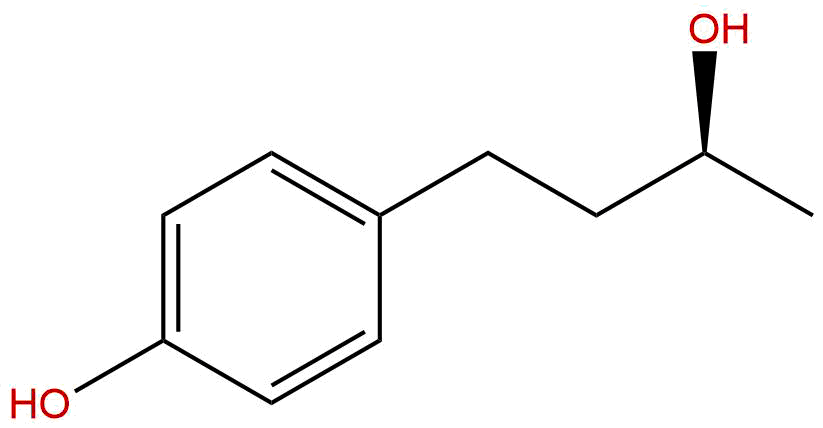


Product name: (+)-Rhododendrol
Synonym name: (S)-(+)-Rhododendrol;(+)-Betuligenol
Catalogue No.: BP5258
Cas No.: 59092-94-3
Formula: C10H14O2
Mol Weight: 166.22
Botanical Source:
Type of Compound: Phenols
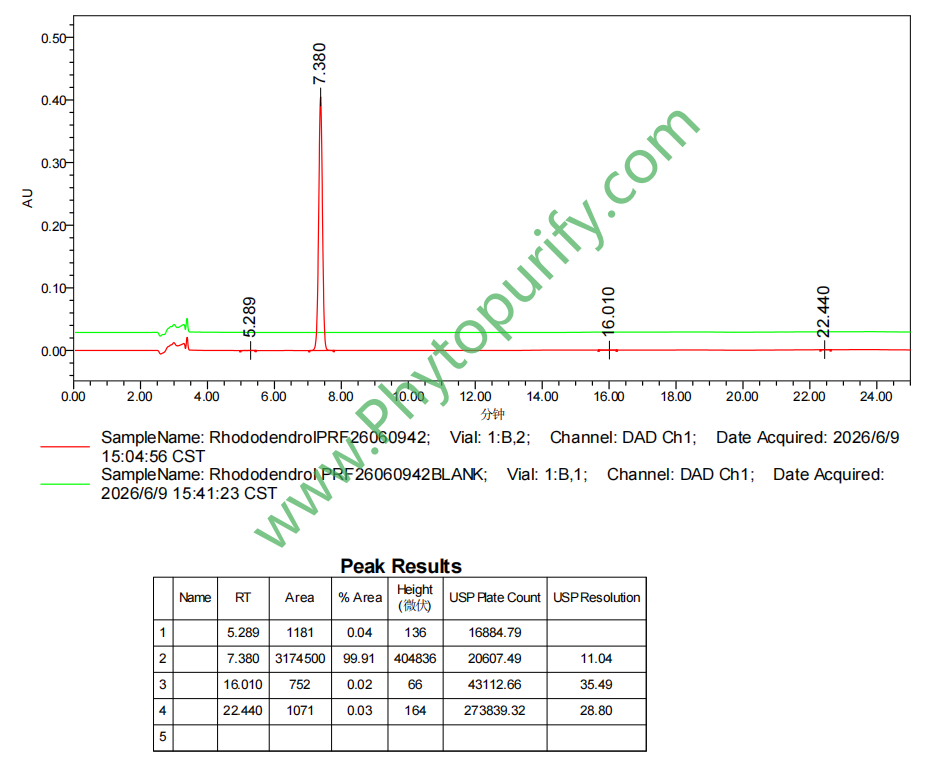
Purity: 95%~99%
Analysis Method: HPLC-DAD or/and HPLC-ELSD
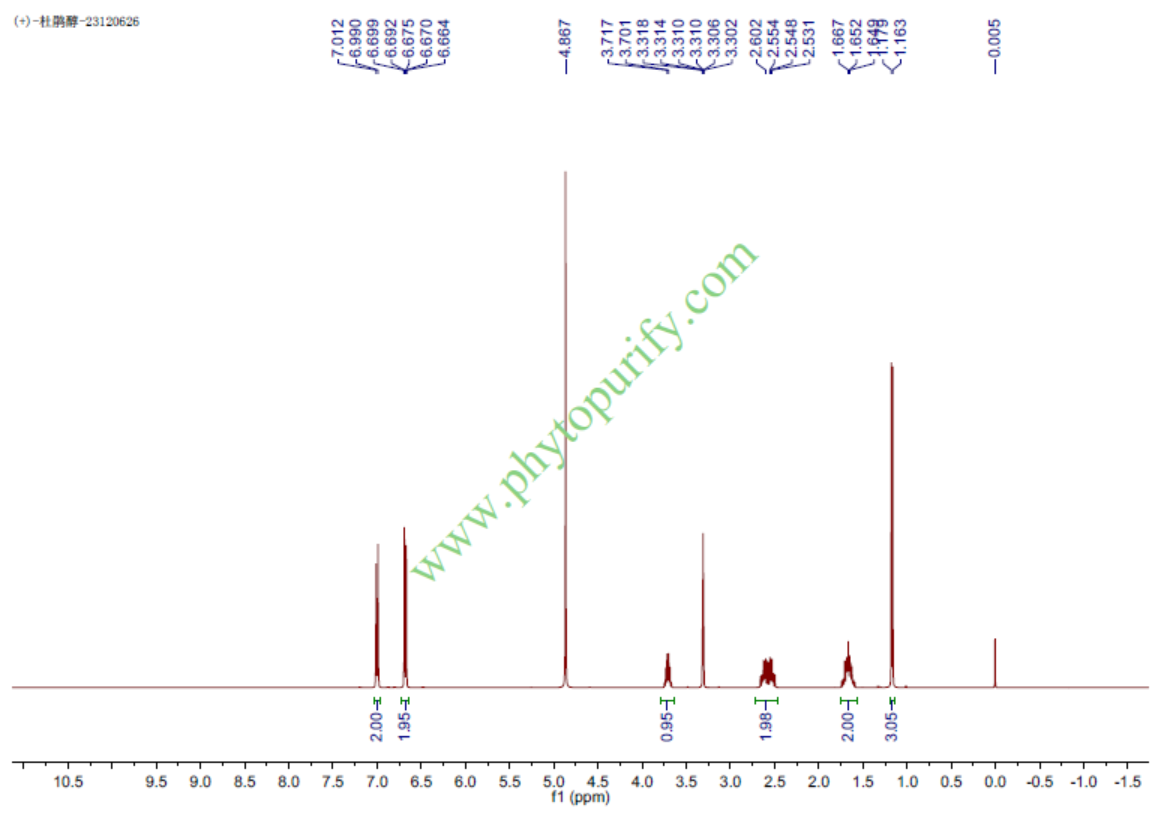
Identification Method: Mass, NMR
Packing: Brown vial or HDPE plastic bottle
Storage: Store in a well closed container, protected from air and light. Put into refrigerate or freeze for long term storage.
Whenever possible, you should prepare and use solutions on the same day. However, if you need to make up stock solutions in advance, we recommend that you store the solution as aliquots in tightly sealed vials at -20℃. Generally, these will be useable for up to two weeks.
The product could be supplied from milligrams to grams
Inquire for bulk scale.
For Reference Standard and R&D, Not for Human Use Directly.
HNMR of (+)-Rhododendrol
HPLC of (+)-Rhododendrol
Storage conditions:Short-term storage at 2~8℃, long-term storage at -20 ~ -80℃
40.4600
1.9948
1.9943
2.7253
3.8713
13.0789
High
60.7346
2.1951
Yes
Yes
No
No
No
No
0.0
No
Yes
No
No
Natural products, as an important source of drug discovery, play an indispensable role in the long history of human struggle against diseases. From ancient plant therapies to the development of modern targeted drugs, the rich chemical diversity in nature continues to provide valuable lead compounds for the pharmaceutical field. Among numerous naturally occurring phenolic compounds with biological activity, (+) - Rhododendron (+) - Rhododendron) has attracted increasing attention from researchers due to its unique chemical structure and multifaceted pharmacological activities, especially its potential in the field of anti-tumor.
(+) - Rhododendron alcohol, chemical name 4- (4-hydroxyphenyl) -2-butanol, is a natural diphenylbutane compound found in various plants. Its name comes from its origin in the genus Rhododendron(Rhododendron)Discoveries in plants. Although this compound has caused some controversy in the cosmetics industry due to its association with skin whitening, in recent years, the scientific community has conducted in-depth exploration of its pharmacological effects in anti-tumor, anti-inflammatory, antioxidant, and other aspects, revealing its important value as a multi-target natural product. In particular, studies have shown that (+) - rhododendron alcohol can exhibit potential anti-tumor activity by regulating multiple key signaling pathways and targets closely related to tumor occurrence and development, such as MCL1, BCL2, STAT3, MMP2, TOP1, HIF1A, TOP2A, MAPK1, ESR1, and CYP19A1. These findings not only provide modern scientific basis for understanding the efficacy of traditional plant medicines, but also open up new directions for developing novel, low toxicity tumor treatment drugs or adjuvant therapy strategies. This article aims to provide a comprehensive and systematic review of the chemical structure, plant origin, pharmacological activity, mechanism of action, medicinal properties, and clinical application prospects of (+) - rhododendron alcohol, in order to provide reference for the in-depth research and development of this natural product.
The chemical structure of (+) - rhododendron alcohol is the basis of its biological activity. Its system is named 4- (4-hydroxyphenyl) -2-butanol, with a molecular formula of C ₁₀ H ₁₄ O ₂ and a molecular weight of 166.22 g/mol. Structurally, it is composed of a para substituted phenol ring (4-hydroxyphenyl) connected to a secondary alcohol group (2-butanol) through an ethyl chain. This structure gives it the characteristics of both phenolic and alcoholic hydroxyl groups, endowing it with unique chemical reactivity and biological activity. It is worth noting that its molecule contains a chiral center (C-2 position), therefore there are two enantiomers, namely (+) - rhododendron alcohol and (-) - rhododendron alcohol. The naturally occurring (+) - rhododendron alcohol has specific optical activity, and its absolute configuration is usually determined as the (S) - configuration. This stereochemical structure is crucial for its interaction with target molecules in living organisms, and different enantiomers may exhibit vastly different pharmacological activities.
In terms of physicochemical properties, (+) - rhododendron alcohol exhibits good drug like characteristics. Its lipid water partition coefficient (LogP) is 1.99, indicating that it has moderate lipophilicity, which allows it to dissolve in aqueous environments and cross biofilms, facilitating absorption, distribution, and binding to targets in vivo. Its topological polar surface area (TPSA) is 40.46 Å ², far below the upper limit of 140 Å ² typically required for oral drugs, indicating its good oral absorption and ability to penetrate biofilms. The water solubility data (2.73 mg/mL) also supports this point, indicating that it has a certain solubility in aqueous solution, which is beneficial for the development of the formulation. In addition, computer simulations predict that it has high blood-brain barrier penetration ability, which suggests that it may have potential application value for central nervous system diseases such as brain tumors. More importantly, early toxicological predictions showed that (+) - rhododendron alcohol does not pose a risk of hERG cardiac toxicity (hERG inhibition: No), and the Ames test results were negative (0.0), indicating that it does not have significant mutagenicity. These good pharmacokinetic parameters, especially their low toxicity and excellent pharmacokinetic properties, lay a solid foundation for their further development as lead compounds or candidate drugs.
(+) - Rhododendron alcohol is not a rare natural product, it is widely distributed in the plant kingdom, especially abundant in plants such as Ericaceae, Betulaceae, and Rosaceae. Its name comes from plants of the Rhododendron genus, such as Rhododendron chrysanthum, R. dauricum, and R. ferrogineum, which are found in the flowers, leaves, and bark of these plants. In addition, the presence of (+) - rhododendron alcohol has also been detected in the bark of birch plants (such as Betula platyphylla var. japonica) and in the bark and fruit of certain Rosaceae plants (such as Sorbus commixta). Factors such as different plant sources, different parts, harvest seasons, and growth environments can significantly affect the content of (+) - rhododendron alcohol. For example, some varieties of azaleas may have higher levels in their tender leaves, while their bark may contain their glycosidic form.
Extraction and purification of (+) - rhododendron alcohol are the basis for subsequent research. The traditional extraction method is mainly based on solvent extraction. Due to the polarity and water solubility of (+) - rhododendron alcohol, methanol, ethanol, or their aqueous solutions are usually used as extraction solvents. For example, dry and crushed plant materials (such as rhododendron leaves) are soaked or percolated in a 70-80% ethanol aqueous solution at room temperature or under heating conditions, and the extract is concentrated under reduced pressure to obtain a crude extract. Subsequently, using liquid-liquid extraction method, such as fractional extraction with solvents of different polarities such as petroleum ether and ethyl acetate, (+) - rhododendron alcohol can be enriched in the ethyl acetate extraction layer. Further purification requires the use of various chromatographic techniques. Classic column chromatography methods, such as silica gel column chromatography, use mixed solvents such as chloroform methanol or n-hexane ethyl acetate as the mobile phase for gradient elution, which is a commonly used method for separating (+) - rhododendron alcohol. In addition, high-performance liquid chromatography (HPLC) technology, especially reverse phase C18 columns, combined with ultraviolet detectors, can achieve high-purity preparation and separation. In recent years, some more efficient and environmentally friendly extraction techniques have also been applied, such as supercritical fluid extraction (SFE) and microwave-assisted extraction (MAE), which can improve extraction efficiency, shorten time, and reduce the use of organic solvents. The separated (+) - rhododendron alcohol can be structurally identified and purity confirmed by methods such as nuclear magnetic resonance (NMR), mass spectrometry (MS), and optical rotation spectroscopy.
In recent years, significant progress has been made in the pharmacological activity research of (+) - rhododendron alcohol, revealing its enormous potential in multiple disease fields, especially in anti-tumor applications.
1. Antitumor activity
This is the most concentrated area of research on (+) - rhododendron alcohol. Numerous in vitro and in vivo studies have shown that (+) - rhododendron alcohol has significant inhibitory effects on proliferation and induces apoptosis in various types of tumor cells.
* Breast cancer: Several studies have confirmed that (+) - rhododendron can inhibit the growth of estrogen receptor positive (ER+) and triple negative breast cancer (TNBC) cells. It can reduce the synthesis of estrogen and play a therapeutic role in hormone dependent breast cancer by downregulating the expression and activity of estrogen receptor alpha (ESR1) and inhibiting the activity of aromatase (CYP19A1). At the same time, it can also induce apoptosis of breast cancer cells by regulating apoptosis related proteins, such as up regulating apoptosis promoting protein Bax, down regulating anti apoptosis proteins MCL1 and BCL2, and inhibiting phosphorylation of STAT3 signaling pathway.
* Lung cancer: In non-small cell lung cancer (NSCLC) cell lines, (+) - rhododendron alcohol exhibits the ability to inhibit cell proliferation and migration. Its mechanism of action involves inhibiting the expression and activity of matrix metalloproteinase 2 (MMP2), thereby weakening the invasion and metastasis ability of tumor cells. In addition, it can also reduce the survival and angiogenesis ability of tumor cells in hypoxic environments by inhibiting the expression of hypoxia inducible factor 1 alpha (HIF1A).
* Prostate cancer: Research has shown that (+) - rhododendron alcohol can inhibit the growth of prostate cancer cells and induce their apoptosis. Its targets include inhibiting the phosphorylation of MAPK1 (ERK2), thereby blocking the transmission of the MAPK/ERK signaling pathway, which is crucial in the occurrence and development of prostate cancer.
* Other tumors: In addition to the aforementioned types of cancer, (+) - rhododendron alcohol also exhibits certain inhibitory activity against liver cancer, colon cancer, melanoma, and other cancers. For example, it has been shown to inhibit the activity of topoisomerase I (TOP1) and topoisomerase II alpha (TOP2A), which are key enzymes in DNA replication and transcription processes, and their inhibitors are commonly used chemotherapy drugs in clinical practice. This suggests that (+) - rhododendron alcohol may exert anti proliferative effects by interfering with the DNA topology of tumor cells.
2. Anti inflammatory and antioxidant activity
(+) - Rhododendron alcohol has also been reported to have anti-inflammatory and antioxidant properties. It can inhibit the production of nitric oxide (NO) and prostaglandin E2 (PGE2) in macrophages stimulated by lipopolysaccharide (LPS), and downregulate the expression of inducible nitric oxide synthase (iNOS) and cyclooxygenase-2 (COX-2). These effects are related to their clearance of free radicals and inhibition of activation of the nuclear factor kappa B (NF - κ B) signaling pathway. These anti-inflammatory and antioxidant activities may complement their anti-tumor effects, as chronic inflammation and oxidative stress are important promoting factors for tumor development.
3. Other activities
Preliminary studies also suggest that (+) - rhododendron alcohol may have neuroprotective, antibacterial, and antiviral activities. For example, it can protect neurons from oxidative stress-induced damage and exhibit inhibitory effects on certain Gram positive bacteria and fungi. However, research in these areas is not yet in-depth and requires further verification.
The pharmacological activity of (+) - Rhododendron alcohol, especially its anti-tumor effect, is not achieved through a single mechanism, but by acting on multiple molecular targets and regulating multiple signaling pathways, exhibiting the characteristic of "multi-target, multi pathway" action. The core mechanism can be summarized as follows:
1. Regulating cell apoptosis and survival signaling pathways
This is one of the core mechanisms by which (+) - rhododendron alcohol exerts anti-tumor effects. It can directly or indirectly affect the balance of Bcl-2 family proteins.
* Target: MCL1 and BCL2 MCL1 and BCL2 are key anti apoptotic proteins that are highly expressed in various tumor cells, leading to resistance of tumor cells to apoptotic signals. Research has shown that (+) - rhododendron alcohol can downregulate the protein levels of MCL1 and BCL2, while upregulating the expression of pro apoptotic proteins such as Bax and Bak, thereby breaking the permeability of mitochondrial membranes, promoting the release of cytochrome c, activating the Caspase cascade reaction, and ultimately inducing tumor cell apoptosis.
* Target: STAT3 STAT3 is a key transcription factor involved in regulating various processes such as cell proliferation, survival, angiogenesis, and immune escape. In many tumors, STAT3 is in a continuously activated state. (+) - Rhododendron alcohol can inhibit the phosphorylation of STAT3, especially at the Tyr705 site, preventing its dimerization and entry into the nucleus, thereby inhibiting the transcription of downstream target genes such as MCL1, BCL2, Cyclin D1, VEGF, etc., and exerting anti-tumor effects.
2. Inhibit tumor invasion and metastasis
The invasion and metastasis of tumors are the main causes of patient death. (+) - Rhododendron alcohol combats this process by inhibiting the activity of matrix metalloproteinases (MMPs).
* Target: MMP2 MMP2 is a key enzyme for degrading extracellular matrix (ECM), and its high expression is closely related to the invasion and metastasis ability of tumors. (+) - Rhododendron alcohol can downregulate the mRNA and protein expression levels of MMP2 and inhibit its enzyme activity by inhibiting upstream signaling pathways such as MAPK/ERK and PI3K/Akt, effectively reducing the migration and invasion ability of tumor cells.
3. Interference with DNA replication and cell cycle
(+) - Rhododendron alcohol can directly act on DNA topoisomerases, interfering with DNA replication and transcription processes.
* Target: TOP1 and TOP2A Topoisomerase is an essential enzyme in the processes of DNA replication, transcription, recombination, and chromosome separation. TOP1 and TOP2A are important anti-tumor drug targets in clinical practice. Research has found that (+) - rhododendron alcohol can inhibit the catalytic activity of TOP1 and TOP2A, similar to classic chemotherapy drugs such as camptothecin and etoposide. This inhibitory effect can lead to DNA strand breaks, trigger DNA damage responses, and ultimately induce cell cycle arrest (such as G2/M phase arrest) and apoptosis.
4. Impact on tumor microenvironment and hormone signaling
(+) - Rhododendron alcohol can also inhibit tumor growth by affecting the tumor microenvironment and hormone signaling pathways.
* Target: HIF1A In the hypoxic microenvironment of tumors, HIF1A is stably expressed and promotes adaptive responses such as angiogenesis (by upregulating VEGF, etc.) and glycolysis. (+) - Rhododendron alcohol can inhibit the protein expression and transcriptional activity of HIF1A, thereby suppressing tumor angiogenesis and cutting off the nutritional supply to the tumor.
* Target: ESR1 and CYP19A1 For hormone dependent breast cancer, (+) - azaleas can directly bind to estrogen receptor α (ESR1) and play an antagonistic role; On the other hand, it can inhibit the activity of aromatase (CYP19A1), reduce the conversion of androgens to estrogens, thereby lowering estrogen levels in the body and double inhibiting estrogen driven tumor growth.
* Target: MAPK1 MAPK1 (ERK2) is a key member of the RAS-RAF-MEK-ERK signaling pathway, regulating cell proliferation and differentiation. (+) - Rhododendron alcohol can inhibit the phosphorylation of MAPK1, thereby blocking the transmission of this pro proliferative signaling pathway.
In summary, (+) - Rhododendron alcohol synergistically induces apoptosis, inhibits proliferation, prevents metastasis, interferes with DNA replication, and improves the tumor microenvironment by simultaneously acting on multiple key targets such as MCL1, BCL2, STAT3, MMP2, TOP1, HIF1A, TOP2A, MAPK1, ESR1, and CYP19A1, thereby exerting its strong anti-tumor activity. This multi-target mode of action is its advantage, which may help overcome the problem of resistance to single target drugs.
Whether a compound can move from the laboratory to clinical application depends on its drug like and pharmacokinetic (ADME) properties. As mentioned earlier, (+) - rhododendron alcohol exhibits good pharmacological properties in terms of physicochemical properties, in accordance with the "Lipinski Five Rules" (molecular weight<500, LogP<5, hydrogen bond donor<5, hydrogen bond acceptor<10), which provides the possibility for its oral administration.
In terms of pharmacokinetics, although systematic ADME research on (+) - rhododendron alcohol is not yet complete, based on its physicochemical properties and preliminary animal experiments, its in vivo processes can be preliminarily evaluated
* Absorption: Due to its moderate LogP (about 2.0) and good water solubility, it is predicted to have good oral absorption. Its high blood-brain barrier penetration ability also suggests that it can be quickly absorbed and distributed to tissues throughout the body, including the brain.
* Distribution: Due to its moderate lipophilicity, (+) - rhododendron alcohol may be widely distributed in various tissues within the body. The binding rate with plasma proteins still needs to be experimentally determined.
* Metabolism: Phenolic compounds typically undergo phase II metabolism in the body, such as glucuronidation and sulfation. The phenolic and alcohol hydroxyl groups in (+) - Rhododendron alcohol molecules are the main metabolic sites. In addition, phase I metabolism such as oxidation may also occur. The activity or toxicity of its metabolites is a key focus of future research.
* Excretion: Metabolites and small amounts of prototype drugs may be mainly excreted through urine and bile.
The key advantage of drug efficacy lies in its predicted low toxicity. A negative hERG inhibition indicates a low risk of cardiac toxicity, while a negative Ames test indicates no genetic toxicity. These characteristics give it significant advantages in terms of safety, surpassing many traditional chemotherapy drugs. However, it is worth noting that (+) - rhododendron alcohol has received attention in the cosmetics industry for causing white spots on the skin (chemical vitiligo) in some users. This suggests that it may be toxic to melanocytes when applied at high local concentrations, but the skin toxicity risk of systemic administration is not yet clear. Therefore, when developing oral or injectable drugs, it is necessary to rigorously evaluate their potential skin toxicity and other organ toxicity.
Overall, (+) - rhododendron alcohol has a good foundation as a lead compound or candidate drug, but its pharmacokinetic properties, metabolic pathways, and long-term toxicity still need to be elucidated through systematic preclinical studies.
Based on the multi-target anti-tumor activity, good physicochemical properties, and predicted low toxicity of (+) - rhododendron alcohol, it has shown broad prospects in clinical applications, especially in the field of tumor treatment.
1. Development of new anti-tumor drugs
The most direct application prospect of (+) - Rhododendron alcohol is to develop it into a new type of anti-tumor drug. Its unique "multi-target" mode of action makes it potentially effective against various cancers and may also exhibit activity against tumor cell lines resistant to traditional chemotherapy drugs. In particular, its potential effect on breast cancer (by targeting ESR1 and CYP19A1), lung cancer (by targeting HIF1A and MMP2) and prostate cancer (by targeting MAPK1) makes it a candidate drug for these high incidence cancers. In the future, it can be developed into oral formulations for long-term maintenance treatment or adjuvant therapy of cancer to reduce the risk of recurrence and metastasis.
2. As a chemotherapy sensitizer or combination therapy
Given that (+) - rhododendron alcohol can inhibit signaling molecules related to chemotherapy resistance such as STAT3 and MCL1, it is expected to serve as a chemotherapy sensitizer and be used in combination with traditional chemotherapy drugs such as cisplatin, paclitaxel, and doxorubicin. Combination therapy may produce a synergistic effect, reducing the effective dose of chemotherapy drugs and thus alleviating their toxic side effects. For example, in combination with topoisomerase inhibitors such as irinotecan, it may enhance the inhibitory effect on TOP1; Combined with endocrine therapy drugs such as trastuzumab, it may more comprehensively inhibit the estrogen signaling pathway.
3. Application in tumor prevention
Due to its good safety and antioxidant and anti-inflammatory activities, (+) - rhododendron alcohol or its plant extracts rich in this ingredient have the potential to be developed as tumor chemopreventive agents for daily interventions in high-risk populations (such as patients with familial adenomatous polyposis and chronic hepatitis) to reduce the risk of cancer.
4. Challenges faced and future research directions
Despite its promising prospects, the clinical application of (+) - rhododendron still faces many challenges:
* Pharmacokinetic optimization: It is necessary to systematically study its in vivo ADME process, especially metabolic stability. If its half-life is short or its first pass effect is strong, it may be necessary to improve its pharmacokinetic properties through structural modifications (such as prodrug design) or the development of novel drug delivery systems (such as liposomes, nanoparticles).
* Toxicity assessment: In addition to skin toxicity, a comprehensive evaluation of its long-term systemic toxicity (such as hepatotoxicity, nephrotoxicity, neurotoxicity) is required. Especially its high blood-brain barrier penetration ability, although beneficial for the treatment of brain tumors, also requires attention to its central nervous system side effects.
* In depth elucidation of the mechanism of action: Although multiple targets are known, their direct binding modes, binding affinities, and synergistic networks with these targets still need to be further elucidated through experimental techniques such as molecular docking, surface plasmon resonance (SPR), and knockout/knock in.
* Clinical translation: From laboratory discovery to clinical application, strict pharmacological, pharmacokinetic, and toxicological evaluations need to be completed, and ultimately validated for safety and efficacy through multiple clinical trials.
(+) - Rhododendron alcohol, as a naturally occurring polyphenolic compound, is transforming from a traditional plant ingredient to the focus of modern drug development due to its unique chemical structure and multifaceted pharmacological activities, especially its enormous potential in the field of anti-tumor. This article provides an overview of its chemical structure, plant origin, pharmacological activity, mechanism of action, and evaluation of its medicinal properties. Research has shown that (+) - rhododendron alcohol can exert multiple anti-tumor effects, including inducing apoptosis, inhibiting proliferation, preventing metastasis, interfering with DNA replication, and regulating the tumor microenvironment, by regulating multiple molecular targets closely related to tumor occurrence and development, such as MCL1, BCL2, STAT3, MMP2, TOP1, HIF1A, TOP2A, MAPK1, ESR1, and CYP19A1. Its excellent physicochemical properties and predicted low toxicity give it an inherent advantage in drug development.
Of course, the road from laboratory discovery to clinical application of (+) - rhododendron alcohol conversion is still long and challenging. Future research needs to focus on optimizing its pharmacokinetic properties, systematic evaluation of long-term toxicity, and in-depth elucidation of its mechanism of action. Through structural modification, dosage form innovation, and combination therapy strategies, it is expected to overcome its potential shortcomings and develop it into a highly efficient and low toxicity new anti-tumor drug or adjuvant therapy. In short, (+) - rhododendron alcohol is a precious gem worth exploring in the treasure trove of natural products, and its application prospects in human health are worth looking forward to.
