


Product name: Demethoxycurcumin
Synonym name: p-Hydroxycinnamoylferuloylmethane;7789-33-5
Catalogue No.: BP0472
Cas No.: 22608-11-3
Formula: C20H18O5
Mol Weight: 338.359
Botanical Source: Curcuma zedoaria, Curcuma longa and Curcuma xanthorrhiza
Physical Description: Yellow powder
Type of Compound: Phenols
Purity: 95%~99%
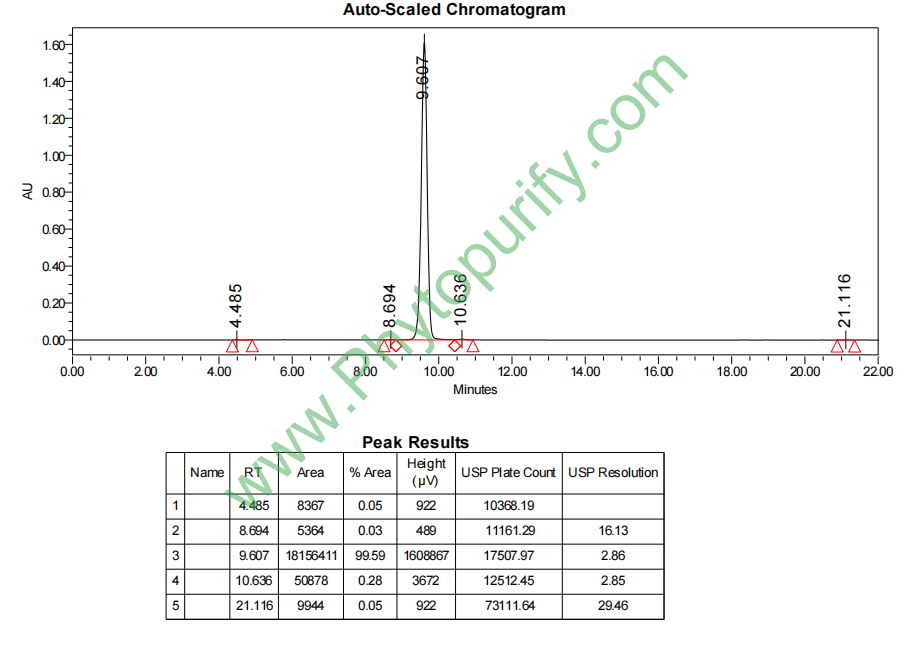
Analysis Method: HPLC-DAD or/and HPLC-ELSD
Identification Method: Mass, NMR
Packing: Brown vial or HDPE plastic bottle
Storage: Store in a well closed container, protected from air and light. Put into refrigerate or freeze for long term storage.
Whenever possible, you should prepare and use solutions on the same day. However, if you need to make up stock solutions in advance, we recommend that you store the solution as aliquots in tightly sealed vials at -20℃. Generally, these will be useable for up to two weeks.
The product could be supplied from milligrams to grams, up to kilograms
Inquire for bulk scale.
Descriptions:
Demethoxycurcumin (DMC) is one of the main active compounds of curcuminoids found in turmeric powder, which is used as a spice in Asian cooking and traditional medicine, has anti-inflammation and anti-cancer activities, the mechanism of DMC-mediated anti-invasive activity involves modulation of the expression of invasion-associated proteins, possibly by targeting NF-κB in MDA-MB-231 cells.[1]
Demethoxycurcumin has the relative potency for suppression of tumor necrosis factor (TNF)-induced nuclear factor-B (NF-B) activation, the relative potency is curcumin > demethoxycurcumin> bisdemethoxycurcumin, they also exhibit variable anti-inflammatory and anti-proliferative activities, which do not correlate with their ability to modulate the ROS status.[2]
Demethoxycurcumin, curcumin and bisdemethoxycurcumin have pro-oxidant, anti-oxidant and cleavage activities on DNA .[3]
Demethoxycurcumin (DMC) has differential potency for inhibition of cancer cell invasion, the differential potency is BDMC> or =DMC>Cur, whereas the cell migration is not affected, shows higher antimetastasis potency than curcumin by the differentially down-regulation of ECM degradation enzymes.[4]
Demethoxycurcumin exerts its in vitro anti-inflammatory effect in LPS-activated N9 microglial cells by blocking nuclear factor-κB (NF-κB) and MAPKs activation, which may be partly due to its potent down-regulation of the NADPH-derived iROS production.[5]
Demethoxycurcumin can induce the apoptosis of human lung cancer NCI-H460 cells through the mitochondrial-dependent pathway, it may be used as a novel anticancer agent for the treatment of lung cancer in the future.[6]
References:
[1] Yodkeeree S, Ampasavate C, Sung B, et al. Eur J Pharmacol, 2009, 627(1-3):8-15.
[2] Sandur SK, Pandey MK, Sung B,et al. Carcinogenesis, 2007, 28(8):1765-73.
[3] Jayaprakasha G K, Rao L J, Sakariah K K. Food Chem, 2006, 98(4):720-4.
[4] Ahsan H, Parveen N, Khan N U, et al. Chem-biol interact, 1999, 121(2):161-75.
[5] Yodkeeree S, Chaiwangyen W, Garbisa S, et al. J Nutr Biochem, 2009, 20(20):87-95.
[6] Zhang L, Wu C, Zhao S, et al. Int Immunopharmacol, 2010, 10(3):331-8.
[7] Jadhav B K, Mahadik K R, Paradkar A R. Chromato, 2007, 65(7):483-8.
HPLC of Demethoxycurcumin
Storage conditions:Short-term storage at 2~8℃, long-term storage at -20 ~ -80℃
83.8300
2.7058
2.6794
.0689
3.8519
4.4165
Low
90.9845
2.3628
Yes
Yes
Yes
No
Yes
No
0.0
No
Yes
Yes
Yes
Natural products, as an important treasure trove for drug discovery and development, play an irreplaceable role in the long history of human fight against diseases. Turmeric, as a widely used medicinal plant in traditional medical systems such as Ayurveda and traditional Chinese medicine, has attracted modern scientific attention for its core active ingredients, curcumin compounds, due to their extensive pharmacological activities. Curcumin compounds mainly include curcumin, demethoxycurcumin, and bis demethoxycurcumin. Among them, demethoxycurcumin, as a major natural homologue of curcumin, although its research history is relatively short, is increasingly becoming a new focus of pharmacological research due to its unique chemical structure and significant biological activity. Demethoxycurcumin not only retains the basic anti-inflammatory and antioxidant properties shared by the curcumin family, but also exhibits potential in anti-tumor and neuroprotective effects that may be superior to curcumin, especially in overcoming the shortcomings of low bioavailability and fast metabolism of curcumin. This article aims to systematically review the chemical properties, plant sources, pharmacological activities, molecular mechanisms of action, pharmacological evaluation, and clinical application prospects of demethoxycurcumin, in order to provide comprehensive scientific references for the in-depth research and development of this compound.
Demethoxycurcumin, chemical name 1- (4-hydroxy-3-methoxyphenyl) -7- (4-hydroxyphenyl) -1,6-heptadiene-3,5-dione, CAS number 22608-11-3. Its molecular formula is C20H18O5 and its molecular weight is 338.3590 g/mol.
From a chemical structure perspective, demethoxycurcumin belongs to the class of diarylheptanes. Its core structure is composed of two aromatic rings (A ring and B ring) connected by a seven carbon chain (containing α, β - unsaturated β - diketone structure). Compared with curcumin (which has one methoxy group on each of the A and B rings), demethoxycurcumin only retains one methoxy group (- OCH3) on the A ring, while on the B ring it has a hydroxyl group (- OH), meaning it "removes" one methoxy group. This structural difference is the origin of its name and deeply affects its physicochemical properties and biological activity. Its β - diketone structure gives it enol ketone tautomerism and can be used as a metal ion chelating agent.
The key physicochemical parameters related to drug properties are as follows: the calculated lipid water partition coefficient (LogP) is about 2.71, indicating that the compound has moderate lipophilicity, which is beneficial for transmembrane transport, but excessively high LogP may also affect water solubility. Its topological polar surface area (TPSA) is 83.83 Å ², which is at a moderate level. The water solubility measured in the experiment is relatively low, about 0.0689 mg/mL, which is one of the main physical and chemical factors limiting its oral bioavailability. These parameters collectively determine its absorption, distribution, metabolism, and excretion characteristics within the organism.
The main source of demethoxycurcumin comes from plants in the ginger family, especially the rhizomes of turmeric. In the dried rhizomes of turmeric, the total content of curcumin compounds is about 2-5%, of which demethoxycurcumin accounts for about 10-20%, making it the second most abundant component after curcumin.
The traditional extraction method is mainly based on solvent extraction. Common solvents include organic solvents such as ethanol, acetone, and methanol. Due to the sensitivity of curcumin compounds to light, heat, and alkaline conditions, the extraction process is usually carried out in the absence of light, at low temperatures, or at room temperature. Conventional Soxhlet extraction, impregnation, and reflux extraction are commonly used methods in laboratory and early industrial preparation.
In order to obtain higher purity of demethoxycurcumin and achieve separation from curcumin and bis demethoxycurcumin, modern separation techniques have been widely used. Column chromatography technology, especially silica gel column chromatography, is a classic method for laboratory scale separation and purification, often using gradient elution systems such as chloroform methanol or petroleum ether ethyl acetate. The high-performance liquid chromatography method is the gold standard for rapid analysis and preparation grade separation. The most common chromatographic conditions are a reverse phase C18 column combined with acetonitrile water (containing a small amount of acid such as formic acid or acetic acid) mobile phase. In addition, high-speed countercurrent chromatography, as a liquid-liquid distribution chromatography technique that does not require a solid carrier, has shown unique advantages in natural product separation due to its high recovery rate and large preparation capacity.
In recent years, green extraction techniques such as ultrasound assisted extraction, microwave-assisted extraction, and supercritical CO2 fluid extraction have also received attention. These methods can shorten extraction time, reduce solvent usage, improve extraction efficiency, and may better protect thermally unstable components.
Numerous in vitro and in vivo studies have confirmed that demethoxycurcumin has broad and powerful pharmacological activities.
1. Anti inflammatory activity: Demethoxycurcumin can effectively inhibit the production of nitric oxide (NO), prostaglandin E2 (PGE2), and pro-inflammatory cytokines (such as TNF - α, IL-1 β, IL-6) in macrophages induced by stimuli such as lipopolysaccharides. In various animal inflammation models, such as carrageenan induced paw edema and acetic acid induced increased vascular permeability, it exhibits anti-inflammatory effects comparable or stronger than curcumin.
2. Antioxidant activity: Its phenolic hydroxyl group and β - diketone structure make it an effective free radical scavenger and metal ion chelating agent. Demethoxycurcumin can directly scavenge free radicals such as DPPH and ABTS, and enhance the intracellular antioxidant defense system, such as upregulating the activity of superoxide dismutase (SOD) and glutathione peroxidase (GPx).
3. Antibacterial and antiviral activity: Research has shown that demethoxycurcumin has inhibitory effects on various Gram positive and Gram negative bacteria. Its antibacterial mechanism may involve disrupting the integrity of bacterial cell membranes, inhibiting biofilm formation, and so on. In addition, preliminary studies have shown that it has inhibitory potential against certain viruses, such as dengue fever virus and influenza virus.
4. Anti cancer activity: This is one of the most in-depth areas of research on demethoxycurcumin. It has shown strong anti proliferation and pro apoptosis effects in a variety of cancer cell lines, including breast cancer, colon cancer, lung cancer, prostate cancer, pancreatic cancer, etc. It is worth noting that in some studies, demethoxycurcumin has shown stronger cytotoxicity than curcumin, which may be related to its different metabolic characteristics and target affinity.
5. Neuroprotective activity: Demethoxycurcumin has shown protective effects in experimental models of neurodegenerative diseases such as Alzheimer's disease and Parkinson's disease. It can alleviate the neurotoxicity induced by β - amyloid protein, inhibit tau protein hyperphosphorylation, and has anti neuroinflammatory and antioxidant stress effects, indicating its potential in maintaining neuronal health.
The multiple pharmacological activities of demethoxycurcumin stem from its regulation of multiple intracellular signaling pathways and its effects on multiple key molecular targets. The following describes the complex action network of breast cancer related targets mentioned in the topic.
1. Regulating energy metabolism and cell growth (AMPK/PRKAA1): AMP activated protein kinase is an energy sensor in cells. Dimethoxycurcumin can activate AMPK, thereby inhibiting mammalian rapamycin target protein complex 1 signaling pathway, inhibiting protein synthesis and cell proliferation, and promoting autophagy, playing a role in inhibiting tumor growth in breast cancer and other cancers.
2. Regulating cell apoptosis (BCL2, STAT3): B-cell lymphoma 2 protein is an important anti apoptotic protein. Demethoxycurcumin can downregulate the expression of BCL2, disrupt mitochondrial membrane potential, promote cytochrome C release, activate caspase cascade reaction, and induce cancer cell apoptosis. Signal transduction and transcription activator 3 is a key oncogenic transcription factor. Demethoxycurcumin can inhibit the phosphorylation (activation) and nuclear translocation of STAT3, thereby downregulating the expression of downstream target genes such as Cyclin D1, BCL2, and Survivor, and inhibiting tumor cell survival, proliferation, and metastasis.
3. Affects hormone signaling pathway (ESR2): Estrogen receptor β is an important receptor in breast cancer. Dimethoxycurcumin may act as a modulator of ER β and affect estrogen dependent signal transduction, which is of great significance in the treatment of hormone receptor positive breast cancer.
4. Inhibition of metastasis and invasion (MMP2, TYR): Matrix metalloproteinase-2 is a key enzyme that degrades extracellular matrix and promotes tumor invasion and metastasis. Demethoxycurcumin can downregulate the expression and activity of MMP2, thereby inhibiting the migration and invasion ability of cancer cells. Tyrosinase is not only related to melanin synthesis, but may also be involved in the progression of certain cancers, and its inhibition may bring additional benefits.
5. Overcoming multidrug resistance (ABCB1/P-gp, ABCG2/BCRP): ABCB1 and ABCG2 are members of the ATP binding cassette transporter superfamily, capable of pumping chemotherapy drugs out of cells, leading to multidrug resistance. Research has shown that demethoxycurcumin can inhibit the function of these efflux pumps, increase the concentration of intracellular chemotherapy drugs (such as doxorubicin and paclitaxel), thereby reversing drug resistance and improving chemotherapy efficacy.
6. Intervention in Signal Transduction and Cytoskeleton (PRKCA, MAPT): Protein kinase C α is involved in the regulation of cell proliferation, differentiation, and apoptosis, and the regulation of its activity by demethoxycurcumin may affect tumor progression. The abnormal hyperphosphorylation of microtubule associated protein tau is an important pathological feature of Alzheimer's disease. Demethoxycurcumin can reduce tau protein phosphorylation and exert neuroprotective effects by inhibiting kinases such as GSK-3 β.
In summary, demethoxycurcumin forms a multi-target and multi pathway network by acting on these interrelated targets and pathways, contributing to its core pharmacological effects such as anti-inflammatory, anticancer, and neuroprotective effects.
Although demethoxycurcumin has significant pharmacological activity, its pharmacological properties, especially pharmacokinetic properties, are obstacles that must be overcome for its clinical application.
Absorption and bioavailability: Similar to curcumin, demethoxycurcumin has poor oral absorption and low systemic bioavailability. This is mainly attributed to its low water solubility, instability in the gastrointestinal tract (especially easily degraded at neutral to alkaline pH), and first pass metabolic effects. However, some comparative studies suggest that due to its lack of one methoxy group, the metabolic stability of demethoxycurcumin in vivo may be slightly better than curcumin, but its absolute bioavailability still needs to be improved.
Distribution: Its moderate LogP value gives it a certain organizational distribution ability. However, key parameter predictions show that Low blood-brain barrier permeability This is a challenge for treating central nervous system diseases such as Alzheimer's disease, which requires improving its brain entry ability through formulation technologies such as nanocarriers and prodrug design.
Metabolism and excretion: Demethoxycurcumin mainly undergoes reduction (reduced by alcohol dehydrogenase to dihydro/tetrahydro/hexahydro derivatives) and binding (glucuronidation and sulfation) metabolism in vivo. The liver and intestines are its main metabolic sites. Metabolites are mainly excreted through bile and urine.
Preliminary safety evaluation: Existing data indicates that demethoxycurcumin has good safety. The key toxicity warning indicators show that HERG channel inhibition risk is negative The potential risk of causing prolonged QT interval in the heart is low.The Ames test result is 0.0 Under the conditions of this experiment, no mutagenicity was observed, indicating a low risk of genetic toxicity. These are its advantageous features as drug candidates.
Formulation strategy: To enhance its medicinal properties, researchers have developed various strategies: ① nano-formulation Such as liposomes, nanoparticles, micelles, solid lipid nanoparticles, etc., can improve solubility and stability, and enhance targeting. ② Structural modification Synthesize its derivatives or prodrugs to improve physicochemical properties and pharmacokinetic behavior. ③ Combined administration Combined with metabolic enzyme inhibitors (such as piperine) or other active ingredients to enhance their bioavailability.
The multi-target and multi pathway effects exhibited by demethoxycurcumin make it have broad application prospects in the prevention and treatment of various diseases, but it also faces many challenges.
1. Cancer adjuvant therapy and chemoprevention: Given its inhibitory effect on multiple cancer cell lines, regulation of key oncogenic signaling pathways, and ability to reverse multidrug resistance, demethoxycurcumin is most promising for application in the field of cancer. It can serve as a sensitizer and adjuvant for existing chemotherapy, radiotherapy, or targeted therapy to reduce side effects, improve efficacy, and overcome drug resistance. In addition, its anti-inflammatory and antioxidant properties also support its use as a chemopreventive agent for preventing cancer in high-risk populations.
2. Neurodegenerative diseases: Despite the challenge of BBB penetration, its dual inhibitory effect on A β and tau pathology in Alzheimer's disease models is encouraging. Through nasal administration, BBB penetrating nanocarriers, or the development of brain targeted prodrugs, it is expected to translate its neuroprotective potential into clinical reality.
3. Chronic inflammatory diseases: For chronic inflammatory conditions such as rheumatoid arthritis and inflammatory bowel disease, demethoxycurcumin can be used as a natural anti-inflammatory alternative or supplement. The development of local dosage forms (such as gel and patch) for the treatment of skin inflammation or osteoarthritis may be a more easily realized path.
Future research directions and challenges:
* In depth mechanism research: More research is needed to clarify its primary target and precise signaling network in different disease models, especially its role in the real microenvironment in vivo.
* Pharmacokinetic optimization: Developing efficient, stable, and scalable advanced delivery systems is the core task driving their clinical translation.
* Preclinical and clinical studies: At present, there is still a lack of systematic toxicology research and standardized clinical trial data on demethoxycurcumin. It is necessary to conduct comprehensive GLP toxicology research and gradually advance Phase I-III clinical trials to confirm its safety and efficacy.
* Exploration of combination therapy: Systematically study its synergistic effect with existing standard therapeutic drugs and search for the optimal combination scheme.
* Derivative development: Based on its pharmacophore, reasonable structural modifications are carried out to obtain new chemical entities with stronger activity and better drug properties.
As an important natural active ingredient in turmeric, demethoxycurcumin has become a bridge connecting traditional medical wisdom with modern drug development due to its unique chemical structure and rich pharmacological activity. From anti-inflammatory and antioxidant to anti-cancer and neuroprotective, its multi-target mode of action reflects the unique advantages of natural products in the treatment of complex diseases. Despite challenges in oral bioavailability and blood-brain barrier penetration, the integration of modern pharmaceutical, medicinal chemistry, and pharmacology technologies is providing powerful tools to overcome these obstacles. The regulation of AMPK, STAT3, BCL2, ABC transporter and other key targets has laid the molecular foundation for its treatment of breast cancer and other diseases. With a deeper understanding of its mechanism of action, the successful development of novel delivery systems, and the advancement of rigorous clinical research, demethoxycurcumin is expected to gradually develop from a promising lead compound into a clinically applicable preventive or therapeutic drug, contributing its unique value to human health. Future research should continue to focus on the transformation process, accelerating the transfer of laboratory discoveries to the well-being of patients.
