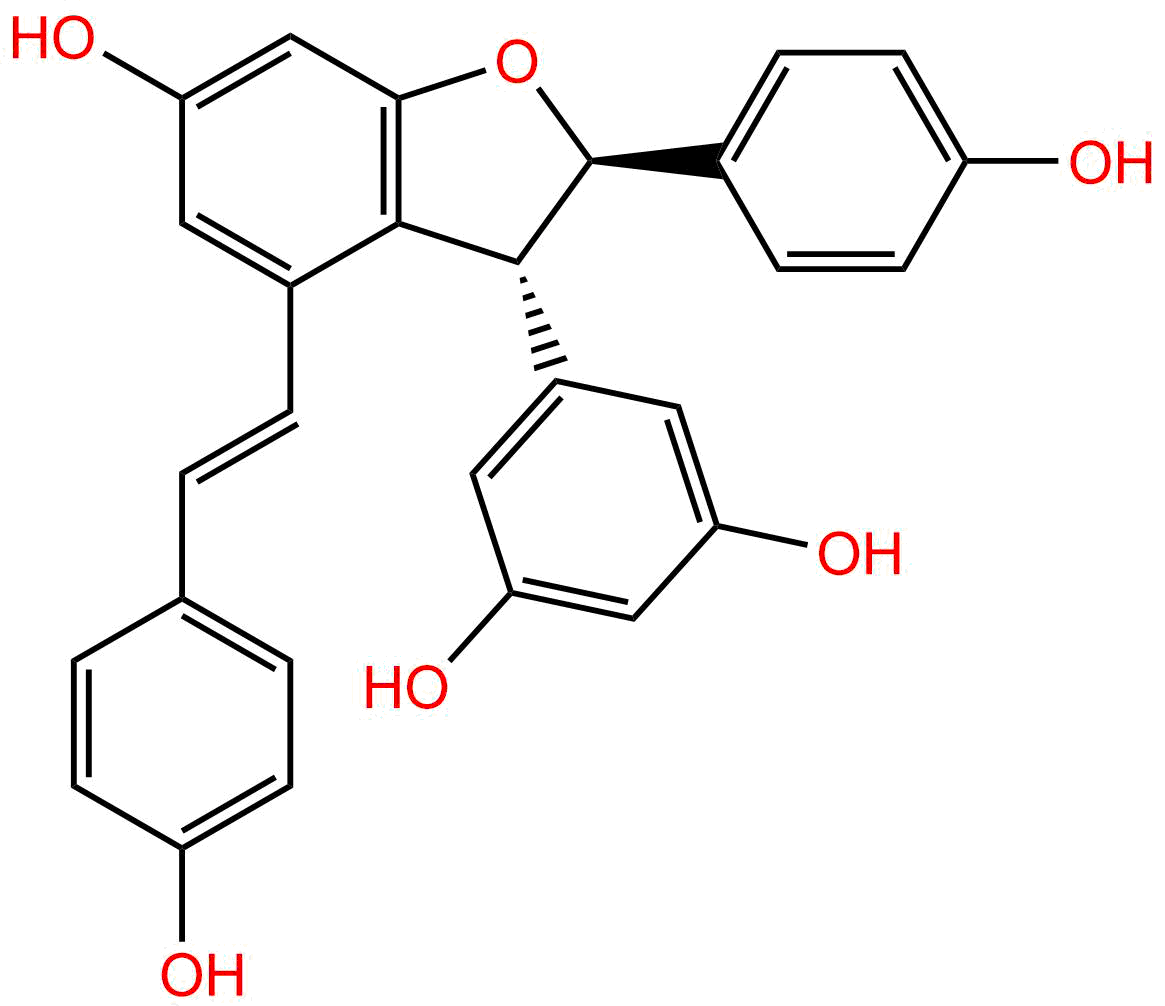


Product name: ε-Viniferin
Synonym name: Epsilon-viniferin
Catalogue No.: SBP00220
Cas No.: 62218-08-0
Formula: C28H22O6
Mol Weight: 454.478
Botanical Source:
Type of Compound: Stibene glucosides
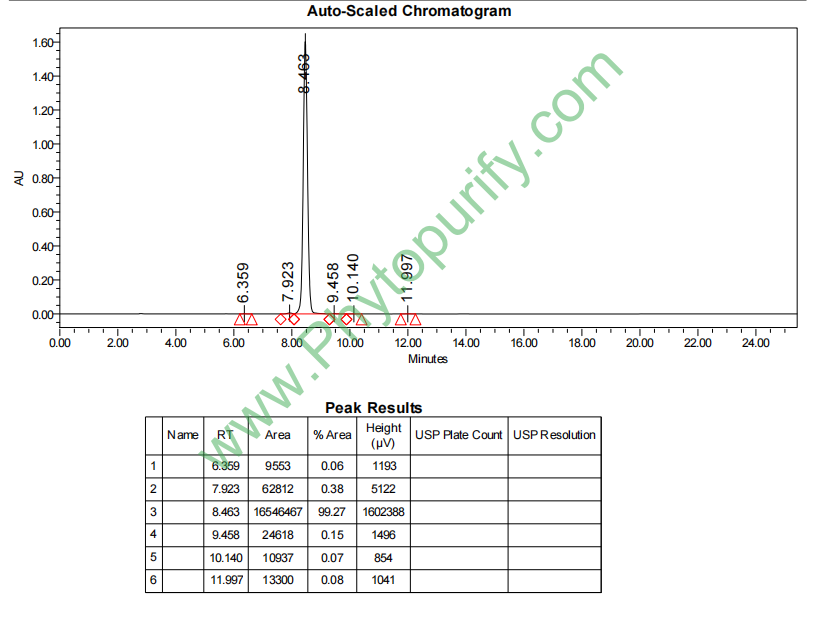
Purity: 95%~99%
Analysis Method: HPLC-DAD or/and HPLC-ELSD
Identification Method: Mass, NMR
Packing: Brown vial or HDPE plastic bottle
Storage: Store in a well closed container, protected from air and light. Put into refrigerate or freeze for long term storage.
Whenever possible, you should prepare and use solutions on the same day. However, if you need to make up stock solutions in advance, we recommend that you store the solution as aliquots in tightly sealed vials at -20℃. Generally, these will be useable for up to two weeks.
The product could be supplied from milligrams to grams
Inquire for bulk scale.
For Reference Standard and R&D, Not for Human Use Directly.
HPLC of ε-Viniferin
Storage conditions:Short-term storage at 2~8℃, long-term storage at -20 ~ -80℃
110.3800
4.8973
4.8846
.0166
2.4292
2.5747
Low
93.1971
3.5327
No
No
Yes
No
Yes
Yes
0.0
Yes
Yes
Yes
Yes
Natural products, as an important source of drug discovery, play an irreplaceable role in the long history of human fight against diseases. Among numerous natural compounds with biological activity, stilbeneids have attracted much attention due to their diverse pharmacological activities and unique chemical structures. Resveratrol, as a typical representative of stilbene compounds, has been widely studied for its antioxidant, anti-inflammatory, anti-tumor, and cardiovascular protective effects. However, the poor metabolic stability and low bioavailability of resveratrol limit its clinical translation. In this context, the dimer of resveratrol - ε - Viniferin has gradually entered the field of researchers, exhibiting pharmacological activity superior to resveratrol and more ideal pharmacokinetic characteristics.
ε - grape extract, chemical name (-) - trans - ε - grape extract, CAS number 62218-08-0, is a naturally occurring stilbene polyphenol compound formed by the cyclodimerization of two molecules of trans resveratrol. This compound was first isolated and identified from Vitis vinifera plants, belonging to the 1-benzofuran class of compounds, and is the enantiomer of (+) - trans - ε - glucoside. As a dimer of resveratrol, ε - glucoside not only retains various biological activities of resveratrol, but also exhibits unique pharmacological properties, including stronger antioxidant capacity, better metabolic stability, and a wider spectrum of biological activities.
In recent years, with the deepening of research on natural products, significant progress has been made in the study of ε - glucosinolates in multiple fields such as anti-tumor, anti-inflammatory, neuroprotective, cardiovascular protection, and metabolic regulation. Its unique mechanism of action involves the regulation of multiple signaling pathways, including key molecular pathways such as NF - κ B, Nrf2, PI3K/Akt, MAPK, etc. Meanwhile, the pharmacological evaluation of ε - glucosinolate also showed encouraging results: its molecular weight was 454.4780, with moderate lipid solubility (LogP=4.8973), topologically polar surface area (TPSA) of 110.3800, low water solubility (0.0166 mg/mL), low blood-brain barrier penetration ability, no hERG inhibitory activity, and a negative Ames test result, indicating its good safety characteristics. These physicochemical properties and safety data lay the foundation for further development of ε - glucosinolates.
This article will provide a systematic review of the research progress of ε - glucoside from the aspects of chemical structure and physicochemical properties, plant sources and extraction methods, pharmacological activity research, mechanism of action and molecular targets, drug evaluation and pharmacokinetics, clinical application prospects and prospects, in order to provide reference for the in-depth research and development of this natural product.
The chemical structure of ε - glucoside is formed by the cyclodimerization of two molecules of trans resveratrol, with a core skeleton of 1-benzofuran structure. Specifically, ε - glucoside belongs to the benzofuran class of stilbene dimers, which contain a dihydrobenzofuran ring system in their structure, which is a characteristic structural unit of this class of compounds. From the perspective of stereochemistry, there are two enantiomers of ε - glucan: (+) - trans - ε - glucan and (-) - trans - ε - glucan, among which the naturally occurring (-) - trans - ε - glucan has biological activity. The molecular formula of this compound is C28H22O6, with a molecular weight of 454.4780 g/mol.
The chemical structure of ε - glucoside contains multiple phenolic hydroxyl groups (usually 4), which endow it with strong antioxidant activity and metal ion chelating ability. Meanwhile, the conjugated double bond system in the molecule enables it to effectively absorb ultraviolet radiation and participate in electron transfer reactions. The presence of benzofuran ring increases the rigidity of the molecule, which may affect its interaction mode with biological targets.
According to the evaluation data of drug properties, the key physicochemical parameters of ε - glucosinolate are as follows:
These physicochemical parameters indicate that ε - glucosinolate has good drug like properties, but its low water solubility is a potential limiting factor. Improving its solubility through structural modification or formulation techniques may further enhance its medicinal properties.
β - glucosinolates are mainly found in Vitaceae plants, especially in Vitis plants. The presence of ε - glucosinolate can be detected in the roots, stems, leaves, fruits, and seeds of Vitis vinifera, but its content varies depending on factors such as variety, growth environment, and harvest season. In addition, ε - glucosinolates are also present in other plant families and genera, including:
It is worth noting that ε - glucan usually exists in plants in the form of a mixture of various stilbene compounds, including resveratrol, ε - glucan, δ - glucan, etc. In grapes, ε - glucosinolates are mainly present in the skin and seeds, and their content is influenced by factors such as grape variety, maturity, and processing methods.
The extraction methods of ε - glucosinolate mainly include traditional solvent extraction and modern assisted extraction techniques.
The traditional solvent extraction method is the most commonly used method, usually using ethanol, methanol, or ethanol water mixed solvents as extractants. The extraction conditions include: solid-liquid ratio of 1:10-1:20 (w/v), temperature of 40-60 ℃, extraction time of 2-4 hours, and repeated extraction 2-3 times. This method is easy to operate and has low cost, but the extraction efficiency is relatively low, and the amount of organic solvent used is large.
Ultrasonic assisted extraction Utilizing the cavitation effect of ultrasound to destroy plant cell walls and improve extraction efficiency. The optimization conditions are usually: ultrasound power of 200-400W, frequency of 20-40kHz, temperature of 40-50 ℃, and extraction time of 30-60 minutes. This method can significantly shorten the extraction time and improve the extraction rate of ε - glucosinolate.
Microwave assisted extraction Utilizing the heating effect of microwaves to accelerate solvent permeation and solute diffusion. The optimization conditions are: microwave power of 300-600W, temperature of 50-70 ℃, and extraction time of 10-30 minutes. This method has the advantages of short extraction time and low solvent dosage.
Supercritical fluid extraction Using supercritical CO2 as the extraction solvent, non-polar compounds can be selectively extracted. Due to the high polarity of ε - glucosinolate, it is usually necessary to add co solvents such as ethanol. This method is environmentally friendly, but the equipment cost is relatively high.
Enzyme assisted extraction Using enzyme preparations such as cellulase and pectinase to destroy plant cell walls and improve the release efficiency of ε - glucan. This method has mild conditions and can avoid the degradation of thermosensitive components.
The crude extract obtained requires further separation and purification to obtain high-purity ε - glucan. Common separation and purification methods include:
As a polyphenolic compound, ε - glucoside has significant antioxidant activity. Its antioxidant mechanism mainly includes:
Directly eliminate free radicals The phenolic hydroxyl group in the ε - glucose molecule can provide hydrogen atoms, effectively scavenging hydroxyl radicals (· OH), superoxide anion radicals (O2 · -), DPPH radicals, etc. Research has shown that the DPPH radical scavenging ability of ε - grape extract is superior to that of resveratrol, which may be related to its more phenolic hydroxyl groups and conjugated structures in the molecule.
Chelation of metal ionsε - Grape extract can chelate transition metal ions such as Fe2+and Cu2+, inhibit hydroxyl radicals generated by Fenton reaction, and thus exert antioxidant effects.
Activate antioxidant enzyme systemβ - glucosinolate can activate the Nrf2/ARE signaling pathway, upregulate the expression of antioxidant enzymes such as superoxide dismutase (SOD), glutathione peroxidase (GPx), and catalase (CAT), and enhance the antioxidant defense ability of cells.
β - glucagon has shown significant anti-inflammatory effects in various inflammatory models:
Inhibit the production of inflammatory mediatorsβ - glucagon can inhibit the production of inflammatory mediators such as nitric oxide (NO), prostaglandin E2 (PGE2), tumor necrosis factor - α (TNF - α), interleukin-6 (IL-6), and interleukin-1 β (IL-1 β) in macrophages stimulated by lipopolysaccharide (LPS).
Inhibit inflammatory enzyme activityβ - glucagon can inhibit the expression and activity of inducible nitric oxide synthase (iNOS) and cyclooxygenase-2 (COX-2), and reduce the production of NO and PGE2.
Regulating the inflammatory signaling pathwayβ - glucagon reduces the expression of inflammation related genes by inhibiting the activation of NF - κ B and MAPK signaling pathways. In addition, ε - glucagon can activate the Nrf2 pathway and exert anti-inflammatory effects.
β - glucagon has shown anti proliferative, apoptosis inducing, and metastasis inhibiting effects in various tumor cell lines
Inhibit tumor cell proliferation: ε - Grapevin can inhibit the proliferation of breast cancer, prostate cancer, lung cancer, colon cancer, liver cancer and other tumor cells, and its IC50 value is usually within the range of 10-50 μ M. It is worth noting that ε - glucoside has low toxicity to normal cells and exhibits a certain degree of selectivity.
Inducing cell apoptosisβ - glucagon can induce tumor cell apoptosis through the mitochondrial pathway and death receptor pathway. The specific mechanisms include: activation of caspase-3/9, upregulation of Bax/Bcl-2 ratio, release of cytochrome c, and activation of p53 signaling pathway.
Inhibit tumor cell migration and invasionβ - glucagon can inhibit the expression and activity of matrix metalloproteinases (MMPs), reducing the migration and invasion ability of tumor cells. In addition, ε - glucagon can also inhibit tumor metastasis by suppressing epithelial mesenchymal transition (EMT) process.
Enhance chemotherapy sensitivity The combination of ε - glucagon and chemotherapy drugs such as cisplatin and paclitaxel can enhance the anti-tumor effect of chemotherapy drugs and reduce drug resistance.
β - glucagon shows protective effects in neurodegenerative disease models:
Anti Alzheimer's diseaseβ - glucagon can inhibit the aggregation and fiber formation of β - amyloid protein (A β), reducing the neurotoxicity induced by A β. In addition, ε - glucoside can also inhibit acetylcholinesterase (AChE) activity, increase acetylcholine levels, and improve cognitive function.
Anti Parkinson's diseaseβ - glucagon can protect dopaminergic neurons from toxic damage caused by 6-hydroxydopamine (6-OHDA) and MPP+, and its mechanism involves antioxidant, anti-inflammatory, and anti apoptotic effects.
Anti cerebral ischemia-reperfusion injuryβ - glucagon can alleviate oxidative stress and inflammatory response caused by cerebral ischemia-reperfusion, reduce the volume of cerebral infarction, and improve neurological deficits.
β - glucagon exhibits multiple protective effects in the cardiovascular system:
Anti atherosclerosis: ε - Grapevin can inhibit the oxidative modification of low-density lipoprotein (LDL), reduce the formation of foam cells, inhibit the proliferation and migration of vascular smooth muscle cells, and thus delay the progress of atherosclerosis.
Protecting myocardial cellsε - glucose can alleviate myocardial ischemia-reperfusion injury, reduce myocardial cell apoptosis, and improve cardiac function. The mechanism involves activating the PI3K/Akt signaling pathway and inhibiting oxidative stress.
Regulate blood pressureβ - glucagon can promote the production of nitric oxide (NO), dilate blood vessels, and lower blood pressure. In addition, ε - glucose can also inhibit the activity of angiotensin-converting enzyme (ACE) and exert a hypotensive effect.
β - glucosinolate shows regulatory effects in metabolic disease models:
anti-diabeticβ - glucagon can improve insulin sensitivity, promote glucose uptake, inhibit gluconeogenesis, and lower blood glucose levels. The mechanism involves activating the AMPK signaling pathway and regulating GLUT4 transport.
Anti obesityβ - glucosinolate can inhibit adipocyte differentiation, promote fat breakdown, and reduce fat accumulation. In addition, ε - glucosinolates can regulate the composition of gut microbiota and improve metabolic disorders.
The pharmacological activity of ε - glucoside involves the regulation of multiple signaling pathways, mainly including:
NF - κ B signaling pathwayβ - glucagon inhibits the phosphorylation and degradation of I κ B α, preventing the nuclear translocation of NF - κ B and thus suppressing the expression of downstream inflammation related genes. This is one of the important mechanisms of its anti-inflammatory and anti-tumor effects.
Nrf2/ARE signaling pathwayβ - glucagon can activate Nrf2, promote its nuclear translocation and bind to ARE, upregulate the expression of antioxidant enzymes and phase II detoxifying enzymes, and exert antioxidant and cell protective effects.
PI3K/Akt signaling pathwayβ - glucagon can activate the PI3K/Akt pathway, promote cell survival, and inhibit apoptosis, which plays an important role in neuroprotection and myocardial protection.
MAPK signaling pathwayβ - glucagon can regulate the phosphorylation levels of ERK, JNK, and p38 MAPK, affecting cell proliferation, differentiation, and apoptosis.
AMPK signaling pathwayβ - glucagon can activate AMPK, regulate energy metabolism, improve insulin sensitivity, and inhibit fat synthesis.
The molecular target research of ε - glucosinolate is still in its preliminary stage, and the identified potential targets include:
Enzyme targetsβ - glucagon can inhibit the activity of various enzymes, including acetylcholinesterase (AChE), cyclooxygenase-2 (COX-2), inducible nitric oxide synthase (iNOS), matrix metalloproteinases (MMPs), angiotensin-converting enzyme (ACE), etc.
Receptor targetβ - glucagon may exert biological effects by regulating the activity of nuclear receptors such as estrogen receptors (ER) and peroxisome proliferator activated receptors (PPARs).
transcription factorβ - glucagon affects gene expression by regulating the activity of transcription factors such as NF - κ B, Nrf2, p53, STAT3, etc.
Epigenetic regulationβ - glucosinolates may affect epigenetic modifications by regulating the activity of histone deacetylases (HDACs) and DNA methyltransferases (DNMTs).
Based on the aforementioned physicochemical property parameters, the pharmacological evaluation of ε - glucosinolate is as follows:
drug-likeness The molecular weight of ε - glucoside (454.4780) conforms to Lipinski's five rules (<500), LogP (4.8973) is slightly higher than the ideal range (<5), TPSA (110.3800) is close to the recommended upper limit (140 Å ²), and the number of hydrogen bond donors and acceptors meets the requirements. Overall, ε - glucosinolates have good pharmacological properties, but low water solubility is a concern that needs to be addressed.
safety HERG inhibition was negative and Ames test was negative, indicating that ε - glucagon has good cardiac and genetic safety. However, there is still a lack of safety data on long-term toxicity, reproductive toxicity, and other factors, which requires further research.
Metabolic stability As a dimer of stilbene, the metabolic stability of ε - glucoside may be better than that of resveratrol, but the specific metabolic pathways and metabolites still need to be clarified.
The pharmacokinetic studies of ε - glucoside are relatively limited, and existing data indicate that:
absorb Due to its low water solubility, the oral absorption of ε - glucosinolate may be poor and its bioavailability may be low. The use of formulation technologies such as nanomaterials, liposomes, and cyclodextrin inclusion complexes may improve their absorption.
distributionε - grape extract has high lipid solubility and may be widely distributed in tissues. The low penetration ability of the blood-brain barrier suggests limited distribution of the central nervous system.
Metabolismβ - glucosinolate may undergo phase II metabolic reactions such as glucuronidation and sulfation to form metabolites. In addition, oxidative metabolism may also occur.
excretionβ - glucosinolates and their metabolites may be mainly excreted through bile and urine.
Based on the pharmacological activity of ε - glucoside, its potential clinical application areas include:
Anti inflammatory and antioxidant related diseases Such as arthritis, inflammatory bowel disease, skin inflammation, etc.
neoadjuvant therapy As a chemotherapy sensitizer, it improves the efficacy of chemotherapy and reduces drug resistance.
Neurodegenerative diseases Adjuvant treatment for conditions such as Alzheimer's disease and Parkinson's disease.
cardiovascular disease Such as prevention and treatment of atherosclerosis, myocardial ischemia and hypertension.
Metabolic diseases Such as auxiliary treatment of type 2 diabetes and obesity.
Although ε - glucan exhibits various pharmacological activities, its clinical translation still faces many challenges:
The issue of bioavailability Low water solubility and potential low oral bioavailability are the main limiting factors. New formulation technologies such as nanoparticles, liposomes, solid dispersions, etc. need to be developed to improve their bioavailability.
Explanation of the mechanism of action The molecular targets and mechanisms of action of ε - glucoside are not fully understood, and further research is needed using omics techniques, chemical biology, and other methods.
safety evaluation Systematic toxicology research is required, including acute toxicity, long-term toxicity, reproductive toxicity, immunotoxicity, etc.
Study on Structure Activity Relationship Through structural modification, explore the structure-activity relationship of ε - glucosinolates and develop derivatives with stronger activity and higher selectivity.
clinical trial Standardized clinical trials are needed to verify the safety and efficacy of ε - glucagon.
As a natural dimer of resveratrol, ε - glucoside exhibits unique advantages in chemical structure, pharmacological activity, and drug properties. Its multi-target characteristics make it potentially valuable in various fields such as anti-inflammatory, antioxidant, anti-tumor, neuroprotective, cardiovascular protection, and metabolic regulation. The evaluation of drug properties shows that ε - glucoside has good drug like and safety characteristics, but low water solubility is the main obstacle to its clinical translation.
In the future, with a deeper understanding of the mechanism of action of ε - glucoside, advances in formulation technology, and the development of clinical trials, this natural product is expected to become a new candidate drug for the treatment of various diseases. At the same time, systematic research on the structure-activity relationship of ε - glucoside will provide scientific basis for its structural optimization and derivative development, and promote the transformation of this field from basic research to clinical application.
