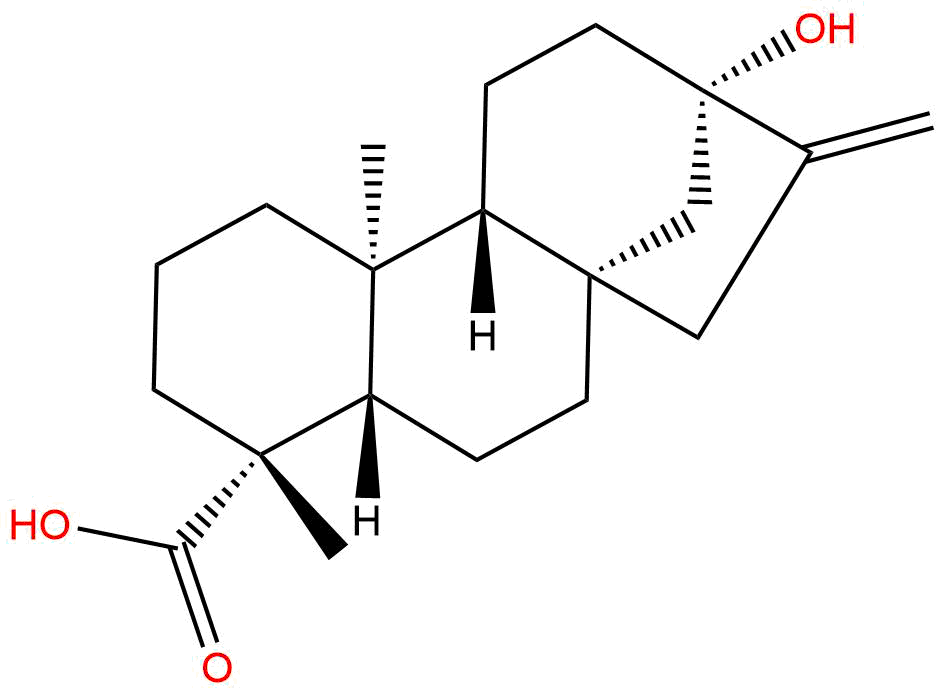


Product name: Steviol
Synonym name:
Catalogue No.: BP1610
Cas No.: 471-80-7
Formula: C20H30O3
Mol Weight: 318.457
Botanical Source: Obt. by enzymatic hydrol. of Stevioside. Prod. by Gibberella fujikuroi; isol. from Cucurbita maxima
Physical Description:
Type of Compound: Terpenoids
Purity: 95%~99%
Analysis Method: HPLC-DAD or/and HPLC-ELSD
Identification Method: Mass, NMR
Packing: Brown vial or HDPE plastic bottle
The product could be supplied from milligrams to grams. Inquire for bulk scale.
We provide solution to improve the water-solubility of compounds, thereby facilitating the variety of activity tests and clinic uses.
For Reference Standard and R&D, Not for Human Use Directly.
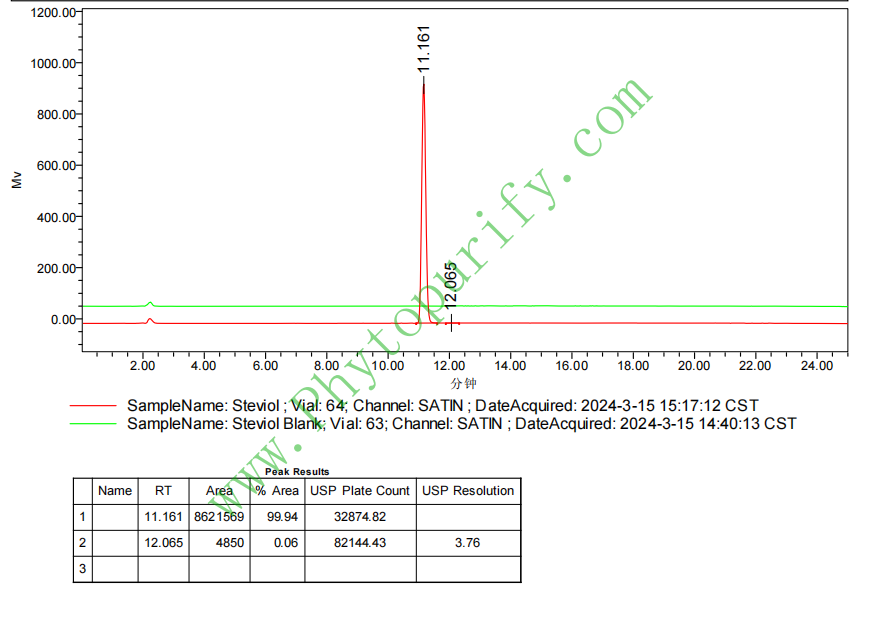
HPLC of Steviol
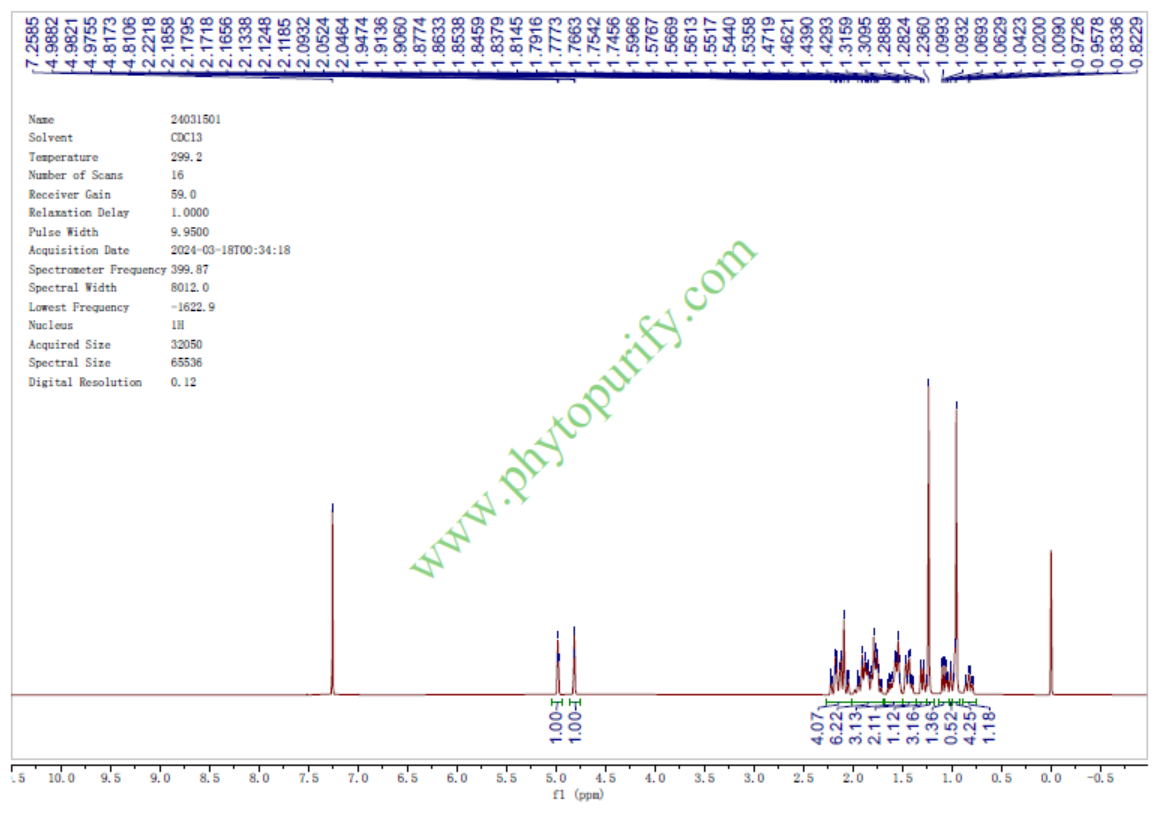
HNMR of Steviol
Storage conditions:Short-term storage at 2~8℃, long-term storage at -20 ~ -80℃
57.5300
3.5401
1.7968
.0307
5.0820
30.2603
High
90.4247
5.6254
No
No
No
No
No
No
0.0
No
No
No
No
Polycystic Kidney Disease (PKD) is a common genetic kidney disease characterized by the formation and progressive enlargement of numerous fluid filled cysts in both kidneys, ultimately leading to end-stage renal disease. At present, clinical treatment options are limited and there is a risk of side effects such as liver injury, except for tolvaptan, a vasopressin V2 receptor antagonist. Therefore, finding new, safe and effective treatment strategies is an urgent need in current research. In recent years, natural products have become an important treasure trove for drug development due to their structural diversity and multi-target effects. Steviol (CAS: 471-80-7), as the main in vivo metabolite of widely used natural sweetener steviol glycosides, has shown potential in the field of metabolic diseases due to its pharmacological effects beyond its simple sweet taste characteristics. The latest research reveals that steviol significantly slows down the growth of renal cysts through its unique mechanism of action - inhibiting the function and expression of cystic fibrosis transmembrane conductance regulator (CFTR) chloride channels and aquaporin 2 (AQP2), providing a novel candidate molecule and intervention approach for the treatment of polycystic kidney disease. The purpose of this paper is to systematically review the chemical characteristics, plant origin, pharmacological activity, molecular mechanism of action, and pharmaceutical characteristics of steviol against polycystic kidney disease and other related diseases (such as diabetes), and look forward to its clinical application prospects.
Steviol is a tetracyclic diterpenoid compound with the chemical name 13-hydroxykaempferol-16-en-18-acid. Its molecular formula is C20H30O3 and its molecular weight is 318.4570. Structurally, steviol alcohol is based on ent kaurane as the basic skeleton, with a hydrogenated phenanthrene structure consisting of four rings (three hexagonal rings and one pentagonal ring) at its core. Its C-19 methyl group is oxidized to carboxyl (- COOH), forming a carboxylic acid structure, which is one of the key functional groups for its biological activity; The C-13 position is connected to a hydroxyl group (- OH). This rigid hydrophobic skeleton, together with polar carboxyl and hydroxyl groups, determines its physicochemical properties.
According to the provided pharmacological parameters, the lipid water partition coefficient (LogP) of steviol alcohol is 3.5401, indicating its good lipophilicity, which facilitates its penetration of cell membranes and binding to hydrophobic targets. Its topological polar surface area (TPSA) is 57.5300 Å ², which is relatively small and further supports its good membrane permeability. The water solubility is relatively low, about 0.0307 mg/mL, which suggests that solubilization strategies may need to be considered in formulation development, such as making salts (such as sodium steviol) or using cyclodextrin inclusion. It is worth noting that steviol alcohol exhibits high blood-brain barrier permeability, indicating its potential central nervous system effects or related side effects that require attention, but current research mainly focuses on peripheral organs such as the kidneys. In the preliminary safety screening, steviol did not show hERG potassium channel inhibitory activity (hERG inhibition: No), reducing the risk of inducing QT interval prolongation and apical torsion type ventricular tachycardia; The Ames test result is 0.0, indicating that it has no direct genetic toxicity and providing preliminary support for its long-term safety.
Steviol is not directly present in large quantities in plants, but rather in the aglycones of its main precursor, Steviol Glycosides. Stevioside is mainly derived from the Asteraceae plant Stevia rebaudiana(Stevia rebaudiana The leaves of Bertoni. Stevia is native to South America and is now widely cultivated in many parts of the world. Its leaves contain various steviol glycosides, such as Stevioside and Rebaudioside A. Its sweetness is 200-300 times that of sucrose, and its calorie content is extremely low, making it an important natural sugar substitute.
There are two main ways to obtain steviol alcohol:
1. Plant extraction and acid hydrolysis Extract crude steviol glycosides from dried leaves of stevia using water or alcohol, and then purify them (such as column chromatography or membrane separation) to obtain high-purity steviol glycosides (such as steviol glycosides). Subsequently, under acidic conditions (usually using hydrochloric acid or sulfuric acid solution), hydrolysis is carried out by heating, and glycosidic bonds are broken, releasing sugar molecules such as steviol glycosides and glucose. The reaction mixture can be neutralized, extracted (using commonly used organic solvents such as ethyl acetate), concentrated, and recrystallized to obtain steviol alcohol crystals.
2. Microbial fermentation or enzymatic conversion Using specific microorganisms (such as certain yeasts and bacteria) or commercial enzymes (such as β - glucosidase) to biotransformation of steviol glycosides, selectively hydrolyzing sugar groups to produce steviol alcohol. This method has mild conditions, good selectivity, and few by-products, making it a green, environmentally friendly, and promising production method.
3. Metabolic production in the body After the human body ingests steviol glycosides, they cannot be directly absorbed by the upper digestive tract. After reaching the colon, they are gradually hydrolyzed by β - glucosidase secreted by the gut microbiota, ultimately removing all glycosides to produce steviol alcohol. The generated steviol alcohol is absorbed by the intestine and enters the portal circulation, which is the main active form of steviol glycosides exerting systemic biological effects in the body. Therefore, oral steviol glycosides can be considered as a "prodrug" that is converted into steviol alcohol in the body.
The pharmacological activities of steviol mainly focus on two areas: metabolic diseases (especially diabetes) and kidney diseases (especially polycystic kidney disease).
1. Anti diabetes activity
The hypoglycemic effect of steviol and its glycosides has been confirmed by a large number of preclinical and partial clinical studies. Its anti diabetes activity is characterized by multiple targets and pathways:
* Improve insulin sensitivity Steviol can activate the AMP activated protein kinase (AMPK) pathway, increasing glucose uptake and utilization in skeletal muscle and adipose tissue. Meanwhile, it can regulate adipocyte differentiation and function, and improve systemic insulin sensitivity by acting on peroxisome proliferator activated receptor gamma (PPAR gamma).
* Promote insulin secretion and protect beta cells Research has shown that steviol alcohol can stimulate insulin secretion in isolated pancreatic or insulinoma cell lines, and its mechanism may be related to regulating ion channels on the cell membrane, enhancing the activity of glucokinase (GCK) to sense blood glucose changes, and activating insulin signaling pathways such as phosphatidylinositol 3-kinase (PI3K)/protein kinase B (AKT1) and insulin receptor substrate 1 (IRS1). In addition, it can also alleviate high glucose or inflammatory factor induced beta cell apoptosis, playing a protective role.
* Inhibit intestinal glucose absorption Steviol can inhibit the sodium glucose cotransporter 2 (SGLT2) on the brush border of the small intestine, reducing the absorption of glucose in the diet.
* Increase peripheral glucose utilization By upregulating the translocation and expression of glucose transporter 4 (SLC2A4/GLUT4), it promotes glucose uptake in muscle and adipose tissue.
* Inhibition of gluconeogenesis and regulation of enzyme activity Steviol can inhibit the activity of key enzymes involved in hepatic gluconeogenesis and reduce hepatic glucose output. It can also inhibit dipeptidyl peptidase-4 (DPP4), increase endogenous glucagon like peptide-1 (GLP-1) levels, indirectly promote insulin secretion and inhibit glucagon secretion.
2. Anti polycystic kidney disease activity
This is the pharmacological activity of steviol that has received the most attention in recent years. In various animal models of polycystic kidney disease, such as PCK rats Pkd1 In mice with conditional knockout, oral administration of steviol significantly inhibited the enlargement of renal cysts and the increase in total kidney volume, improved kidney function, and delayed disease progression. Its core function is to regulate the ion and liquid transport of cyst epithelial cells:
* Inhibit CFTR chloride ion channels The abnormal accumulation of fluid inside the cyst depends on the secretion of chloride ions on the basement membrane side, and CFTR is a key channel in this process. Steviol has been proven to be an effective CFTR chloride channel inhibitor, which can directly block its channel activity and reduce the entry of chloride ions, sodium ions, and water into the cyst cavity.
* Downregulate and promote AQP2 degradation AQP2 is a water channel regulated by vasopressin on the apical membrane of renal collecting duct main cells, which is crucial for water reabsorption. In polycystic kidney disease, AQP2 expression is often abnormally upregulated. Steviol not only reduces the mRNA and protein expression levels of AQP2, but also inhibits the reabsorption of water by cyst epithelial cells by promoting the ubiquitination proteasome pathway degradation of AQP2 protein, reducing the number of functional AQP2 on the membrane.
* synergistic effect By simultaneously inhibiting CFTR driven secretion and AQP2 mediated reabsorption, steviol effectively "drains" cysts and slows down their expansion. This dual mechanism of action distinguishes it from single CFTR inhibitors.
3. Other potential activities
The study also suggests that steviol may have anti-inflammatory, antioxidant, anti hypertensive (via endothelial dependent vasodilation), and anti-tumor activities, but these effects still require further research and verification.
The pharmacological effects of steviol, especially its anti polycystic kidney disease and anti diabetes effects, are achieved through interaction with multiple molecular targets.
Core targets (for polycystic kidney disease):
* Cystic fibrosis transmembrane conductance regulator (CFTR)Steviol, as a direct CFTR channel blocker, may bind to the intracellular part of the channel, alter its gating properties, and inhibit chloride ion efflux. This is the primary mechanism for inhibiting the accumulation of cyst fluid.
* Aquaporin 2 (AQP2)The regulation of AQP2 by steviol alcohol is multi-level. It may inhibit the transcription of AQP2 by interfering with the cAMP/PKA signaling pathway (downstream pathway of vasopressin). More importantly, it can enhance the ubiquitination modification of AQP2 protein, guide its degradation through the proteasome pathway, and reduce its abundance on the cell membrane.
Key target network (for diabetes):
The anti diabetes effect of steviol involves a complex signal network, and the main targets include:
* Energy Sensor: AMPK (PRKAA1/AMPK)Steviol is an activator of AMPK. Activated AMPK promotes fatty acid oxidation, glucose uptake, and inhibits gluconeogenesis and fat synthesis, which is the core of improving insulin resistance.
* Key nodes of insulin signaling pathway:
* Insulin receptor substrate 1 (IRS1)Steviol may enhance insulin signaling by reducing serine phosphorylation (inhibitory signal) of IRS1 and increasing its tyrosine phosphorylation (activation signal).
* Phosphatidylinositol 3-kinase regulatory subunit 1 (PIK3R1) and protein kinase B (AKT1)Steviol activates the PI3K/AKT pathway, promotes GLUT4 translocation, glycogen synthesis, and inhibits apoptosis.
* Nuclear receptor: Peroxisome proliferator activated receptor gamma (PPARG)As a partial agonist or regulator of PPAR γ, steviol affects adipocyte differentiation, lipid metabolism, and insulin sensitization.
* Glucose metabolism related enzymes and transporters:
* Glucokinase (GCK)May be positively regulated to enhance the glucose sensing ability of pancreatic beta cells.
* Sodium glucose cotransporter 2 (SGLT2) and glucose transporter 4 (SLC2A4/GLUT4)Inhibited and promoted respectively, regulating the absorption and utilization of glucose.
* Enzyme target: Dipeptidyl peptidase-4 (DPP4)After inhibition, it prolongs the half-life of endogenous GLP-1 and exerts intestinal insulinotropic effects.
The "multi-target" characteristic of steviol alcohol enables it to synergistically regulate blood glucose homeostasis and cyst growth from multiple links, but it also means that its mechanism of action is complex and requires more precise systems biology research to elucidate its networked effects.
Based on the provided parameters and existing research, a preliminary evaluation of the pharmacological properties of steviol alcohol is conducted
Pharmacokinetic characteristics:
As a metabolite of steviol glycosides, the pharmacokinetic studies of steviol alcohol are mostly based on monitoring after oral administration of steviol glycosides. Stevioside is metabolized into steviol alcohol by the gut microbiota and absorbed, with a peak blood concentration time (Tmax) of approximately 8-24 hours, indicating slow absorption. Steviol is mainly metabolized in the body by binding with glucuronic acid to form Steviol glucuronide, which is the main form present in plasma and excreted through the kidneys. Steviol itself has a short half-life, but its complexes have a longer half-life. The oral bioavailability of steviol alcohol is greatly influenced by gut microbiota, and individual differences may be significant. There is limited research on the direct administration of steviol alcohol, but its high LogP value suggests that its oral absorption may be superior to its hydrophilic glycoside precursor.
Pharmaceutical advantages:
1. Natural source, good safety foundation As a metabolic end product of widely consumed stevia glycosides, humans have a long and extensive history of indirect exposure, and epidemiological data shows that it is safe.
2. Clear activity and mechanism The mechanism of action for polycystic kidney disease (CFTR/AQP2 dual inhibition) is novel and clear, and its efficacy has been validated in animal models.
3. Good membrane permeability Moderate LogP and smaller TPSA facilitate its transmembrane transport to intracellular targets (such as the intracellular portion of CFTR).
4. Preliminary cardiac safety Lack of hERG inhibition signal reduces the risk of cardiac toxicity.
5. No genetic toxicity warning Ames test negative.
Drug Challenge:
1. Poor water solubility Low water solubility may affect the development, in vivo dissolution, and absorption of its formulations, and appropriate pharmaceutical methods are needed to address this issue.
2. High blood-brain barrier permeability Although it may be advantageous for central nervous system diseases, the potential central side effects of treating polycystic kidney disease, which mainly affects peripheral organs, need to be evaluated.
3. The duality of multi-target effects It can be both an advantage and a disadvantage. Widespread effects may lead to off target effects or unforeseeable side effects, requiring rigorous preclinical toxicological evaluation.
4. Pharmacokinetic complexity Dependence on gut microbiota transformation (prodrug form) may lead to significant individual differences in efficacy. The ADME (absorption, distribution, metabolism, excretion) characteristics of direct administration of steviol alcohol need to be comprehensively studied.
5. Potential drug interactions As a CFTR inhibitor, it is necessary to evaluate the interaction with drugs secreted or metabolized by CFTR.
The clinical application prospects of steviol mainly revolve around its two core pharmacological activities:
1. New drug candidates for treating polycystic kidney disease
This is the most breakthrough potential application direction of steviol alcohol. Compared to existing therapies such as tofacitant, steviol alcohol has the following potential advantages:
* Dual action mechanism Targeting both cyst fluid secretion (CFTR) and reabsorption (AQP2) simultaneously may theoretically produce stronger cyst inhibition effects.
* Derived from natural products, long-term safety may be better Tovaptan has liver toxicity and side effects such as thirst and polyuria. Steviol is derived from food ingredients, and its long-term safety profile is more anticipated, which may improve patient tolerance and compliance.
* oral administration Convenient for patients to use.
The future clinical development path includes optimizing derivatives of steviol alcohol to enhance efficacy and pharmacokinetic properties; Conduct systematic preclinical toxicology and pharmacodynamic studies; Ultimately advancing to Phase I (safety), Phase II (concept validation and dose exploration, with the primary endpoint potentially being total kidney volume growth rate), and Phase III clinical trials. The challenge lies in determining the optimal therapeutic dose, managing potential intestinal or respiratory side effects caused by CFTR inhibition (CFTR is expressed in multiple epithelial tissues), and clarifying its efficacy in PKD patients of different genotypes.
2. As an auxiliary treatment or functional food ingredient for anti diabetes
Steviol and its glycosides have been used as calorie free sweeteners in patients with diabetes. Based on its clear hypoglycemic mechanism, steviol with higher purity or specific formula can be explored and developed in the future as a health food or dietary supplement to assist in hypoglycemic, and used for blood glucose management in patients with pre diabetes or type 2 diabetes. Higher quality clinical studies are needed to confirm its effective dosage and clinical endpoint benefits as a therapeutic agent.
3. Combination therapy strategy
In view of the complexity of polycystic kidney disease and diabetes, steviol may be combined with other drugs. For example, when combined with tolvaptan, it synergistically inhibits cyst growth through different pathways; Combined with SGLT2 inhibitor, it can control blood glucose and delay the progression of kidney disease in patients with diabetes complicated with polycystic kidney disease.
4. Exploration of other diseases
Its CFTR inhibitory activity also suggests its potential application value in other CFTR related diseases such as secretory diarrhea and polycystic liver disease, which is worth exploring.
Steviol, from a simple natural sweetener metabolite, has evolved into a lead compound with significant pharmacological activity and clear molecular targets. Its role in anti polycystic kidney disease, especially through the unique mechanism of dual inhibition of CFTR and AQP2, provides a promising new treatment strategy for this refractory genetic kidney disease. At the same time, its multi target anti diabetes activity also shows its potential application in the field of metabolic diseases. Despite facing challenges such as water solubility, pharmacokinetic optimization, and comprehensive safety evaluation on the path towards clinical drug development, steviol alcohol's profound natural food safety background, novel mechanism of action, and clear preclinical efficacy make it an extremely attractive starting point for research and development. Future research should focus on structural optimization to improve its drug properties, in-depth network pharmacological interpretation of the mechanism of action, and actively promote rigorous clinical transformation research, with a view to transforming this natural gift into a new therapeutic drug for the benefit of patients with polycystic kidney disease and diabetes.
