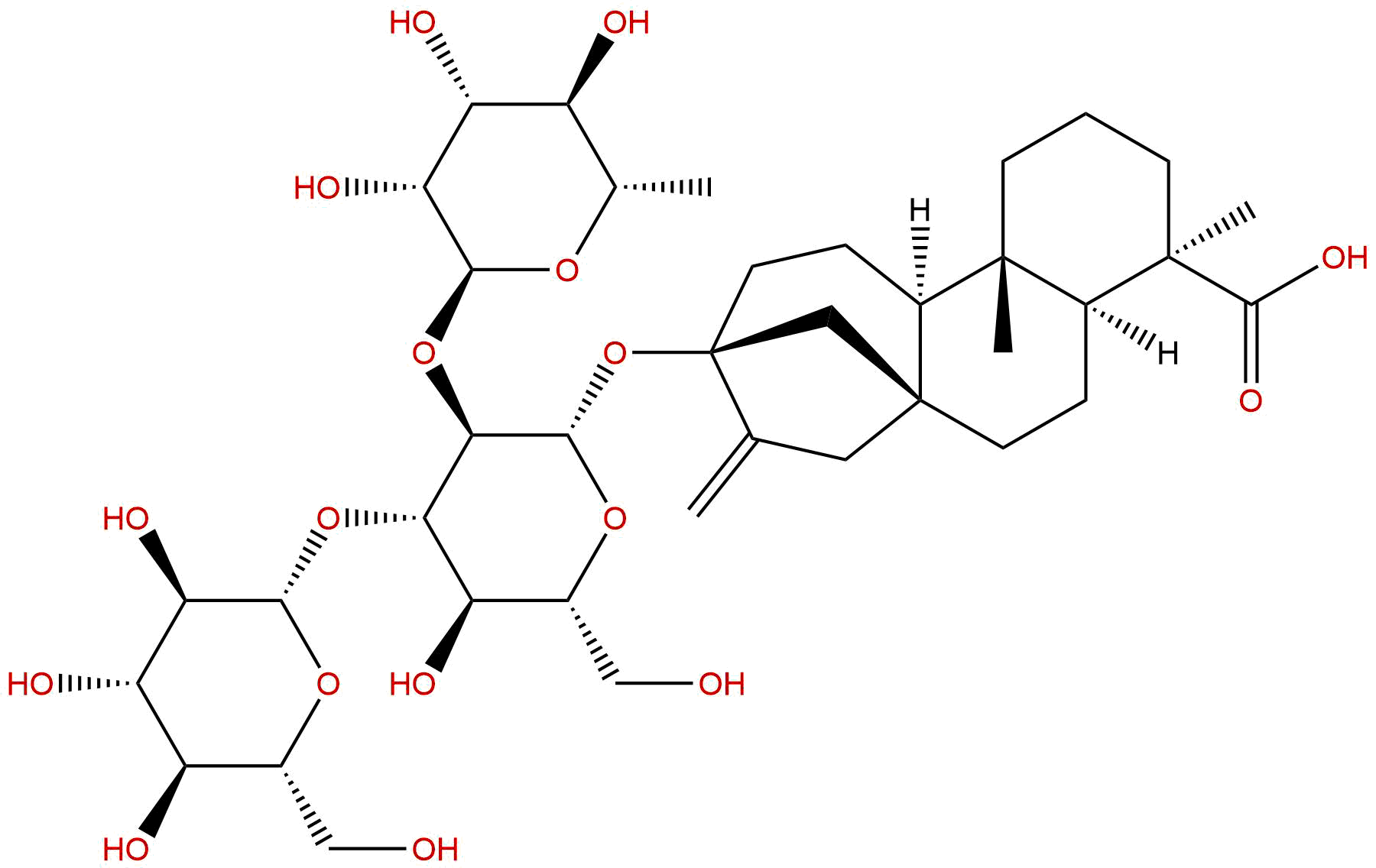


Product name: Dulcoside C
Synonym name:
Catalogue No.: BP5322
Cas No.: 64432-09-3
Formula: C38H60O17
Mol Weight: 788.881
Botanical Source:
Type of Compound: Diterpenoids
Purity: 95%~99%
Analysis Method: HPLC-DAD or/and HPLC-ELSD
Identification Method: Mass, NMR
Packing: Brown vial or HDPE plastic bottle
Storage: Store in a well closed container, protected from air and light. Put into refrigerate or freeze for long term storage.
Whenever possible, you should prepare and use solutions on the same day. However, if you need to make up stock solutions in advance, we recommend that you store the solution as aliquots in tightly sealed vials at -20℃. Generally, these will be useable for up to two weeks.
The product could be supplied from milligrams to grams
Inquire for bulk scale.
For Reference Standard and R&D, Not for Human Use Directly.
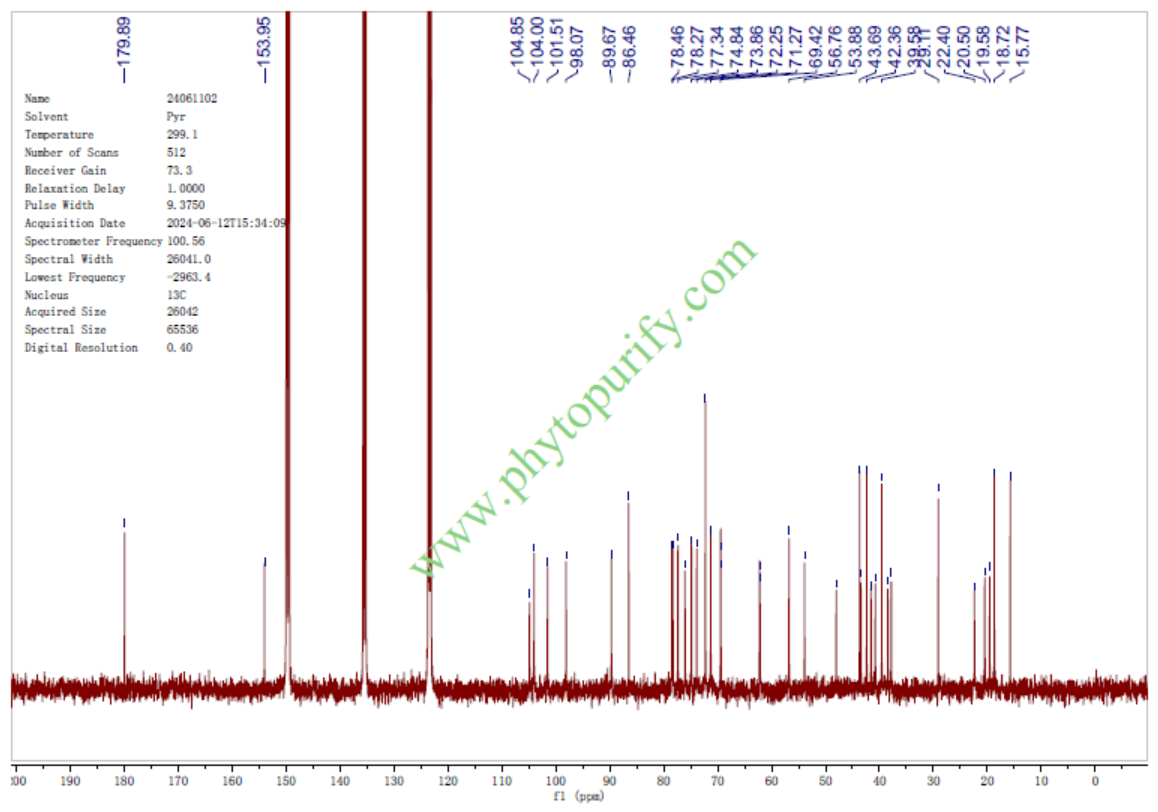
NMR of Dulcoside C
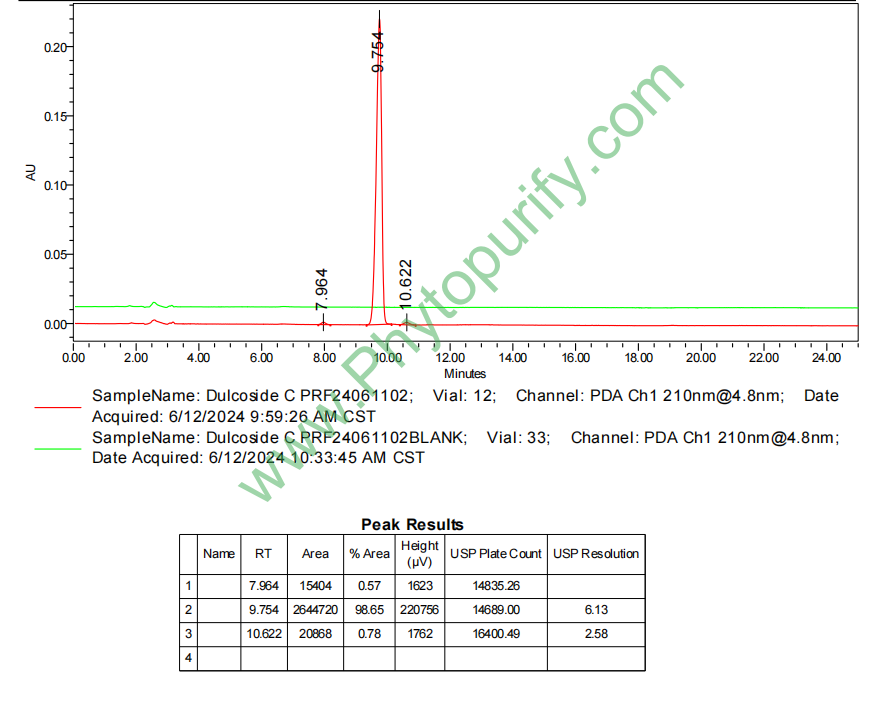
HPLC of Dulcoside C
Storage conditions:Short-term storage at 2~8℃, long-term storage at -20 ~ -80℃
274.7500
.2711
-1.5195
1.4019
.4249
.2883
Low
70.5763
7.1090
No
No
No
No
No
No
0.0
Yes
No
No
No
Natural products, as an important source of drug discovery, play an indispensable role in the long history of human struggle against diseases. From the classic analgesic morphine to the antimalarial drug artemisinin, the diverse and unique secondary metabolites in nature continue to provide valuable lead compounds for modern drug development. Among numerous natural products, from stevia(Stevia rebaudiana Bertoni and its diterpenoid glycosides, belonging to the same plant family, are widely known for their high sweetness and low calorie properties, and are widely used as natural sweeteners in the food industry. However, the biological functions of these compounds go far beyond taste perception, and their potential pharmacological activities, especially in antiviral, anti-inflammatory, anti-tumor, and other aspects, are gradually becoming a new hotspot in natural product pharmacology research.
Dulcoside C, as one of the diterpenoid glycosides with relatively low content but unique structure in Stevioside, has a much shorter research history compared to its main components such as Stevioside and Rebaudioside A. However, with the deepening of systematic research on the chemical composition of Stevia rebaudiana, as well as advances in high-throughput screening and computer-aided drug design techniques, the unique biological activity of Dukoside C, especially its antiviral potential, has begun to receive attention from the academic community. Unlike steviol glycosides, which mainly exert their effects through regulating blood sugar, anti-inflammatory and other pathways, existing research suggests that ducin C may exhibit broad-spectrum antiviral activity by acting on multiple key stages of the virus lifecycle.
This review aims to comprehensively review the current research status of Dukoside C, systematically expound its chemical structure and physicochemical properties, plant sources and extraction processes, pharmacological activity (especially antiviral activity), mechanism of action and molecular targets, pharmacological evaluation and pharmacokinetic characteristics, and based on this, look forward to its prospects and challenges as a lead compound or candidate drug in clinical applications. By integrating existing research results, this article attempts to provide a systematic and professional academic reference for the in-depth development and utilization of Dukoside C.
Dulcoside C is a naturally occurring diterpenoid glycoside compound, whose chemical structure belongs to the enantiomeric kaempferol group(ent-Derivatives of kaurane type diterpenes. Its core skeleton is enantiomeric kaempferol-16-en-19-acid(ent-kaur-16-en-19-oic acid), Namely Steviol. The carboxyl groups at positions C-13 and C-19 of steviol alcohol are respectively linked to the sugar group through glycosidic bonds, forming the complete molecular structure of D-glucoside C.
Specifically, the carboxyl group at position C-19 of Dukoside C forms an ester bond with a glucose group (β - D-glucopyranosyl), while the hydroxyl group at position C-13 is connected to a triple sugar chain consisting of two glucose groups and one rhamnopyranosyl group. The specific connection mode of this triple sugar chain is: β - D-glucopyranosyl - (1 → 2) - [α - L-rhamnopyranosyl - (1 → 3)] - β - D-glucopyranosyl -. Therefore, the complete chemical name of Dukoside C can be expressed as: 13- [(2-O - β - D-glucopyranosyl-3-O - α - L-rhamnopyranosyl - β - D-glucopyranosyl) oxy]-ent-kaur-16-en-19-oic acid β-D-glucopyranosyl ester。 Its molecular formula is C ∝₈ H ₆₀ O ₁₈, and its molecular weight is 788.88 g/mol.
From the perspective of physical and chemical properties, Dukoside C exhibits typical glycosidic compound characteristics. The calculated lipid water partition coefficient (LogP) is 0.2711, indicating that its hydrophilicity is slightly stronger than its lipophilicity, but overall it exhibits amphiphilicity, which is related to the presence of both hydrophobic diterpene parent nuclei and hydrophilic multiple sugar groups in its molecule. The polar surface area (TPSA) is as high as 274.75 Å ², much higher than the commonly assumed upper limit of 140 Å ² for oral drugs, mainly due to the large number of hydroxyl and ether oxygen atoms in its molecules. A high TPSA value usually indicates poor transmembrane permeability. Its water solubility (LogS) is 1.4019, indicating a certain solubility in water, but not completely soluble. In addition, predictions based on its structure indicate that the blood-brain barrier (BBB) penetration ability of Dukoside C is relatively low, suggesting a lower likelihood of its direct effects in the central nervous system. These physicochemical properties, especially high polarity and low permeability, have a decisive impact on their oral bioavailability and in vivo pharmacokinetic behavior.
The main plant source of Duque glycoside C is stevia, a plant in the Asteraceae family(Stevia rebaudiana Bertoni)。 Stevia is native to Paraguay and Brazil in South America, and its leaves contain various high sweetness diterpenoid glycosides, collectively known as Stevio glycosides (SGs). Among these SGs, steviol glycoside and rebaudin A are the two most abundant and extensively studied, while ducin C is a minor component. In addition to stevia, ducin C is also found in plants of the same genus, such as Stevia phlebophylla and Stevia serrata It is found in the middle, but its content is usually low.
The content of D-glucoside C in stevia leaves varies depending on factors such as variety, growth environment, and harvest season, typically accounting for less than 1% of the total stevia glycoside content. Its biosynthetic pathway is similar to other SGs, both starting from the mevalonic acid (MVA) pathway or the 2-C-methyl-D-erythrin-4-phosphate (MEP) pathway, and undergoing a series of enzymatic reactions to generate enantiomeric kaempferol acid, which is then modified by hydroxylation, glycosylation, and other processes to ultimately form. Among them, uridine diphosphate glycosyltransferases (UGTs) play a key role in determining glycosylation patterns and the formation of final products such as dukeside C.
The extraction of D-glucoside C is usually combined with the extraction process of steviol glycosides, and the main steps include:
1. Raw material pretreatment Dry stevia leaves are crushed and sieved, and then extracted with water or aqueous ethanol (such as 50-70% ethanol) under heating conditions (such as 60-80 ℃). The water extraction method has low cost and high safety, but there are many impurities; The alcohol extraction method has better selectivity and is beneficial for subsequent purification.
2. Rough extraction and decolorization After filtration, the extraction solution is often subjected to coagulation, centrifugation, or membrane separation techniques (such as microfiltration and ultrafiltration) to remove large molecular impurities (such as proteins, pectin, polysaccharides). Subsequently, decolorization and desalination treatment were carried out using activated carbon adsorption or ion exchange resin to obtain a clear crude glycoside solution.
3. Separation and purification Due to its structural similarity with other SGs (especially rebaudin A and steviol glycosides), the separation and purification of Dukoside C is a technical challenge. At present, the following methods are mainly used:
* Macroporous adsorption resin column chromatography This is the most commonly used method for separating SGs in industry. By selecting resins of different polarities (such as HPD-400, AB-8, etc.) and using ethanol water gradient elution at different concentrations, preliminary grouping and enrichment of SGs can be achieved. Dukoside C is usually eluted together with more polar components such as rebaudin A and D.
* Preparation type high performance liquid chromatography (Prep HPLC)In order to obtain high-purity Dukoside C monomer, preparative HPLC must be used. The commonly used stationary phase is a reverse phase C18 column, and the mobile phase is acetonitrile water or methanol water system. By finely optimizing the gradient elution program, baseline separation of Dukoside C from other structurally similar compounds can be achieved. This is currently the most effective method for obtaining high-purity D-glucoside C on a laboratory scale.
* High Speed Counter Current Chromatography (HSCCC)As a liquid-liquid distribution chromatography technique, HSCCC has the advantages of irreversible adsorption and high sample recovery rate, and has also been applied in the separation of SGs in recent years. By selecting a suitable solvent system (such as n-butanol ethyl acetate water), HSCCC can efficiently separate various SGs, including D-glucoside C.
Overall, the acquisition of Dukoside C still faces challenges of low content and difficult separation. Developing efficient, low-cost, and scalable separation and purification technologies is a key prerequisite for promoting their in-depth research and application.
At present, research on the pharmacological activity of Dukoside C is still in its early stages, and the number of publicly reported literature is far less than that of Stevioside and Lepidide A. However, existing studies have preliminarily revealed its significant potential in the field of antiviral therapy, and sporadic reports of its anti-inflammatory, anti-tumor, and other activities have also been made.
Antiviral activity is currently the most widely studied pharmacological effect of Dukoside C. Research has shown that Dukoside C has inhibitory effects on various viruses and exhibits broad-spectrum antiviral potential.
* Antiherpesvirus Early studies have found that Dukosidine C has inhibitory effects on herpes simplex virus types 1 (HSV-1) and 2 (HSV-2). Its mechanism of action may involve inhibiting viral DNA replication or interfering with the binding process between the virus and host cells.
* Anti human immunodeficiency virus (HIV)This is another important direction in the antiviral research of Dukoside C. In vitro experiments have shown that Dukosidine C can inhibit the replication of HIV-1 in T cells. Its potential targets may include HIV-1 protease (PR) and integrase (INT), which block the virus's lifecycle by inhibiting the activity of these key enzymes.
* Anti Cytomegalovirus (CMV)Human cytomegalovirus (HCMV) is an important pathogen that causes severe infection in patients with low immune function (such as organ transplant recipients, AIDS patients). Preliminary research suggests that dukeside C may exert antiviral effects by targeting HCMV DNA polymerase (UL54) or helper protein (UL42).
* Anti other viruses In addition, ducin C has been reported to have a certain inhibitory effect on varicella zoster virus (VZV) and certain respiratory viruses (such as respiratory syncytial virus RSV).
In addition to its antiviral effect, Dukoside C also exhibits other potential biological activities:
* anti-inflammatory activity In the lipopolysaccharide (LPS) - induced macrophage inflammation model, dukeside C can significantly reduce the production of pro-inflammatory factors such as tumor necrosis factor - α (TNF - α), interleukin-6 (IL-6), and nitric oxide (NO). The mechanism may be related to the inhibition of the activation of the nuclear factor kappa B (NF - κ B) signaling pathway.
* Antitumor activity It has been reported that dukoside C can inhibit the proliferation of some tumor cell lines (such as HepG2 and MCF-7) and may induce apoptosis. But its concentration is usually high, and its selectivity needs to be improved.
* antioxidant activity As a polyhydroxy compound, Dukoside C also exhibits certain free radical scavenging ability, but its antioxidant activity is much lower than that of classic antioxidants such as vitamin C.
It should be emphasized that the pharmacological activity research of Dukoside C mostly remains at the cellular level in vitro, and there is a severe lack of in vivo animal experiments and clinical research data. The specific potency, selectivity index, and comparative study with other SGs of its antiviral activity need to be systematically carried out.
The multiple pharmacological activities of Dukoside C, especially its broad-spectrum antiviral effect, suggest that it may act on multiple conserved stages of the virus lifecycle or common pathways in host cells. Based on existing research, its mechanism of action and molecular targets can be summarized as follows:
The antiviral mechanism of Dukoside C exhibits multi-target and multi link characteristics, which may be the basis for its broad-spectrum activity.
1. Inhibit virus entry For enveloped viruses such as HSV and HIV, virus entry into host cells relies on the binding of viral envelope glycoproteins to host cell surface receptors. Dukoside C may exert its effect by interfering with this process. For example, for HIV, it may prevent virus adsorption and membrane fusion by binding to the viral envelope glycoprotein gp120 or host cell receptor CD4, co receptor CCR5/CXCR4. For HSV, it may target the viral envelope glycoprotein gD and block its binding to host cell receptors.
2. Inhibition of viral gene replication This is one of the core mechanisms of the antiviral effect of Dukoside C. For DNA viruses such as HSV and HCMV, viral DNA polymerase is a key enzyme in the replication process. Duque glycoside C is predicted to inhibit HCMV DNA polymerase (UL54) and its co factor (UL42), thereby blocking the synthesis of viral DNA. For retroviral HIV, it may inhibit the activity of HIV-1 reverse transcriptase (RT) and integrase (INT), interfere with the reverse transcription of viral RNA and the integration of viral DNA into the host genome.
3. Inhibition of viral protein synthesis and processing The synthesis and processing of viral proteins are another important step in the viral replication cycle. Duque glycoside C may block the hydrolysis of viral polyprotein by inhibiting virus encoded proteases (such as HIV-1 protease PR), thereby producing non infectious viral particles. In addition, for HSV, it may interfere with the function of viral transcriptional regulatory proteins (such as ICP27), affecting the expression of viral genes.
4. Regulating host immune response In addition to directly acting on viral targets, Dukoside C may also indirectly exert antiviral effects by regulating the immune response of host cells. For example, its anti-inflammatory activity may help alleviate the excessive inflammatory response (cytokine storm) caused by viral infection, thereby protecting host tissues. In addition, studies have shown that certain SGs can activate the AMPK signaling pathway, which plays an important role in regulating cellular metabolism and antiviral immunity.
According to the provided compound information, the antiviral effect of Dukoside C involves the following key targets:
* Virus target MPO (may refer to a protein encoded by cytomegalovirus or myeloperoxidase, further confirmation needed), UL42 (HCMV DNA polymerase helper subunit), UL54 (HCMV DNA polymerase catalytic subunit), ICP27 (HSV transcriptional regulatory protein), TK (HSV thymidine kinase), gD (HSV envelope glycoprotein), HIV-1 PR (HIV-1 protease), INT (HIV-1 integrase).
* Host target CCR5 and CXCR4 (co receptors required for HIV entry).
These targets cover multiple key steps such as virus entry, gene replication, protein processing, etc., explaining the molecular basis of the broad-spectrum antiviral activity of Dukoside C. However, most of these targets are based on computer simulation predictions or preliminary experimental evidence, and their direct physical binding and detailed kinetic parameters still need to be validated through classical pharmacological methods such as surface plasmon resonance (SPR), isothermal titration calorimetry (ITC), and enzyme activity inhibition experiments.
To promote the clinical application of Dukoside C from a natural product, a systematic evaluation of its drug like and pharmacokinetic (ADME) properties is necessary. Based on the provided parameters and existing knowledge, a preliminary assessment of its pharmacological potential can be made.
The evaluation of drug properties aims to assess whether a compound possesses the basic physicochemical properties necessary to become an oral medication. The pharmacological parameters of Dukoside C exhibit significant advantages and disadvantages.
* Advantage:
* Low hERG inhibition risk HERG (human Ether - à - go Related Gene) potassium channel inhibition is the main cause of drug induced cardiac toxicity (QT interval prolongation). Duke glycoside C predicts no hERG inhibitory activity, which is an important safety advantage.
* Low Ames test risk Ames test is a standard method for detecting the mutagenicity of compounds. The Ames test result of Dukoside C is 0.0, indicating that its genetic toxicity risk is extremely low.
* Low blood-brain barrier penetration For the treatment of peripheral viral infections or inflammation, low BBB penetration can reduce central nervous system side effects.
* disadvantage:
* Not in compliance with Lipinski's Rule of Five This rule is a classic empirical rule for evaluating the pharmacological properties of oral medications. The molecular weight of Dukoside C (788.88) is much greater than 500, and the LogP (0.27) is slightly lower than 2, but the number of hydrogen bond donors (hydroxyl groups) and hydrogen bond acceptors (oxygen atoms) far exceed the upper limit of the rule (5 and 10, respectively). This indicates that its oral bioavailability may be extremely low.
* High Polarity Surface Area (TPSA)The TPSA of 274.75 Å ² is much higher than that of 140 Å ², indicating poor transmembrane permeability and difficulty in being absorbed by the intestine through passive diffusion.
* Water solubility Although LogS is 1.4, considering its high molecular weight and complex sugar structure, its actual water solubility may not be ideal, which can also affect its formulation development and in vivo absorption.
Overall, the development of drug properties, especially as an oral medication, of Dukoside C faces significant challenges. Its structure itself has typical "non pharmaceutical" characteristics, more like a natural product rather than a traditional small molecule drug.
At present, there is very limited experimental data on the in vivo pharmacokinetics of Dukoside C. Based on its physicochemical properties and studies of similar compounds such as steviol glycosides, it can be inferred that its possible ADME characteristics are:
* Absorption Oral absorption is extremely poor. High polarity and high molecular weight make it difficult to pass through small intestinal epithelial cells. It is likely to be mainly metabolized by gut microbiota in the intestine, hydrolyzing sugar groups and releasing glycosides - steviol alcohol. Steviol has a smaller molecular weight (318.45) and a LogP of approximately 3.0, with significantly reduced polarity, making it easier to be absorbed into the bloodstream. Therefore, after oral administration, the main form of systemic exposure of Dukoside C may not be the prototype drug, but its metabolite steviol alcohol.
* Distribution Due to its high polarity and low BBB penetration, the prototype of Dukoside C is mainly distributed in the extracellular fluid and is not easily accessible to tissue cells. The distribution volume of its metabolite steviol alcohol may be larger.
* Metabolism Metabolism is a key link in the in vivo disposal of Dukoside C. As mentioned earlier, after oral administration, β - glucosidase and rhamnosidase in the gut microbiota gradually hydrolyze their glycosides, ultimately producing steviol alcohol. After being absorbed into the bloodstream, steviol mainly undergoes phase II metabolism in the liver, binding with glucuronic acid or sulfuric acid to form a more water-soluble complex that is easier to excrete.
* Excretion Dukoside C and its metabolites (mainly glucuronic acid conjugates of steviol) are mainly excreted through bile and urine.
key issue Is the antiviral activity of Dukoside C derived from the prototype drug or its metabolite steviol? This is a core issue. If the activity mainly comes from the prototype, its extremely low oral bioavailability will severely limit its oral application, and non oral dosage forms such as injections or transdermal administration may need to be developed. If the activity comes from steviol alcohol, then ducin C is more like a prodrug, and its pharmacokinetic and pharmacodynamic characteristics will mainly depend on steviol alcohol. At present, there is a lack of research directly comparing the antiviral activity of D-glucoside C and steviol alcohol.
As a natural product with unique multi-target antiviral activity, Dukoside C still faces challenges in drug development, but its clinical application prospects are worth exploring, especially in the following fields:
Lead compounds of antiviral drugs The "non pharmacological" structure of Dukoside C provides ample space for its structural modification. By means of medicinal chemistry, its structure can be optimized in order to improve its drug properties. For example:
Local antiviral application Given its low oral bioavailability but high safety profile (low hERG inhibition, low mutagenicity), Dukoside C is highly suitable for development as a topical formulation. For example:
Combination therapy strategy The multi-target mechanism of action of Dukoside C makes it an ideal candidate for combination therapy. Combined use with antiviral drugs targeting a single target (such as acyclovir, ganciclovir, zidovudine, etc.) may produce synergistic effects, improve efficacy, and reduce the development of drug resistance. For example, combining Dukosidine C with HIV protease inhibitors or integrase inhibitors may achieve multiple blockade of the HIV replication cycle.
As a functional food or dietary supplement Although it faces challenges in drug development, Dukoside C, as a natural ingredient in Stevia rebaudiana, has high safety. It can be explored as a functional food or dietary supplement for daily antiviral prevention or immune regulation. For example, adding it to beverages or health supplements, utilizing its mild anti-inflammatory and potential antiviral activity to assist in maintaining health. Of course, this requires stricter toxicology and human clinical trials to confirm its long-term safety and effectiveness.
Future research directions:
* Deepen mechanism research Clarify the direct binding mode, binding constant, and inhibition kinetics of Dukoside C to various viral targets (such as UL54, HIV1-PR, INT). Elucidate its mechanism of action through structural biology techniques such as X-ray crystallography and molecular docking.
* Pharmacodynamic validation in vivo Establish animal infection models for various viruses (such as HSV skin infection mouse model, HIV transgenic mouse model, HCMV disseminated infection model), and systematically evaluate the in vivo antiviral efficacy and pharmacokinetic characteristics of dukeside C and its derivatives.
* Study on Structure Activity Relationship The system synthesizes a series of analogs of Dukoside C, including derivatives with different numbers and connection modes of sugar groups, esters or ether derivatives of steviol alcohol, etc. Through activity screening, a clear structure-activity relationship (SAR) model is established to guide subsequent molecular optimization.
* toxicological evaluation Conduct comprehensive acute and chronic toxicology studies to evaluate the safety of long-term use, particularly its impact on gut microbiota, liver and kidney function, and reproductive system.
Dukoside C, as a rare diterpenoid glycoside in Stevia rebaudiana, is gradually transforming from a food sweetener component to a natural product with potential medicinal value. This review systematically summarizes the research progress in chemistry, botany, pharmacology, mechanism of action, and drug properties. Despite its remarkable antiviral activity, especially its multi-target inhibitory effects on HSV, HCMV, and HIV, the "non drug like" characteristics (high molecular weight, high polarity, low permeability) that it faces as an oral drug are the main bottlenecks restricting its clinical translation.
However, challenges and opportunities coexist. The unique structure of Dukoside C provides an excellent modification platform for medicinal chemists, and its good safety (low cardiac toxicity, low mutagenicity) and potential for local application open up another feasible development path for it. Future research should focus on: 1) overcoming pharmacokinetic deficiencies through structural optimization or prodrug design; 2) Thoroughly elucidate the molecular mechanism of its multi-target antiviral effect; 3) Actively explore its application value in local antiviral therapy and combination therapy.
In summary, the research on Dukoside C is still in its early stages and there is still a long way to go before it becomes a clinical drug. But as a molecule endowed by nature with unique structure and activity, it undoubtedly provides new ideas and valuable lead compounds for the development of antiviral drugs, especially for drug-resistant and emerging viruses. With the deepening of research, Dukoside C and its derivatives are expected to play their unique roles in the future field of antiviral therapy.
