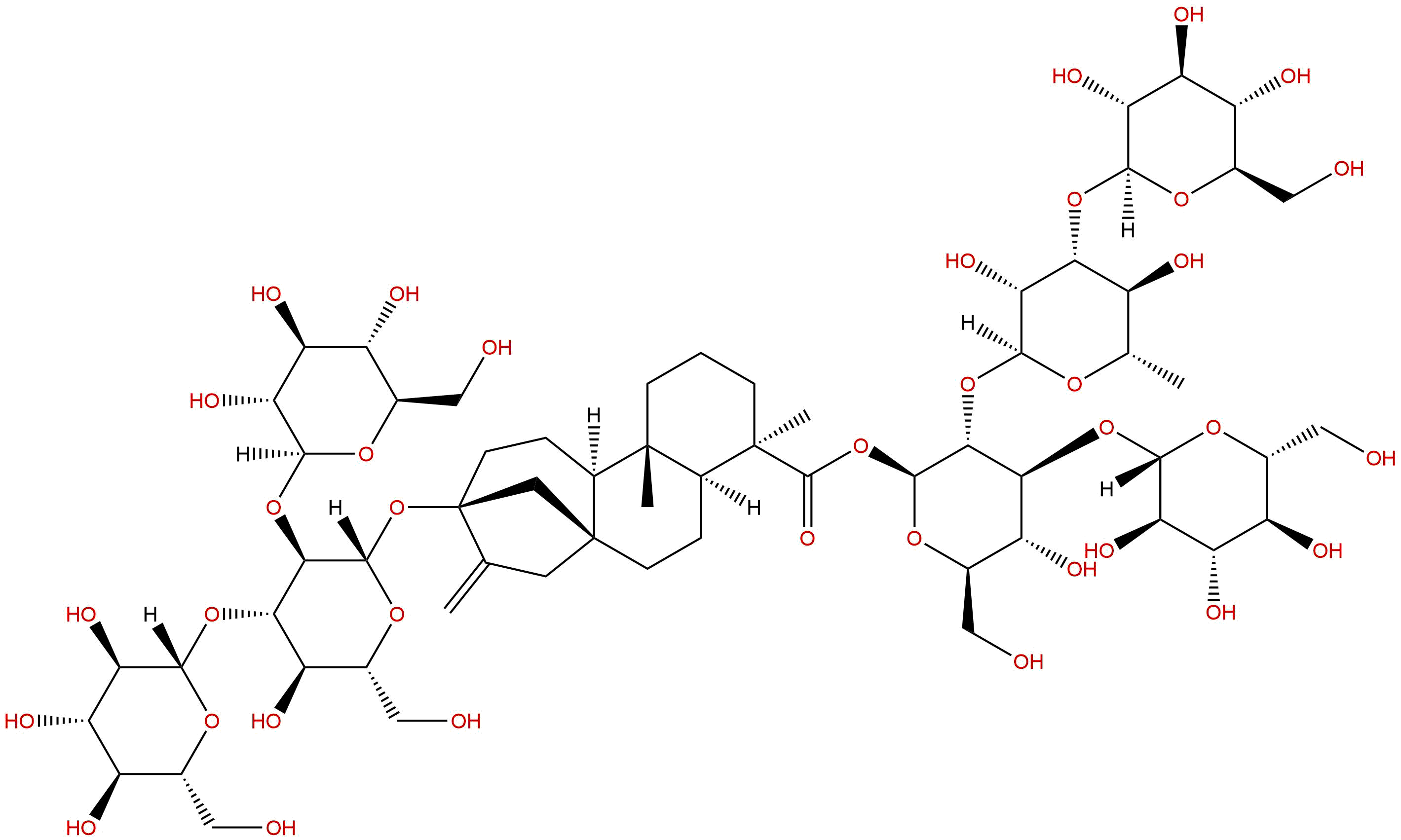


Product name: Rebaudioside O
Synonym name:
Catalogue No.: BP5222
Cas No.: 1220616-48-7
Formula: C62H100O37
Mol Weight: 1437.45
Botanical Source:
Type of Compound: Diterpenoids
Purity: 95%~99%
Analysis Method: HPLC-DAD or/and HPLC-ELSD
Identification Method: Mass, NMR
Packing: Brown vial or HDPE plastic bottle
Storage: Store in a well closed container, protected from air and light. Put into refrigerate or freeze for long term storage.
Whenever possible, you should prepare and use solutions on the same day. However, if you need to make up stock solutions in advance, we recommend that you store the solution as aliquots in tightly sealed vials at -20℃. Generally, these will be useable for up to two weeks.
The product could be supplied from milligrams to grams
Inquire for bulk scale.
For Reference Standard and R&D, Not for Human Use Directly.
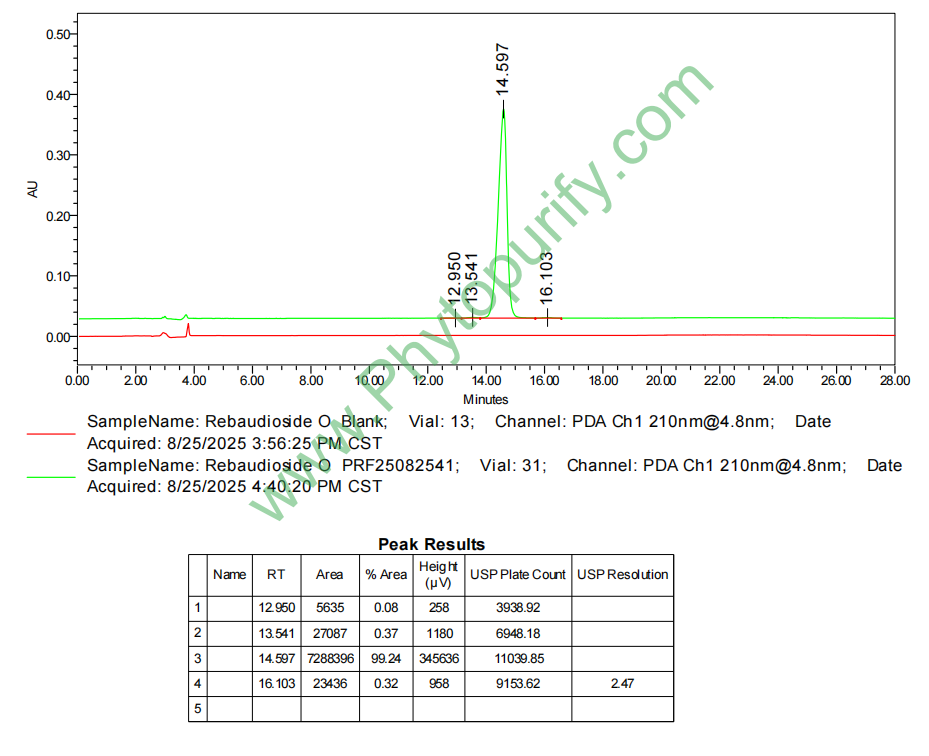
HPLC of Rebaudioside O
Storage conditions:Short-term storage at 2~8℃, long-term storage at -20 ~ -80℃
591.3500
-1.2913
-1.2905
7.1855
.3958
.4084
Low
47.3324
7.8320
Yes
No
No
No
Yes
No
0.0
Yes
No
No
Yes
The research and development of natural sweeteners is one of the important strategies to deal with the increasingly severe challenges of metabolic diseases such as obesity and diabetes worldwide. For a long time, traditional sweeteners such as sucrose have been criticized for their high calorie intake and severe impact on blood sugar. In this context, stevia, a plant of the Asteraceae family, originated from Paraguay and Brazil in South America(Stevia rebaudiana Bertoni's steviol glycoside compounds, with their excellent characteristics such as high sweetness, low calorie content, and almost zero blood sugar response, have become the "star" natural sweeteners that are being pursued in the fields of food, beverage, and medicine. Since the discovery of steviol glycosides, over 40 structurally diverse steviol glycosides have been identified and reported, among which Rebaudioside A (RA) and Stevioside (STV) are the two most widely commercialized main components.
However, with the deepening of research and the increasing demand for taste from consumers, the problems exposed in the application of traditional stevia glycosides (such as RA and STV) have gradually emerged, the most prominent of which are their inherent post bitter and licorice flavors, which to some extent limit their wide application in high-end food and beverages. To overcome this bottleneck, scientists have turned their attention to rare steviol glycosides with lower content but more complex structure and potentially better taste characteristics in stevia. Rebaudioside O (Rebaudioside O, abbreviated as Reb O) is one of the new stevia glycosides discovered and attracting attention in this wave of exploration.
Ruibaodi glycoside O, CAS number 1220616-48-7, is a tetracyclic diterpenoid glycoside isolated from the stevia cultivar "Morita". Its chemical structure is composed of Steviol as a glycoside, with multiple glucose groups connected at C-13 and C-19 sites, forming a complex sugar chain structure. This unique structure endows it with physicochemical and sensory properties distinct from RA and STV. Preliminary studies have shown that rebaudin O not only has extremely high sweetness (about 200-400 times that of sucrose), but more importantly, its sweet taste is pure and its aftertaste is significantly lower than RA, even close to zero, demonstrating great potential as a new generation of "zero calorie" high potency sweeteners.
In addition to its direct application value as a sweetener, the pharmacological activity of rebaudin O, especially its potential role in metabolic diseases, is gradually becoming a research hotspot. Modern pharmacological research has revealed that steviol glycosides are not just "inert" sweet molecules. They can interact with various metabolic targets in the body to exert biological activities such as lowering blood sugar, improving insulin resistance, anti-inflammatory, and antioxidant effects. For Ribadine O, its potential hypoglycemic effect is particularly noteworthy. Preliminary molecular docking and network pharmacology studies suggest that it may participate in regulating glucose metabolism and insulin signaling pathways by acting on multiple key targets such as glucokinase (GCK), peroxisome proliferator activated receptor gamma (PPARG), dipeptidyl peptidase-4 (DPP4), insulin receptor substrate 1 (IRS1), glucose transporter 4 (SLC2A4), and insulin receptor (INSR). These findings suggest that rebaudin O may not only be a "superior" sweetener, but also a functional food ingredient or lead compound with multiple health benefits.
The purpose of this article is to provide a systematic professional review of the emerging natural product, rebaudin O. We will explore its plant origin and extraction and separation techniques based on its chemical structure and physicochemical properties, conduct in-depth analysis of its reported pharmacological activities and potential mechanisms of action, and evaluate its pharmacokinetic characteristics based on its pharmacological parameters. Finally, we will look forward to its application prospects and challenges in the fields of food industry, functional food, and drug development, in order to provide comprehensive scientific references for the in-depth research and development of this highly promising natural sweetener and active molecule.
The chemical essence of rebaudin O is a tetracyclic diterpenoid steviol glycoside. Its parent nucleus structure is steviol alcohol(ent-13-hydroxykaur-16-en-19-oic acid), This is a rigid skeleton composed of four rings (A, B, C, D), where the D ring is a five membered ring and contains a characteristic outer methylene group (C-16=C-17). The C-19 position of steviol alcohol is a carboxyl group and the C-13 position is a hydroxyl group. These two sites are the main sites for glycosylation modification and are also the key factors determining the structural differences of different steviol glycosides.
The structural feature of Rabobasidin O lies in its complex sugar chain composition. Specifically, a sugar chain consisting of four glucose units (glycosyl - β - D-glucoside) is connected to the hydroxyl group at position C-13; On the carboxyl group at position C-19, a sugar chain consisting of two glucose units (β - sophorose) is connected. Therefore, the complete structure of Rabobasidin O can be described as: 13- [(β - D-glucopyranosyl - (1 → 2) - β - D-glucopyranosyl - (1 → 3) - β - D-glucopyranosyl - (1 → 2) - β - D-glucopyranosyl) oxy] ent-Kaur-16-en-19-oic acid β - D-glucopyranosyl - (1 → 2) - β - D-glucopyranosyl ester. Its molecular formula is C ₆₂ H ₁₀₀ O ∝₆, with a molecular weight of up to 1437.4450 g/mol, making it one of the largest members of known stevia glycosides. This highly glycosylated structure is the determining factor in its physicochemical properties.
From the perspective of physical and chemical properties, Ribadine O exhibits typical strong hydrophilicity characteristics. The calculated water solubility (LogS) is 7.1855, indicating that it has extremely high solubility in water, thanks to the large number of hydroxyl groups on the molecular surface. Its lipid water partition coefficient LogP is -1.2913, which is a significant negative value, further confirming its strong hydrophilicity. This high water solubility is extremely advantageous for its application in food and beverage systems, as it is easy to process and mix. The topologically polar surface area (TPSA) is as high as 591.3500 Å ², mainly attributed to the contribution of 36 oxygen atoms (mostly oxygen in hydroxyl and ether bonds). A very high TPSA value usually means that molecules have difficulty penetrating biological membranes, which is highly consistent with the predicted "low blood-brain barrier permeability" in subsequent drug evaluation, and also suggests that its oral absorption may mainly rely on intestinal transporters rather than passive diffusion.
In terms of sensory characteristics, the most prominent advantage of Ribadine O is its excellent sweet taste quality. Compared with RA and STV, Reb O has a faster onset of sweetness, a sweetness duration closer to sucrose, and most importantly, its residual bitterness and licorice taste are significantly reduced, even described as a "clean" and "refreshing" sweetness. This significant improvement in taste makes it an ideal candidate for developing natural high magnification sweeteners that are closer to sucrose. Its sweetness is about 200-400 times that of sucrose, and the specific multiple varies depending on the testing conditions and concentration. In addition, Ribadine O exhibits good chemical stability and can remain stable under conventional food processing conditions such as high temperature and acidic environment, making it difficult to degrade. Its thermal stability is superior to certain other steviol glycosides, providing a guarantee for its application in baking, acidic beverages, and other fields.
Ruibaodi glycoside O was originally derived from Stevia rebaudiana(Stevia rebaudiana A breeding variety of Bertoni - S rebaudiana Separated and identified from Morita. Stevia is native to South America, and its leaves are the natural "factory" for steviol glycosides. However, there are significant differences in the content and proportion of various steviol glycosides in different varieties, growth environments, and growth stages of stevia leaves. Traditional commercial varieties are mainly enriched in STV and RA, while rare glycosides such as Reb O have extremely low content, usually only accounting for a few percent or even lower of the total glycoside content. S. rebaudiana The Morita variety is a special strain bred through traditional breeding techniques, characterized by significantly increasing the accumulation level of various rare stevia glycosides, including Reb O (such as Reb D, Reb M, etc.), providing the possibility for large-scale research and application of these rare glycosides.
Extracting rebaudin O from plant raw materials usually follows the general process of steviol glycoside extraction, but due to its low content and complex structure, more refined and efficient separation and purification techniques are needed. The basic process includes:
Raw material pretreatment and crude extraction After crushing the dried leaves of Stevia rebaudiana, water or low concentration ethanol (such as 50-70% v/v) is usually used as the extraction solvent for leaching or percolation extraction under heating conditions (50-80 ℃). The water extraction method has low cost and environmental friendliness, but its selectivity is poor, and it can simultaneously extract a large amount of impurities such as pigments, proteins, polysaccharides, etc. The alcohol extraction method can effectively inhibit certain enzymatic reactions and microbial growth, and has better solubility for glycosides. After centrifugation or filtration of the extract, a crude extract containing various stevia glycosides is obtained.
Preliminary purification and enrichment The crude extract is first subjected to steps such as flocculation and decolorization to remove large molecular impurities and pigments. Common decolorizing agents include activated carbon, macroporous adsorption resin, etc. Subsequently, macroporous adsorption resin column chromatography (such as D101, AB-8, HPD-100, etc.) was used for preliminary separation. The decolorized extract is loaded onto a resin column, where steviol glycosides are adsorbed and water-soluble impurities such as inorganic salts, monosaccharides, and organic acids are removed by washing with water. Then, gradient elution with different concentrations of ethanol (such as 20% -80%) can be used to separate the different polarity components of stevia glycosides, achieving preliminary enrichment. Distillates containing Reb O typically appear in higher concentrations of ethanol eluent.
Fine separation and purification Due to the close physical and chemical properties of glycosides with highly similar structures such as Reb O, Reb D, and Reb M, conventional macroporous resin chromatography is difficult to completely separate them. Therefore, higher resolution chromatographic techniques are needed for fine purification.
Identification and Quality Control The final product needs to undergo structural confirmation and purity identification through various analytical techniques. Common methods include: high performance liquid chromatography evaporative light scattering detection (HPLC-ELSD) or mass spectrometry (HPLC-MS) for qualitative and quantitative analysis; Accurate structural analysis using nuclear magnetic resonance spectroscopy (NMR, including ¹ H-NMR, ¹ ³ C-NMR, 2D-NMR); And mass spectrometry (MS, such as ESI-MS, MALDI-TOF-MS) is used to determine molecular weight.
Although the application prospects of Ribadine O as a sweetener have attracted much attention, its direct and systematic pharmacological activity research, especially in vivo pharmacological research, is still in its infancy, and the publicly reported literature is relatively limited. However, based on the clear pharmacological activities of its homologues (such as RA, STV, Reb D, Reb M) and preliminary computer simulation studies, we can make reasonable inferences and explore their potential pharmacological effects in depth.
1. Lowering blood sugar and improving insulin resistance
This is the pharmacological activity direction that attracts the most attention for Rabeprizin O. A large number of studies have shown that stevioside family members have significant anti diabetes potential. Its mechanism of action is multifaceted, mainly including:
* Promote insulin secretion Some studies suggest that steviol glycosides (such as STV) can directly act on pancreatic beta cells, promoting glucose stimulated insulin secretion by activating transient receptor potential channels (such as TRPM5) or affecting intracellular cAMP levels.
* Improve insulin sensitivity In cell and animal models of insulin resistance, RA and STV have been found to upregulate the phosphorylation levels of key proteins in the insulin signaling pathway (such as IRS1, PI3K, Akt) and increase the translocation of glucose transporter 4 (GLUT4, encoded by the SLC2A4 gene) on the cell membrane, thereby enhancing the uptake and utilization of glucose by peripheral tissues (such as fat and muscle).
* Inhibition of alpha glucosidase activity Similar to acarbose, certain steviol glycosides can inhibit alpha glucosidase on the brush border of the small intestine, delaying carbohydrate digestion and absorption, thereby reducing postprandial blood glucose peaks.
* Regulating intestinal hormones By acting on intestinal L cells, GLP-1 promotes the secretion of glucagon like peptide-1 (GLP-1). GLP-1 not only promotes insulin secretion, but also inhibits glucagon release, delays gastric emptying, and exerts a comprehensive hypoglycemic effect. DPP4 is a key enzyme for degrading GLP-1, and inhibiting DPP4 activity is a target of novel hypoglycemic drugs such as sitagliptin.
For Reb O, molecular docking studies have shown that it may have potential binding affinity for multiple targets related to glucose metabolism and insulin signaling, such as GCK, PPARG, DPP4, IRS1, SLC2A4, and INSR. For example, binding with GCK may directly enhance liver phosphorylation of glucose and promote glycogen synthesis; Binding with PPARG may regulate adipocyte differentiation and insulin sensitivity; The binding with DPP4 may prolong the half-life of endogenous GLP-1. These computer simulation results strongly suggest that Reb O may exert a synergistic hypoglycemic effect through multiple targets and pathways, and its effect may be superior to compounds with a single target.
2. Antioxidant and anti-inflammatory effects
Oxidative stress and chronic low-grade inflammation are the core pathological links of insulin resistance, type 2 diabetes and its complications (such as cardiovascular disease and kidney disease). Stevia glycosides have been proven to have direct antioxidant activity, capable of scavenging free radicals (such as DPPH, ABTS ⁺), chelating metal ions, and upregulating the activity of antioxidant enzymes in the body (such as superoxide dismutase (SOD), catalase (CAT), glutathione peroxidase (GPx)). Meanwhile, they can also exert anti-inflammatory effects by inhibiting the activation of nuclear factor kappa B (NF - κ B) and reducing the production of pro-inflammatory cytokines such as TNF - α, IL-6, IL-1 β. Given that Reb O has more sugar units and a higher density of hydroxyl groups on its molecular surface, theoretically it may have stronger free radical scavenging ability. Its antioxidant and anti-inflammatory activities may be another important mechanism for its ability to lower blood sugar and improve metabolic syndrome.
3. Other potential activities
The mechanism of action of ribavirin O, especially its hypoglycemic effect, is a complex network involving multiple targets and pathways. Based on the preliminary research results of network pharmacology and molecular docking, we can outline its potential mechanism of action map.
Core target network analysis:
GCK (Glucokinase)GCK is a glucose sensor in liver and pancreatic beta cells, catalyzing the phosphorylation of glucose to 6-phosphate glucose, and is the first key rate limiting enzyme in glucose metabolism. In the liver, activation of GCK can promote glucose uptake and glycogen synthesis, and lower blood sugar levels; In beta cells, GCK acts as a "glucose receptor" to regulate insulin secretion. The potential binding of Reb O to GCK may enhance its activity through allosteric regulation, thereby exerting hypoglycemic effects at both the liver and pancreas levels.
PPARG (Peroxisome proliferator activated receptor gamma)PPARG is a member of the nuclear receptor superfamily and a key regulatory factor for adipocyte differentiation and insulin sensitization. Thiazolidinedione (TZDs) hypoglycemic drugs (such as Rogoglitazone) improve insulin resistance by activating PPARG. Reb O may act as a partial agonist of PPARG, regulating downstream gene expression related to fat metabolism and glucose uptake (such as GLUT4 and adiponectin) by binding to the ligand binding domain, thereby improving insulin sensitivity in peripheral tissues.
DPP4 (dipeptidyl peptidase-4)DPP4 is a serine protease widely expressed on various cell surfaces, and its substrates include enteropancreatin GLP-1 and GIP. DPP4 rapidly degrades GLP-1, resulting in a very short half-life (<2 minutes). Inhibition of DPP4 activity is one of the important strategies for the treatment of type 2 diabetes. Molecular docking shows that Reb O may form competitive or non competitive inhibition by binding to the active sites of DPP4 (such as key amino acid residues S630, H740, D709, etc.), thereby prolonging the action time of endogenous GLP-1, promoting insulin secretion, and inhibiting glucagon release.
IRS1 (Insulin Receptor Substrate 1)IRS1 is a key adaptor protein in the insulin signaling pathway. After insulin binds to INSR, it leads to self phosphorylation of INSR, which in turn phosphorylates IRS1. Phosphorylated IRS1 recruits and activates downstream PI3K Akt signaling pathway, ultimately promoting GLUT4 translocation and glucose uptake. In insulin resistance, serine phosphorylation of IRS1 increases (inhibitory) while tyrosine phosphorylation decreases (activated). Reb O may repair damaged insulin signaling by inhibiting the activity of certain serine kinases (such as JNK, IKK β) or directly promoting tyrosine phosphorylation of IRS1.
SLC2A4 (glucose transporter 4, GLUT4)GLUT4 is the main glucose transporter protein in adipocytes and skeletal muscle cells. In its basic state, GLUT4 is mainly stored in intracellular vesicles. Insulin stimulation or muscle contraction can trigger the fusion and translocation of GLUT4 vesicles to the cell membrane, thereby rapidly increasing the transmembrane transport of glucose. Reb O may promote membrane translocation of GLUT4 by activating the PI3K Akt AS160 signaling axis, which is one of its core mechanisms for improving peripheral tissue glucose utilization.
INSR (Insulin Receptor)INSR is the starting point of insulin action. Reb O may mimic the conformational changes of insulin by binding to the extracellular alpha subunit of INSR, thereby activating the tyrosine kinase activity of the receptor and initiating downstream signaling cascades. Alternatively, it may also amplify insulin signaling by enhancing the binding affinity between INSR and its natural ligand (insulin).
Signal pathway integration:
Based on the above targets, the hypoglycemic mechanism of Reb O can be summarized as the following interrelated pathways:
* Pancreatic pathway By activating GCK (enhancing glucose sensing) and inhibiting DPP4 (prolonging GLP-1 action), it synergistically promotes insulin secretion.
* Liver pathway By activating GCK, promoting hepatic glycogen synthesis and inhibiting hepatic glucose output.
* Peripheral tissue (fat/muscle) pathway By activating PPARG and repairing IRS1/PI3K/Akt signaling, GLUT4 translocation is promoted, increasing glucose uptake and utilization.
* Intestinal pathway By inhibiting DPP4, increasing GLP-1 levels, delaying gastric emptying, and enhancing satiety.
This multi-target and multi pathway mode of action theoretically gives Reb O a more comprehensive and mild hypoglycemic effect than single target drugs, and may be accompanied by lower risk of side effects. However, it should be emphasized that these mechanisms are mainly based on computer simulations and inference from homologous studies, and still need to be validated through rigorous in vitro enzyme activity experiments, cell signaling pathway analysis, and in vivo animal model experiments.
The evaluation of the pharmacological properties of ribavirin O is a key step in assessing its potential to further develop from a "sweetener" to a "drug" or "functional ingredient". Based on its physicochemical properties and preliminary pharmacokinetic predictions, we can conduct the following analysis.
1. Drug similarity and the "Five Rules"
According to Lipinski's "Rule of Five", an orally active small molecule drug should typically meet the following criteria: molecular weight<500, LogP<5, The number of hydrogen bond donors is less than 5, and the number of hydrogen bond acceptors is less than 10. The molecular weight (1437.4 Da) of ribavirin O far exceeds 500, and although LogP (-1.29) conforms to<5, its number of hydrogen bond donors (about 20 hydroxyl hydrogens) and acceptors (36 oxygen atoms) also far exceed the upper limit of the rule. Therefore, Reb O completely does not comply with the "five rules" and belongs to a typical "non class drug" molecule. This strongly suggests that its oral bioavailability will be very low, making it difficult to enter the systemic circulation through passive diffusion through intestinal epithelial cells.
2. Absorption, distribution, metabolism, and excretion (ADME) prediction
3. Safety evaluation
4. Summary of pharmacokinetic characteristics
Overall, the pharmacokinetic characteristics of Ribadine O can be summarized as follows:Low absorption, high metabolism, fast excretion, low systemic exposure After oral administration, the vast majority of Reb O is not absorbed in the gastrointestinal tract, but instead acts as a "prodrug" or "intestinal restriction" molecule, metabolized by the gut microbiota into steviol alcohol. Steviol is rapidly metabolized and excreted after absorption. This pharmacokinetic characteristic determines that when used as a sweetener, it hardly contributes calories and does not have a direct impact on blood sugar. However, if we hope to develop it into a systemic hypoglycemic drug, its extremely low bioavailability is a huge challenge. Possible solutions include designing prodrugs, using nanocarriers or absorption enhancers, and changing the route of administration (such as injection). But a more realistic path is to position it as a local regulator of "enteropancreatin" that acts in the intestine, achieving hypoglycemic effects without entering the systemic circulation by inhibiting intestinal DPP4, regulating intestinal microbiota, and stimulating L cell secretion of GLP-1.
As a natural product with excellent sweet taste quality and potential pharmacological activity, Ribadine O has broad application prospects, but also faces a series of challenges.
1. Application in the food industry: a new generation of "zero calorie" sweeteners
This is the most direct and mature application direction of Reb O. Its core advantages lie in:
* Taste Revolution Solved the post bitterness problem of traditional steviol glycosides, providing a pure sweetness closer to sucrose, and has the potential to fully or partially replace sucrose and artificial sweeteners (such as aspartame and sucralose) in high-end beverages, yogurt, baked goods, candies, seasonings, and other fields.
* clean label As a 'natural extract', it meets consumers' pursuit of 'clean labels' and' natural health '.
* Compound application Reb O is often used in combination with other sweeteners such as RA, STV, erythritol, and alloulose to achieve the best sweetness curve and cost-effectiveness through synergistic enhancement and taste modification.
challenge High production costs. Due to the extremely low content of Reb O in natural stevia, its extraction and purification process is complex, low yield, and high cost, which are the main bottlenecks restricting its large-scale commercialization. In the future, through enzymatic biotransformation (using specific glycosidases to convert rich RA or STV into Reb O) or synthetic biology (reconstructing the biosynthetic pathway of stevia glycosides in microorganisms) technologies, it is expected to significantly reduce its production costs and achieve large-scale supply.
2. Functional foods and dietary supplements: metabolic health management
Based on its potential activities such as lowering blood sugar, improving insulin resistance, and antioxidation, Reb O can be used as an ingredient in functional foods or dietary supplements to assist in managing blood sugar and weight.
* Diabetes/pre diabetes population Develop specialized sweeteners or functional drinks for individuals with high blood sugar levels, which may provide sweetness while also exerting a mild regulatory effect on postprandial blood sugar through mechanisms such as inhibiting DPP4 and regulating GLP-1.
* Obese/Metabolic Syndrome Population As a zero calorie sweetener, it helps reduce total calorie intake while potentially improving insulin sensitivity, which may be beneficial for improving overall metabolic health.
challenge More high-quality clinical studies are needed to confirm its health claims. At present, there is almost no in vivo pharmacological data on Reb O. Strict randomized controlled clinical trials (RCTs) must be conducted to verify its hypoglycemic effect, effective dosage, and long-term safety in humans, in order to provide a solid scientific basis for the development of functional foods.
3. Drug development: novel hypoglycemic lead compounds
Although the low oral bioavailability is the "weakness" of Reb O as a systemic drug, its unique pharmacokinetic characteristics have also opened up new avenues for drug development
* Intestinal restrictive DPP4 inhibitor Designed to exist at high concentrations in the local intestine, effectively inhibiting intestinal DPP4 and increasing local GLP-1 levels, with almost no absorption into the bloodstream, thus avoiding the potential side effects of systemic DPP4 inhibition (such as increased risk of upper respiratory tract infections).
* prebiotics As the "food" of the gut microbiota, it selectively promotes the growth of beneficial bacteria and regulates host metabolism through the "gut brain axis" or "gut liver axis".
* Structural modification Using Reb O as the parent nucleus, the sugar chain structure is modified through chemical or enzymatic methods to obtain derivatives with higher oral bioavailability and stronger activity.
challenge The leap from sweeteners to drugs requires significant R&D resources and lengthy approval cycles. Its mechanism of action is not yet clear and requires systematic and in-depth research from molecules, cells to animal models. In addition, as a drug development, its purity, stability, formulation process and other requirements are much higher than food grade standards.
Ruibaodi glycoside O is a brilliant pearl in the natural treasure trove of stevia. It has brought a revolutionary breakthrough in taste to the field of natural sweeteners with its excellent sweetness quality, and is expected to become an ideal choice to replace sucrose and artificial sweeteners. At the same time, based on its chemical structure and preliminary pharmacological research, it also shows great potential in metabolic health management beyond the scope of "sweeteners", especially its multi-target hypoglycemic mechanism, which provides a new idea for the development of new anti diabetes strategies.
However, we must soberly recognize that research on rebaudin O is still in its early stages. From a chemical perspective, there is an urgent need for breakthroughs in its efficient and low-cost large-scale preparation technology; From a biological perspective, its exact pharmacological activity, in vivo mechanism of action, long-term safety, and pharmacokinetic characteristics in humans all require rigorous scientific research to elucidate. At present, the interaction between it and targets such as GCK, PPARG, and DPP4 is mainly in the stage of computer simulation, and there is an urgent need for in vitro enzyme activity experiments and cellular level functional verification.
Looking ahead to the future, the research on ribavirin O will develop in parallel along two main lines. One is that as a "better natural sweetener", its industrialization process will rely on advances in biotechnology and green chemistry. Secondly, as a natural molecule with health functions, the development of its drugs or functional ingredients will rely on in-depth exploration of basic pharmacology and breakthroughs in clinical translation. It can be foreseen that with the continuous deepening of research and the continuous innovation of technology, rebaudin O is expected to play an increasingly important role in improving global human dietary health and addressing metabolic disease challenges. It is not only a "new star" in the field of sweeteners, but also a vivid example of the intersection of natural product chemistry and pharmacology, demonstrating the infinite possibilities of discovering and developing active molecules with multiple values from natural resources.
