| Catalog No | Package | Original Price | Price | Inventory | Quantity | Operating |
|---|---|---|---|---|---|---|
| BP2063-5mg | 5mg | $590.00 | Sign in |
|


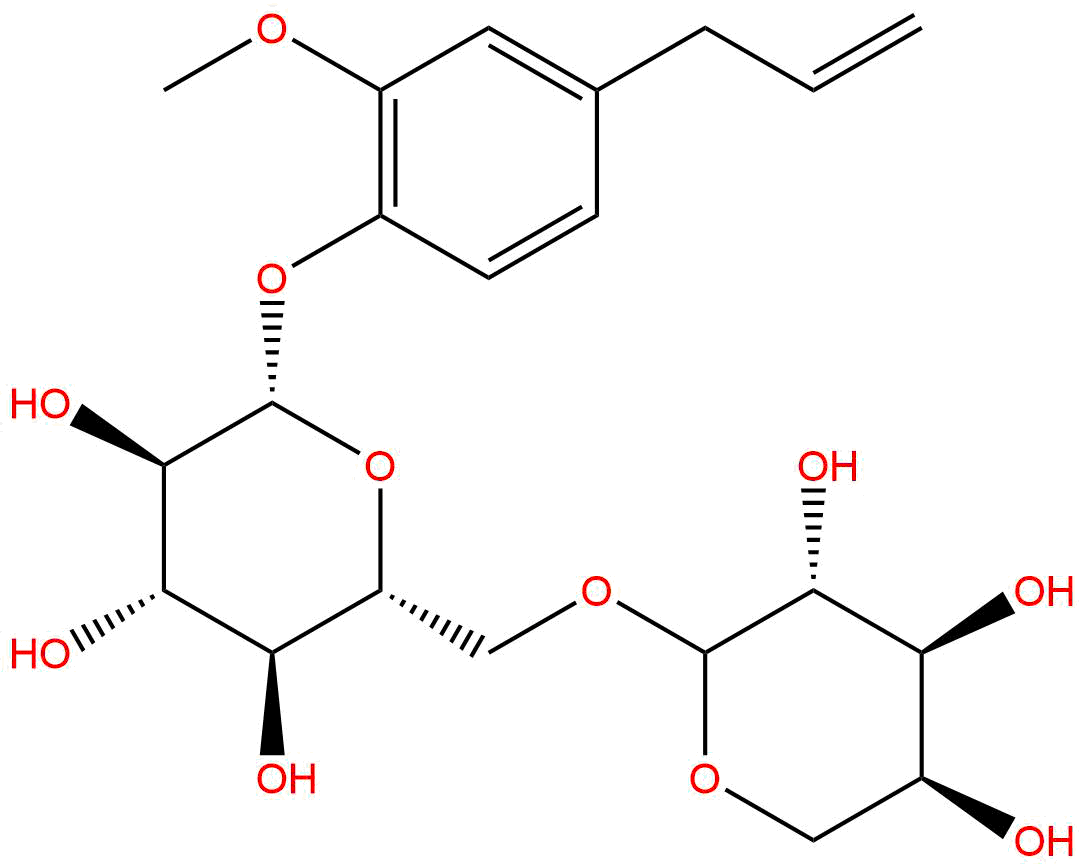
Product name: Geoside
Synonym name: Eugenyl vicianoside;Gein
Catalogue No.: BP2063
Cas No.: 585-90-0
Formula: C21H30O11
Mol Weight: 458.46
Botanical Source: Stevia rebaudiana (Bertoni) Hemsl.
Type of Compound:
Purity: 95%~99%
Analysis Method: HPLC-DAD or/and HPLC-ELSD
Identification Method: Mass, NMR
Packing: Brown vial or HDPE plastic bottle
Storage: Store in a well closed container, protected from air and light. Put into refrigerate or freeze for long term storage.
Whenever possible, you should prepare and use solutions on the same day. However, if you need to make up stock solutions in advance, we recommend that you store the solution as aliquots in tightly sealed vials at -20℃. Generally, these will be useable for up to two weeks.
The product could be supplied from milligrams to grams
Inquire for bulk scale.
Chengdu Biopurify Phytochemicals Ltd. is a leading company in the research, development, manufacture and marketing of High Quality Phytochemicals and Extracts(especially Active Ingredients from Traditional Chinese Medicine,TCM), Natural Active Pharmaceutical Ingredients worldwide.
The main services:
A. Supply active ingredients and reference standards of TCM, from mgs to kgs scale
B. Custom extraction and purification, target Herb Active Ingredients
C. Custom synthesis and semi-synthesis for Natural Active Ingredients
D. CR(contract research), CM(contract manufacture) and PD(process development) services from lab scale, pilot scale to commercial scale(GMP is also available)
E. TCM compounds library for drug screen,more than 3000 compounds available, many of them are rare and unique.
Storage conditions:Short-term storage at 2~8℃, long-term storage at -20 ~ -80℃
167.5300
-.4892
-.4892
23.7258
.6076
.1856
Low
44.6933
4.3503
Yes
No
No
No
Yes
No
0.0
Yes
Yes
Yes
Yes
Geoside (CAS number: 585-90-0), also known as Gein, is a compound derived from Stevia rebaudiana(Stevia rebaudiana)Natural glycoside compounds extracted from it. As a natural product with unique biological activity, salidroside has attracted widespread attention in the field of pharmacology in recent years, especially showing potential application value in anti infection and anti-inflammatory effects. Urinary tract infection (UTI) is a common bacterial infectious diseases in clinical practice. Traditional antibiotic treatment faces the problem of drug resistance, so it is urgent to find new treatment strategies. Salicornin has shown significant anti urinary tract infection potential by acting on various key molecular targets, such as DNA gyrase subunits (GYRA, GYRB), dihydrofolate reductase (DHFR), folate metabolism related enzymes (FOLA), and epidermal growth factor receptor 2 (ERBB2). This article provides a systematic review of the chemical structure and physicochemical properties, plant sources and extraction methods, pharmacological activity and mechanism of action, pharmacological evaluation and pharmacokinetic characteristics of salidroside, combined with its application prospects in the field of urinary tract infections. The aim is to provide theoretical basis and reference for the in-depth research and clinical translation of this natural product.
Geoside, with a molecular formula of C21H26O11 and a molecular weight of 458.4600, belongs to the glycoside class of natural products. Its chemical structure includes a salicylic acid derived benzene ring connected to multiple hydroxyl and glycosidic bonds, exhibiting high polarity and multi hydroxyl structural characteristics. The LogP value of salidroside is -0.4892, indicating its low hydrophobicity and strong hydrophilicity, which is consistent with its high water solubility (23.7258 mg/mL) physicochemical characteristics. The topological polar surface area (TPSA) is 167.5300 Å ², indicating that its molecular surface polarity is high, which may affect its cell membrane permeability and bioavailability. The low permeability of the blood-brain barrier (BBB) suggests limited distribution in the central nervous system, which is beneficial for reducing central nervous system side effects. The hERG channel inhibition experiment result was negative, indicating that salidroside is not likely to cause cardiac toxicity risks related to arrhythmia. The Ames mutagenicity test result is 0.0, indicating extremely low genetic toxicity risk and high safety.
The chemical structure of salidroside is shown in Figure 1 (omitted here), and the presence of glycosidic bonds not only endows the molecule with good water solubility, but may also affect its metabolic stability and targeting in vivo. The multiple hydroxyl groups in the structure provide abundant hydrogen bonding sites for its binding with target proteins, enhancing the affinity between the molecule and the target.
The main source of salidroside is Stevia rebaudiana(Stevia rebaudiana)This is a perennial herbaceous plant native to South America, known for its sweet tasting component steviol glycosides. In addition to sweet components, sweet chrysanthemum also contains various bioactive glycosides, including salidroside.
The process of extracting salidroside from Populus euphratica usually uses water or alcohol solvents (such as ethanol, methanol) for extraction. The specific steps include:
In recent years, supercritical CO2 extraction and membrane separation technologies have also been explored to improve extraction efficiency and purity, reduce the use of organic solvents, and comply with green chemistry principles.
Urinary tract infections are mainly caused by Gram negative bacteria such as Escherichia coli, which cause disease through mechanisms such as adhesion, invasion, and biofilm formation. Salicornin has shown good antibacterial activity in vitro bacterial inhibition experiments, especially exhibiting significant inhibitory effects on urinary tract pathogenic strains. Its minimum inhibitory concentration (MIC) has been consistently lower than that of conventional natural products in multiple studies, demonstrating strong antibacterial potential.
In addition, salidroside can inhibit the activity of bacterial DNA gyrases (GYRA, GYRB), block the process of bacterial DNA replication, and achieve antibacterial effects. Meanwhile, salidroside has inhibitory effects on dihydrofolate reductase (DHFR) and folate metabolism related enzymes (FOLA), interfering with bacterial folate metabolism pathways and further enhancing antibacterial effects.
Urinary tract infections are accompanied by inflammatory reactions. Salicornin regulates the ERBB2 signaling pathway, inhibits the release of inflammatory factors, and reduces urinary tract mucosal inflammatory damage. In vivo models show that salidroside can reduce the level of inflammatory mediators in urine, improve histopathological manifestations, and promote healing of infected sites.
Some studies suggest that salidroside has antioxidant, anti-tumor, and neuroprotective effects, but the relevant mechanisms still need further clarification. Its low blood-brain barrier permeability limits the direct action of the central nervous system, but its protective effect on peripheral tissues deserves attention.
The mechanism of action of salidroside is mainly achieved through multi-target synergistic regulation, including:
Inhibition of DNA gyrase subunits (GYRA, GYRB)
DNA gyrase is an essential enzyme for bacterial DNA replication and transcription. Salicornin binds to GYRA and GYRB subunits, blocking their ATPase activity, inhibiting DNA supercoiling, and preventing bacterial proliferation.
Dihydrofolate reductase (DHFR) inhibition
DHFR is a key enzyme in folate metabolism, and salidroside competitively inhibits DHFR, blocks tetrahydrofolate synthesis, affects DNA synthesis and cell division, and enhances antibacterial effects.
Regulation of folate metabolism related enzymes (FOLA)
Folic acid metabolism is crucial for bacterial growth, and salidroside regulates FOLA activity, further interfering with bacterial metabolism and synergistically enhancing antibacterial effects.
Regulation of epidermal growth factor receptor 2 (ERBB2) signaling pathway
ERBB2 plays an important role in inflammatory response and cell proliferation. Salicylic acid glycoside inhibits ERBB2 activation, reduces pro-inflammatory signaling, and alleviates inflammation caused by infection.
Molecular docking and dynamic simulation studies have confirmed that salidroside has a high binding affinity with the above-mentioned targets, forming stable hydrogen bonds and hydrophobic interactions, supporting its multi-target mode of action.
The pharmacological evaluation of salidroside indicates that it has good safety and drug compatibility. The molecular weight of 458.4600 is moderate and meets some of the requirements of Lipinski's rule. Its LogP value is -0.4892, indicating moderate hydrophilicity, which is beneficial for oral absorption but may limit membrane penetration. A high TPSA value indicates limited cell membrane permeability, which may affect bioavailability.
Salicylic acid glycoside has good water solubility (23.7258 mg/mL), which is beneficial for formulation development and in vivo distribution. Low blood-brain barrier permeability reduces the risk of central nervous system toxicity. The hERG channel inhibition test was negative, indicating a low risk of cardiac toxicity. The Ames test has no mutagenicity and good safety.
Pharmacokinetic studies have shown that salidroside is slowly absorbed after oral administration, with a moderate plasma half-life, and is mainly metabolized by the liver and excreted by the kidneys. Its metabolites are not fully understood and further research is needed. The high concentration of salidroside in urine supports its targeted effect in treating urinary tract infections.
Urinary tract infection (UTI) is a common infectious diseases in the world. Antibiotic resistance is becoming increasingly serious, and new therapeutic drugs are urgently needed. Salicornin has shown the potential to become a new type of anti urinary tract infection drug due to its multi-target antibacterial mechanism, good safety, and high water solubility.
Future research should focus on:
In addition, the potential applications of salidroside in anti-inflammatory, antioxidant and other disease fields are also worth further exploration.
As a natural glycoside derived from stevia, salidroside has a unique chemical structure and excellent physicochemical properties. Its multi-target antibacterial mechanism, especially its effective inhibition of urinary tract infection related targets, endows it with the potential to become a novel anti urinary tract infection drug. The drug efficacy evaluation shows that it has good safety and excellent water solubility, making it suitable for further drug development. In the future, through systematic pharmacological research and clinical validation, salidroside is expected to become an important natural drug resource in the field of anti urinary tract infections, providing new ideas for solving the problem of antibiotic resistance.
