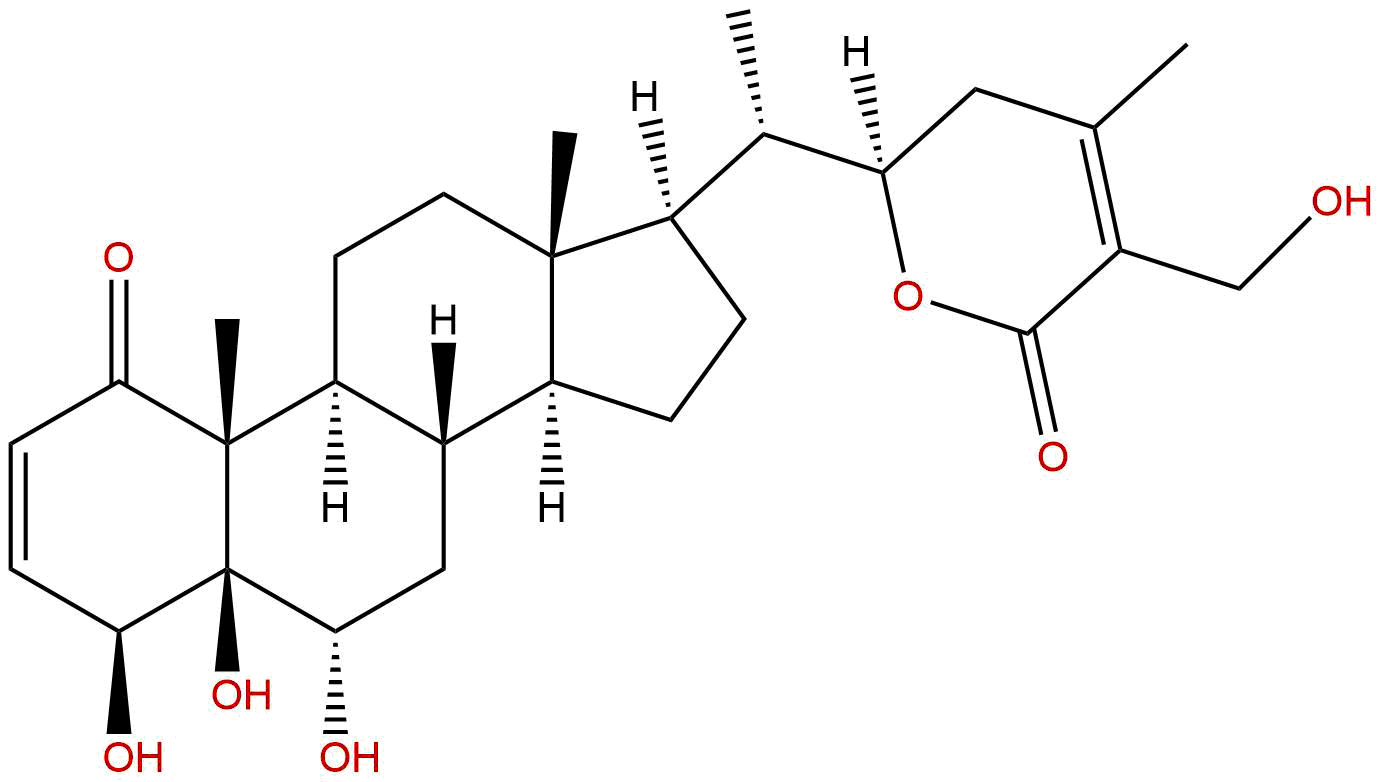


Product name: 2,3-Didehydrosomnifericin
Synonym name: (+)-2,3-Dehydrosomnifericin
Catalogue No.: BP2459
Cas No.: 173614-88-5
Formula: C28H40O7
Mol Weight: 488.621
Botanical Source: Ashwagandha
Type of Compound: Terpenoids
Purity: 95%~99%
Analysis Method: HPLC-DAD or/and HPLC-ELSD
Identification Method: Mass, NMR
Packing: Brown vial or HDPE plastic bottle
Storage: Store in a well closed container, protected from air and light. Put into refrigerate or freeze for long term storage.
Whenever possible, you should prepare and use solutions on the same day. However, if you need to make up stock solutions in advance, we recommend that you store the solution as aliquots in tightly sealed vials at -20℃. Generally, these will be useable for up to two weeks.
The product could be supplied from milligrams to grams
Inquire for bulk scale.
For Reference Standard and R&D, Not for Human Use Directly.
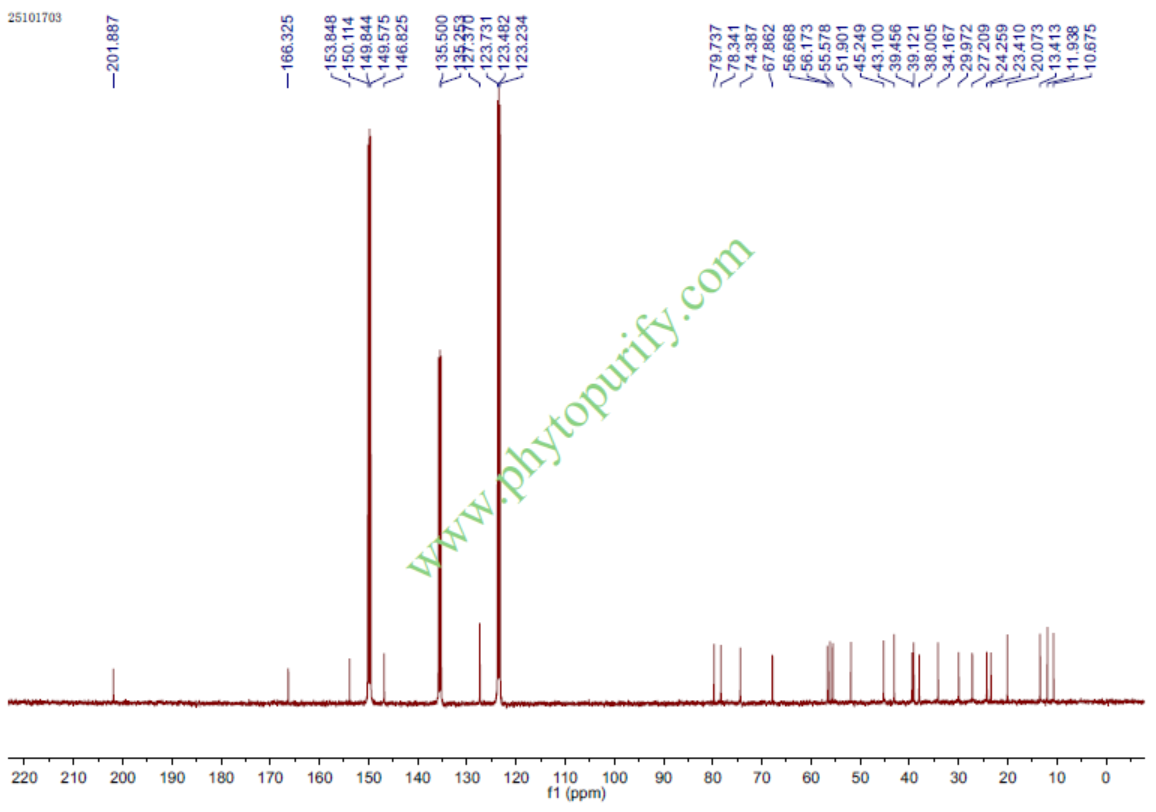
NMR of 2,3-Didehydrosomnifericin
Storage conditions:Short-term storage at 2~8℃, long-term storage at -20 ~ -80℃
Unknown
Unknown
Unknown
Unknown
Unknown
Unknown
Unknown
Unknown
Unknown
Natural products, as an important source of drug discovery, play an irreplaceable role in the long history of human fight against diseases. From the classic analgesic morphine to the anticancer drug paclitaxel, the secondary metabolites found in nature continue to provide valuable lead compounds for modern drug development due to their unique chemical structures and diverse biological activities. Among the many biologically active natural product families, they originate from Apiaceae plants, especially from Panax notoginseng(Conium maculatum L. Polyacetylene alcohol compounds isolated from species such as ________ have attracted much attention due to their novel structure, significant neurotoxicity, and pharmacological activity. Somnifericin and its derivatives are important members of this class of compounds, named after a variant of the species additive "maculatum" in Panax ginseng, implying its association with plant toxicity.
2,3-Dehedrosomnifericin (CAS number: 173614-88-5) is a key member of the Somnifericin family, characterized by the presence of an additional double bond in the molecule, namely the dehydrogenation structure located between C-2 and C-3 positions. This minor structural modification, compared to its parent compound Somnifericin, may significantly alter its molecular conformation, electron distribution, and interaction mode with non biological targets, thereby endowing it with a unique pharmacological activity spectrum. Although current research on 2,3-Deheydrosomnifericin is still in its early stages and publicly available literature is relatively limited, its research value as a class of natural polyacetylene alcohols with complex structures and potential biological activities cannot be ignored.
This review aims to systematically review the existing research progress of 2,3-Deheydrosomnifericin, covering its chemical structure and physicochemical properties, plant sources and extraction and isolation methods, reported pharmacological activities, potential mechanisms of action and molecular targets, and conducting preliminary evaluations based on its pharmacological parameters. By integrating existing knowledge, this review will explore the potential application prospects of this compound in drug development, and point out the current research gaps and possible future research directions, in order to provide reference for further exploration of the medicinal value of this natural product.
The chemical structure of 2,3-Deheydrosomnifericin belongs to a typical natural product of polyacetylene alcohols. Its core skeleton is composed of a long-chain aliphatic structure, which contains multiple conjugated carbon carbon triple bonds (alkyne bonds) and double bonds (ene bonds), and is usually connected to oxygen-containing functional groups such as hydroxyl groups. Specifically, the characteristic structure of Somnifericin like compounds is a polyacetylene alcohol containing a C17 or C18 skeleton, and the naming of 2,3-Deheydrosomnifericin directly reveals its structural characteristics: a double bond (Δ ², ³) is introduced between C-2 and C-3 positions on the basis of the parent compound Somnifericin. This structural modification makes the compound a dehydrogenation analogue of Somnifericin.
From the molecular formula, based on its molecular weight of 472.6100 g/mol, it can be inferred that its molecular formula may be composed of C ₂₉ H ₄₄ O ₅ or similar components, depending on its exact structural details, such as the number and position of hydroxyl, epoxy, or other oxygen-containing groups. Polyacetylene alcohol compounds typically have high unsaturation due to the presence of multiple alkyne and alkene bonds in their molecules. The conjugated enyne system in 2,3-Deheydrosomnifericin is the main source of its UV absorption and chemical reactivity.
In terms of physical and chemical properties, as a long-chain polyacetylene alcohol, 2,3-diehydrosomnifericin typically exhibits the following characteristics:
1. solubility Due to the presence of both polar hydroxyl groups and non-polar long carbon chains, as well as hydrophobic conjugated enyne systems, this compound may exhibit amphiphilicity. It may be easily soluble in moderately polar organic solvents such as methanol, ethanol, ethyl acetate, chloroform, etc., while its solubility in water may be lower. The specific LogP value (oil-water partition coefficient) has not been reported yet, but based on its structure, it is speculated to have a certain degree of lipophilicity.
2. Stability Polyacetylene compounds are generally sensitive to light, heat, and oxygen, and are prone to polymerization, oxidation, or isomerization reactions. Conjugated enyne systems may undergo photochemical reactions under illumination. Therefore, the separation, purification, storage, and biological activity testing of 2,3-Dehydrosomnifericin need to be carried out under conditions such as light avoidance, low temperature, and inert gas protection to ensure its chemical integrity.
3. spectral characteristics Its UV Vis spectrum typically exhibits absorption peaks with fine structures within a specific wavelength range (such as 230-350 nm), which is a characteristic of conjugated enyne systems. Infrared spectroscopy (IR) can observe characteristic absorption of hydroxyl (~3400 cm ⁻¹), alkynyl (~2200 cm ⁻¹), and alkynyl (~1600 cm ⁻¹) groups. The ¹ H and ¹ ³ C spectra in nuclear magnetic resonance spectroscopy (NMR) can provide detailed information about its structure, especially the positions and configurations of double bonds and hydroxyl groups. Mass spectrometry (MS) can be used to determine its molecular weight and fragmentation pattern.
At present, there is still a blank in the public literature regarding the detailed physicochemical parameters of 2,3-Deheydrosomnifericin, such as melting point, optical rotation, pKa, etc. The lack of these data may be partly due to the low content of the compound in nature, the difficulty of separation and purification, and its relatively short research history. Future research requires systematic determination of these basic physicochemical properties, laying the foundation for subsequent pharmacological research and formulation development.
As a polyacetylene alcohol compound, the source of 2,3-Deheydrosomnifericin is mainly limited to specific plant families and genera, especially Apiaceae plants. Umbelliferae plants are known for their abundant secondary metabolites, especially polyacetylene compounds. Poison ginseng(Conium maculatum L. Somnifericin and its analogues were first isolated and identified from this plant in history. In addition, other plants in the Umbelliferae family, such as some belonging to(Angelica)Chaihu genus(Bupleurum)Or the genus of Qianhu(Peucedanum)The species may also contain structurally similar polyacetylene alcohols, but the specific distribution range of 2,3-Deheydrosomnifericin still needs further confirmation.
Given that the content of 2,3-diehydrosomnifericin in plants is usually low and its chemical properties are unstable, establishing efficient and mild extraction and separation methods is the key to obtaining this compound. The typical extraction process usually follows the following steps:
Raw material collection and pretreatment Select plant parts (usually aboveground parts or whole plants) containing the target compound, and immediately dry them in a cool and ventilated place after collection, or use freeze-drying to minimize enzymatic degradation and oxidation reactions. The dried plant material needs to be crushed to an appropriate fineness to increase the contact area between the extraction solvent and the plant tissue.
Solvent extraction Due to the polarity of polyacetylene alcohol compounds, moderate polarity organic solvents are usually used for extraction. Common solvents include methanol, ethanol, ethyl acetate, or their mixed solvents. The extraction method can be cold soaking (soaking at room temperature for several days, with multiple stirring during this period), percolation method, or Soxhlet extraction method. Due to the heat sensitivity of the target compound, cold soaking or room temperature percolation methods are more recommended. After filtration, the extract is concentrated under reduced pressure and low temperature conditions to obtain the crude extract.
Preliminary separation and enrichment Crude extracts typically contain a large amount of lipid soluble impurities (such as chlorophyll, wax, fatty acids, etc.) and polar impurities. The liquid-liquid extraction method can be used for preliminary separation. For example, suspend the crude extract in water and extract it sequentially with solvents such as petroleum ether, ethyl acetate, n-butanol, etc. As a moderately polar compound, 2,3-diehydrosomnifericin may be mainly enriched in the ethyl acetate extraction layer. In addition, silica gel column chromatography (normal phase) or reverse phase silica gel (C18) column chromatography is also a commonly used preliminary separation method, which can achieve preliminary component separation through gradient elution (such as petroleum ether ethyl acetate or methanol water system).
Fine separation and purification For the target components after initial enrichment, higher resolution chromatographic techniques are required for purification. High performance liquid chromatography (HPLC) is the preferred method for separating and purifying such unstable natural products. Usually, a reverse phase C18 chromatographic column is used, with acetonitrile water or methanol water system as the mobile phase. By optimizing the gradient elution program, baseline separation of 2,3-Dedehydroxamifericin from structurally similar compounds can be achieved. Preparation HPLC can be used to obtain pure products in milligrams or even grams. In addition, high-speed countercurrent chromatography (HSCCC), as a liquid-liquid distribution chromatography technique, has unique advantages in separating unstable polyacetylene compounds due to its lack of solid stationary phase, which avoids irreversible adsorption and degradation of samples on the column.
During the entire extraction and separation process, it is necessary to strictly control the operating conditions: avoid light throughout the process (using brown glassware or wrapped in aluminum foil), operate at low temperatures (4 ° C or lower), protect with inert gases (such as nitrogen or argon), and add a small amount of antioxidant (such as BHT) to the solvent. The components obtained at each step should be analyzed by NMR and MS as soon as possible to confirm the presence and purity of the target compound.
At present, there are few reports on the specific extraction process of 2,3-Deheydrosomnifericin. The above methods are mainly based on the universal separation strategy of similar polyacetylene alcohol compounds. In the future, efficient and green extraction methods for this compound, such as supercritical fluid extraction and microwave-assisted extraction, are worth further exploration.
Although the discovery of 2,3-diehydrosomnifericin has been ongoing for several years, systematic research on its pharmacological activity is still very limited, and the number of publicly reported literature is scarce. However, based on its belonging to the polyacetylene alcohol compound family, especially its structural similarity with Somnifericin, it can be reasonably speculated that it may possess the following potential pharmacological activities, which also represent important directions for future research.
Neuroactivity and toxicity This is the most striking characteristic of Somnifericin compounds. Poison ginseng(Conium maculatum)Known for its neurotoxicity, its main toxic component is piperidine alkaloids (such as toxine). However, Somnifericin and its analogues are also believed to be associated with neurotoxicity in plants. 2,3-Dehydrosomnifericin may affect the transmission of neural signals by interacting with neurotransmitter receptors or ion channels. Preliminary research or structure-activity relationship (SAR) speculation, C-2, The double bond at position 3 may enhance its affinity for certain targets, such as nicotinic acetylcholine receptors (nAChRs), exhibiting stronger or different neural regulatory effects than Somnifericin. This effect may have a dual nature: at low concentrations, it may exhibit neuroprotective or regulatory effects, while at high concentrations, it may produce neurotoxicity. Therefore, accurately defining its safe concentration range is the primary task for future research.
Anti inflammatory and immune regulatory activity Many natural polyacetylene alcohols, such as compounds isolated from plants such as ginseng and Atractylodes macrocephala, have been proven to have significant anti-inflammatory activity. They typically exert their effects by inhibiting the production of pro-inflammatory cytokines such as TNF - α, IL-1 β, IL-6, or blocking key inflammatory signaling pathways such as NF - κ B and MAPK. The conjugated enyne structure of 2,3-Deheydrosomnifericin is a potential site for its Michael addition reaction or redox reaction with biomolecules, which may be the molecular basis for its anti-inflammatory activity. Future research can establish a lipopolysaccharide (LPS) - induced macrophage inflammation model to evaluate its inhibitory effect on the release of inflammatory mediators such as nitric oxide (NO) and prostaglandin E2 (PGE2).
Antitumor activity Polyacetylene compounds are one of the important sources of natural anti-tumor active ingredients. They can kill tumor cells through various mechanisms, including inducing apoptosis, inhibiting cell proliferation, interfering with the cell cycle, and resisting angiogenesis. For example, certain polyacetylene alcohols can exert cytotoxic effects by producing reactive oxygen species (ROS) or directly acting on microtubules. In view of the structural complexity of 2,3-Didehydrosomnifericin, it is necessary to screen its cytotoxicity on a variety of human cancer cell lines (such as lung cancer, breast cancer, colon cancer, liver cancer, etc.). MTT or SRB assay is a commonly used preliminary screening method. If it is found to have selective cytotoxic activity, further research is needed to investigate its mechanism of inducing apoptosis, such as detecting Caspase activity and changes in Bcl-2 family protein expression.
Antibacterial and antiviral activity The conjugated enyne structure also endows these compounds with potential antibacterial and antiviral activities. They may exert their effects by disrupting the integrity of microbial cell membranes or interfering with the activity of their key enzymes. Some studies have reported that certain polyacetylene alcohols have inhibitory effects on Staphylococcus aureus, Candida albicans, and other bacteria. It is worth exploring whether 2,3-diehydrosomnifericin has broad-spectrum antibacterial activity, especially against drug-resistant strains. In addition, considering its structural characteristics, its potential in antiviral (such as influenza virus, herpes virus) should also be evaluated.
It should be emphasized that the speculation of the pharmacological activity mentioned above is mainly based on chemical taxonomy and structure-activity relationships, and there is currently a lack of authoritative experimental data directly supporting 2,3-diehydrosomnifericin. The core gap in this field lies in the lack of systematic and reproducible pharmacological activity screening research. Future research must start with the most basic cellular level activity evaluation and gradually delve into animal models to confirm its true pharmacological effects and potential therapeutic window.
Similar to pharmacological activity research, there is currently almost no information available on the molecular mechanism of action and direct targets of 2,3-Dehedrosomnifericin. However, based on its chemical structural characteristics and known modes of action of similar compounds, several reasonable hypotheses can be proposed, providing direction for future mechanism research.
Direct interaction with ion channels or receptors Given the close association between Somnifericin compounds and the nervous system, one of the most likely targets is ion channels, particularly ligand gated ion channels such as nicotinic acetylcholine receptors (nAChRs). NAChRs are key receptors that mediate rapid neural transmission, and their agonists or antagonists can produce significant neural effects. The long-chain structure of 2,3-diehydrosomnifericin may enable it to embed into the binding pocket between receptor subunits and interact with the receptor through non covalent forces such as hydrogen bonding, hydrophobic interactions, or π - π stacking. C-2, The double bond at position 3 may affect the binding affinity and selectivity with the receptor by altering the flexibility and spatial conformation of the molecule. In addition, other neurotransmitter receptors such as GABA receptors and glutamate receptors may also be potential targets.
Regulating the redox state of cells The conjugated alkyne structure is a region with high electron density, which is prone to participate in redox reactions. 2,3-Dehydrosomnifericin may act as an electrophilic reagent, covalently or non covalently binding to thiol rich proteins (such as glutathione and thioredoxin) or enzymes (such as tyrosine phosphatase) in cells, thereby altering the redox balance of cells. This mechanism of action is very common in various natural anti-tumor and anti-inflammatory compounds. For example, it may lead to an increase in reactive oxygen species (ROS) levels by consuming intracellular glutathione (GSH) or inhibiting the activity of thioredoxin reductase (TrxR), thereby activating oxidative stress-related signaling pathways such as JNK and p38 MAPK, ultimately inducing cell apoptosis.
Intervention in lipid signaling pathway As a long-chain aliphatic compound, 2,3-diehydrosomnifericin may be able to embed into cell membranes, affecting membrane fluidity and lipid raft formation. More importantly, it may interfere with the arachidonic acid (AA) metabolic pathway. AA is a precursor for synthesizing inflammatory mediators such as prostaglandins and leukotrienes. Some polyacetylene alcohols have been shown to be inhibitors of phospholipase A2 (PLA2) or cyclooxygenase (COX)/lipoxygenase (LOX). 2,3-Dehydrosomnifericin may exert anti-inflammatory effects by inhibiting these key enzymes and reducing the production of inflammatory mediators. This is highly consistent with its potential anti-inflammatory activity hypothesis.
Affects epigenetic regulation This is a relatively new research direction. Certain natural products can alter gene expression by inhibiting histone deacetylases (HDACs) or DNA methyltransferases (DNMTs). It is currently unclear whether the unique structure of 2,3-diehydrosomnifericin has the ability to bind to the active sites of these epigenetic regulatory enzymes, but this is undoubtedly a frontier area worth exploring.
In order to elucidate the mechanism of action of 2,3-diehydrosomnifericin, future research needs to adopt the following strategies:
- Affinity chromatography and target fishing Fix 2,3-Deheydrosomnifericin on a solid phase carrier, incubate with cell lysate, and identify the protein that specifically binds to it through elution and mass spectrometry.
- Computer aided drug design Using molecular docking and molecular dynamics simulations, predict its binding mode with candidate targets such as nAChRs, COX-2, TrxR.
- omics technologies Comparing the changes in gene and protein expression profiles in cells before and after drug treatment through transcriptomics (RNA seq) and proteomics (quantitative proteomics) analysis, in order to reveal the affected signaling pathways.
- Chemical probe Design and synthesize 2,3-Deheydrosomnifericin derivatives with light affinity or fluorescence tags for labeling and tracking their direct acting proteins in living cells.
According to the provided pharmacological parameters, many key indicators of 2,3-Dehedrosomnifericin in the early stages of drug development are "unknown", highlighting that the compound is currently in a very early stage of research. Nevertheless, we can conduct preliminary pharmacological evaluations based on its chemical structure and identify knowledge gaps that must be filled in the future.
1. Analysis of drug properties:
According to the Lipinski Five Rules, an orally active candidate drug should typically meet the following criteria: molecular weight<500, LogP<5, The number of hydrogen bond donors is less than 5, and the number of hydrogen bond acceptors is less than 10. The molecular weight of 2,3-diehydrosomnifericin is 472.6, which conforms to the rules. The number of hydrogen bond donors (hydroxyl groups) and acceptors (oxygen atoms) is likely to be within an acceptable range. However, its LogP value is unknown, but based on its long carbon chain structure, it is speculated to be higher (>5), which may lead to poor water solubility and affect oral absorption. In addition, there are multiple unsaturated bonds in its structure, which may increase its interaction with the target, but also pose risks of chemical and metabolic instability.
2. Absorption, distribution, metabolism, and excretion (ADME) characteristics:
- absorb Due to its potential lipophilicity, oral absorption may be better, but poor water solubility may become the limiting step. It is necessary to determine its solubility at different pH values and conduct Caco-2 cell monolayer experiments to evaluate its intestinal permeability.
- distribution Lipophilic compounds typically have a large distribution volume and are prone to accumulate in adipose tissue. The most critical issue is' blood-brain barrier (BBB) permeability ', which is currently' unknown '. Given its potential neural activity, BBB permeability is the key factor determining whether it can be used as a central nervous system (CNS) drug. If it indeed acts on CNS targets, BBB permeability is necessary; On the contrary, if its target is peripheral, it is necessary to avoid BBB permeability to reduce central side effects.
- Metabolism Polyacetylene compounds are usually prone to oxidative metabolism. Cytochrome P450 enzymes (CYPs) may undergo epoxidation or oxidative cleavage of their alkyne and alkene bonds, and hydroxyl groups may also undergo glucuronidation or sulfation binding reactions. Its metabolic stability needs to be evaluated through liver microsomal or hepatocyte experiments. The identification of metabolites is crucial for understanding their efficacy and toxicity.
- excretion Metabolites are mainly excreted through bile and urine. Animal experiments are needed to study its excretion pathways and half-life.
3. Toxicity risk assessment:
- Hepatotoxicity: Unknown. Many natural products and drugs pose a risk of liver toxicity. Early evaluation is required through in vitro experiments (such as HepG2 cell toxicity experiments) and in vivo experiments (detection of animal serum transaminase levels).
- cardiotoxicity: Unknown. Especially the inhibitory effect on hERG potassium ion channels is the main cause of drug-induced QT interval prolongation and arrhythmia. The hERG inhibition experiment is a mandatory component of drug cardiac safety evaluation. Given the potential neural activity of 2,3-diehydrosomnifericin, hERG inhibitory activity testing is necessary.
- Genotoxicity The Ames test result is' Unknown '. The Ames test is a standard method for detecting the mutagenicity of compounds. If the compound has anti-tumor activity, its potential genetic toxicity risk needs special attention.
4. Pharmacokinetic (PK) studies:
There is currently no PK data available for 2,3-Deheydrosomnifericin. Future research must establish sensitive and specific biological sample (plasma, tissue) analysis methods (such as LC-MS/MS) and conduct animal PK experiments to obtain key PK parameters, including half-life (t ₁/₂), peak time (Tmax), peak concentration (Cmax), area under the drug time curve (AUC), bioavailability (F), clearance rate (CL), and distribution volume (Vd). These data are the core basis for determining whether they have further development value.
In summary, the pharmacological evaluation of 2,3-Deheydrosomnifericin is currently completely blank. Its structure conforms to certain pharmacological rules, but lipophilicity, metabolic instability, and potential toxicity risks are the main challenges it faces. Future research must systematically fill the data gaps in ADME and toxicology in order to make objective judgments on its pharmaceutical prospects.
Based on the extremely limited public information currently available, the clinical application of 2,3-Dehydrosomnifericin is still very far away, and even its clear medicinal value remains to be confirmed. However, based on its chemical structure and the characteristics of the compound family it belongs to, we can look forward to its potential application directions and point out the key path for future research.
Potential application prospects:
Treatment of neurological disorders If its neural activity is confirmed to be selective, 2,3-Deheydrosomnifericin or its structurally optimized derivatives may be developed for the treatment of certain neurological diseases. For example, as a regulator of nAChRs, it may play a role in Alzheimer's disease (by enhancing cholinergic transmission), Parkinson's disease, attention deficit hyperactivity disorder (ADHD), or pain management. The key lies in how to convert its neurotoxicity into beneficial regulatory effects within the therapeutic window.
Anti inflammatory and autoimmune diseases If its anti-inflammatory activity is confirmed, the compound may be used to treat chronic inflammatory diseases such as rheumatoid arthritis, inflammatory bowel disease, psoriasis, etc. Its unique mechanism may provide a new alternative or complementary solution for existing anti-inflammatory drugs, such as NSAIDs and biologics.
Antitumor adjuvant therapy Although its direct cytotoxic activity may not be sufficient to become a first-line chemotherapy drug, 2,3-Dehedrosomnifericin may serve as a chemotherapy sensitizer or anti metastatic drug. For example, by inhibiting the NF - κ B pathway, it can enhance the sensitivity of tumor cells to chemotherapy drugs. Alternatively, inhibiting tumor growth and metastasis through anti angiogenic activity.
Antimicrobial agents Given the increasingly severe antibiotic resistance, it is urgent to develop anti infective drugs with new mechanisms. If 2,3-diehydrosomnifericin exhibits potent and selective antibacterial activity against drug-resistant strains, it may become a lead compound.
Future research directions and challenges:
Systematic activity screening This is currently the most urgent task. High throughput or high content screening must be conducted on multiple disease models (neurological, inflammatory, tumor, infection) to identify their most prominent pharmacological activities. At the same time, it is necessary to establish its cytotoxicity profile and determine its therapeutic index.
Target discovery and mechanism elucidation Using chemical biology methods (such as affinity fishing, thermal stability migration experiments) and omics techniques, identify its direct target and key signaling pathways. This is the foundation for rational drug design and structural optimization.
Structure Activity Relationship (SAR) Study Synthesize a series of analogues of 2,3-Deheydrosomnifericin, particularly by altering the double bond position, hydroxyl number and position, carbon chain length, etc., and systematically study the effects of structural modifications on their activity, selectivity, and toxicity. This helps to discover candidate compounds with higher activity and lower toxicity.
Addressing the issue of drug formation To address its potential issues of high lipophilicity, poor water solubility, and metabolic instability, pharmaceutical methods such as prodrug design, nano formulations (such as liposomes and polymer micelles), and cyclodextrin inclusion were employed to improve its ADME properties. At the same time, all necessary toxicological evaluations must be completed.
Resources and Supply Due to the low content of natural sources, the development of fully synthetic or semi synthetic chemical routes is crucial for ensuring their future research and supply. We need to develop efficient and scalable synthesis processes.
As a naturally occurring polyacetylene alcohol with a unique structure, the research on 2,3-Dehedrosomnifericin is still in the "pre dawn darkness" stage. Although its chemical structure has been elucidated, its pharmacological activity, mechanism of action, pharmacokinetic properties, and toxicological characteristics are almost completely unknown. This is both a challenge and a huge opportunity. This review systematically summarizes the existing knowledge of the compound and makes reasonable speculations on its potential application prospects based on chemical taxonomy and structure-activity relationships.
Currently, the core bottleneck in this field lies in the lack of systematic and in-depth experimental research. Future research must start with the most basic activity screening and target discovery, gradually building a knowledge system about the compound. Only through rigorous scientific experiments can we answer the fundamental question of whether 2,3-diehydrosomnifericin has medicinal value. If its activity is confirmed, it will become a class of lead compounds with a completely new skeleton, providing new ideas for drug discovery in major diseases such as nerves, inflammation, and tumors. On the contrary, if its activity is not significant or its toxicity is too high, its research value lies in providing important data for the structure-activity relationship of polyacetylene alcohol compounds and enriching the treasure trove of natural product chemistry. In any case, the exploration of 2,3-Deheydrosomnifericin is an important question about the chemical diversity and biological activity in nature, and its final conclusion is worth looking forward to.
